A Blast From The Past: Orson Welles’s 1938 Broadcast of The War of the Worlds


On October 30th, 1938, Orson Welles and the Mercury Theater On The Air broadcast an adaptation of H.G. Wells’s War of the Worlds and, legend has it, they scared the ever-loving heck out of America.

Actually, there’s some debate as to just how panicked America got when they heard the Mercury Theater On The Air’s adaptation of War of the Worlds.  There was definitely some panic but there are differing reports on just how wide spread it was.  For our purposes, let’s assume that the entire country was terrified at the same time and that everyone was loading up a shotgun and planning to go out and look for aliens.  One thing is for sure.  With his adaptation of War of the Worlds, Orson Welles managed to invent the whole found footage genre that would later come to dominate horror cinema in the late 90s and the aughts.  Every found footage horror film owes a debt to what Orson Welles accomplished with War of the Worlds.  We won’t hold that against Orson.  Instead, it’s just another example of how far ahead of his time Orson Welles was.

H.G. Wells, the original author of War of the Worlds, and Orson Welles only met once, while they were both in San Antonio, Texas in 1940.  (Orson Welles and H.G. Wells hanging out in San Antonio?  To be honest, that sounds like it would make a good movie.)  They were interviewed for a local radio station.  H.G. Wells expressed some skepticism about the reports of Americans panicking while Welles compared the radio broadcast to someone dressing up like a ghost and shouting “Boo!” during Halloween.  Both Wells and Welles then encouraged Americans to worry less about Martians and more about the growing threat of Hitler and the war in Europe.

I’ve shared this before but this just seems like the time to share it again.  Here, for Halloween Eve, is the 1938 Mercury Theater On The Air production of The War of the Worlds!

Scene That I Love: Charles Foster Kane Runs For Governor in Citizen Kane


Orson Welles was fond of telling the story of how Franklin D. Roosevelt, shortly before his death, encouraged Welles to enter politics and run for Wisconsin’s U.S. Senate seat in 1946.  Welles gave it some consideration but ultimately, he decided not to run.  He was, after all, a movie star and, in the mid-40s, he had yet to be exiled from Hollywood.

Welles later said that a part of him regretted not running because, if he had, his opponent would have been Joseph McCarthy.  Welles assumed that he would have easily beaten McCarthy and therefore, the McCarthy era never would have happened.  Of course, the truth of the matter is that there’s no guarantee that Welles, as someone who had spent most of his life in New York and California, would have even won the Democratic primary, that Welles would have defeated McCarthy in the general, or that some other Senator wouldn’t have launched an anti-communist crusade in McCarthy’s place.  But Orson Welles was never one for false modesty.  That’s one thing that made him such an important and exciting filmmaker.

Welles also said that, despite his regrets, he was ultimately happy that he didn’t run because he would have felt the need to then run for President.  President Welles!  Imagine that.  (Actually, it probably would have been a disaster but still …. President Orson Welles!  If nothing else, a Welles presidential campaign would have spared America from having to look at Adlai Stevenson for two straight elections.)

Today’s scene that I love provides a glimpse of what an Orson Welles political campaign might have been like.  In this scene, from 1941’s Citizen Kane, Charles Foster Kane runs for governor and gives the political speech of his life.  Sadly, as we all know, Kane would never be governor and he would never again be as beloved by the masses as he was in this scene.  Instead, he would die isolated, alone, and wishing for his childhood.

4 Shots From 4 Films: Special Orson Welles Edition


4 Or More Shots From 4 Or More Films is just what it says it is, 4 shots from 4 of our favorite films. As opposed to the reviews and recaps that we usually post, 4 Shots From 4 Films lets the visuals do the talking!

Today we celebrate what would have been the 109th birthday of the great Orson Welles!  It’s time for….

4 Shots from 4 Orson Welles Films

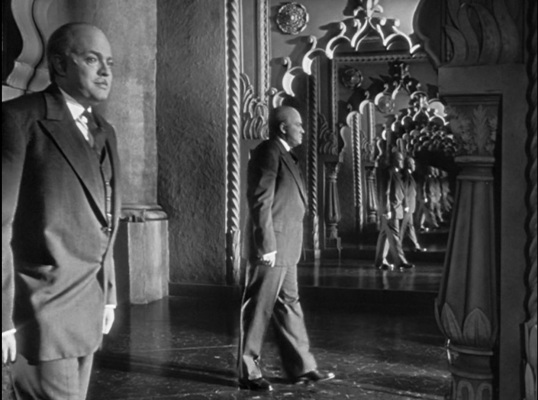
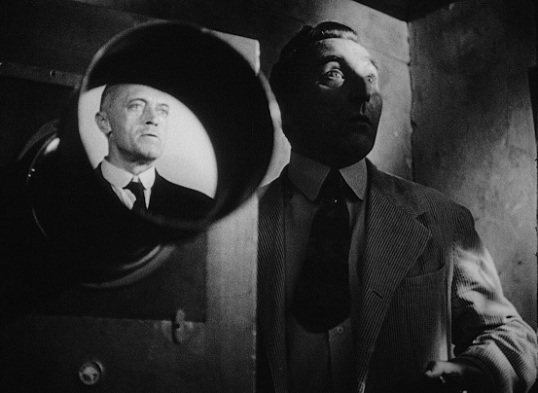
Citizen Kane (1941, dir by Orson Welles, DP: Gregg Toland)

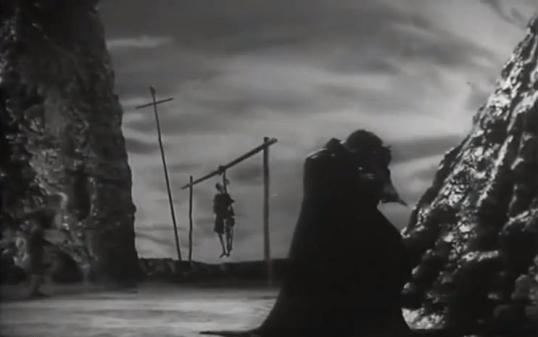
MacBeth (1948, dir by Orson Welles, DP: John L. Russell)

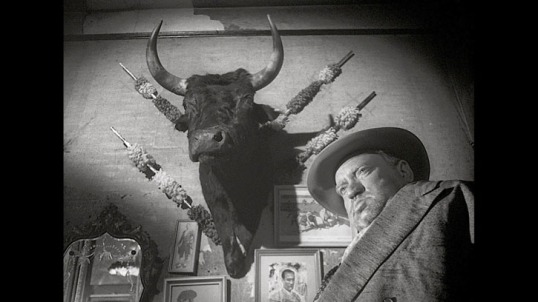
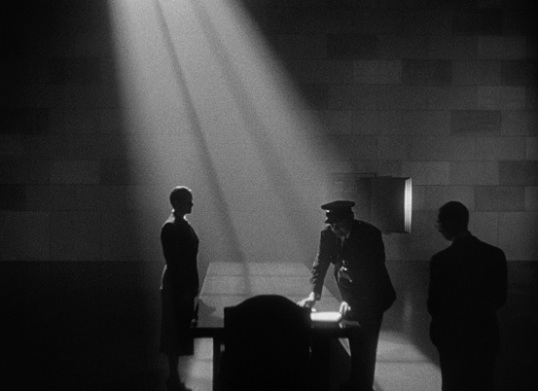
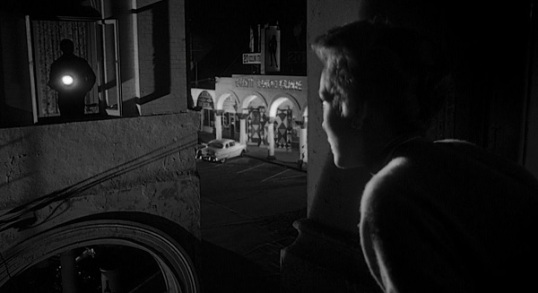
Touch of Evil (1958, dir by Orson Welles, DP: Russell Metty)

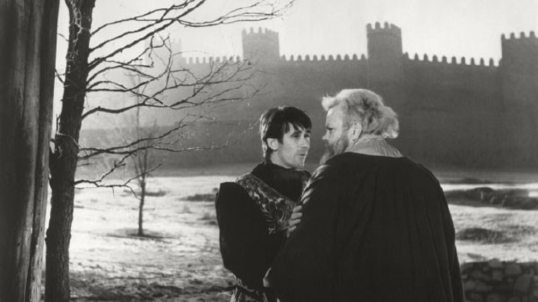
Chimes at Midnight (1965, dir by Orson Welles, DP: Edmond Richard)

A Blast From The Past: The Night America Trembled (dir by Tom Donovan)


Filmed in 1957 for a television program called Westinghouse Studio One, The Night America Trembled is a dramatization of the night in 1938 when Orson Welles’s adaptation of H.G. Wells’s The War of the Worlds reportedly caused a panic amongst listeners.

For legal reasons, Orson Welles is not portrayed nor is his name mentioned.  Instead, the focus is mostly on the people listening to the broadcast and getting the wrong idea.  That may sound like a comedy but The Night America Trembled takes itself fairly seriously, complete with Edward R. Murrow narrating and taking drags off of a cigarette.

Clocking in at a brisk 60 minutes, The Night America Trembled is an interesting recreation of that October 30th.  Among the people panicking are a large collection of future stars and character actors.  Ed Asner, James Coburn, John Astin, Warren Oates, and Warren Beatty all make early appearances.

It’s an interesting historical document and you can watch it below!

An Auditory Blast From The Past: Orson Welles’s 1938 Broadcast of The War of the Worlds


On October 30th, 1938, Orson Welles and the Mercury Theater On The Air broadcast an adaptation of H.G. Wells’s War of the Worlds and, legend has it, they scared the ever-loving heck out of America.

Actually, there’s some debate as to just how panicked America got when they heard the Mercury Theater On The Air’s adaptation of War of the Worlds.  There was definitely some panic but there are differing reports on just how wide spread it was.  For our purposes, let’s assume that the entire country was terrified at the same time and that everyone was loading up a shotgun and planning to go out and look for aliens.  One thing is for sure.  With his adaptation of War of the Worlds, Orson Welles managed to invent the whole found footage genre that would later come to dominate horror cinema in the late 90s and the aughts.  Every found footage horror film owes a debt to what Orson Welles accomplished with War of the Worlds.  We won’t hold that against Orson.  Instead, it’s just another example of how far ahead of his time Orson Welles was.

H.G. Wells, the original author of War of the Worlds, and Orson Welles only met once, while they were both in San Antonio, Texas in 1940.  (Orson Welles and H.G. Wells hanging out in San Antonio?  To be honest, that sounds like it would make a good movie.)  They were interviewed for a local radio station.  H.G. Wells expressed some skepticism about the reports of Americans panicking while Welles compared the radio broadcast to someone dressing up like a ghost and shouting “Boo!” during Halloween.  Both Wells and Welles then encouraged Americans to worry less about Martians and more about the growing threat of Hitler and the war in Europe.

I’ve shared this before but this just seems like the time to share it again.  Here, for Halloween, is the 1938 Mercury Theater On The Air production of The War of the Worlds!

4 Shots From 4 Films: Special Orson Welles Edition


4 Or More Shots From 4 Or More Films is just what it says it is, 4 shots from 4 of our favorite films. As opposed to the reviews and recaps that we usually post, 4 Shots From 4 Films lets the visuals do the talking!

Today we celebrate what would have been the 108th birthday of the great Orson Welles!  It’s time for….

4 Shots from 4 Orson Welles Films

Citizen Kane (1941, dir by Orson Welles, DP: Gregg Toland)

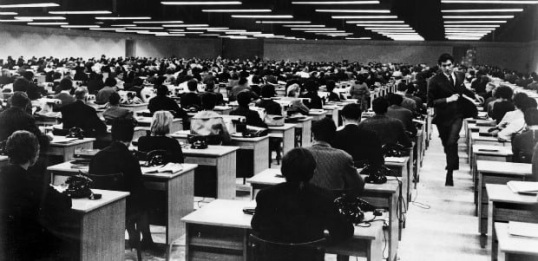
The Stranger (1946, dir by Orson Welles, DP: Russell Metty)

Touch of Evil (1958, dir by Orson Welles. DP: Russell Metty)

The Trial (1962, dir by Orson Welles, DP: Edmond Richard)


12 Oscar Snubs From the 1950s


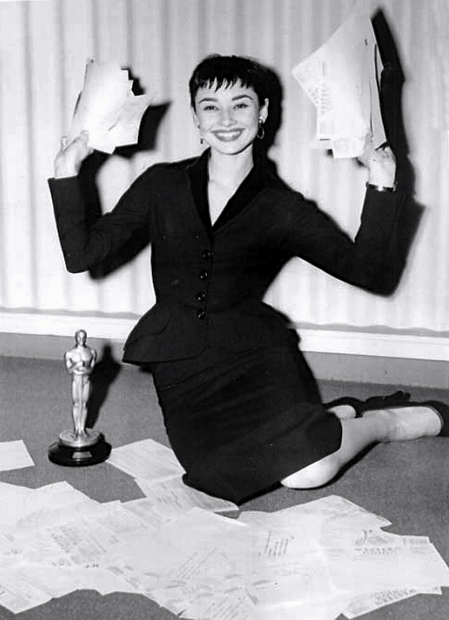
Audrey Hepburn and her Oscar.  At least the Academy didn’t snub her!

Continuing our look at the Oscar snubs of the past, it’s now time to enter the 50s!

World War II was over. Eisenhower was President. Everyone was worried about communist spies. And the Hollywood studios still reigned supreme, even while actors like Marlon Brando and James Dean challenged the establishment.  There were a lot great film released in the 50s.  There were also some glaring snubs on the part of the Academy.  Here’s twelve of them.
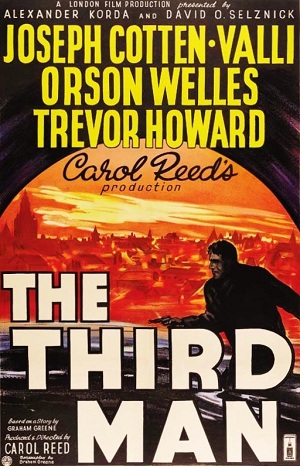
1950: The Third Man Is Not Nominated For Best Picture

….and Orson Welles was not nominated for Best Supporting Actor!  The Third Man received three Oscar nominations, for Director, Cinematography, and Editing.  The fact that Welles, Joseph Cotten, Alida Valli, and the film’s score were not nominated (and that King Solomon’s Mines was nominated for Best Picture instead of The Third Man) remains one of the more surprising snubs in Oscar history.

1952: Singin’ In The Rain Is Not Nominated For Best Picture

What the Heck, Academy!?  This was the year that The Greatest Show On Earth won the Best Picture Oscar.  Personally, I don’t think The Greatest Show On Earth is as bad as its reputation but still, Singin’ In The Rain is a hundred times better.

1953: Alan Ladd Is Not Nominated For Best Actor For Shane

How could Shane score a nomination for Best Picture without Shane himself receiving a nomination?

1954: Rear Window Is Not Nominated For Best Picture

Rear Window was not totally ignored by the Academy.  Alfred Hitchcock received a nomination for directing.  It also received nominations for Best Adapted Screenplay, Cinematography, and Sound.  However, Rear Window was not nominated for Best Picture and James Stewart, Grace Kelly, Raymond Burr, and Thelma Ritter all went unnominated as well.  Today, Rear Window is definitely better-remembered than the majority of 1954’s Best Picture nominees.  Certainly, it deserved a nomination more than Seven Brides For Seven Brothers and Three Coins in The Fountain.

1955: Ralph Meeker Is Not Nominated For Best Actor For Kiss Me Deadly

I guess I shouldn’t be surprised.  If the Academy wasn’t going to nominate Rear Window for Best Picture, there was no way that they would have nominated Ralph Meeker for playing a sociopathic private detective who, even if inadvetedly, helps to bring about the end of the world.

1955: Rebel Without A Cause Is Not Nominated For Best Picture or Best Actor

The 1955 Best Picture lineup was a remarkably weak one.  The eventual winner was Marty, a likeable film that never quite escapes its TV roots.  Picnic has that great dance scene but is otherwise flawed.  Mister Roberts was overlong.  Love Is A Many-Splendored Thing and The Rose Tattoo are really only remembered by those of us who have occasionally come across them on TCM.  Perhaps the best-remembered film of 1955, Rebel Without A Cause, received quite a few nominations but it was not nominated for Best Picture.  And while the Rebel himself, James Dean, was nominated for Best Actor, it was for his performance in East of Eden.  1955 was a strange year.

1955: Robert Mitchum Is Not Nominated For Best Actor For The Night of the Hunter

Robert Mitchum only received one Oscar nomination over the course of his entire career, for 1945’s The Story of G.I. Joe.  He deserved several more.  His performance as the villainous preacher in The Night of Hunter made Reverend Harry Powell into one of the most iconic film characters of all time.
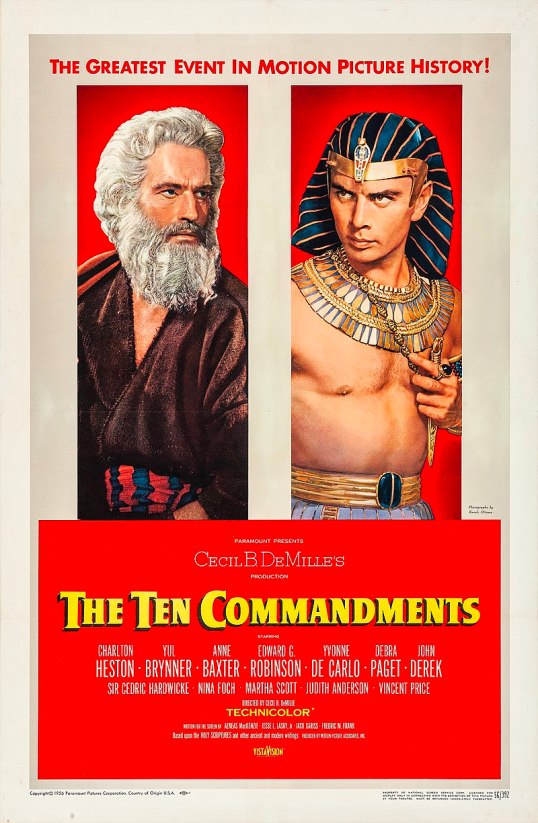
1956: Cecil B. DeMille Is Not Nominated For Best Director For The Ten Commandments

Cecil B. DeMille was only nominated once for Best Director, for 1952’s The Greatest Show On Earth.  DeMille, however, deserved to be nominated for The Ten Commandments.  As campy as DeMille’s films can seem today, he was an expert storyteller and that’s certainly evident when one watches The Ten Commandments, a film that holds the viewer’s attention for nearly four hours.  DeMille deserved a nomination for the Angel of Death scene alone.  The screams in the night are haunting.

1957: Henry Fonda Is Not Nominated For Best Actor For 12 Angry Men

With 12 Angry Men, Fonda did something that very few actors can.  He made human decency compelling.  One gets the feeling that, much like Tom Hanks in Captain Phillips, Fonda made it look so easy that the Academy took him for granted.

1958: Touch Of Evil Is Totally Ignored

Anyone who had researched the history of the Academy knows that there was no way that the 1950s membership would have ever honored Orson Welles’s pulp masterpiece, Touch of Evil.  That said, it still would have been nice if they had.  Touch of Evil has certainly go on to have a greater legacy than Gigi, the film that won Best Picture that year.

1958: Vertigo Is Almost Totally Ignored

Vertigo did receive nominations for Art Direction and Sound but Alfred Hitchcock, James Stewart, and the film itself were snubbed.

1959: Some Like It Hot Is Not Nominated For Best Picture or Best Actress

Some Like It Hot received 6 Oscar nominations, including nominations for Best Director, Best Actor, and Best Adapted Screenplay.  It did not receive a nomination for Best Picture and, sadly, Marilyn Monroe did not receive a nomination for Best Actress.  Much as with Henry Fonda in 12 Angry Men, one gets the feeling that the Academy took Monroe for granted.  It’s sad to realize that, while two actresses have been nominated for playing Marilyn Monroe, Monroe herself would never be nominated.

Agree?  Disagree?  Do you have an Oscar snub that you think is even worse than the 12 listed here?  Let us know in the comments!

Up next: Things get wild with the 6os!
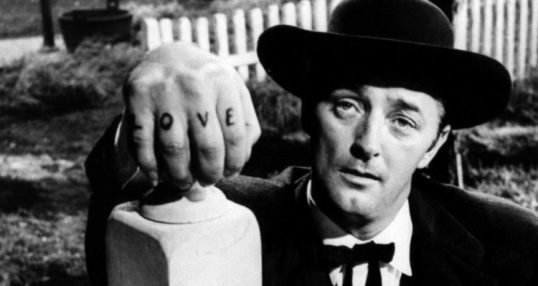
Night of the Hunter (United Artists 1955; D: Charles Laughton)

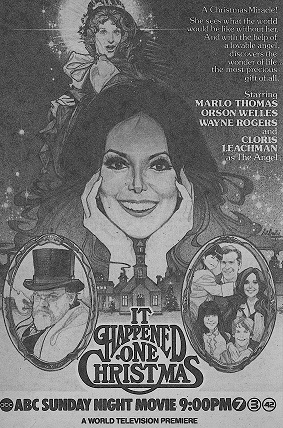
Holiday Film Review: It Happened One Christmas (dir by Donald Wyre)


The 1977 made-for-TV movie, It Happened One Christmas, opens in Heaven.  We hear the voice of Joseph (Charles Grodin), one of the top angels.  Joseph has noticed that, in the town of Bedford Falls, a lot of people seem to be praying and all of their prayers concern one person.  They are all worried about Mary Bailey Hatch (Marlo Thomas).

He requests that an angel be sent down to Earth to help Mary with her problems.  Unfortunately, the only angel available is Clara (Cloris Leachman) and Clara, despite her optimistic outlook and upbeat personality, is not considered to be a particularly smart angel.  She hasn’t even gotten her wings yet!  However, Joseph promises her that, should she convince Mary Hatch not to toss away her life on Christmas Eve, Clara will get her wings.

But first, Joseph shows Clara all of the important events in Mary’s life.  Clara watches as young Mary saves the life of her brother, Harry.  A few weeks later, Mary manages to keep Dr. Gower from accidentally poisoning a patient.  Though Mary dreams of leaving Bedford Falls and pursuing a career as a writer, she instead ends up taking over her late father’s old Building and Loan company.  With the help of her husband, George (Wayne Rogers), she helps hundreds of people move into affordable housing.  She is also one of the few people in town willing to stand up to Old Man Potter (Orson Welles)….

What was that?

Yeah, I know.  Just hold on.  I’m getting to that.

Anyway, everything is going great in Mary’s life until her irresponsible Uncle Willie (Barney Martin) accidentally loses a deposit on Christmas Eve.  Facing embezzlement charges and having yelled at her family, Mary considers jumping off a bridge.  Fortunately, Clara is there to show her what her life would be like if she had never been born….

Excuse me?  Did you say that this sounds familiar?

Yes, It Happened One Christmas is a remake of It’s A Wonderful Life.  The main difference is that the genders are swapped.  Jimmy Stewart’s role is played by Marlo Thomas.  Wayne Rogers plays the Donna Reed role.  This leads to a few changes in the story.  For instance, Mary still yells at ZuZu’s teacher but she doesn’t get sucker punched as a result.  Whereas the original Mr. Potter treated George Bailey with outright hostility, the remake’s Mr. Potter tends to use a tone of condescending concern when talking to Mary.  Since George Hatch doesn’t lose his hearing in one ear, he’s able to serve in World War II and he returns on crutches.  In the world where Mary was never born, George still never marries but, instead of working at the library, he becomes a boorish auto mechanic.  Violet is no longer an important character and Mary never tries to blame her visions of Pottersville on “bad liquor.”  These are cosmetic differences but, otherwise, it’s pretty much the exact same story.

To be honest, it probably sounds more interesting than it actually is.  It’s not that It Happened One Christmas is a poorly made or a badly acted film.  It’s fine, really!  But it’s not It’s A Wonderful Life.  Marlo Thomas plays her role with a lot of energy but she’s still no Jimmy Stewart.  Stewart, who was still dealing with his own World War II experiences, played up the haunting sadness behind George’s mild-mannered facade and that’s something that Thomas never accomplishes.  If Stewart’s George seems like he’s been beaten down by one lost dream after another, Marlo Thomas’s Mary just seems like she’s having a really bad night.  By that same token, Wayne Rogers is likable a the love of Mary’s life but he’s no Donna Reed.  Even the great Orson Welles can’t escape the shadow of Lionel Barrymore.  Barrymore’s Mr. Potter was a pure misanthrope who was at his happiest mocking the dead and approving men for the draft.  Oddly, Orson Welles brings an almost avuncular style to Mr. Potter.  One gets the feeling that Welles simply couldn’t resist winking at the audience and assuring them that he was still the bigger-than-life showman that they had grown up with.

So, you may be wondering ….. why remake It’s A Wonderful Life in the first place?  I was wondering about that so I did a little research and thanks to an obscure web site called Wikipedia (not many people have heard of it), I discovered that It Happened One Christmas was actually made before It’s A Wonderful Life started to regularly air during the holidays.  At the time it was made, it was aactually remake of a classic film that was no longer regularly watched.  Frank Capra angrily denounced It Happened One Christmas as being “plagarism” but, in 1977, it was enough of ratings success that it was re-aired in both 1978 and 1979.  But, by that time, It’s A Wonderful Life had started to regularly air during the holiday season and was being rediscovered by audiences young and old.  As a result, the okay remake was soon overshadowed by the vastly superior original.

And really, that’s the way it should be.  It Happened One Christmas isn’t a bad movie but it just no replacement for Capra’s Wonderful film.

Happy Birthday, H.G. Wells!


Today is the 156th anniversary of the birth of British author H.G. Wells!

It’s a bit of a tradition around these parts to celebrate H.G. Wells’s birthday with the help of another Welles, in this case Orson.  Here is the infamous 1938 radio adaptation of H.G. Wells’s War of the Worlds.  This is the program that became famous for terrorizing America.  Of course, there’s always been some suggestions that the reports of panic were a bit exaggerated.  That’s always possible.  Orson Welles was, at heart, a showman and he knew how to tell and embellish a story.  That said, it is also known for fact that enough people took the show seriously that the panic made the front page of the New York Times.

The first half of the show is an early example of what would become known as the found footage genre.  It was the first mockumentary!  The second half features Welles narrating the events after the invasion.  During the second half, the news program angle is dropped and it becomes a traditional radio broadcast.  One would hope that even panicked listeners would have taken the hint but who knows?  They may have been too busy loading up their shotguns and heading outside to search for Martians to have been paying attention at that point.

Enjoy!

Lisa Marie Reviews A Cannes Festival Winner: Othello (dir by Orson Welles)


With the Cannes film festival underway in France, I’ve decided to spend the next few days watching and reviewing some of the films that previously won the Festival’s top prize.  In 1952, what would eventually become the Palme d’Or was known as Grand Prix du Festival International du Film and it was actually awarded to two separate films.  One of those films was Renato Castellani’s Two Cents Worth of Hope.  The other was Orson Welles’s adaptation of Othello.

Oh, Othello.  Where to begin, with this well-made Shakespearean adaptation that, by today’s standards, many would consider to be problematic?

Othello is one of Welles’s most important films, not just because of its quality but also because it was one of the first films of his European exile.  It was also the first Welles’s production to last for over a year.  In this case, it took three years to finish filming Othello.  As Welles himself often pointed out, one of the film’s key sequences began in Morocco but ended in Rome.  Working with a low budget, Welles would take roles just to have enough money to shoot another few feet of film.  (Reportedly, his salary for The Third Man went right into Othello.)  Pieces of scenes would be filmed years apart, often with the actors speaking to the camera as opposed to another performer.  Actors regularly became unavailable and were replaced.  And yet somehow, Welles managed to edit all of the seemingly random bits and pieces into a coherent and frequently powerful film.  Over the years, the chaotic production of Othello would become the norm for Welles and he would become as known for the films he was forced to abandon as he was for the films that he had made.  But, in 1952, Welles’s perseverance and his determination to bring his vision to the screen were still appreciated and the Cannes jury, headed by author Maurice Genevoix, saw fit to honor his achievement.

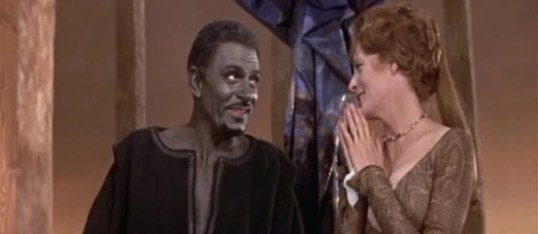
At the same time, this is also the film in which the white Orson Welles played the Moor of Venice.  Of course, in 1951, it was still pretty much a tradition that every Shakespearean would eventually play Othello and that he would wear dark make-up while doing so.  Welles opts for a light bronzer, one that makes him appear to have a deep tan.  While it’s undeniably jarring to see Orson Welles playing a North African, it’s still not quite as jarring as seeing what Laurence Olivier did in his Oscar-nominated version of the play.

Laurence Olivier’s Othello

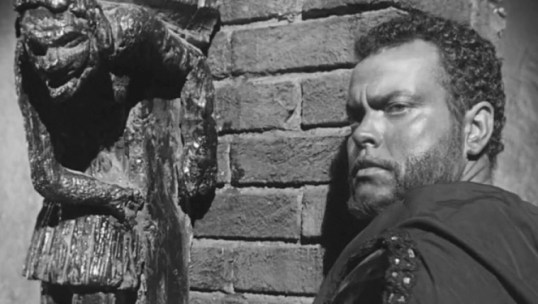
Orson Welles’s Othello

I have to admit that I held off on seeing this film precisely because I didn’t want to watch a film featuring Orson Welles, a director who I greatly admire, in blackface.  Many people are probably never going to see this film for precisely that reason and that’s certainly understandable.  In the end, it’s a decision that everyone will have to make for themselves.  That said, having watched the film, I can now say that Orson Welles gives one of his best performances as Othello, playing him as a brilliant warrior who knows that, because of his background, he will never be fully accepted by the people of Venice.  They’ll expect him to fight their battles for him but, when he marries the white Desdemona (Suzanne Cloutier), he is still expected to prove that he’s not some sort of savage.  In fact, the only thing that prevents him from being brought up on charges is that Venice needs him to fight in another battle.  Being a permanent outsider leaves Othello open to the manipulations of the evil Iago (Michael Mac Liammor), who pretends to be a friend but who instead views everyone around him with contempt and jealousy.  Welles captures Othello’s anger but also his emotional vulnerability.  As a permanent outsider, Othello is so used to being betrayed that it doesn’t take much from Iago to push him over the edge.

Welles directs the film like a film noir, filling the screen with menacing shadows and framing the film’s tragic finale like a horror film.  He makes the film’s low-budget works to its advantage.  As opposed to the grandeur that one normally associates with Shakespeare, there’s a seediness to the locations in Welles’s version of Othello.  As Othello’s jealousy and paranoia grows, Venice itself appears to become more cluttered and cramped.  It’s as if the viewer is seeing the location through Othello’s eyes, a once imposing city that, with each little secret or lie, edges closer to death.  As both a director and an adapter of Shakespeare’s original text, Welles tells the entire story of Othello in less than 90 minutes, a pace that reflects Othello’s quick decent into irrational paranoia.

Admittedly, it’s not a perfect film.  Mac Liammor was reportedly the best Irish stage actor of his time but his inexperience with film acting is obvious and it makes him a less than ideal Iago.  Traditionally, Othello is usually dominated by whichever actor plays the role of Iago, as it’s Iago who pushes the story forward and narrates the action.  However, Welles removes the moments when Iago narrates and speaks to the audience.  Welles gives us an Othello that is clearly about the title character and this production is less interested in the reasons behind Iago’s betrayal than in what happens to Othello as a result.  (Othello becomes yet another Welles film that is ultimately about the importance of friendship and loyalty.)  Not surprisingly, with the film firmly centered on Welles’s performance, the rest of the cast struggles to make as strong of an impression.  Only Suzanne Cloutier, cast as Desdemona, manages to give a performance that escapes from Welles’s shadow.

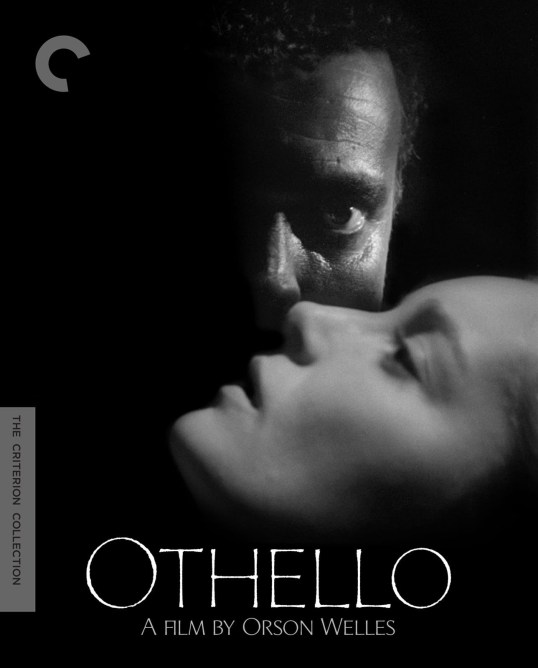
At Cannes, Othello defeated, among others, An American In Paris, Detective Story, Umberto D., and Viva Zapata.  As often happened with Welles’s later films, it didn’t get much of an initial release in America but it has since been rediscovered by film connoisseurs.  Needless to say, the Criterion release is the one to check out.