Lisa Marie Reviews An Oscar Winner: Citizen Kane (dir by Orson Welles)


For some reason, certain people seem to feel the need to try to reduce what Orson Welles accomplished with 1941’s Citizen Kane.

In 1971, the famous film critic Pauline Kael published an essay called Raising Kane, in which she argued that screenwriter Herman J. Mankiewicz deserved the majority of the credit for Citizen Kane.  This was Kael’s shot at rival Andrew Sarris and his embrace of the auteur theory.  (1971 was the same year that Kael described Dirty Harry as being  a “fascist work of art” so I guess even the best film critics can have a bad year.)  David Fincher’s father, after reading Kael’s essay, wrote the screenplay for Mank, which not only made the case that Mankiewicz deserved the credit but which portrayed Orson Welles in such a negative fashion that you really did have to wonder if maybe Orson had owed old Jack Fincher money or something.  Herman J.  Mankiewicz himself always claimed that he deserved the majority of the credit for Citizen Kane but then he would, wouldn’t he?

The truth of the matter is that Mankiewicz did write the screenplay for Citizen Kane and he did base the character of Charles Foster Kane on William Randolph Hearst and the character of Kane’s second wife on Hearst’s mistress, Marion Davies.  There’s some debate over how much of the film’s narrative structure belongs to Mankiewicz and how much of it was a result of Welles rewriting the script.  Mankiewicz played his part in the making of Citizen Kane but he played that part largely because Orson Welles allowed him to.  Like all great directors, Welles surrounded himself with people who could help to bring his vision to life.  (That’s something that would think David Fincher, of all people, would understand.  Aaron Sorkin may have written The Social Network but the reason why the film touched so many is because it was a David Fincher film.)
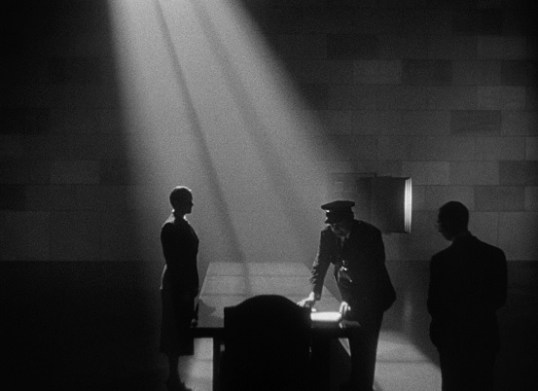
Make no mistake about it.  Citizen Kane is Orson Welles’s vision and Welles is the one who deserves the majority of the credit for the film.  The themes of Citizen Kane are ones to which Welles would frequently return and the cast, all of whom bring their characters to vivid life, is made up of largely of the members of Welles’s Mercury Theatre.  The tracking camera shots, the dark cinematography, and the satiric moments are all pure Welles.  As the Fincher film argues, Mankiewicz may have very well meant to use the film to attack Hearst for his personal hypocrisy and for opposing the political ambitions of Upton Sinclair.  If so, let us be thankful that Orson Welles, as a director, was smart enough to realize that such didacticism is often deadly dull.

And there’s nothing dull about Citizen Kane.  It’s a great film but it’s also an undeniably fun film, full of unforgettable imagery and scenes that play like their coming to us in a dream.  It’s a film that grabs your interest and proves itself to be worthy of every minute that it takes to watch it.  I was lucky enough to first see Citizen Kane at a repertory theater and on the big screen and really, that’s the best way to watch it.  It’s a big film that’s full of bigger-than-life characters who are ultimately revealed to be full of the same human longings and regrets as all of us.  As a young man, the fabulously wealthy Charles Foster Kane thinks that it would be “fun” to run a newspaper.  Later, he thinks that he’s found love by marrying the niece of the President.  He runs for governor of New York and, watching Welles in these scenes, you can see why FDR tried to recruit him to run for the Senate.  Welles has the charisma of a born politician.  When Welles first meets Susan Alexander (Dorothy Comingore) it’s easy to laugh.  The great man has just been splashed by a taxi.  Susan laughs but then winces in pain due to a tooth ache.  Later, Kane insists on trying to turn her into an opera star.  He runs a negative review written by his friend (Joseph Cotten) and then he promptly fires him.  As in all of Welles’s films, it’s all about personal loyalty.  Kane may betray his wife and the voters but he’s ultimately just as betrayed by those around him.  In the end, you get the feeling that Kane was desperately trying to not be alone and yet, that’s how he ended up.
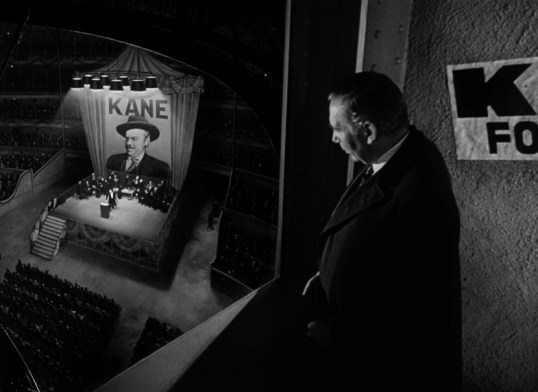
There are so many stand-out moments in Citizen Kane that it’s hard to list them all.  The opening — MIGHTY XANADU! — comes to mind.  The satirically overdramatic newsreel is another.  (Citizen Kane can be a very funny film.)  Joseph Cotten’s performance continues to charm.  Orson Welles’s performance continues to amaze.  Who can forget Agnes Moorehead as Kane’s mother or Everett Sloane as Mr. Bernstein, haunted by that one woman he once saw on a street corner?  Myself, I’ve always liked the performances of Ray Collins (as the sleazy but strangely reasonable Boss Gettys), Paul Stewart (as the subtly menacing butler), and Ruth Warrick (as Kane’s first wife).  Mankiewicz may have put the characters on paper but Welles is the one who selected the amazing cast that brought them to life.

Citizen Kane was nominated for nine Oscars and it won one, for the screenplay written by Welles and Mankiewicz.  Best Picture went to How Green Was My Valley.  When was the last time anyone debated who should be given credit for that movie?
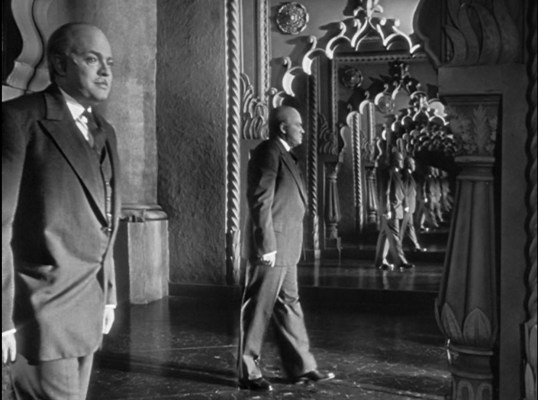
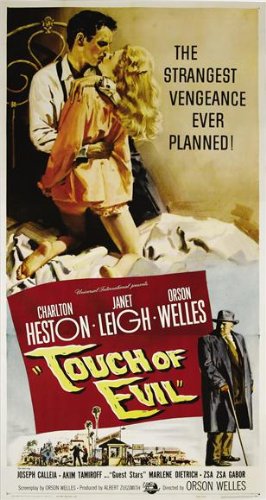
Scenes That I Love: The Opening Tracking Shot from Orson Welles’s Touch of Evil


Since today is Orson Welles’s birthday, I wanted to share at least one scene that I love from his films.  The famous tracking shot from 1958’s Touch of Evil, which begins in America and ends in Mexico, truly shows Orson Welles at his visionary best.

It’s also Welles at his most clever.  Knowing that he wouldn’t be given control over the editing of the footage he shot, Welles included as many long shots as possible to make it more difficult for an editor to chop up or alter his vision.

4 Shots From 4 Films: Special Orson Welles Edition


4 Or More Shots From 4 Or More Films is just what it says it is, 4 shots from 4 of our favorite films. As opposed to the reviews and recaps that we usually post, 4 Shots From 4 Films lets the visuals do the talking!

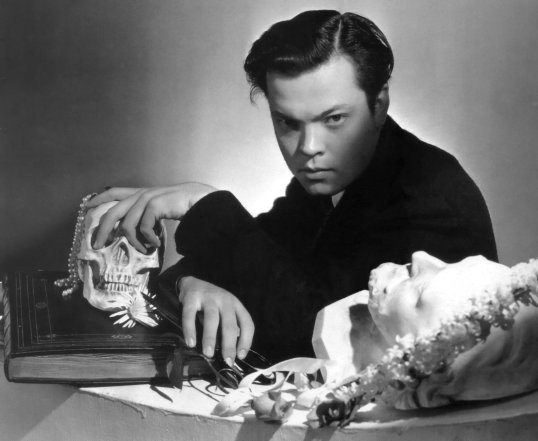
Today we celebrate what would have been the 110th birthday of the great Orson Welles!  It’s time for….

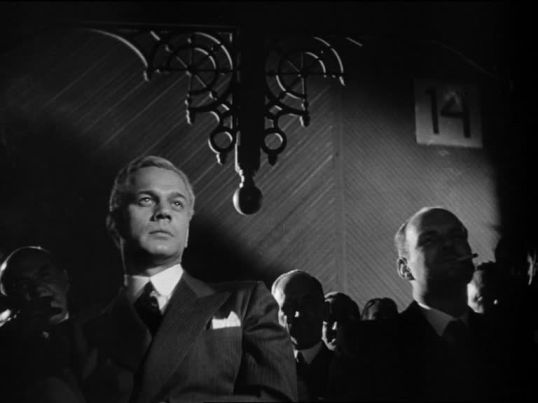
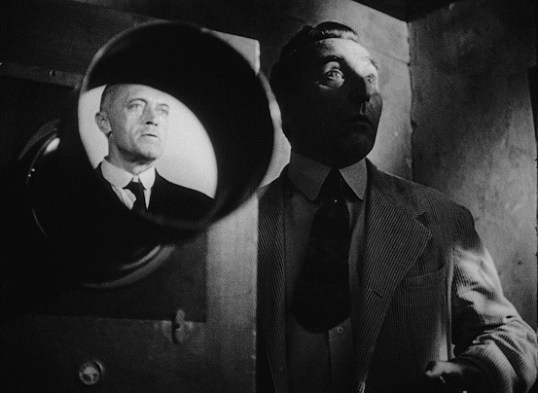
4 Shots from 4 Orson Welles Films

Citizen Kane (1941, directed by Orson Welles, DP: Gregg Toland)

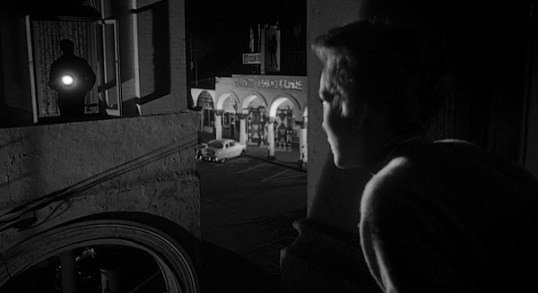
The Stranger (1946, dir by Orson Welles, DP: Russell Metty)

Touch of Evil (1958, dir by Orson Welles. DP: Russell Metty)

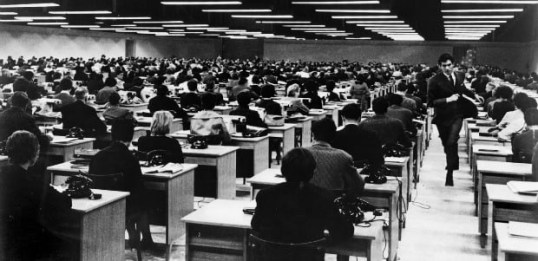
The Trial (1962, dir by Orson Welles, DP: Edmond Richard)

4 Shots From 4 Films: Special 1946 Edition


4 Shots From 4 Films is just what it says it is, 4 shots from 4 of our favorite films. As opposed to the reviews and recaps that we usually post, 4 Shots From 4 Films lets the visuals do the talking!

Today, we pay tribute to the year 1946.  It’s time for….

4 Shots From 4 1946 Films

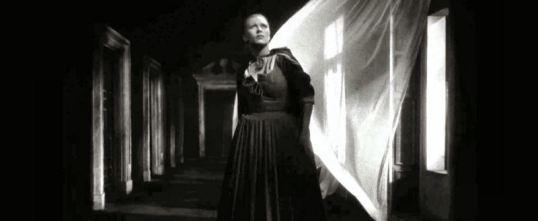
Beauty and the Beast (1946, dir by Jean Cocteau, DP: Henri Arinal)

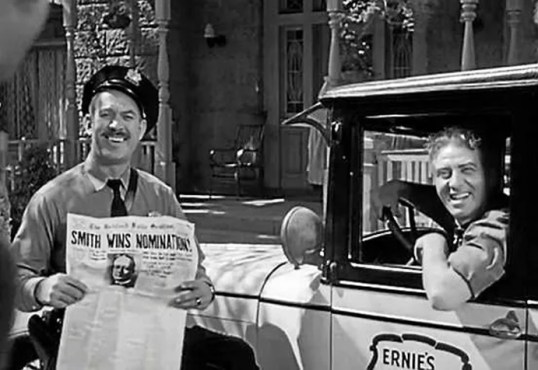
It’s A Wonderful Life (1946, dir by Frank Capra, DP: Joseph Walker and Joseph Biroc)

The Big Sleep (1946, dir by Howard Hawks, DP: Sidney Hickox)

The Stranger (1946, dir by Orson Welles, DP: Russell Metty)

A Joseph Cotten Scene That I Love From Citizen Kane


Joseph Cotten passed away 31 years ago today.  Cotten appeared in a lot of good films and worked with many important directors but he will always be remembered for bringing to life Jedidiah Leland, the drama critic in Citizen Kane.  I liked the character so much that I paid tribute to him with my penname, though I substituted an A for the first I.

Cotten played Jedidiah as both a young man and an old man in Citizen Kane.  The first time I saw the movie, I reacted to the young Leland.  With each passing year, I think I understand better what the older Leland was talking about when he said that memory is the greatest curse ever inflicted on the human race.

(Even retired and living in what appears to be a nursing home, Jedidiah Leland still spoke like a drama critic.)


4 Shots From 4 Films: Special Also-Ran Edition


4 Or More Shots From 4 Or More Films is just what it says it is, 4 shots from 4 of our favorite films. As opposed to the reviews and recaps that we usually post, 4 Shots From 4 Films lets the visuals do the talking!

Since today is Oscar nomination day, today’s edition of 4 Shots From 4 Films is dedicated to films that were nominated for Best Picture but which did not win.

4 Shots From 4 Best Picture Nominees

Citizen Kane (1941, dir by Orson Welles, DP: Gregg Toland)

High Noon (1952, dir by Fred Zinnemann, DP: Floyd Crosby)

Goodfellas (1990, dir by Martin Scorsese, DP: Michael Ballhaus)

Lost In Translation (2003, dir by Sofia Coppola, DP: Lance Acord)

Film Review: Voyage of the Damned (dir by Stuart Rosenberg)


In 1939, an ocean liner named the MS St. Louis set sail from Hamburg.  Along with the crew, the ship carried 937 passengers, all of whom were Jewish and leaving Germany to escape Nazi persecution.  The ship was meant to go to Havana, where the passengers had been told that they would be given asylum.  Many were hoping to reunite with family members who had already taken the voyage.

What neither the passengers nor Captain Gustav Schroeder knew was that the entire voyage was merely a propaganda operation.  No sooner had the St. Louis left Hamburg than German agents and Nazi sympathizers started to rile up anti-Semitic feelings in Cuba.  The plan was to prevent the passengers from disembarking in Cuba and to force the St. Louis to then return to Germany.  The Nazis would be able to claim that they had given the Jews a chance to leave but that the rest of the world would not take them in.  Not only would the Jews be cast as pariahs but the Germans would be able to use the world’s actions as a way to defend their own crimes.

Captain Schroeder, however, refused to play along.  After he was refused permission to dock in Cuba, he then attempted to take the ship to both America and Canada.  When both of those countries refused to allow him to dock, Schroeder turned the St. Louis toward England, where he planned to stage a shipwreck so that the passengers could be rescued at sea.  Before that happened, Belgium, France, the Netherlands, and the United Kingdom jointly announced that they would accept the refugees.

Tragically, just a few days after the passengers disembarked, World War II officially began and Belgium, France, and the Netherlands all fell to the Nazi war machine.  It is estimated that, of the 937 passengers on the St. Louis, more than 600 of them subsequently died in the Nazi concentration camps.

The journey of the St. Louis was recreated in the 1976 film, Voyage of the Damned, with Max von Sydow as Captain Schroeder and a collection of familiar faces playing not only the ship’s passengers and crew but also the men and women in Cuba who all played a role in the fate of the ship.  In fact, one could argue that there’s a few too many familiar faces in Voyage of the Damned.  One cannot fault the performances of Max von Sydow, Malcolm McDowell, and Helmut Griem as members of the crew.  And, amongst the passengers, Lee Grant, Jonathan Pryce, Paul Koslo, Sam Wanamaker, and Julie Harris all make a good impression.  Even the glamorous Faye Dunaway doesn’t seem to be too out-of-place on the ship.  But then, in Havana, actors like Orson Welles and James Mason are awkwardly cast as Cubans and the fact that they are very obviously not Cuban serves to take the viewer out of the story.  It reminds the viewer that, as heart-breaking as the story of the St. Louis may be, they’re still just watching a movie.

That said, Voyage of the Damned still tells an important true story, one that deserves to be better-known.  In its best moments, the film captures the helplessness of having nowhere to go.  With Cuba corrupt and the rest of the world more interested in maintaining the illusion of peace than seriously confronting what was happening in Germany, the Jewish passengers of the St. Louis truly find themselves as a people without a home.  They also discover that they cannot depend on leaders the other nations of the world to defend them.

Defending the passengers falls to a few people who are willing to defy the leaders of their own country.  At the start of the film, Nazi Intelligence Chief Wilhelm Canaris (Denholm Elliott) explains that Captain Schroeder was selected specifically because he wasn’t a member of the Nazi Party and could not be accused of having ulterior motives for ultimately returning the passengers to Germany.  Canaris and his fellow Nazis assume that anti-Semitism is so natural that even a non-Nazi will not care what happens to the Jewish passengers.  Instead, Schroeder and his crew take it upon themselves to save the lives of the passengers.  It is not Franklin Roosevelt who tries to save the passengers of St. Louis.  Instead, it’s just a handful of people who, despite unrelenting pressure to do otherwise, step up to do the right thing.  Max von Sydow, who was so often cast in villainous roles, gives a strong performance as the captain who is willing to sacrifice his ship to save his passengers.

Flaws and all, Voyage of the Damned is a powerful film about a moment in history that must never be forgotten.

From 1939, it’s Lionel Barrymore and Orson Welles in A Christmas Carol!


This radio production of A Christmas Carol was originally broadcast on Christmas Eve, 1939.  It’s not really Christmas unless you experience at least one version of Charles Dickens’s classic holiday tale and this version features not only Orson Welles providing the narration but Lionel Barrymore playing the role of Scrooge!

Other members of the cast included such well-known Welles’s associates as  Everett Sloane (Marley’s ghost), Frank Readick (Bob Cratchit), Erskine Sanford (Fezziwig) and George Coulouris (Ghost of Christmas Present).  Two years after this broadcast, Welles, Sloane, Sanford, and Coulouris would all appear in Citizen Kane.

For your listening pleasure, we offer up this journey to the past….

Here is Dracula, presented by Orson Welles and The Mercury Theater!


Did you know that in 1938, the same year that they horrified America with their production of The War Of The Worlds, Orson Welles and the Mercury Theater did a radio version of Dracula?

Check out this amazing cast list:

Orson Welles – Dracula/Dr. Arthur Seward
George Coulouris- Jonathan Harker
Ray Collins – Russian Captain
Karl Swenson – The Mate
Elizabeth Fuller – Lucy Westenra
Martin Gabel – Professor Van Helsing
Agnes Moorehead – Mina Harker

Coulouris, Collins, and Moorehead would, of course, all go one to appear with Orson Welles in Citizen Kane.

And now, we are proud to present, for your listening pleasure …. DRACULA!

Bonus Horror on TV: The Night America Trembled (dir by Tom Donovan)


Filmed in 1957 for a television program called Westinghouse Studio One, The Night America Trembled is a dramatization of the night that Orson Welles terrified America with his radio adaptation of War of The Worlds.  

For legal reasons, Orson Welles is not portrayed nor is his name mentioned.  Instead, the focus is mostly on the people listening to the broadcast and getting the wrong idea.  That may sound like a comedy but The Night America Trembled takes itself fairly seriously.  Even pompous old Edward R. Murrow shows up to narrate the film, in between taking drags off a cigarette.

Clocking in at a brisk 60 minutes, The Night America Trembled is an interesting recreation of that October 30th.  Among the people panicking: a group of people in a bar who, before hearing the broadcast, were debating whether or not Hitler was as crazy as people said he was, a babysitter who goes absolutely crazy with fear, and a group of poker-playing college students.  If, like me, you’re a frequent viewer of TCM, you may recognize some of the faces in the large cast: Ed Asner, James Coburn, John Astin, Warren Oates, and Warren Beatty all make early appearances.

It’s an interesting little historical document and you can watch it below!