The Films Of 2025: Warfare (dir by Alex Garland and Ray Mendoza)


It’s been said that it’s next to impossible to make a true anti-war film because war itself is so cinematic that even the most harrowing portrayals of combat ultimately make it look exciting and, for those who survive, cool.

Now, I don’t quite believe that myself.  Stanley Kubrick made three of the most effective anti-war movies ever made, Paths of Glory, Dr. Strangelove, and Full Metal Jacket, though it should be noted that the first two of those films were more critical of the incompetence of those running the war than war itself.  Both Lewis Milestone and Edward Berger made strong anti-war statements by adapting All Quiet On The Western Front.  Both films featured battle scenes that were devoid of the personal heroics that tend to crop up in other war films.  (Platoon may have been firmly against the Vietnam War but it’s still hard not to cheer when a crazed Charlie Sheen takes on the entire VC on his own.)  Robert Altman’s M*A*S*H made an effective anti-war statement by focusing on what comes after the battle.  The scene where a geyser of blood suddenly erupts from a soldier’s neck shocks, terrifies, and ultimately outrages us.  That said, it is true that an effective battle scene, especially one that leaves the viewer feeling as if they are actually in the middle of combat themselves, does tend to get the heart pumping and the adrenaline surging, regardless of the politics of the person watching.  We tend to look up to those who have been tested by combat, those who have come under fire and who have survived.  One can be anti-war while still understanding why war itself has been a popular cinematic topic since the silent era.

I’m thinking about this because of the online reaction to Warfare, a film that came out in April of this year.  Based on actual skirmish that occurred in Iraq in 2007, the film plays out largely in real time and follows a platoon of Navy SEALs as they set up operations in a two-story house and then later try to escape when they come under fire from insurgents.  The film was written and co-directed by Ray Mendoza, who was one of the SEALs involved in the actual incident.  In the film, Mendoza is played by D’Pharaoh Woon-A-Tai while other SEALs are played by actors like Will Poulter, Michael Gandolfini, and Charles Melton.  The film itself doesn’t tell us much about the individual SEALs.  We don’t get any heart-breaking stories about anyone’s homelife.  No one takes the time to pull out a picture of their girlfriend back home or any of the other usual stuff that happens in war movies.  There’s really not time for that.  For over an hour, Warfare puts the viewers directly in the middle of the battle and it does a good job of it.  The bullets, the explosions, all of them seem far too real as we watch.

The online reaction to Warfare has definitely been a bit mixed.  There are quite a few people who are convinced that Warfare is a pro-war, “imperialist” film.  “Why did Alex Garland make this!?” cries one of the top reviews over on Letterboxd.  Myself, I disagree.  It’s not a political film.  It’s neither pro- nor anti-war.  Instead, it’s a film about a group of men who are fighting to survive.  And to me, it is an effective anti-war film because it shows exactly how much damage a bullet and a grenade can do to a human being.  When one of the SEALs is seriously wounded, there’s no glamour to it.  Instead, you feel his pain and you realize that it’s not even that clear what the mission was in the first place.  Warfare is a tough and gritty film.  It’s a combat film that makes me happy that I’ll probably never come under fire while also respecting the men who refused to leave anyone behind.

If peace could be achieved by didactic speeches and heavy-handed moralizing, it would have happened long before now.  Warfare presents what happened and leave it to the viewer to draw their own conclusion.

Scenes That I Love: The Third Man


ThirdManUSPoster

Some movies are merely good.  Some movies are undeniably great.  And then, a handful movies are so amazingly brilliant that, every time you watch, you’re reminded why you fell in love with cinema in the first place.

The Third Man is one of those brilliant films.

Directed by Carol Reed and scripted by novelist Graham Greene, The Third Man takes place in the years immediately following the end of World War II.  Pulp novelist Holly Martins (Joseph Cotten) comes to Vienna to search for his old friend Harry Lime (Orson Welles).  Upon arriving, Holly is shocked to learn that Harry makes his living selling diluted penicillin on the black market.

In the classic scene below, Harry and Holly have a clandestine meeting in a Ferris wheel and Harry justifies both his actions and the lives that have been lost as a result of them.

While Orson Welles’ performance is (rightfully) celebrated, I’ve always felt that Joseph Cotten’s work was even more important to the film’s success.  While Welles made Harry Lime into a charismatic and compelling villain, it was  Cotten who provided the film with a heart.

4 Shots From 4 Films: Special Carol Reed Edition


4 Shots From 4 Films is just what it says it is, 4 shots from 4 of our favorite films. As opposed to the reviews and recaps that we usually post, 4 Shots From 4 Films lets the visuals do the talking.

Today, we celebrate the birth of the great British director, Carol Reed!  It’s time for….

4 Shots From 4 Carol Reed Films

Odd Man Out (1947, dir by Carol Reed, DP: Robert Krasker)

The Fallen Idol (1948, dir by Carol Reed, DP: Georges Perinal)

The Third Man (1949, dir by Carol Reed, DP: Robert Krasker)

Flap (1970, dir by Carol Reed, DP: Fred J. Koenekamp)

The Films of 2025: Steve (dir by Tim Mielants)


Cillian Murphy plays the title character in this rather downbeat British film.

Though Steve has a properly depressing British flat in a properly depressing British town, he still spends the majority of his time at the reform school that he struggles to manage.  The students are rowdy and quick to fight but Steve insists that all of them can be reached if the teachers just try hard enough.  Steve has taken a particular interest in a student called Shy (Jay Lycurgo).  Shy alternates between moments of genuine insight and empathy and moments of pure rage.  He’s practically begging for someone to take the risk to get close to him but, at the same time, he instinctively pushes people away.

Steve takes place over one 24-hour period.  We first meet Shy while he’s getting high in a nearby field.  Later, he takes a call from his mother and she promptly informs him that he’s no longer allowed to be a part of her life.  As for Steve, he has to deal with not only a documentary crew but also the news that the building housing his school has been sold and that the school that he’s dedicated his life to will now be shutting down.  Steve tries to hold back his temper, self-medicating his bad back with painkillers and alcohol.

Directed in a frenetic manner by Tim Mielants, Steve is a film that seems like it should be better than it actually is.  It’s a film dealing with an important subject.  Steve cares about his dysfunctional students but that’s not going to make much of a difference if his school gets shut down.  Shy is intelligent but also only a few steps away from self-destructing.  Cillian Murphy, who also produced the film, gives a committed performance.  And yet the film is never quite as affecting as it should be.

The film itself is extremely British, which is a polite way of saying that the nonstop cursing got boring after about five minutes and the harsh lighting seemed to be designed to make sure that we understood that everyone was very, very tired.  Visually, the hand-held camera work couldn’t disguise just how drab everything looked.  Beyond that, though, I have to admit that, as the film reached the 60 minute mark, I realized that I was just tired of Steve.  I was tired of his scraggly beard.  I was tired of his constant back pain.  I was tired of his stupid tennis ball.  I was tired of the pained expression on his face.  I was tired of his nonstop resentment and his complaining.  I was tired of his inability to fight back.  I was just sick to death of spending time with him.  Murphy commits himself to the roll but Steve is not a compelling character.  If anything, he’s a bit whiny.  Seriously, Steve, don’t just lie down on the floor and talk about how much you resent things.  Get out there and fight for your school, dude.

There are parts of the film that work but there are other parts that just fall totally flat.  The use of the documentary crew feels unnecessary and there’s not really any payoff to their presence.  A scene where a stuffy member of Parliament visits the school and talks about the importance of not allowing Britain to go communist is so poorly-executed that it almost feels like a parody of a Ken Loach film.  Even when Steve finally does let go of his emotions, it feels like a false note.

In the end, I’ll give Steve credit for trying to deal with a real issue.  The fact of the matter is that society — both in the UK and in the US — is far too quick to give up on those who have been deemed as delinquents.  That said, the film falls flat.  It’s a noble failure but failure nonetheless.

Join #MondayMania For The Wrong Mommy!


Hi, everyone!  Tonight, on twitter, I will be hosting one of my favorite films for #MondayMania!  Join us for 2019’s The Wrong Mommy, featuring Eric Roberts!

You can find the movie on Prime and then you can join us on twitter at 9 pm central time!  (That’s 10 pm for you folks on the East Coast.)  See you then!

Monday Live Tweet Alert: Join Us For Time Trackers!


As some of our regular readers undoubtedly know, I am involved in hosting a few weekly live tweets on twitter and occasionally Mastodon.  I host #FridayNightFlix every Friday, I co-host #ScarySocial on Saturday, and I am one of the five hosts of Mastodon’s #MondayActionMovie!  Every week, we get together.  We watch a movie.  We snark our way through it.

Tonight, for #MondayActionMovie, the film will be 1989’s Time Trackers!

It should make for a night of fun viewing and I invite all of you to join in.  If you want to join the live tweets, just hop onto Mastodon, find the movie on YouTube and hit play at 8 pm et, and use the #MondayActionMovie hashtag!  The  watch party community is a friendly group and welcoming of newcomers so don’t be shy.   

See you soon!

Scenes that I Love: The Iguanas On The Coffee Tables From Bad Lieutenant: Port of Call New Orleans


Ever since Werner Herzog’s Bad Lieutenant: Port of Call New Orleans was first released in 2009, people have debated the symbolism of the iguanas on the coffee table.  Are they just a sign that Nicolas Cage’s bad lieutenant is totally high or do they have a deeper meaning?  Myself, I’m not even going to try to guess.  All I know is that the lieutenant eventually came to appreciate their presence.

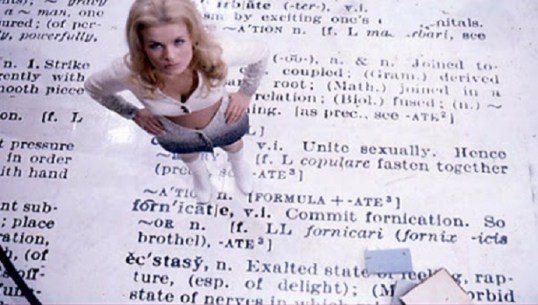
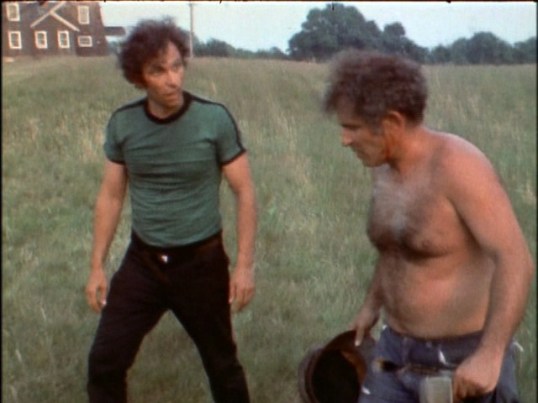
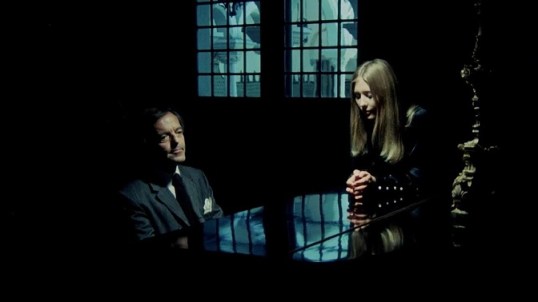
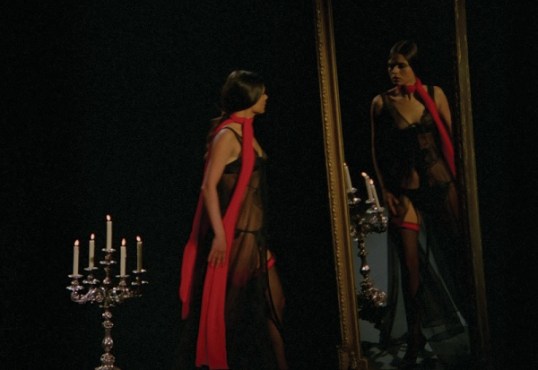
4 Shots From 4 Films: Special Barbara Steele Edition


4 Shots From 4 Films is just what it says it is, 4 shots from 4 of our favorite films. As opposed to the reviews and recaps that we usually post, 4 Shots From 4 Films is all about letting the visuals do the talking.

Happy birthday to the wonderful and iconic actress, Barbara Steele!

4 Shots From 4 Barbara Steele Films

Black Sunday (1960, dir by Mario Bava)

Black Sunday (1960, dir by Mario Bava)

8  1/2 (1963, dir by Federico Fellini)

8 1/2 (1963, dir by Federico Fellini)

I maniaci (1964, dir by Lucio Fulci)

I maniaci (1964, dir by Lucio Fulci)

Caged Heat (1974, dir by Jonathan Demme)

Caged Heat (1974, dir by Jonathan Demme)

Brad reviews INTO THE WILD (2007), directed by Sean Penn!


This morning my wife told me she wanted to watch a movie based on a true story. After scrolling for a bit, I came across the film INTO THE WILD, which interested me for a couple of reasons. First, it was directed by Sean Penn, whose directorial debut, THE INDIAN RUNNER (1991), gave my favorite actor of all time, Charles Bronson, a late-career character performance that critics actually took seriously. I’ve followed his directing career ever since. Second, the movie stars Emile Hirsch, who my wife and I had the rare opportunity to watch up close this summer while he was filming a movie here in Central Arkansas… an awesomely surreal experience that’s had me revisiting the work of the actors I saw that day. As such, today seemed like the perfect time to hit play on INTO THE WILD! 

INTO THE WILD is based on the true story of Christopher McCandless (Emile Hirsch), a bright, idealistic young man who graduates from college in the early 1990s and immediately walks away from the type of life everyone expects him to live. Chris donates his savings to charity, abandons his car, burns the cash in his wallet, reinvents himself as Alexander Supertramp, and sets off across America on a great Alaskan adventure. Along the way he comes across different people who impact his life in a variety of ways, from some free-spirited hippies, to a grizzled old widower, and even a beautiful young lady who takes an immediate liking to him. Each of these encounters offer Chris a chance to form meaningful relationships, but he always decides to keep moving on. When he does eventually make it to the wilds of Alaska, it’s everything he hoped for… at first. But as the months wear on, his loneliness and inexperience take their toll, and Chris is forced to face the ultimate consequence of his decisions. 

I’ll start out by saying that INTO THE WILD is a truly beautiful film. Sean Penn and his cinematographer Eric Gautier capture so many amazing images, from the Grand Canyon and Lake Tahoe, to the Denali National Park in Alaska. We see an America that is awe-inspiring, and we can at least somewhat understand why Chris might want to escape to such a world of promise. I also liked the music, especially when Eddie Vedder’s voice emerges to punctuate a scene that seems perfectly in tune with Chris’ restless spirit.

I must admit that Chris McCandless, the person, is quite the frustrating subject. He’s intelligent and sincere, but he’s also painfully naive and self-righteous. It’s noble that he wants to find ultimate truth, but he goes about it by running away from the messy parts of his life, especially the parents, played here by William Hurt and Marcia Gay Harden, that he sees as horrible people. I guess my frustration with Chris’ decisions may be the point, and Director Sean Penn doesn’t turn him into either a saint or a fool. While watching the film, I was somewhat torn between admiring Chris for the way he rejects materialism and lives his life on his own terms, while also being disappointed as he continually walks away from any person who gets too close or tries to help him. 

Emile Hirsch is incredible in the lead role as Chris McCandless. He captures his restless spirit, as well as his determination to make it completely on his own, that is, until he realizes that he overplayed his hand. The other performances that stood out to me came from Vince Vaughn as a farmer that Chris stops and works for, Catherine Keener as a hippie with her own set of issues, and especially Hal Holbrook as a lonely, but perceptive old man who sees in Chris the grandson he never had.

At the end of the day, I feel that INTO THE WILD is a powerful film, but not because of what ultimately happens to Chris. Rather, what lingers with me is his too-late realization that personal freedom without meaningful relationships is not satisfying. As beautiful as this movie is to look at, its strongest moments are Chris’ interactions with the caring people he meets along the way. I just wish one of them had been able to convince him to call his mom and dad. 

The Films of 2025: The Roses (dir by Jay Roach)


The Roses is a marriage story.

When architect Theo (Benedict Cumberbatch) and aspiring chef Ivy (Olivia Colman) meet in London, it is love at first sight.  Ivy wants to move to America so that she can pursue her dream of opening a restaurant.  Theo impulsively decides that he wants to move with her.  (Take that, Britain!)  They marry and the film follows them as they settle in California and pursue success in their respective fields while raising precocious twins.  At first, Theo has more success than Ivy but that changes when a freak storm causes one of Theo’s buildings to collapse on the same night that it also causes hundreds of stranded tourists to suddenly show up at Ivy’s restaurant.  Ivy becomes a success while Theo, who is now basically unemployable, becomes a stay-at-home dad.  Theo starts to resent Ivy’s success.  Ivy starts to resent the amount of time that Theo spends with their daughters.  Looking to fix their fraying marriage, Theo design an ultra-modern and chic home for them.  Needless to say, by the end of the movie, Theo is being chased through the house by a gun-wielding Ivy.

Oh, Benedict Cumberbatch and Olivia Colman.  They’re both good actors and I’ve appreciated many of their past performances but, watching them in The Roses, I do have to admit that I realized that I’ve started to get a bit bored with both of them.   Their performances here all about technique.  Cumberbatch does his barely repressed anger thing until eventually he explodes into a frantic fury.  Colman does her cutting barb followed by a goofy smile thing.  Neither performance really has much emotional depth and, even when they’re supposed to be happy, you don’t really buy them as a couple for a second.  Even when they blow up at each other and fully embrace their growing hatred, it doesn’t have much of an emotional impact because they never really seemed to like each other to begin with.  Every line that Colman delivers sounds like a sarcastic attempt at a bon mot, even she’s supposed to be sincere.  There’s nothing shocking about either one of their cruel comments to each other.  It just feels like two actors doing their thing.

At its heart, The Roses is meant to be a satire.  Theo and Ivy grow to hate each other but neither one is willing to give up their rather tacky house.  Unfortunately, Jay Roach is exactly the wrong director for this material.  Roach has gone from directing broad but genuinely funny comedies to becoming something of a second-rate Adam McKay.  Perhaps even more so than McKay, he’s a prime example of what happens when a director decides that he can’t just be happy making movies that people actually enjoy.  (Trumbo and Bombshell may have gotten mildly good reviews from critics who are sympathetic to Roach’s liberal politics but, in the end, Austin Powers is the film for which audiences will remember Jay Roach.)   There’s not a subtle moment to be found in The Roses and, as a result, there’s not really much genuine emotion to be found either.  Towards the end of the film, we get a montage of Theo and Ivy escalating their attacks on one another.  It’s one thing for Ivy to create an AI video of Theo smoking crack.  It’s another thing for Theo to spike the food at Ivy’s restaurant with hallucinogenic shrooms, leading to an slow motion orgy involving a bunch of middle-aged tourists.  It all becomes so cartoonish that the film loses sight of whatever it was trying to say about marriage.

Touted as an Oscar nominee before it was released and subsequently forgotten about, The Roses was one of the many disappointing films of 2025.