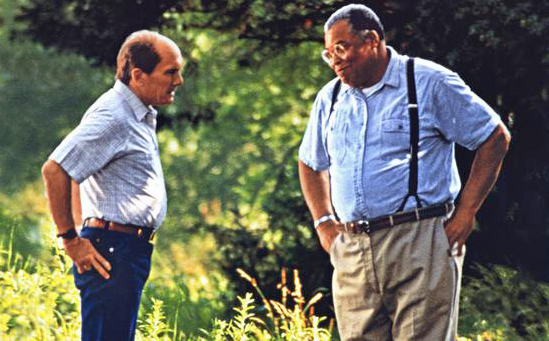
4 Shots From 4 Films: RIP, Paul Morrissey


4 Shots From 4 Films is just what it says it is, 4 shots from 4 of our favorite films. As opposed to the reviews and recaps that we usually post, 4 Shots From 4 Films lets the visuals do the talking!

Today, the Shattered Lens honors Paul Morrissey, a pioneering director who passed away yesterday at the age of 84.

Though he may not have been as well known as some of his contemporaries, Paul Morrissey was one of the godfathers of independent film.  He first came to notice as a collaborator of Andy Warhol’s.  Morrisey’s first films were shot at the Factory and starred the members of Warhol’s entourage.  At a time when the indie film scene barely even existed, Morrissey was making boldly transgressive films and distributing them largely on his own.  In fact, it could probably be argued that, if not for Paul Morrissey, the American independent film scene would never have grown into the impressive artistic and financial force that it is today.

There’s always been some debate over how much influence Warhol had over Morrissey’s films.  Morrissey always said that Warhol had next to nothing to do with the films, beyond occasionally taking a producer’s or a co-director’s credit.  Others have disagreed.  What can be said for sure is that, even after Warhol retreated from directly involving himself in the cinematic arts, Morrissey continued to make fiercely independent films.

Paul Morrissey made films about outsiders.  While other directors were telling stories about the middle and upper classes, Morrissey was making movies about junkies, prostitutes, and people simply trying to make it from one day to another.  His films also frequently satirized classic Hollywood genres.  In fact, his two best-known films, Flesh for Frankenstein and Blood for Dracula, not only satirized the old Universal horror films but also the Marxist-themed films being made in Europe.  A devout Catholic and a political conservative, Morrissey took a particular delight in tweaking the left-wing assumptions of the counterculture.  Who can forget Joe Dallesandro’s gloriously shallow revolutionary in Blood for Dracula?

Here are….

4 Shots From 4 Paul Morrissey Films

Chelsea Girls (1966, dir by Paul Morrissey and Andy Warhol)

Trash (1970, dir by Paul Morrissey)

Blood For Dracula (1974, dir by Paul Morrissey)

Mixed Blood (1984, dir by Paul Morrissey)

October Hacks: Wrong Turn (dir by Rob Schmidt)


Poor West Virginia!

Seriously, I’ve been to West Virginia.  It’s a beautiful state and the majority of the people that I met while I was there were just lovely.  And before anyone trots out all the usual stereotypes about rural communities, let me say that one of the nicest used book store that I’ve ever been to was in West Virginia.  It’s a nice state, one that feels like a throwback to a less cynical universe.  Even all of the bridges and the streets named after the loathsome Robert Byrd added to the lovely quaintness of the place.

And yet, when it comes to the entertainment industry, West Virginia is rarely portrayed in a positive light.  The coastal elite has never had much use for West Virginia or the surrounding states and that’s something that comes out in the films and television shows that are made in New York and California.  Whenever anyone says that they’re from West Virginia in a movie or a television show, you can be sure that they’re either going to be a meth cook or a villainous redneck.  West Virginia is one of those regions that’s never given much respect in Hollywood and that’s a shame.

Take Wrong Turn, for instance.  First released in 2003, the original Wrong Turn taught an entire generation that West Virginia was full of cannibals and blood farmers.  If you’re going to go for a drive in the wilderness of West Virginia, this film tells us, keep an eye out for barb wire booby traps.  If you’re going to hiking in the mountains, notify your next of kin because you probably won’t be coming back.  Wrong Turn follows a group of friends as they are tracked by a family of cannibal hillbillies and the main message seems to be, “For the love of God, stay out of Appalachia!”

(When I first started writing for this blog, I caused a mini-controversy when I said that no one would pay good money to see a film called The Vermont Chainsaw Massacre.  My point was that Texas has a reputation, albeit one that has more to do with fevered imaginings of out-of-staters than anything rooted in reality, that made it the only place where that film could really be effectively set.  The same is true of Wrong Turn.  It’s a story that people wouldn’t buy if it was happening anywhere other than in Appalachia.  Nobody would care about cannibals living in Minnesota, for instance.)

West Virginia slander aside, the original Wrong Turn holds up well.  It’s a slasher film from the era right before slasher films started taking themselves so seriously.  It’s a throwback to the rural horror films of the 70s, with an attractive cast getting picked off in various gruesome ways.  The cannibals are frightening and the victims are all likable without being so likable that you can’t handle seeing them killed off.  Jeremy Sisto and Lindy Booth both bring some comic relief to the film before their characters are dispatched.  Desmond Harrington is a sold-enough lead.  When I first saw Wrong Turn, my main reaction was that Eliza Dushku kicked ass and that was still my reactions when I rewatched it.  The film is bloody, shameless, and fully willing to give the audience what it wants without scolding them for it.  In short, it’s a perfectly fun slasher film and, watching it, it’s hard not to miss the era before horror films started taking themselves so damn seriously.

Wrong Turn‘s a fun movie.  But West Virginia is a lovely state and that should never be forgotten!


The TSL Horror Grindhouse: Don’t Look Away (dir by Michael Bafaro)


The main thing you need to know about 2023’s Don’t Look Away is that the killer looks like this.

Yes, the killer is a mannequin and a rather silly-looking one at that.  Silly or not, the mannequin is undeniably creepy, as mannequins tend to be.  The mannequin is apparently stalking a group of friends.  Frankie (Kelly Bastard) is convinced that the mannequin is alive and possessed by some sort of supernatural power.  Her friends disagree …. until they start dying, one-by-one.

Now, I should make clear that, for the majority of the film’s running time, we don’t actually see the mannequin kill anyone.  At the most, we see the mannequin suddenly show up behind someone.  He evens shows up in a swimming pool at one point.  Occasionally, his facial expression seems to change but, for the most, he always has the same goofy smile painted on his face.  The mannequin stalks one person-at-a-time and if you see him behind you and then look away, he’ll be closer the second time you look at him.

We do see the aftermath of meeting the mannequin.  As silly as it may seem to get killed by a mannequin (and I mean, seriously, how do you handle that shame while waiting in Purgatory), Kelly’s friends are actually dying, though it appears that they could all just be having unfortunate accidents or committing suicide.  Is it possible that the mannequin is just a mess delusion and that Kelly’s paranoia has poisoned the group?  The thing is, though …. if you were going to imagine a scary mannequin trying to kill you, wouldn’t you actually visualize something a lot more scary than a naked, emasculated wooden man with a silly smile on his face?

Don’t Look Away doesn’t quite work.  None of the friends really make a huge impression or even register as anything more than horror movie stereotypes.  There’s a scene set in a disco that I appreciated but that’s just because I appreciated anything that’s set in a disco.  Don’t Look Away suffers from a common affliction amongst horror films that were made after It Follows, in that the action moves way too slowly.  When the film should be fast-paced and silly, it’s somber and strangely self-serious.

The film’s big star, of course, is that mannequin.  Here’s another shot of him.

I mean, yeah, he’s creepy.  The first few times that you see him, he’s legitimately scary.  But then, after a while, he just become silly.  There’s only so much you can do with a goofy-looking mannequin.  I mean, don’t get me wrong.  I’ve seen some good killer mannequin films.  Mannequins can definitely be scary and I wouldn’t want to get locked in a warehouse with them or anything like that.  Mario Bava’s Lisa and the Devil makes wonderful use of the creepiness of mannequins.  But the mannequin at the heart of Don’t Look Away becomes less creepy and more goofy every time that you see him.  I’ll admit that I looked away a few times in an effort not to laugh.

Hmmm …. that may have been a mistake.

Here Are The 2024 Gotham Nominations


Awards season began this morning, with the announcement of the Gotham nominations!

Now, to be clear, the Gotham Awards are not exactly the best precursor when it comes to predicting the Oscars.  The Gothams are designed to honor independent films and, as a result, a lot of Oscar contenders are not even eligible for the Gothams.  Dune 2, for instance, is definitely not a Gotham film.

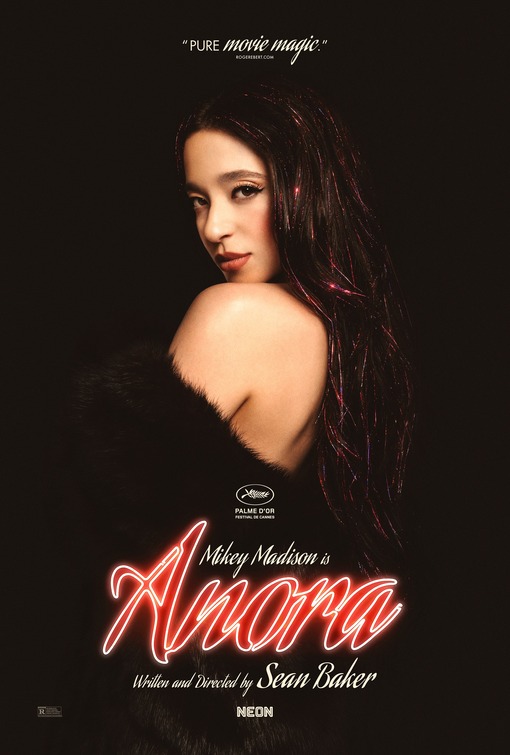
That said, every little bit helps and, since we’ve got a whole month before the rest of precursors start weighing in, the producers of Anora have to be happy that today’s headlines have all basically been a variation of “ANORA LEADS THE GOTHAMS.”  If you’re going to build momentum on the way to the Oscars, it’s important to stay in the conversation.  Today, Anora is dominating that conversation.

Here are the Gotham nominations!

Best Feature

Anora
Sean Baker, director; Sean Baker, Alex Coco, Samantha Quan, producers (NEON)

Babygirl
Halina Reijn, director; David Hinojosa, Julia Oh, Halina Reijn, producers (A24)

Challengers
Luca Guadagnino, director; Luca Guadagnino, Rachel O’Connor, Amy Pascal, Zendaya, producers (Amazon MGM Studios)

A Different Man
Aaron Schimberg, director; Gabriel Mayers, Vanessa McDonnell, Christine Vachon, producers (A24)

Nickel Boys
RaMell Ross, director; Joslyn Barnes, Dede Gardner, Jeremy Kleiner, David Levine, producers (Orion Pictures/Amazon MGM Studios)

Best International Feature

All We Imagine as Light
Payal Kapadia, director; Julien Graff, Thomas Hakim, producers (Sideshow and Janus Films)

Green Border
Agnieszka Holland, director; Fred Bernstein, Agnieszka Holland, Marcin Wierzchoslawski, producers (Kino Lorber)

Hard Truths
Mike Leigh, director; Georgina Lowe, producer (Bleecker Street)

Inside the Yellow Cocoon Shell
Thien An Pham, director; Jeremy Chua, Tran Van Thi, producers (Kino Lorber)

Vermiglio
Maura Delpero, director; Francesca Andreoli, Maura Delpero, Santiago Fondevila Sance, Leonardo Guerra Seràgnoli, producers (Sideshow and Janus Films)

Best Documentary Feature

Dahomey
Mati Diop, director; Mati Diop, Judith Lou Lévy, Eve Robin, producers (MUBI)

Intercepted
Oksana Karpovych, director; Darya Bassel, Olha Beskhmelnytsina, Rocío B. Fuentes, Giacomo Nudi, Lucie Rego Pauline Tran Van Lieu, producers (Grasshopper Film)

No Other Land
Yuval Abraham, Basel Adra, Hamdan Ballal, Rachel Szor, directors; Fabien Greenberg, Bård Kjøge Rønning, producers (Antipode Films)

Soundtrack to a Coup d’Etat
Johan Grimonprez, director; Rémi Grellety, Daan Milius, producers (Kino Lorber)

Sugarcane
Julian Brave NoiseCat, Emily Kassie, directors; Emily Kassie, Kellen Quinn, producers (National Geographic Documentary Films)

Union
Stephen Maing, Brett Story, directors; Samantha Curley, Mars Verrone, producers (Self-Distributed)

Best Director

Payal Kapadia, All We Imagine as Light (Sideshow and Janus Films)
Sean Baker, Anora (NEON)
Guan Hu, Black Dog (The Forge)
Jane Schoenbrun, I Saw the TV Glow (A24)
RaMell Ross, Nickel Boys (Orion Pictures/Amazon MGM Studios)

Best Screenplay

Between the Temples, Nathan Silver, C. Mason Wells (Sony Pictures Classics)
Evil Does Not Exist, Ryûsuke Hamaguchi (Sideshow and Janus Films)
Femme, Sam H. Freeman, Ng Choon Ping (Utopia)
His Three Daughters, Azazel Jacobs (Netflix)
Janet Planet, Annie Baker (A24)

Breakthrough Director

Shuchi Talati, Girls Will Be Girls (Juno Films, Inc)
India Donaldson, Good One (Metrograph Pictures)
Alessandra Lacorazza, In the Summers (Music Box Films)
Vera Drew, The People’s Joker (Altered Innocence)
Mahdi Fleifel, To a Land Unknown (Watermelon Pictures)

Outstanding Lead Performance

Pamela Anderson, The Last Showgirl (Roadside Attractions)
Adrien Brody, The Brutalist (A24)
Colman Domingo, Sing Sing (A24)
Marianne Jean-Baptiste, Hard Truths (Bleecker Street)
Nicole Kidman, Babygirl (A24)
Keith Kupferer, Ghostlight (IFC Films)
Mikey Madison, Anora (NEON)
Demi Moore, The Substance (MUBI)
Saoirse Ronan, Outrun (Sony Pictures Classics)
Justice Smith, I Saw the TV Glow (A24)

Outstanding Supporting Performance

Yura Borisov, Anora (NEON)
Kieran Culkin, A Real Pain (Searchlight Pictures)
Danielle Deadwyler, The Piano Lesson (Netflix)
Brigette Lundy-Paine, I Saw the TV Glow (A24)
Natasha Lyonne, His Three Daughters (Netflix)
Clarence Maclin, Sing Sing (A24)
Katy O’Brian, Love Lies Bleeding (A24)
Guy Pearce, The Brutalist (A24)
Adam Pearson, A Different Man (A24)
Brian Tyree Henry, The Fire Inside (Amazon MGM Studios)

Breakthrough Performer

Lily Collias, Good One (Metrograph Pictures)
Ryan Destiny, The Fire Inside (Amazon MGM Studios)
Maisy Stella, My Old Ass (Amazon MGM Studios)
Izaac Wang, Dìdi Y(Focus Features)
Brandon Wilson, Nickel Boys (Orion Pictures/Amazon MGM Studios)

Horror Scenes That I Love: The Interview With The Chief From Night of the Living Dead


“Yeah, they’re dead …. they’re all messed up.”

There’s a lot of disturbing scenes in the original Night of the Living Dead but I’ve always loved this live, televised interview with the chief of police.  First, there’s the delivery of that classic line.  “….they’re all messed up.”  Yes, they are.  Then there’s the fact that the chief doesn’t seem to be particularly perturbed by the fact that the dead are coming back to life.  Instead, his attitude is very straight-forward.  It’s happening, we need to take care of it, let’s arm some civilians.

Of course, this interview sets up the film’s ending, in which we learn that those helpful civilians with guns are a bit trigger happy and sometimes, the living get in the way.  When you first see this interview, it’s easy to laugh at the sight of the chief’s posse and everyone’s odd confidence that the dead will somehow just go away.  (Death, after all, is the one thing that is guaranteed to happen to everyone eventually.)  Once you know how the story’s going to end, though, this scene becomes much more ominous.

In the end, the film suggests that it’s not just dead who are all messed up.

Here’s The Trailer For Queer


The trailer for Luca Guadagnino’s Queer dropped today.  Based on a novel by William S. Burroughs, the film stars Daniel Craig as William Lee.  (Lee, of course, was Burroughs by any other name,)  After a drug bust, Lee heads down to Mexico and become infatuated with a drug-addicted former serviceman (played by Drew Starkey).

I’ve never really forgiven Guadagnino for his Suspiria remake and I think he’s a fairly overrated filmmaker but Queer has been getting a lot attention on the festival circuit and Daniel Craig has been getting a lot of Oscar buzz for his performance in the lead role.  So, we’ll see.  Here’s the trailer!

Horror Film Review: Godzilla vs. Megaguirus (dir by Masaaki Tezuka)


It has always bothered me whenever a long-running franchise decides that the best way to reboot things is to wipe away its own history.

Consider the James Bond films, in which the current producers apparently decided that Daniel Craig’s grim and whiny interpretation of the character was so definitive that it would be no big deal to wipe all of the previous Bond films out of existence.  Sorry, Sean Connery.  Sorry, Roger Moore, Timothy Dalton, Pierce Brosnan, and even George Lazenby.   Sorry, everyone who enjoyed the original Bond films and who enjoys spies who are relatively free of angst and self-pity.  Your films are now no longer canon, all because someone thought it would be a good idea for Bond and Blofeld to be brothers.

Consider the DC films, in which there are so many different versions of the same characters floating around that it’s next to impossible to keep straight what is an “official” film and what isn’t.  Admittedly, the majority of the DC films weren’t that good but still, there’s just something kind of annoying in the way that franchise in particular tends to just shrug and say, “Okay, that film doesn’t really count.”  Own your mistakes.

And then there’s my beloved Halloween franchise, ruined by David Gordon Green’s belief that he was better than the genre.  After years of brother/sister drama between Laurie Strode and Michael Myers, Green simply decided to do away with all of that and, in the process, he made the entire story (and Laurie Strode as a character) far less interesting.

Usually I think of this as being a relatively new phenomena but, as I watched 2000’s Godzilla vs. Megaguirus, I realized that reboots that do away with years of continuity are nothing new.  Godzilla vs. Megagurius opens with a narrator literally telling us to forget about all the films that came out after the original Gojira.  And we’re also told to forget about the ending of Gojira because that never happened either.  The Oxygen Destroyer was not used and Tokyo had to be abandoned.  Godzilla survived the end of Gojira and he continues to use Japan as his own personal power source, attacking not only a nuclear reactor but also a plasma reactor.  So, sorry, Mothra.  Sorry, Rodan.  Sorry, all of you fans of Ghidorah.  Sorry everyone who enjoyed the classic Godzilla films.  We’re now in a universe where none of that happened.

That’s not to say that Godzilla vs. Megagurius is a bad film, of course.  The majority of the people who watch these films (and films in general) could hardly care less about continuity.  They want to see a fight between giant monsters and they want to hear Godzilla’s roar and this film provides both of them.  After Japan attempts to destroy Godzilla with a satellite that shoots — I kid you not — miniature black holes, it finds itself being attacked by prehistoric dragonflys.  While Godzilla searches for a new power source, the dragonflys attempt to siphon off Godzilla’s energy for their own uses.  As so often happened with these movies, humanity’s attempt to destroy Godzilla actually leads to far more destruction than if they had just left Godzilla alone.  It turns out that creating miniature black holes and ripping open the time/space continuum is not the solution to all the world’s problems.  It’s the human beings who are ultimately the bigger threat than the giant monsters.

It’s an entertaining film.  The Megagurius is a good monster and a worthy opponent to Godzilla.  Godzilla does what he does best.  The film wiped out a decades worth of continuity but at least it kept the Godzilla roar.  In the end, you can’t silence a good giant monster.

Previous Godzilla Reviews:

  1. Godzilla, King of the Monsters (1958)
  2. Godzilla Raids Again (1958)
  3. King Kong vs Godzilla (1962)
  4. Mothra vs. Godzilla (1964)
  5. Ghidorah: The Three-Headed Monster (1964)
  6. Invasion of the Astro-Monster (1965)
  7. Godzilla vs. The Sea Monster (1966)
  8. Son of Godzilla (1967)
  9. Destroy All Monsters (1968)
  10. All Monsters Attack (1969)
  11. Godzilla vs Hedorah (1971)
  12. Godzilla vs Gigan (1972)
  13. Godzilla vs Megalon (1973)
  14. Godzilla vs Mechagodzilla (1974)
  15. The Terror of Mechagodzilla (1975)
  16. Cozilla (1977)
  17. Godzilla 1985 (1985)
  18. Godzilla vs. Biollante (1989)
  19. Godzilla vs King Ghidorah (1992)
  20. Godzilla vs. Mothra (1992)
  21. Godzilla vs Mechagodzilla 2 (1994)
  22. Godzilla vs SpaceGodzilla (1994)
  23. Godzilla vs. Destoroyah (1995)
  24. Godzilla (1998)
  25. Godzilla 2000 (1999)
  26. Godzilla, Mothra, and King Ghidorah: Giant Monsters All-Out Attack (2001)
  27. Godzilla (2014)
  28. Godzilla: Planet of the Monsters (2017)
  29. Godzilla, King of the Monsters (2019)
  30. Godzilla vs Kong (2021)
  31. Godzilla Minus One (2023)

October “True” Crime: Bundy Reborn (a.k.a. The Inflicted) (dir by Matthan Harris)


Right now, on Tubi, you can find a film that the service says is titled Bundy Reborn.  It’s a horror film, one that centers on a medical student named David O’Hara (played by the film’s director, Matthan Harris) who turns into a serial killer.  Struggling with the trauma of having witnessed his father (Bill Moseley) murder his younger sister, David kidnaps Melissa Daniels (Lindsay Hightower) and then disappears into the night when Melissa is rescued by Inspector Lorenzo (the one and only Giovanni Lombardo Radice).  Nine months later, David comes out of hiding after Melissa gives birth to their child.  David once again kidnaps Melissa and kills several other people as well.

It’s pretty much a standard serial killer film.  Despite the title, it has little to do with Ted Bundy.  In fact, Bundy isn’t even mentioned in the film.  David, like Bundy, is a handsome serial killer who went to college.  But, whereas Bundy killed because he enjoyed it, David is trying to recreate a family that was destroyed by his equally sociopathic father.  There’s a germ of an interesting idea to be found in this film.  For all of his crimes and his evil actions, David really is just carrying on the family tradition.  Can evil be passed down genetically?  Or would David be perfectly normal if he just hasn’t witnessed his father killing his sister?  Those are legitimate questions that this film raises and then promptly seems to forget about.  The title, however, suggests that David is literally Ted Bundy in a new body and that’s simply not the case here.

Indeed, the film was originally released under a totally different title, The Inflicted.  That title worked well with this film’s portrayal of a son who inherited his murderous compulsions from his father.  David has been inflicted with the same evil that his father carries in his heart.  The Inflicted is an honest title but, at the same time, it’s not a title that’s going to grab the audience.  It’s a title that feels a bit too generic.  Bundy Reborn, on the other hand, is an acknowledgement of the fact that Ted Bundy is a particularly macabre part of the American pop cultural landscape.  As evil and worthy of hate as Ted Bundy may have been, viewers just can’t get enough of him.  Ted Bundy never had much of a chance to pursue his political ambitions but today, more people probably know who Ted Bundy was then know that Connecticut Senator Richard Blumenthal lied about serving in Vietnam.

As for the film, the plot is full of contrivances and moments that just don’t make much sense.  For horror fans, it is a chance to see several icons in one film, though most of them have extremely small roles.  That said, it’s nice to see a usually villainous actor like Sid Haig cast as a kindly psychiatrist.  Bill Moseley is properly menacing as David’s father.  Doug Bradley seems to be enjoying himself as an FBI agent.  As for Giovanni Lombardo Radice, how can you not smile when he’s onscreen?  Radice’s Italian accent may seem out of place in a film that is shot and was made in North Texas.  But Radice had an undeniable screen presence and he looked good wearing a trenchcoat and holding a gun.  He simply was Lorenzo.

On a persona note, this film was shot in my part of the world.  Several scenes were shot in my hometown.  Several other scenes were filmed in the town where I went to college.  When Inspector Lorenzo gets a call about David’s activities, I immediately yelled, “Oh my God, he’s at the Shops at Legacy!”  Later, my heart ached when I saw that the hospital that Melissa was taken to was the same hospital that my father was taken to immediately after his car accident back in May.  I recognized almost every location in the film as some place that I had been personally and that was definitely kind of exciting.

Finally, let’s all just be happy that Bundy has not been reborn but instead was apparently cremated and dumped out over some anonymous swimming pool somewhere.


4 Shots From 4 Horror Films: Special Sam Raimi Edition


4 Shots From 4 Films is just what it says it is, 4 shots from 4 of our favorite films. As opposed to the reviews and recaps that we usually post, 4 Shots From 4 Films is all about letting the visuals do the talking.

Today’s director: Sam Raimi!

4 Shots From 4 Sam Raimi Films

The Evil Dead (1981, dir by Sam Raimi, DP: Tim Philo)

Evil Dead II (1987, dir by Sam Raimi, DP: Peter Deming)

Army of Darkness (1992, dir by Sam Raimi, DP: Bill Pope)

Drag Me To Hell (2009, dir by Sam Raimi, DP: Peter Deming)

Horror Film Review: All You Need Is Death (dir by Paul Duane)


Folk music is the music of evil people.

That’s something that I’ve been saying for years.  Of course, as is usually the case with such pronouncements, I was only being half-serious when I originally said it.  The first time I said it, it was to an older relative who had just forced me to sit through a 20 minute performance of I’ll Fly Away.  The second time I said it, it was to a friend who was really into Woody Guthrie, Pete Seeger, and all those commies  After that, I found many excuses to say it because I was going to college that was renowned for its music program.  It was one of those colleges where you couldn’t turn a corner without potentially running into someone who was taking a class in folk music.  They were always a bit annoying.  For folkies, it wasn’t enough to tell you that their music was better than your music.  They also had to tell you why listening to the Weavers on scratchy vinyl made them better human beings than you.

That said, I was never totally serious about folk music being the music of evil people.  That seemed like a far more appropriate thing to say about prog rock.  But, having watched All You Need Is Death, I’m now not so sure.  Folk music may very well be evil.

All You Need Is Death tells the story of Anna (Simone Collins) and Aleks (Charlie Maher), a couple who live in Dublin.  Anna is a gifted singer and, when we first see the two of them, Anna and Aleks appear to be deeply in love.  They work for an academic named Agnes (Catherine Siggins), whose goal is to find the oldest known versions of various folk songs.  Their work brings them to an apparently demented old woman named Rita (Olwen Fouere), who is rumored to know a song that is in a language the predates the Irish language.  Rita reveals that she does indeed know the song, which was apparently inspired by a romantic betrayal and a brutal death.  She explains that the song has been passed down from one woman to another over the centuries.  It can never be recorded and men are not allowed to hear the song.  After Aleks excuses himself, Rita sings the song to Anna.  As they drive back home, Anna tries to sing the song from memory but struggles, which isn’t surprising considering that the song isn’t even in a living language.  However, they’re stopped by Agnes who reveals that she secretly recorded Rita singing.  Meanwhile, Rita is herself gruesomely murdered by a mysterious force.

Things get progressively stranger from there, as Anna finds herself being targeted by Rita’s unhinged son (Nigel O’Neill) and Anna and Alek’s previously blessed relationship suddenly seems to be cursed.  There’s even a touch of Cronenbergian body horror as the film plays out.  The film’s plot is not always easy to follow and that’s not a bad thing.  This is one of those horror films that works because the audience never feels quite secure in their understanding of what they’re seeing.  The story plays out at its own pace, putting an emphasis on atmosphere over easy shocks and jump scares.  It’s about as close to a filmed dream as the viewer is likely to find.  It’s a horror film that sticks with you after the end credits role.  You’ll never listen to another folk song.