4 Shots From 4 Films is just what it says it is, 4 shots from 4 of our favorite films. As opposed to the reviews and recaps that we usually post, 4 Shots From 4 Films lets the visuals do the talking!
Today, we pay tribute to the year 1999. It’s time for….
4 Shots From 4 1999 Films
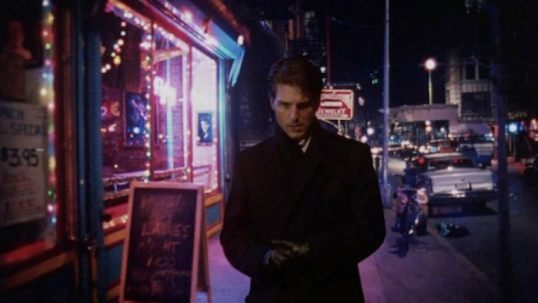
Eyes Wide Shut (1999, dir by Stanley Kubrick, DP: Larry Smith)
Fight Club (1999, dir by David Fincher, DP: Jeff Cronenweth)
The Virgin Suicides (1999, dir by Sofia Coppola, DP: Edward Lachman)
The Straight Story (1999, dir by David Lynch, DP: Freddie Francis)
2016’s Deepwater Horizon tells the story of the 2010 explosion that led to the biggest oil spill in American history.
Owned by British Petroleum, the Deepwater Horizon was an oil rig sitting off the coast of Louisiana and Texas. A series of explosions, which were found to be the result cost-cutting and negligence on the part of BP, killed eleven men, injured countless others, and led to an 87-day oil spill that leaked 210 million gallons of oil into the Gulf of America (or the Gulf of Mexico, as it was known back then. I know, it can be heard to keep track). I can still remember when the disaster happened. It was seen as an early test of the “government-can-fix-anything” philosophy of the Obama era and it pretty much proved the opposite. Private citizens (including Kevin Costner) offered to help and were rebuffed. The governor of Louisiana was criticized for ordering the construction of barrier islands, even though they were more effective than was that the federal government was offering up. The CEO of British Petroleum issued a self-pitying apology. For a generation coming of political age in 2010, witnessing the government’s ineffective attempts to deal with the oil spill was as radicalizing a moment as the COVID lunacy would be for people coming of age in 2020.
In all the chaos surrounding the oil spill, it was often overlooked that 11 people died in the initial explosion. In all the rightful criticism that was directed towards British Petroleum, the heroic efforts of the workers on the Deepwater Horizon, all of whom risked their lives to try to prevent the disaster from getting worse, were also often overlooked. To an extent, Deepwater Horizon corrects that oversight, paying tribute to the men on that rig while also portraying the extent of the environmental disaster caused by BP’s negligence.
The film centers of Jimmy Harrell (Kurt Russell) and Mike Williams (Mark Wahlberg), two engineers who attempt to warn BP execs like Donald Virdrine (John Malkovich) that cutting costs on safety will inevitably lead to disaster. Russell, Wahlberg, and Malkovich are all ideally cast, with Russell and Wahlberg capturing the spirit of men who try to do their job well and who live their life by the philosophy of not leaving anyone behind. Malkovich is playing a corporate stooge, the man who many people blamed for the disaster. But, to his credit, Malkovich is able to turn Virdrine into a complex character. Virdrine makes terrible mistakes but he never becomes one-dimensional corporate villain. Though Deepwater Horizon is dominated by its special effects and the explosion is an undeniably intense scene, the film doesn’t forget about the human cost of the disaster. Russell, Wahlberg, and Malkovich are supported by good performances from Ethan Suplee, Gina Rodriguez, and Kate Hudson. (Hudson, in particular, deserves a lot of credit for making her thinly-written role into something compelling.) Kurt Russell does such a good job of capturing Jimmy’s quiet confidence and his expertise that, the minute he’s injured by the explosion, the audience knows that Deepwater Horizon is doomed. If even Kurt Russell can’t save the day, what hope is there?
Director Peter Berg specialized in films about ordinary people who found themselves caught up in extraordinary situations. His well-made and earnest films — like Lone Survivor, Patriots Day, and this one — were rarely acclaimed by critics, many of whom seemed to take personal offense at Berg’s unapologetically patriotic and individualistic vision. Personally, I appreciate Berg’s pro-American aesthetic. At a time when we were being told that individuals didn’t matter and that everyone should be content with merely being a cog in a bigger machine, Berg’s films came along to say, “This is what team work actually means.” It’s been five years since Berg’s last film. Hopefully, we will get a new one soon.
There’s this cruise ship. It’s a luxury liner and it’s sailing across the ocean on New Year’s Eve. There’s a lot of passengers on the liner. Most of them are wealthy and the majority of them are played by familiar actors. Everyone is in the ballroom, celebrating the upcoming new year. They do the countdown. They cheer when they hit zero. Kisses are exchanges. Dances are danced. A blonde woman sings a song. Suddenly, a tidal wave smashes into the Poseidon, turning it over. Explosions rock the ship as it ends up floating upside down. The majority of the crew and the passengers are killed immediately. The survivors face a decision. Do they stay in the ballroom or do they attempt to climb upwards to safety?
Yep, Poseidon is a remake of The Poseidon Adventure. It tells basically the same story but with slightly better special effects and slightly less histrionic actors. The original Poseidon Adventure had Gene Hackman and Ernest Borgnine yelling at each other for over two hours while Shelley Winters swam until she died. “WHERE’S YOUR GOD NOW, PREACHER!?” Borgnine shouted while Hackman yelled, “ROGO!” over and over again. (Rogo was Borgnine’s character. Hackman shouted the name with a wonderful amount of loathing.) It was a very loud and every entertaining movie. The cast of Poseidon is a bit more low-key but Poseidon is also more interested in special effects than any sort of human (melo)drama.
For instance, Josh Lucas plays a Navy veteran-turned-professional gambler. He gives a good performance as the de facto leader of the survivors but he never gets to yell as much as Gene Hackman did in the original. Richard Dreyfuss plays an architect and you would think that Dreyfuss, of all people, would chew up the scenery in this disaster film with relish but Dreyfuss is oddly subdued. Jacinda Barrett is the mother who tries to protect her son (played by Jimmy Bennett). Fergie is the singer who embraces the ship’s captain (Andre Braugher) as the ballroom floods. Emmy Rossum is the rebellious teenager. Mike Vogel is her boyfriend. And Kurt Russell plays the former mayor of New York City. He also happens to be a former fireman.
It’s a good cast. Kurt Russell is especially good in his role, believable as both a fireman (a role that he’s played in a few films) and as a politician. It’s a talented group of actors but no one really goes overboard in the way that Gene Hackman, Ernest Borgnine, Shelley Winters, Stella Stevens, Roddy McDowall, and even Leslie Nielsen did in the first one. The premise of the film is so silly that it really does require the cast and the director to fully embrace the melodrama. As opposed to the original, this film only gives the melodrama a quick hug and instead concentrates on explosions, water, and flames. The special effects overshadow the humans and that’s unfortunate because there’s a lot of interesting people in this movie. A good performance can last a lifetime. There’s a reason why we still talk about Kurt Russell in films like Escape From New York and The Thing. Good special effects, on the other hand, still look incredibly dated after three years.
I’m not really sure that it was necessary to remake The Poseidon Adventure in the first place. I’m just glad they left Beyond The Poseidon Adventurealone.
2002’s Dark Blue opens in 1992, with a decorated Los Angeles cop named Eldon Perry (Kurt Russell) holed in a hotel room with a shotgun and a pistol. Perry, who were learn comes from a long line of cops, should be happy. He’s about to finally get promoted. While Los Angeles is in the grip of the riots that followed the Rodney King verdict, Perry’s lifelong dream is about to come true. But, instead of celebrating, he’s a nervous wreck. Dark Blue shows us why.
Perry is the protegee of Commander Jack Van Meter (Brendan Gleeson), a corrupt cop who regularly encourages his men to harass, arrest, and even kill anyone who is suspected of having committed a crime. Van Meter and Perry claim that they’re doing what they need to do in order to keep the city safe. They look at a reformer like Assistant Chief Arthur Holland (Ving Rhames) and they see someone who has no idea what it’s actually like on the streets and who is more concerned with his own ambitions than anything else. However, Van Meter has a side operation going. Two of his informants (played by Korupt and Dash Mihok) regularly commit robberies that he sets up and helps them get away with. When their latest robbery leaves four people dead and one wounded, Van Meter assigns Perry and Perry’s young partner, Bobby Keough (Scott Speedman), to the case. Bobby is young and maybe not as cynical as Perry. But he’s also Van Meter’s nephew so the assumption is that he’ll play ball.
And, at first, Bobby does go along with whatever Van Meter and Perry say. When Perry unknowingly gets too close to the truth about what happened at the robbery, Van Meter orders Perry and Bobby to go after someone else. When Perry orders Bobby to execute an innocent man, Bobby does so and Perry takes the blame. (In one of the film’s best scenes, Bobby gives his statement about the shooting to Internal Affairs, just for the detectives to shut off the tape recorder and give Bobby a chance to make a better statement.) But when Bobby has a crisis of conscience and Van Meter reveals that depths that he’ll go to protect himself, Eldon Perry is forced to reconsider the life that he’s built for himself as a cop. With Los Angeles descending into chaos, Perry has to finally decide whether or not to play the game or to do the right thing.
There’s a lot going on in Dark Blue. Actually, there’s too much going on. The film is based on a story by James Ellroy and it has Ellroy’s traditionally dense plotting, full of duplicitous characters and macho dialogue. Not only is Perry dealing with the investigation, he’s also dealing with his frayed marriage to Sally (Lolita Davidovich). Not only is Bobby struggling with his ethics but he’s also struggling with his love for Sgt. Beth Williamson (Michael Michele), who is also Holland’s assistant and who also once had a one-night stand with Holland, pictures of which have gotten into Van Meter’s hands and which Van Meter plans to use to blackmail Holland into taking a job in Cleveland. It’s a lot to keep track of and, visually, director Ron Shelton struggles to capture Ellroy’s trademark prose. As a writer, Ellroy’s jittery style can get readers to accept almost anything, no matter how complex or potentially disturbing. Ellroy has no fear of alienating the reader. Shelton, on the other hand, has a much more gentle style and it’s not a good match for Ellroy’s vision of a world gone mad. The film mixes Ellroy’s moral ambiguity with Shelton’s rather predictable liberal piety and the end result never really comes together. Shelton doesn’t seem to be sure what he wants to say with Dark Blue.
That said, this film does feature an excellent performance from Kurt Russell. Russell plays a character who is both good and bad. Perry cares about his partner. He cares about his family. He’s loyal to the police department. His methods may be extreme but he’s also taking criminals off the street. But Perry is also thoroughly mired in Van Meter’s corruption. Perry trusts Van Meter because Perry considers the police force to be his family. His shock at being betrayed is one of the more poignant things about the film and Russell captures the moment perfectly.
Dark Blue has a lot that it wants to say, about morality, policing, and race relations. It doesn’t really work because Ron Shelton was the wrong director to bring James Ellroy’s pulp sensibility to life. But it does provide Kurt Russell a chance to show us that he’s one of our most underrated actors.
1998’s Soldier starts off with a brilliant seven-minute sequence. We watch as, over the course of 17 years, a child named Todd is raised and trained to be the ultimate soldier. From a young age, he’s learning how to fight. He’s learning discipline. He’s learning to follow orders without question. We follow him as he goes on to fight in conflict after conflict. The name of each conflict in which he fights is tattooed on his muscular arms. Finally, a title card appears that informs us that Todd (now played by Kurt Russell) is “Between wars.”
Captain Church (Gary Busey) insists that Todd and his fellow soldiers are the greatest fighting force in the galaxy. The autocratic Colonel Merkum (Jason Isaacs) disagrees, claiming that his genetically-engineered soldiers are superior and that Todd is now obsolete. After a savage training exercise that leaves Todd unconscious, Merkum orders that Todd be dumped on an abandoned planet.
Of course, it turns out that the planet in question is not actually abandoned. Instead, it’s home to a group of colonists who crash-landed on the planet years ago and who now live a life that is devoid of conflict. When Todd approaches the colony, he is cautiously welcomed. Todd, who rarely speaks, is extremely strong and quick and that pays off when he’s able to save Jimmy (Michael Chiklis) from being pulled into a thrasher. However, Todd is also haunted by PTSD and he’s been bred to fight and that leaves the other colonists cautious about him. Despite the efforts of Mace (Sean Pertwee) and his wife Sandra (Connie Nielsen), the other colonists vote to exile Todd from their colony.
Meanwhile, Merkum and his “superior” soldiers are heading towards the planet, eager to execute the colonists as a part of a training exercise. Todd will have to use all of his training to defeat Merkum’s super soldier, Caine 607 (Jason Scott Lee), and help the colonists reach their final destination.
One of the more interesting things about Soldier is that it apparently takes place in the same cinematic universe as Blade Runner. The wreckage of one of Blade Runner‘s flying cars is spotted on the planet and Todd is shown to have fought in some of the same battle that Roy Batty claimed to have witnessed in Ridley Scott’s classic film. For that matter, Ridley Scott himself has said that Blade Runner also takes place in the same cinematic universe as Alien and some people insist that Predator is a part of the universe as well. That’s a rich heritage for Soldier, which is essentially a dumb but entertaining B-movie.
I liked Soldier, almost despite myself. It’s a silly film and there are certain scenes, mostly dealing with day-to-day life in colony, that feel a bit draggy. But I enjoyed Kurt Russell’s performance as the ultimate super soldier. Russell has very little dialogue in the film and his character is bit stunted emotionally but it doesn’t matter. Ultimately, Russell’s natural charisma carries the day and his fight with Caine 607 is genuinely exciting. As usual, Jason Isaacs makes for a wonderfully hissable villain and even Gary Busey gives what is, for him, a rather restrained and ultimately credible performance. As is so often the case with the work of director Paul W.S. Anderson, the film is a cartoon but it’s an entertaining cartoon.
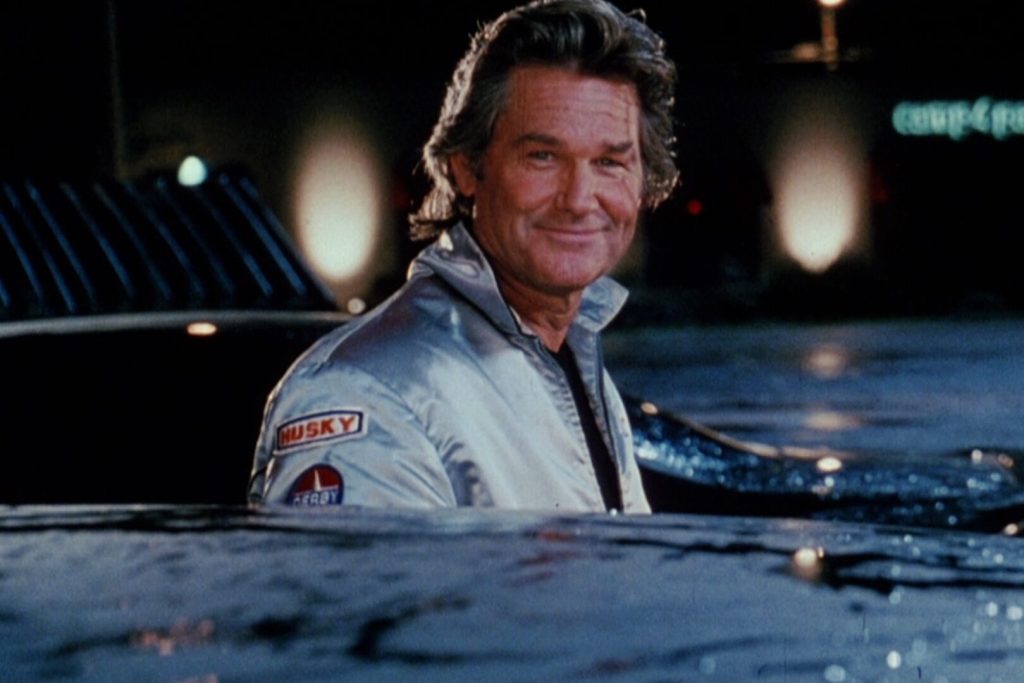
I’m a fan of Quentin Tarantino’s DEATH PROOF. The primary reason is Kurt Russell’s performance as stuntman Mike. But a nice bonus is Vanessa Ferlito’s performance as Arlene. I remember when the movie came out, I had already noticed her from her run as CSI Detective Aiden Burn on CSI: NEW YORK. But she definitely gave a memorable, attention-grabbing performance in Tarantino’s film. And birthday boy Kurt Russell had a front row seat! Enjoy my friends!
In 1996’s Executive Decision, terrorists hijack an airplane. Their leader, Nagi Hassan (David Suchet) demands that the U.S. government not only give him and his men safe passage but that they also release Hassan’s commander, Jaffa (Andreas Katsulas).
In Washington D.C., it is decide to use a stealth plane to transport Col. Austin Travis (Steven Seagal) and his men into the passenger plane. Accompanying them will be Dr. David Grant (Kurt Russell), a consultant for U.S. Intelligence. Dr. Grant is the world’s leading expert on Hassan, even though neither he nor anyone else is even sure what Hassan looks like. Travis distrusts Grant because he’s a civilian and also because he holds Grant responsible for a botched raid on a Russian safehouse in Italy. Dr. Grant is going to have to prove himself to Col. Travis because Travis doesn’t have any time for people who can’t get the job done. And Travis is determined to get on that plane and save all those passengers.
In other words, Travis is a typical Steven Seagal character and, for the first fourth of this movie, Seagal gives a typical Steven Seagal performance. He delivers his line in his trademark intimidating whisper, he glares at everyone else in the film, and essentially comes across as being a total douchebag who can still handle himself in a fight.. However, when it’s time to board the airplane through a docking tunnel, something goes wrong. Everyone — even nervous engineer Dennis Cahill (Oliver Platt) is able to slip through the stealth plane’s docking tunnel and get into the hijacked airplane cargo hold without being detected. But the two planes are hit by severe turbulence. Suddenly, it becomes apparent the one man is going to have to sacrifice his life and close the hatch before the docking tunnel decompresses.
David, already in the cargo hold, looks down at Austin in the tunnel. “We’re not going to make it!”
“You are!” Austin replies before slamming the hatch shut and getting sucked out of the tunnel. (There’s your Oscar Cheers Moment of 1996!) After all that build-up, Steven Seagal exits the film early and now, it’s up to Kurt Russell and what’s left of Austin Travis’s men to somehow stop the terrorists. Not only do they have to stop Hassan but they also have to do it before the Air Force — which has no way of knowing whether or not any of their men were able to get on the plane before the tunnel fell apart — shoots down the airliner.
(If the airplane looks familiar, that’s because Lost used the same stock footage whenever it flashed back to the plane crash that started the show.)
It’s actually a rather brilliant twist. When this film came out, Seagal was still a film star. He played characters who always got the job done and who were basically infallible. He wasn’t a very good actor but he did manage to perfect an intimidating stare and that stare carried him through a lot of movies. No one would have expected Seagal to die within the first 30 minutes of one of his movies and when Col. Travis, who the film has gone out of its way to portray as being the consummate warrior, is suddenly killed, there really is a moment where you find yourself wondering, “What are they going to do now?” In just a matter of minutes, Executive Decision goes from being a predictable Steven Seagal action film to a genuinely exciting and clever Kurt Russell thriller. For once, Russell is not playing a man of action. He’s an analyst, a thinker. And, to the film’s credit, he uses his mind more than his brawn to battle Hassan’s terrorists. With excellent support from Halle Berry (as a flight attendant who discreetly helps out David and the soldiers), Oliver Platt, B.D. Wong, Whip Hubley, David Suchet, Joe Morton, and even John Leguizamo (as Travis’s second-in-command), Executive Decision reveals itself to be an exciting and ultimately rewarding thrill ride.
And to think, all it took was sacrificing Steven Seagal.
In 1994’s Stargate, James Spader plays Daniel Jackson, a nerdy Egyptologist who is recruited to decipher some hieroglyphics on some ancient stones that are being studied in a secret government facility in Colorado. Kurt Russell plays Colonel Jack O’Neill, a Special Operations officer who has been suicidal ever since the accidental death of his son. (He shot himself with Jack’s gun. Yikes!)
Together …. they solve crimes!
Well, no, not really. Instead, by deciphering the hieroglyphics, Daniel discovers how to open up a stargate, a wormhole that leads to another planet. Daniel, Jack, and a group of soldiers go through the stargate to see where it leads. Daniel is interested in discovering a new world and perhaps coming to understand how the pyramids were built. Jack just wants to get things over with. He’s been given a nuclear bomb and told to blow things up if the stargate leads to a hostile world. Jack doesn’t care if he lives or dies.
That changes once everyone finds themselves on a desert planet where the inhabitants are being exploited by Ra (Jaye Davidson)! It turns out that Ra actually does exist. Rather than being the God that the ancient Egyptians believed him to be, Ra is actually an alien who feeds off of the life forces of others. Every sacrifice that is performed for him allows Ra to extend his life. When Ra discovers that Daniel and Jack are on the planet and that Jack has a nuclear warhead with him, Ra takes that as a sign of aggression. He decides to make the warhead even more powerful and send it back through the stargate so that it can blow up the Earth. Normally, Jack wouldn’t care but fighting for the planet’s oppressed inhabitants has filled him with a renewed purpose.
Stargate is a film that I like almost despite myself. There’s a lot of reasons why Stargate would seem like the type of film that I would normally dislike. With the exception of a few films (Starcrash, the Guardians of the Galaxy trilogy), I’m not normally a huge fan of science fiction. I’m not really a fan of anything that takes place in the desert because I know I would be miserable if I was there. (Redhead don’t tan, we burn.) I’m not really a fan of Roland Emmerich as a director. I’ll never forgive him for Anonymous, which I realize was made decades after Stargate but it was still annoying all the same.
And yet, I do like Stargate. I like that James Spader gets to play something other than a sinister creep for once. Nerdy Spader is a very appealing Spader. I like that Kurt Russell gives a fully committed performance, even if the film itself is somewhat silly. He doesn’t just go through the motions with his role, that I’m sure the temptation was there to do so. When Jack is depressed, you believe it. I like that Jaye Davidson gives an enjoyably bizarre performance as Ra. (Davidson, who was offered the role after The Crying Game and was shocked when the producers agreed to pay him a million dollars to play Ra, retired from acting after this film.) I liked the fact that, for once, the aliens truly seemed like aliens as opposed to coming across like stuffy Earthlings in a flying saucer. And I appreciated that, with this film, Emmerich actually seemed to be having fun with the story as opposed to just stolidly moving the action from one trailer-ready moment to another.
Stargate is silly. Wow, is it ever silly! But it’s silly in an enjoyable and entertaining way. James Spader, Kurt Russell, and Jaye Davidson make the film worth watching.
1992’s Captain Ron opens with Martin Harvey (Martin Short) suffering through another day as a corporate drone in Chicago. What is Martin’s job like? It’s the type of job where there’s broken glass on the sidewalk because someone jumped out a window. Martin is ready for an escape and he gets it when he’s informed that his deceased uncle has left him a yacht that once belonged to Clark Gable. The only catch is that the yacht is on a Caribbean island and Martin will need to sail it to Miami if he wants to sell it. Martin decides this will be a great opportunity get away from cold Chicago with his wife (Mary Kay Place), daughter (Meadow Sisto), and son (Benjamin Salisbury).
It turns out that the yacht is in terrible shape. And so, for that matter, is the sailor who has been assigned to help the Harveys set sail. Ron “Everyone calls me Captain Ron” Rico (Kurt Russell) is a somewhat slovenly drunk who wears sunglasses over his eyepatch and who is in debt to some dangerous people. It also turns out that, despite talking a big game, Captain Ron is fairly incompetent as a navigator. He knows how the boat works. He knows how to keep the engine from overheating. He knows how to borrow Martin’s video camera so he can film Marin’s wife and daughter while they walk around top deck. What Captain Ron can’t do is actually get the boat to where it needs to go. Instead, Captain Ron takes the family to a number of islands, gets them into trouble with pirates, and also becomes the surrogate father-figure that the family needs.
There’s a lot to criticize about Captain Ron. The script cannot quite decide just who exactly it wants these characters to be. Moments of sentimental family comedy are mixed with scenes of Captain Ron leering at Martin’s wife and daughter. Martin and his wife get stuck in the boat’s shower and I’ll admit that I laughed at the scene because something similar happened to me in college but it still felt as if it was included solely to get the movie up to a PG-13. The film has the making of being a wild comedy but it never quite goes as far as it could. Martin gets upset but he never gets truly frantic, which is a waste of Martin Short’s talents. Ron has the makings to be a true force of chaos but the film instead just makes him incompetent. There’s an odd scene where Martin considers shooting Captain Ron with a flare gun. It comes out of nowhere and it’s not ever mentioned again. It hints at a film that could have been a lot more subversive than it turned out to be.
That said, I did enjoy Captain Ron. The island scenery is lovely. The shots of that dilapidated yacht on the ocean do, almost despite themselves, achieve a sort of grandeur. And then you’ve got Kurt Russell, wearing a red speedo and apparently having the time of his life as the incompetent yet rather cocky Captain Ron. It’s a fun performance, even if the film sometimes doesn’t seem to be sure what to do with it. That the film remains watchable is a testament to the charm of Kurt Russell. Much like the title character, Captain Ron is a film that’s likable even when it shouldn’t be.
1984’s Swing Shift begins in 1941. Kay (Goldie Hawn) and Jack Walsh (Ed Harris) are a young married couple in California. At first glance, they seem to have the perfect life. Jack works all day and comes home and has a beer and tells his wife how much he loves her. Kay spends her day cleaning up around the house and when her husband comes home, she sits down next to him and tells him how much she loves him. Whenever their neighbor, Hazel (Christine Lahti), walks by their bungalow, Jack mutters that she’s a tramp. Hazel sings in a sleazy nightclub and dates a shady fellow named Biscuit (Fred Ward) and that’s just not what respectable people do!
When the Japanese bomb Pearl Harbor, Jack enlists in the Navy. Kay suggests that she could get a job while he’s gone but Jack is firm. He doesn’t want his wife working. However, after Jack leaves, Kay is motivated by both boredom and her patriotic duty to apply for a job in an armaments factory. With all of the men overseas fighting, their wives have been implored to do their part for the war effort.
Kay works the swing shift, along with Hazel and a trumpet player named Lucky (Kurt Russell). (Lucky sweetly declines to explain why he’s called Lucky.) Despite some early antagonism, Hazel and Kay becomes friends. Kay starts to come out of her shell, especially where Lucky is concerned. How will Jack react when he returns home?
The late director Jonathan Demme described directing Swing Shift as being one of the worst experiences of his career. Demme’s original cut of the film was an ensemble piece that was a drama with comedic moments. Star Goldie Hawn was reportedly not happy with Demme’s original cut and the film was essentially taken away from the director. Screenwriter Robert Towne was brought in to write some additional scenes. (Even before Towne was brought in, at least four writers had written a draft of the script and the screenplay itself was finally credited to a non-existent “Rob Morton.”) Some scenes were reshot. The film itself was reedited. The end result was a film that focused primarily on Kay and made her relationships with Hazel, Jack, and Lucky far less complex. Jonathan Demme walked away from the film, retaining his directorial credit but pointedly requesting that the film not be advertised as a “Jonathan Demme film.” Later in life, Demme declined to discuss either Swing Shift or the experience of working with Goldie Hawn.
Watching the studio cut of Swing Shift on Prime, I could understand many of Demme’s objections. It’s a film that’s full of good performances and some stylish visuals but it really doesn’t have much narrative momentum and, especially when it comes to Kay’s friendship with Hazel, it does feel like certain scenes are missing. Hazel is remarkably quick to forgive someone who she believes has spent years calling her a tramp. As well, there’s a lot of interesting characters in the background, many of whom are played by regular members of the Jonathan Demme stock company. (Charles Napier, Susan Peretz, Holly Hunter, Roger Corman, Lisa Peilkan, Sudie Bond, and Stephen Tobolowsky all have small roles.) Watching the film, one gets the feeling that they all probably had more to do in Demme’s original cut.
That said, I have to admit that I still enjoyed the studio cut of Swing Shift, flaws and all. A lot of that is due to the performances of Hawn and Russell. (Christine Lahti received a Supporting Actress Oscar nomination for her performance in this film. She’s okay, though I don’t really think she deserved a nomination over someone like Elizabeth Berridge in Amadeusor Tuesday Weld in Once Upon A Time In America.) Hawn does a wonderful job portraying Kay’s transformation from being a rather meek housewife to someone who can put a plane together without a moment’s hesitation. Hawn and Russell began their legendary romance on the set of Swing Shift and their chemistry is strong enough to carry the film over plenty of rough spots. At its best, Swing Shift inspired me to wonder what I would have done if I had been alive in the 1940s. Would I have ended up cutting my hair and working in a factory? Would I have waited at home from my ‘husband or sweetheart” (as the film refers to them) to come home? Or would I have run off with Lucky and followed him from town to town? Swing Shift is a good film that could have been great and, by many accounts, actually was great before it was recut. (Even with the reediting, enough of Demme’s trademark humanity comes through to make the scenes in the factory memorable.) In the end, Swing Shift isn’t perfect but I still enjoyed it.



 Through the Shattered Lens