Scenes That I Love: The Wheelchair Race From Days Of Thunder


Today, the Shattered Lens wishes a happy birthday to the great character actor, Michael Rooker.

For today’s scene that I love, we’ve got a fairly silly scene from a fairly silly movie.  Micahael Rooker and Tom Cruise play racing rivals in 1990’s Days Of Thunder.  In this scene, we see just how dedicated they are to always trying to be the first to make it to the finish line.

Roger Corman directed MACHINE GUN KELLY (1958), Charles Bronson’s first starring role!


I’ve always appreciated the legendary Roger Corman, who was born on this day in 1926, because he gave Charles Bronson his first starring role in MACHINE GUN KELLY. I’ve heard Quentin Tarantino himself say that It’s the best movie that Corman ever directed. It was such an important movie for Bronson because it directly led to a HUGE break 10 years later when Alain Delon wanted him for his co-star in FAREWELL, FRIEND (1968). Delon wanted Bronson because he admired his performance as George Kelly.

Happy Birthday in heaven, Mr. Corman! Thanks for giving Charles Bronson, and so many greats, the break of a lifetime!

Love On The Shattered Lens: At First Sight (dir by Irwin Winkler)


1999’s At First Sight tells the story of Amy (Mira Sorvino) and her boyfriend, Virgil (Val Kilmer).

Virgil seems to be just about perfect.  He’s intelligent.  He’s sensitive.  He knows just what to say when Amy’s crying.  He’s a masseuse and who doesn’t want to come home to a nice massage?  He loves hockey.  He’s a great guy to go for a walk with and he’s someone who always has his own individual way of interpreting the world.  However, Virgil is blind.  He’s been blind since he was three years old.  When Amy comes across an article about a doctor named Charles Aaron (Bruce Davison), who has developed an operation that could restore Virgil’s sight, Amy pushes Virgil to get operation.  In fact, Amy pushes him maybe just a bit too much.  Virgil regains his sight but struggles to adjust to being able to see the world around him.

For instance, he has no idea how to read Amy’s facial expressions.  He struggles with his depth perception and, at one point, even walks into a glass door.  He’s seeing the world for the first time and a lot of the things that amaze him are things that Amy takes for granted.  Virgil getting back his sight totally changes the dynamic of his relationship with Amy and soon, despite their best efforts, the two of them find themselves drifting apart.  Amy is even tempted by her ex (Steven Weber).  Meanwhile, Dr. Aaron suggests that Virgil talk to a therapist who can help him adjust to his new life.  Seize every experience, Phil Webster (Nathan Lane) suggests.  Really?  That’s the great advice?  I could have come up with that!

However, Virgil has a secret that he has been keeping from Amy.  There were no guarantees when it came to the operation and now, Virgil’s sight is starting to grow dim.  He’s just gained the ability to see the world but now, he’s about to lose it again.  Will he make it to one final hockey game before he loses his eyesight?  Will he finally discover what “fluffy” thing he was looking at before he went blind at the age of three?  And will Amy ever realize that it was kind of wrong for her to push him into getting an experimental operation that he didn’t even want?

At First Sight has its flaws, as you may have guessed.  The plot is often predictable.  The message of “seizing the day” and “enjoying every moment” has been delivered by countless other films.  (The movie seems to think we won’t notice the message is a cliche as long as it’s delivered by Nathan Lane.)  As directed by Irwin Winkler (who was better-known as a producer than as a director), the film moves at a slow pace and the two-hour plus running time feels excessive.  But it almost doesn’t matter when you’ve got stars as attractive and charismatic as Val Kilmer and Mira Sorvino.  Whatever other flaws the film may have, it doesn’t lack chemistry between the two leads and I actually found myself very much caring about these characters and their relationship.  When it comes to romance, good chemistry can make up for a lot!

It was hard not to feel a bit sad while watching the film’s stars act opposite each other.  After the film was released, Mira Sorvino was blacklisted by Harvey Weinstein and her career has yet to really recover.  With his health struggles and his own reputation for being eccentric, Val Kilmer struggled to get good roles during the latter half of his career.  It was nice, though, to see them in At First Sight, looking young and happy and hopeful.  That’s one wonderful thing about the movies.  They save the moment.

Gamera Review: Gamera vs Barugon (dir by Shigeo Tanaka)


1966’s Gamera vs Barugon opens six months after the end of Gamera, The Giant Monster.

Everyone’s favorite atomic turtle has been exiled into space, sent on a rocket to a distant planet and ordered to never attack Japan again.  However, when a meteorite collides with the rocket, Gamera is set free.  He promptly returns to Earth and attacks Japan again.  Seriously, Japan really can’t catch a break!  While it’s true that Gamera and Godzilla don’t exist in the same cinematic universe, it’s still hard not to wonder why Japan is the only country that ever seems to get attacked by the giant monsters.

(The obvious answer, of course, is that both Gamera and Godzilla, with their fiery breath and their relentless need to destroy everything in their path, are metaphors for the atomic bombs that were dropped on Hiroshima and Nagasaki.  Blame Truman.)

However, Gamera is not Japan’s only problem.  They’re also having to deal with Barugon, a monster who hatches out of an opal that a group of bumbling adventurers have recently retrieved from New Guinea.  Barugon is a lizard, one that grows from being tiny to gigantic in just a manner of days.  Barugon creates rainbows that not only serve as a shield for him but which also destroy just about anything that they touch.  Gamera, though perhaps not intentionally, becomes the champion of the same humans that previously tired to exile him into space.

There’s an interesting subtext to Gamera vs Barugon.  The opal was originally discovered by a soldier during World War II.  He hid the opal in New Guinea, not realizing that it was actually an egg.  Years later, he’s the one who hires the men who retrieve the opal.  In its way, the opal is a symbol of the past, of what Japan was before the American occupation and what Japan could have been if it had been victorious in the war.  Of course, bringing the opal to Japan and allowing it to open leads to the deaths of hundreds of innocent people and it nearly destroys the country.  If the opal had remained where it had been abandoned and if the old soldier had been willing to move on from the past, Barugon would never have been born.  Then again, if Barugon hadn’t been born then Gamera wouldn’t have had a chance to redeem himself in the eyes of the public.  For every bad thing (like Barugon) that happens, there’s also a good thing to consider.  Then again, maybe I’m reading too much into it.

Quickly paced and featuring enough giant monster action to hold the interest of even the most jaded of viewers, Gamera vs Barugon is a lot of fun.  With its colorful visuals, cute but angry monsters, and random rainbows, it’s definitely a work of pop art.  Seriously, how can you not love a giant turtle that spins around and shoots fire?  And how can you not love a lizard like Barugon, with his rainbow destruction and his cheerful facial expressions?  One thing I enjoy about the Gamera films is that Gamera always seems to be doing his best.  He’s determined to win!  Sometimes, Godzilla can seem like he’s just phoning it in.  But Gamera always gives 110%!  Yay, Gamera!

Previous Gamera Reviews:

  1. Gamera, The Giant Monster (1965)
  2. Gamera vs. Jiger (1970)

Lisa Marie’s Way Too Early Oscar Predictions For April


Now that the 2024 Oscars are over with, it’s time to move on to the 2025 Oscars!

Needless to say, there’s probably nothing more pointless than trying to guess which films are going to be nominated a year from now.  I can’t even guarantee that all of the films listed below are even going to be released this year.  And, even if they are released this year, I can’t guarantee that they’ll actually be any good or that the Academy will show any interest in them.  I mean, someone like Martin Scorsese always seems like a safe bet but we all remember what happened with Silence.  For months, everyone said Silence would be the Oscar front runner.  Then it was released to respectful but not ecstatic reviews.  Audiences stayed away.  The film ended up with one technical nomination.  And let’s not forget that last year, at this time, the narrative was that it was going to be Ridley Scott’s year.

My point is that no one knows anything.  As much as I hate quoting William Goldman (because, seriously, quoting Goldman on a film site is such a cliché at this point), Goldman was right.

(Add to that, 2025 is starting to look like it’s going to be a seriously underwhelming year as far as the movies are concerned.)

Anyway, here are my random guesses for April!  A few months from now, we can look back at this list and have a good laugh.

Best Picture

After The Hunt

Avatar: Fire and Ash

Deliver Me From Nowhere

Eddington

F1

Frankenstein

The Lost Bus

One Battle After Another

Wicked For Good

The Young Mothers Home

Best Director

Paul Thomas Anderson for One Battle After Another

Jon M. Chu for Wicked For Good

Jean-Pierre and Luc Dardenne for The Young Mother’s Home

Guillermo del Toro for Frankenstein

Joseph Kosinksi for FI

Best Actor

Austin Butler in Eddington

Timothee Chalamet in Marty Supreme

Leonardo DiCaprio in One Battle After Another

Matthew McConaughey in The Lost Bus

Jeremy Allen White in Deliver Me From Nowhere

Best Actress

Olivia Colman in The Roses

Cynthia Erivo in Wicked For Good

Julia Roberts in After The Hunt

Amanda Seyfried in Ann Lee

June Squibb in Eleanor The Great

Best Supporting Actor

Colman Domingo in Michael

Josh O’Connor in The History of Sound

Sean Penn in One Battle After Another

Joaquin Phoenix in Eddington

Christoph Waltz in Frankenstein

Best Supporting Actress

Fran Drescher in Marty Supreme

Ayo Edebri in After The Hunt

Ariana Grande in Wicked For Good

Gabby Hofman in Deliver Me From Nowhere

Nia Long in Michael

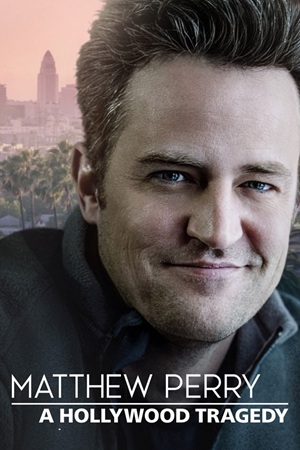
Documentary Review: Matthew Perry: A Hollywood Tragedy (dir by Robert Palumbo)


It’s rare that I ever feel like I should apologize for having watched a documentary but that was the feeling I had after watching Matthew Perry: A Hollywood Tragedy.

This documentary examined the career and death of actor Matthew Perry, with most of the emphasis being put on Perry’s struggle with addiction.  Excerpts were read from his book.  Lots of clips were shared from Friends.  People in the industry talked about what a charming actor Perry was and they also talked about how hard it is to free oneself from addiction.  This is especially true when you’re rich enough to have a bunch of people around you who will literally respond to your every whim and not take a second to ask, “Are you sure?”  One of the worst things about celebrity culture is that we tend to root for the worst until it actually happens.  When an actor is publicly struggling with addiction or their mental health, it’s treated as entertainment  It’s only after that actor dies that we talk about how tragic it was and people hop on social media to talk about how addiction is a disease and no one should be shamed for their struggle.

And that brings me to documentaries like this one.  There’s something really hypocritical about these documentaries that take a real life tragedy and turn it into entertainment while pretending to be a tribute or a serious examination of the addiction crisis in America.  For instance, this documentary tells you absolutely nothing that you didn’t already know about Matthew Perry and his tragic death and it really doesn’t do a good job of paying tribute to him as an actor either.  Those clips from Friends are the same clips that you’ve seen on every other special about the life of Matthew Perry.  There’s really no reason for this documentary to exist, other than to appeal to the desire of viewers to learn something sordid about a well-known figure.  It’s a documentary that exploits Perry’s death while claiming to mourn it.

And I’m not saying anything that you haven’t already heard or which hasn’t been said by hundred other people.  Nearly every review that I’ve read of this documentary says basically the same thing that I just said.  It’s exploitive and doesn’t have much to add to our overall understanding of how someone with so much talent and so many fans could also be so self-destructive.  And yet, while we all criticize documentaries like this, many of us still watch them.  I still watch them.  I watched this one.  I learned absolutely nothing new and I felt fairly guilty afterwards.  Matthew Perry’s death was a tragedy and a cautionary tale and, at the same time, it should take nothing away from the happiness that he brought his fans.  He deserved better than this.  For that matter, he deserved better than all of the speculative stories that came out after his appearance on the Friends Reunion Special.

But I can’t get self-righteous or too quick to condemn.  Because I did watch this.  I was bored, I saw that it was streaming, and I watched it.  And I’ll probably watch the next trashy celebrity documentary that come out.  I won’t feel good about it but I’ll probably do it.  I doubt I’ll be alone.

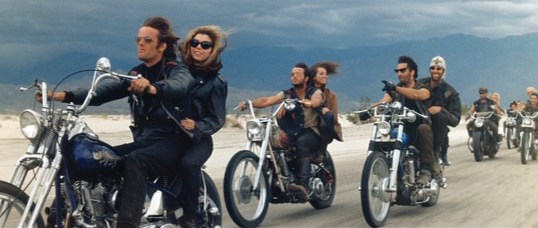
The TSL Grindhouse: The Wild Angels (dir by Roger Corman)


“What is it exactly that you want?” a preacher (Frank Maxwell) asks a congregation of leather-clad bikers.

“We want to get loaded!” Heavenly Blues (Peter Fonda) replies, “And we want to have a good time!”

And have a good time, they proceed to have.  Of course, it’s a good time for them.  Everyone else who meets the bikers at the center of 1966’s The Wild Angels are horrified by this collection of rebellious and violent outsiders.  Sure, Heavenly Blues might actually be a soulful guy who mistakenly believes that he can control the gang’s more excessive tendencies.  His girlfriend, Mike (Nancy Sinatra), actually seems rather reserved and conservative when compared to the rest of the gang.  But make no mistake about it, the majority of the members of the gang are into violence for its own sake.  They are bullies who couldn’t make the football team so, instead, they hopped on a motorcycle and formed their own society.  They’re self-styled rebels  but what are they rebelling against?  What have you got?

I know, I know.  That famous line comes from Marlon Brando and it was uttered in The Wild One.  Peter Fonda, to put it lightly, was no Marlon Brando and, as directed by Roger Corman, The Wild Angels doesn’t have the societal concerns that lay at the hear of The Wild One.  As Corman was often the first to admit, his main concern when it came to making movies was to make money.  Corman wasn’t necessarily against message films.  He often stated that, as a director, 1962’s The Intruder was the film in which he took the most pride.  The Intruder took a firm stand against racism and it let everyone know where Corman stood on when it came to the Civil Rights Movement.  It was also one of his few films to lose money.  The Wild Angels celebrates rebellion but one gets the feeling that celebration is motivated by the fact that younger filmgoers would be happy to pay to see a movie about a bunch of “youngish” people telling the old folks to shut up and get out of the way.  The Wild Angels themselves don’t seem to be motivated by any sort of grand ideology.  Heavenly Blues preaches about getting loaded and having a good time and celebrating freedom but he also allows the members of the gang to drape a Nazi flag over a casket.  What does Heavenly Blues actually believe in?

Heavenly Blues believes in loyalty to his friends.  For all the fights and the orgies and the scenes of motorcycles roaring down country roads, this is ultimately just a film about a guy who wants to give his best friend a decent burial.  The Loser (Bruce Dern) dies about halfway through the film and one gets the feeling that he probably would have lived if the gang hadn’t kidnapped him from the hospital.  Heavenly Blues wants to give The Loser the type of wild funeral that Blues thinks he would have wanted though I think The Loser probably would have been happier not have been killed by the actions of his idiot friends.  Diane Ladd, who was married to Bruce Dern at the time and who has said Laura Dern was conceived during the filming of The Wild Angels, is heart-breaking as The Loser’s girlfriend, Gaysh.  Gaysh wants to mourn her boyfriend while the rest of the gang is more concerned with figuring out who her next boyfriend is going to be.

Does Heavenly Blues ever realize that he’s traveling with a bunch of animals?  He does but one gets the feeling that he’s accepted his fate.  There’s no going back.  The past can’t change and the future cannot be controlled so Heavenly Blues is content to live in the present.  All he can do is try to give his friend a decent burial while the sirens of cops shriek in the distance.

The Wild Angels was a controversial film when it was first released.  It also made a lot of money and led to a whole cycle of outlaw biker films, culminating with Easy Rider.  Seen today, it’s a portrait of a society coming apart, with the establishment and the bikers not even willing to stop fighting long enough to allow for a simple burial.  It’s definitely a time capsule film, one of those productions that epitomizes an era.  There’s not much going on underneath the surface and most of the film’s bikers really are awful people but there is something touching about Blues giving it all up just to try to give his friend a decent burial.

Live Tweet Alert: Watch The Stepfather With #ScarySocial!


As some of our regular readers undoubtedly know, I am involved in a few weekly live tweets on twitter.  I host #FridayNightFlix every Friday, I co-host #ScarySocial on Saturday, and I am one of the five hosts of #MondayActionMovie!  Every week, we get together.  We watch a movie.  We tweet our way through it.

Tonight, for #ScarySocial, I will be hosting 1987’s The Stepfather!

If you want to join us on Saturday night, just hop onto twitter, start the film at 9 pm et, and use the #ScarySocial hashtag!  The film is available on Prime!  I’ll be there co-hosting and I imagine some other members of the TSL Crew will be there as well.  It’s a friendly group and welcoming of newcomers so don’t be shy!


Scenes That I Love: Peter Fonda Wants To Have A Good Time In The Wild Angels


In this scene, from Roger Corman’s 1968 film The Wild Angels, Peter Fonda sets forth a manifesto for living.  It’s not exactly a manifesto for living for a long time but it certainly seemed to work for him.


4 Shots From 4 Films: Special Roger Corman Edition


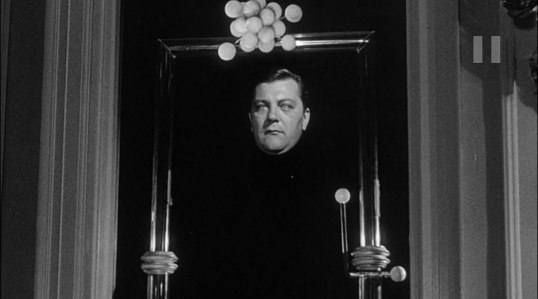
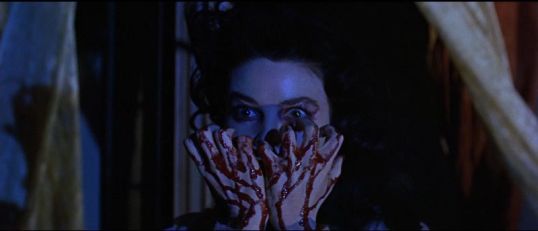
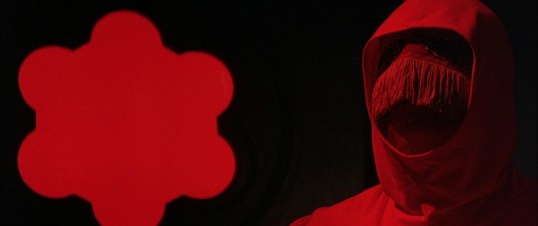
4 (or more) Shots From 4 (or more) Films is just what it says it is, 4 (or more) shots from 4 (or more) of our favorite films. As opposed to the reviews and recaps that we usually post, 4 (or more) Shots From 4 (or more) Films lets the visuals do the talking.

Today would have been the 99th birthday of the legendary filmmaker, Roger Corman!  And that means that it’s time for….

4 Shots From 4 Roger Corman Films

Not of this Earth (1957, dir by Roger Corman DP: John J. Mescall)

The Fall of the House of Usher (1960, dir by Roger Corman, DP: Floyd Crosby)

The Masque of the Red Death (1964, dir by Roger Corman, DP: Nicolas Roeg)

The Wild Angels (1966, dir by Roger Corman, DP: Richard Moore)