Before You See Anything Else — “Before Midnight”


before-midnight-poster


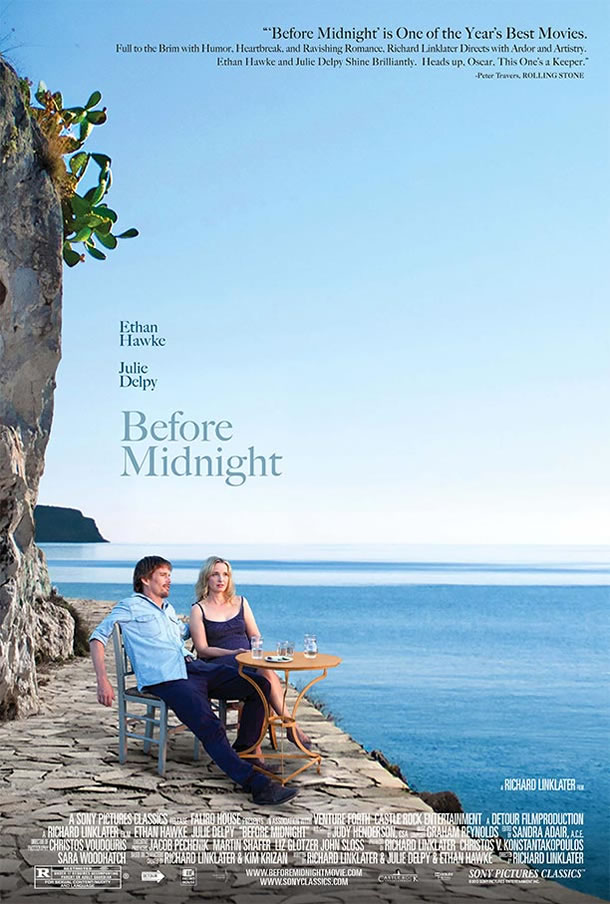
So, this is it. You can keep your Man Of Steels, your Iron Man 3s, your Star Trek : Into Darknesses, and your Pacific Rims — fun popcorn fare some of those may be, but for me summer 2013 at the movies is all about the third installment in Richard Linklater, Ethan Hawke, and Julie Delpy’s long-running cinematic romance, Before Midnight. I won’t rehash the details of how and why this unlikeliest of indie “franchises” has meant so much to this armchair critic on a personal level over the years — hell, over the decades now! — as my reviews of Before Sunrise and Before Sunset last week covered that ground pretty damn thoroughly already, suffice to say that the chance to see Jesse and Celine living happily ever after is, at the risk of sounding hopelessly corny, a little bit of a celluloid dream come true for yours truly. And so here it is — and here they are, doing just that.

Or are they? Okay, sure, they’re together — and have been, apparently, since the conclusion of Before Sunset nine years ago. They’ve got twin daughters, successful careers (Jesse as a novelist and English professor, Celine as an environmental activist) in Paris, and are just winding up spending a magical summer at a writer’s retreat in the Greek Islands. Sounds ideal, right?

But all is not, of course, well in paradise — Jesse’s torn about the son he left behind in the US and wants to be a more active part of his life, Celine feels stifled by the apparently-tranquil domesticity of her situation and has no desire to move back to America for Jesse to be near his kid, and both are struggling with the the ever-narrowing possibilities life offers up as we age and our thousands of dreams get whittled down to a more concrete set of responsibilities. The passing years have seen “must do”s replace “want to”s in their lives, and one of the running themes of all of these Before pictures is that of  somehow finding a way for love and passion and the sheer wonder of being with another person who understands and accepts us for who we are to survive amidst all that.

They seem to be doing their best. Their sex life is still refreshingly healthy for a cinematic couple on the cusp of middle age, they still walk and talk like the two young lovebirds who met on the train to Vienna, and they still show a genuine affection for one another that can give all of us some small measure of hope. But half the film is consumed by a fairly heated and wide-ranging argument in a hotel room that lays bare the many fault lines underpinning in their relationship. The only question, it seems, is whether they’ll continue to navigate those together or choose to go their separate ways.

Linklater, Delpy, and Hawke, who collaborated on the screenplay together once again (though it’s still nice to see them share character-creation credits with Linklater’s friend, the late Kim Krizan), strike a very delicate balance here between presenting the “heaviest” material we’ve yet to see in this series with the most lighthearted, comedic  sequences to date, as well, and the end result is a film that’s not just a joy to watch, but to absorb, from its first frame to its last.

My long-standing group of friends I’ve seen all these films with waited until we could all see it together, and over the customary after-movie drinks last night we all agreed on two things — we loved it to pieces, even though it was, in many instances, the most difficult of  the bunch to take in; and we couldn’t wait to see it again. It’s just a bit too early to figure out where we’d rank this is the entire — uhhmmmm — “pantheon,” I guess, after only one viewing, ya see.

Now, if you’ll indulge me, I’d like to unceremoniously transition into a personal plea here — rumors are swirling that this might be the final Before of the bunch, and if that’s the case, I think it’s well past time for Oscar to show it a little respect. Yes, this series enjoys a deeply passionate and committed following, but it sure would be nice if Hollywood’s establishment paid some attention to this evolving little piece of wonderment that’s been happening under their noses for nearly two decades. Hawke and Delpy have both affected subtle body-language shifts over the years to delineate their characters’ evolving personalities (he walks with more swagger than ever, for instance, while she exudes an air of peace-that’s-looking-for-any-excuse-to-erupt resignation) that perfectly complement their maturation on paper and each is deserving of a Best Actor/Actress in a Leading Role nomination, and if the three collaborators aren’t recognized with a nod for Best Original Screenplay, there seriously ought to be an investigation. Hell, unless something else comes along that completely knocks our collective socks off, there ought to be an investigation if they don’t win it. Let’s get the email, blog, forum, etc. pressure campaign started right here — who’s with me on this?

Before Midnight is the most authentically human picture to come down the pipeline in ages, and traverses a rocky yet rewarding emotional terrain with grace, warmth, and yes, even charm. It shows how love endures when initial , lustful ehuberance ages into a kind of occasionally- resplendent ardor, and how it finds its level and holds us aloft even when we get everything we’ve ever wanted only to find out it’s still not exactly what we were yearning for (humans, we’re so picky). It’s the “happily ever after” we’ve always wanted for Jesse and Celine — and for ourselves — warts and all. And I’m so completely in love with the cinema, and even with life,  again it damn near hurts. If this is, indeed, the end — and I sincerely hope it’s not, I want to grow old with these characters — it couldn’t be more perfectly imperfect, more gloriously flawed, more tragically comedic, more uneasily blissful.

 

Trash Film Guru Vs. The Summer Blockbusters : “Man Of Steel”


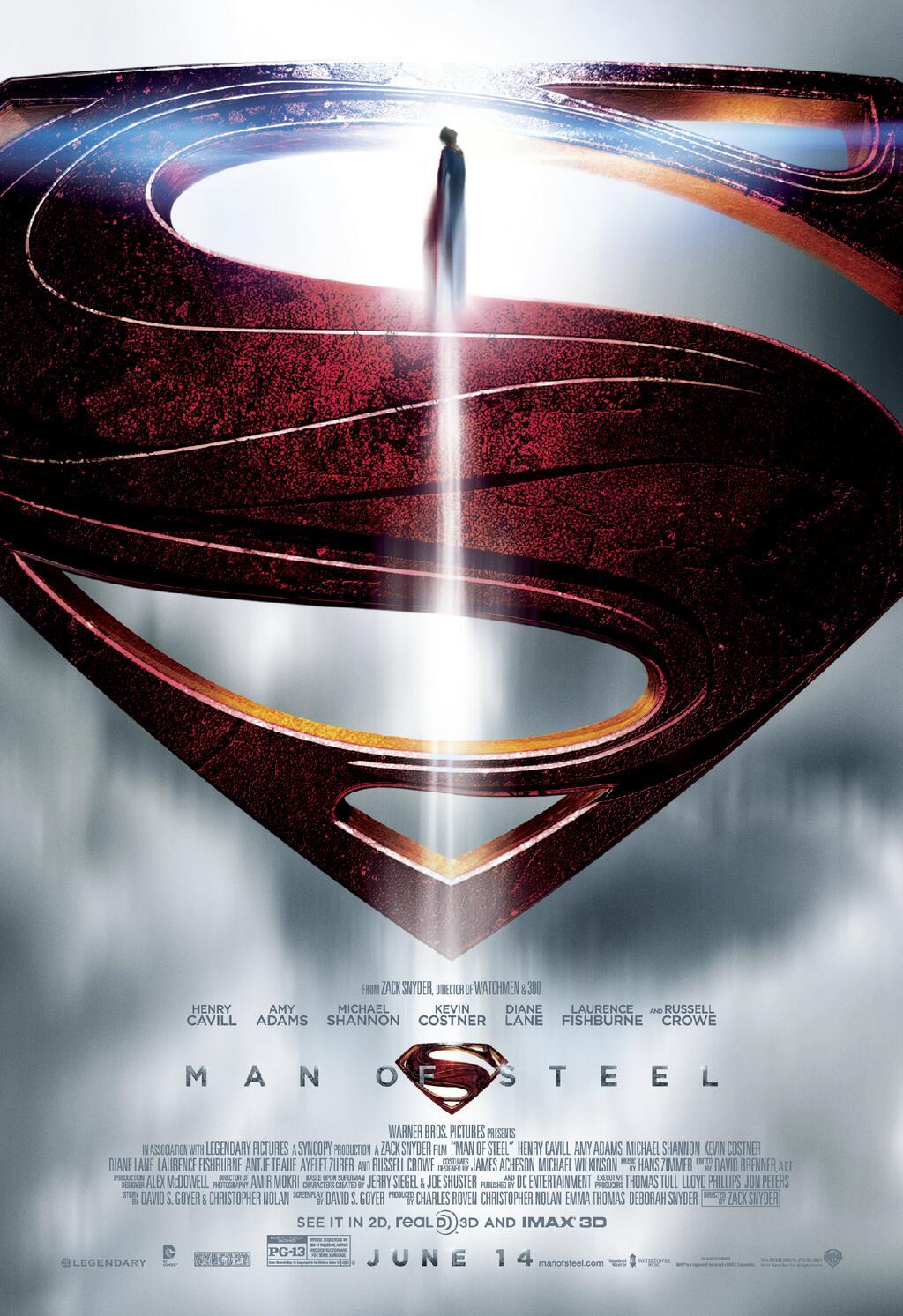
New Man of Steel Poster

I know that, in this day and age, we as a society seem to get off on tearing down our myths and legends and “humanizing” them, but seriously — when did Superman develop a split personality?

Before you jump to any conclusions based on that admitted “gotcha” of an opening line, allow me to state for the record that I didn’t actively dislike Zack Snyder’s Man Of Steel, it’s just that it spends its first half or so rather half-heartedly trying to portray its title character in more human terms than we’ve seen in previous iterations before finally throwing all that out the window and deciding that it actually wants to tell a story about a God who walks (and flies) among us, and the film definitely suffers as a result of this abrupt shift in tone.

But first the “plus” side of the ledger : Man Of Steel is pretty much the most awesome visual spectacle the movies have ever produced. I’m no fan of CGI as a general rule, but damn if every single effects shot in this flick isn’t enough to take your breath away, particularly the sequences on Superman’s home planet of Krypton, which Snyder and his WETA-employed staff depict in a markedly new and exciting “biotech on steroids” fashion. When the action goes earthbound, the optical awesomeness continues, never fear, so if spectacle is what you’re after, you’ll walk away from this well pleased indeed.

Pitch-perfect (with one notable exception which we’ll get to in a moment) casting doesn’t hurt matters any, either — Henry Cavill makes an immediate impression in both his Superman and Clark Kent personas; Russell Crowe is suitably above it all as his Kryptonian father, Jor-El; Kevin Costner and Diane Lane are almost too spot-on for words as his adopted human parents; Laurence Fishburne’s Perry White is old-school newspaper vet all the way (even with the pierced ear); and the always-underrated Michael Shannon oozes psychotic menace as lead villain General Zod. Watching all these people at work is a genuine joy.

Granted, the script — by Dark Knight veteran David S. Goyer (from a story co-plotted with the head honcho of this whole enterprise, Christopher Nolan) — doesn’t do any of them any favors dialogue-wise (apparently Kryptonians have evolved beyond good, old-fashioned conversation and speak entirely in grandiose pronouncements — but it’s not like the mere humans in this film are any less prone to dull, dry, wooden,  faux-poetic waxings themselves), but the players by and large manage to rise above the material they’ve been handed.

I say “by and large” (and here comes that exception I talked about a moment ago) because, sadly, one has been dealt such a losing hand that I’m not sure what she could really have done about it — I’m speaking, of course, about Amy Adams’ Lois Lane. Goyer does some brave and interesting things in terms of shaking up the established Clark-Lois backstory ( let’s just say she won’t be sneaking glimpses of him at sly angles when his glasses are off to see how much he might or might not look like Superman), but the cold, emotionally distant nature of this particular big-budget beast means that the whole love story angle falls pretty flat. By the time Goyer, Nolan, and Snyder decide they want to play the Nietzchean uberman card for all it’s worth, the independent, confident journalist we meet at the outset is reduced to becoming more awestruck than she is lovestruck, and rather than being “Superman’s girlfriend” she comes off more as his disciple. Who just so happens to kiss him. I mentioned the abrupt tonal shift in the film at the outset of this review, and poor Lois definitely suffers the brunt of it.

The messianic poses Cavill is forced into during all the flight and battle sequences get pretty old pretty fast as well, it’s gotta be said, and with no real transition period in the way the story is structured between its “simple farm boy from Kansas”  and its “demi-god here to save us all from the evil forces originating from his own homeworld” (that he inadvertently brought here himself, but hey, let’s not dwell on that) segments, well — let’s just say not much thought apparently went into how jarringly that would all play out. Hans Zimmer’s typically percussive, insistent musical score only augments the problem, and while there’s no way anybody was gonna have fans forgetting about John Williams, a “stripped-down,” “less over the top” orchestral accompaniment really doesn’t work when you’re trying to portray Superman as a fucking deity.

Superman purists, for their part,  may also find themselves semi-outraged by more than the snakeskin-fetish-wear take on his costume. There’s no Jimmy Olsen here, no Lex Luthor (although the “Lexcorp” logo appears here and there on props throughout — as do the logos for Sears, 7-11, and an unending and highly annoying litany of corporate sponsors), and “Metropolis” is never mentioned by name even though the entire final act takes place there. So be ready for at least some “nerd-rage” on the internet. Still, if those were the only things that bugged me about Man Of Steel, I’d be feeling a little bit better about it as a whole right about now. Not that I’m all that pissed or disappointed —-just, well, kinda perplexed.

I can’t say that Man Of Steel isn’t a fun movie to watch, because it is — hell, it’s an absolute visual marvel, and if you want to shut your brain off and just be taken along for a wild adventure ride, you’re not gonna do much better this (or any other) summer  Still —my mind kept drifting back to the famous first-encounter-between-Supes-and-Lois scene in Richard Donner’s Superman : The Movie (still the gold standard for all superhero flicks as far as I’m concerned) : when Lois asks him “who are you?,” and he replies, simply and with a smile, “a friend,” that told us all we needed to know right there. Sure, he was faster than a speeding bullet, more powerful than a locomotive, and able to leap tall buildings in a single bound, but at the end of the day , Superman as envisioned by Richard Donner, Mario Puzo, and Christopher Reeve was one of us.

By contrast, Superman a la Snyder, Nolan, Goyer and Cavill is above us. He’s not here to help humanity, but to redeem it. He’s not our hero anymore, he’s our savior — whether we want one or not.

Trash Film Guru Vs. The Summer Blockbusters : “After Earth”


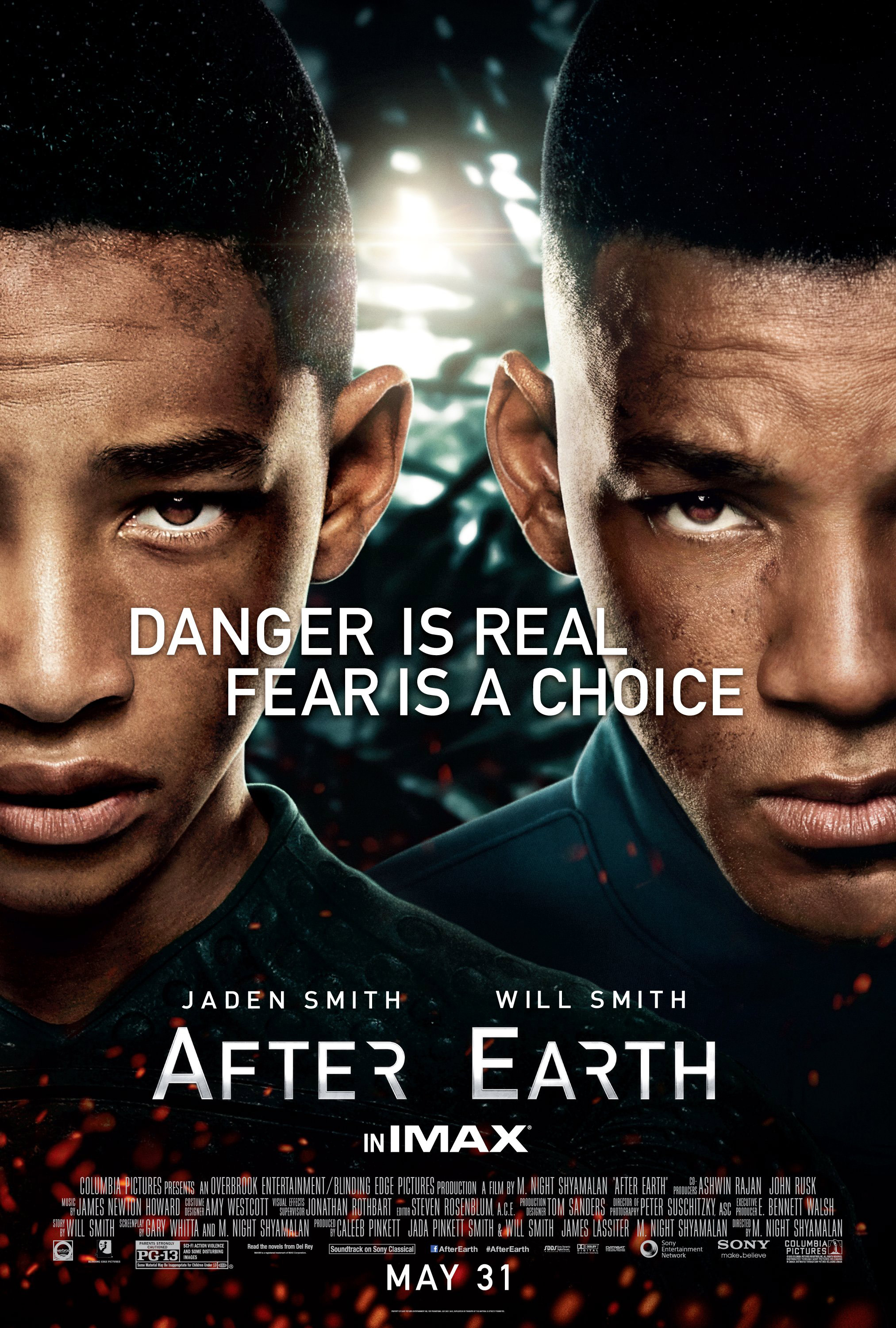
After-Earth-poster


Given that the always-on-the-ball Lisa Marie Bowman already beat me to the punch with this one on these virtual “pages,” I won’t waste too much of your time, dear reader, on my post-mortem analysis of the decidedly dull, wannabe-mystical-and-“empowering” mess that is Will Smith’s latest vanity project, After Earth, and instead merely remark upon some — -well, remarkable facts.

The first being that precisely two scribes here at TTSL actually saw this thing, and my best guess is that we both saw it in empty theaters because, according to box office receipts from the past weekend, nobody else went. So Sony/Columbia owes us a debt of thanks. And maybe some free passes to some future release of theirs.

Secondly, I’d like to state for the record that this film actually isn’t the abysmal and abject failure so many have quickly taken to labeling it as being so much as it’s just thoroughly predictable and almost relentlessly dull. 1,000 years after the evacuation of the planet due to largely unspecified but apparently quite serious environmental devastation,  emotionally distant military bad-ass-with-focus-group-tested -name Cypher Raige (Smith) and his son, Kitai (Smith’s kid Jaden) crash-land on the supposedly uninhabitable rock and must find a way to — yawn — survive while also learning to — yawn again — finally form the deep bonds of trust that all parents and their offspring are, y’know, supposed  to have.

There’s a bog-standard “warrior monk” mentality that runs through this picture that confuses stoicism for honor and nonchalance for dignity, and while Smith seems to be ill at ease with the material, he’s really got no one to blame but himself given that the film’s plot was apparently hatched in his own mind and the whole thing’s a family affair, with the former “Fresh Prince” not only starring in it, supposedly having a hand in scripting it, and casting his son to appear alongside him, but with his wife,  Jada Pinkett Smith, grabbing a producer’s credit, as well. And while it might be tempting to lay a pretty fair share of the blame for this overwrought snoozer on M. Night Shyamalan’s doorstep, as well — especially given his thoroughly uninspiring track record over the past decade or so —  the fact is that he’s pretty much acting as a director/co-writer-for-hire here, his fifteen minutes as Hollywood’s “next big thing” having apparently — finally! — run their course.

And weird as it sounds considering my disdain for pretty much anything he’s ever had his name attached to in the past, Shyamalan actually acquits himself reasonably well here. His direction doesn’t especially stand out in any respect, mind you, but you know what they say about how tough it is to make a silk purse from a sow’s ear. All in all, I got the distinct impression that he was at least trying to inject some life into some pretty goddamn listless proceedings.

His efforts certainly aren’t enough, though. LMB’s right that the film’s environmental message feels both heavy-handed and tacked on — shit, at least Birdemic was so hilariously inept at doing more or less the same thing that you couldn’t help but love it —but its New Agey emotional subtext is even more clumsy and ham-handed than its ecological one,  and to me that’s where the film’s most egregious sermonizing is to be found.

Parents should love their kids and be nice to them? Wow, ya don’t say.

Anyway, there’s probably not much point belaboring the obvious any further here — I’ve never been a big fan of piling on, and as I said, I don’t find  this flick so much actively bad as it is just dull, preachy, and without purpose apart from demonstrating to the world what an awesome, caring, understanding bunch the Smith/Pinkett clan is (after all, they’d never treat their kids like this in real life, right?). So there ya go —  and there it goes, since all indications are that After Earth will probably “enjoy” a well-deserved short-lived run on our nation’s movie screens before slowly dying on the home video and cable TV vine. Hang onto your cash and catch it on TNT or TBS some Saturday afternoon a year from now.

Film Review: After Earth (dir by M. Night Shyamalan)


After Earth is the latest of many forgettable films to have been released in 2013.

The film’s plot — which will be familiar to anyone who has seen Oblivion or any other science fiction film — deals with a father (Will Smith) and his son (Jaden Smith). The father is a great military leader but is emotionally distant.  (Will Smith, who is probably one of the most openly emotional actors working today, deals with being miscast by refusing to smile.)  The son is desperate to prove himself to his father.  When the two of them return to Earth (which was deserted a thousand years ago because of — you guessed it — pollution), their ship crashes.  The father is critically injured and, of course, the son has to save both of their lives, deal with his past guilt, and become a man.

Or something like that.

Did you know that M. Night Shyamalan directed After Earth?  If you didn’t, don’t feel bad.  In the advertising campaign leading up to this film’s release, Columbia Pictures has treated Shyamalan’s involvement like a dirty secret.  It’s understandable, really.  After all, Shyamalan’s last two films were The Happening and The Last Airbender and you can only refer to him as being “the director of The Sixth Sense” for so long.  That said, Shyamalan’s work here isn’t that bad.  It’s not that memorable either.  Instead, it’s the epitome of adequate and bland.  Some scenes (like the crash landing on Earth) actually come close to being exciting but there’s little sense of wonder or surprise to the film’s version of the future and, while the majority of the film is about Jaden Smith trying to survive and conquer the cruelty of nature, the environment of After Earth never truly feels alive.  Perhaps an Ang Lee or a Werner Herzog could have brought After Earth to life but all Shyamalan can do is keep the action plodding forward.

However, it’s unfair to put blame for After Earth on M. Night Shyamalan.  If anybody can truly be considered the auteur of After Earth, it is Will Smith.  Smith produced the film, came up with the film’s storyline, and gave the film’s lead role to his son.  Thematically, After Earth fits into Smith’s feel-good, good-for-you brand of cinema.  The problem, however, is that for an action film like this to work, you need a charismatic hero and, to judge from this film, Jaden Smith has inherited little of his father’s onscreen prowess.  Fairly or not, it’s impossible to watch Jaden in this film without being aware that he (as opposed to an actor who doesn’t have a famous father) got the role solely because he was the producer’s son.  As such, it’s far more difficult to forgive Jaden’s awkward screen presence than it might be otherwise.

After Earth is only 100 minutes long.  It’s considerably shorter than both Iron Man 3 and the latest Star Trek film.  However, when the film’s lack of surprise is combined with Jaden Smith’s bland lead performance, the end result is a film that feels a lot longer than it actually is.

When all I said and done, the only real question about After Earth is whether or not it’s worse than Oblivion.  It’s hard to say because After Earth and Oblivion are both oddly forgettable sci-fi films with similar premises.  In fact, while watching After Earth, I kept expecting Tom Cruise to pop up and say, “I thought I was the only man left on Earth!”

I guess the question really comes down to which film is more annoying and again, there are no easy answers.  Considering how bland both Oblivion and After Earth really are, it’s interesting that both of them manage to feature some overdone accent work.  It’s hard to know how to describe Will Smith’s vaguely Aruban (?) accent in After Earth but honestly, nothing could be more annoying than Melissa Leo’s butchering of the Southern accent in Oblivion.  So, as far as bad accents are concerned, Oblivion has to be considered the winner.

(Add to that, as weird as Smith’s accent was, it could at least be justified by the fact that After Earth was meant to be taking place in the far future.  There was absolutely no justifiable reason for Melissa Leo in Oblivion to sound like Cate Blanchett in Hanna.)

However, After Earth has a tacked-on environmental message, the type that makes Shyamalan’s The Happening seem subtle and intelligent by comparison. Don’t get me wrong.  I’m not objecting to After Earth (or any other film) having a subtext.  What I do object to is when a film uses an obvious and heavy-handed subtext to try to hide the fact that the movie itself isn’t that good.  In the case of After Earth, the environmental message feels lazy and predictable.  It almost feels as if, by paying lip service to a noble cause, Shyamalan is attempting to blackmail us into liking this film.

So, what’s worse?  A bad accent or an insincere message?

Ultimately, that’s a decision that everyone must make on their own.

Or you could just ignore both After Earth and Oblivion altogether and instead make the effort to see and support truly unique films like Upstream Color.

The choice is yours.

Trailer: As I Lay Dying


PCAS

As far as I’m concerned, 2013 should just be called “The Year of James Franco.”  Not only is James Franco my super hot (and smart) fantasy husband but he’s also starring in Oz, the Great and Powerful, playing himself in This Is The End, and making memorable appearances in supporting roles in films like The Iceman and Spring Breakers but he’s also directed his first film!

As I Lay Dying is based on William Faulkner’s classic novel.  A lot of critics have claimed that the book is unfilmable but I think that, if anyone can make As I Lay Dying into a great film, it’ll be James Franco.

Why?

Because he’s James Franco.

Guilty Pleasure No. 8: Paparazzi


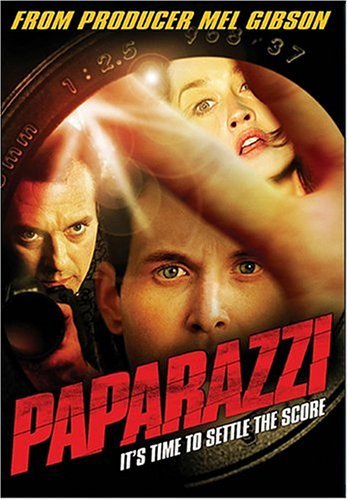
259791_ori

I once got into an argument with a friend of mine about whether or not a film could actually be so bad that it was good.

His argument was that bad, by its very definition, was the opposite of good and therefore, nothing bad could be good and vice versa.

My argument was Paparazzi.

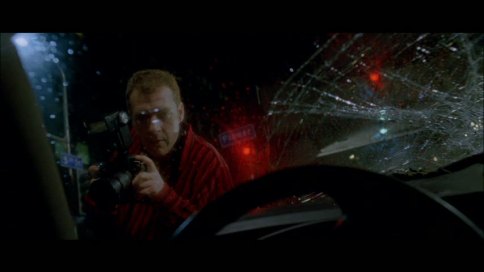
First released back in 2004, Paparazzi tells the story of Bo Laramie (Cole Hauser).  Bo is an up-and-coming super star.  As the film begins, we’re told — by a breathless correspondent from E! News — that Bo has arrived.  He’s starring in what promises to be “the world’s biggest action franchise.”  Bo has a wife (Robin Tunney), a son, and a beautiful house on the beach.  Whenever he goes jogging, huge groups of women magically materialize so that they can giggle as he runs by.

However, not everything is perfect in the world of Bo Laramie.  Like far too many defenseless celebrities, he’s being harassed by the paparazzi.  At first, Bo attempts to be polite.  However, a demonic photographer named Rex (Tom Sizemore) refuses to stop trying to take pictures of Bo at his son’s soccer game.  Things escalate until eventually, Bo’s son is in a coma and Bo is coming up with ludicrously elaborate ways to kill all of Rex’s colleagues.

The thing that distinguishes Paparazzi is not that it’s a revenge film.  What distinguishes Paparazzi is that it seems to seriously be arguing that celebrities have the right to kill people who annoy them.  Rex and his colleagues are portrayed as being pure evil (one even laughs maniacally after snapping a picture) while Bo is the victim who has to deal with the issues that come from being a multimillionaire.  Even the homicide detective played by Dennis Farina seems to be continually on the verge of saying, “Right on!” while looking over the results of Bo’s handiwork.

It’s so ludicrous and stupid and over-the-top that it can’t help but also be a lot of fun.

Don’t get me wrong.  Paparazzi is a terrible film.  In fact, it’s so terrible that, if a group of aliens ever somehow saw Paparazzi, they would probably hop in their spaceship and come to Earth specifically to wipe out the human race.  However, as bad as the film is, it’s also one of those films that you simply cannot look away from.  Watching this film is like witnessing a tornado of pure mediocrity coming straight at you.  You know that you should just stop watching and get to safety but it’s such an unexpectedly odd sight that you can’t look away.  Once you’ve seen it, you’ll never forget it and it becomes impossible not to become fascinated by the fact that such a terrible film could actually exist.

Consider the following:

1) When he’s not busy killing photographers, Bo Laramie is filming a movie called Adrenaline Force 2.  Seriously, that title is so generic that I couldn’t help but smile every time it was mentioned.  Can you imagine anyone saying, “I want to see that new movie, what’s it called, uhmm… Adrenaline Force 2?”

2) Speaking of generic, do you think that anyone named Bo Laramie could ever possibly become the biggest film star in the world?

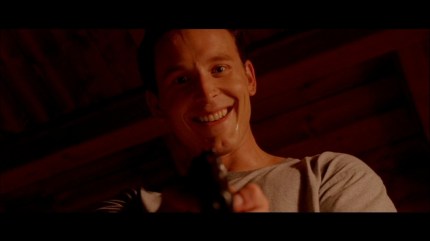
3) In the role of Bo Laramie, Cole Hauser seems like he’s as confused by this movie as everyone else.  However, towards the end of the film, he starts to flash a psychotic little grin and the contrast between that grin and Laramie’s previously stoic facade is oddly charming.

Hauser-in-Paparazzi-cole-hauser-12392470-853-480

4) You haven’t lived until you’ve seen Tom Sizemore play the world’s sleaziest photographer.

5) Vince Vaughn has a cameo as himself!  He’s co-starring in Adrenaline Force 2.

6) Mel Gibson has a cameo as himself!  He’s seen sitting in a psychologist’s office.  (No, seriously…)

7) Matthew McConaughey has a cameo as himself!  He shows up out-of-nowhere, tells Bo that it’s a pleasure to meet him, and then goes, “Alright, alright…”

8) Chris Rock has a cameo as a …. pizza deliveryman!  At first, I assumed that Chris Rock was playing himself and I kept waiting for him to explain why he was delivering a pizza to Bo Laramie’s house.  However, according to the end credits, Vaughn, McConaughey, and Gibson were playing themselves while Rock was playing the role of “Pizza Guy.”

9) Plotwise, this film invites the viewer to play a game of, “What if everyone in this film wasn’t a total and complete idiot?”  For all the effort that Bo puts into plotting his revenge, it’s hard not to feel that he just got extremely lucky.

10) The film manages to be both silly and completely humorless at the same time.  As a result, it’s a good for more than a few laughs.

11) There’s a scene where, out of nowhere, Bo recites an inner monologue about the price of fame that will remind observant viewers of Tony Bennett’s classic narration from The Oscar.

12) At one point, Tom Sizemore says, “I am going to destroy your life and eat your soul. And I can’t wait to do it.”

13) The film’s director used to be Mel Gibson’s hairdresser.

14) Finally, the film was produced by Mel Gibson and that probably means that the film actually is making a sincere case for murdering members of the paparazzi.

If ever a film has deserved the description of being so bad that it’s good, it is Paparazzi.  Between the sense of entitlement, the feverish fantasies of revenge, and the out-of-nowhere celebrity cameos, Paparazzi is a film that has earned the title of guilty pleasure.

Tom-in-Paparazzi-tom-sizemore-26901287-853-480

Previous Guilty Pleasures:

  1. Half-Baked
  2. Save The Last Dance
  3. Every Rose Has Its Thorns
  4. The Jeremy Kyle Show
  5. Invasion USA
  6. The Golden Child
  7. Final Destination 2

Before The New One Comes Out — “Before Sunset”


before-sunset-movie-poster-2004-1020215600

When I got back to the US after spending 18 or so months abroad in 2005, Before Sunset had already come and gone from theaters the previous year, and to be honest, my first reaction to it was to be a bit perplexed by the whole idea. “Never saw that one coming,” I thought to myself — but I knew I had to see it. Yeah, as I said last time, I couldn’t really picture any other ending for Jesse and Celine apart from one where they absolutely had to have met up again six months later and lived, as the saying goes, “happily ever after,” but here we were, nine years down the road, with the real (well, okay, not “real” — it is a movie, after all — but you know what I mean) story of what came next. Fortunately for me, my very good (to this day) friend with whom I had seen Before Sunrise had missed this one in the cinemas, as well, so just a few days after getting settled back into my house, with almost no furniture in place, and my TV and DVD player only having been hooked up a matter of hours earlier, we kicked back and did a little marathon viewing session of both films back-to-back.

The first thing I was taken aback by was how much of an emaciated meth-head Ethan Hawke looked like this time around, and Julie Delpy looked to be bordering on “unhealthy thin” status as well, but no matter — for the next hour-and-a-half or so we were back in their lives, and they were back in ours, and even if everything wasn’t gonna be perfect, it was all gonna be good enough.

Which isn’t too bad a summation of Before Sunset as a whole, with one added caveat — “good enough” can be pretty damn beautiful in its own way. Jesse’s an author know, touring Europe to promote his new book, an obviously-autobiographical account of two strangers who meet on a train, spend an evening in Vienna, and fall deeply, passionately, and completely in love. Then never meet again. Or maybe they do. The novel’s ending is deliberately ambiguous.

Sound familiar? Anyway, on the last night of his tour he happens to be giving a reading/signing in Paris, and Celine shows up. They have just enough time, it seems, to grab a cup of coffee before he’s on a plane back home, and the motif of “stolen time” that they should never have had in the first place that runs through the first film is definitely pressed even further this time around, as events unfold very nearly in real time and every minute our two long-separated lovers spend together is one that pushes the envelope of their “real lives” even further out of shape.

I have to be honest — on first viewing this ultra-compressed time frame gave things a very rushed feel that I wasn’t terribly “in to,” but  I’ve subsequently grown to appreciate its utility as a story-telling device more and more. Jesse’s got a wife and son back home, but it’s a sham marriage where they’re both just going through the motions, while Celine, who now does some sort of unspecified work for an environmental organization,  has a boyfriend who works as a photojournalist and is basically gone all the time. She couldn’t make it back to Vienna to meet him all those years ago because her grandmother had just died, while Jesse showed up and couldn’t find her, even going so far as to post missing persons flyers around town in hopes of tracking her down. And that “missed meeting” has informed and shaped the course of their lives every bit as much as the time they actually did meet.

Once again,  Richard Linklater’s superbly subtle eye ensures than the camera is in exactly the right place for maximum dramatic impact with every shot, but giving the proceedings an even more naturalistic flow here is the fact that there’s no Linklater/Karen Krizan script to be read — rather Hawke and Delpy were allowed to “get in character” and create their own dialogue for these people they knew so well. It works like a charm, and the whole thing feels like nothing so much as an expertly-filmed conversation between two old lovers that unfolds as they hurriedly stroll through the streets of Paris. Every second counts. Every word counts. Ever movement and expression counts. Everything counts. Even if it’s delivered with the more practiced nonchalance that most of us acquire as settle into what life is rather than dream about what it could be.

With both characters now in the early 30s, those possibilities of which I speak have narrowed considerably compared to last time around, but I think that’s the whole unfolding theme of this entire series — learning to find a place for dreams, and for love, in a world that whittles away the chances at achieving both as the years go on. A search for beauty and truth and meaning by projecting our hopes and ideals into visions of a world that we wished existed inexorably giving way to a life where we can still, hopefully, search for — and maybe even find — beauty and truth and meaning in a world that already exists.  It’s painfully obvious that both Jesse and Celine have never really “moved on” from their one magical night together, and that they’ve both dreamed of an existence where they were able to meet again ever since. Jesse’s stumbled into a responsible “family man” life simply because he saw it as all that was on offer anymore, and Celine’s carefully walled herself off from real emotional connection with others simply because it all hurts too much when they inevitably leave. Both are hopelessly infatuated with a memory, yet torn apart by it at the same time,  and are  now presented with a very rare opportunity in life — the chance to rekindle that memory, actively, in the present day, and maybe — just maybe — build on it. They both share the unbreakable bond of one moment in time that’s authored every moment since. And now, finally meeting again after all these years, wouldn’t ya know it — they’re in a hurry.

Imperfect circumstances for two people leading imperfect lives that have largely been a series of imperfect reactions to one perfect evening. Celine’s completely neurotic, Jesse’s completely resigned to his fate, and yet — the spark is still there. Their time together here is often painful, argumentative, and decidedly uncomfortable, but it all feels so almost unbearably authentic that you can’t help but become just as swept up in it as you were by that night in Vienna.

All of which leads to an ending you can’t help but love, despite the enormous complications you know it will present to both of these characters’ lives. Linklater is obviously trading in reversals with Before Sunset from the outset — showing us still-frame shots of where our couple will go at the beginning rather than showing us where they’ve been  at the end, and swapping out talk of what they want their lives to be with a litany of regrets over what their lives have become, but whereas their first meeting was a luminous evening capped off with a separation, their second is a rocky, tenuous, long-delayed and frankly even a bit faded afterglow that Jesse purposely blows off his flight home to stay in. This is no longer an idealized memory, or a painful reminder of what might have been — this is here. This is now. This is real life with all its flaws and foibles and tragedies and responsibilities. And these two are in in together.

As with all things as we get older, moments of revelation and life-altering decisions become more subtle and unpronounced in their execution, but their impact is every bit as real. When Celine tells Jesse “you’re going to miss that flight,” and he replies “I know,” it’s not tinged with the momentous import of every new character revelation we enjoyed in their first outing, but it sure does resonate at least as much as any of them, if not moreso. These people are grown-ups now. Their actions matter. And our reactions to them are consequently more complex and nuanced. “Dude, you’re fucking your life up big-time here” is answered by “but you’ll be fucking it up even more if you leave.” I was, and still am, elated by his choice, despite its implications, and am eagerly awaiting the next chapter in this story with a burning interest I haven’t felt for any other film in years. Before Sunrise left me in love with an idealized vision; a dream. Before Sunset left me in love with the real world and all the possibilities that still exist within it.