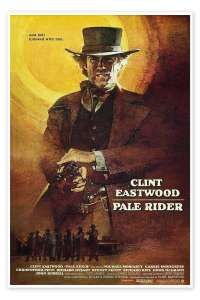
Pale Rider (dir. by Clint Eastwood)


We continue the Shattered Lens’ celebration of Clint Eastwood with 1985’s Pale Rider, one of my favorites. This was a film my long time friend Jay shared with me many years ago, as he owns most of Eastwood’s library of films. I like to think of it as a softer version of Eastwood’s own High Plains Drifter, which my father loved, but I couldn’t really get. It’s a tale of vengeance, but wrapped more in miracles. 

You should first know that Westerns aren’t really my genre when it comes to film types I often watch. I don’t have a lot of historical background when it comes to Westerns overall. If you asked for a short list of my favorites, I’d give up Rustler’s Rhapsody (it’s a fun comedy), The Good, The Bad & The Ugly (my Dad watched it often), Blazing Saddles, and in terms of books, the first few books of Stephen King’s The Dark Tower. I only recently watched Shaneafter Logan was first released, and I love the Red Dead Redemption games.

Pale Rider takes place in California around the time of the gold rush. Outside the town of LaHood, named after the wicked Coy LaHood (Richard Dysart, The Thing), we have a group of miners settled in that are hoping to strike it rich. It’s somewhat difficult with LaHood’s henchmen trying to drive them out at every turn, to steal the land. Hull Barrett (Michael Moriarty, Q The Winged Serpent) hopes to be successful, living with his fiancé Sarah (Carrie Snodgress, The Fury) and her daughter, Meghan (Sydney Penny, The Wife He Met Online). The most recent attack from LaHood’s men has shattered the miners’ morale and few are spared. Even Meghan’s dog is killed, causing her to wish for a miracle.

When LaHood’s son, Josh (Chris Penn, True Romance) and some other baddies (including The Thing‘s Charles Callahan, reuniting with Dysart) confront Hull, a stranger steps in. He handles them all easily with an axe handle, and as thanks, Hull welcomes him to the Miners area for room and board. Of course, having a stranger brings up all sorts of questions from the townsfolk, who don’t appear to be too trusting. Is he an outlaw, possibly? Even Meghan’s a little apprehensive at first, with her quote from Revelations 6:8 forshadowing the Pale Rider’s presence. Everyone is put at ease when they find our stranger is actually a Preacher, though Hull is still a bit curious about the six bullet sized scars on the man’s back. Can the Preacher help the Miners keep their land and stop LaHood? 

From a casting standpoint, Pale Rider is damn near perfect. Although Eastwood is the main star in his own film, he comes across more as an accessory for everyone else in scenes. Moriarty does most of the heavy lifting, as does Snodgress and Penny. Their characters are all easily likable and the supporting cast (particularly Doug McGrath’s Spider) shine in their parts. Dysart’s LaHood is a dark character and there’s a wonderful verbal conflict between him and Eastwood in one scene that’s just sweet to watch to see who loses their cool first. 

Pale Rider is both pretty simple and well executed from a story standpoint. It bears some similarities to Eastwood’s other film, High Plains Drifter. Though the town isn’t painted in red, there are allusions to the idea that the Preacher may be something of.a specter or ghost of vengeance. We’re not given any kind of full story as to why the Preacher’s here. We are shown that both The Preacher and LaHood’s Marshall, Stockburn (John Russell, The Outlaw Josey Wales) share a history, but that’s it. The story, like the Preacher and the events around him, moves in mysterious ways. 

What I love the most about Pale Rider is the way the Preacher changes the minds (and hearts) of those around him. The miners learn to fend for themselves. His enemies are often in shock over what he does (and at least one flips from bad to good). It kind of reminds me of Wild West version of John Wick or Nobody, with a character whose reputation precedes him. 

Bruce Surtees was the Cinematographer for Pale Rider, who also worked on a number of Eastwood’s earlier films, including The Outlaw Josey Wales and Play Misty for Me. Pale Rider has some beautiful landscape shots of the West (as the film was filmed in Idaho). Despite all the well lit shots, there are still moments where faces are obscured by the brim of a hat or the contrasts in a candlelit room. 

The story isn’t without some dark areas or some odd moments. A dog is killed, and there’s a scene where Meghan is nearly raped, but there’s some intervention before things can get out of hand. Both instances help to show how dark the villains are in the overall tale. Both Sarah and Meghan seem to take their own shine to The Preacher, one already in a relationship and the other too young for what she’s asking for, but I took it to just be that their both a bit mesmerized by the Preacher’s presence in different ways. 

Overall, Pale Rider is a wonderful offering by Eastwood, with fine performances by everyone involved. The Preacher does what he can to make things better around him with a peaceful approach. When push comes to shove, however, the guns come out blazing. 
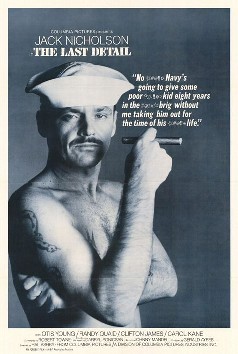
The Last Detail (1973, directed by Hal Ashby)


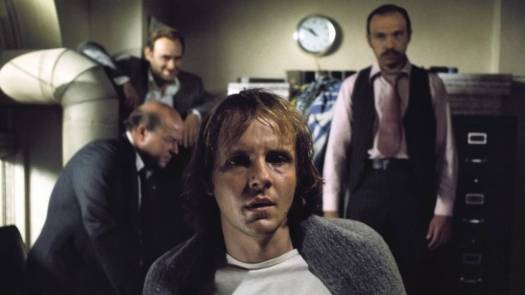
Billy “Badass” Buddusky (Jack Nicholson) and Richard Mulhall (Otis Young) are two Navy lifers stationed in Virginia.  On shore patrol, they’ve been assigned to transport a 18 year-old seaman to a Naval prison in Maine.  The kid has been dishonorably discharged and sentenced to eight years in the brig for trying to steal $40 from a charity box.  (The charity was a favorite of the wife of his commanding officer.)  Buddusky and Mulhall are expecting to find a hardened punk but instead, they end up escorting Larry Meadows (Randy Quaid), a timid teenager who suffers from kleptomania and who doesn’t seem to understand just how bad things are going to be for him for the rest of his life.  Not only is he going to do eight years in the brig, surrounded by hardened criminals, but his dishonorable discharge is going to follow him for the rest of his life.

Resenting having to take Meadows to prison and also feeling that he’s getting a raw deal, Buddusky and Mulhall decide to make a few stops on their way to Maine, so that Larry can enjoy what little time he has left and hopefully lose his virginity before being locked up.  In between brawling with Marines, visiting a brothel (where a young Carol Kane plays one of the prostitutes), and hanging out with a group of hippies (one of whom is played by Gilda Radner), Meadows comes to think of Buddusky and Mulhall as being his best friends.  Unfortunately, for Meadows, both Buddusky and Mulhall have their job to do.

Hal Ashby’s road picture is a character study of three men who are all lifers, even if they don’t realize that.  Both Buddusky and Mulhall hate the Navy but they also can’t relate to anyone who isn’t a member of the service.  Meadows’s entire future has been pre-determined because he tried to steal $40 but he doesn’t realize it until its too late.  When the film came out, it was controversial due to its “colorful” language.  In an interview, screenwriter Robert Towne defended the frequent profanity because, as he put it, when you’re in a situation you hate, “that’s what you do.  You bitch.”  Hal Ashby’s loose direction captures the road trip feel as the three leads reluctantly head to their ultimate destination.

The Last Detail features one of Jack Nicholson’s best performances.  Buddusky is cynical and doesn’t trust anyone other than Mulhall but even he knows that Larry Meadows deserves better than to spend eight years in the brig.  Along with lending his star power to the film and standing by director Hal Ashby when Ashby was arrested for marijuana possession, Nicholson also played a big role in the casting of Randy Quaid as Larry Meadows.  (The other final contender for the role was John Travolta but Nicholson insisted on Quaid).  The 6’5 Quaid towers of Nicholson and Young, making him look as if he could escape any time that he wants.  But Larry is so naive that he doesn’t want to make any trouble for his “friends.”  Though this wasn’t his first film, The Last Detail is the film that made Quaid one of the busiest character actors of the 70s and 80s and it also, at least temporarily, made him a part of the Jack Nicholson stock company.

Both sad and funny, The Last Detail is one of the best films of the 70s and features Jack Nicholson at his most unforgettable.

Horror Film Review: Troll (dir by John Carl Buechler)


The 1986 film, Troll, opens with Harry Potter moving into a San Francisco townhouse.

Okay, it’s not that Harry Potter.  Troll was produced long before the first Harry Potter book was even published so it’s fair to assume that it’s just a coincidence that this film — about trolls, magic, and faeries — just happens to feature not just one but two characters named Harry Potter.  Harry Potter, Sr. (Michael Moriarty) is a typical, dorky father figure.  Indeed, he’s such a conventional figure that it’s a bit hard to understand why the always neurotic Michael Moriarty was cast in the role.  Harry’s son is named Harry Potter, Jr. (Noah Hathaway).  Harry, Jr. is a teenager who is shocked by how bratty his little sister, Wendy (Jenny Beck), becomes after the family moves into their new apartment.

Why is Wendy acting like such a brat?  It’s because Wendy has been kidnapped by Torok the Troll (Phil Fondacaro), a grotesque creature who not only abducts Wendy but also steals her appearance so that he can safely move around the world of the humans.  Torok, himself, was once a powerful wizard but, centuries ago, he and an army of faeries tried to destroy all the humans in the world.  Their plan didn’t work and, as punishment, Torok was turned into a troll.

But now, somehow, Torok is free and he’s taking over the apartment building.  One by one, he tracks down each tenant and casts a spell which turns them into a mythological creature, like a gnome or a wood nymph.  All of the apartments turns into lushly overgrown forests.  Among those tenants that get transformed are Sonny Bono and a young Julia Louis-Dreyfus.  I have a feeling that, when Sonny later ran for Congress, he did not include his appearance in Troll in any of his campaign literature.  As for Louis-Dreyfus, she was reportedly angered once when a talk show host (I think it was Jay Leno) showed footage from this film while interviewing her.  It’s not so much that Julia Louis-Dreyfus isn’t a convincing wood nymph as much as it’s the fact that she’s Julie Louis-Dreyfus and it’s just difficult to imagine her appearing in such a stupid role.  This, of course, was her first film and everyone has to start somewhere.

Anyway, realizing that he has to rescue his little sister, Harry Potter, Jr. gets some help from the local witch, Eunice St. Clair (Joan Lockhart).  Eunice gives Harry a magic spear to take with him in his quest.  It’s not really that much of quest, however.  Troll is a low-budget film that was produced by Albert Band so this is not the film to watch if you’re expecting some sort of elaborate fantasy epic.

One positive thing that I will say for Troll is that some of the troll makeup is effective.  The plot maks absolutely zero sense but Director John Carl Buechler specialized in creating memorable monsters on a budget and he manages to do that with Troll.  And, despite all of the people getting turned into monsters, Troll is a largely good-natured film.  It’s not a deliberately cruel or even gory film.  It’s a dumb little horror/fantasy film that features Sonny Bono turning into a plant and Julie Louis-Dreyfus turning into a wood nymph.  It’s dumb but it’s mild and generally inoffensive.

Finally, I should also note that it is in no way connected to Troll 2.  Troll 2, after all, is about goblins.

Lisa Marie’s Grindhouse Trailers: 6 Trailers For The Second Thursday In October


We are rapidly reaching the halfway mark of our October horrorthon here at the Shattered Lens. By the time we reach the end of the first half at midnight on Saturday, we will have published over 200 posts. During the second half, we’ll publish …. well, let’s not speculate. You never know. The world could end tomorrow and, as a result, we might never post again. What’s important is that I’m proud of what we’ve accomplished so far and I look forward to seeing what we accomplish during the rest of the month!

(That said, I’m hoping for another 250 to 300 or so posts. 500 FOR OCTOBER! It seems like a reasonable go. We’ll see!)

Anyway, today seems like a good time for another edition of Lisa Marie’s Favorite Grindhouse Trailers! And, since today is Jack Arnold’s birthday, it only seems appropriate that today’s edition deals with giant creature features!

  1. Q: The Winged Serpent (1982)

From director Larry Cohen, it’s Q The Winged Serpent! I’ve seen this movie and it’s undeniably entertaining. On the one hand, you’ve got the serpent flying around and looking all dangerous. Then you’ve got David Carradine and Richard Roundtree kind of sleepwalking through their roles. And then, suddenly, Michael Moriarty shows up and gives this brilliant, method-influenced performance. It’s an odd film but it’s hard not to like that Claymation flying serpent.

2. The Giant Spider Invasion (1975)

From Wisconsin’s own Bill Rebane, here’s the trailer for The Giant Spider Invasion! This is probably Rebane’s best film. If you’re trying to frighten your audience, you can’t go wrong with a giant spider.

3. Empire of the Ants (1977)

What’s the only thing scarier than a giant spider? A giant ant, of course! This film is from Bert I. Gordon, a director so obsessed with films about giant monsters that he was actually nicknamed Mr. BIG. (Of course, it also helped that those were his initials.)

4. Food of the Gods (1976)

Speaking of Bert I. Gordon, he was also responsible for this film, Food of the Gods. Like Empire of the Ants, it was based (however loosely) on a novel by H.G. Wells. Two old farmers feed the food of the Gods to the local animals and things do not go well. For some reason, a football player played by Marjoe Gortner decides to investigate. Shouldn’t he be practicing for the big game? Gordon missed an opportunity here by not having a giant-sized Marjoe Gortner.

5. Night of the Lepus (1972)

As frightening as those previous trailers were, can anything prepare you for the terror of killer rabbits!? This movie is proof positive that rabbits look cute no matter who they’re killing.

6. Village of the Giants (1965)

In the end, though, the greatest monster will always be man. By the way, this is another Bert I. Gordon film. Beau Bridges turns into a giant and plots to conquer the world. Only a young Ron Howard can stop him.

I hope you’re having a wonderful October! Never stop watching the shadows!

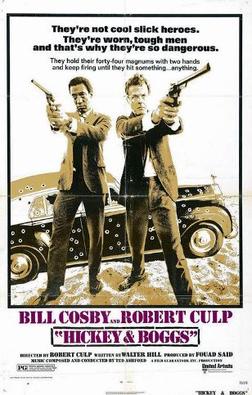
Hickey & Boggs (1972, directed by Robert Culp)


Frank Boggs (Robert Culp) and Al Hickey (Bill Cosby) are two private investigators who are constantly in danger of losing their licenses and going out of business.  Hickey is the responsible one.  Boggs is the seedy alcoholic.  When Hickey and Boggs are hired to track down a missing woman, their investigation lands them in the middle of a war between the mob and a group of political activists who are fighting over who is going to get the loot from a recent robbery.  Hickey and Boggs are targeted by the mob and soon, everyone is dying around them.

With its cynical themes and downbeat ending, Hickey & Boggs is very much a 70s film.  The script was written by future director Walter Hill and when it was eventually offered to Bill Cosby, Cosby agreed to star on the condition that his I Spy co-star, Robert Culp, be hired to direct.  Producer John Calley hired Culp but after Calley refused to provide the budget that Culp requested, Culp bought the script and raised the money himself.

There are a few problems with Hickey & Boggs, the main one being that the plot is next to impossible to follow.  As a director, Robert Culp apparently didn’t believe in either filming coverage or providing establishment shots so, especially early on, it is often impossible to tell how one scene is connected to another or even how much time has passed between scenes.  I don’t know if this was an intentional aesthetic decision or if the production just ran out of money before everything could be shot but it makes it difficult to get into the film’s already complicated story.  On a positive note, Culp did have a flair for staging action scenes.  The film ends with a shoot out on the beach that’s is handled with such skill that it almost makes up for what came before it.  Also, like many actors-turned-director, Culp proved himself capable of spotting talent.  Along with giving early roles to Vincent Gardenia, James Woods and Michael Moriarty, Culp also took the chance of casting sitcom mainstay Robert Mandan as a villain.  It was a risk but it worked as Mandan convincingly portrays the banality of evil.

Of course, the biggest problem with Hickey & Boggs is that it stars Bill Cosby as a straight-laced hero and that’s no longer a role that anyone’s willing to believe him in.  Cosby actually does give a convincing dramatic performance in Hickey & Boggs.  Just look at the final scene on the beach where Hickey has his “what have we done” moment and shows the type of regret that Cosby has never shown in real life.  The problem is that to really appreciate Cosby’s performance, you have to find a way to overlook the fact that he’s Bill Cosby and that something that I found impossible to do while watching Hickey & Boggs.  When you should be getting into the movie, you’re thinking about how many decades Bill Cosby was able to get away with drugging and assaulting women.  If not for a comment from Hannibal Buress that led to a social media uproar, Cosby would probably still be getting away with it.  If Buress’s anti-Cosby comments hadn’t been recorded and hadn’t gone viral, Bill Cosby would still be free and the media would probably still be holding him up as some sort of role model.

At the time Hickey & Boggs was made, both Bill Cosby and Robert Culp were at a career crossroads.  Cosby was hoping to transform himself into a film star.  Culp was hoping to become a director.  Hickey & Boggs, however, was disliked by critics and flopped at the box office.  Culp never directed another film and we all know what happened with Bill Cosby.  (Of course, it wasn’t just the box office failure of Hickey & Boggs that kept Cosby from becoming a movie star.  Say what you will about Robert Culp as a director, he had nothing to do with Leonard Part 6.)  Hickey  & Boggs is too disjointed to really work but Robert Culp and Bill Cosby were convincing action stars and the film’s downbeat style and cynical worldview is sometimes interesting.

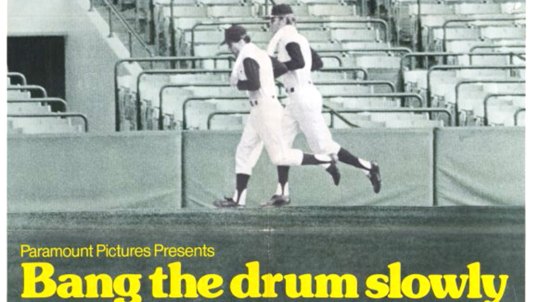
Bang The Drum Slowly (1973, dir. by John Hancock)


The last time I wrote a film review for this site, it was because I was missing baseball.

Guess what?

I still miss baseball!  Luckily, I’ve still got plenty of baseball films to keep me busy until the MLB gets its act together and starts up again.  I hope we’ll get baseball this year but if we don’t, at least I can watch a movie like Bang The Drum Slowly.

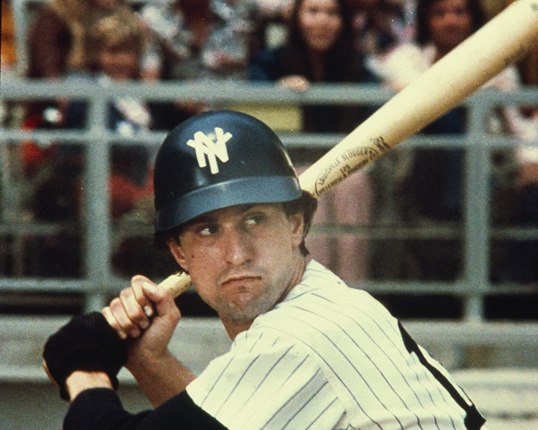
Bang The Drum Slowly is the ultimate baseball movie.  It’s about a pitcher named Henry Wiggin (Michael Moriarty) who plays for the New York Mammoths and who has a side job selling insurance and writing books.  When it’s time to renegotiate his contract, Henry says that he’ll re-sign with the team if the team agrees to not release or trade one of their catchers, Bruce Pearson (a really young Robert de Niro).  Henry says that he and Bruce are a package deal.  No one can understand why Henry cares because Bruce isn’t an outstanding player and everyone thinks that he’s slow but Henry finally gets the team’s general manager, Dutch (Vincent Gardenia), to agree to his terms.  What only Henry knows is that Bruce is terminally ill and that he will be lucky to survive the entire season.

Though the Mammoth eventually make a run for the World Series and there’s a lot of great baseball footage, Bang the Drum Slowly is more about friendship than it is about winning or losing.  Henry is willing to sacrifice everything to make sure that Bruce enjoys his final days and Bruce finally gets to play on a wining team.  Because Bruce is so young and he appears to be so healthy for most of the film, it’s really devastating when he suddenly does get ill and he’s finally has to come to terms with his mortality.  I cried a lot while I was watching Bang The Drum Slowly.  You will too.

The other players eventually rally around Bruce and they become a stronger teams as a result.  That’s one of the things that I love about baseball.  One player, no matter how good, can’t win a game on his own.  Instead, the entire team has to work together.  Not everyone can go out and try to hit a home run.  That’s not the way you win at baseball.  Instead, you win by doing what you have to do to bring your teammates home.  Bang The Drum Slowly celebrates friendship and loyalty and it perfectly captures the spirit of the game.

We may not be able to watch baseball right now.  But at least we can watch movies like Bang The Drum Slowly.

The TSL’s Horror Grindhouse: Q (dir by Larry Cohen)


This 1982 film from Larry Cohen is a strange one.

Q stands for Quetzalcoatl, a winged-serpent that was once worshiped by the Aztecs.  In New York someone has been performing ritual sacrifices, flaying victims of their skin.  As a result, Q has flown all the way to New York City and has taken residence in the Chrysler Building.  She’s also laid an egg, from which a baby Q will soon emerge.

Now, I’ve always heard that it’s next to impossible to surprise a New Yorker.  Apparently, living in New York City means that you’ve seen it all.  And that certainly seems to be the case with this film because no one in New York seems to notice that there’s a winged serpent flying over the city.  Somehow, Q manages to snatch up all sorts of people without anyone noticing.  When Q beheads a window washer, Detectives Shepard (David Carradine) and Powell (Richard Roundtree) aren’t particularly concerned by the fact that they can’t find the man’s head.  Shepard just shrugs and says the head will turn up eventually.

Q is really two films in one.  One of the films deals with a winged serpent flying over New York and killing people.  This film is a throwback to the old monster movies of the 50s and 60s, complete with some charmingly cheesy stop motion animation.  The film is silly but undeniably fun.  Director Cohen is both paying homage to and poking fun at the classic monster movies of the past and both Carradine and Roundtree gamely go through the motions as the two cops determined to take down a flying monster.

But then there’s also an entirely different film going on, a film that feels like it belongs in a totally different universe from the stop-motion monster and David Carradine.  This second film stars Michael Moriarty as Jimmy Quinn, a cowardly but charming criminal who would rather be a jazz pianist.  Quinn may be a habitual lawbreaker but he always makes the point that he’s never carried a gun.  He does what he has to do to survive but he’s never intentionally hurt anyone.  In Quinn’s eyes, he’s a victim of a society that has no room for a free-thinker like him.

However, when Quinn stumbles across Q’s nest, he suddenly has an opportunity to make his mark.  As he explains it to the police, he’ll tell them where to find the serpent and her eggs.  But they’re going to have to pay him first….

In the role of Quinn, Michael Moriarty is a jittery marvel.  Whenever Moriarty is on screen, he literally grabs the film away from not only his co-stars but even his director and makes it his own.  Suddenly, Q is no longer a film about a monster flying over New York City.  Instead, Q becomes a portrait of an outsider determined to make the world acknowledge not only his existence but also his importance.  After spending his entire life on the fringes, Jimmy Quinn is suddenly the most important man in New York and he’s not going to let the moment pass without getting what he wants.  Thanks to Moriarty’s bravura, method-tinged performance, Jimmy Quinn becomes a fascinating character and Q becomes far more than just another monster movie.

It makes for a somewhat disjointed viewing experience but the film still works.  With its charmingly dated special effects and it’s surprisingly great central performance, Q is definitely a film that deserves to be better-known.

Concrete Jungle: REPORT TO THE COMMISSIONER (United Artists 1975)


gary loggins's avatarcracked rear viewer

REPORT TO THE COMMISSIONER usually gets lumped in with the plethora of 70’s cop films, but I viewed it as a neo-noir. It’s structure tells the tale mainly in flashback, from the participating character’s differing perspective, and is dark as hell. I’m sure co-screenwriters Abby Mann and Ernest Tidyman were well aware of what they were doing: both men were former Oscar winners (Mann for JUDGEMENT AT NUREMBERG, Tidyman for THE FRENCH CONNECTION   ) familiar with the conventions of the genre. The solid cast features a powerhouse collection of 70’s character actors, led by Michael Moriarty’s patented over-the-edge performance as protagonist Bo Lockley.

Lockley is a young, idealistic cop caught up in circumstances beyond his control, snaring him in an inescapable downward spiral. The film opens with a pair of New York City detectives discovering the body of a young woman, who turns out to be one of their own, an undercover…

View original post 501 more words

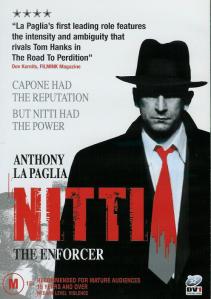
A Movie A Day #121: Frank Nitti: The Enforcer (1988, directed by Michael Switzer)


Everyone knows who Al Capone was but few people remember Frank Nitti.  Nicknamed “The Enforcer,” Nitti was Capone’s right-hand man.  When Big Al was sent to federal prison for not paying his taxes, Nitti was the one who kept things going in Chicago.  While Al was losing his mind in Florida, Nitti was the one who moved the Chicago Outfit away from prostitution and into the labor racket.  Today, if anyone remembers Frank Nitti, it is probably because of the scene in Brian DePalma’s The Untouchables where Eliot Ness tosses him off of a building.  In real life, Nitti survived the Untouchable era just to become one of the few crime bosses to die by his own hand.  In 1943, With the feds closing in on him, Nitti shot himself in a Chicago rail yard.

Frank Nitti: The Enforcer was a made-for-TV movie that told the story of Nitti’s life.  Broadcast a year after The Untouchables, Nitti is, in many ways, a direct refutation of DePalma’s film.  Eliot Ness never appears in the movie and is dismissed, by special prosecutor Hugh Kelly (Michael Moriarty), as being a publicity seeker.  Al Capone (Vincent Guastaferro) is ruthless and resents being called Scarface but he never hits anyone with a baseball bat.  In this movie, the only real villains are the Irish cops who harass Nitti (played by Anthony LaPaglia, in his American film debut) and Chicago’s ambitious mayor, Anton Cermak (Bruce Kirby).  Cermak orders a corrupt cop (Mike Starr) to shoot Nitti and the film implies that Cermak’s subsequent assassination was payback.

Though it sometimes tries too hard to portray its title character as just being a salt of the Earth family man who also happened to be the biggest mob boss in the country, Nitti is a good gangster film.  Michael Moriarty’s performance is a forerunner to his work on Law & Order and Trini Alvarado is lovely as Nitti’s wife.  Anthony LaPaglia gives a good performance in the lead role, with the film’s portrayal of Nitti as a ruthless but reluctant mob boss predating The Sopranos by a decade.

6 Trailers For Your Oscar Hangover


Now that the Oscars are over with, it’s time for another installment of Lisa Marie’s Favorite Grindhouse and Exploitation Trailers.

1) The Sicilian Connections (1972)

Since we’re coming down off the Oscars, I’ll start this latest edition off with the trailer for The Sicilian Connection, an Italian rip-off of 1971 best picture winner, The French Connection.  I haven’t seen the actual movie but I love the music that plays in the background of this trailer.

2) Dirty Gang (1977)

This is another Italian crime flick.  This trailer is worth it to just see that wonderful credit “Tomas Milian as Trash.”

3) Trouble Man (1972)

Tomas Milian may have been Trash but Robert Hooks was Trouble.

4) Q: The Winged Serpent (1982)

I’m so happy to include this trailer because I think Arleigh will love it.  David Carradine and Richard Roundtree fight a prehistoric something-or-an0ther.  Michael Moriarty’s in this which can only mean that this is a Larry Cohen film.

5) Dawn of the Mummy (1980)

“Egypt…a nice place to visit but would you want to die there?”  Not surprisingly, this is an Italian film that was released in the wake of Dawn of the Dead and Zombi 2.

6) The Crippled Masters (1979)

I kinda feel that this trailer runs a little bit long but then again, I’m not big into Kung Fu films that don’t star Uma Thurman.  Still, this is one of those pure grindhouse trailers that has to be seen to be believed.