VIOLENT CITY (1970) – starring Charles Bronson, Telly Savalas & Jill Ireland!


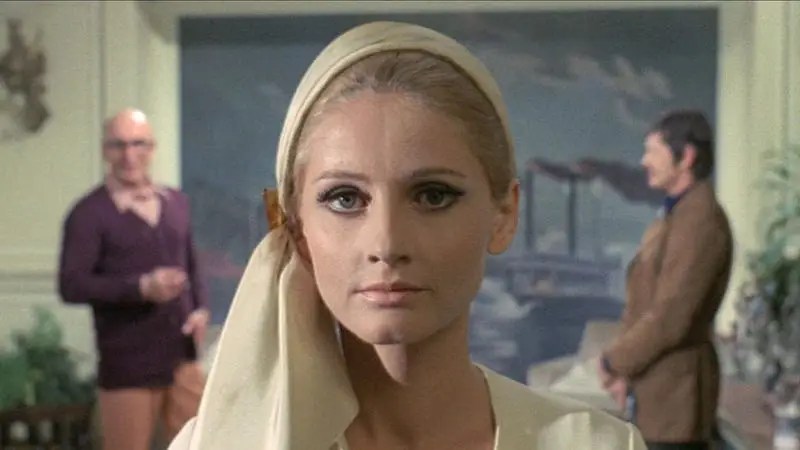
VIOLENT CITY opens with Jeff Heston (Charles Bronson) and Vanessa Shelton (Jill Ireland) living it up on a tropical island. They boat, they make love, and then spend some time enjoying the local island culture. Unfortunately, this is all a mirage and Jeff can’t escape the effects of his day job, that of a professional assassin. Soon a group of men are after him in a high speed chase on the narrow streets of paradise. Just when he thinks he’s gotten away, he’s double crossed and shot by his former associate, Jerry. Even worse, Vanessa gets in the car with Jerry and the two speed off. Waking up in jail, Jeff is visited by Steve (Umberto Orsini), the lawyer of his former boss Weber (Telly Savalas). Steve and Weber want him to come back and work for their organization. Jeff is more interested in finding Jerry and Vanessa, so when he finally gets out of jail, he turns their job offer down and continues on his odyssey into New Orleans. Jerry’s not too hard to find because he’s a professional race car driver. Jeff goes to his next race and shoots his tire out from long distance with a high powered rifle and watches as his car explodes in flames of death! Vanessa’s not so easy, not because he can’t find her, but because he loves her. He’d much rather make love to her than kill her, so that’s exactly what he does a couple of more times when he locates her. Even when he finds out she’s actually married to Weber, she’s able to convince Jeff that she only married him so she could be safe and that she despises him. She convinces Jeff that for them to be happy together that he should kill Weber. Does she really love him, or is she just using his badassery again? 

In honor of Jill Ireland’s birthday (April 24, 1936), I thought I’d review a Charles Bronson film that features a strong performance from his beautiful wife. And speaking of beautiful, she has never been any more beautiful than she is in VIOLENT CITY. I mentioned earlier that the film opens in a tropical paradise. Let’s just say that Bronson and Ireland are in peak physical condition and absolutely striking as they walk the island streets. With his chiseled features and mustache, Bronson is the perfect image of masculinity. With her blonde hair, curvaceous figure and perfect tan, she’s a vision of feminine beauty. Bronson’s Jeff Heston is as tough as it gets, and we soon find out that no man can get the better of him. It’s a tribute to Ireland’s performance that we don’t necessarily blame him for continuing to give her second and third chances, even to his own peril. And she saves her best work for the end, when we all find out that she has more going for her than just beauty. 

VIOLENT CITY was directed by the Italian filmmaker Sergio Sollima, whose other credits include the excellent spaghetti western, THE BIG GUNDOWN with Lee Van Cleef, and the solid “Polizziotteschi” crime film REVOLVER, with Oliver Reed. He gets more sensual performances from the stars than we’d get in future years, as they do lots and lots of loving on each other throughout the course of the film. The musical score is from the master composer himself, Ennio Morricone. It’s not quite ONCE UPON A TIME IN THE WEST level, but it’s really good stuff and quite memorable. If I had one complaint it would be that I wish Telly Savalas had more screen time as Weber. His character added life to the film whenever he appeared. He could be a real asshole, but he seemed to have a lot of fun, and he makes one hell of a cocktail (the moonlight passion)!

My final word on VIOLENT CITY is that it’s a solid Italian crime film, with a lean, mean Bronson, good action sequences, and a more than adequate Jill Ireland as a beautiful femme fatale. I certainly recommend it. Happy Birthday, Jill! 

VIOLENT CITY was initially released in America under the name THE FAMILY in hopes of drafting off the THE GODFATHER. See the trailer below.

Film Review: Voyage of the Damned (dir by Stuart Rosenberg)


In 1939, an ocean liner named the MS St. Louis set sail from Hamburg.  Along with the crew, the ship carried 937 passengers, all of whom were Jewish and leaving Germany to escape Nazi persecution.  The ship was meant to go to Havana, where the passengers had been told that they would be given asylum.  Many were hoping to reunite with family members who had already taken the voyage.

What neither the passengers nor Captain Gustav Schroeder knew was that the entire voyage was merely a propaganda operation.  No sooner had the St. Louis left Hamburg than German agents and Nazi sympathizers started to rile up anti-Semitic feelings in Cuba.  The plan was to prevent the passengers from disembarking in Cuba and to force the St. Louis to then return to Germany.  The Nazis would be able to claim that they had given the Jews a chance to leave but that the rest of the world would not take them in.  Not only would the Jews be cast as pariahs but the Germans would be able to use the world’s actions as a way to defend their own crimes.

Captain Schroeder, however, refused to play along.  After he was refused permission to dock in Cuba, he then attempted to take the ship to both America and Canada.  When both of those countries refused to allow him to dock, Schroeder turned the St. Louis toward England, where he planned to stage a shipwreck so that the passengers could be rescued at sea.  Before that happened, Belgium, France, the Netherlands, and the United Kingdom jointly announced that they would accept the refugees.

Tragically, just a few days after the passengers disembarked, World War II officially began and Belgium, France, and the Netherlands all fell to the Nazi war machine.  It is estimated that, of the 937 passengers on the St. Louis, more than 600 of them subsequently died in the Nazi concentration camps.

The journey of the St. Louis was recreated in the 1976 film, Voyage of the Damned, with Max von Sydow as Captain Schroeder and a collection of familiar faces playing not only the ship’s passengers and crew but also the men and women in Cuba who all played a role in the fate of the ship.  In fact, one could argue that there’s a few too many familiar faces in Voyage of the Damned.  One cannot fault the performances of Max von Sydow, Malcolm McDowell, and Helmut Griem as members of the crew.  And, amongst the passengers, Lee Grant, Jonathan Pryce, Paul Koslo, Sam Wanamaker, and Julie Harris all make a good impression.  Even the glamorous Faye Dunaway doesn’t seem to be too out-of-place on the ship.  But then, in Havana, actors like Orson Welles and James Mason are awkwardly cast as Cubans and the fact that they are very obviously not Cuban serves to take the viewer out of the story.  It reminds the viewer that, as heart-breaking as the story of the St. Louis may be, they’re still just watching a movie.

That said, Voyage of the Damned still tells an important true story, one that deserves to be better-known.  In its best moments, the film captures the helplessness of having nowhere to go.  With Cuba corrupt and the rest of the world more interested in maintaining the illusion of peace than seriously confronting what was happening in Germany, the Jewish passengers of the St. Louis truly find themselves as a people without a home.  They also discover that they cannot depend on leaders the other nations of the world to defend them.

Defending the passengers falls to a few people who are willing to defy the leaders of their own country.  At the start of the film, Nazi Intelligence Chief Wilhelm Canaris (Denholm Elliott) explains that Captain Schroeder was selected specifically because he wasn’t a member of the Nazi Party and could not be accused of having ulterior motives for ultimately returning the passengers to Germany.  Canaris and his fellow Nazis assume that anti-Semitism is so natural that even a non-Nazi will not care what happens to the Jewish passengers.  Instead, Schroeder and his crew take it upon themselves to save the lives of the passengers.  It is not Franklin Roosevelt who tries to save the passengers of St. Louis.  Instead, it’s just a handful of people who, despite unrelenting pressure to do otherwise, step up to do the right thing.  Max von Sydow, who was so often cast in villainous roles, gives a strong performance as the captain who is willing to sacrifice his ship to save his passengers.

Flaws and all, Voyage of the Damned is a powerful film about a moment in history that must never be forgotten.

Retro Television Review: Homicide: Life on The Street 1.7 “A Dog and Pony Show”


Welcome to Retro Television Reviews, a feature where we review some of our favorite and least favorite shows of the past!  On Sundays, I will be reviewing Homicide: Life On The Street, which aired from 1993 to 1999, on NBC!  It  can be viewed on Peacock.

This week, everyone gets something to do!

Episode 1.7 “A Dog and Pony Show”

(Dir by Alan Taylor, originally aired on March 10th, 1993)

Still struggling to accept their failure to get the arraber to confess to the murder of Adena Watson, Bayliss and Pembleton find themselves investigating another mysterious death.  Jake, a healthy and apparently beloved member of the Baltimore police, has been found dead in a park.  No one is sure about the cause of death but Pembleton suspects that Jake may have been poisoned.  When Pembleton asks Jake’s partner (played by Nick Olcott) if Jake had any enemies, he replies, “Maybe just the Pekingese next door.”

Pembleton is determined to solve the mystery of Jake’s death.  Bayliss is less concerned with the case, largely because Jake was a dog.  Of course, as a member of a K-9 unit, Jake was also a member of the force.  Because Jake was a member of law enforcement, the Homicide unit is required to investigate his death.  Bayliss thinks that Pembleton’s interest in the case is just trying to show Bayliss up in front of Giardello but Pembleton claims that his only concer is seeing that justice is done.  Add to that, Pembleton just happens to like dogs.

And Pembleton does solve the case.  It turns out that Jake got loose and was picked up by an overworked animal control officer (Joy Ehrlich) who, back at the pound, mixed Jake up with another dog who was scheduled to be put down.  She only realized her mistake after Jake died.  In a panic, she dumped Jake’s body in the park.  Having solved Jake’s death, Pembleton and Bayliss attend his funeral.  As Jake’s partner dumps Jake’s ashes into a lake, Bayliss suddenly gets emotional.  He explains that he’s thinking about Adena.  Pembleton, for once, shows some sympathy for Bayliss.  It looks like the two are finally starting to bond and become true partners.  All it took was the death of one dog.  (I’m getting teary-eyed just writing that sentence.)

Meanwhile, Bolander continues to stress out about his relationship with Carol, which is a subplot that I find less and less interesting with each episode in which it is featured.  This time, Bolander and Munch take Carol’s teenage son, Danny (Stivi Paskoski), on a ride-along.  Bolander is disturbed at just how excited Danny gets about seeing a dead body.  When Danny says that he’d love to commit a murder and get away with it, Bolander decides that the kid is mentally disturbed.  He also lets Carol know that he thinks Danny is a bit sick in the head.  I get the feeling this relationship is not going to last much longer and that’s fine with me because Bolander’s love life (or lack thereof) is honestly the least interesting part of this show so far.

While all of that is going on, Crosetti tries to comfort the now blind Chris Thormann, who does not react well to the news that his wife (played by Edie Falco) is pregnant.  I’m not really a huge fan of the Thormann storyline, largely because I find it to be almost unbearably depressing.  But I do have to say that Jon Polito, Lee Tergesen, and Edie Falco all really gave great performance in this episode.

Howard and Felton investigate the murder of a drug dealer’s girlfriend.  This storyline was pretty typical of what you’d expect to see on a cop show.  The most interesting thing about it was the presence of Lawrence Gilliard, Jr. as an associate of the suspect.  Years later, Gilliard would play the tragic D’Angelo Barksdale on the first two seasons of The Wire, a show that feels like a direct descendant of Homicide.  (And, indeed, Richard Belzer did have a cameo as John Munch during The Wire‘s final season so the two shows do take place in the same universe, though it should be made clear that Gilliard is not playing D’Angelo in this episode.)

Finally, a retiring shift commander (played by Michael Constantine) warned Giardello that the bosses want to force out all of the veteran commanders so that they can be replaced by younger men.  As usual, Kotto shined in the role of Giardello, playing him as being the ideal boss.  In a police force where almost everyone else seems to be looking out for themselves, Giardello genuinely cares about the people working under him.

After the emotional intensity of the previous episode, A Dog and Pony Show feels a bit more like a traditional crime show.  It’s definitely an ensemble piece, with everyone getting something to do.  (Even Lewis gets to help out Felton and Howard while his usual partner, Crosetti, tends to Thormann.)  Though this episode doesn’t grab the viewer in the same way as the previous few episodes, it still gives the cast a chance to show off their strengths and it still features enough unexpected moments of mordant wit to keep things from getting too bleak.  (It’s hard not to smile at Bayliss and Pembleton bickering over dogs or at Yaphet Kotto’s delivery of the line, “I’m starting to dislike both of you.”)  This episode shows that, even with a somewhat conventional episode, Homicide could still get the job done without sacrificing its own unique identity.

Late Night Retro Television Review: Highway to Heaven 2.12 “The Good Doctor”


Welcome to Late Night Retro Television Reviews, a feature where we review some of our favorite and least favorite shows of the past!  On Thursdays, I will be reviewing Highway to Heaven, which aired on NBC from 1984 to 1989.  The entire show is currently streaming on Freevee and several other services!

It’s time to get back on that highway!

Episode 2.12 “The Good Doctor”

(Dir by William Claxton, originally aired on December 18th, 1985)

This week, Mark is super-excited about Jonathan’s new assignment.  They’re going to be working, as equipment managers, for a pro football team!  Mark’s excited because he loves football and he can’t wait to meet his favorite player of all time, a banged-up, aging guy named Alex Carpenter (Ray Young).

Jonathan, however, is concerned that everyone is on drugs.  Alex is in almost constant agony from his injuries and he’s gotten hooked on the pain pills that are provided to him by the team doctor, Dr. Dan Hickey (Michael Constantine).  Dan is hooked on pills himself, along with being an alcoholic.  Dan is such an addict that he doesn’t even realize that his son, medical student Neal (William Kirby Cullen), is now abusing drugs himself.  Everyone’s an addict and everyone’s in denial.

When Alex gets cut from the team, he is also cut off from his main supplier and soon, he’s tearing up his house while searching for any leftover pills.  (Jonathan appears and loudly encourages him to destroy his entire office while searching, presumably so Alex can see how out-of-control his addiction is.)  When Neal takes too many pills before his next exam, he ends up in the hospital.  And Dan is finally forced to admit that he hasn’t been a good doctor.

Does this episode end at a Narcotics Anonymous meeting, attended by all three of the addicts?  You better believe it!

This was pretty much a typical Highway to Heaven episode.  This message was earnest and heartfelt but the direction and the script totally embraced the episode’s already heightened melodrama.  It wasn’t enough for Alex to get upset over not being able to find his pills.  Instead, he had to furiously toss everything around his office (and even break a window) while Jonathan shouted, “WHERE ARE THE PILLS, ALEX!?  WHERE ARE THEY!?”  It wasn’t enough for Dan to overprescribe pills.  He also had to be so drunk that he didn’t even notice when Jonathan materialized in his office.  And, of course, Neal had to OD because there was no way we were going to end this episode without someone being rushed to the hospital.  It was all a bit predictable but the show wasn’t incorrect when it came to discussing the dangers of abusing even prescription medication.  If the show aired today, the enemy would be fentanyl.  Since it was made in 1985, the enemy is instead just generic pain pills.

As often was the case with this series, the acting was a mixed bag but Michael Constantine was certainly effective as the “good doctor,” wandering through his day in a haze of pills and alcohol.  And Michael Landon delivered his denunciation of drugs with a quiet fury that let you know that he meant every word of it.

Next week, Jonathan and Mark help a young man who is living alone.

Late Night Retro Television Review: Friday the 13th: The Series 1.24 “Pipe Dreams”


Welcome to Late Night Retro Television Reviews, a new feature where we review some of our favorite and least favorite shows of the past! On Fridays, I will be reviewing Friday the 13th: The Series, a show which ran in syndication from 1987 to 1990. The show can be found on YouTube!

This week, Ryan discovers that Uncle Louis’s latest victim is his own father!

Episode 1.24 “Pipe Dreams”

(Dir by Zale Dalen, originally aired on July 11th, 1988)

Ryan has been invited to the wedding of Connie (Marion Gilsenan) and Ray Dallion (Michael Constantine).  Ray is Ryan’s estranged father.  As Ryan explains it to Micki, this is only the latest of Ray’s many marriages.  Ray has spent his entire life trying to get rich and he often neglected his son while pursuing his dream.  Ray will do anything to get rich.  Ryan feels that there are more important things than money, like tracking down cursed antiques.  Ryan decides to go the wedding but he brings his cousin Micki along with him for moral support.  I mean, considering that Micki has just lost two potential husbands in a row, why wouldn’t she want to attend a wedding?

As the result of inventing a new type of gun, Ray has come into money.  Ryan is horrified that his father would get rich off of weaponry but Ray explains that he was inspired by Uncle Louis.  If Louis could get rich just by running a rinky dink antique store, why can’t Ray get rich from his inventions?  Ryan explains that Uncle Louis got rich by selling cursed antiques and selling his soul to the Devil and now, Ryan and Micki spend all of their time traveling around the country (which is totally Canada, regardless of what the show occasionally claims) and trying to undo Louis’s evil.  Ray doesn’t seem to be particularly surprised by any of this.

Ray has an antique of his own, a pipe that Louis gave to him.  Whenever Ray smokes the pipe, it produces an orange smoke that disintegrates anyone that it surrounds.  You know that gun that Ray invented?  Well, it turns out that he didn’t actually invent it.  Instead, he stole it after using his magic pipe to kill the original inventor.  When Jack shows up for the wedding and informs Ryan of all of this, Ryan cannot believe it.  He may be estranged from his father but Ryan can’t accept that he’s turned evil.  But, as we all know from previous episodes, using the cursed antiques is like getting hooked on drugs.  Once you use it once, you become addicted to using it again and again.

This is yet another episode of Friday the 13th that ends with a freeze frame of someone sobbing.  In this case, it’s Ryan crying.  As easy as it id to poke fun at how often Ryan and Micki end up either sobbing or staring at the camera with a forlorn look on their face, it’s actually a sign of the show’s intelligence that it realizes and acknowledges that dealing with cursed antiques is going to take a mental and emotional toll on someone.  Both Ryan and Micki has lost a lot of people this season.  In this episode, Ryan loses his father and, due to the performances of John D. LeMay and Michael Constantine, it definitely carries an emotional punch.  Like so many of the “villains” on this show, Ray was not inherently evil.  Instead, he was a man who lost his soul due to Louis’s evil deal with the Devil.  The best episodes of Friday the 13th are tragedies and that’s certainly the case with this episode.

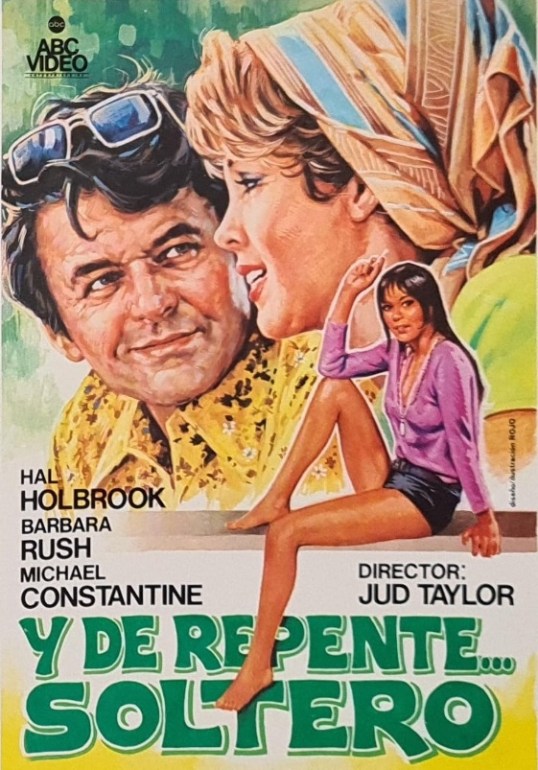
Retro Television Reviews: Suddenly Single (dir by Jud Taylor)


Welcome to Retro Television Reviews, a feature where we review some of our favorite and least favorite shows of the past!  On Sundays, I will be reviewing the made-for-television movies that used to be a primetime mainstay.  Today’s film is 1971’s Suddenly Single!  It  can be viewed on YouTube.

Suddenly Single opens with middle-aged Larry Hackett (Hal Holbrook) loading his suitcases into the back of his car.  His neighbors (David Huddleston and Pamela Rodgers) come over to say goodbye.  Larry has just gotten divorced and, as a result, he’s lost his perfect house in the suburbs.  Now, he’s going to have to move into the city and start a new life but he assures his neighbors that he’ll be okay and that there aren’t any hard feelings between him and his ex, Joanne (Cloris Leachman).  Sometimes, marriages just don’t work out….

Then Joanne shows up….

With her new husband, Ted (Fred Bier)!

While Larry can only watch, Ted insists on picking up Joanne and carrying her over the threshold of what used to be Larry’s house.  As it dawns on him that Joanne was having an affair during the final days of their marriage, Larry is understandably miffed.

Larry just isn’t ready to find himself in the world of the early 70s.  He’s an extremely conservative pharmacist who will now have to deal with hippies and the single scene.  His co-worker (Harvey Korman) encourages Larry to hit the bars.  Marlene (Agnes Moorehead) encourages him to figure out what he wants to do with his life.  His new and much younger neighbor, Jackie (Margot Kidder), tells him that he needs to get a gym membership and be more open-minded.  At first, Larry pursues a relationship with the classy Evelyn Baxter (Barbara Rush) but then he’s drawn to Jackie.  And Jackie, oddly enough, is drawn to him….

Quicker than you can say Breezy, Larry is dating the much younger Jackie and he’s starting to wear hip clothes and hang out with cool, long-haired people.  When he runs into his old neighbors on the street, he discovers that he no longer has much in common with them.  However, Larry still finds himself becoming jealous and possessive of Jackie, who is not the type of to give up her freedom for a relationship.  In the end, Larry is forced to admit that, while he has become more open-minded following his divorce, he still can’t magically change who he is.

Suddenly Single has a great cast and it’s not surprising that it’s a well-acted film.  At the same time, Larry can be a bit of a jerk.  Evelyn is the nicest person in the entire movie and Larry basically breaks her heart so that he can pursue an obviously doomed relationship with the younger Jackie.  It’s a bit sad to watch because everyone but Larry can see what he’s doing.  Larry may be wiser by the end of the film but that’s small solace to Evelyn.  Suddenly Single is about flawed characters and, as such, it can be easy to get annoyed with Larry and Jackie while also appreciating the fact that, like all of us, they’re just trying to figure out life as they go along.

Suddenly Single acts as a bit of time capsule and watching it is as probably as close as one can get to 1971 without a time machine.  It’s a trip to the past with some of the best actors of the era.

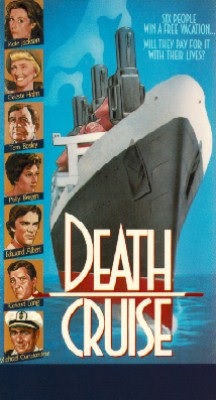
Retro Television Reviews: Death Cruise (dir by Ralph Senesky)


Welcome to Retro Television Reviews, a feature where we review some of our favorite and least favorite shows of the past!  On Sundays, I will be reviewing the made-for-television movies that used to be a primetime mainstay.  Today’s film is 1977’s Death Cruise!  It  can be viewed on Tubi and YouTube.

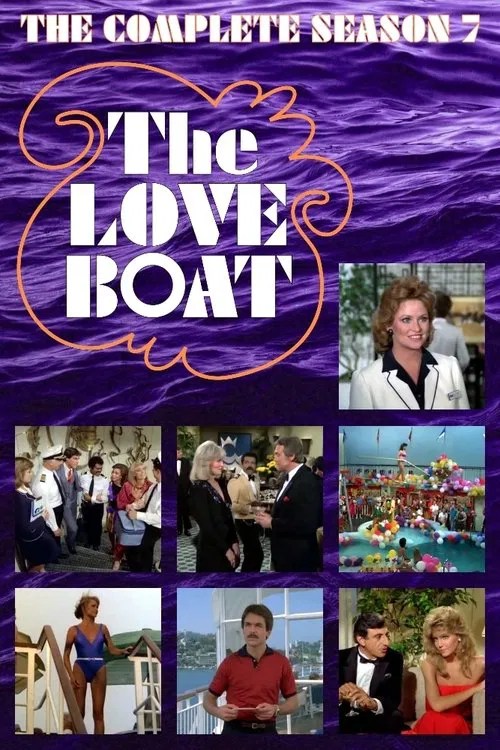
The thing with the Love Boat is that it promises something for everyone.  It’s a place where you set a course for adventure and put your mind on a new romance.

The same cannot be said of the Death Cruise.

Death Cruise opens with three couples winning an all-expenses paid trip on a luxury liner.  None of the couples are in a happy marriage.  Sylvia Carter (Polly Bergen) is tired of her husband, Jerry (Richard Long), and his philandering ways.  Elizabeth Mason (Celeste Holm) is frustrated with David Mason (Tom Bosley) and his loud dinner jackets.  Mary Frances Radney (Kate Jackson) is fed up with James (Edward Albert) and his smug refusal to start a family.  Of course, it’s not just martial problems that connects these passengers.  It’s also the fact that someone on the boat is stalking and killing them, one-by-one.  Can Dr. Burke (Michael Constantine) and Captain Vettori (Cesare Danova) track down the killer before it’s too late?

Death Cruise is an enjoyably twisty little murder mystery.  It aired in 1974, a good two years before the first Love Boat pilot film appeared on television.  However, both Death Cruise and The Love Boat were produced by Aaron Spelling so the two productions definitely have a shared DNA.  The Love Boat is basically Death Cruise with the addition of a laugh track and considerably less murder.  That said, I have my doubts as to whether Doc Bricker would have been as effective a detective as Dr. Burke.

One of the most interesting things about Death Cruise is how little anyone on the boat really seems to care about the fact that the passengers are turning up dead.  In fact, one widower is asking a widow to be his date to dinner within a few hours of the deaths of their spouses.  Of course, the murderer makes sure that dinner date is canceled but it’s still hard not to wonder whatever happened to an appropriate time of grieving.  Then again, I guess if you’re on a boat for a weekend, you just do whatever feels right at the moment.

(And certainly, if they were on The Love Boat, the walking HR nightmares that was Doc Bricker wouldn’t have wasted any time asking the widows to come by his office for a examination.)

Of the victims and suspects, Richard Long and Edward Albert are memorably sleazy while Tom Bosley plays up just how annoyed he is with the whole situation.  Michael Constantine is a good detective and the movie’s final twist is nicely executed.  Personally, when it comes to cruises, I will always prefer the safety and romance of The Love Boat but Death Cruise was an entertaining nautical diversion.

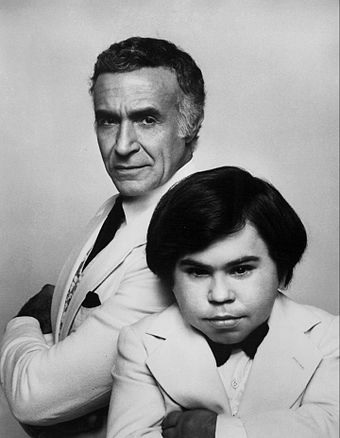
Retro Television Reviews: Fantasy Island 3.16 “Rogues and Riches/Stark Terror”


Welcome to Retro Television Reviews, a feature where we review some of our favorite and least favorite shows of the past!  On Tuesdays, I will be reviewing the original Fantasy Island, which ran on ABC from 1977 to 1986.  Almost entire show is currently streaming is on Youtube!

Smiles, everyone!  Smiles!

Episode 3.16 “Rogues and Riches/Stark Terror”

(Dir by Cliff Bole, originally aired on January 19th, 1980)

Our latest weekend on Fantasy Island is both strange and entertaining!

Attorney Mark Hendicks (John Schuck) comes to the Island with a briefcase full of papers.  He’s searching for his former law partner, Pete Gilbert (singer Robert Goulet).  Years ago, Pete came to Fantasy Island with a simple fantasy.  He wanted to be an 18th century British outlaw.  However, Pete had so much fun in the past that he decided that he never wanted to leave.  Mark needs to get Pete’s signature on some official forms so that Mark can sell some land that he and Pete bought before Pete’s fateful trip to the Island.

Mr. Roarke explains to Mark what’s going on with Pete and Mark is surprisingly accepting of Roarke’s explanation.  Roarke drives Mark out to a bridge.  He tells Mark that crossing the bridge will transport Mark to Pete’s fantasy.  Mark crosses the bridge and immediately sees Pete being chased by a bunch of British soldiers.  Pete is having a grand ol’ time in the 18th century but he’s more than willing to take some time out from plundering so that he can sign the papers so that will allow Mark to become a millionaire once he returns to the present.  However, after a dinner scene that is basically lifted shot-for-shot from Tom Jones, Mark falls in love with Margaret Winston (Dolly Read), the wife of sword-wielding Judge Winston (Alan Hale, Jr).  Mark is tempted to remain in the past but, in the end, he decides that his place is in the present.  Fortunately, it turns out that Margaret was having a fantasy of her own and she and Mark leave the Island together.

While that silly but enjoyable fantasy plays out out, Amy Marson (Melissa Sue Anderson) searches for the solution to a mystery that was so traumatic that it caused her to lose her ability to speak.  Amy’s mother (Elinor Donahue) died in front of her and Amy hopes to discover not only who killed her mother but also to recover her ability to speak.  This leads to Amy visiting the lighthouse where she grew up and having a reunion with the kindly lighthouse keeper, Joshua Templar (Michael Constantine).  Amy’s flashbacks lead her to the solution to the mystery of her mom’s death and also to Joshua’s secret son (David Drucker).

This storyline, much like last week’s battle against Elizabeth Bathory, was enjoyably creepy and it featured good performances from Anderson, Constantine, Donahue, and Drucker.  In the best tradition of Fantasy Island, the storyline was both macabre and also rather life-affirming.  Fantasy Island was always at its best when it revealed the hidden humanity at the heart of each fantasy.  Amy learns the truth of her mother’s death and she regains her ability to speak.  Tattoo tells her that she has a beautiful voice.  Awwwwww!

This was a great weekend on Fantasy Island!

Retro Television Reviews: The Bait (dir by Leonard J. Horn)


Welcome to Retro Television Reviews, a feature where we review some of our favorite and least favorite shows of the past!  On Sundays, I will be reviewing the made-for-television movies that used to be a primetime mainstay.  Today’s film is 1973’s The Bait!  It  can be viewed on YouTube!

Tracey Fleming (Donna Mills) is the widow of a cop and an undercover detective herself.  Unfortunately, her superior, Captain Maryk (Michael Constantine), is not convinced that Tracey has what it takes to be in a dangerous situation and, as a result, Tracey spends most of her time riding the bus and busting perverts and low-level drug dealers.  When four woman are raped and murdered by the same serial killer, Tracey writes up a report on what she thinks is motivating the killer.  Captain Maryk is, at first, skeptical about Tracey’s claim that the killer is fueled by a puritanical rage but, when it turns out that the killer has been wiping off his victims’s lipstick (just as Tracey speculated that he was), Maryk starts to think that Tracey might have something to offer the investigation.

Tracey becomes the bait in an operation to lure out the killer.  Leaving behind her son and her mother, Tracey moves into an apartment in the neighborhood that is believed to be the center of the killer’s activities.  Tracey is given a job as a survey taker and soon, she’s walking around the neighborhood and asking random men for their opinions on current events and women’s liberation.  A local waitress (Arlene Golonka) recognizes Tracey as a detective but Tracey lies and say that she’s no longer with the force.  When the killer makes the waitress his next victim, Tracey becomes even more determined to capture him but will she able to get Marsyk and the rest of the force to give her the room to investigate the murders?

This may sound like an intriguing whodunit but, for some reason, The Bait reveals early on that the murderer is a bus driver named Earl Stokely (played, in a very early performance, by William Devane).  There’s really nothing to be gained by revealing the killer’s identity as early as the film does.  Perhaps if the film was split between scenes of Tracey investigating the neighborhood and Earl stalking Tracey, that would have generated some sort of suspense but, with the exception of one bus ride, Tracey and Earl barely even interact before he comes after her at the film’s end.  Devane does give a good performance as a homicidal lunatic but, when viewed today, it’s impossible to watch him in this film without spending most of the time thinking, “Hey, that’s the usually Kennedyesque William Devane, playing a killer bus driver!”

I was not surprised to learn that The Bait was intended to be a pilot for a weekly television series that would have followed the future investigations of Tracey Fleming.  Donna Mills was likable in the lead role and she had a good chemistry with the other actors playing her colleagues so it’s easy to imagine a series in which Tracey solved a new case every week while Marsyk continually underestimated her.  Ultimately, though, that series never happened and The Bait would be the sole televised adventure of Detective Tracey Fleming.

Retro Television Reviews: The Secret Night Caller (dir by Jerry Jameson)


Welcome to Retro Television Reviews, a feature where we review some of our favorite and least favorite shows of the past!  On Sundays, I will be reviewing the made-for-television movies that used to be a primetime mainstay.  Today’s film is 1975’s The Secret Night Caller!  It  can be viewed on YouTube!

Though the show pretty much guaranteed that he would forever be a part of the American pop cultural landscape, Robert Reed was not a fan of The Brady Bunch.  Onscreen, Reed played Mike Brady, the stern patriarch who always knew the right thing to do and who, as a result, was named father of the year by the local chamber of commerce.  (Of course, even though she was responsible for him getting the reward, Mike still grounded Marcia for sneaking out to mail in his nomination forms.)  Offscreen, Reed was notoriously difficult, complaining that the scripts for the show were juvenile and shallow.  Reed was correct and it should be noted that all of the actors who played the Brady kids have said that Reed never took out his frustration on the cast and actually became a bit of a surrogate father to all of them.  Still, you have to wonder what Reed was expecting when he signed up for a show that was created by the man responsible for Gilligan’s Island.

The Brady Bunch was cancelled in 1974, temporarily setting Robert Reed free from the burden of playing Mike Brady.  (Of course, he would later return to the role in The Brady Bunch Hour and we all know how that turned out.)  One of the first post-Brady movies that Reed starred in was The Secret Night Caller.   

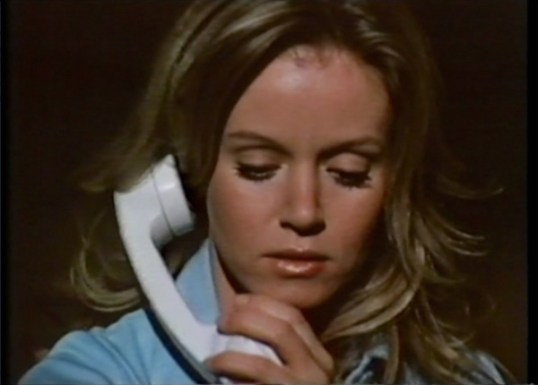
In this film, Reed plays a seemingly mild-mannered IRS (booo!) agent named Freddy Durant.  Freddy has a good career and a nice home but he’s deeply unsatisfied.  He barely communicates with his wife, Pat (Hope Lange).  He freaks out over his teenage daughter, Jan (Robin Mattson), wearing a bikini.  He fantasies about hitting on almost every woman that he sees.  He hangs out at a strip club and, when he’s really feeling unsatisfied, he makes obscene phone calls!  Because this is a made-for-TV movie from the 70s, we never actually get to hear what Freddy says on the phone but he manages to disgust and/or horrify everyone who has the misfortune to answer his call.  He even calls a woman who works in his office, scaring Charlotte (Arlene Golonka) so much that she subsequently has an auto accident.  Unfortunately, for Freddy, one of his victims, a stripper named Chloe (Elaine Giftos), recognizes his voice and tries to blackmail him.  Freddy’s life is falling apart.  Can his psychiatrist (played by Michael Constantine) help him put it all back together again?

Freddy Durant is obviously meant to come across as being the exact opposite of Mike Brady.  (Of course, many of us who have seen The Brady Bunch have our suspicions about what Mike was actually doing in his office….)  Whereas Mike Brady was the perfect father, Freddy is cold, distant, and repressed.  Reed is convincingly uptight as Freddy and he’s surrounded by a fine supporting cast, including Sylvia Sidney as his disapproving mother-in-law.  That said, it’s still impossible to watch this show without thinking to yourself, “There’s Mike Brady making an obscene phone call.”  That’s the difficulty of typecasting unfortunately.  For all of his efforts to escape the shadow of the Brady Bunch, it’s impossible not to associate Robert Reed with the show, even when he’s talking dirty on the phone.