THE CHEAP DETECTIVE could easily be subtitled “Neil Simon Meets MAD Magazine”. The playwright and director Robert Moore had scored a hit with 1976’s MURDER BY DEATH, spoofing screen PI’s Charlie Chan, Sam Spade, and Nick & Nora Charles, and now went full throttle in sending up Humphrey Bogart movies. Subtle it ain’t, but film buffs will get a kick out of the all-star cast parodying THE MALTESE FALCON, CASABLANCA , TO HAVE AND HAVE NOT, and THE BIG SLEEP .
Peter Falk does his best Bogie imitation as Lou Peckinpaugh, as he did in the previous film. When Lou’s partner Floyd Merkle is killed, Lou finds himself in a FALCON-esque plot involving some rare Albanian Eggs worth a fortune. Madeline Kahn , John Houseman, Dom De Luise , and Paul Williams stand in for Mary Astor, Sydney Greenstreet, Peter Lorre, and Elisha Cook Jr, respectively, and they milk it for every…
The Exorcist is one of the greatest horror films of all time and a personal favorite of mine. But what about Exorcist II: The Heretic? Well, it would be a bit of an understatement to say that The Heretic has not quite received the amount of critical acclaim as the first film. Since it was first released in 1977, The Heretic has been widely considered to be one of the worst sequels of all time. It’s a film that is often cited as evidence as to why not all successful films need a follow-up.
Myself, I have sat through The Heretic twice. And yes, it is a pretty bad film but I have to admit that I enjoyed it each time that I saw it. It’s not a scary film at all. It’s not a successful horror film. But, as an unintentional comedy, it’s hilarious.
The Heretic opens four years after the end of The Exorcist. Father Merrin (Max von Sydow) is dead, having had a heart attack during the first film while performing an exorcism on Regan MacNeil (Linda Blair). In the years since, some in the Vatican have cast doubt on whether or not Merrin actually performed exorcisms. It turns out that, contrary to everything that we saw in the first film, Father Merrin was actually something of a rebel. His teachings are controversial. For instance, he was convinced that everyone has latent psychic powers and that the demon Pazuzu possesses those who have the potential to be the strongest psychics. Why? Because those people have the ability to lead humanity into a shared global consciousness and…
Well, it gets a little bit complicated. That’s one of the big differences between The Exorcist and Heretic. The Exorcist kept things relatively simple. The Heretic drags in a lot of metaphysical argle bargle.
The deceased Father Merrin has been brought up on charges of heresy. The Cardinal (Paul Henreid, many, many years after Casablanca), assigns Father Lamont (Richard Burton) to investigate the circumstances surrounding Father Merrin’s final exorcism.
The presence of Richard Burton is what elevates Heretic from merely being bad to being so bad that it’s good. As written, Father Lamont is supposed to be something of a naive idealist, someone who never met Father Merrin but who has been intrigued by his writings. Reportedly, several youthful actors turned down the role and eventually, production decided to make Lamont an older man and they ended up casting Richard Burton. Speaking in a shaky rasp and staring at the camera with bloodshot eyes, Burton appears to be at the height of his famous self-loathing in this film. Burton is so miscast as an idealistic priest that the film becomes fascinating to watch. Occasionally, the film tries to make us suspect that Lamont himself may be possessed but with Burton snarling his way through the role, how could anyone tell the difference?
Lamont tracks Regan down in New York. Regan doesn’t remember a thing about the exorcism and appears to be an overly happy teenage actress. (A good deal of the movie is devoted to her rehearsing a big dance number.) She is under the care of psychiatrist Gene Tuskin (Louise Fletcher). Tuskin has a device called the Synchronizer. When two people are hooked up to it, they can literally see into each other’s minds. They can share the same memories. They can … wait a minute. What the Hell? The Synchronizer essentially appears to be little more than a blinking light but it can actually allow you to enter into someone else’s mind? Doesn’t that seem like that should be a big deal?
Well, it’s not. Everyone pretty much just shrugs and accepts it…
Through the use of the Synchronizer, Reagan, Lamont, and Tuskin get to watch a lot of scenes from the first Exoricst. It also allows Father Lamont to have visions of Africa and another exorcism, this one involving a young boy named Kokumo.
This leads to one of my favorite parts of the film; Richard Burton wandering around a dusty African market and randomly telling people, “I am looking for Kokumo.” It turns out that Kukomo has grown up to be a doctor and he’s now played by James Earl Jones, who appears to be amused by his dialogue. Also showing up in the film’s Africa scenes is Ned Beatty. Beatty plays a pilot who flies Lamont to Kokumo’s village. “Have you come here before?” Beatty asks. “Once … on the wings of a demon,” Lamont replies.
Well, okay then…
The first Exorcist worked largely because William Friedkin directed it as if he was making a documentary. John Boorman takes the exact opposite approach here, trying to turn a cheap sequel into a metaphysical meditation on good, evil, and nature. It’s amazingly pretentious and it would actually be rather annoying if not for the fact that Burton doesn’t make the slightest bit of effort to come across as being in any way emotionally or intellectually invested in his over-the-top dialogue. When you combine Burton’s overwhelming cynicism with Linda Blair’s nearly insane perkiness, Louise Fletcher’s genial confusion, and James Earl Jones’s cheerful humor, the end result is something that simply has to be seen to be believed.
So, yes, The Heretic is as bad as you’ve heard. But that doesn’t mean you shouldn’t watch it.
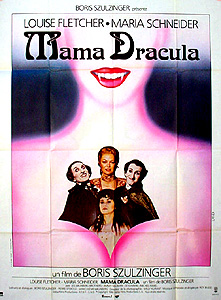
This 1980 Belgian film is quite possibly the worst film that I’ve ever seen.
That’s something that I have to be careful about saying because there’s always a chance someone is going to say, “Oh my God! If it’s really that bad, it must be a lot of fun to watch! I have to track this movie down!”
Well, it’s not that hard to track down Mama Dracula. It’s been included in countless Mill Creek box sets. It’s in the public domain so you can probably find it on YouTube. But seriously, when I say this movie is bad, I don’t mean that it’s so bad that it’s good. This is not an Ed Wood film. It’s not even a Herschell Gordon Lewis. Instead, it’s just a really bad and tedious movie. How bad is it? It’s so bad that I originally suspected that maybe Bret Ratner had something to do with it. That’s how bad it is.
Anyway, I guess I should tell you what the film is about so that way, I can at least say that I’ve reviewed this damn thing. Professor Van Bloed (Jimmy Schuman) gets an invitation to attend a special conference on blood research. The conference is being held in a small village in Transylvania and it’s being hosted by Countess Dracula. And yes, she actually does sign the invitation “Countess Dracula” and no, Professor Van Bloed finds nothing strange about it.
Anyway, it turns out that Countess Dracula is played by Oscar-winner Louise Fletcher. And yes, she’s a vampire. But also, she’s the infamous Countess Bathory, who remains young by bathing in the blood of virgins. But if she’s a vampire, wouldn’t she remain young regardless? (And, add to that, Louise Fletcher doesn’t look particularly young in this film so you have to wonder how old she was when she first started bathing in blood.) Countess Dracula also has twin sons and they are vampires with fangs and all that. Apparently, they don’t have to bathe in blood to stay young.
Anyway (and you end up saying anyway a lot when you watch a film like Mama Dracula), the Dracula Twins run a clothing store called Vamp and, whenever a virgin steps into the changing room, she is promptly kidnapped and whisked away to the castle. But everyone in the village seems to know what the twins are doing so you have to wonder why they don’t just stop going into the store.
Anyway, it turns out that there’s not many virgins left in the world and the villagers are encouraging their daughters to get laid as soon as possible. So, Countess Dracula is willing to set Prof. Van Bloed with a special laboratory so that he can … do something.
ANYWAY, after about an hour, the film realizes that it’s going to have to end at some point so Prof. Van Bloed ends up falling in love with Nancy Hawaii (Maria Schneider), who I guess is supposed to be a virgin, though the film never seems to be quite sure…
But … yeah, this was an amazingly bad film. Bleh on you, 1980 filmmakers!
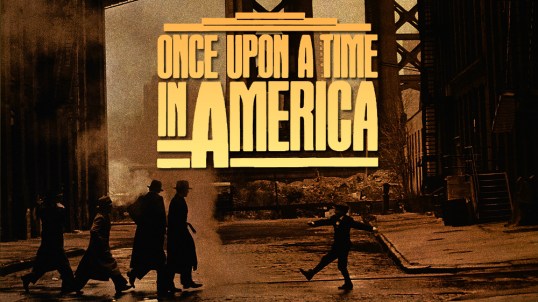
Before I start this review of Sergio Leone’s 1984 gangster epic, Once Upon A Time In America, I want to issue two warnings.
First off, this review is going to have spoilers. I’ve thought long and hard about it. Usually, I try to avoid giving out spoilers but, in this case, there’s no way I can write about this movie without giving away a few very important plot points. So, for those of you who don’t want to deal with spoilers, I’ll just say now that Once Upon A Time In America is a great film and it’s one that anyone who is serious about film must see.
Secondly, I’m not going to be able to do justice to this film. There’s too much to praise and too much going on in the film for one simple blog post to tell you everything that you need to know. Once Upon A Time In America is the type of film that books should be written about, not just mere blog posts. Any words that I type are not going to be able to match the experience of watching this film.
For instance, I can tell you that, much as he did with his classic Spaghetti westerns, Sergio Leone uses the conventions of a familiar genre to tell an epic story about what it means to be poor and to be rich in America. But you’ll never truly understand just how good a job Leone does until you actually see the film, with its haunting images of the poverty-stricken Jewish ghetto in 1920s New York and it’s surreal climax outside the mansion of a very rich and very corrupt man.
I can tell you that Ennio Morricone’s score is one of his best but you won’t truly know that until you hear it while gazing at Robert De Niro’s blissfully stoned face while the final credits roll up the screen.
I can tell you that the film’s cast is amazing but you probably already guessed that when you saw that it featured Robert De Niro, James Woods, Treat Williams, Danny Aiello, Joe Pesci, Burt Young, Tuesday Weld, Elizabeth McGovern, and Jennifer Connelly. But, again, it’s only after you’ve seen the film that you truly understand just how perfectly cast it actually is. Given the politics of Hollywood and the fact that he’s unapologetically critical of Barack Obama, it’s entirely possible that James Woods might never appear in another major motion picture. A film like Once Upon A Time in America makes you realize what a loss that truly is.
So, if you haven’t seen it yet, I encourage you to see it. Order it off of Amazon. Do the one day shipping thing. Pay the extra money, the film is worth it.
Much like The Godfather, Part II (and Cloud Atlas, for that matter), Once Upon A Time In America tells several different stories at once, jumping back and forth from the past to the present and onto to the future.
The film’s “past” is 1920. Noodles (Scott Tiler) is a street kid who lives in New York’s ghetto. He makes a living by doing small jobs for a local gangster and occasionally mugging a drunk. He’s also the head of his own gang, made up of Patsy (Brian Bloom), Cockeye (Adrian Curry), and Dominic (Noah Moazezi). Despite his rough edges, Noodles has a crush on Deborah (Jennifer Connelly), a refined girl who practices ballet in the back of her family’s store. When Nooldes meets Max (Rusty Jacobs), the two of them become quick friends. However, their criminal activities are noticed by the demonic Bugsy (James Russo), who demands any money that they make.
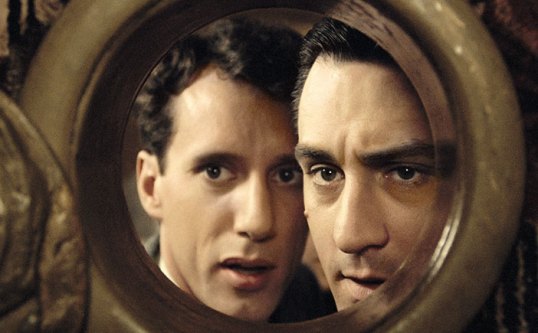
The film’s “present” is 1932. Noodles (Robert De Niro) has spent twelve years in prison and, when he’s released, he discovers that some things have changed but some have remained the same. Max (James Woods), Cockeye (William Forsythe), and Patsy (James Hayden) are still criminals but they’ve prospered as bootleggers. Occasionally, they do jobs for a local gangster named Frankie (Joe Pesci) and sometimes, they just rob banks on their own. During one such robbery, they meet a sado-masochistic woman named Carol (Tuesday Weld), who quickly becomes Max’s girlfriend.
As for Noodles, he continues to love Deborah (Elizabeth McGovern). But, when he discovers that she’s leaving New York to pursue a career as an actress, he reveals his true nature and rapes her. It’s a devastating scene — both because all rape scenes are (or, at the very least, should be) devastating but also because it forces us to ask why we expected Noodles to somehow be better than the men who surround him. After spending nearly two hours telling ourselves that Noodles is somehow better than his friends and his activities, the movie shows us that he’s even worse. And, when we look back, we see that there was no reason for us to believe that Noodles was a good man. It’s just what we, as an audience, wanted to believe. After all, we all love the idea of the romanticized gangster, the dangerous man with a good heart who has been forced into a life of crime by his circumstances and who can be saved by love. In that scene, Once Upon A Time In America asks us why audiences continue to romanticize men like Noodles and Max.
As for the gang, they’re hired to serve as unofficial bodyguards for labor leader Jimmy O’Donnell (Treat Williams) and, in their way, help to found the modern American labor movement. (“I shed some blood for the cause,” Patsy says while showing off a huge bandage on his neck.) When fascistic police chief Aiello (Danny Aiello) needs to be taken down a notch, they kidnap his newborn son and hold him for ransom. (While pulling off this crime, they also manages to switch around all the babies and, as a result, poor babies go home with rich families and vice versa, neatly highlighting both the power of class and the randomness of fate.) However, the good times can’t last forever and, when prohibition is repealed, the increasingly unstable Max has to find a new way to make some money.
Finally, the film’s third storyline (the “future” storyline) takes place in 1967. Noodles has spent decades living under a false identity in Buffalo. When he gets a letter addressed to his real name, Noodles realizes that someone knows who he is. He returns to a much changed New York. Carol now lives in a retirement home. Deborah is an acclaimed Broadway actress. Jimmy O’Donnell is the most powerful union boss in America. Fat Moe’s Speakeasy is now Fat Moe’s Restaurant.
Once Noodles is back in town, he receives a briefcase full of money and a note that tells him that it’s an advanced payment for his next job. He also receives an invitation to a party that’s being held at the home of Christopher Bailey, the U.S. Secretary of Commerce.
Who is Secretary Bailey? He’s a shadowy and powerful figure and he’s also a man who is at the center of a political scandal that has turned violent. And, when Noodles eventually arrives at the party, he also discovers that Secretary Bailey is none other than his old friend Max.
How did a very Jewish gangster named Max transform himself into being the very WASPy U.S. Secretary of Commerce? That’s a story that the film declines to answer and it’s all the better for it. What doesn’t matter is how Max became Bailey. All that matters is that he did. And now, he has one final favor to ask Noodles.
(There’s a very popular theory that all of the 1967 scenes are actually meant to be a hallucination on Noodles’s part. And the 1967 scenes are surreal enough that they very well could be. Though you do have to wonder how Noodles in 1932 could hallucinate the Beatles song that is heard when he returns to New York in 1967.)
Once Upon A Time In America is an amazing film, an epic look at crime, business, and politics in America. It’s a film that left me with tears in my eyes and questions in my mind. The greatness of the film can not necessarily be put into words. Instead, it’s a film that everyone needs to see.
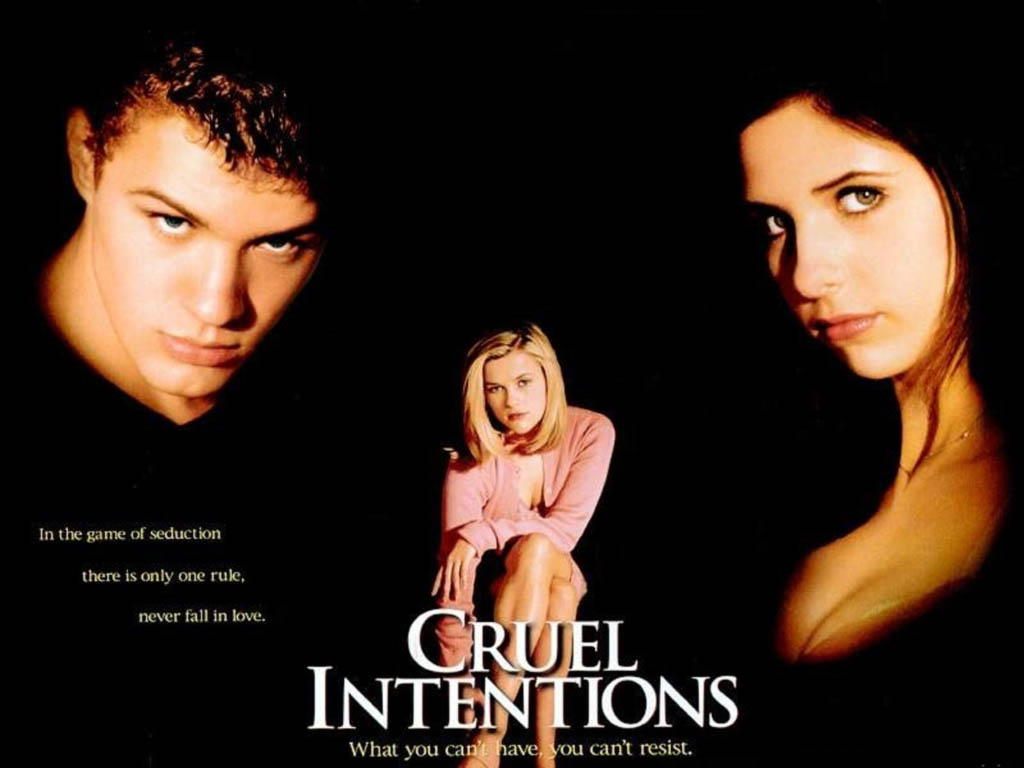
For the past 10 days, I’ve been reviewing some of the most and least memorable melodramas ever filmed. Starting with 1916’s Where Are My Children?, we’ve been moving chronologically through film history. We’re now coming to the end of the 90s and what better way to end that decade than by taking a look at 1999’s Cruel Intentions?
Cruel Intentions takes place in the upscale world of a New York private school. Rich and popular Kathryn Merteuil (Sarah Michelle Gellar) is also a manipulative hypocrite who destroys reputations on a whim and carries cocaine in her ever-present cross necklace. Kathryn is upset because her boyfriend has recently dumped her and is now dating the sweet and innocent Cecile (Selma Blair). Kathryn asks her decadent cousin Sebastian Valmont (Ryan Phillippe) to seduce Cecile. However, Sebastian refuses, saying that the challenge would be too easy. Instead, he plans to seduce Annette Hargrove (Reese Whitherspoon), who has recently written an acclaimed essay about the importance of chastity and who also happens to be the daughter of the school’s headmaster. Kathryn is intrigued by Sebastian’s plan and makes a bet with him. If Sebastian manages to take Annette’s virginity than Kathryn will have sex with him…
Now, if you’ve already read my previous review of Dangerous Liaisons, the plot of Cruel Intentions probably sounds a bit familiar. That’s because both of these films are based on the same source material — Les Liaisons dangereuses by Pierre Choderlos de Laclos. The main difference between the two films — beyond the fact that Dangerous Liaisons is set in pre-Revolutionary France and Cruel Intentions is set in 1990s New York — is that Dangerous Liaisons uses the material to comment on the excesses of the rich while Cruel Intentions is all about style.
And, to be honest, while Dangerous Liaisons is undoubtedly the better film, Cruel Intentions is a lot more fun. I first saw Cruel Intentions shortly before I started my sophomore year of high school and I excitedly thought to myself, “So this is what high school is going to be like!” Well, unfortunately, it turned out that I was wrong but oh well! (Though, in all fairness to the film, I went to a public high school in the suburbs of Dallas as opposed to a rich private school in New York.) The movie still a lot of fun, even if it didn’t quite match up with reality. Everything from the costumes (I absolutely LOVED every single outfit that Sarah Michelle Gellar wore and, even before it was revealed to be full of cocaine, that cross necklace was to die for) to the ornate sets to the wonderfully melodramatic and self-aware performances — it all works towards creating a vivid and engrossing alternative universe.
So no, don’t take Cruel Intentions seriously.
Just enjoy the dance while it lasts.
Tomorrow, embracing the melodrama enters the 21st Century!


 Through the Shattered Lens