Scenes That I Love: Audrey Hepburn in Two For The Road


Today would have been the 95rd birthday of one of my favorite actresses, the wonderful Audrey Hepburn!

We’re all Audrey Hepburn fans here at the Shattered Lens.  How could we not be?  Long before she made her film debut, Audrey Hepburn literally risked her life as a part of the Dutch Resistance during World War II.  After she retired from regularly appearing in the movies, she devoted herself to humanitarian causes and brought attention to the plight of refugees the world over.  She was one of the greats and, for that reason, today’s scene that I love comes from one of her best films, 1967’s Two For The Road.

In this scene, Albert Finney and Audrey Hepburn play a married couple who discuss their troubled but loving marriage while on the road.  This film features one Audrey’s best performances.

4 Shots From 4 Films: Special Star Wars Edition


4 Or More Shots From 4 Or More Films is just what it says it is, 4 shots from 4 of our favorite films. As opposed to the reviews and recaps that we usually post, 4 Shots From 4 Films lets the visuals do the talking!

Today, we wish all of our readers a happy May The Fourth Be With You Day!  It’s time for….

4 Shots From 4 Star Wars Films

Star Wars Episode IV: A New Hope (1977, dir by George Lucas, DP: Gilbert Talyor)

The Empire Strike Back (1980, dir by Irvin Kershner, DP: Peter Suschitzky)

Return of the Jedi (1983, dir by Richard Marquand, DP: Alan Hume and Alec Mills)

Rogue One (2016, dir by Gareth Edwards, DP: Greig Fraser)

Late Night Retro Television Review: Friday the 13th: The Series 2.2 “The Voodoo Mambo”


Welcome to Late Night Retro Television Reviews, a new feature where we review some of our favorite and least favorite shows of the past! On Fridays, I will be reviewing Friday the 13th: The Series, a show which ran in syndication from 1987 to 1990. The show can be found on YouTube!

This week, Micki, Ryan, and Jack get involved in voodoo!

Episode 2.2 “The Voodoo Mambo”

(Dir by Timothy Bond, originally aired on October 7th, 1988)

This episode opens with Micki and Ryan watching a street party that just happens to be taking place in front of Curious Goods.  It’s a Haitian voodoo party and, judging from Micki and Ryan’s comments, it is apparently some sort of annual event that takes place wherever this show is supposed to be set.

(If Curious Goods was set in New Orleans, I could maybe buy this without giving it too much thought.  But the show is filmed in Canada and, judging from the states that were specifically mentioned over the course of the first few episode, it appears that Curious Goods is meant to be located in the Northeast.  How many voodoo street parties do you see in New Jersey?)

Micki and Ryan want to join the party but Jack insists that they first meet his old friend, Hedley (Joe Seneca).  Hedely is a powerful voodoo priest and he has traveled to the city so that his daughter, Stacy (Rachael Crawford, who was on the first season of T & T until her character vanished), can become a priestess.  Ryan is obviously attracted to Stacy but the attraction goes nowhere, which I guess is good considering that every woman who likes Ryan ends up dying in some terrible way.

Meanwhile, good-for-nothing Carl Walters (David Matheson) is in danger of losing the mansion that has been in his family’s possession ever since their days as plantation overlords.  Carl finds a voodoo mask in the basement.  Whenever he puts the mask on, the spirit of a voodoo priestess named Laotia (Suzanna Coy) rips out someone’s throat.  Laotia wants to rip out the throats of the city’s top voodoo priests so that she can gain their powers.  Carl agrees to help because part of the deal is that Carl will get what he wants as well.  I’m not sure what Carl wants, though.  Money, I guess.  But it doesn’t matter because, of course, Laotia is really only concerned with what she wants.

This episode had some atmospheric moments, especially in the scenes featuring the big party outside of Curious Goods.  There’s also some black-and-white footage of actual voodoo ceremonies that is randomly inserted throughout the episode.  I assume that black-and-white footage is meant to be a flashback or something like that, though the show never really makes it all that clear.  That said, this episode was a bit on the dull side.  Carl and Laotia were not particularly interesting and this is the second episode this season to feature an old friend of Jack’s.  (That wouldn’t be a problem, except for the fact that we’re only two episodes in.)  This episode felt a bit tired, as if someone entered the production office and shouted, “I need an episode about Voodoo!  You’ve got 48 hours!”

Next week, hopefully, thing will be a bit more interesting.

The Film of 2024: Lola (dir by Nicola Peltz Beckham)


Lola (Nicola Peltz Beckham) works her days working in a convenience store and her nights dancing at a strip club.  It’s not enjoyable work but she’s trying to raise money so that she can enroll her little brother, Arlo (Luke David Blumm) in a special arts school in Dallas.  At present, Arlo is being homeschooled by their religious fanatic mother, Mona (Virginia Madsen).  Heavy-drinking Mona throws a fit whenever she sees Arlo putting on makeup or wearing a dress but she doesn’t do a thing about the way her boyfriend (Trevor Long) leers at Lola.  She’s the type who gives people doughnuts with “God” written in icing.

Lola thinks that it is a film about poor people but actually, it isn’t.  Written by, directed by, and starring the daughter of billionaire Nelson Peltz, Lola is less a film about poor people and more a film about what rich people think being poor is like.  As such, everyone smokes and everyone lives in either a trailer or a one-story house but the inside of those houses are perfectly lit and not the least bit cluttered.  Lola may have to work two jobs and she may be hooked on cocaine but her hair and her makeup are always perfect.  Lola’s homelife may not be perfect but, as all poor white girls do in movies like this, she has a super-loyal Black friend (Raven Goodwin) who doesn’t appear to have a life outside of obsessing on Lola’s problems.  Lola also has a dumbass boyfriend (played by Richie Merritt, the star of White Boy Rick) who keeps her supplied with cocaine but who also gets upset when Lola says she’s not ready to lose her virginity to him.

The film follows Lola from one trauma to another.  We’re supposed to sympathize with her because her life is so bad but the film itself doesn’t seem to realize that Lola is often her own worst enemy.  For instance, knowing that she cannot afford to lose her job at the convenience store, she still tries to steal from the store in the most obvious way possible.  When she gets caught, her boss fires her.  Even when she offers to get the stolen stuff out of her locker (seriously, she put it in her locker?), her boss tells her that she’s fired.  The film sets this up as if the boss is somehow being unfair but actually, he’s doing what any boss would do to an employee stealing products from his shelf.  He has every right to fire her and if he didn’t, he would basically be inviting everyone else who works for him to steal from him as well.  Losing the job sends Lola into a spiral of depression and desperation but again, it was her own fault so how sorry am I supposed to feel for her?

Eventually, there is a tragedy.  It’s not great shock when it happens but it does lead to scene of Lola sobbing while portentous string music playing on the soundtrack.  Much like everything else in the film, the music choice is so obvious and heavy-handed that it’s more like to inspire a chuckle than a tear.  The right to portentous string music is something that a movie has to earn.  Requiem For A Dream earned Lux AeternaLola is no Requiem For A Dream.

Instead, Lola has more in common with Ryan Gosling’s directorial debut, Lost River.  Both Lola and Lost River are films about poverty that try way too hard to be profound.  The difference is that Lola lacks the spark of madness that made Lost River interesting, albeit incoherent.  That said, I do think that Nicole Peltz Beckham does have some talent as a director.  There are a few impressive shots to be found in Lola, even if Beckham doesn’t really seem to yet understand how to use them to tell a compelling story.  But with some experience and a script written by someone other than herself, Nicole Peltz Beckham seems like she has the potential to be a worthwhile director.

Retro Television Review: T and T 3.7 “A Lesson In Values”


Welcome to Retro Television Reviews, a new feature where we review some of our favorite and least favorite shows of the past! On Fridays, I will be reviewing T. and T., a Canadian show which ran in syndication from 1987 to 1990.  The show can be found on Tubi!

In this episode, Terri finally get to show what she can do in court.

Episode 3.7 “A Lesson In Values”

(Dir by Clay Borris, originally aired on February 17th, 1990)

While working late at the courthouse, Terri stumbles across a homeless man named Nesmith.  Nesmith explains that he’s not a drug addict or a drunk or a criminal or anyone dangerous.  He’s just a man who lives on the streets and travels the country, jotting down his thoughts in notebooks.  Terri is charmed by Nesmith and offers to find him room at a nearby hostel.  Nesmith accepts the offer but then drops dead of a heart attack.

Terri takes it upon herself to serve as executor of his estate.  In his will, Nesmith asks that all of his money — several thousand dollars — be left to his friend and traveling companion, Junior Grayson.  Turner tracks down Grayson, which is about all T.S. Turner does in this episode.  Instead, the entire episode revolves around Terri trying to prove that Nesmith’s will is legitimate.  Nesmith’s wife (Fran Gebhard) and her sleazy attorney (John Stocker) want the money for themselves, despite the fact that Nesmith left home 12 years previously and had little contact with her afterwards.

It took seven episodes but Terri finally gets to be at the center of an episode.  Unfortunately, it’s a pretty predictable episode and it’s also one that presents the homeless as being not people in need of support but instead as whimsical truth-tellers who enjoy living on the streets.  As played by Kristina Nicoll, Terri is not a particularly credible attorney.  I mean, Amy was definitely an underused character but you never doubted that she knew what she was doing in court.  Terri, on the other hand, seems to think that suggesting that the judge will be a big meany head if she doesn’t find for Grayson is an effective argument.

In the end, Grayson does get the money but, because Nesmith’s owed a bunch of back taxes (Come on, Canada, the mans dead!), Grayson will only be getting a few dollars.  That’s okay, though.  Grayson knows that there’s more to life than money.  Grayson gives Terri all of Nesmith’s notebooks and the episode ends with Terri starting to read them while Turner and Decker box in the background.  (Seriously, Turner does next to nothing in this episode and, from what we do see of him, he just seems to be annoyed in general.)  Personally, I was hoping that the episode would end with Terri announcing that she was going to get the notebooks published so that everyone could know who Nesmith was.

Another strange thing about this episode is that the actors playing Nesmith and Grayson were not credited.  I sat through this show a handful of times, looking for their names but they were never listed.  (And they’re not listed at the imdb either.)  The actor playing Grayson gave a heartfelt performance and was this episode’s redeeming factor.  I wish I could credit him.

Live Tweet Alert: Join #FridayNightFlix For Rolling Thunder!


As some of our regular readers undoubtedly know, I am involved in a few weekly live tweets on Twitter and Mastodon.  I host #FridayNightFlix every Friday, I co-host #ScarySocial on Saturday, and I am one of the five hosts of #MondayActionMovie!  Every week, we get together.  We watch a movie.  We tweet our way through it.
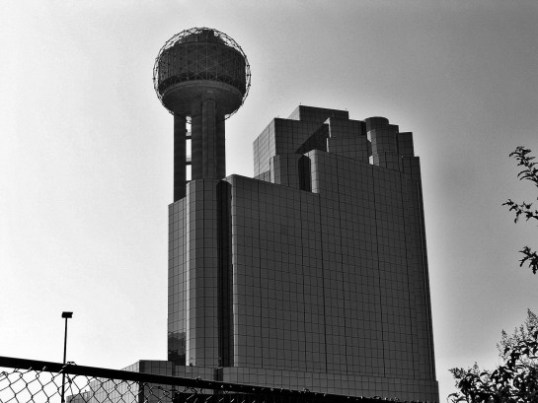

Tonight, at 10 pm et, we’ve got a classic, 1977’s Rolling Thunder!

If you want to join us this Friday, just hop onto twitter, start the movie at 10 pm et, and use the #FridayNightFlix hashtag!  It’s a friendly group and welcoming of newcomers so don’t be shy.

Rolling Thunder is available on Prime and Tubi!  See you there!

Scenes That I Love: Amy Steel Confuses Jason Voorhees in Friday the 13th Part II!


Today, the Shattered Lens wishes a happy birthday to Amy Steel, the actress who played Ginny, the strongest and most resourceful of all of the final girls to appear in the Friday the 13th franchise.  Whenever I watch any of the Friday the 13th films, I always like to think that I would be Part 2’s Ginny, though I know, deep down, I would actually probably more likely be Part One’s Marci, getting stuck outside the rain in my underwear and somehow not hearing someone stepping up behind me with an axe.

Today’s scene that I love comes from Friday the 13th Part II.  In this scene, Ginny proves herself to be the only camp counselor in history to be smart enough to confuse a backwoods vagrant who wears a flour bag over his head.  This scene is one of the reasons why Ginny is one of the franchise’s most popular characters.

4 Shots From 4 Films: Special Joseph Kosinski Edition


4 Or More Shots From 4 Or More Films is just what it says it is, 4 shots from 4 of our favorite films. As opposed to the reviews and recaps that we usually post, 4 Shots From 4 Films lets the visuals do the talking!

Today, TSL wishes a happy birthday to director Joseph Kosinski!  It’s time for….

4 Shots From 4 Joseph Kosinski Films

Tron: Legacy (2010, dir by Joseph Kosinski, DP: Claudio Miranda)

Oblivion (2013, dir by Joseph Kosinski, DP: Claudio Miranda)

Only The Brave (2017, dir by Joseph Kosinski, DP: Claudio Miranda)

Top Gun: Maverick (2022, dir by Joseph Kosinski, DP: Claudio Miranda)

Late Night Retro Television Review: Highway to Heaven 2.8 “The Smile In The Third Row”


Welcome to Late Night Retro Television Reviews, a feature where we review some of our favorite and least favorite shows of the past!  On Thursdays, I will be reviewing Highway to Heaven, which aired on NBC from 1984 to 1989.  The entire show is currently streaming on Freevee and several other services!

This week, Jonathan and Mark head to Broadway!

Episode 2.8 “The Smile In The Third Row”

(Dir by Michael Landon, originally aired on November 20th, 1985)

Fred Fusco (Lorne Greene) is a veteran actor who is appearing in a Broadway play.  In the play, Fred plays a man who learns that he’s about to die.  During the third act, Fred’s character actually does die and Fred ends the play with a monologue about owning the choices he made in his life before he ascends into Heaven (via a harness).

It’s a depressing play and the theater is usually half-empty whenever Fred performs.  But one night, Fred claims that he spotted God sitting in the third row.  Fred also says that God really enjoyed the show.  When the news get out, the play becomes a huge success as audiences turn out to see a play endorsed by God.  Fred becomes a huge celebrity and befriends a terminally ill boy who promises to say hi to God when he goes to Heaven.  However, when Fred starts to talk about leaving his fortune to charity, both his sister (Mary Ann Gibson) and his nephew (David L. Lander) conspire to have him committed.

Fred also happens to be Jonathan and Mark’s later assignment.  Mark gets a job at the theater while Jonathan puts on a collar and becomes Father Jonathan.  While Mark is convinced that Fred is actually seeing God, Jonathan is skeptical because Jonathan doesn’t see God in the theater.  Why, Jonathan asks, would God reveal himself to an actor but not an angel?  There’s an interesting subtext here, as it quickly becomes obvious that Jonathan isn’t so much skeptical as he’s jealous.  He even rather recklessly reveals to Fred that he’s an angel in his quest to convince Fred that he hasn’t actually seen God.  Fred reveals that he’s willing to accept Jonathan’s word that he’s an angel but then asks why Jonathan is not willing to accept his word that he sees God in the theater.

Is God in the theater?  At the end of the episode, Fred’s harness is broken but, at the end of the third act, he still ascends above the theater and then vanishes.  The newspapers call it a hoax but the show suggests that, much like Elijah, he’s been assumed straight to Heaven.  Is Fred meant to be a modern day Elijah?  Would that therefore make his sister a modern-day Jezebel?  Perhaps but, fortunately for her, she is never eaten by wild dogs.

As usual, there wasn’t much subtlety to be found in this episode of Highway to Heaven but it still worked surprisingly well.  When Fred met the dying child, my first instinct was to roll my eyes at the obviousness of it all but those same eyes had tears in them by the time the scene was over.  The episode benefitted greatly from Lorne Greene’s strong performance as Fred Fusco and Michael Landon’s strong portrayal of Jonathan’s mixed feelings about Fred’s claims.  All in all, this was a strong episode.

The Films of 2024: The Bricklayer (dir by Renny Harlin)


Someone is assassinating commie journalists in Europe and making it appear as if the CIA is responsible.  O’Malley (Tim Blake Nelson) of the CIA suspects that the assassin is Michael Radek (Clifton Collins, Jr.), a former intelligence asset who faked his own death but who has now returned and is seeking vengeance on the Agency for the death of his wife and daughter.  O’Malley decides that Radek’s friend and former CIA handler, Steve Vail (Aaron Eckhart), is the only man who can track Radek down.

The problem is that Vail is as disillusioned with intelligence work as Radek.  Vail walked away from the Agency years ago and now spends his time listening to jazz and working as a bricklayer.  Vail explains that, when working with bricks, everything is predictable and everything fits together perfectly.  It’s the opposite of the chaotic world of spies and assassinations.  O’Malley think that Vail is full of crap and I would be tempted to agree if not for the fact that Aaron Eckhart is one of the few actors who can make you believe anything that he says.

At first, Vail refuses to help but then Radek sends a group of assassins to kill him.  That changes Vail’s mind.  Along with an inexperienced supervisor named Kate (Nina Dobrev), Vail heads to Greece to not only track down Radek but also discover the identity of a mole in the CIA.

The Bricklayer was advertised as being a return-to-form of sorts for director Renny Harlin.  In many ways, it’s a typical Harlin film.  For the most part, it looks good.  Some of the action scenes are exciting.  A car flips over and explodes.  At the same time, it never quite reaches the heights of Harlin’s heyday.  This film has neither the grandeur of Die Hard 2, the romantic sparks of The Long Kiss Goodnight, or the energy of Deep Blue Sea.  The film’s low-budget is definitely a factor in that.  There are scenes in the film that look about as cheap as some of the movies that Bruce Willis was making before he announced his retirement.

That said, The Bricklayer does what it does with efficiency and Renny Harlin still knows how to keep the action moving.  Though the story is a bit too familiar to really be intriguing, Aaron Eckhart makes for a surprisingly believable secret agent.  One thing I especially liked about Eckhart’s performance is that he didn’t go for the “grim” stereotype of the former intelligence agent.  As played by Aaron Eckhart, Steve Vail may have had his regrets but he wasn’t some sort of emotionless zombie.  He enjoyed jazz.  He enjoyed the work that he did as a bricklayer.  Though the rules of the genre demand that he and Nina Dobrev start the film as mild adversaries, they quickly developed a likable chemistry.

The Bricklayer is the epitome of an okay, middle of the road movie.  It’s neither good nor bad enough to be especially memorable but it’s entertaining enough if you’ve got 100 minutes to kill.