Guilty Pleasure No. 91: No One Lives (dir. by Ryuhei Kitamura)


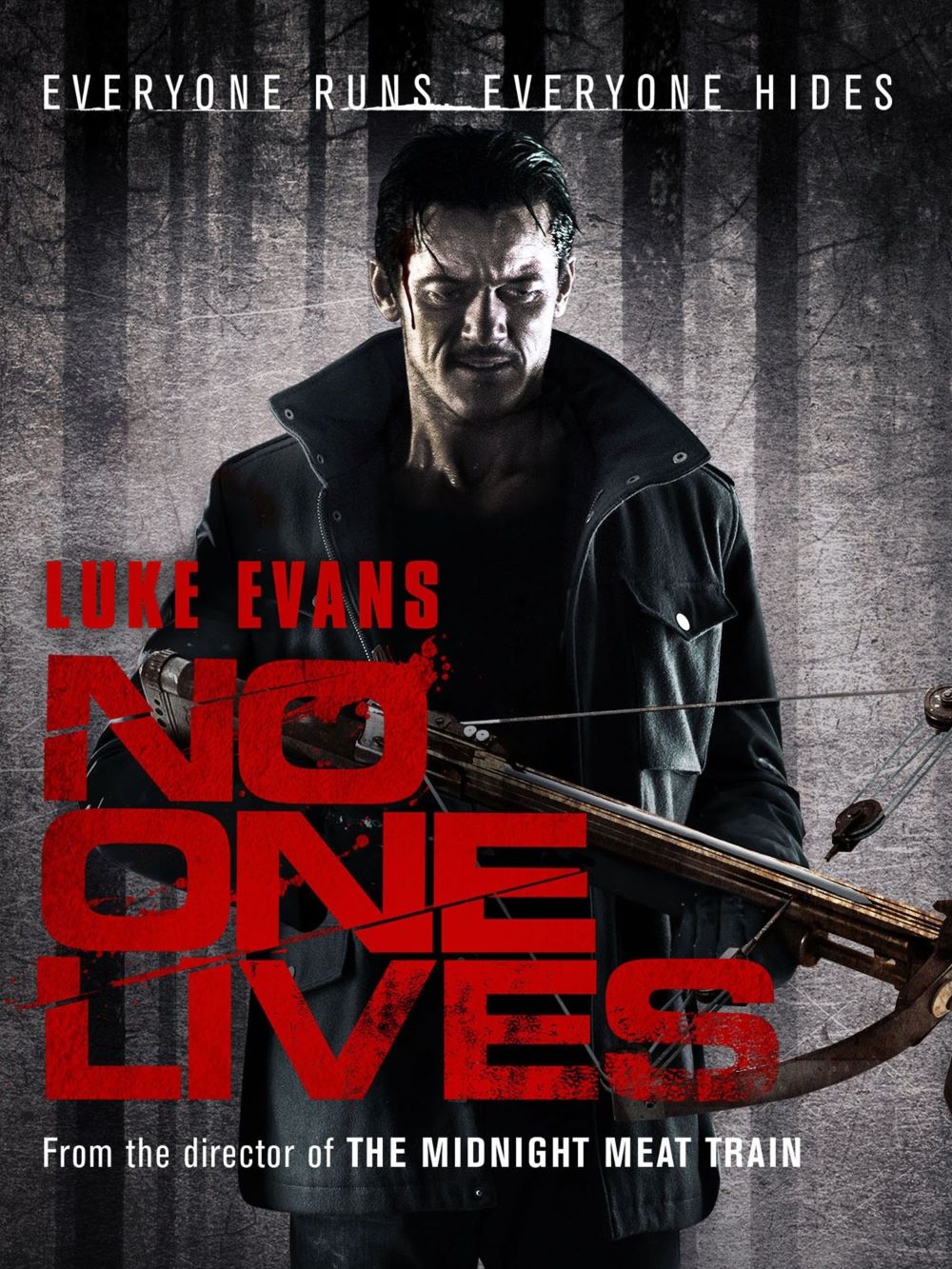
Ryuhei Kitamura’s 2012 horror film No One Lives is a gritty, brutal revenge slasher that doesn’t aim for subtlety or depth but delivers a fast-paced, high-gore thrill ride. The story follows a couple traveling cross-country who are kidnapped by a ruthless gang, only for the man to reveal himself as a deadly predator on a violent rampage. Luke Evans, playing the mysterious and merciless Driver, leads the film with a performance that blends cold calculation and terrifying violence, keeping viewers glued to the screen.

What makes No One Lives stand out is how it leans heavily into its grindhouse and exploitation roots, which proves both advantageous and limiting. The film fully embraces the hallmarks of grindhouse cinema—fast pacing, gritty visuals, excessive gore, and an amoral story stripped down to revenge-fueled violence. This raw, unapologetic approach results in an intense, no-holds-barred experience that will satisfy fans of exploitation and grindhouse styles. The practical effects are impressively executed, with creative and shocking kills that maintain impact without descending into the ridiculous. This dedication to grindhouse aesthetics gives the film a charged energy and a cult appeal, making it a pulpy, heart-pounding experience for viewers who appreciate that sleazy, nihilistic flavor.

However, the grindhouse influence also shapes the film’s limitations. The focus on spectacle and shock means character development and thematic depth take a back seat, making the story feel thin and the characters largely unrelatable except as violent archetypes. Dialogue at times drifts toward camp, and some acting choices can feel a bit amateurish, which may pull some viewers out of the otherwise tense atmosphere. The film’s relentless brutality and amoral tone also create a polarizing effect; it’s unapologetically harsh and violent, which fits the exploitation tradition, but it’s not for everyone. Those expecting traditional horror with complex narratives might find the experience shallow and exhausting.

Luke Evans’s Driver is a compelling anti-hero/monster hybrid, a character who dominates the film with his cold efficiency and unpredictable savagery. The other characters—mostly the gang members—serve as fodder for the film’s violent set pieces, with minimal background or sympathy. This suits the film’s grindhouse style, where depth is often sacrificed for thrills and shock value. The script cleverly keeps some mystery around Driver, maintaining suspense about his origins and intentions, which helps to sustain interest amid the unrelenting carnage.

The film’s grindhouse and exploitation roots also explain its tone and style: it revels in zaniness and excess, the gore is gratuitous but skillfully done, and the revenges feel morally ambiguous and raw. The film doesn’t try to justify or soften its violence; it embraces the lawlessness and nihilism typical of exploitation cinema. While this results in a tight, entertaining 86-minute rush of thrills, it also means the film lacks subtlety or emotional resonance. The style is both a badge of authenticity for genre fans and a barrier to wider appeal.

No One Lives offers a high-energy, blood-soaked horror experience that fully embraces its grindhouse and exploitation influences. It is crafted with a strong focus on unapologetic violence, tight pacing, and a captivating anti-hero in Luke Evans’s Driver. This stylized approach gives the film its raw, relentless intensity that fans of exploitation cinema will appreciate. However, this allegiance to grindhouse aesthetics also means the film prioritizes style and spectacle over emotional depth and narrative complexity. While the movie is an engaging and brutal thrill ride for those who enjoy extreme horror, its minimal character development and abrasive tone might feel one-dimensional or grating for viewers seeking more meaningful storytelling. Overall, it succeeds as a wild, gritty exploitation flick but doesn’t aim to be more than that, making it ideal for audiences who like their horror unrefined and full throttle.

Previous Guilty Pleasures

  1. Half-Baked
  2. Save The Last Dance
  3. Every Rose Has Its Thorns
  4. The Jeremy Kyle Show
  5. Invasion USA
  6. The Golden Child
  7. Final Destination 2
  8. Paparazzi
  9. The Principal
  10. The Substitute
  11. Terror In The Family
  12. Pandorum
  13. Lambada
  14. Fear
  15. Cocktail
  16. Keep Off The Grass
  17. Girls, Girls, Girls
  18. Class
  19. Tart
  20. King Kong vs. Godzilla
  21. Hawk the Slayer
  22. Battle Beyond the Stars
  23. Meridian
  24. Walk of Shame
  25. From Justin To Kelly
  26. Project Greenlight
  27. Sex Decoy: Love Stings
  28. Swimfan
  29. On the Line
  30. Wolfen
  31. Hail Caesar!
  32. It’s So Cold In The D
  33. In the Mix
  34. Healed By Grace
  35. Valley of the Dolls
  36. The Legend of Billie Jean
  37. Death Wish
  38. Shipping Wars
  39. Ghost Whisperer
  40. Parking Wars
  41. The Dead Are After Me
  42. Harper’s Island
  43. The Resurrection of Gavin Stone
  44. Paranormal State
  45. Utopia
  46. Bar Rescue
  47. The Powers of Matthew Star
  48. Spiker
  49. Heavenly Bodies
  50. Maid in Manhattan
  51. Rage and Honor
  52. Saved By The Bell 3. 21 “No Hope With Dope”
  53. Happy Gilmore
  54. Solarbabies
  55. The Dawn of Correction
  56. Once You Understand
  57. The Voyeurs 
  58. Robot Jox
  59. Teen Wolf
  60. The Running Man
  61. Double Dragon
  62. Backtrack
  63. Julie and Jack
  64. Karate Warrior
  65. Invaders From Mars
  66. Cloverfield
  67. Aerobicide 
  68. Blood Harvest
  69. Shocking Dark
  70. Face The Truth
  71. Submerged
  72. The Canyons
  73. Days of Thunder
  74. Van Helsing
  75. The Night Comes for Us
  76. Code of Silence
  77. Captain Ron
  78. Armageddon
  79. Kate’s Secret
  80. Point Break
  81. The Replacements
  82. The Shadow
  83. Meteor
  84. Last Action Hero
  85. Attack of the Killer Tomatoes
  86. The Horror at 37,000 Feet
  87. The ‘Burbs
  88. Lifeforce
  89. Highschool of the Dead
  90. Ice Station Zebra

Guilty Pleasure No. 80: Point Break (dir by Kathryn Bigelow)


Some films are so ludicrous and self-aware of their absurdity that you can’t help but love them and that’s certainly the case with 1991’s Point Break.

Consider what Point Break offers us:

First, you’ve got Keanu Reeves playing a former college football star who, after blowing out his knee, ended up joining the FBI.  Keanu, who looks like he’s barely out of high school in this film, plays a character with the wonderful name of Johnny Utah.  Keanu gives a relaxed performance.  You can tell that he’s having fun in this movie and Johnny Utah’s enthusiasm is infectious.  Personally, I prefer Johnny Utah to John Wick.

Secondly, you’ve got Patrick Swayze as Bodhi, the ruthless bank robber who is also a surfer.  Much like Reeves, Swayze could occasionally be a stiff actor but in this film, you can tell he’s having fun and again, it’s hard not have fun watching him as he spouts his surfer philosophy, jumps out of planes, and dreams of dying while mastering a 50-foot wave.  Swayze is so charismatic as Bodhi that you totally buy that Johnny Utah would like him despite all the times that Bodhi tries to kill him.

You’ve got Bodhi’s bank-robbing gang, who call themselves the Ex-Presidents.  Bodhi wears a Ronald Reagan mask.  Other members of the gang wear LBJ, Nixon, and Carter masks.  “I am not a crook!” Nixon says.  The wonderful thing about the Ex-Presidents is that they seem to truly enjoy robbing banks.  Of course, they also enjoy surfing.

Gary Busey plays a character who is not Gary Busy.  Instead, he’s Johnny’s partner.  Everyone in the FBI laughs at him when he says the bank robbers are surfers but guess who knows what he’s talking about!  Seriously, though, it’s always interesting to see Gary Busey in the years when he was still a somewhat serious actor.

John C. McGinley does the uptight boss thing.  Lori Petty is the waitress who teaches Johnny Utah how to surf.  The surf footage is beautifully shot.  A soaked Johnny give the camera a thumbs-up.  Director Kathryn Bigelow keeps the action moving quickly and, just as she did with Near Dark, uses the film’s genre trappings to explore the bond that holds together a group of outsiders.

It’s an over-the-top and cheerfully absurd film and it’s impossible not to love it.  I haven’t felt the need to watch the remake.  Why would I?  The original has everything I need.

Previous Guilty Pleasures

  1. Half-Baked
  2. Save The Last Dance
  3. Every Rose Has Its Thorns
  4. The Jeremy Kyle Show
  5. Invasion USA
  6. The Golden Child
  7. Final Destination 2
  8. Paparazzi
  9. The Principal
  10. The Substitute
  11. Terror In The Family
  12. Pandorum
  13. Lambada
  14. Fear
  15. Cocktail
  16. Keep Off The Grass
  17. Girls, Girls, Girls
  18. Class
  19. Tart
  20. King Kong vs. Godzilla
  21. Hawk the Slayer
  22. Battle Beyond the Stars
  23. Meridian
  24. Walk of Shame
  25. From Justin To Kelly
  26. Project Greenlight
  27. Sex Decoy: Love Stings
  28. Swimfan
  29. On the Line
  30. Wolfen
  31. Hail Caesar!
  32. It’s So Cold In The D
  33. In the Mix
  34. Healed By Grace
  35. Valley of the Dolls
  36. The Legend of Billie Jean
  37. Death Wish
  38. Shipping Wars
  39. Ghost Whisperer
  40. Parking Wars
  41. The Dead Are After Me
  42. Harper’s Island
  43. The Resurrection of Gavin Stone
  44. Paranormal State
  45. Utopia
  46. Bar Rescue
  47. The Powers of Matthew Star
  48. Spiker
  49. Heavenly Bodies
  50. Maid in Manhattan
  51. Rage and Honor
  52. Saved By The Bell 3. 21 “No Hope With Dope”
  53. Happy Gilmore
  54. Solarbabies
  55. The Dawn of Correction
  56. Once You Understand
  57. The Voyeurs 
  58. Robot Jox
  59. Teen Wolf
  60. The Running Man
  61. Double Dragon
  62. Backtrack
  63. Julie and Jack
  64. Karate Warrior
  65. Invaders From Mars
  66. Cloverfield
  67. Aerobicide 
  68. Blood Harvest
  69. Shocking Dark
  70. Face The Truth
  71. Submerged
  72. The Canyons
  73. Days of Thunder
  74. Van Helsing
  75. The Night Comes for Us
  76. Code of Silence
  77. Captain Ron
  78. Armageddon
  79. Kate’s Secret

Retro Television Review: Homicide: Life On The Street 3.4 “Crosetti”


Welcome to Retro Television Reviews, a feature where we review some of our favorite and least favorite shows of the past!  On Sundays, I will be reviewing Homicide: Life On The Street, which aired from 1993 to 1999, on NBC!  It  can be viewed on Peacock.

This week, we discover why Steve Crosetti has not come back to work.

Episode 3.4 “Crosetti”

(Dir by Whitney Ransick, originally aired on December 2nd, 1994)

Detective Steve Crosetti has yet to return from a week-long vacation in Atlantic City.  When Giardello asks Lewis where Crosetti is, Lewis lies and says that he has the flu.  In truth, Lewis hasn’t heard from Crosetti but he remains convinced that his partner will soon return and will once again be annoying him with all of his theories about Abraham Lincoln.

Meanwhile, Bolander and Munch are called to the harbor.  A body has been fished out of the water.  The body has been in the water for a while and, from what we see, its bloated and the skin has turned the purplish color of decay.  Bolander and Munch have no idea who the man is but they see that he’s wearing a lapel pin that identifies him as a member of the Fraternal Order of Policeman.  They check the body for ID….

Lewis is called in Giardello’s office.  Giardello tells Lewis that Steve Crosetti is dead.  His body was found in the harbor.  Bolander is investigating but all signs seem to indicate that Crosetti’s death was a suicide.  Lewis refuses to believe it.  He is convinced that Crosetti was murdered, perhaps by someone he investigated.  Lewis takes out his anger on Bolander and Munch, feeling that they’re attempting to besmirch Crosett’s reputation by even considering the possibility of suicide.

It’s more than just Lewis’s feelings at stake.  If Bolander determines that Crosetti committed suicide, it will make him the fourth Baltimore cop to have committed suicide that year.  The brass says that Crosetti won’t get an honor guard if it’s determined that he committed suicide.  Giardello subtly suggests that Bolander should rule the death of homicide.  Bolander suggests that committing suicide was Crosetti’s final statement.   Who are they to ignore a man’s final statement?

In the end, the toxicology results reveal that Crosetti was drunk when he fell in the harbor, leading to Lewis saying the death was an accident.  Munch then reveals that Crosetti was also taking several anti-depressants at the time of his death and Lewis is finally forced to admit that Crosetti was not murdered.  Crosetti does not get his honor guard, though Pembleton, after spending the whole episode acting as if he didn’t care, puts on his full dress uniform and salutes as Crosetti’s casket passes.

This was an incredibly powerful episode, all the more so because no explanation is given as to what specifically led to Crosetti taking his own life.  The genesis behind the episode was not a happy one.  One of NBC’s conditions for renewing Homicide for a third season was that Jon Polito, who was not considered photogenic enough for television, be written out.  Showrunner Tom Fontana told Polito it would only be a temporary thing and that Crosetti would return once the show had been renewed for a fourth season.  Polito didn’t believe Fontana and went to the press, complaining about how the show was being run.  As a result, Crosetti ended his life.  (Polito and Fontana later ended their feud, allowing Polito to return as a ghost at the end of Homicide: The Movie.)  The show uses Crosetti’s suicide as a way to explore the psychological impact of being a cop as well as the impossibility of truly knowing what’s going on inside anyone’s head.  Only after Crosetti’s suicide has been confirmed can Lewis look back and see certain signs that Crosetti was unhappy.

Wonderfully acted and wonderfully written, this episode is a dark one but, as so often happens with life’s darker moments, there are moments of humor.  Pembleton brags about his parallel parking skills, just to discover that he can’t actually pull out afterwards.  An attempt to buy cookies for Crosetti’s reception leads to a fierce argument between Bayliss and Pembleton, regarding both the price of cookies and whether or not the baker was actually Italian.  We meet Munch’s younger brother, a rather bitter mortician.  When Lewis cleans out Crosetti’s desk, the first thing he pulls out is a slinky.  These are small moments but they affirm the humanity of the show’s characters and reminds us that the show and this episode in general is as much about living as it is about dying.

Steve Crosetti, RIP.

Retro Television Review: Homicide: Life on The Street 1.7 “A Dog and Pony Show”


Welcome to Retro Television Reviews, a feature where we review some of our favorite and least favorite shows of the past!  On Sundays, I will be reviewing Homicide: Life On The Street, which aired from 1993 to 1999, on NBC!  It  can be viewed on Peacock.

This week, everyone gets something to do!

Episode 1.7 “A Dog and Pony Show”

(Dir by Alan Taylor, originally aired on March 10th, 1993)

Still struggling to accept their failure to get the arraber to confess to the murder of Adena Watson, Bayliss and Pembleton find themselves investigating another mysterious death.  Jake, a healthy and apparently beloved member of the Baltimore police, has been found dead in a park.  No one is sure about the cause of death but Pembleton suspects that Jake may have been poisoned.  When Pembleton asks Jake’s partner (played by Nick Olcott) if Jake had any enemies, he replies, “Maybe just the Pekingese next door.”

Pembleton is determined to solve the mystery of Jake’s death.  Bayliss is less concerned with the case, largely because Jake was a dog.  Of course, as a member of a K-9 unit, Jake was also a member of the force.  Because Jake was a member of law enforcement, the Homicide unit is required to investigate his death.  Bayliss thinks that Pembleton’s interest in the case is just trying to show Bayliss up in front of Giardello but Pembleton claims that his only concer is seeing that justice is done.  Add to that, Pembleton just happens to like dogs.

And Pembleton does solve the case.  It turns out that Jake got loose and was picked up by an overworked animal control officer (Joy Ehrlich) who, back at the pound, mixed Jake up with another dog who was scheduled to be put down.  She only realized her mistake after Jake died.  In a panic, she dumped Jake’s body in the park.  Having solved Jake’s death, Pembleton and Bayliss attend his funeral.  As Jake’s partner dumps Jake’s ashes into a lake, Bayliss suddenly gets emotional.  He explains that he’s thinking about Adena.  Pembleton, for once, shows some sympathy for Bayliss.  It looks like the two are finally starting to bond and become true partners.  All it took was the death of one dog.  (I’m getting teary-eyed just writing that sentence.)

Meanwhile, Bolander continues to stress out about his relationship with Carol, which is a subplot that I find less and less interesting with each episode in which it is featured.  This time, Bolander and Munch take Carol’s teenage son, Danny (Stivi Paskoski), on a ride-along.  Bolander is disturbed at just how excited Danny gets about seeing a dead body.  When Danny says that he’d love to commit a murder and get away with it, Bolander decides that the kid is mentally disturbed.  He also lets Carol know that he thinks Danny is a bit sick in the head.  I get the feeling this relationship is not going to last much longer and that’s fine with me because Bolander’s love life (or lack thereof) is honestly the least interesting part of this show so far.

While all of that is going on, Crosetti tries to comfort the now blind Chris Thormann, who does not react well to the news that his wife (played by Edie Falco) is pregnant.  I’m not really a huge fan of the Thormann storyline, largely because I find it to be almost unbearably depressing.  But I do have to say that Jon Polito, Lee Tergesen, and Edie Falco all really gave great performance in this episode.

Howard and Felton investigate the murder of a drug dealer’s girlfriend.  This storyline was pretty typical of what you’d expect to see on a cop show.  The most interesting thing about it was the presence of Lawrence Gilliard, Jr. as an associate of the suspect.  Years later, Gilliard would play the tragic D’Angelo Barksdale on the first two seasons of The Wire, a show that feels like a direct descendant of Homicide.  (And, indeed, Richard Belzer did have a cameo as John Munch during The Wire‘s final season so the two shows do take place in the same universe, though it should be made clear that Gilliard is not playing D’Angelo in this episode.)

Finally, a retiring shift commander (played by Michael Constantine) warned Giardello that the bosses want to force out all of the veteran commanders so that they can be replaced by younger men.  As usual, Kotto shined in the role of Giardello, playing him as being the ideal boss.  In a police force where almost everyone else seems to be looking out for themselves, Giardello genuinely cares about the people working under him.

After the emotional intensity of the previous episode, A Dog and Pony Show feels a bit more like a traditional crime show.  It’s definitely an ensemble piece, with everyone getting something to do.  (Even Lewis gets to help out Felton and Howard while his usual partner, Crosetti, tends to Thormann.)  Though this episode doesn’t grab the viewer in the same way as the previous few episodes, it still gives the cast a chance to show off their strengths and it still features enough unexpected moments of mordant wit to keep things from getting too bleak.  (It’s hard not to smile at Bayliss and Pembleton bickering over dogs or at Yaphet Kotto’s delivery of the line, “I’m starting to dislike both of you.”)  This episode shows that, even with a somewhat conventional episode, Homicide could still get the job done without sacrificing its own unique identity.

Retro Television Review: Homicide: Life On The Street 1.5 “A Shot In The Dark”


Welcome to Retro Television Reviews, a feature where we review some of our favorite and least favorite shows of the past!  On Sundays, I will be reviewing Homicide: Life On The Street, which aired from 1993 to 1999, on NBC!  It  can be viewed on Peacock.

This week, the murders continue and two detectives continue to obsess.

Episode 1.5 “A Shot In The Dark”

(Dir by Bruce Paltrow, originally aired on February 24th, 1993)

As I watched this week’s episode of Homicide, it occurred to me that I really don’t care about Stanley Bolander’s relationship with Dr. Carol Blythe.

Seriously, I really did try to give this storyline a chance.  Bolander is played by the great character actor Ned Beatty.  Dr.  Blythe is played by Wendy Hughes.  Both Beatty and Hughes are no longer with us but they were both very good actors and I’m always in favor of giving good actors a plotline.  But, my God — Bolander is so whiny!  I mean, I get it.  He’s newly divorced and he’s unsure of himself and he’s a lot more comfortable investigating death than actually living life.  However, Dr. Blythe obviously likes him and Bolander had a fairly good date with her during the previous episode so why did he spend this episode afraid to talk to her on the phone?  During this episode, Bolander and Munch were investigating the murder of a drug dealer.  The only witness was a high-class prostitute who ended up hitting on Bolander, largely because she wanted him to buy her some food.  It was an interesting-enough case but instead of focusing on that, the whole thing was Munch telling Bolander to call Blythe and Bolander getting mad as a result.  It got old.

While Bolander whined about his relationship issues, Lewis and Crosetti continued to investigate the shooting of Officer Thormann.  Crosetti was convinced that Thormann had been shot by Alfred Smith (Mojo Gentry), largely because a man named Charles Flavin (Larry Hull) fingered Smith as being the shooter.  Lewis thought that Flavin was a more likely suspect, especially after Flavin failed a lie detector.  In the end, it was not superior police work that led to the arrest of Charles Flavin but instead his girlfriend telling Crosetti and Lewis that Flavin shot Thormann because he had a headache.  When confronted, Flavin immediately confessed and then started complaining about his migraine.

(As for Officer Thormann, he survives being shot in the head but he is now blind.)

Everyone is happy that Thormann’s shooter has been arrested but Crosetti finds himself wracked with guilt and self-doubt over the fact that he nearly arrested the wrong man.  In a wonderfully-acted moment, Crosetti tells Lewis that Giardello was right.  Crosetti was too close to Thormann to work the case.

Speaking of getting too involved in a case, Bayliss continues to obsess over the Adena Watson case.  After the incompetent Captain Barnfather (Clayton LeBouef) goes to a community meeting and reveals that a pipe was used to kill Adeena (and, in the process, ruins Bayliss’s plan to interrogate the man who he suspects is the murderer), Bayliss calls Barnfather and calls him a — cover your ears, if you’re young — “butthead.”  Barnfather is so offended that he comes to the station to demand that Bayliss be taken off the case.  Giardello tells Bayliss that he can either apologize or he can find another job.  Giardello also acknowledges that Barnfather’s an idiot and Bayliss has every reason to be upset.  Bayliss, who has a cold and is running a fever, apologizes and then tells Giardello that he’s willing to step down as primary and let Pembleton have the case.  Giardello, who really is the perfect boss, tells Bayliss to go home and get some sleep.

While Bayliss is losing his temper, Felton and Pembleton are investigating a man who lived in the neighborhood where Adeena’s body was found.  Felton’s theory is that the man killed Adeena and then kept her body in the trunk of his car before dumping her in the back yard where she was found.  The man’s car has subsequently been repossessed and Pembleton and Felton spend a night searching for the car on various impound lots.  When they finally find the car, they also find no evidence linking it to the Watson murder.  The focus of these scenes was less on the search for the car and more on listening to Pembleton and Felton bicker.  The two men sincerely dislike each other and Homicide deserves a lot of credit for acknowledging that working with someone is not the same thing as respecting them.  Pembleton views Felton as being a racist.  Felton views Pembleton as being a snob.  As they look for the car, they argue about everything, from the renaming of a street after Martin Luther King to Felton’s belief that Pembleton takes everything too personally.  Their argument is fascinating to listen to, largely because of the obvious disdain that each man has for the other.  Neither man is portrayed as having a monopoly on the truth.  Pembleton may be right about Felton’s prejudices but Felton is equally correct when he suggests that Pembleon is more concerned with showing up Bayliss than with investigating the case.  It’s the type of thing that you would never hear on television today.

In the end, the neighbor and his car prove to be a dead end.  But lab results come in that suggest that Bayliss’s suspicion that Adeena was killed by the local arabber may be correct.  While the rest of the squad celebrates the arrest of Charles Flavin, Pembleton and Bayliss prepare to bring in the arabber.

(According to Wikipedia, an arabber is a street vendor who sells fruits and vegetables from a horse-drawn cart.  Apparently, they’re a Northeastern thing and specifically a Baltimore thing.  Having grown up in the Southwest, I have to admit that I had never even heard the term before watching Homicide.)

All of the Bolander nonsense aside, this was a good episode that took a look at the mental strain involved in being a homicide detective.  Crosetti allowed himself to become so obsessed that he nearly arrested the wrong guy.  Bayliss allowed himself to become so obsessed that he nearly lost his job as a result.  Interestingly enough, Thormann’s shooter is captured because his girlfriend turned him in and not because of any superior policework.  Meanwhile, it’s easy to laugh at Pembleton and Felton spending an entire day chasing down a false lead but, in doing so, they eliminate the neighbor as a viable suspect and help to make the case against the arabber even stronger.  In the end, it’s a thankless job but this episode makes the viewer glad that someone’s doing it.

Next week, we finally meet the arabber!

Retro Television Review: Homicide: Life on the Street 1.4 “Son of a Gun”


Welcome to Retro Television Reviews, a feature where we review some of our favorite and least favorite shows of the past!  On Sundays, I will be reviewing Homicide: Life On The Street, which aired from 1993 to 1999, on NBC!  It  can be viewed on Peacock.

This week, things get emotional on Homicide!

Episode 1.4 “Son of a Gun”

(Dir by Nick Gomez, originally aired on February 10th, 1993)

Officer Chris Thormann (Lee Tergesen), a patrol officer who is friendly with the Homicide detectives and who is a bit of protegee to Steve Crosetti, has been shot.  While Thormann lies in surgery with a bullet in his brain, his wife (Edie Falco, in one of her first television appearances) waits for news from the doctors and tries to avoid the members of the callous press.  Crosetti demands to be put in charge of the investigation into Thormann’s shooting and when Giardello points out, quite correctly, that Crosetti is too close to the victim to be objective, Crosetti strips down to his boxers and shows Giardello the scars left behind by every time that he’s been shot.

It’s an odd scene, one that seems to come out of nowhere in an episode that, up until that moment, had been pretty serious.  Kotto does a great job of capturing Giardello’s horror as Crosetti drops his pants.  It’s obvious that this is not the first time that Crosetti has shown off his scars to get assigned to a certain case.  It’s a scene that shouldn’t work but it does work because not only is it well-acted by Yaphet Kotto and Jon Polito but it also captures the insanity of being a homicide detective.  Just four episodes in, Homicide has already shown that it can be a funny show but the humor is rooted in the darkest corners of the human experience.  To survive as a homicide detective, you have to harden yourself to the point of being callous and you have to be able to see the humor in just about everything.  Crosetti, with his constant analysis of the Lincoln assassination and his inventory of bullet scars, may seem crazy but actually, he’s doing what he has to do to survive.

The episode ends with Thormann alive but in a coma and possibly brain-damaged.  And it ends with the shooter still at large.  Crosetti has received an anonymous tip from someone saying that the killer was a man named Alfred Smith.  But who knows if that’s true.

The Adeena Watson case remains open, as well.  Bayliss and Pembleton are still struggling to figure out how to work together.  Bayliss is too obsessed with the case.  Pembleton is too determined to show up the new guy.  A raid on the apartment where it’s believed Adeena was murdered turns up nothing but more evidence of human misery.  That said, a cheerful guy (played by Paul Schulze) who claims to be an agent for hitmen does give up several of his clients, allowing Howard and Felton to close even more cases.  Even Calpurnia Church (Mary Jefferson), the “black widow” from the pilot, is finally arrested due to the agent’s testimony.

Finally, Stanley Bolander goes on his first date with Dr. Blythe.  Before going on his date, he meets his neighbor, Larry Molera (Luis Guzman).  Larry is a carpenter.  He’s built a coffin that is currently sitting in living room.  Bolander’s date goes well but the nervous Bolander turns down Blythe’s offer to go back to her place with her.  Bolander returns to his apartment, where he discovers that Larry is dead and lying in his coffin.  (Much, who was called when Larry’s body was discovered, is shocked to see Bolander.  Bolander is not happy that Much now knows where he lives.)  Larry’s death inspires Boland to return to Dr. Blythe’s apartment.

This was an emotional episode.  Thormann is clinging to his life while his wife and Crosetti wait for him to wake up.  The recently divorced Bolander finally found the courage to go out with Dr. Blythe.  Bayliss appears to be so obsessed with the Adeena Watson case that he’s struggling to think straight.  This episode takes a look at the mental strain that comes from dealing with crime and death on a daily basis.  It’s well-done, even if it’s not quite as memorable as Night of the Dead Living.  (The stuff with Larry and his coffin was a bit too self-consciously quirky to be as emotionally devastating as the show obviously meant for it to be.)  If I took anything away from this episode, it’s that fate is random.  Officer Thormann has been shot in the head but he survived hours of surgery.  Larry seemed to be healthy but he suddenly died while Bolander was on his date.  Adeena’s killer may never be caught while Calpurnia Church was caught because of an initially unrelated investigation.  Some of the detectives are skilled.  Some of them are not.  But, in the end, they’re all at the random mercy of fate.

Retro Television Review: Homicide: Life on Street 1.3 “Night of the Dead Living”


Welcome to Retro Television Reviews, a feature where we review some of our favorite and least favorite shows of the past!  On Sundays, I will be reviewing Homicide: Life On The Street, which aired from 1993 to 1999, on NBC!  It  can be viewed on Peacock.

This week, the Homicide Squad works the night shift on the hottest night of the year.

Episode 1.3 “Night of the Dead Living”

(Dir by Michael Lehmann, originally aired on March 31st, 1993)

On the hottest night of the year, Giardello’s homicide squad works the night shift.  Everyone comes in grumpy.  Munch has just broken up with his girlfriend.  Bolander is trying to work up the courage to call Dr. Blythe.  Bayliss is still obsessing on the Adeena Watson case and he and Pembleton are still trying to figure out how to work together.  Kay’s sister is having trouble at home.  Felton’s wife hates him.  Crosetti worries about his teenage daughter and her boyfriend.  Giardello tries to figure out why the air conditioner is only blowing out hot air on what Lewis claims is the hottest night in history.

Despite the heat and the statistics that show that most homicide occur at night, no calls come in.  Bayliss is convinced he’s cracked the Watson case when he discovers that the fingerprints on Adeena’s library book belongs to someone named James.   He sends Thorson out to arrest James.  James turns out to be a seventh grader who thinks he’s being arrested by not paying a library fine.  (James did check out the book, when he was in the fifth grade.)

A drunk man dressed as Santa Claus is brought in and later falls through the ceiling when he attempts to escape custody.  A baby is found in the station’s basement but it turns out to the cleaning lady’s baby.  She brings him to work with her to protect him from the rats that live in their apartment building.  Eventually, Bolander works up the courage to call Blythe and Bayliss and Pembleton figure out that Adeena’s body was found where it was because her killer brought the body down a fire escape.  At the end of the shift, Giardello assembles his detectives on the roof and joyfully sprays them with the water hose.

It’s an episode that feels like a play, taking place in one location and featuring a lot of monologuing.  Each member of the squad gets a their chance in the spotlight, with the episode revealing that every one of them is a bit more complex than they initially seem.  Even Munch, the misanthrope, is shown to light a candle in memory of “all those who have been killed.”  It’s one of those episodes that makes you understand why Homicide is considered to be classic while also showing you why it struggled in the ratings.  In this episode, Homicide revealed itself to be not a cop show but instead a show about people who happened to be cops.  Most shows about detectives end with an arrest.  This episode ends with Giardello showing his love for the people who work for him.  After spending an hour with everyone sweating and complaining, it’s nice to see them happy on the roof of the station house.  Yaphet Kotto’s joy in the final scene is a wonder to behold.  And yet, it’s easy to imagine how confused audiences, whose expectations had been set by more traditional crime show, would have been.

This episode was meant to be the third episode of the series.  NBC decided that it worked better as the finale of the first season and instead made it the ninth episode.  Peacock has this episode placed where it originally belonged and, with this review, that’s what I’m going with as well.


Retro Television Review: Homicide: Life on the Street 1.2 “Ghost of a Chance”


Welcome to Retro Television Reviews, a feature where we review some of our favorite and least favorite shows of the past!  On Sundays, I will be reviewing Homicide: Life On The Street, which aired from 1993 to 1999, on NBC!  It  can be viewed on Peacock.

This week, the search for Adeena Watson’s murderer begins.

Episode 1.2 “Ghost of a Chance”

(Dir by Martin Campbell, originally aired on February 3rd, 1993)

There’s been a murder in Baltimore.  That, in itself, is not news.  The pilot firmly established that murder is a fact of life in Baltimore.  But, the victim of this crime is an 11 year-old girl named Adeena Watson, who left her home to go to the library and who never returned.  The press is covering every detail.  The police brass want an arrest and they want an arrest quickly.  And the primary detective on the case is rookie Tim Bayliss, who has never even worked a murder case on his own before.  Giardello refuses to replace Bayliss but he also makes it clear that he needs Bayliss to bring him something.

As for Bayliss, he spends most of this episode struggling.  Not only does he not have the respect of his fellow detective but he also, as a rookie, doesn’t even have a desk until Giardello, in a fit of anger, knocks everything off an unoccupied desk and awards it to Bayliss.  (So, was that desk just sitting there the whole time?  I thought they didn’t have any available desks.)  Because this crime is what is known as a “red ball,” (i.e., a murder that has attracted the attention of the media and the public), every detective is looking for Adeena’s murderer.  While Bayliss obsesses on who Adeena was before she was killed, the rest of the squad does the practical things, like talking to neighbors and bringing in all of the city’s sex offenders for interrogation.

My heart broke for Bayliss while watching this episode.  Kyle Secor did a good job of capturing both Bayliss’s outrage over the crime and his fear of failing to solve his first case as a primary.  While Bayliss stared at Adeena’s body in the alley, Munch, Lewis, and Crosetti debated sports.  And while their attitude may have seemed callous, this episode established that disconnecting is the only way to handle working Homicide.  Bayliss, having not learned how to disconnect, grows more and more obsessed with Adeena.  I cheered a little when Bayliss finally stood up for himself and even won the grudging respect of Frank Pembleton.  That said, the change in Bayliss happened almost too quickly to be credible.  Apparently, all it took was for Giardello to give him a desk for Bayliss to go from being meek and overwhelmed to being a confident and take-charge detective.

While Bayliss searched for Adeena’s killer, Much and Bolander dealt with a murder that happened in a wealthy neighborhood.  The killer (Gwen Verdon) was a wife who snapped after 60 years of marriage.  As she explained to Bolander and Munch, she and her husband had earlier promised each other that they wouldn’t get a divorce until the children died.  Bolander has a crush on the coroner, Dr. Blythe (Wendy Hughes), but he’s worried about getting back in the dating game after his own divorce.  When Munch asks Bolander how old he is, Bolander replies, “48.”  Ned Beatty was a great actor and I’ve never seen a bad Ned Beatty performance.  That said, it’s also hard for me to think of any film where he looked a day under 50.

Meanwhile, Kay tries to get a confession from a guy who is about to go on trial for murder.  Felton laughs when Kay says that she was visited by the ghost of the guy’s victim.  However, Felton makes up for being a jerk by helping Kay find the murder weapon.  This whole subplot was odd to me, largely because Kay really doesn’t come across as the type to believe in ghosts.  But whatever works, I guess!  Melissa Leo and Daniel Baldwin did a good job in this episode, selling a storyline that had the potential to be a little bit too cute for its own good.

As the episode ended, the killer of Adeena Watson had yet to be captured.  While the other detective drank at a wharf bar, Bayliss went to Adeena’s memorial service and stared at her coffin, haunted.  It was a powerful moment but one that left the viewer worried about Bayliss’s sanity.  Earlier in this episode, Pembleton said that a murder that goes 72 hours without being solved will never be solved.  Bayliss is running out of time.


Retro Television Reviews: Acting Sheriff 1.1 “Pilot”


Welcome to Retro Television Reviews, a feature where we review some of our favorite and least favorite shows of the past!  On Thursdays, I will be reviewing Acting Sheriff, which aired on CBS in 1991.  The entire show is currently streaming on YouTube!

Who is Brent McCord?

Why, he’s the acting sheriff!

Episode 1.1 “Pilot”

(Dir by Michael Lembeck, originally aired on August 17th, 1991)

At a small country jail in North Carolina, the staff is waiting the arrival of the new sheriff.

Dispatcher Helen Munson (Ruth Kobart) is grumpy and sarcastic, as all older characters were required to be in 1990s sitcoms.

Deputy Judith Mahoney (Diane Delano) is a blonde badass who can’t wait to enforce the law and lock up every criminal that she sees, despite the fact that there aren’t many criminals to be found in this small, rural county.

Deputy Mike Swanson (John Putch) is the smart, responsible deputy who ran for sheriff in the last election but lost, despite his years of hard work and his likability.

Who is the new sheriff?  Why, he’s Brent McCord (Robert Goulet), a former Hollywood star who went from starring in films like Get Al Capone and A Fistful of Courage to appearing in books with titles like Where Are They Now?  Brent once was a huge star but, after several failed television shows and a handful of divorces, he has returned home and …. run for sheriff, for some reason.

When he does show up at the jail, Brent swaggers around like John Wayne and says things like, “Is the slime infecting the streets waiting for me?”  Brent McCord doesn’t know anything about being a county sheriff but he does know how to act like a character in a movie.  He walks into the station, draws his gun, and accidentally fires it.

Deputy District Attorney Donna Singer (Hilary B. Smith) is not happy about the new sheriff.  She tells him that, “Someone should put a tent over you and charge admission!”  She’s even less happy when a banker robber (Lee Tergesen) escapes from the jail, largely due to the sheriff’s incompetence.  Fortunately, Deputy Mike remembers a scene from Get Al Capone where McCord’s character recaptured a bank robber by leaving more money around for him to steal.  Following the same strategy, Mike recaptures the bank robber but he allows Sheriff McCord to have all the credit.  Mike’s a good guy who doesn’t hold a grudge over a silly thing like losing an election to a B-actor.

This pilot, which was produced by Disney for CBS, aired once and that was it.  It didn’t lead to anymore episodes and, watching the pilot, it’s easy to see why.  The pilot struggles to combine the relatively realistic portrayal of a county jail with the over-the-top performance of Robert Goulet.  Occasionally, Goulet will get a laugh by delivering his pompous lines in the most self-serious manner possible.  But, far too often, the character is so cartoonish that the other actors don’t seem to know how to keep up with Goulet’s hammy performance.  (At times, Goulet seems to be copying William Shatner’s technique without any of Shatner’s charm.)  Probably the biggest problem is that pilot fails to answer the most obvious question that one would have while watching the show.  Why did Brent McCord run for sheriff?  Does he want to do a good job or was he just bored?  Does he care about the county or did he just want to see his name in the newspapers?  Is he well-intentioned or just buffoonish?  The pilot doesn’t seem to know and, as a result, audiences would never find out.


A Very Short Review of Tooken


Why am I even reviewing Tooken?

That’s a good question.  I’m about to tell you that this film sucked but the thing is, you probably know that it sucked just by the fact that the movie is named Tooken.  I mean, do I even need to tell you that it’s supposed to be a parody of the Taken films?  Bleh!

Originally, I was going to include this film as one of my Insomnia Files but then it occurred to me that Tooken is the type of film that gives insomnia a bad name.  Seriously, go tell someone that you couldn’t sleep last night so you turned on the TV and watched Tooken.

Really?  they’ll say, You stayed up all night so you could watch that crap?

And it doesn’t even matter that insomnia is something that you have no control over.  Instead, it’ll all come down to the fact that you were actually awake at 4 in the morning and you were watching Tooken.

And you’ll hate yourself for it.  Oh, the shame that you will feel….

Anyway, the depressing thing about Tooken is that it stars Lee Tergesen, who actually does a pretty good Liam Neeson imitation and who proved, in a short film called Into The Dark, that he deserves better than Tooken.  Tergesen plays Bryan Millers, a former CIA agent who is now a mall security guard and the main joke of the film is that he’s always losing stuff and reacting to it in the style of Liam Neeson discovering that Kim has, once again, been taken.  And I know that sounds like it has the potential to be funny but the joke actually wears thin pretty quickly.

(How thin?  Thinner than the fabric of the nightie that I’m wearing as I type up this review it at 3 in the morning!  And that’s pretty thin!)

Part of the problem with Tooken is that the Taken films don’t take themselves that seriously to begin with.  In many ways, Tooken is a parody of a parody.  Whenever Liam Neeson growls into that phone and lets the kidnappers know that he’s coming, he does so with just the slightest twinkle in his eye.  He’s letting us know that he’s in on the joke and he understands that the entire franchise is ludicrous.  There’s really not a single joke that you can make about the Taken franchise that the franchise hasn’t already made itself.

Of course, the other problem with Tooken is that it’s just not funny.  In fact, it’s painfully unfunny.  Watching this movie is like listening to a 3rd grader try to tell a joke and realizing, with a feeling of deepening horror, that not only have you heard the stupid joke before but the kid is totally going to screw up the delivery as well.

Back to the question that started this review.  Why am I reviewing Tooken?  Well, at the start of this year, I swore that I was going to make sure that this site had a review for every movie that I watched in 2015.  Tooken is a film that I watched so I had to review it.

That’s right — I did it for the site.

And I did it for you, my loves.

Y’all owe me big time.