Scenes I Love: The Cross-Examination From Anatomy of a Murder


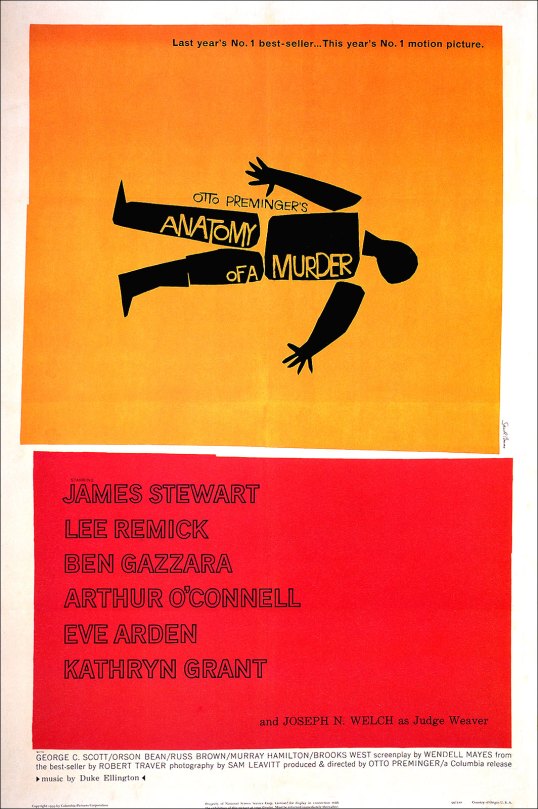
Since today is Otto Preminger’s birthday, I figured that this would be a good time to share a scene that I love from one of my favorite movies, Preminger’s 1959 film, Anatomy of a Murder.

In this scene, prosecutor Claude Dancer (played, in one of his first screen roles, by George C. Scott) cross-examined Laura Manion (Lee Remick), the wife of a man who has been accused of murder.  Playing the role of the defense attorney is James Stewart.  This scene is a master-class in great acting.  Preminger could be a bit of an inconsistent director but his willingness to take on controversial subjects set him apart from many of his contemporaries.  When he had the right material, as he did here, he could create the perfect mix of melodrama and art.  Preminger’s best films, like Anatomy of a Murder, stand the test of time.

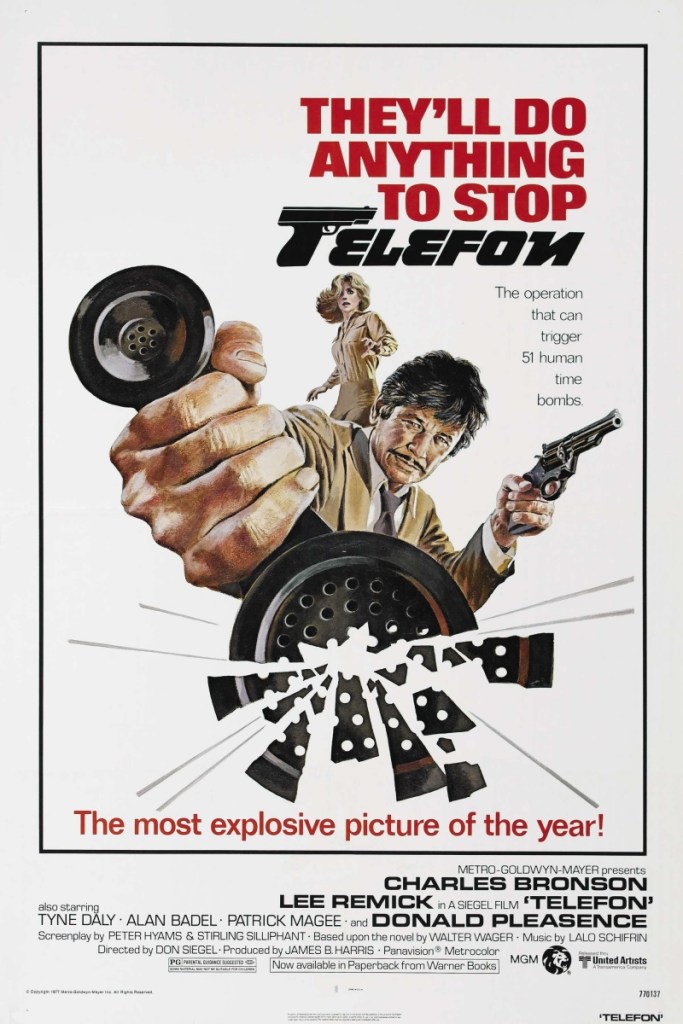
Scenes that Bradley loves – triggering human time bombs in TELEFON!


Well before THE NAKED GUN was triggering Reggie Jackson, director Don Siegel and Charles Bronson were triggering human time bombs in TELEFON (1977). Quentin Tarantino even borrowed from this film when he chose the Robert Frost poem for Stuntman Mike’s (Kurt Russell) lap dance from Arlene (Vanessa Furlito). It’s not as sexy, but it’s still a good time as Bronson tries to prevent World War III. Enjoy!

TELEFON – Charles Bronson plays a KGB agent in a movie that inspired The Naked Gun and Tarantino’s Death Proof!


When I was a kid, FOX-16 out of Little Rock, Arkansas would have “Charles Bronson weeks” where every night they’d show a different Bronson film.  I saw several of his films for the first time during those weeks and TELEFON was one of those movies.  I remember really enjoying it that first time I saw it, and I’ve always carried that positive feeling with me.  

The plot of TELEFON is pretty interesting.  In a nutshell, Charles Bronson is Russian KGB agent, Grigori Borsov, who’s been sent to the United States to stop radical Russian Nicolai Dalchimsky (Donald Pleasance), before he can set off more hypnotized human time bombs.  Lee Remick is a beautiful Russian agent (double agent?) who helps him with his mission.  

I personally think TELEFON is an underrated Charles Bronson film, and it seems like a movie that has almost been forgotten.  This is strange to me because it had quite the pedigree at the time of production.  Bronson was a huge star at the time, and the director was Don Siegel, the man behind such classics as DIRTY HARRY, ESCAPE FROM ALCATRAZ, and THE SHOOTIST.  The cast is exceptional as well, with Bronson being joined by the likes of Donald Pleasance, Lee Remick, Tyne Daly, Sheree North and Patrick Magee. The screenplay was co-written by Peter Hyams, who would go on to direct such excellent films as OUTLAND, THE STAR CHAMBER, and RUNNING SCARED.  My point of sharing all of this is that true professionals were at work in front of, and behind the camera, and they created a damn fine Cold War thriller.  I was glad that Shout Factory put out a nice blu ray of the film in January of 2024.  Hopefully film enthusiasts will begin discovering the film again.  

With that said, TELEFON isn’t a perfect film and I do have a few small complaints.  First, Charles Bronson doesn’t appear in the film until we’re already 21 minutes deep.  That’s a long time for me to have to wait for the man!  Second, Bronson and Remick don’t have a lot of sexual chemistry.  She’s beautiful and he oozes masculinity, but somehow it doesn’t really extend to a real connection between their characters.  That’s one of the reasons I like it when Bronson works with his wife Jill Ireland.  That chemistry is usually there between them.  Third, Donald Pleasance wears several wigs and looks kind of dorky at times.  Fourth, Sheree North wears a housecoat during her section of the film.  If you’ve seen her in BREAKOUT with Bronson from a couple of years earlier, you understand just what a missed opportunity that was.  Finally, Tyne Daly is so good in her small role, but she ultimately just kind of exits the film.  I’d have liked even more of her.  These are small complaints, with the exception of Bronson’s entrance & North’s wardrobe choice, that I don’t really hold against the movie.  

The last thing that I want to mention is that there are a couple interesting pop culture references to TELEFON in movies that came out later.  First, the writers of THE NAKED GUN borrowed the plot about hypnotized human time bombs in their own plot to assassinate the visiting Queen of England.  Certain scenes are taken directly from TELEFON.  I remember watching THE NAKED GUN in theaters in the late 80’s and wondering if I was the only person who realized this fact.  Second, in DEATH PROOF, Quentin Tarantino used the major plot device of quoting the Robert Frost poem “Stopping by Woods on a Snowy Evening” in order to trigger something. In TELEFON, it was human time bombs.  In DEATH PROOF, it was human lap dances.  God bless Quentin Tarantino!

Scenes I Love: The Cross-Examination From Anatomy of a Murder


Since today is Otto Preminger’s birthday, I figured that this would be a good time to share a scene that I love from one of my favorite movies, Preminger’s 1959 film, Anatomy of a Murder.

In this scene, prosecutor Claude Dancer (played, in one of his first screen roles, by George C. Scott) cross-examined Laura Manion (Lee Remick), the wife of a man who has been accused of murder.  Playing the role of the defense attorney is James Stewart.  This scene is a master-class in great acting.  Preminger could be a bit of an inconsistent director but his willingness to take on controversial subjects set him apart from many of his contemporaries.  When he had the right material, as he did here, he could create the perfect mix of melodrama and art.  Preminger’s best films, like Anatomy of a Murder, stand the test of time.

4 Film Reviews: Bridge To Silence, The Chocolate War, Kiss The Bride, Wedding Daze


Last week, I watched six films on This TV.

Which TV?  No, This TV!  It’s one of my favorite channels.  It’s not just that they show a lot of movies.  It’s also that they frequently show movies that are new to me.  For instance, last week, This TV introduced me to both Prison Planet and Cherry 2000.

Here are four other films, two good and two not so good, that This TV introduced to me last week.
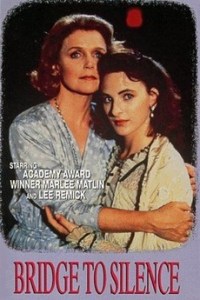
First up, we have 1989’s Bridge to Silence.

Directed by Karen Arthur, Bridge To Silence was a made-for-TV movie.  Lee Remick plays Marge Duffield, who has a strained relationship with her deaf daughter, Peggy (Marlee Matlin).  After Peggy’s husband is killed in a traffic accident, Peggy has a nervous breakdown.  Marge and her husband, Al (Josef Sommer) take care of Peggy’s daughter, Lisa, while Peggy is recovering.  However, even as Peggy gets better, Marge still doesn’t feel that she can raise her daughter so Marge files a lawsuit to be named Lisa’s legal guardian.  While all of this is going on, Peggy is starring in a college production of The Glass Menagerie and pursuing a tentative romance with the play’s director (Michael O’Keefe).

Bridge to Silence is one of those overwritten but heartfelt melodramas that just doesn’t work.  With the exception of Marlee Matlin, the cast struggles with the overwrought script.  (Michael O’Keefe, in particular, appears to be miserable.)  The film’s biggest mistake is that it relies too much on that production of The Glass Menagerie, which is Tennessee Williams’s worst play and tends to be annoying even when it’s merely used as a plot device.  There’s only so many times that you can hear the play’s director refer to Peggy as being “Blue Roses” before you just want rip your hair out.
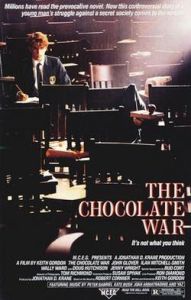
Far more enjoyable was 1988’s The Chocolate War.

Directed by Keith Gordon, The Chocolate War is a satirical look at conformity, popularity, rebellion, and chocolate at a Catholic boys school.  After the manipulative Brother Leon accidentally purchases too much chocolate for the school’s annual sale, he appeals to one of his students, Archie Costello (Wallace Langham), to help him make the money back.  Archie, who is just as manipulative as Leon, is the leader of a secret society known as the Vigils.  However, Archie and Leon’s attempt to manipulate the students runs into a roadblack when a new student, Jerry Renault (Illan Mitchell-Smith) refuses to sell any chocolates at all.  From there, things get progressively more complicated as Archie tries to break Jerry, Jerry continues to stand up for his freedom, and Leon … well, who knows what Leon is thinking?

The Chocolate War was an enjoyable and stylish film, one that featured a great soundtrack and a subtext about rebellion and conformity that still feels relevant.  John Glover and Wallace Langham both gave great performances as two master manipulators.
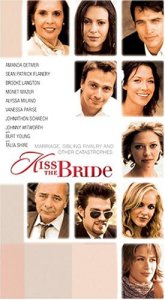
I also enjoyed the 2002 film, Kiss The Bride.

Kiss The Bride tells the story of a big Italian family, four sisters, and a wedding.  Everyone brings their own personal drama to the big day but ultimately, what matters is that family sticks together.  Directed by Vanessa Parise, Kiss The Bride featured believable and naturalistic performances from Amanda Detmer, Talia Shire, Burt Young, Brooke Langton, Monet Mazur, and Parise herself.

I have to admit that one reason why I liked this film is because it was about a big Italian family and it featured four sisters.  I’m the youngest of four sisters and, watching the film, I was reminded of my own big Irish-Italian family.  The movie just got everything right.

And then finally, there was 2006’s Wedding Daze.

Wedding Daze is a romantic “comedy.”  Anderson (Jason Biggs) asks his girlfriend to marry him, just to have her drop dead from shock.  Anderson’s best friend is afraid that Anderson will never get over his dead girlfriend and begs Anderson to not give up on love.  Anderson attempts to humor his friend by asking a complete stranger, a waitress named Katie (Isla Fisher), to marry him.  To everyone’s shock, Katie says yes.

From the get go, there are some obvious problems with this film’s problem.  Even if you accept that idea that Katie would say yes to Anderson, you also have to be willing to accept the idea that Anderson wouldn’t just say, “No, I was just joking.”  That said, the idea does have some comic potential.  You could imagine an actor like Cary Grant doing wonders with this premise in the 30s.  Unfortunately, Jason Biggs is no Cary Grant and the film’s director, comedian Michael Ian Black, is no Leo McCarey.  In the end, the entire film is such a misjudged failure that you can’t help but feel that Anderson’s ex was lucky to die before getting too involved in any of it.
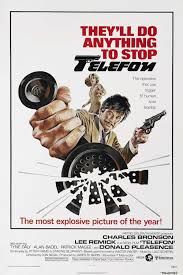
A Movie A Day #175: Telefon (1977, directed by Don Siegel)


Across America, strange things are happening.  Seemingly ordinary, middle-aged citizens are, without explanation, attacking formerly top secret government facilities.  The attackers are from all different walks of life.  One was an auto mechanic.  Another was a priest.  There was even a housewife who, after blowing up a power station, committed suicide with a poison pill that the KGB stopped issuing a decade ago.  Before launching their attacks, each one of them received a phone call in which a Russian man recited a poem by Robert Frost.

The Americans may not understand what is happening but the Soviets do.  Immediately after the Cuban Missile Crisis, the KGB planted sleeper agents across the United States.  They hypnotized and brainwashed the agents so thoroughly that they no longer remember that they are agents.  The Frost poem was the trigger designed to activate the agents, all of whom were meant to attack what were then valuable parts of America’s infrastructure.  With the arrival of détente, the program was abandoned and the sleeper agents were simply left behind in the United States.  But now, a former hardliner (Donald Pleasence), is activating the agents one by one.  Because he has a photographic memory, KGB colonel Charles Bronson is sent to the United States to track down and kill Pleasence before the United States discovers the truth about what is happening.  Lee Remick, as an American KGB agent, is assigned to work with him but is also ordered to kill him once the assignment has been completed.

That Telfon is one of Charles Bronson’s better post-Death Wish films is largely due to the presence of Don Siegel in the director’s chair.  As a director who specialized in intelligent genre films and who helped to make Clint Eastwood one of the world’s biggest stars with Dirty Harry, Coogan’s Bluff, The Beguiled, and Escape from Alcatraz, Don Siegel was the ideal director to bring out the best in Bronson.  Like St. Ives, Telefon features Bronson in an uncharacteristically cerebral role.  For once, he spends more time analyzing clues than he does shooting people and Bronson is surprisingly credible as a man with a photographic memory.

As directed by Siegel, Telefon is almost a satire of the type of violent action films that Bronson usually made for directors like Michael Winner. In Telefon, both the bad guys and the good guys are equally clueless.  All of the KGB sleeper agents are dumpy and middle-aged and the film continually emphasizes that they’ve all been brainwashed to attack targets that are no longer strategically important.    Donald Pleasence, playing one of his raving villains, wears a blonde, Beatles-style wig for much of the film.

Though the ending is a let down, Telefon is still one of the best of Bronson’s late 70s films.

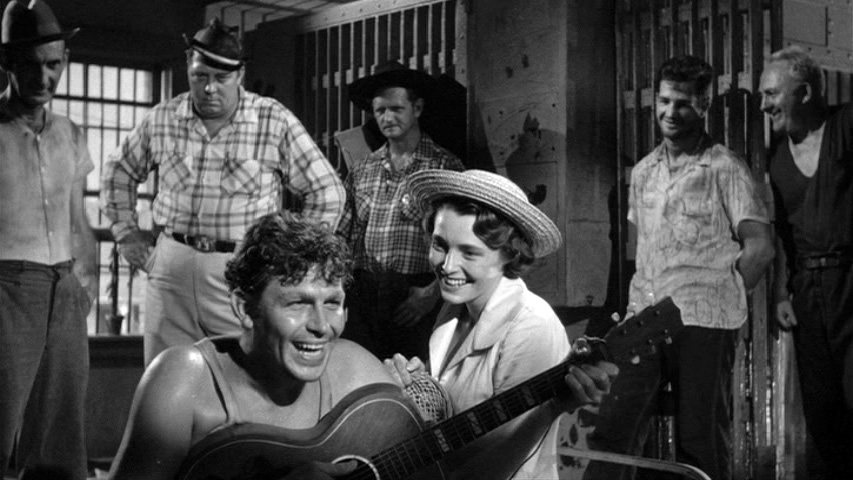
The Medium is the Message: Andy Griffith in A FACE IN THE CROWD (Warner Brothers 1957)


gary loggins's avatarcracked rear viewer

face1

If you only know Andy Griffith from his genial TV Southerners in THE ANDY GRIFFITH SHOW and MATLOCK, brace yourself for A FACE IN THE CROWD. Griffith’s folksy monologues had landed him a starring role in the hit Broadway comedy NO TIME FOR SERGEANTS. The vicious, wild-eyed Lonesome Rhodes was thousands of miles away from anything he had done before, and the actor, guided by the sure hand of director Elia Kazan, gives us a searing performance in this satire of the power of the media, and the menace of the demagogue.

face2

When we first meet Larry Rhodes, he’s in the drunk tank in rural Pickett, Arkansas, a small town not unlike Mayberry. Local radio host Marcia Jeffries is doing a remote broadcast there, hoping to catch some ratings. The no-account drifter is hostile at first, but when the sheriff promises him an early release, you can practically see the wheels spinning…

View original post 684 more words

Embracing the Melodrama Part II #50: Hustling (dir by Joseph Sargent)


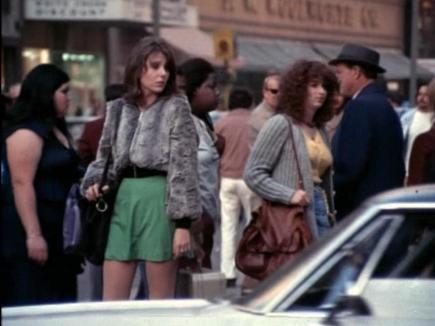
hustling21I have to admit that I had ulterior motives for reviewing the film Hustle as a part of Embracing the Melodrama.  I was already planning on reviewing another 1975 film about prostitutes, one that I had recently watched on Netflix.  That name of that film was Hustling and, for whatever reason, it amused me to imagine being alive in 1975 and going to see Hustle at a movie theater and then coming home, turning on TV, and finding myself watching a film called Hustling.

So really, if I was going to review one of those films, I had to review the other, right?  It made perfect sense at the time!

Anyway, as for Hustling, it’s a film about prostitutes in New York and the wealthy magazine writer who decides to interview them for an article.  Watching the film, what I immediately noticed was that, even though the film had a properly gritty feel to it, none of the characters ever cursed and, for a film about sex workers, there was no nudity.  Though the characters continually talked about getting beaten up by their pimps, all of the violence occurred off-screen.  Even more importantly, whenever something dramatic happened, the scene would fade to black.  It was almost as if the movie was pausing for an unseen commercial.

Which, of course, it was.  Hustling was made for television and, as I watched it, it was easy for me to imagine that I was actually watching the latest Lifetime original film.  It certainly followed a pattern that should be familiar to anyone who has ever watched a movie on Lifetime.  Wanda (Jill Clayburgh, giving an excellent performance) is a veteran prostitute who, after being arrested for the hundredth time, is told that the charges against her will be dropped if she allows herself to be interviewed by magazine writer, Fran Morrison (Lee Remick).  At first Wanda refuses but, after her pimp refuses to pay her fine and suggests that she should just accept spending a few months in jail, Wanda reconsiders and accepts Fran’s offer.

The rest of the film charts Fran and Wanda’s unlikely friendship.  Wanda tells Fran what it’s like to be prostitute.  Fran encourages Wanda and the other prostitutes to stand up for their legal rights.  Wanda deals with a society that looks down on her.  Fran deals with a boyfriend (Monte Markham) who can’t understand why she’s so concerned about a bunch of prostitutes.  Wanda considers going back to her pimp.  Fran considers exposing all of the “respectable” men who use prostitutes.

So, Hustling is pretty predictable and, not surprisingly, rather dated but it’s also a fairly effective portrait of life on the margins of society.  Lee Remick is stuck playing a one-note character but Jill Clayburgh is great in the role of Wanda. If nothing else, Hustling was filmed on location in some of the sleaziest parts of 1970s New York City and therefore, the film serves as a bit of a historical document.

For those wishing to check it out, the film’s currently available on Netflix.

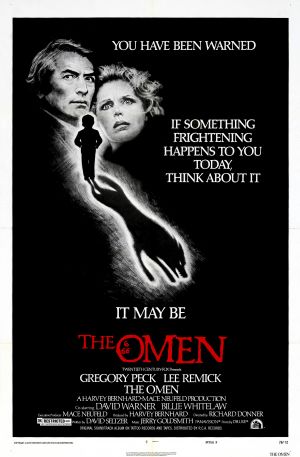
Horror Film Review: The Omen (dir by Richard Donner)


The Omen

A few days ago, Arleigh shared the theme song from 1976’s The Omen as Monday’s horror song of the day.  As I sat there and listened to Jerry Goldsmith’s award-winning hymn to Satan, it occurred to me that I happen to have all five of the Omen films sitting in my movie collection.  Seeing as how this is Halloween and how the world seems to be getting closer to ending with each passing day, I decided that this would be the perfect time to rewatch the entire franchise and consider whether or not The Omen films are truly as scary as a lot of people seem to think.

So, that’s what I did.

How did things turn out?

Well, in the long history of sequels and remakes, The Omen franchise is one of the more uneven collections.  This is one of those franchises where things tend to get less impressive with each subsequent entry.  However, 38 years after its initial release, the first Omen remains effective and, in its way, genuinely scary.

If you’re a horror fan, you probably know the general plot of The Omen regardless of whether you’ve actually watched it or not.  It’s one of those films that has been so frequently imitated that it’s almost possible to watch it by osmosis.

The film opens in Rome with diplomat Robert Thorn (Gregory Peck) being rushed to the hospital where his wife, Kathy (Lee Remick), has just given birth.  A priest (Martin Benson) tells him that his son died shortly after being born but that he can always just go home with an orphaned newborn that he just happens to have handy.  Robert agrees and decides not to tell his wife the truth about the child.  Robert and Kathy raise the boy and they name him Damien.  Four years later, the politically ambitious Robert is named as Ambassador to the Court of St. James.

The Thorns move to London and soon, odd things start to happen.  Damien (now played by Harvey Spencer Stephens) is a quiet boy with a piercing stare who throws a fit whenever he’s taken inside of a church.  When Kathy takes Damien to the zoo, they’re attacked by angry baboons.  A large Rottweiler mysteriously appears on the grounds of the Ambassador’s estate.  A mysterious and sinister nanny (Billie Whitelaw) shows up and explains that she’s been sent by an “agency.”  A crazed priest (Patrick Troughton) starts to stalk the Ambassador, demanding a chance to speak with him and insisting that Damien’s mother was actually a jackal.

Even more mysteriously, people start dying in the strangest of ways.  A young woman (Holly Palance) smiles as she shouts, “Damien, it’s all for you!” and then hangs herself, thoroughly ruining Damien’s fifth birthday party.  A freak lightning storm leads to a man being impaled by a weather vane.  Another person who suspects that there might be something wrong with Damien ends up losing his head in a graphic sequence that — even in this age of Hostel and Saw — is difficult to watch.

The Ambassador is contact by Keith Jennings (David Warner), a nervous photographer who fears that Damien may be planning on killing him.  Soon, Thorn and Jennings are flying to Italy and to the Middle East and discovering evidence that five year-old Damien might very well be the Antichrist.  Speaking of Damien, he and that nanny have been left alone with poor, victimized Kathy.

(“Oh, leave her alone,” I muttered as Damien attempted to kill Kathy for the hundredth time…)

As I watched The Omen, I tried to figure out why this film has held up so well.  It certainly wasn’t due to the performance of Gregory Peck who, quite frankly, seemed to mostly be going through the motions.  David Warner, on the other hand, gave such a good performance that it was almost difficult to watch.  (Don’t get attached to any character who appears in an Omen film.)   Some of the film’s effectiveness was undoubtedly due to Jerry Goldsmith’s intense score.  Anything’s scary when you’ve got a hundred voice shouting “Ave Satani” at you.

But, ultimately, I think the reason why The Omen still works is because the film generates such a palpable sense of doom.  This is one of those films that leaves you convinced that anyone can die at any minute and, considering that happens to be true in both this movie and in real life, that makes the horror of The Omen feel very real.  By the time the film ends, you’re left with little doubt that nobody in the film had the least bit of power or control over his or her own destiny.  Instead, they were all just pawns in a game that they had no hope of ever winning or understanding.  Is there anything scarier than feeling powerless?

All I know is that, having rewatched The Omen, I will never look at a plane of glass the same way again.

http://www.youtube.com/watch?v=vVK42hD9IaY


Scenes I Love: A Face In The Crowd


Located below is the famous Vitajex advertising montage from Elia Kazan’s 1957 film, A Face In The CrowdEverytime I see this, I wonder if maybe American audiences in the 50s were smarter than we give them credit for. 

Then again, A Face in The Crowd was a notorious financial and critical failure when it was first released.  It’s actually one of the best and most influential movies ever made.  Certainly, it’s one of the few Kazan films that still seems artistically relevent today.  It should also be noted that A Face in the Crowd features Anthony Franciosa years before his starring turn in Dario Argento’s Tenebrae, Andy Griffith playing a villain, the film debut of Lee Remick, Walter Matthau as a tv writer, and Patricia Neal having a nervous breakdown.  Supposedly, a very young Rip Torn is somewhere in this film as well but I’ve never been able to spot him.