As of this month, I have been reviewing films here at the Shattered Lens for 3 years. In honor of that anniversary, I thought I’d post my picks for the 50 best films that have been released in the U.S. since 2010.
Without further ado, here’s the list!
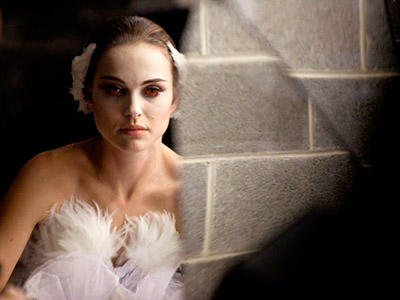
Black Swan (directed by Darren Aronofsky)
Exit Through The Gift Shop (directed by Banksy)
Hanna (directed by Joe Wright)
Fish Tank (directed by Andrea Arnold)
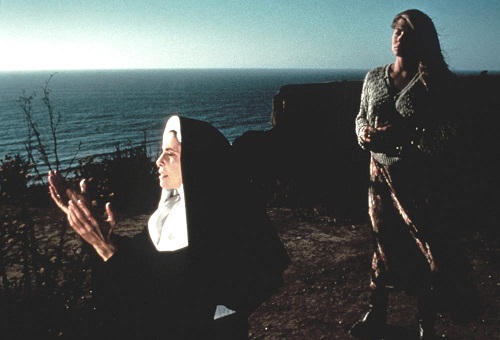
Higher Ground (directed by Vera Farmiga)
Shame (directed by Steve McQueen)
Anna Karenina (directed by Joe Wright)
The Cabin In The Woods (directed by Drew Goddard)
127 Hours (directed by Danny Boyle)
Somewhere (directed by Sofia Coppola)
Life of Pi (directed by Ang Lee)
Hugo (directed by Martin Scorsese)
Inception (directed by Christopher Nolan)
Animal Kingdom (directed by David Michod)
Winter’s Bone (directed by Debra Granik)
The Artist (directed by Michel Hazanavicius)
The Guard (directed by John Michael McDonagh)
Bernie (directed by Richard Linklater)
The King’s Speech (directed by Tom Hooper)
Bridesmaids (directed by Paul Feig)
Tinker, Tailor, Soldier, Spy (directed by Thomas Alfredson)
Django Unchained (directed by Quentin Tarantino)
Never Let Me Go (directed by Mark Romanek)
Toy Story 3 (directed by Lee Unkrich)
The Girl With the Dragon Tattoo (directed by Niels Arden Oplev)
Young Adult (directed by Jason Reitman)
Sucker Punch (directed by Zack Snyder)
The Master (directed by Paul Thomas Anderson)
Incendies (directed by Denis Villeneuve)
Melancholia (directed by Lars Von Trier)
Super (directed by James Gunn)
Silver Linings Playbook (directed by David O. Russell)
Scott Pilgrim Vs. The World (directed by Edgar Wright)
The Last Exorcism (directed by Daniel Stamm)
Skyfall (directed by Sam Mendes)
Easy A (directed by Will Gluck)
Harry Potter and the Deathly Hallows Parts 1 and 2 (directed by David Yates)
The Avengers (directed by Joss Whedon)
How To Train Your Dragon (directed by Chris Sanders and Dean DeBois)
Win Win (directed by Thomas McCarthy)
Les Miserables (directed by Tom Hooper)
Take This Waltz (directed by Sarah Polley)
Cave of Forgotten Dreams (directed by Werner Herzog)
Rust and Bone (directed by Jacques Audiard)
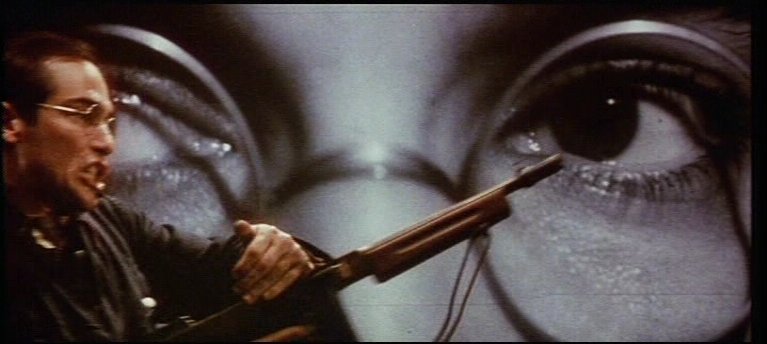
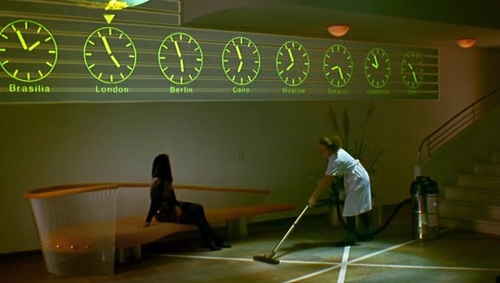
Cosmopolis (directed by David Cronenberg)
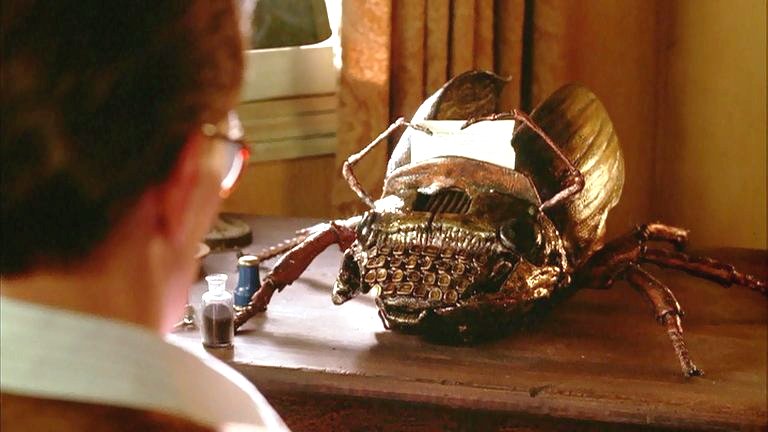
Ruby Sparks (directed by Jonathan Dayton and Valarie Faris)
Brave (directed by Mark Andrews and Brenda Chapman)
Martha Marcy May Marlene (directed by Sean Durkin)
Let us take a moment to consider the career of film director Lars Von Trier. Is Von Trier a visionary? Is he a genius? Is he an artist who forces us to look at the world in a different way? Is he one of the major voices working in the world of cinema today? Or is he just full of crap? This is the debate that always seems to come up whenever one talks about Lars Von Trier and a pretty good case can be made that the man is both a genius and an idiot, an artist and a charlatan. How, we ask ourselves, do we reconcile the fact that this man who has directed so many memorable films is also the same man who goes to Cannes and hints that he might be sympathetic to Hitler. As a result, Von Trier’s films seem to act as both aesthetic statements and as evidence in the never-ending trial to determine whether or not Lars Von Trier is worth all the trouble. Melancholia — which is currently both playing at theaters and available OnDemand — is the latest exhibit in a long trial.
Melancholia is both the story of the relationship of two sisters (played by Charlotte Gainsbourg and Kirsten Dunst, who deservedly won best actress at Cannes for her performance here) and the story of what happens when a new planet called Melancholia appears in the sky and then promptly starts to move closer to the Earth.
The film is divided into two parts. The first part takes place over the course of one long night. Justine (Dunst) and her new husband Michael (Alexander Skarsgard who looks so amazing in a tux) attend a wedding reception at a mansion owned by Justine sister Clare (Gainsbourg) and Clare’s well-meaning but condescending husband John (Kiefer Sutherland). While Justine and Michael, at first, appear to be the perfect couple, it slowly becomes apparent that the truth is far more complex. The first part of the film takes its time establishing the characters and how they relate to each other but it never drags, largely because of the chemistry between Dunst and Skarsgard but also because Von Trier proves himself to be far more subtle director here than he’s usually given credit for being. The first half of the film is full of details — some small and some not — that make us believe that these very familiar actors actually are the characters that they are portraying. While Von Trier never explicitly show us what’s at the heart of Skarsgard and Dunst’s trouble relationship, he includes enough details that we, as the viewer, can figure it out. Under Von Trier’s skilled direction, even such little things as Dunst’s constant struggle to keep her dress up take on an added and poignant significance.
In the second half of the film, a depressed Dunst is now living in the mansion with Gainsbourgh and Sutherland. Despite the fact that Dunst is nearly catatonic, Sutherland has little sympathy for her and makes no secret of the fact that he’s not happy to have her living in his home. However, things change rather quickly once it is learned that the new planet Melancholia is on a collision course with Earth. While Sutherland insists that the two planets will not actually collide and Gainsbourgh panics, Dunst starts to find herself oddly rejuvenated by the prospect that the world might end…
If you were dismissive of Von Trier before this movie came out, I doubt watching Melancholia will change your mind. In many ways, this film epitomizes everything that people tend to hate about his movies. However, I loved Melancholia. Visually, it’s beautiful and the film student in me loved the film simply for the many homages to Last Year at Marienbad. Von Trier gets excellent performance from the entire cast but really, this is Kristen Dunst’s film and she proves that she’s capable of a lot more than just being a Manic Pixie Dream Girl. Speaking of someone who has battled depression all of her life, I have to say that Dunst gets it right, capturing not only the pain of permanent sadness but also the odd moments of clarity that seem to come with it. Finally, this is a unique film and it’s unique because Von Trier is a director that’s not afraid to be an egocentric asshole when it comes to telling the story that he wants to tell.
I could spend hours debating what exactly Melancholia means and I’d probably change my mind several times during the conversation. However, one thing is for sure: Melancholia is one of the best of films of 2011.
The winners of this year’s Cannes Film Festival have been announced and it’s good news for Kirsten Dunst and Terrence Malick, the director of Palme d’Or winner Tree of Life.. I’ve seen the Tree of Life trailer about a thousand times at the Plano Angelika and to be honest, I haven’t been very enthused about it. On the one hand, Terrence Malick is a legendary director and the film looks visually quite stunning. On the other hand, the trailer also features a kid with a heavy country accent (and I’m not hating here, I’ve got quite a twang myself) going “Mother, Father, always you fight within me,” and when I hear dialogue like that, I’m just kinda like, “Uh-oh.” The trailer itself features a lot of quite interesting and tense family scenes mixed in with a lot of scenes that seem rather New Agey. I’d go into my feelings about new agey films but I don’t want to upset our readers in Vermont.
Kirsten Dunst (who may be on the verge of a comeback of sorts and good for her) won for a film directed by Lars Von Trier and I wonder if the award was, in any way, meant to protest Von Trier being previously declared a “non-person” at Cannes because of a press conference where he may or may not (I haven’t been following the story closely enough to take a side) have said he was a Nazi. (While I can’t say whether or not Von Trier is a Nazi, I can say that I loved Dancer in the Dark, Breaking the Waves, and Zentropa and I hated Dogville and I’m scared to see AntiChrist.)
Anyway, here’s the winners:
Palme d’Or: The Tree of Life (Terrence Malick)
Grand Prix(a tie): Le Gaumin au Velo (Dardennes brothers) & Once Upon a Time in Anataolia (Nuri Bilge Ceylan)
Best Director: Nicholas Winding Refn (Drive)
Best Actor: Jean Dujardin (The Artist)
Best Actress: Kirsten Dunst (Melancholia)
Prix du Jury: Polisse (Maïwenn)
Prix du scènario / Best Screenplay: Hearat Shulayim (Joseph Cedar)
Camera d’Or (Best First Film): Las Acacias (Pablo Giorgelli)
Un Certain Regard : Prix Spécial du Jury / Special Jury Prize : Elena (Andrey Zvyagintsev)
Best Short Film: Cross Country
Just a heads up, Arleigh — next year, I’m going to get down on my knees and crawl all the way over to California just so I can beg you to send me to Cannes. 🙂
 Through the Shattered Lens