Brad’s reflections on STAND BY ME (1986), directed by Rob Reiner!


“I was twelve going on thirteen the first time I saw a dead human being.”

These are the first words spoken in director Rob Reiner’s classic coming of age film, STAND BY ME, which received its widespread theatrical release in the United States on August 22nd, 1986. Actor Richard Dreyfuss spoke words that gave an exact description of my own age in the summer of 1986 when the film was released, and I certainly felt a connection to the characters in Reiner’s film. I watched STAND BY ME many times as a teenager, and with a humble and hurting heart, I decided to watch it again last night. On its surface, it’s a pretty simple story… 

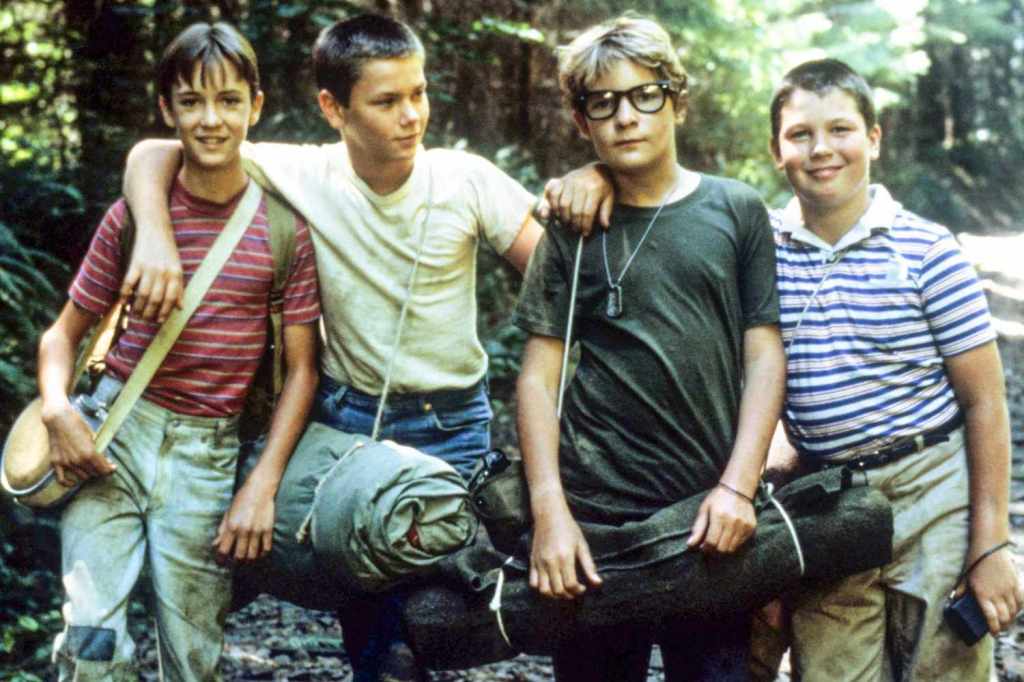
After accidentally learning of the location of the body of a local boy who’s been missing for several days, four boys (played by Wil Wheaton, River Phoenix, Corey Feldman, and Jerry O’Connell) set off on a weekend adventure to find the body in hopes of becoming local heroes. Along the way, they dodge trains, get sucked on by leeches, tell gross-out stories around a campfire, tackle traumatic personal issues, and eventually stand up to a group of older bullies (led by Kiefer Sutherland)! When the weekend is over, they move on with their own lives, lives that are never quite the same again.                   

The main reason I have a real personal connection to STAND BY ME is the fact that I recognize myself and some of my friends in its young characters. I grew up in a very small rural community in Arkansas called Toad Suck. It wasn’t even a town; it was more of just a spot in the road where a few homes built up near a dam and bridge on the Arkansas River. Often when I’d spend the night with my best friend, we’d go walking down the railroad track that ran through our community, carrying our BB guns and hanging out on the railroad bridges where we could take aim at rocks, sticks, turtles, and, at times, the dreaded water mocassin! Like the boys in the movie, we’d always have to be on the lookout for the oncoming trains. As a very naïve and sheltered kid of the mid-80’s who was raised in a strict religious household, I tended to be somewhat judgmental. STAND BY ME forced me to think deeper thoughts and try to find a more mature empathy for those kids I hung out with and saw at school every day. While none of the characters in the film are an exact replica of me or my friends, we knew of people who were probably experiencing abuse, who were looked down upon as “less than,” and who were neglected by their parents. And I think we have all experienced times when we felt insecure, lacked confidence, or were afraid and didn’t have the maturity to handle it in a positive manner. I felt compassion for these characters, which in turn helped me feel more understanding towards those around me in my real life! As a filmmaker in complete control of his craft, Rob Reiner made a movie that even affected someone like me, and I’ve never forgotten those feelings. 

My feeling of kinship with the actors who played in STAND BY ME didn’t end when the movie ended either. Wil Wheaton, River Phoenix, Corey Feldman and Jerry O’Connell were all very close to my age when they filmed the movie, and I’ve followed each of their careers fairly closely my entire life. My two favorites were River Phoenix and Corey Feldman. It was painful to me when River Phoenix died in 1993 at just 23 years of age. I remember all the issues Corey Feldman had with drug addiction. I’m so glad that he’s been able to overcome that addiction and achieve sobriety for multiple decades. I’m not a Star Trek completist, but I always got a kick out of seeing Wil Wheaton on THE BIG BANG THEORY. And then Jerry O’Connell definitely lost his baby fat and has gone on to a solid acting career! The common thread, of course, is the fact that Reiner got great performances from each of these young actors in STAND BY ME. Combine those performances with the quality of the film and the time in my own life when the film came out, and you can start to get the idea of why the film has a position of reverence in my life. You can also see why I have such respect for Rob Reiner as a filmmaker. 

Overall, STAND BY ME is simply one of my favorite films of all time. It has some of the most memorable on-screen moments of my childhood. The pie eating barf-o-rama and the crotch leeches are scenes that are burned into my psyche. Along with the great cast of boys, Kiefer Sutherland gives one of his solid, bully performances in an 80’s film. Sutherland would go on later in his career and play one of my all-time favorite TV characters, Jack Bauer, in 24. More important than all of that, though, is the fact that the coming-of-age film STAND BY ME helped 12-13 year-old me grow up a little bit myself by making me feel something. I guess the greatest compliment you can give any director is to tell them that their film made you think about things more important than yourself and made a difference in your own life. Today, I pay you that great compliment and say Rest in Peace, Mr. Reiner! 

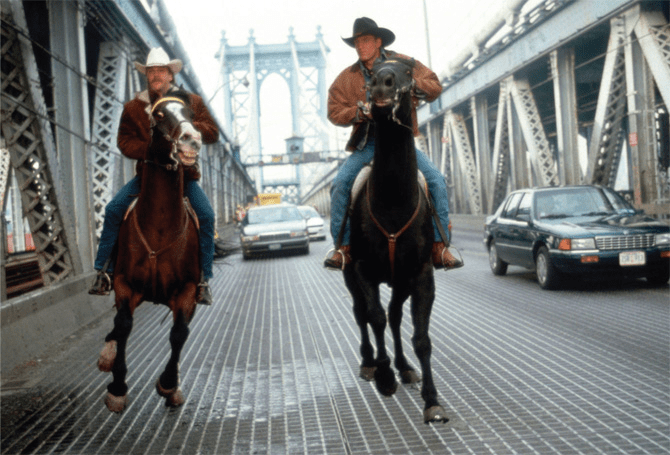
#MondayMuggers presents YOUNG GUNS (1988) starring Emilio Etevez, Kiefer Sutherland, Lou Diamond Phillips, and Charlie Sheen!


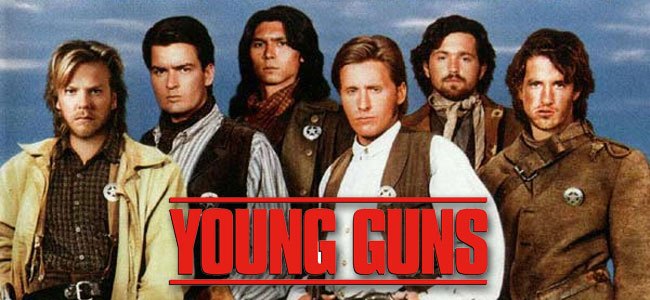
Every Monday night at 9:00 Central Time, my wife Sierra and I host a “Live Movie Tweet” event on X using the hashtag #MondayMuggers. We rotate movie picks each week, and our tastes are quite different. Tonight, Monday May 19th, we are showing YOUNG GUNS (1988) starring Emilio Estevez, Kiefer Sutherland, Lou Diamond Phillips, Charlie Sheen, Dermot Mulroney, Casey Siemaszko, Terence Stamp, Jack Palance, Terry O’Quinn, Brian Keith, and Patrick Wayne.

This movie focuses on a group of young gunmen, led by Billy the Kid (Emilio Estevez), who become deputies to avenge the murder of John Tunstall (Terence Stamp), the rancher who took them in, gave them jobs, and taught them how to read. But when Billy takes their authority too far, they soon find themselves to be the outlaws and the ones being hunted down.

Join us tonight for #MondayMuggers and watch the extremely fun YOUNG GUNS! It’s on Amazon Prime. The trailer is included below:

The Killing Time (1987, directed by Rick King)


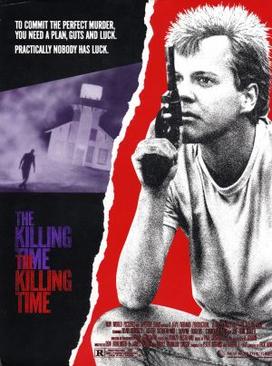
After she is raped and beaten by her husband, Jake (Wayne Rogers), Laura Winslow (Camelia Kath) and her lover, Deputy Sam Wayburn (Beau Bridges), plot to murder him.  Sam and Laura come up with a plan to shoot Jake and frame another deputy, the recently hired Brian Mars (Kiefer Sutherland), for the crime.  What Sam doesn’t know is that Brian isn’t Brian.  Instead, “Brian” killed the real deputy and stole his identity.  Fake Brian has his own reasons for wanting to kill Jake but he also doesn’t appreciate Sam and Laura trying to set him up.

This is a typical 80s neo-noir, with an interesting premise that is sabotaged by subpar execution.  A big problem is with the casting.  Beau Bridges, whose stock-in-trade has always been a natural human decency, is miscast as a deputy who would conspire to not only murder someone but also frame an innocent man.  Camelia Kath doesn’t have the style necessary to be a compelling femme fatale.  Sutherland is good when he’s playing a psychopath but he’s less convincing when he has to pretend to be Brian.  It’s hard to believe that Sutherland’s obviously unstable killer would be able to fool anyone.

Instead, the film is stolen by Joe Don Baker and Wayne Rogers.  Joe Don Baker plays the sheriff who gives up his retirement plans so that he can solve the biggest crime that’s ever been committed in his jurisdiction,  Baker’s role isn’t huge but he still gives one of the better performances in the film.  If anyone was born to play a small-town sheriff, it was Joe Don Baker.  Meanwhile, Rogers is very much cast against type as the evil Jake but the film uses Rogers’s good guy persona to its advantage.

The other big problem is that, other than Baker’s sheriff, there’s no one likeable to be found in this movie.  The movie tries to generate sympathy for Sam but once you decide to frame an “innocent” man for murder, it’s impossible to then go back to being a sympathetic character.  Brian may be a killer but Sam didn’t know that when he and Laura decided to frame him for killing Jake.

Movies like this used to be a HBO mainstay.  Even though the movies themselves often weren’t that good, I still miss those days.


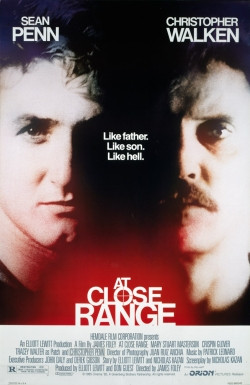
At Close Range (1986, directed by James Foley)


Brad Whitewood, Sr. (Christopher Walken) is known as Big Brad, a rural crime lord who rules the backwoods of Pennsylvania.  When his son, Little Brad (Sean Penn, trying too hard to be James Dean), comes to live with him, Big Brad goes out of his way to try to bring the teenager into his criminal lifestyle.  At first, Little Brad loves being a part of the family business but witnessing a murder and falling in love with Terry (Mary Stuart Masterson) caused Little Brad to start to move away from his father.  With the FBI closing in on the Whitewood family, Brad Sr. starts to eliminate everyone who he considers to be a threat, including the members of his own family.

Based on a true story, this neo-noir features a great cast, including Chris Penn, Millie Perkins, Kiefer Sutherland, Crispin Glover, David Strathairn, Tracey Walter, and Mary Stuart Masterson.  Unfortunately, the movie itself moves at a plodding pace.  There are some good and disturbing scenes, like the montage where Big Brad starts to eliminate the members of his gang.  The film does a good job of showing how seductive Big Brad’s criminal lifestyle can be to a bunch of kids who have basically been written-off by society.  But the story itself is so bleak that most people will end up tuning out long before Little Brad finally turns against his father.

Whatever other flaws it may have, At Close Range does feature one of Christopher Walken’s best performances.  Walken is chillingly evil as Big Brad.  He’s got enough charisma to be believable as someone who could bring a gang together but he’s also frightening as he starts killing anyone who he thinks might talk to the police or the FBI.  Big Brad is a remorseless killer and Walken plays him as being a classic sociopath, someone who cannot understand why the members of his gang and family would get upset when he starts killing some of them.  To Big Brad, that just goes with the territory.  It’s a part of doing business.  With his distinct way of speaking and his trademark tics, Walken is someone who has inspired many impersonators and it can be easy to forget that he’s also a damn good actor.  Films like At Close Range remind us of just how talented Walken actually is.

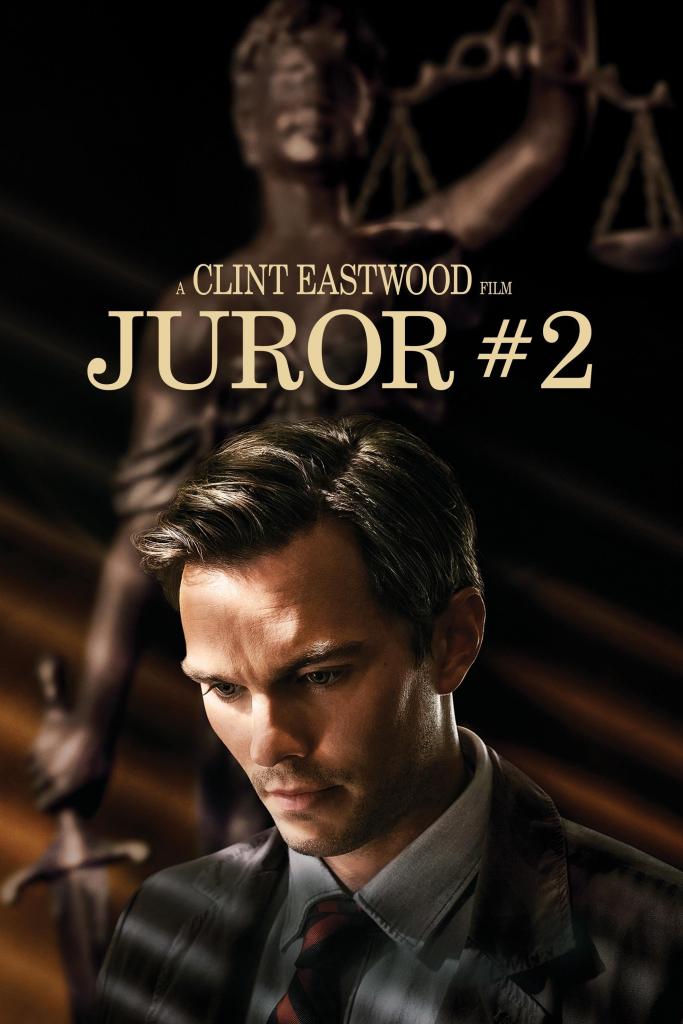
JUROR #2 (2024) – Another Gift from Clint Eastwood


I’ve really been looking forward to seeing JUROR #2, Clint Eastwood’s most recent directorial effort, since I first read about it a year or two ago. Any film from the aging icon is a gift to his fans at this point, so it seems appropriate that I watched it for the first time on Christmas Eve. I still don’t understand the release strategy for the film, considering it was released in a few theaters and then pushed out to streaming platforms a little over a month later. That seems strange for a movie with this kind of pedigree, but I guess that doesn’t really matter at this point. 

The plot revolves around Justin Kemp (Nicholas Hoult), a seemingly nice guy who’s going to be a dad any day now. I know that because his wife Allison (Zoey Deutch) looks like she could pop at any moment. He tries to use that pregnancy to get out of jury duty, but to no avail. Of course he gets selected to serve. As District Attorney Faith Killebrew (Toni Collette) begins laying out the facts of a horrific murder case against James Michael Sythe (Gabriel Basso), Justin begins to immediately realize that the wrong guy may have been arrested for the crime. How does he know they’ve got the wrong guy? Because Justin now thinks that he may be the one responsible for an accidental hit and run killing of the victim, Kendall Carter (Francesca Eastwood). The remainder of the film deals with Justin’s moral dilemma as he attempts to serve on the jury, protect his own freedom, and not send an innocent man to jail. This plot does require a pretty big suspension of disbelief, but if you’ll just go along with it, the movie does present some interesting ideas.

I’ll say right off the bat that I like JUROR #2. This was a relief to me because as much as I wanted to like Eastwood’s prior film CRY MACHO, at the end of the day it just wasn’t a very good movie. I’ve always enjoyed courtroom thrillers, and it doesn’t seem we get to see many of them anymore. Our main character Justin Kemp has a troubled past, but he’s truly turned his life around. The fact that he now finds himself in a seemingly impossible moral position is a strong hook that pulled me in. Director Eastwood takes his time here and tightens the grip on Justin, leaving him with few options, as he tries to figure out what to do. I’ve never served on a jury, and I’ve never really wanted to. I’m not sure I want the responsibility of deciding a person’s guilt or innocence. Eastwood’s film doesn’t change my mind in this area. It shows us some jurors who have made up their minds based on pre-conceived notions, regardless of the evidence. It shows us other jurors who want to convict just so the trial can be over and they can get on with their lives. It shows us witnesses who are willing to identity people just to please the prosecution. Considering what we know as the audience, these are glaring but realistic weaknesses of our nation’s system of justice. 

Eastwood assembled a good cast with Nicholas Hoult, Toni Collette, J.K. Simmons, and Kiefer Sutherland, actors that I always find worth watching. Hoult and Collette do most of the heavy lifting. JUROR #2 is set in Georgia, and I appreciate that Hoult, who’s from England, and Collette, who’s from Australia, don’t overdo the southern accents. J.K. Simmons is very impressive as an ex-cop who’s serving on the jury who is convinced of the defendant’s innocence. Unfortunately, his character exits the film fairly early, and he’s sorely missed. I’ve been a big fan of Kiefer Sutherland since I was a teenager, and I consider “24” one of my all time favorite shows. His role is pretty small here. He’s good, but from what I’ve read, he really just wanted to work with Eastwood. I also enjoyed seeing Gabriel Basso (Hillbilly Elegy) and Francesca Eastwood (Clint’s daughter) in the film. 

Clint Eastwood amazes me. In his legendary six decade career, he has been a part of some of the best films of all time. DIRTY HARRY, THE OUTLAW JOSEY WALES, and UNFORGIVEN are included in my list of all-time favorites. JUROR #2 is not in their league, and it’s certainly not a perfect film. But it is an entertaining film that tells an interesting story and even makes you think a little bit. And with that I say, thanks for another gift, Clint! 

Film Review: The Caine Mutiny Court-Martial (dir by William Friedkin)


The Caine Mutiny Court-Martial is a film that I wanted to like more than I actually did.

The movie, which is based on a play by Herman Wouk (which was itself based on a novel by Wouk that was adapted into an Oscar-nominated film in 1954), takes place in a Naval courtroom.  Lt. Steven Maryk (Jake Lacey) is on trial, accused of mutiny against his commanding officer.  Maryk claims that, when the ship sailed into a storm, his commanding officer, Philip Francis Queeg (Kiefer Sutherland), was giving orderss that put the entire ship at risk.  With the support of the officers, Maryk relieved Queeg of command.  Maryk claims that he did so with the knowledge that it would lead to him being court-martialed.

Maryk is assigned Lt. Greenwald (Jason Clarke) as his defense counsel.  Greenwald is not happy with his assignment because he think that Maryk is guilty and he believes in the chain of command.  When Maryk and his fellow officers claim that Queeg was showing signs of mental instability, Greenwald wonders how they came to that conclusion.  Whereas Maryk and his fellow officers, including Keith (Tom Riley) and Keefer (Lewis Pullman), claim that Queeg was dangerously unstable, Greenwald sees an insecure commander who was abandoned by his men.  Greenwald comes to realize that keeping Maryk out of the brig will mean destroying Queeg on the stand.

As I said, I wanted to like this film more than I actually did.  The Caine Mutiny Court-Martial was the final film to be directed by William Friedkin.  Friedkin started his career by directing adaptations of plays like The Birthday Party and The Boys In The Band, so another theatrical adaptation does feel like an appropriate bookend for a legendary career.  Friedkin’s best films featured troubled and somewhat obsessive individuals, people who are almost addicted to taking risks.  That’s certainly an accurate description of several of the characters in The Caine Mutiny Court-Martial, from Queeg to Keefer to even Greenwald himself.  After Friedkin passed away in August, I found myself really hoping that The Caine Mutiny Court-Martial would be one final brilliant Friedkin film.

There’s a lot of good things to be said about The Caine Mutiny Court-Martial, including the fact that Jason Clarke is well-cast as Lt. Greenwald.  But, in the end, The Caine Mutiny Court-Martial is essentially a filmed play and, despite a camera that moves frequently, it all feels rather stagey and, at a time, a bit too theatrical.  As good as Clarke is, some other members of the cast can’t break free of the film’s staginess and their performances often feel disappointingly superficial.  This is especially true of Monica Raymund as the prosecutor and, surprisingly, Kiefer Sutherland as Queeg.  Sutherland, who, when he was younger, would have been the ideal pick for the role of Lt. Keefer, gives an overly mannered performance as Queeg, one that is all tics and nerves but with little of the vulnerability that Humphrey Bogart brought to the role in the 1954 film.

Friedkin’s The Caine Mutiny Court-Martial takes place in 2022, as opposed to the World War II setting of Wouk’s original novel.  This does lead to an interesting subtext, as Friedkin’s version of the story is set during a time when many people are no longer confident in America’s military leadership.  (Wouk’s novel and play came out while America was still feeling confident after the victory of the Allies in World War II.)  Friedkin takes a direct approach to the material, allowing the audience to decide for themselves whether Maryk did the right thing.

It’s a solid enough film but one that never quite escapes its stage origins.  Friedkin’s respect for the material comes through, even if the film isn’t totally successful.

Little Red Riding Hood On Acid: Freeway (1996, directed by Matthew Bright)


Vanessa Lutz (Reese Witherspoon) may not be able to read but she ain’t dumb.

When her mother (Amanda Plummer) gets arrested for prostitution and her stepfather (Michael T. Weiss) goes to jail for meth possession, Vanessa knows that it’s time to leave South Los Angeles and go to her grandmother in Stockton.  She puts on her red jacket, packs her possession in a picnic basket, and heads for the freeway.  Vanessa is determined to get to grandmother’s house and she’s not going to let anyone stop her.  Not the police.  Not the gangbangers who murdered her boyfriend, Chopper (Bookeem Woodbine).  And certainly not Bob Wolverton (Kiefer Sutherland), the psychiatrist who moonlights as the I-5 killer.

An audaciously wild take on the story of Little Red Riding Hood, Freeway used to be a HBO mainstay, where it developed the cult following that it retains to this very day.  The violence is graphic and the humor is often viscous but Reese Witherspoon has never been better than she was in the role of the loud and unapologetically profane Vanessa Lutz.  Whether she’s cussing up a storm or shooting a pervert in the face or plotting her escape from jail, Vanessa is a whirlwind of nonstop energy and it is impossible not to get swept up with her.  Witherspoon has since won an Oscar and appeared in all sorts of “prestige” pictures but she’s never had a better role than she did in Freeway.

Witherspoon is such a force of a nature that she dominates the film but the rest of the cast is interesting as well, with several familiar faces in small roles.  Sutherland has played so many psychos that it is not a surprise when Bob turns out to be one but he still throws himself into the role.  (Like a cartoon character, it doesn’t matter how badly injured or disfigured Bob gets.  He just keeps on going.)  Dan Hedaya and Wolfgang Bodison play detectives.  Alanna Urbach and Brittany Murphy play two inmates who Witherspoon meets in prison.  Brooke Shields has a small role as Bob’s unsuspecting wife and is convincingly clueless.

Ultimately, though, the movie belongs to Reese Witherspoon.  Vanessa might not always be pleasant to be around but she’s so determined to make it to grandmother’s house but you can’t help but be on her side.  She’s the Little Red Riding Hood that we all deserve.

Horror Film Review: Flatliners (dir by Niels Arden Oplev)


Jeff and I are currently on a little road trip but we’re not going to let something like that prevent us from seeing the latest bad movies.

For instance, last night, we saw the remake of Flatliners at the AMC 8 in Ardmore, Oklahoma.  Ardmore is a lovely little town.  When I was six years old, my family briefly lived in Ardmore and I can still remember this deserted barn that was sitting right at the edge of our property.  My older sisters all told me that it was haunted and I can still remember sneaking over to the window in the middle of the night and staring at that dilapidated barn, searching for ghosts.  Even though I was only six at the time, it’s still an incredibly vivid memory and I still have dreams about that barn.  That’s the power of a good scare and that is exactly what’s missing from Flatliners.  This is seriously one of the most forgettable films that I’ve ever seen.

I did get a little excited when I discovered that the film co-starred Nina Dobrev.  Most people know her as Elena from The Vampire Diaries but, for me, she’ll always be Mia Jones on Degrassi.  (Mia was not only a high school student and a star on the spirit squad.  She was also: a single mother, a model, a drug addict, and J.T.’s girlfriend during the show’s sixth season.)  She’s one of many Canadians in the cast of Flatliners.  There’s also Ellen Page and Kiefer Sutherland.

That’s right, Kiefer Sutherland returns in the new version of Flatliners.  But don’t get too excited.  He’s not playing the same character.  If he had been playing the same character, this film would have been a lot more interesting and he could have told the new cast, “Your sins have returned in physical form … and they’re pissed off!”  Instead, he’s just playing a clueless doctor with really weird hair.  I think we’re just supposed to be impressed by the fact that he agreed to appear in the remake and I guess I would be if the first one was some sort of award-winning classic or something.  It’s not like the original Flatliners is the defining role of Kiefer Sutherland’s career.  Now, if they had gotten Oliver Platt to come back…

ANYWAY, it’s pretty much the same story all over again, just told with a lot less visual flair.  (Say what you will about Joel Schumacher as a director, he understood that the first Flatliners needed a lot of neon.)  This time, it’s Ellen Page who convinces her friends to let her die and then revive her after two minutes.  The remake does add an interesting wrinkle in that, when Page returns from being dead, she is now suddenly super smart and has total recall.  At the very least, this explains why all the rest of her friends are then so eager to try it out for themselves.  Even though it feels like a Limitless knock off, it’s still an interesting idea and I think that if the entire film had been about the students obsessively killing themselves and coming back, all in an effort to achieve some sort of Godhood, it would have made for an intriguing movie.

But that whole angle kind of gets abandoned.  Soon, it’s time for everyone’s sins to start showing up.  That means that Ellen page has to deal with her dead sister.  Nina Dobrev has to deal with a dead patient.  Another doctor has to deal with a girl she bullied.  The movie tries to make you wonder whether or not they’re just having hallucinations but why would a hallucination feel the need to sneak around a room while its target isn’t looking?

Plus, I have to wonder: there are real people out there who have been clinically dead, just to have been brought back to life.  Some of them have reported seeing the bright light and all the rest.  If you follow this movie’s logic, are they all now secretly smart and being chased around by their past sins?  If that’s the case then I’m looking forward to the sequel to Heaven Is For Real.

It’s a forgettable movie.  The first Flatliners had its own stupid charm but the remake just falls flat.

http://www.youtube.com/watch?v=K_4gKgj8i54

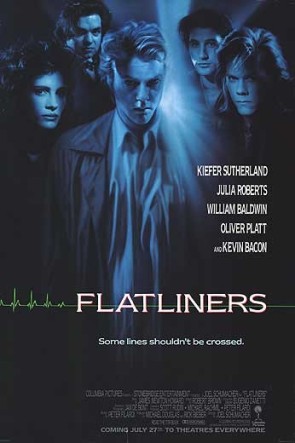
Horror Film Review: Flatliners (dir by Joel Schumacher)


“Our sins have come back in a physical form … and they’re pissed!”

That one line pretty much sums up the original 1990 version of Flatliners.  It’s a good line in that it’s one that you remember and it’s a line that you can use in almost any situation.

Have you gotten a phone call from an unknown caller?  “Our sins have come back in physical form … and they’re pissed!”

Have you and your boyfriend recently been driving across Texas and suddenly noticed that a car has been following you all the way from Lake Dallas to the border of Oklahoma.  “Our sins have come back in physical form … and they’re pissed!”

Have you ever had a stranger fail to hold a door open for you?  There’s only one possible reason for that rudeness.  “Our sins have come back in physical form .. and they’re pissed!”

And don’t even get me started on people who leave negative comments under my reviews.  We all know what’s going on with that!  “Our sins have come back in physical form … and they’re pissed!”

It’s a line that is both oddly memorable and also deeply stupid.  The same description can be applied to Flatliners.  It’s a film about a group of medical students (played by Julia Roberts, William Baldwin, Oliver Platt, and Kevin Bacon) who help Kiefer Sutherland investigate whether or not there’s actually an afterlife.  Sutherland believes that there is but he needs an atheist to be a part of the group, that’s where Kevin Bacon comes in.  And he needs a potential love interest and a Baldwin brother to be a member of the group as well, that’s why Julia Roberts and William Baldwin are there.  And, of course, someone has to provide comedic relief whenever things start to get too dark.  Say hello to Oliver Platt!  Anyway, Sutherland’s plan is to die for a minute or two and then have his fellow medical students bring him back to life.  It sounds like kind of a dumb idea but everyone agrees to it.

Anyway, it turns out that the afterlife looks a lot like an overproduced student film, full of weird camera angles, tinted lighting and disembodied voices.  When Sutherland dies, he sees a boy that he used to bully.  Julia Roberts sees her father, who committed suicide when she was younger.  Kevin Bacon sees a little girl that he used to bully.  (There are a lot of bullies in this movie.)  William Baldwin, a sex addict who is chronically unfaithful to his fiancée, sees hundreds of women, all saying, “But you said you loved me.”  Oliver Platt never actually gets to die and therefore, he sees nothing.  He does make a joke about how his vision would probably involve an angry babysitter.  I laughed.

What happens next?  “Our sins have come back in physical form … and they’re pissed!”

Flatliners has an intriguing premise but oh my God, is it ever a silly film.  It’s not really a spoiler to tell you that all of these returned sins want the characters to either atone for their mistakes or make peace with their past.  For Kevin Bacon, this means tracking down the girl that he used to bully and allowing her to bully him.  For Julia Roberts, it means getting an apology from her Dad and understanding that he was addicted to heroin.  For William Baldwin, it means making peace with never being as well-known as either Alec or Steven.  As for Kiefer … well, things are a bit more complicated for Kiefer Sutherland.

Flatliners starts out as a horror film but then it turns into a squishy movie about letting go of bitterness and learning how to forgive oneself.  It’s kind of annoying that the film couldn’t just stick to being scary because the first half of the film does have some effectively tense moments.  However, it all gets lost as the film’s plot sinks into sentimental, New Age-y quicksand.

Flatliners was directed by Joel Schumacher, who generally does well with shallow films that 1) don’t really mean anything and 2) don’t involve super heroes.  And really, the only film that I can think of that’s more shallow than the original Flatliners is the remake.  (But we’ll talk about that later…)  Schumacher’s direction here is not particularly bad — everyone looks good and the film is never boring.  It’s a very, very pretty film and one that doesn’t add up to much.

I would suggest watching it with your sins, especially after they take physical form.  Maybe they’ll be a little less pissed off afterward.

Film Review: Twin Peaks: Fire Walk With Me (dir by David Lynch)


“It was a dream!  We live in a dream!”

— Phillip Jeffries (David Bowie) in Twin Peaks: Fire Walk With Me (1992)

Even among fans of the show, Twin Peaks: Fire Walk With Me is controversial.

If you read Reflections: An Oral History of Twin Peaks, you’ll discover that many members of the television show’s cast either didn’t want to be involved in the film or didn’t care much for it when it came out.  Fearful of being typecast, Kyle MacLachlan only agreed to play Dale Cooper on the condition that his role be greatly reduced.  (Was it that fear of being typecast as clean-cut Dale Cooper that led to MacLachlan later appearing in films like Showgirls?)  Neither Lara Flynn Boyle nor Sherilyn Fenn could work the film into their schedules.

When Twin Peaks: Fire Walk With Me premiered at Cannes, it was reportedly booed by the same critics who previously applauded Lynch’s Wild at Heart and who, years later, would again applaud Mulholland Drive.  When it was released in the United States, the film was savaged by critics and a notorious box office flop.  Quentin Tarantino, previously a fan of Lynch’s, has been very outspoken about his hatred of Twin Peaks: Fire Walk With Me.  When I first told people that we would be looking back at Twin Peaks for this site, quite a few replied with, “Even the movie?”

And yet, there are many people, like me, who consider Twin Peaks: Fire Walk With Me to be one of David Lynch’s most haunting films.

It’s also one of his most straight forward.  Twin Peaks: Fire Walk With Me is a prequel, dealing with the events leading up to the death of Laura Palmer.  Going into the film, the viewer already knows that Laura Palmer (Sheryl Lee) is full of secrets.  They know that she is using drugs.  They know that she is dating Bobby (Dana Ashbrook), while secretly seeing James (James Marshall).  They know about her diary and her relationship with the reclusive Harold (Lenny Von Dohlen).  They know that she is a friend to innocent Donna Hayward (Moria Kelly, somewhat awkwardly taking the place of Lara Flynn Boyle).  Even more importantly, they know that she has spent the last six years of her life being abused by BOB (Frank Silva) and that BOB is her father, Leland Palmer (Ray Wise).  The viewer starts the story knowing how it is going to end.

Things do get off to a somewhat shaky start with a nearly 20-minute prologue that basically plays like a prequel to the prequel.  Theresa Banks, who was mentioned in the show’s pilot, has been murdered and FBI director Gordon Cole (David Lynch) assigns agents Chester Desmond (Chris Isaak) and Sam Stanley (Kiefer Sutherland) to investigate.  Chester and Sam’s investigation basically amounts to a quick reenactment of the first season of Twin Peaks, with the agents discovering that Theresa was involved in drugs and prostitution.  When Chester vanishes, Dale Cooper is sent to investigate.  Harry Dean Stanton shows up as the manager of a trailer park and David Bowie has an odd cameo as a Southern-accented FBI agent who has just returned from the Black Lodge but otherwise, the start of the film almost feels like a satire of Lynch’s style.

But then, finally, we hear the familiar theme music and the “Welcome to Twin Peaks” sign appears.

“And the angel’s wouldn’t help you. Because they’ve all gone away.”

— Laura Palmer (Sheryl Lee), Twin Peaks: Fire Walk With Me (1992)

A year has passed since Theresa Banks was murdered.  The rest of the film deals with the final few days of the life of doomed homecoming queen Laura Palmer.  Laura smiles in public but cries in private.  She is full of secrets that she feels that she has to hide from a town that has literally idolized her.  She has visions of terrifying men creeping through her life and each day, she doesn’t know whether it will be BOB or her father waiting for her at home.  She knows that the world considers her to be beautiful but she also know that, within human nature, there is a desire to both conquer and destroy beauty.  When she sleeps, she has disturbing dreams that she cannot understand but that she knows are important.  At a time when everyone says she should be happy to alive, all she can think about is death.  Everywhere she goes, the male gaze follows and everything that should be liberating just feels her leaving more trapped.  For all the complaints that Twin Peaks: Fire Walk With Me is somehow too strange to be understood, it’s not a strange film at all.  This is David Lynch at his most straight forward.  Anyone who thinks that Laura’s story is incomprehensible has never been a 17 year-old girl.

This is the bleakest of all of David Lynch’s films.  There is none of broad humor or intentional camp that distinguished the TV show.  After the show’s occasionally cartoonish second season, the film served as a trip into the heart of the darkness that was always beating right underneath the surface of Twin Peaks.  It’s interesting how few of the show’s regulars actually show up in Twin Peaks: Fire Walk With Me.  None of the characters who represented goodness are present.  There’s no Doc Hayward.  No Sheriff Truman.  No Deputies Andy or Hawk.  No Pete Martell.  No Bookhouse Boys.  Scenes were filmed for some of them but they didn’t make it into the final cut because their tone did not fit with the story that Lynch was seeking to tell.  The Hornes, Dr. Jacoby, Josie, none of them are present either.

Instead, there’s just Larua and her father.  As much as they try to deny it, Laura knows that she is going to die and Leland knows that he is going to kill her.  Killer BOB and the denziens of the Black Lodge may be scary but what’s truly terrifying is the sight of a girl living in fear of her own father.  Is Leland possessed by BOB or is BOB simply his way of excusing his own actions?  If not for Leland’s sickness, would BOB even exist?  When Laura shouts, “Who are you!?” at the spirit of BOB, she speaks for every victim of abuse who is still struggling to understand why it happened.  For all the talk of the Black Lodge and all the surreal moments, the horror of this film is very much the horror of reality.  Leland’s abuse of Laura is not terrifying because Leland is possessed by BOB.  It’s terrifying because Leland is her father

David Lynch directs the film as if it where a living nightmare.  This is especially evident in scenes like the one where, at the dinner table, Leland switches from being kindly to abusive while Laura recoils in fear and her mother (Grace Zabriskie) begs Leland to stop.  It’s a hard scene to watch and yet, it’s a scene that is so brilliantly acted and directed that you can’t look away.  As brilliant as Ray Wise and Grace Zabriskie are, it’s Sheryl Lee who (rightly) dominates the scene and the rest of the film, giving a bravely vulnerable and emotionally raw performance.  In Reflections, Sheryl Lee speaks candidly about the difficulty of letting go of Laura after filming had been completed.  She became Laura and gave a performance that anchors this absolutely terrifying film.

“Mr. Lynch’s taste for brain-dead grotesque has lost its novelty.”

— Janet Maslin

“It’s not the worst movie ever made; it just seems to be”

— Vincent Canby

If you need proof that critics routinely don’t know what they’re talking about, just go read some of the original reviews of Twin Peaks: Fire Walk With Me.

And yet, having just rewatched the show and now the movie, I can understand why critics and audiences were baffled by this film.  This is not Twin Peaks the TV show.  There is no light to be found here.  There is no comic relief.  (Even Bobby Briggs, who had become something of a goofy anti-hero by the time the series ended, is seen here shooting a man in the head.)  There is no exit and there is no hope.  In the end, the film’s only comfort comes from knowing that Laura was able to save one person before dying.  It’s not easy to watch but, at the same time, it’s almost impossible to look away.  The film ends on Laura’s spirit smiling and, for the first time, the smile feels real.  Even if she’s now trapped in the Black Lodge, she’s still free from her father.

Since this was a prequel, it didn’t offer up any answers to the questions that were left up in the air by the show’s 2nd season finale.  Fortunately, those questions will be answered (or, then again, they may not be) when the third season premieres on Showtime on May 21st.

Previous Entries in The TSL’s Look At Twin Peaks:

  1. Twin Peaks: In the Beginning by Jedadiah Leland
  2. TV Review: Twin Peaks 1.1 — The Pilot (dir by David Lynch) by Lisa Marie Bowman
  3. TV Review: Twin Peaks 1.2 — Traces To Nowhere (directed by Duwayne Dunham) by Jedadiah Leland
  4. TV Review: Twin Peaks 1.3 — Zen, or the Skill To Catch A Killer (dir by David Lynch) by Lisa Marie Bowman
  5. TV Review: Twin Peaks 1.4 “Rest in Pain” (dir by Tina Rathbone) by Leonard Wilson
  6. TV Review: Twin Peaks 1.5 “The One-Armed Man” (directed by Tim Hunter) by Jedadiah Leland
  7. TV Review: Twin Peaks 1.6 “Cooper’s Dreams” (directed by Lesli Linka Glatter) by Lisa Marie Bowman
  8. TV Review: Twin Peaks 1.7 “Realization Time” (directed by Caleb Deschanel) by Lisa Marie Bowman
  9. TV Review: Twin Peaks 1.8 “The Last Evening” (directed by Mark Frost) by Leonard Wilson
  10. TV Review: Twin Peaks 2.1 “May the Giant Be With You” (dir by David Lynch) by Leonard Wilson
  11. TV Review: Twin Peaks 2.2 “Coma” (directed by David Lynch) by Jedadiah Leland
  12. TV Review: Twin Peaks 2.3 “The Man Behind The Glass” (directed by Lesli Linka Glatter) by Jedadiah Leland
  13. TV Review: Twin Peaks 2.4 “Laura’s Secret Diary” (dir by Todd Holland) by Lisa Marie Bowman
  14. TV Review: Twin Peaks 2.5 “The Orchid’s Curse” (dir by Graeme Clifford) by Lisa Marie Bowman
  15. TV Review: Twin Peaks 2.6 “Demons” (dir by Lesli Linka Glatter) by Leonard Wilson
  16. TV Review: Twin Peaks 2.7 “Lonely Souls” (directed by David Lynch) by Jedadiah Leland
  17. TV Review: Twin Peaks 2.8 “Drive With A Dead Girl” (dir by Caleb Deschanel) by Lisa Marie Bowman
  18. TV Review: Twin Peaks 2.9 “Arbitrary Law” (dir by Tim Hunter) by Lisa Marie Bowman
  19. TV Review: Twin Peaks 2.10 “Dispute Between Brothers” (directed by Tina Rathbone) by Jedadiah Leland
  20. TV Review: Twin Peaks 2.11 “Masked Ball” (directed by Duwayne Dunham) by Leonard Wilson
  21. TV Review: Twin Peaks 2.12 “The Black Widow” (directed by Caleb Deschanel) by Leonard Wilson
  22. TV Review: Twin Peaks 2.13 “Checkmate” (directed by Todd Holland) by Jedadiah Leland
  23. TV Review: Twin Peaks 2.14 “Double Play” (directed by Uli Edel) by Jedadiah Leland
  24. TV Review: Twin Peaks 2.15 “Slaves and Masters” (directed by Diane Keaton) by Lisa Marie Bowman
  25. TV Review: Twin Peaks 2.16 “The Condemned Woman” (directed by Lesli Linka Glatter) by Leonard Wilson
  26. TV Review: Twin Peaks 2.17 “Wounds and Scars” (directed by James Foley) by Lisa Marie Bowman
  27. TV Review: Twin Peaks 2.18 “On The Wings of Love” (directed by Duwayne Dunham) by Jedadiah Leland
  28. TV Review: Twin Peaks 2.19 “Variations on Relations” (directed by Jonathan Sanger) by Lisa Marie Bowman
  29. TV Review: Twin Peaks 2.20 “The Path to the Black Lodge” (directed by Stephen Gyllenhaal) by Lisa Marie Bowman
  30. TV Review: Twin Peaks 2.21 “Miss Twin Peaks” (directed by Tim Hunter) by Leonard Wilson
  31. TV Review: Twin Peaks 22.2 “Beyond Life and Death” (directed by David Lynch) by Lisa Marie Bowman