Scenes I Love: The Highwaymen


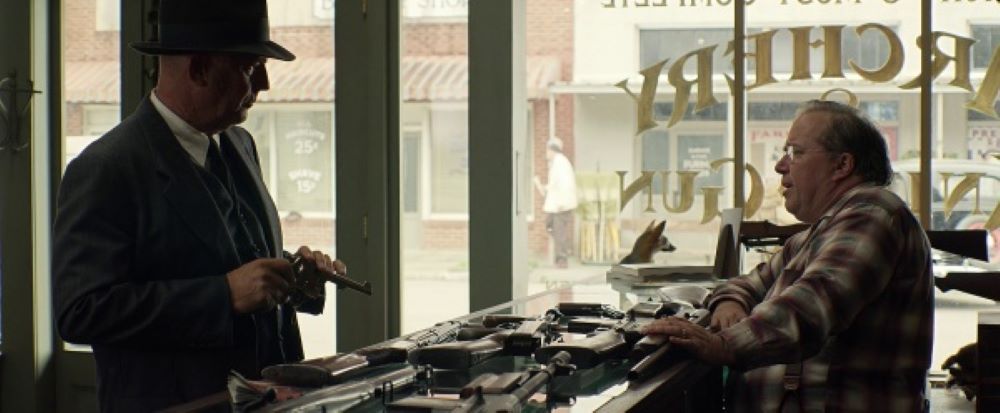
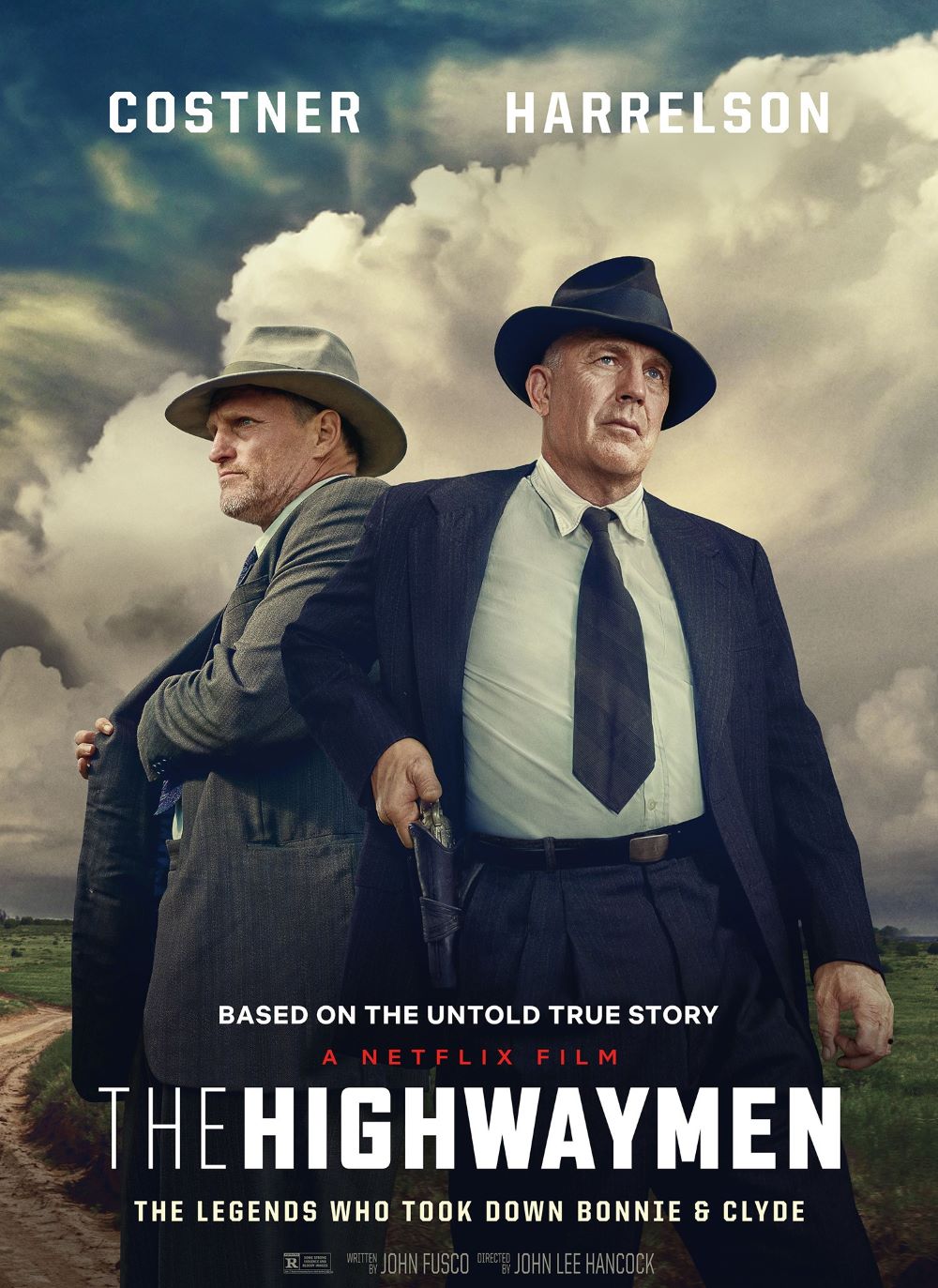
I reviewed the film The Highwaymen (directed by John Lee Hancock) earlier this week and there was always one scene from the entire film that I always go back to rewatching. It’s pretty much a sequence where Texas Ranger Frank Hamer (played by Kevin Costner) stops by a local gun store and begins naming off pistols and rifles that he wants to examine.

It’s a random scene, but it also shows how much has changed from how American treated the purchase and ownership of guns during the Prohibition and gangland era of the late 20’s and early 30’s. This was a time when any adult could go into a store and purchase any type of gun (from pistols, rifles, shotguns and all the way up to machine guns) as long as they had the money. No license required to purchase whatever one desired and no waiting period and background check.

All of this would just a month after the deaths of Bonnie and Clyde as depicted in the film when Congress would pass the National Firearms Act of 1934 when certain firearms would be heavily restricted (such as short-barreled shotguns, machine guns, short-barreled rifles aka submachine guns, etc.) requiring specific licenses and up to restricted for law enforcement use-only.

This scene shows a time that was still holding onto the ways of the frontier and the Old West, but was about to end as the government began to centralize regulation on the federal level and away from the states. It’s a scene that on its own was a small random one that almost borders on the ridiculous as Hamer just names off guns after guns then answering the store owner’s question of which he would buy with a simple answer of “all of them.”

I also love this scene being a gun enthusiast who has his own large collection. What I wouldn’t give to be able to just do what Frank Hamer did in this scene. Though my wallet would cry if I was given the chance.
Review: The Highwaymen (dir. by John Lee Hancock)


“People don’t always know who they are… ’til it’s too late.” — Frank Hamer

The Highwaymen, as directed by John Lee Hancock, delivers a character-driven, period crime drama that refreshes a story so often mythologized in American pop culture. Instead of glamorizing Bonnie and Clyde, the film spotlights the two former Texas Rangers tasked with ending their crime spree: Frank Hamer (played by Kevin Costner) and Maney Gault (played by Woody Harrelson). Set against the bleak dustbowl landscape of 1934, the film opens with the criminal duo breaking their associates out of Eastham Prison, setting the state of Texas into a panic. In desperation, Governor “Ma” Ferguson authorizes the return of Hamer, a seasoned lawman whose old-school methods have largely been left behind in modern policing.

From the start, The Highwaymen takes its time, inviting viewers into a slower, more contemplative chase rather than the kinetic action often associated with outlaw stories. Hamer, long retired and resistant to rejoining the fight, is persuaded both by the severity of Bonnie and Clyde’s violence and the humiliation his state faces in failing to catch them. Gault, for his part, is recruited despite his own personal struggles, adding a layer of regret and weariness to their partnership. Their pursuit is marked by straightforward detective work—staking out small towns, following trails, and confronting a public that is strangely captivated by the criminals they hunt. The film repeatedly draws attention to the way crowds and the press elevate Bonnie and Clyde, reflecting on an early version of true crime celebrity culture.

The dynamic between Hamer and Gault forms the emotional core of the movie. Their bond is shaped by years of experience, mistakes, and a real sense of being out of place in a society that now doubts their relevance. There’s plenty of banter and friction, but also reflective moments that dig into the costs of life spent in pursuit of justice. Throughout the investigation, the film uses the Texas and Louisiana landscape as a powerful backdrop—the vast, windswept highways underscore the isolation and existential gravity faced by these lawmen. The cinematography favors wide shots and muted colors, giving the chase a feeling of endlessness and melancholy.

Instead of showcasing Bonnie and Clyde as glamorous anti-heroes, the film keeps them at a distance, rarely granting much screen time or dialogue. Violence is handled abruptly and unsentimentally. When it finally arrives, most notably in the climactic ambush, it is portrayed as brutal and inevitable, reminding the viewer that myths are built on blood and public spectacle. The lawmen’s final confrontation results in the infamous shootout, depicted with documentary-like restraint. The aftermath involves a bullet-riddled car towed through throngs of onlookers—an eerie scene that highlights how tragedy becomes spectacle.

One of the film’s greatest strengths is in its portrayal of moral ambiguity. Both Hamer and Gault operate by principles shaped in a different era. Their methods can be rough and unorthodox; they clash with younger law enforcement and the FBI, whose approaches are more bureaucratic, less personal. The film hints at the toll violence and a lifetime in law enforcement has taken on them, including a poignant story from Gault about a tragic accident in his past. These reflections draw out the muted sadness underlying their pursuit, exploring themes of justice, changing times, and what remains after one’s era passes.

Performance-wise, Costner and Harrelson bring authenticity and gravity to their roles. Their chemistry is quiet and real, developed largely through understated scenes—silent drives, awkward motel breakfasts, and occasional arguments broken up by mutual respect. Supporting roles, like Kathy Bates’s steely governor and John Carroll Lynch’s earnest corrections chief, flesh out the historical setting and institutional pressures.

The film doesn’t always dig as deep as it could into the complexities of Depression-era justice, but its restraint and focus on character make up for that. Rather than indulging in nostalgia or sensationalizing violence, it keeps its lens on the human cost—the consequences for the victims, the weariness of the men trying to restore order, and the strange cultural fascination with outlaws. If you’re looking for a grounded historical drama that trades fast action for thoughtful pacing, and puts working-class grit front and center, The Highwaymen is worth the ride.

Scene That I Love: Garrison Meets X in JFK


Today is Oliver Stone’s birthday so, for all conspiracy-loving readers, here is a key scene from Stone’s 1991 film, JFK!  In this scene, Kevin Costner’s Jim Garrison meets the mysterious man known as X (played by the much-missed Donald Sutherland).  X explains the conspiracy to Garrison.

This scene certainly convinced a lot of people.  Personally, I think Oswald acted alone but one cannot deny Stone’s talent as a filmmaker.

4 Shots From 4 Films: Special 1990 Edition


4 Or More Shots From 4 Or More Films is just what it says it is, 4 shots from 4 of our favorite films. As opposed to the reviews and recaps that we usually post, 4 Shots From 4 Films lets the visuals do the talking!

Today, we pay tribute to the year 1990!  It’s time for….

4 Shots From 4 1990 Films

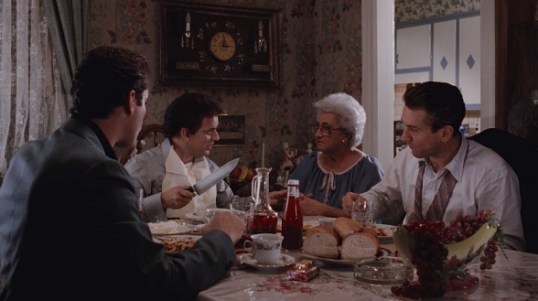
Goodfellas (1990, dir by Martin Scorsese, DP: Michael Ballhaus)

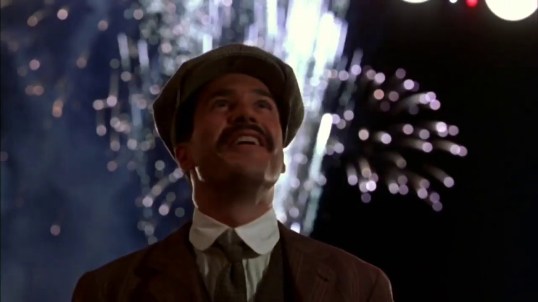
Avalon (1990, directed by Barry Levinson, DP: Allen Daviau)

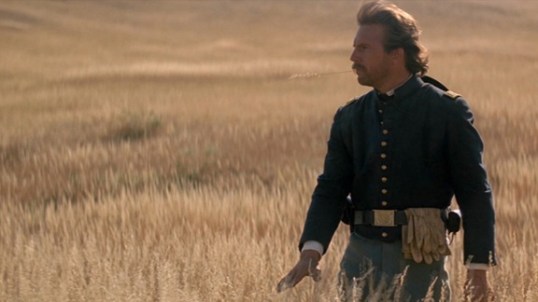
Dances With Wolves (1990, dir by Kevin Costner, DP: Dean Semler)

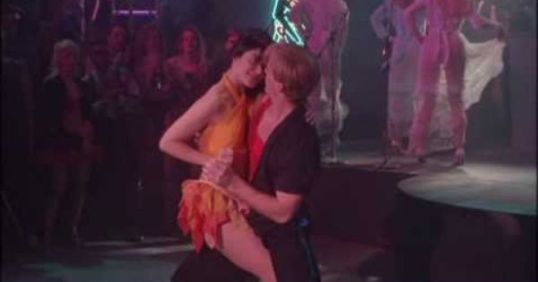
The Forbidden Dance Is Lambada (1990, dir by Greydon Clark, DP: R. Michael Stringer)

THE UNTOUCHABLES (1987) – Happy 70th Birthday, Kevin Costner!


There was a time in my life, before I could drive, when I would beg my parents to stop at the video store every time we went to the neighboring town of Conway, Arkansas. The town I grew up in was too small to have more than just a gas station, so this movie buff had to take advantage of every trip to town. One night when we were headed home, my parents relented to my repeated requests, so we stopped off at Budget Video. I wanted to choose all the movies, but unfortunately mom and dad would also let my brother and sister choose movies from time to time as well. On this particular night, my brother wanted to rent THE UNTOUCHABLES (1987). I don’t remember what I was wanting, but I do remember that it was not THE UNTOUCHABLES. I probably pouted a little bit, but we ended up taking THE UNTOUCHABLES home with us. We turned it on that night, and I’ll gladly admit that I was 100% wrong. THE UNTOUCHABLES immediately became one of my favorite films. Great job, bro!

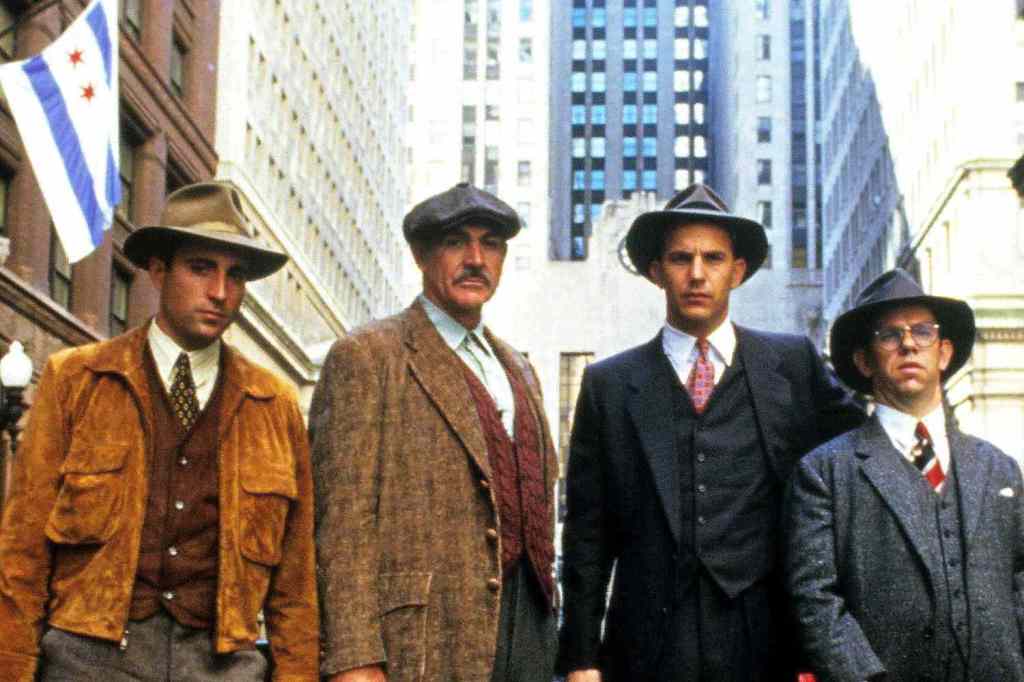
It’s 1930 and Prohibition is the law of the land in the United States of America. Treasury agent Eliot Ness (Kevin Costner) has been given the seemingly impossible task of bringing down notorious gangster Al Capone (Robert De Niro), who supplies booze to nearly all of Chicago. Capone doesn’t just supply the booze, he rules Chicago with an iron fist; and if you’re a local business who doesn’t want to buy his product, he just may blow your ass up! Ness’ job is made especially difficult due to the rampant corruption in Chicago, where everyone from the Mayor, to the judges, lawyers, and law enforcement officers are all on Capone’s payroll, making it pretty much impossible to trust anyone. In a complete stroke of luck, Ness encounters the honest Irish American policeman James Malone (Sean Connery) and asks him to join him in bringing down Capone. With Malone, Ness has found that honest and badass cop who’s not afraid to go up against Capone and his goons. Knowing that most of the police force is already compromised, the two men head to the police academy to try to find another honest cop. This turns out to be another great move as they come upon an Italian American trainee named George Stone (Andy Garcia), who’s a prodigy with a gun. Their last, and greatest move in this humble CPA’s opinion, comes when they accept accountant Oscar Wallace (Charles Martin Smith) to their team. Wallace is convinced that the key to bringing down Capone is trying to build a tax evasion case against him. He’s initially laughed at, but it’s soon apparent that this accountant knows his debits and credits, and his expertise may be just what’s needed to end Capone’s reign of terror once and for all.

I’ve always considered THE UNTOUCHABLES to be a near perfect film. One of the main reasons I find the film so perfect is the direction of Brian De Palma. I’ve been a fan of his “style” for so long, with films like DRESSED TO KILL (1980) and BLOW OUT (1981), but I think he just nails the material here. There are so many great scenes, but the “Union Station” sequence has to be one of the most perfectly choreographed sequences of all time. The building of the tension, the slow-motion shootout when the bad guys arrive, and finally the badass resolution all prove what an absolute master De Palma could be with the right material. De Palma claims that he made up the series of shots as he was filming the scenes at the train station, making the final product that much more impressive. And this all plays out against the background of a “lullaby theme” composed by the legendary Ennio Morricone (THE GOOD, THE BAD, AND THE UGLY). This is what “cinema” is all about.

THE UNTOUCHABLES has an amazing cast of actors to bring its “based on real events” story to life. Kevin Costner was just beginning to emerge as a movie star when this movie was made back in 1987. Especially as a younger actor, Costner was good at projecting both a certain innocence, tempered with the willingness to do what it takes to get the job done once his family and friends are put in danger. And what can you say about actors like Sean Connery and Robert De Niro?!! Connery is so charismatic, wise, and tough as the beat cop who shows Eliot Ness how to beat Capone… ”he sends one of yours to the hospital, you send one of his to the morgue!” He’s a beat cop because he’s incorruptible, and Connery projects that stubborn honesty perfectly. I’m so glad that Connery won an Oscar for this performance, as it would be the only time he would ever be nominated for an Academy Award. He’s amazing in this role, even if his accent is Scottish rather than Irish (a notable controversy at the time). Connery may have won the Oscar, but Robert De Niro matches him scene for scene. His ability to make Capone both charismatic and evil in equal measure is an example of what makes De Niro special as an actor. So many actors phone in these types of broad performances, but not De Niro. I also just think it’s cool that De Niro admitted that his performance was heavily influenced by Rod Steiger’s in 1959’s AL CAPONE. I love Steiger and consider this a wonderful tribute. Throw in a young Andy Garcia, the always underrated Charles Martin Smith, and a creepy Billy Drago as Frank Nitti, and you have one of the better casts ever assembled. I especially became a fan of Garcia based on his performance in THE UNTOUCHABLES.

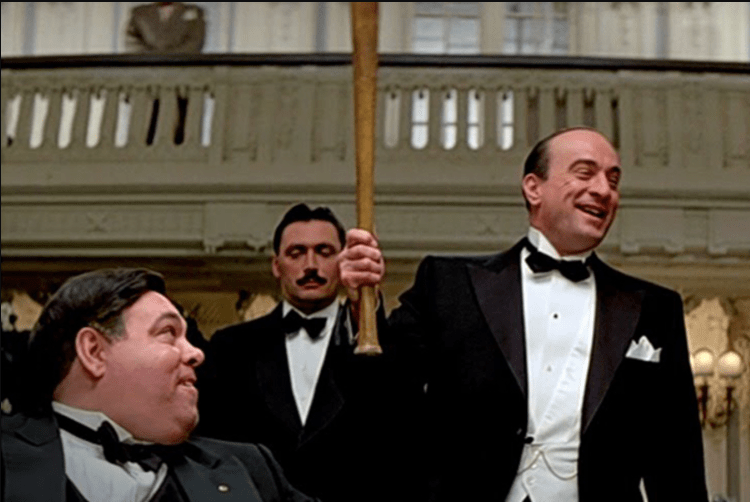
The last person I want to mention is the screenwriter, David Mamet. His screenplay is another perfect element of THE UNTOUCHABLES. The same man who has directed his own films like HOUSE OF GAMES (1987), HOMICIDE (1991), THE SPANISH PRISONER (1997), and SPARTAN (2004) knows how to write a great screenplay. There are so many amazing moments, from the “baseball bat” sequence to the “Stone recruitment” scene, and even Ness’ “he’s in the car” line about Frank Nitti, it’s a muscular screenplay full of big-time moments of audience satisfaction.

At the end of the day, THE UNTOUCHABLES is just a great movie. I still periodically thank my brother for picking it out that fateful day in the late 80’s, and it will always be one of my very favorites. It’s one of those movies that I recommend with zero reservations!

Check out the trailer below, and if you’re smart, you’ll watch one of the great movies of the 1980’s, Brian De Palma’s THE UNTOUCHABLES.

Silverado (1985, directed by Lawrence Kasdan)


In the old west, a cowboy named Emmet (Scott Glenn) teams up with a reformed outlaw named Paden (Kevin Kline) and they bust Emmet’s wild younger brother, Jake (Kevin Costner), out of jail.  After Mal (Danny Glover) helps the three of them escape from a posse, they all end up going to the town of Silverado, where all four of them have business.  Emmett and Jake want to protect their sister from the corrupt son (Ray Baker) of a cattle baron who was previously killed by Emmett.  Mal wants to save his sister Rae (Lynn Whitfield) from an evil gambler (Jeff Goldblum).  Paden discovers that Cobb (Brian Dennehy), his former partner-in-crime, is now the sheriff of Silverado and working for the cattle barons.  When Paden tries to protect the new settlers (including Rosanne Arquette), it leads to a confrontation with his former partner.

In the 80s, when he wasn’t directing films like The Big Chill and The Accidental Tourist, Lawrence Kasdan specialized in paying homage to the films of Hollywood’s golden age.  He started his directorial career with Body Heat, a modern film noir.  He worked on the screenplays of both Empire Strikes Back and Raiders of the Lost Ark.  With Silverado, Kasdan tried to resurrect the western.

Silverado is a traditional western with a few modern touches, like casting Jeff Goldblum as a gambler and John Cleese as the sheriff who wants to execute Kevin Costner.  Silverado also has more humor than a typical western, largely thanks to Kevin Kline.  Silverado starts out as a comedy before turning serious and grim once the four heroes finally reach Silverado.

Kasdan’s love of the genre is obvious in every frame of Silverado but, in trying to tell multiple stories at once, the movie spreads itself too thin.  I like that Kasdan tried to shake things up by casting actors who most people wouldn’t expect to see in a western but both Kevin Kline and Brian Dennehy seem miscast in their roles and their final confrontation never becomes the epic moment that it needs to be.  Scott Glenn and Kevin Costner are far more believable in their roles.  Danny Glover is also believable but his character is underused.

Silverado was obviously a labor of love for Kasdan and it shows that, if nothing else, Kasdan understood the appeal of the genre and the beauty of the wide open frontier.  The movie has its flaws but fans of westerns will appreciate his effort.

I Watched Bull Durham (1988, dir. by Ron Shelton)


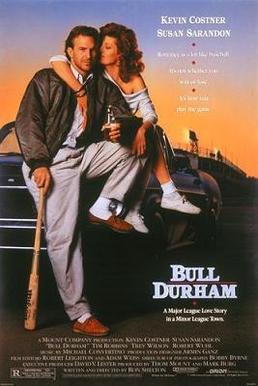
In Bull Durham, Kevin Costner plays Crash Davis, a veteran catcher in the minor leagues who is brought onto the Durham Bulls so that he can teach a rookie pitcher, Ebby LaLoosh (Tim Robbins), how to play the game and also get him ready for his inevitable move to the major leagues.  Also helping to get the dim-witted but sincere Ebby ready is Annie Savoy (Susan Sarandon), who worships at the Church of Baseball and who has an affair with a different player every season.  The film follows the Bulls through their season, as both Crash and Annie mentor Ebby while also falling in love with each other.  Ebby even gets a nickname, Nuke.

Considering how much I love baseball, it might surprise you to learn that, up until recently, I had never seen Bull Durham.  I had read that it was one of the best baseball movies ever made but I never actually watched it.  I’m glad that I finally did watch it because it is a really good baseball movie.  It’s a movie that loves the game and I wasn’t surprised that the director was a former minor league player because Bull Durham is full of the type of details that you would only get from someone who had actually been there.  I especially liked the scene where it was revealed what the players and the coaches are actually talking about when they all gather on the pitcher’s mound.  It turns out that they’re not always talking about how to strike out the pitcher.

The love triangle part of the film didn’t work as well as for me.  I could relate to Annie’s love for baseball but her character still didn’t quite ring true for me and her narration was overdone.  Both Annie and Nuke seemed cartoonish whenever they got together.  Kevin Costner, though, was great as Crash Davis.  He was believable as an athlete and a mentor.  My favorite Costner moment was when a batboy told him to “Get a hit, Crash,” and he replied, “Shut up.”  It rang true.

I don’t agree with those who say Bull Durham is the best baseball movie.  I think Eight Men Out is better.  But I still enjoyed Bull Durham.  It’s a movie that loves the game almost as much as I do.

Night Shift (1982, directed by Ron Howard)


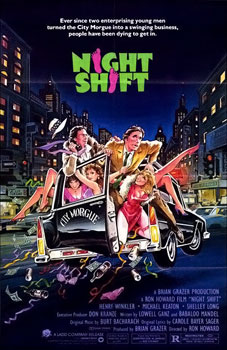
Chuck Lumley (Henry Winkler) was a Wall Street wizard until the stress of the job started to give him ulcers.  He dropped out of the rat race, got a less stressful job as an attendant at a New York City morgue, and eventually met and became engaged to Charlotte (Gina Hecht).  When Chuck’s supervisor decides to give Chuck’s day shift to his new guy, Chuck is promoted to the night shift.  “He has the same last name as you,” Chuck says when he learns the about the new employee.  “Yeah, I think he’s my nephew or something,” his supervisor replies.

Chuck finds himself working nights with “Billy Blaze” Blazejowski (Michael Keaton), a hyperactive “idea man,” who has so many brilliant plans that he has to carry around a tape recorder so he doesn’t forget them.  A typical Billy Blaze idea is to battle litter by creating edible paper.  Another one is to rent out the hearse as a limo and give rides to teenagers.  Chuck may not be happy about his new shift or coworker but he is happy that he shares his new work schedule with his upstairs neighbor, Belinda Keaton (Shelley Long).  Belinda is a high-class prostitute who first meets Chuck when she comes by the morgue to identify the body of her pimp.  When Chuck discovers that Belinda needs a new pimp, he and Billy take on the job themselves, which brings them into conflict with not only the vice cops but also with Pig (Richard Belzer) and Mustafa (Grand L. Bush).

Raunchy but good-hearted, Night Shift has always been one of my favorite comedies.  Along with being Ron Howard’s first movie for grown-ups, it also featured Michael Keaton in his first lead role.  Keaton is both funny and surprisingly poignant as Billy.  He’s hyperactive and impulsive and doesn’t think things through but his friendship with Chuck is real and later on in the movie, he reveals himself to have more depth than he lets on.  Also giving good performances are Henry Winkler and Shelley Long, two performers better-known for their television work than their film roles.  With his role here, Winkler proved that he was capable of playing more than just the Fonz.  Shelley Long has probably never been better (or sexier) than she was in this film.  The scene where she makes breakfast for Chuck is unforgettable.  Even though she’s playing a stock character, the prostitute with a heart of gold, Shelley Long brings her own unique charm to the role and makes Belinda seem like a real person.

Night Shift starts out strong but falters slightly during its second hour, when Chuck and Billy seem to magically go from being nerdy morgue attendants to successful pimps overnight.  Some of the violence feels out-of-place in what is essentially a buddy comedy with a dash of romance.  It’s still a funny movie that is full of memorable one liners and good performances.  As you might expect from Ron Howard, Night Shift is a surprisingly good-hearted look at the business of sex.  Ron Howard has directed a lot of films since but few of them are as much fun as Night Shift.

The Films of 2024: Horizon: An American Saga: Chapter One (dir by Kevin Costner)


Horizon: An American Saga: Chapter One is the rather unwieldy title of the first part of what Kevin Costner has said will be an epic four-part movie about the settling of the American frontier.

It’s very, very long.

It has a running time of three hours, during which time a lot of characters are introduced and a lot of plotlines are initiated but, because this is the only first chapter, none of them come to a close.  In fact, as the film ends, it’s still a mystery as to how some of the characters are even related.  I watched all three hours and I took my ADD meds this morning so you can be assured that I was actually paying attention.  That said, I still struggled to keep track of who everyone was or even where they were in proximity to each other.  Indeed, it was only towards the end of the film that I realized that several years were supposed to have passed over the course of the first chapter’s running time.

That’s not to say that the film is a disaster.  While it’s not quite the nation-defining epic that Costner obviously envisioned it as being, it’s also not quite the cinematic atrocity that several critics made it out to be.  It’s a throwback of sorts, to the epic westerns of old.  As such, the film features taciturn gunslingers, a woman with a past, dangerous outlaw families, fierce Indian warriors, and a wise Indian chief who has dreamed of the coming of the white man.  The film is full of actors — like Michael Rooker, Sienna Miller, Sam Worthington, Danny Huston, Will Patton, James Russo, Dale Dickey, and Kevin Costner himself — who feel as if they belong to a different era of filmmaking.  Just about everyone in the film is heading to the settlement of Horizon, which sits in Apache territory.  Despite the efforts of the Indians to kill every settler who shows up, they keep coming.  As one army officer explains it, the Indians have made the mistake of thinking that the settlers will come to believe the land is cursed while the settlers, all of whom are full of American optimism, instead chose to believe that the previous settlers were unlucky but that the next wave of settlers will make it work.  Costner has the right visual sensibility for a western.  The film reveals a director who is obviously in love with the Western landscape and the film is at its best when it simply frames the characters against the beauty of the frontier.  But when it comes to actually telling a compelling story, he struggles.  There are a lot of moving parts to the first chapter of Horizon and the problem is not that they don’t automatically connect but instead that Costner never gives us any reason to believe that they’ll ever connect.  There are no visual clues or bits of dialogue to assure the viewer that everything they’re watching is going to eventually pay off.  Costner asks his audience to have faith in him and remember that he directed Open Range and Dances With Wolves while forgetting about The Postman.

The first hour, which features a brutal raid on the settlement by a group of Indians, is the strongest.  It really drives home the brutality of what we now call the old west.  In the style of Michael Cimino’s The Deer Hunter, Costner closely observes the individual customs of the film’s settlers and carefully introduces several appealing characters who leave the viewer feeling as if they’ve met a very special and very unique community of people.  That makes it all the more devastating when the majority of those characters are subsequently wiped out with casual cruelty in a raid led by the Indian warrior Pionsenay (Owen Crow Shoe).  (Later — much later — a tracker played by Jeff Fahey will show similar brutality while wiping out a group of Apaches.)  The first hour establishes the frontier as being beautiful but also dangerous and it also drives home the mix of determination, desperation, and even madness that led so many to follow Horace Greeley’s advice and “Go west!”  Though the film was shot in early 2023, the brutality of the raid brought to mind the terrible images of the October 7th attacks on Israel.  The subsequent scenes in which Pionesenay and his followers ridiculed those in the tribe who wanted peace mirrored the current schism that’s driving apart the worldwide Left.  The U.S. Army, for their part, arrives a day late and can only offer up not-so subtle condescension.  The surviving settlers, however, remain determined to make a home for themselves.

The second hour focuses on Hayes (played by Costner), who rides into a mining town and gets involved with a family of outlaws who are looking for the woman who shot their father.  The second hour is a bit more of a traditional western than the first hour, though some of the violence is still shockingly brutal.  (Even being comedic relief won’t save you in this film.)  Abbey Lee gives a good performance as the woman with a past and a baby and Kevin Costner is  …. well, he’s Costner.  He could play this type of role in his sleep.

The third hour is a mess, introducing a wagon train and featuring a miscast Luke Wilson as the leader of the settlers and Jeff Fahey giving a strong performance as a ruthless tracker.  The third hour meandered as a whole new set of characters were introduced and I was left to wonder why the film needed new characters when the characters from the first two hours were perfectly adequate.  It was during the third hour that I started to really get impatient with the film and its leisurely approach to storytelling.

The film ends with a montage of what we can expect from the next few chapters of Horizon and I will say that the montage actually looked pretty cool.  That’s because the montage was almost totally made up of action scenes, with none of the padding that caused Chapter One to last an unwieldy three hours despite only having 90 minutes worth of story.  Still, one has to wonder if we’ll actually get to see the next three chapters.  The first chapter bombed at the box office and didn’t exactly excite critics.  Costner is producing and financing the films himself and I doubt he’ll give up on them.  The Horizon saga will be completed but will it made it to theaters or will it just end up on streaming?  Personally, I think the whole thing would work best as a miniseries but who knows?  (If Horizon was airing on Paramount, it would probably be a Yellowstone-style hit.)  All I really do know is that Chapter Two has yet to be released.  And that’s a shame because, for all of Chapter One‘s flaws, I’d still like to see how the story turns out.

Here Is The Official Cannes Lineup!


The lineup for the Cannes Film Festival has been announced.  After a rather subdued Sundance, film lovers like me are desperately looking to Cannes to add some excitement to 2024.  Considering that Cannes is going to see the premiere of new films from Francis Ford Coppola, Paul Schrader, Sean Baker, Kevin Costner, Andrea Arnold, George Miller, David Cronenberg, and Yorgos Lanthimos, it might do just that!

In the past, Cannes has always been hit-and-miss when it comes to the Oscars.  But lately, films like The Zone of Interest, Parasite, and The Tree of Life have followed success at Cannes with success with the Academy.

With that in mind, here’s the lineup.  If you’re going to Cannes in May, you’re going to have a good time!

Full lineup of the 2024 Cannes film festival.

The Second Act Quentin Dupieux (Opening Film) (Out of Competition)

Competition

L’Amour Ouf Gilles Lellouche

All We Imagine As Light Payal Kapadia

Anora Sean Baker

The Apprentice Ali Abbasi

Bird Andrea Arnold

Caught by the Tides Jia Zhangke

Emilia Perez Jacques Audiard

The Girl With the Needle Magnus von Horn

Grand Tour Miguel Gomes

Limonov: The Ballad Kirill Serebrennikov

Marcello Mio Christophe Honoré

Megalopolis Francis Ford Coppola

Motel Destino Karim Ainouz

Oh Canada Paul Schrader

Parthenope Paolo Sorrentino

The Shrouds David Cronenberg

The Substance Coralie Fargeat

Wild Diamond Agathe Riedinger

Kinds of Kindness Yorgos Lanthimos

Out of Competition

Furiosa: A Mad Max Saga George Miller

Horizon, an American Saga Kevin Costner

Rumours Evan Johnson, Galen Johnson, Guy Maddin

She’s Got No Name Chan Peter Ho-Sun

Un Certain Regard

Armand Halfdan Ullmann Tondel

Black Dog Guan Hu

The Damned Roberto Minervini

L’Histoire de Souleymane Boris Lojkine

My Sunshine Boku No Ohisama

Norah Tawik Alzaidi

On Becoming a Guinea Fowl Rungano Nyoni

Le Royaume Julien Colonna

Santosh Sandhya Suri

September Says Ariane Labed

The Shameless Konstantin Bojanov

Viet and Nam Truong Minh Quý

The Village Next to Paradise Mo Harawe

Vingt Deux! Louise Courvoisier

Who Let the Dogs Bite? Laetitia Dosch

Midnight Screenings

The Balconettes Noémie Merlant

I, The Executioner Seung Wan Ryoo

The Surfer Lorcan Finnegan

Twilight of the Warrior Walled In Soi Cheang

Cannes Premiere

C’est Pas Moi Leos Carax

Everybody Loves Touda Nabil Ayouch

The Matching Bang Emmanuel Courcol

Misericorde Alain Guiraudie

Rendez-Vous Avec Pol Pot Rithy Panh

Le Roman de Jim Arnaud Larrieu, Jean-Marie Larrieu

Special Screenings

Apprendre Claire Simon

La Belle de Gaza Yolande Zauberman

Ernest Cole, Lost and Found Raoul Peck

Le Fil Daniel Auteuil

The Invasion Sergei Loznitsa