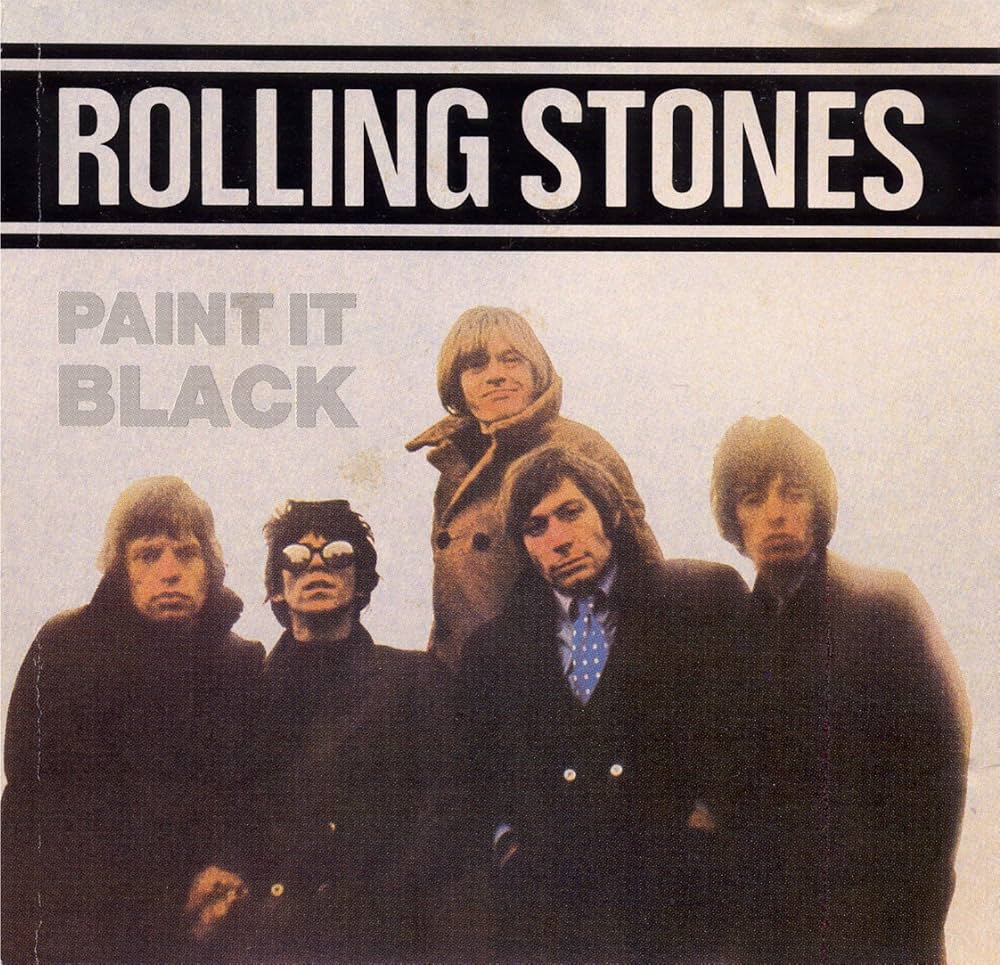
Song of the Day: Paint It Black (The Rolling Stones)


You ever notice how “Paint It Black” doesn’t really start so much as it unfolds—that strange sitar riff creeping in like a bad dream you can’t quite shake? The Stones captured something that feels less like heartbreak and more like a total emotional blackout. The sound is restless, paranoid even, like someone pacing around inside their own thoughts at 3 a.m. That’s what makes it such a sharp symbol of depression: it’s not just sadness, it’s this all-consuming fog where color, joy, and even meaning itself disappear.

The thing that always strikes me is how the song turns that private darkness into a worldview. The singer doesn’t only feel grief—he wants the whole world to match how he feels inside. That line between self and everything else completely breaks down. You can hear it in the drumming, that pounding rhythm chasing itself in circles, or the sitar’s looping melody that never resolves. It’s like he’s trapped in motion, unable to stop thinking or feeling, stuck in a spiral that makes sense only to him. It’s haunting because it sounds familiar to anyone who’s been that low.

And that’s why, even decades later, “Paint It Black” still feels so alive—so uncomfortably modern. Underneath the 60s cool, it taps into that quiet nihilism a lot of people still wrestle with today: the idea that maybe there’s nothing left worth looking at, so you might as well black it all out. But there’s something cathartic in that honesty. The song doesn’t try to fix anything or offer redemption; it just sits in the darkness. And sometimes, that’s what makes it hit harder than any happy ending could.

Paint It Black

I see a red door
And I want it painted black
No colors anymore
I want them to turn black

I see the girls walk by
Dressed in their summer clothes
I have to turn my head
Until my darkness goes

I see a line of cars
And they’re all painted black
With flowers and my love
Both never to come back

I’ve seen people turn their heads
And quickly look away
Like a newborn baby
It just happens everyday

I look inside myself
And see my heart is black
I see my red door
I must have it painted black

Maybe then, I’ll fade away
And not have to face the facts
It’s not easy facing up
When your whole world is black

No more will my green sea
Go turn a deeper blue
I could not foresee this thing
Happening to you

If I look hard enough
Into the setting sun
My love will laugh with me
Before the morning comes

I see a red door
And I want it painted black
No colors anymore
I want them to turn black

I see the girls walk by
Dressed in their summer clothes
I have to turn my head
Until my darkness goes

I wanna see it painted
Painted black
Black as night
Black as coal
I wanna see the sun
Blotted out from the sky
I wanna see it painted, painted, painted
Painted black, yeah

Ambush at Cimarron Pass (1958, directed by Jodie Copelan)


Immediately following the Civil War, a group of U.S. soldiers and a group of former Confederates have to work together to survive an Apache ambush.  The leader of the soldiers is Sgt. Matt Blake (Scott Brady) and he’s escorting a gunrunner (Baynes Barron) to a nearby fort.  Leading the former Confederates is Sam Prescott (Frank Gerstle).  The two groups are, at first, suspicious of each other.  Confederate Judge Stanfield (Irving Bacon) thinks that Blake should just give the gunrunner and his guns to the Apaches, since that’s what they want.  When Blake disagrees, Prescott tries to encourage a young and angry former Confederate named Keith (Clint Eastwood) to challenge Blake’s command.  In the end, the former enemies have to learn how to set aside their differences to survive and to make it to the fort.

This was one of Eastwood’s earliest performances and only the fourth time that his name actually appeared in the opening credits.  (Eastwood had appeared, uncredited, in several films before this one.)  Eastwood later called Ambush at Cimarron Pass “the lousiest western ever made” and claimed that he hated the film so much that he almost gave up on acting after seeing it.  I think he’s being too hard on the movie.  It’s a low-budget B-movie that pretty much takes place in one location and it has an tending that feels tacked-on but, when it concentrates on the action and the hostility between the two groups, it’s not that bad.  It feels more like an episode of Death Valley Days than an actual movie but Scott Brady is a convincing hero and his brawl with Eastwood is one of the movie’s highlights.  As for Eastwood’s performance, he’s stiff but convincing when he’s angry.  It’s obvious that, in 1958, Clint Eastwood still had a long way to go an actor but his physical presence makes him stand out whenever he’s in a scene.  Ambush at Cimarron Pass is nothing special but it’s good enough to work for fans of the genre who might be looking for a brief diversion that features a handful of familiar faces.

After appearing in this film, Eastwood would land the role of Rowdy Yates on Rawhide and spend the next six years on television.  His next film would be A Fistful of Dollars, a western that made a much deeper impression on audiences than Ambush At Cimarron Pass.

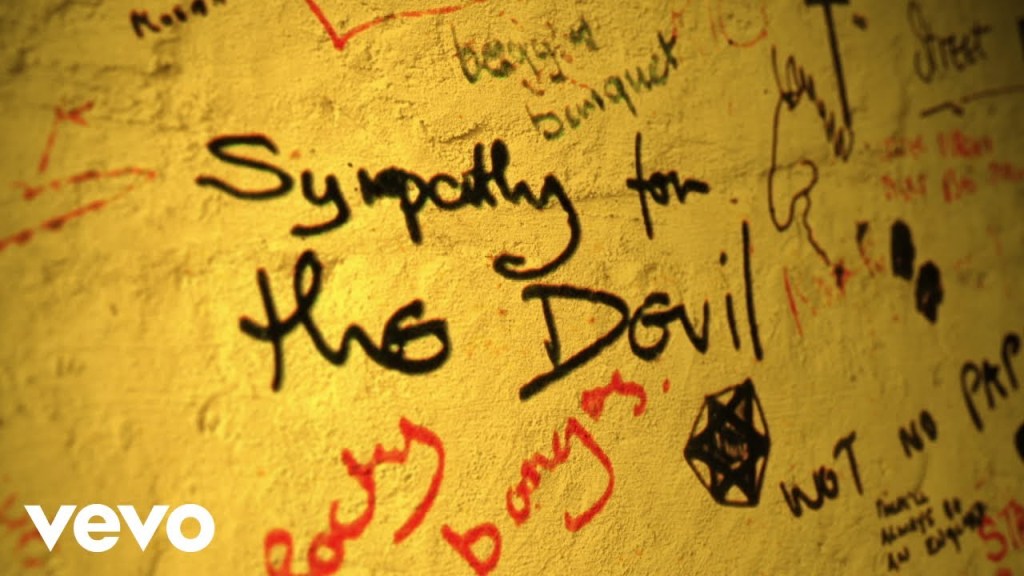
Song of the Day: Sympathy for the Devil (The Rolling Stones)


The latest “Song of the Day” is very near and dear to my blues-covered metal heart. I consider it one of the best rock ‘n’ roll songs ever created. It’s been covered by numerous bands in the decades since it’s initial release but I will always consider the original as the best. The latest song of the day is The Rolling Stones’ “Sympathy for the Devil”.

This song was released in the early days of December 1968. It was the opening track for The Rolling Stones’ latest album (Beggars Banquet) at that date. What makes this song so great is how simple the song really comes across. It doesn’t have the typical blues rock tone of previous Stones’ songs until Keith Richard’s guitar solo around the 2:55 mark. The song definitely sounds more like a combination of folk rock (by way of it’s spoken word-like lyrics) and a samba (due to the incorporation of additional percussions like the congas).

“Sympathy for the Devil” has been called a confession song while others see it as the narcissistic bragging of the narrator. Both viewpoints are quite valid and there are more as every listener of this song hears and imagines different themes. I always saw it as a combination of the two. It’s Lucifer’s confession and bragging about his role in the tumultuous and evil events in man’s history. It’s a song that its narrator wants to understand and admit that while he has been there through all those dark moments in history, he wouldn’t have been able to do what he’s done if not for people allowing him in and becoming complicit.

Sympathy for the Devil

Please allow me to introduce myself
I’m a man of wealth and taste
I’ve been around for a long, long years
Stole many a man’s soul and faith

And I was ’round when Jesus Christ
Had his moment of doubt and pain
Made damn sure that Pilate
Washed his hands and sealed his fate

Pleased to meet you
Hope you guess my name
But what’s puzzling you
Is the nature of my game

I stuck around St. Petersburg
When I saw it was a time for a change
Killed the czar and his ministers
Anastasia screamed in vain

I rode a tank
Held a general’s rank
When the blitzkrieg raged
And the bodies stank

Pleased to meet you
Hope you guess my name, oh yeah
Ah, what’s puzzling you
Is the nature of my game, oh yeah
(woo woo, woo woo)

I watched with glee
While your kings and queens
Fought for ten decades
For the gods they made
(woo woo, woo woo)

I shouted out,
“Who killed the Kennedys?”
When after all
It was you and me
(who who, who who)

Let me please introduce myself
I’m a man of wealth and taste
And I laid traps for troubadours
Who get killed before they reached Bombay
(woo woo, who who)

Pleased to meet you
Hope you guessed my name, oh yeah
(who who)
But what’s puzzling you
Is the nature of my game, oh yeah, get down, baby
(who who, who who)

Pleased to meet you
Hope you guessed my name, oh yeah
But what’s confusing you
Is just the nature of my game
(woo woo, who who)

Just as every cop is a criminal
And all the sinners saints
As heads is tails
Just call me Lucifer
‘Cause I’m in need of some restraint
(who who, who who)

So if you meet me
Have some courtesy
Have some sympathy, and some taste
(woo woo)
Use all your well-learned politesse
Or I’ll lay your soul to waste, um yeah
(woo woo, woo woo)

Pleased to meet you
Hope you guessed my name, um yeah
(who who)
But what’s puzzling you
Is the nature of my game, um mean it, get down
(woo woo, woo woo)

Woo, who
Oh yeah, get on down
Oh yeah
Oh yeah!
(woo woo)

Tell me baby, what’s my name
Tell me honey, can ya guess my name
Tell me baby, what’s my name
I tell you one time, you’re to blame

Oh, who
woo, woo
Woo, who
Woo, woo
Woo, who, who
Woo, who, who
Oh, yeah

What’s my name
Tell me, baby, what’s my name
Tell me, sweetie, what’s my name

Woo, who, who
Woo, who, who
Woo, who, who
Woo, who, who
Woo, who, who
Woo, who, who
Oh, yeah
Woo woo
Woo woo

Great Guitar Solos Series

Song of the Day: Sister Morphine by Marianne Faithfull


Today’s song of the day comes to us, like our music video of the day, from the late Marianne Faithfull.

Co-written with Keith Richards and Mick Jagger, Sister Morphine was originally recorded by Faithfull in 1969 but her recording was initially banned in the United Kingdom due to the song’s drug-related content.  The Rolling Stones would go on to release a version of the song in 1971 and Faithfull would record and release the song a second time in 1979.

Here I lie in my hospital bed
Tell me, Sister Morphine
When are you coming around again?
Oh I don’t think I can wait that long
Oh you see that my pain is so strong

All the other patients say
They’ve never seen a man with such pain
Tell me, Sister Morphine
When are you coming round again?
Oh I don’t think I can wait that long
Oh you see that I’m not that strong

The scream of the ambulance
Is sounding in my ear
So tell me, Sister Morphine
How long have I been lying here?
What am I doing in this place?
Why does the doctor have no face?
Oh I can’t crawl across the floor
Can’t you see, Sister Morphine?
Just tryin’ to score

Well the actions go to show
Things are not what they seem
Please, Sister Morphine
Turn my nightmare into dream
Oh can’t you see that I’m fading fast?
And this shot will be the last

Please, cousin Cocaine
Lay your cool hands on my head
Hey, Sister Morphine
You better make up the black bed
‘Cause you know and I know
That you want me, I’ll be dead
You sit around and watch
The clean white sheets stained red

songwriters: Marianne Faithfull/Mick Jagger/Keith Richards

Music Video Of The Day: God’s Gonna Cut You Down (2006, dir by Tony Kaye)


This is a case where I like the song more than the music video.  This video was actually filmed three years after Johnny Cash’s death.  As far as “official” music videos are concerned, I always feel like a musician should have some sort of say into how their music is visually interpreted.  Obviously, Johnny Cash wasn’t around to have anything to say about the video for God’s Gonna Cut You Down.

Since Cash wasn’t available, director Tony Kaye filled the video with cameos from other actors and musicians, a few of whom (though not many) were previous Cash collaborators.  Among the celebs who make an appearance in this video: David Allan Coe, Patricia Arquette, Travis Barker, Peter Blake, Bono, Sheryl Crow, Johnny Depp, the Dixie Chicks, Flea, Billy Gibbons, Whoopi Goldberg, Woody Harrelson, Dennis Hopper, Terrence Howard, Jay-Z, Mick Jones, Kid Rock, Anthony Kiedis, Kris Kristofferson, Amy Lee, Adam Levine, Shelby Lynne, Chris Martin, Kate Moss, Graham Nash, Busy Philipps, Iggy Pop, Lisa Marie Presley, Q-Tip, Corinne Bailey Rae, Keith Richards, Chris Rock, Rick Rubin, Patti Smith, Sharon Stone, Justin Timberlake, Kanye West, Brian Wilson, and Owen Wilson.  Some of the celebs — like Dennis Hopper and Kris Kristofferson — seem like they naturally belong there.  Others seem so out-of-place that you’ll want to throw something.  You know how that works,

God’s Gonna Cut You Down is a traditional folk song.  I’ve heard countless versions of it.  I prefer Cash’s version to the more traditional gospel arrangement but, then again, I tend to find gospel music to be dull in general.  Cash’s arrangement brought new life to an old song.

Enjoy!

Pirates of the Caribbean: On Stranger Tides (Super Bowl TV Spot)


The more I read about and see stuff on this fourth film on the Disney action-adventure franchise the more I’m really looking forward to Pirates of the Caribbean: On Stranger Tides.

This Super Bowl tv spot shows some new scenes that wasn’t in the official trailer released a little over a month ago. One thing I am glad to see is more Ian McShane as Blackbeard. I’m also glad that there’s still no Orlando Bloom and Keira Knightley to be seen in this film. Yes, I know that they declined to be in it (that or Bruckheimer finally got the hint that it was these two who bogged down the first two sequels).

In the end, this third sequel will live or die on the performance of Depp returning as Capt. Jack Sparrow. I’d bet on Captain Jack returning to his roguish self and making this fourth film a fun ride the way the first two sequels weren’t.

Pirates of the Caribbean: On Stranger Tides is set for a May 20, 2011 release.