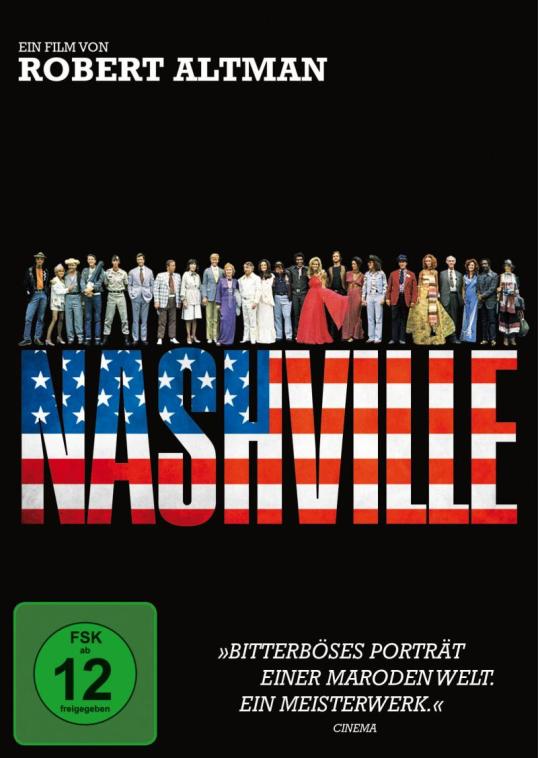
Since today would have been Robert Altman’s 101st birthday, it only seems right that today’s song of the day should come from his best film. In this scene from 1975’s Nashville, Keith Carradine sings I’m Easy as Altman’s camera finds each of his lovers in the audience, all convinced that Carradine is singing expressly to them.
This song won Nashville it’s only Oscar. It also made Keith, who wrote the song, the only Oscar winner amongst the fabled Carradine family.
In 1979’s Old Boyfriends, Talia Shire plays Dianne Cruise.
A sociology professor (or so she claims at one point), Dianne is struggling with an unhappy marriage and trying to recover from a recent breakdown. After deliberately crashing her car, she leaves her husband and goes on a trip across the country. She sets out to track down three ex-boyfriends.
Jeff Turrin (Richard Jordan) was her college boyfriend, the one who asked her to marry him three times. Jeff is now working as a director. When we first see him, he’s shooting a commercial for a political campaign in which Sam the Fisherman (Gerrit Graham) complains that the current governor of Colorado is a “long-hair” who gets in the way of small businessmen like himself. Dianne shows up on the set. Sam hits on her. Interestingly, it takes Jeff a while before he recognizes her. (Jeff comments that Dianne used to have longer hair but still, it seems like Jeff should be able to recognize someone to whom he proposed marriage three times.)
After having an affair with Jeff, who is in the process of getting a divorce, Dianne tracks down Eric Katz (John Belushi), the aspiring musician who humiliated her in middle school by telling everyone that she was “easy.” Eric owns a formal wear store and he still performs with his band. (Belushi sings the Hell out of Jailhouse Rock at one point.) He mostly performs at proms. As he explains it to Dianne, most of his customers are teenagers looking for prom outfits so it only makes sense that he should perform for them as well as dress them.
Dianne’s third old boyfriend is Louis Van Til but, when Dianne arrives at his home, she is told that Louis died in Vietnam. Under the watchful eye of his mother (Bethel Leslie) and his psychiatrist (John Houseman), she starts an obviously doomed relationship with Louis’s sensitive younger brother, Wayne (Keith Carradine).
While Dianne travels around the country, Jeff continues to look for her. He even hires a private detective named Art Kopple (Buck Henry).
Old Boyfriends is a film that I had been meaning to watch for a while. (I first read about it in a biography of John Belushi.) A lot of talent went into making the film. The script is by Paul and Leonard Schrader. Director Joan Tewkesbury wrote the script for Robert Altman’s Nashvilleand indeed, there is an Altmanesque feel to the loose way that the film’s story unfolds. The cast is full of talented people. This was John Belushi’s first film after Animal House and Talia Shire’s first after Rocky. With all that talent, you would think that the end result would be more interesting than it actually is. The story is intriguing. The cast is impressive. But Old Boyfriends falls flat.
Why doesn’t the film work? A lot of it is due to Tewkesbury’s direction. She struggles with the film’s frequent shifts in tone and she always seems to be keeping a certain distance from the characters. Talia Shire is in nearly every scene but the film seems to be determined to just observe her as opposed to actually allowing the viewer to get into her head. Shire herself never seem to be particularly comfortable with the role and, as a result, none of her visits with her old boyfriends carry much of an emotional impact. (Unfortunately, they don’t carry much of an intellectual impact either.) Jordan, Belushi, and Carradine all give good performances but the film itself doesn’t seem to be sure what it wants to say about any of them.
It’s a disappointing film. It’s not awful but, while watching it, it’s hard not to think about how much better it could have been. One gets the feeling that Robert Altman, with his eye for quirky detail and his skill with improvisation, could have gotten something worthwhile out of the material. As it is, Old Boyfriends is an intriguing idea that doesn’t quite work.
Though the Academy of Motion Picture Arts and Sciences claim that the Oscars honor the best of the year, we all know that there are always worthy films and performances that end up getting overlooked. Sometimes, it’s because the competition too fierce. Sometimes, it’s because the film itself was too controversial. Often, it’s just a case of a film’s quality not being fully recognized until years after its initial released. This series of reviews takes a look at the films and performances that should have been nominated but were, for whatever reason, overlooked. These are the Unnominated.
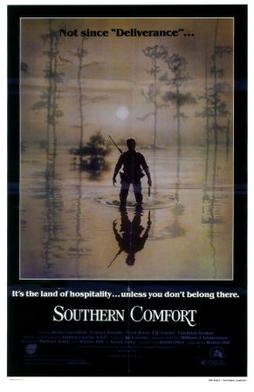
1981’s SouthernComfort takes place in 1973. While America tries to wind down its presence in Vietnam, a squad of nine National Guardsmen take part in war games in the Louisiana bayous. The squad is led by the ineffectual Sgt. Crawford Poole (Peter Coyote) while other members include the trigger-happy Lonnie Reece (Fred Ward), the weed-smoking Tyrone Cribbs (T.K. Carter), the cowardly Private Simms (Franklyn Seales), and the tightly-wound Coach Bowden (Alan Autry). Poole may be in charge but most of the members of the squad seem to look up to the laid-back and friendly Private Spencer (Keith Carradine). The newest member of the squad is Charles Hardin (Powers Boothe), a sober-minded transfer from Texas who doesn’t seem to get along with anyone but Spencer.
With the exception of Poole and Hardin, no one takes the weekend maneuvers seriously until they find themselves lost in the bayou and it becomes obvious that Poole has no idea what he’s doing. When they come across some canoes that belong to some Cajun trappers, they decide to “borrow” them. When the trappers protest, Reece fires his weapon at them. Reece’s gun is loaded with blanks but the trappers don’t know that. They fire back, killing Poole.
The national guardsmen now find themselves lost and being stalked by the trappers, a largely unseen force that always seems to attack out of nowhere. The men have no idea where they are. The trappers, on the other hand, have lived in the swamps their entire lives. The guardsmen bicker and argue over the best way to respond. Some want to fight back and some just want to get back to civilization. One-by-one, the men are picked off until only two remain.
Though the film is a somewhat heavy-handed metaphor for the Vietnam War, SouthernComfort is still a deeply affecting and suspenseful mix of horror and action. Director Walter Hill keeps the action moving at a quick pace and the film, which was shot on location and featured scenes shot during an actual Cajun celebration, perfectly captures the languid yet ominous atmosphere of the bayous. As soon as the men see those canoes unattended, we know that they’re going to steal them and that they are making the biggest mistake of their lives. Keith Carradine and Powers Boothe both give powerful performances in the lead roles and the members of the supporting cast — especially Alan Autry and Fred Ward — make a strong impression as well. I especially liked the performance of Brion James, who has a small role as a one-armed Cajun who is more crafty than he looks.
Being a mix of horror and action, it’s probably not a shock that SouthernComfort was ignored by the Academy. At the very least, I would have found room for Ry Cooder’s original score and Andrew Laszlo’s haunting cinematography.
Today, the Shattered Lens wishes a happy birthday to the actor and musician Keith Carradine. Our song of the day is a song that Carradine wrote for and performed in the 1975 film, Nashville.
First released in 1971, McCabe & Mrs. Miller takes place in the town of Presbyterian Church at the turn of the 19th Century.
Presbyterian Church is a mining town in Washington State. When we first see the town, there’s not much to it. The town is actually named after its only substantial building and the residents refer to the various parts of the town as either being on the right side or the left side of the church. The rest of the town is half-constructed and appears to be covered in a permanent layer of grime. This is perhaps the least romantic town to ever appear in a western and it is populated largely by lazy and bored men who pass the time gambling and waiting for something better to come along.
When a gambler who says that he is named McCabe (Warren Beatty) rides into town, it causes a flurry of excitement. The man is well-dressed and well-spoken and it’s assumed that he must be someone important. Soon a rumor spreads that McCabe is an infamous gunfighter named Pudgy McCabe. Pudgy McCabe is famous for having used a derringer to shoot a man named Atwater. No one is really sure who Atwater was or why he was shot but everyone agrees that it was impressive.
McCabe proves himself to be an entrepreneur. He settles down in Presbyterian Church and establishes himself as the town’s pimp. Soon, he is joined by a cockney madam names Mrs. Miller (Julie Christie). The two of them go into business together and soon, Presbyterian Church has its own very popular bordello. Sex sells and Presbyterian Church becomes a boomtown. It attracts enough attention that two agents of a robber baron approach McCabe and offer to buy him out. McCabe refuses, thinking that he’ll get more money if he holds out. Mrs. Miller informs him that the men that he’s dealing with don’t offer to pay more money. Instead, they just kill anyone who refuses their initial offer.
Three gunmen do eventually show up at Presbyterian Church and we do eventually get an answer to the question of whether or not McCabe killed Atwater or if he’s just someone who has borrowed someone else’s legend. The final gunfight occurs as snow falls on the town and the townspeople desperately try to put out a fire at the church. No one really notices the fact that McCabe is fighting for his life at the time and, as befits a revisionist western, there’s nothing romantic or dignified about the film’s violence. McCabe is not above shooting a man in the back. The killers are not above tricking an innocent cowboy (poor Keith Carradine) into reaching for his gun so that they’ll have an excuse so gun him down. McCabe may be responsible for making Presbyterian Church into a boomtown but no one is willing to come to his aid. The lawyer (William Devane) that McCabe approaches is more interested in promoting his political career than actually getting personally involved in the situation. Mrs. Miller, a businesswoman first, smokes in an opium den with an air of detachment while the snow falls outside.
It’s a dark story with moments of sardonic humor. It’s also one of director Robert Altman’s best. The story of McCabe and Mrs. Miller and the three gunmen is far less important than the film’s portrayal of community growing and changing. Featuring an ensemble cast and Altman’s trademark overlapping dialogue, McCabe & Mrs. Miller puts the viewer right in the heart of Presbyterian Church. There are usually several stories playing out at once and it’s often up to the viewer to decide which one that they want to follow. Yes, the film is about Warren Beatty’s slick but somewhat befuddled McCabe and Julie Christie’s cynical Mrs. Miller. But it’s just as much about Keith Carradine’s Cowboy and Rene Auberjonois’s innkeeper. Corey Fischer, Michael Murphy, John Schuck, Shelley Duvall, Bert Remsen, and a host of other Altman mainstays all have roles as the people who briefly come into the orbit of either McCabe or Mrs. Miller. Every character has a life and a story of their own. McCabe & Mrs. Miller is a film that feels as if it is truly alive.
As with many of Altman’s films, McCabe & Mrs. Miller was not fully appreciated when initially released. The intentionally muddy look and the overlapping dialogue left some critics confused and the film’s status as a western that refused to play by the rules of the genre presented a challenge to audience members who may have just wanted to see Warren Beatty fall in love with Julie Christie and save the town. But the film has endured and is now recognized as one of the best of the 70s.
Since today would have been Robert Altman’s 100th birthday, it only seems right that today’s song of the day should come from his best film. In this scene from 1975’s Nashville, Keith Carradine sings I’m Easy as Altman’s camera finds each of his lovers in the audience, all convinced that Carradine is singing expressly to them.
This song won Nashville it’s only Oscar. It also made Keith, who wrote the song, the only Oscar winner amongst the fabled Carradine family.
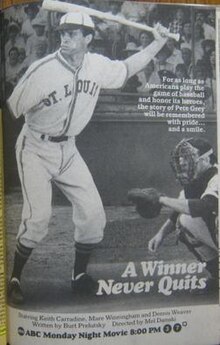
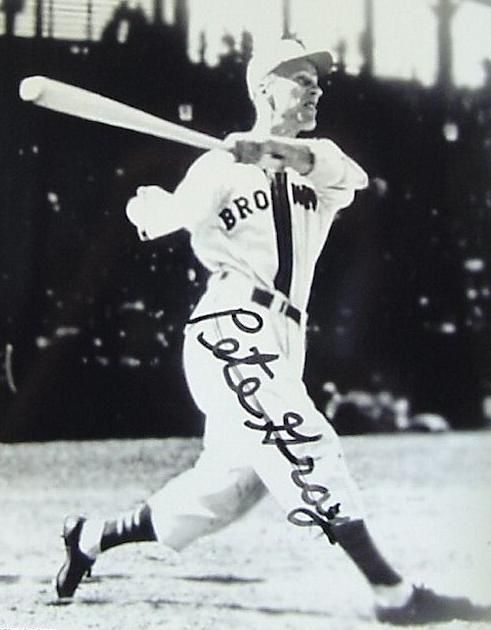
In 1945, Peter Gray made history when he became the first one-armed major league baseball player. Gray grew up in poverty in Pennsylvania. His father was a miner and Peter was one of five children. He was only seven years old when he lost his right arm in a wagon accident but he loved baseball and he wasn’t going to let his disability keep him from playing. He learned how to bat and catch and throw with his left hand. He quit school when he was thirteen and worked for a while as waterboy while playing baseball in the local leagues. Eventually, he made his way up to the minor leagues and, in 1945, he was called up to the majors. He played one season for the St. Louis Browns.
The media loved the story of the one-armed baseball player but Peter always said that he resented feeling like he was being put on display whenever he took the field. He was a competitive outfielder who could catch a ball, remove his glove, and then throw the ball to the infield just as quickly as anyone with two hands. As a hitter, he struggled because pitchers figured out early on that he couldn’t hit the breaking ball. After the 1945 season, Peter was sent to back to the minors, where he spent the rest of his career. Though Peter was known for being an angry player who resented anyone pointing out his disability, he still made time to visit amputees in military hospitals to show them that they could still find success and to encourage them to chase after their dreams.
Peter’s story was the basis of A Winner Never Quits, which I watched on YouTube this weekend. It was a good baseball movie, starring Keith Carradine as Peter. What I liked is that the movie didn’t make him into a saint. Carradine played Peter as being angry and with a definite chip on his shoulder. Peter had every right to be angry and I’m glad the movie acknowledged that. In both the movie and in real life, Peter was worried that he was just being treated as a sideshow. In the movie, his attitude improves when he meets a young boy who recently lost his arm and who looks up to Peter. Peter remained a friend to the boy and his family for the rest of his life. A Winner Never Quits is about pursuing what you love and never giving up. That’s what baseball is all about. A Winner Never Quits is a good and inspiring baseball movie that’s not just for the fans.
Laws of Man opens with two U.S. marshals driving through the desert of Utah. Tommy Morton (Jackson Rathbone) is young and impulsive, a Korean war vet who is quick to open fire. Frank Fenton (Jacob Keohane) is older and more cautious. He also served in the military, though his service was during World War II. Frank is haunted by flashbacks to a particularly gruesome battle. Tommy and Frank may spend most of their time wearing black suits in the desert but neither one breaks a sweat.
The year is 1963. Kennedy is in the White House. The communists are on the move. And Tommy and Frank are busy executing arrest warrants in the most desolate part of the country. An attempt to arrest Mormon cult leader Crash Mooncalf (Ricard Brake) leads to a bloody shootout that leaves Mooncalf and his followers dead. Their next assignment leads them to a small town in Nevada, where Bill Bonney (Dermot Mulroney) and his violent family is suspected of killing local ranchers and stealing their land.
From the minute that Tommy and Frank arrive in Nevada, something feels off. They stay at a cheap motel, where Tommy picks up a woman named Dinah (Ashley Gallegos) and Frank spends his time talking to a bartender named Callie (Kelly Lynn Reiter). An old rancher named Don Burgess (Forrie J. Smith) shows off his gun and says that he would rather suffer a violent death than give up his land. A traveling preacher named Cassidy Whitaker (Harvey Keitel) approaches Frank in the parking lot and starts talking about sin and redemption. Meanwhile, FBI agent Galen Armstong (Keith Carradine) appears to be curiously unconcerned with the Bonneys and their reign of violence. As for the sheriff (Graham Greene), he spending his time sitting outside a burned-out ranch house. The charred bodies of the owners are still inside, seated around the dinner table.
An attempt to arrest Bill Bonney at his home leads to a violent shootout, one in which no one is killed but Bill is still not happy about having a bunch of bullet holes in his roof. Tommy and Frank attempt to serve the arrest warrant, just to discover that it’s not going to be as easy as they thought. Frank, whose World War II flashbacks are getting more and more intense, wants to leave town. Tommy, however, is obsessed with discovering what exactly everyone is hiding.
And, through it all, people who know their history will notice that the film is taking place in November of 1963 and the 22nd is rapidly approaching….
Laws of Man gets off to a strong start but begins to meander about halfway through. Luckily, the film’s final third features a wonderfully insane twist that recaptures the viewer’s attention. No matter what you may think is going on in the film, it can’t prepare you for just how weird things eventually get. Laws of Man is an entertaining film, one that is occasionally a bit too self-consciously quirky for its own good but which ultimately works. Jackson Rathbone and Jacob Keohane both give strong performances in the lead roles and the familiar faces in the film’s supporting cast all do their best to bring the film’s often surreal world to life. Dermot Mulroney and Keith Carradine give especially strong performance while Harvey Keitel appears to be having fun as the offbeat preacher.
Laws of Man managed to truly take me by surprise. For fans of paranoid cinema, it’s definitely worth making time for.
It’s interesting how quickly a film can be forgotten.
Based on a novel by Thomas Savage, The Power of the Dog was one of the most anticipated films of 2021. It was considered to be a front runner for Best Picture even before it was released. Even though everyone knew 2021 was going to be the year that the Academy finally got around to giving Will Smith the Oscar, there was still a lot of excitement about the idea of Benedict Cumberbatch playing a sinister and closeted cowboy named Phil Burbank. The first teaser featured Cumberbatch being wonderfully creepy. I remember that I was certainly looking forward to it.
When it finally showed up in theaters and then premiered on Netflix, the reviews were …. respectful. They were positive but they weren’t exactly enthusiastic. This was the type of film where people noted that it was well-made and well-acted but it seemed to just be missing a little something. The film was nominated for a lot of Oscars but, in the end, it only won one, for Jane Campion’s direction. (And Campion, unfortunately, had to spend the days leading up to the ceremony dealing with a stupid controversy over a very mild joke she made to Serena and Venus Williams about how making a movie was more difficult than playing tennis.) People admired the skill that went into The Power of the Dog but, in the end, it was CODAthat captured the hearts of the Academy. CODA may not have been as technically well-made as Power of the Dog but CODA was a film that made people cry. And, in 2021, voters who had spent an entire year being told that they would die a horrible death if they even dared to leave their house without putting on a mask, decided to vote with their hearts.
Taking place in 1925 Montana, The Power of the Dog centers on two prominent ranchers, the Burbank brothers. Phil Burbank is a man’s man, a bluff and hearty type who lives to conquer the land and who doesn’t have much use for women. Phil looks down on anything that he considers to be a sign of weakness, like showing emotion or making paper flowers. And yet, Phil is also fiercely intelligent and Ivy League-educated, a man who is capable of playing beautiful music but who has decided not to. Phil is cruel and manipulative. Perhaps the only person that he’s ever respected is his mentor, Bronco Henry. Phil’s admiration for Henry and his collection of gay pornography tells us all we need to know about why Phil is so obsessed with maintaining his “manly” image.
His brother, George (Jesse Plemons), is a much more sensitive soul than Phil and yet, he allows himself to be dominated by his brother. It’s not until George meets and marries a widow named Rose (Kirsten Dunst) that he starts to come out of his shell. Angry that Rose seems to be freeing George from his domination, Phil goes out of his way to make her life miserable, even preventing Rose from playing the piano. In her loneliness, Rose starts to drink. Phil, meanwhile, sets himself up as a mentor (and potentially more) for Rose’s sensitive and introverted son (Kodi Smit-McPhee), who does like to make paper flowers but who also has an obsession with his late father’s medical books….
The Power of the Dog is a film that I had mixed feelings about. On the one hand, I did respect the craft that went into making the film. The Montana scenery was both beautiful and ominous. And I thought that both Jesse Plemons and Kirsten Dunst gave award-worthy performances. Dunst, especially, really captured the pain of Rose’s life on the ranch. Plemons, meanwhile, made George’s gentle nature compelling, which is not always the easiest thing for an actor to do. At the same time, Benedict Cumberbatch was miscast as Phil and Kodi Smit-McPhee’s performance was a bit too cartoonishly creepy for the film’s ending to really be as shocking as it was obviously meant to be. Ultimately, the main problem with the film was that Campion, as a director, kept the audience from really connecting with the characters. The film was well-made but almost as emotionally remote as Phil Burbank and it left the audience feeling as if they were on the outside looking in. While the book leaves you feeling as if you’re actually in Montana and allows you into the hearts of all of the characters, even Phil, the movie leaves you feeling as if you’ve just watched a really carefully-made film that ultimately treated you as scornfully as Phil treated Rose.
Because it is such a well-made film, The Power of the Dog is a film worth watching but it’s not necessarily a film that leaves you with any desire to watch a second time. For all the excitement that the film generated before it was released, it was largely forgotten after it lost the Oscar for Best Picture to CODA.
Though the Academy of Motion Picture Arts and Sciences claim that the Oscars honor the best of the year, we all know that there are always worthy films and performances that end up getting overlooked. Sometimes, it’s because the competition too fierce. Sometimes, it’s because the film itself was too controversial. Often, it’s just a case of a film’s quality not being fully recognized until years after its initial released. This series of reviews takes a look at the films and performances that should have been nominated but were, for whatever reason, overlooked. These are the Unnominated.
First released in 1980, The Long Riders is one of the many films to tell the story of the James/Younger Gang.
A group of former Confederate guerillas who became some of the most notorious bank robbers to roam post-Civil War America and who were based in Missouri, the brothers who made up the James/Younger Gang were hunted by the Pinkertons and beloved by the citizens who viewed them as being 19th Century Robin Hoods. Following a disastrous attempt to rob a bank in Northfield, Minnesota, the Younger brothers were captured by the government while Jesse and Frank James made it back to Missouri. Jesse was shot in the back by Bob Ford while Frank subsequently surrendered to authorities and made a good living on the lecture circuit.
The Long Riders tells the story of the gang, from their first encounter with the heavy-handed Pinkertons to the Northfield raid to Frank’s eventual surrender. Director Walter Hill both celebrates the legend of the James/Younger Gang while also emphasizing that all the members of the gang were also individual humans who had their strengths and their flaws. Hill emphasizes the idea of the gang being a group of post-war rebels, still fighting a war against a government that is more interested in protecting banks than looking after people. The Long Riders deconstructs the legend while also celebrating it.
The main thing that sets The Long Riders apart from other films about the James/Younger Gang is the fact that the brothers are played by actual brothers. David, Keith, and Robert Carradine plays the Youngers. Randy Quaid plays Clell Miller while Dennis Quaid assumes the role of the cowardly Ed Miller. Nicholas and Christopher Guest make a memorably creepy impression as Charley and Bob Ford. And finally, Jesse and Frank James are played by James and Stacy Keach. (The Keaches also worked on the film’s script). And while Stacy is definitely the more charismatic of the Keach brothers, the film makes good use of James’s rather stoic screen presence. While the rest of the gang enjoys the outlaw life, James Keach’s Jesse is rigid, serious, and ultimately too stubborn and obsessive for his own good.
Now, the casting might sound like a gimmick but it works wonderfully. When Clell chooses the gang over Ed, it carries an emotional weight because we’re watching real brothers reject each other. The comradery between the Carradines carries over to the comradery between the Youngers and it also informs their occasional rivalry with the better known James brothers. While it is Stacy Keach and David Carradine who ultimately dominate the film, every brother in the cast makes a strong impression. Also giving a memorable performance is Pamela Reed as a defiantly independent Belle Starr, who loves David Carradine’s Cole Younger but marries Sam Starr (James Remar). The knife fight between Carradine and Remar is one of the film’s highlights, as is the violent and disastrous attempt to rob the bank in Northfield.
The Long Riders is an exciting and ultimately poignant western but sadly, it received not a single Oscar nomination, not even for the stunning cinematography or Ry Cooder’s elegiac score. Fortunately, just like the legend of the James/Younger Gang, The Long Riders lives on.

 Through the Shattered Lens