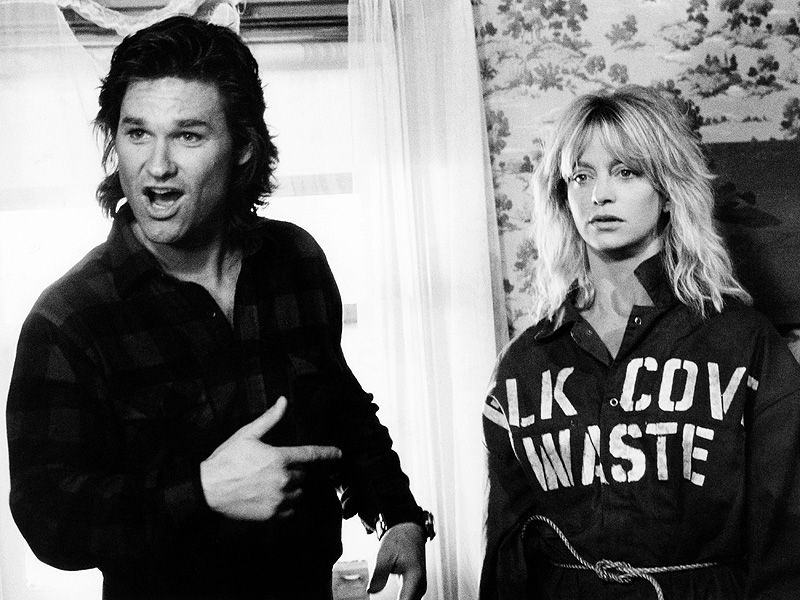
Brad reviews OVERBOARD (1987), starring Kurt Russell and Goldie Hawn!


Spoiled heiress Joanna Stayton (Goldie Hawn) hires carpenter Dean Proffitt (Kurt Russell) to remodel a closet on her yacht. Unsatisfied with his work and completely unreasonable about everything, she refuses to pay him and when he presses her for the $600, she pushes him and all of his tools overboard. Needless to say, the lady’s a “bitch” (Dean’s word) and nobody can stand her, including her husband, Grant Stayton III (Edward Herrman), and their butler Andrew (Roddy McDowell). And then something interesting happens a few days later… Joanna accidentally falls off her yacht, and when she’s fished out of the ocean, she’s still difficult to deal with, but she doesn’t have a clue who she is. Unable to identity her, the hospital puts the “amnesia lady” on the news hoping someone will recognize her. Sensing a chance to get rid of the anchor around his neck, Grant Stayton III pretends he doesn’t know her and heads out of town. This is where Dean hatches up his own plot to get revenge. He heads to the hospital and through a series of happenstances and coincidences, he’s able to convince everyone, including Joanna, now dubbed as “Annie,” that she’s his wife. He takes her home with him and makes her take care of his four wild boys, cook their food, and clean his house. Dean figures she owes it to him. But wouldn’t you know it, even though “Annie” hates it at first, over time she begins to soften towards her new life, bonds with the boys, and some sparks of love start flying between her and Dean. When she unexpectedly gets her memory back, she has to decide whether to return to her life as a spoiled heiress or stay with the man and boys she’s grown to love.

I have a soft spot in my heart for OVERBOARD, because this is a movie that my mom and I both loved, and we watched it together many times in the late 80’s and early 90’s. My mom and I didn’t often have the same taste in movies, so this was kind of “our movie.” There are a couple of other notable favorites for both me and mom, and those movies are RUTHLESS PEOPLE (1986) and LETHAL WEAPON (1987). I guarantee if I called my mom right now, interrupted her Hallmark Christmas movies, and told her I was coming over with OVERBOARD, she’d say “Come on! I’ll get something together for you to eat!” That actually sounds like a pretty good idea!

Another reason I love OVERBOARD is the fact that it stars Kurt Russell. I became a big fan of Kurt Russell during my teenage years, as I was 14 when this movie came out. A couple of years earlier, Russell starred in the films THE BEST OF TIMES (1986) and BIG TROUBLE IN LITTLE CHINA (1986), and a couple of years later he would make movies like TEQUILA SUNRISE (1988), TANGO & CASH (1989), and BACKDRAFT (1991). I wanted to watch every movie that Russell was in, and all of these films are staples of my VHS years and nostalgic favorites. In OVERBOARD, Russell starts off as a gruff, grudge-holder, but as he begins to fall for “Annie,” his natural charm and likability emerge, but so does a newfound guilt for lying to her and possibly even kidnapping her. One question for the lawyers out there, is it kidnapping when her husband had a chance to claim her and chose to abandon her instead? I’m not sure if it’s a felony or not, but I’m guessing there has to be something on the law books that doesn’t jive with what happens here. Anyway, I’ll just say that it’s best not to think of these types of pesky realities when judging this fairy tale and just go along for the ride.

Along with the Russell’s fun performance, Goldie Hawn is so perfect as the horrifically spoiled snob of an heiress who transforms into a caring substitute mother and the woman of Dean’s dreams. I know she’s great in the movie, because I can’t stand her at the beginning, but I find myself falling for her too as the movie progresses. I would not really call myself a fan of Goldie Hawn, because I haven’t spent much of my life revisiting her films, but I love her here. A couple in real life, the natural chemistry between Russell and Hawn sparkles as they fall in love on screen and only the most cold-hearted cynic isn’t pulling for them to live happily ever after as the movie closes in on its ending. As far as the supporting cast, Edward Herrmann, Katherine Helmond, Mike Hagerty, and Roddy McDowall all have good moments sprinkled throughout the film.

I do have one complaint about OVERBOARD, and that’s the “Wonders of the World Miniature Golf Course,” which is the dream business of Dean and his best friend Bad Billy Pratt (Mike Hagerty). As someone who grew up in the 70’s and 80’s playing miniature golf on the courses in Branson, MO, I would never want to play their course. Its design appears over-the-top and cheesy to me, the type of course where the scores on the holes would be determined as much by luck as by skill, which is something I find offensive. However, just like the potential kidnapping storyline, I’ve had to let my disdain for the quality of the course design go as well so I could enjoy that section of the film. I will admit this one is harder for me personally, and I still struggle with it.

Overall, OVERBOARD is not high art, and its premise is about as silly as it gets, but through a magical combination of personal 1980’s nostalgia, an appreciation for the chemistry of its stars, and a complete willingness to suspend my disbelief as we head towards an irresistibly happy ending, I still love this film. I watch it just about every year, especially if I need a pick me up as I hammer away at tax returns!
Retro Television Review: Fantasy Island 7.2 “The Big Switch/Hooker’s Holiday”


Welcome to Retro Television Reviews, a feature where we review some of our favorite and least favorite shows of the past!  On Tuesdays, I will be reviewing the original Fantasy Island, which ran on ABC from 1977 to 1984.  Unfortunately, the show has been removed from most streaming sites.  Fortunately, I’ve got nearly every episode on my DVR.

This week, the tyranny of Laurence continues.

Episode 7.2 “The Big Switch/Hooker’s Holiday”

(Dir by Bob Sweeney, originally aired on October 15th, 1983)

Shelley James (Melinda Culea) is a high-priced call girl who comes to Fantasy Island looking for an escape from her life.  For one weekend, she wants not only a normal life but also a chance to meet a man who will love her without paying her for sex.  Luckily, Brad Jacobs (Richard Hatch) is also on the Island!

This is the type of fantasy that Fantasy Island handled well in the past.  It doesn’t work out quite as well this episode became Mr. Roarke’s new servant (there’s no other word for him), Laurence, makes some rather snarky and judgmental comments about Shelly and her profession (asking at one point whether she’s on the Island for a fantasy or to give someone a fantasy) and it just feels totally wrong.  One of the good things about Fantasy Island was that Roarke never judged the people asking for fantasies.  He may have warned them about what they would discover.  Sometimes, he manipulated them to help them discover something important about themselves.  But once you were allowed to come to the Island, Roarke didn’t judge you and neither did Tattoo.  In fact, Tattoo was probably even less judgmental than Roarke.  Tattoo knew what it was like to be judged.  Laurence, on the other hand, is a snooty British butler and seems personally offended by Shelley’s presence on the Island.  (Eventually, after she shares her tragic backstory, he comes around but still, it shouldn’t take a sad story to get people to treat each other with decency.)  Laurence is the type of employee who would keep me from wanting to visit the Island.  I fear he would tell me that my skirt was too short or something.

As for the other fantasy, Laura Walter (Katharine Helmond) feels that her husband George Walter (Vic Tayback) is a chauvinist and she’s right.  She wants him to experience what it’s like to be a woman so Roarke arranges for them to switch bodies.  Laura is in George’s body and George is in Laura’s body but for some reason, the show dubs their voices so, whenever George speaks, we hear Laura’s voice and whenever Laura speaks, we hear George’s voice.  It’s a bit awkward.  Why would their voice switch too?  Anyway, Laura discovers that women tend to toss themselves at George and George discovers that his business partner is a lech.

It’s the final season and final seasons often feel uninspired.  That was certainly the case with this episode.  Even the reliable Ricardo Montalban seemed bored with it all.  In the end, it’s just not as much fun without Herve Villechaize around.

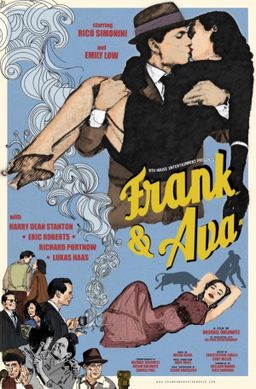
Love On The Shattered Lens: Frank and Ava (dir by Michael Oblowitz)


2018’s Frank & Ava tells the story of the tempestuous love affair and marriage of Frank Sinatra (Rico Simonini) and Ava Gardner (Emily Elicia Low).

The film opens with Sinatra at his lowest point.  His records are no longer selling.  His marriage to Nancy is in trouble.  The government is now investigating him for supposed communist sympathies (say it ain’t so, Frank!) and also his connections to the Mafia.  Hedda Hopper (Joanne Baron), Louella Parsons (Joanna Sanchez), and Walter Winchell (Richard Portnow) all pop up throughout the film, breathlessly reading the latest gossip into radio microphones.  Frank’s voice is weakening and it looks like he’s about to lose his fanbase to Eddie Fisher and Perry Como.  As for his acting career, everyone knows that he can’t act.  (At one point, even Frank’s friends laugh at the idea of Siantra ever winning an Oscar.)  Frank knows that he would be perfect for the role of Maggio in From Here To Eternity but the film’s director wants to cast someone like Harvey Lembeck or Eli Wallach.

As for Ava Gardner, she’s just gotten out of a relationship with Howard Hughes.  More famous for her then-scandalous personal life than her film roles, Gardner drinks too much, curses too much, and is too open about her affairs for the sensibilities of much of 1950 America.

When Frank and Ava meet, it’s love at first sight.  They drive around while drinking champagne straight from the bottle.  They crash cars.  When they’re arrested, they charm a local sheriff (Harry Dean Stanton, in his final film role).  They fight.  They make love.  They fight more.  They make love more.  Frank obsesses on the possibility of Ava being unfaithful to him while continually cheating on her with everyone from Lana Turner to Marilyn Maxwell.

The first thing that you notice about Frank & Ava is that it is full of references to real Hollywood gossip.  Names are dropped.  Real celebrities are depicted and the portrayals are not always positive.  The second thing that you notice is that, with the exception of Emily Elicia Low, no one is particularly convincing.  The actress who plays Marilyn Monroe not only looks nothing like Marilyn but her attempt to imitate Marilyn’s trademark voice made me laugh out loud.  Actors appear as Lana Turner, Montgomery Clift, Howard Hughes, and a host of mafiosos and none of them are the least bit convincing.  Much of the film is like attending a costume party where no one could spend more than five bucks on their costume.  Rico Simonini, who was so charming in My Dinner With Eric, is not particularly convincing as Frank Sinatra.  That said, Emily Elicia Low is well-cast as Ava Gardner and Eric Roberts shows up for two scenes as producer Harry Cohn.  In real life, Cohn was a notorious bully.  The old anecdote about everyone showing up at an unpopular man’s funeral to make sure that he’s actually dead is often said to have been inspired by Cohn.  In the film, Roberts plays Cohn as being a surprisingly reasonable guy.  If Fred Zinnemann wants Sinatra, he can have Sinatra.  If he wants Eli Wallach, he can have Eli Wallach.  Just make sure they aren’t communists!

Probably the most interesting thing about this film is its attempt to recreate the 50s without spending a good deal of money.  This is a low-budget movie and there’s an obvious artificiality to many of the sets and costumes that gives the entire film an oddly dream-like feel.  It’s less a recreation of the past and more a look at how the past might look in our fantasies.  All the men wear suits.  Ava dresses and talk as if she just stepped out of a parody of a film noir.  Famous scenes from Goodfellas and La Dolce Vita are awkwardly recreated by Santini and the cast.  The film, which was made by people who obviously loved the legend of Frank and Ava, ultimately transcends the conventional definition of good and bad and instead becomes a work of outsider art, a look into the hazier regions of the American cultural psyche.

Previous Eric Roberts Films That We Have Reviewed:

  1. Star 80 (1983)
  2. Blood Red (1989)
  3. The Ambulance (1990)
  4. The Lost Capone (1990)
  5. Love, Cheat, & Steal (1993)
  6. Voyage (1993)
  7. Love Is A Gun (1994)
  8. Sensation (1994)
  9. Dark Angel (1996)
  10. Doctor Who (1996)
  11. Most Wanted (1997)
  12. Mercy Streets (2000)
  13. Wolves of Wall Street (2002)
  14. Mr. Brightside (2004)
  15. Six: The Mark Unleased (2004)
  16. Hey You (2006)
  17. In The Blink of an Eye (2009)
  18. Enemies Among Us (2010)
  19. The Expendables (2010) 
  20. Sharktopus (2010)
  21. The Dead Want Women (2012)
  22. Deadline (2012)
  23. The Mark (2012)
  24. Miss Atomic Bomb (2012)
  25. Bonnie And Clyde: Justified (2013)
  26. Lovelace (2013)
  27. The Mark: Redemption (2013)
  28. Self-Storage (2013)
  29. This Is Our Time (2013)
  30. Inherent Vice (2014)
  31. Road to the Open (2014)
  32. Rumors of War (2014)
  33. Amityville Death House (2015)
  34. A Fatal Obsession (2015)
  35. Stalked By My Doctor (2015)
  36. Enemy Within (2016)
  37. Joker’s Poltergeist (2016)
  38. Prayer Never Fails (2016)
  39. Stalked By My Doctor: The Return (2016)
  40. The Wrong Roommate (2016)
  41. Dark Image (2017)
  42. Black Wake (2018)
  43. Stalked By My Doctor: Patient’s Revenge (2018)
  44. Clinton Island (2019)
  45. Monster Island (2019)
  46. The Savant (2019)
  47. Seven Deadly Sins (2019)
  48. Stalked By My Doctor: A Sleepwalker’s Nightmare (2019)
  49. The Wrong Mommy (2019)
  50. Exodus of a Prodigal Son (2020)
  51. Free Lunch Express (2020)
  52. Her Deadly Groom (2020)
  53. Top Gunner (2020)
  54. Deadly Nightshade (2021)
  55. The Elevator (2021)
  56. Just What The Doctor Ordered (2021)
  57. Killer Advice (2021)
  58. The Poltergeist Diaries (2021)
  59. The Rebels of PT-218 (2021)
  60. A Town Called Parable (2021)
  61. Bleach (2022)
  62. My Dinner With Eric (2022)
  63. Aftermath (2024)
  64. The Wrong Life Coach (2024)

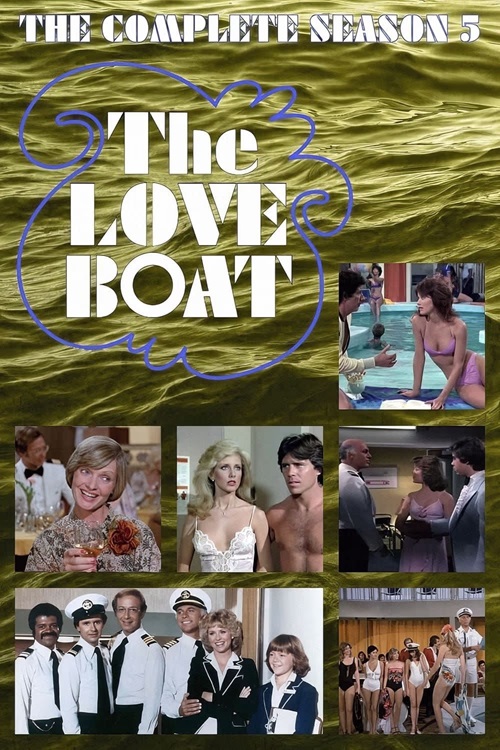
Retro Television Review: The Love Boat 5.1 and 5.2 “The Expedition/Julie’s Wedding/The Mongala/Julie’s Replacement/The Three R’s/The Professor’s Wife”


Welcome to Retro Television Reviews, a feature where we review some of our favorite and least favorite shows of the past!  On Wednesdays, I will be reviewing the original Love Boat, which aired on ABC from 1977 to 1986!  The series can be streamed on Paramount Plus!

This week, we start season 5 of The Love Boat!

Episode 5.1 and 5.2 “The Expedition/Julie’s Wedding/The Mongala/Julie’s Replacement/The Three R’s/The Professor’s Wife”

(Dir by Roger Duchowny, originally aired on October 10th, 1981)

The fifth season of The Love Boat opens with a two-hour spectacular.  Our Love Boat crew is in Australia, where they will be guiding The Sea Princess on a voyage through the South Pacific.  It’s a bit odd to start off a season of The Love Boat on a different boat but I guess the plan was to show off all the different ships that sailed for Princess Cruise Lines.  This episode was actually shot on the boat during a cruise.  It’s interesting to see how different the Sea Princess is from the show’s usual location.  It has nicer hallways than the Pacific Princess and a much larger lobby.  However, I prefer the relative privacy of the Pacific Princess’s multi-level dining room to the wide open space provided by the Sea Princess.

Captain Stubing, Gopher, Isaac, and Doc are shocked when Julie does not board the ship.  She’s been on vacation with her boyfriend, Tony (Anthony Andrews), for the last few months. Tony lives in Australia so, really, it shouldn’t be too hard for Julie to make it to the ship. Instead, a substitute cruise director named Yvonne (Delvene Delaney) shows up.  Doc and Gopher are happy because it gives them a new co-worker to lust after.  Captain Stubing is upset because Julie has sent them all a letter in which she explains that she will be marrying Tony and retiring to the animal habitat where he works.  She asks Stubing to give her away and she invites Vicki to be a bridesmaid.  Gopher, Isaac, and Doc will be ushers.

Doc is briefly distracted from chasing Yvonne when he spots Barbara Carroll (Michelle Phillips) boarding the boat.  However, Barbara has eyes for Ralph Sutton (Patrick Duffy), a rancher who is blind without his glasses.  Unfortunately, that means that he can’t read the love letter that Barbara wrote him.  Because she wants Ralph for herself, Connie Walker (Jennilee Harrison) lies about what the letter says.  *GASP*  (Don’t worry, it all works out.)

Meanwhile, an expedition headed by shady Deke Donner (Jose Ferrer) goes to an island and captures a hairy man (Patrick Ward) who they believe is the Mongola, a.k.a., the missing link!  (Wait, what?)  They hide the ape-man in the ship’s cargo area (huh?) and try to keep anyone else from learning that they’re transporting a living thing.  Everyone acts like he’s a caveman but it’s kind of obvious that the Mongola is just a confused guy with a beard.  Dr. Jill McGraw (Donna Dixon) falls in love with the Mongola, much to the consternation of her colleague, Dr. Barry Mason (Gary Frank).  Meanwhile, Deke’s old friend, Prof. Milo Ender (Harry Morgan), is stunned to discover that the Mongola has a vaccination scar.  Milo’s wife, Vivian (Katherine Helmond), encourages Milo to keep the secret to himself so that they can at least make some money off of the Mongola.  (Like, seriously, what the Hell is even going on with this story?)  Milo agrees, though it doesn’t seem to occur to him that, if he could notice the vaccination scar, then pretty much anyone could notice the vaccination scar.  Eventually, the Mongola gets loose from his cage and jumps overboard.  “He’s shark food,” Deke says.  (What in the name of God is going on here?)  However, the Mongola apparently survives because the police are waiting to arrest Deke as soon as the ship docks in Australia.

But what about the wedding!? you’re saying.  Well, the wedding doesn’t happen.  It nearly happens.  Julie shows up at the church.  However, Tony finds out that he’s going to die in a month or two so he leaves Julie at the altar.  Julie flies back to Los Angeles with the rest of the Love Boat crew.

Seriously, this is the most morbid episode of The Love Boat that I’ve ever seen.

Still, morbid or not, it’s an entertainingly weird episode and the Australian and New Zealand scenery is lovely to look at.  (As with all of the two-hour episodes of The Love Boat, there’s a lot of travelogue padding.)  There’s something oddly appealing about seeing the usual Love Boat shenanigans mixed in with a story about the Missing Link and Julie discovering that the love of her life is terminally ill.  I mean, the song isn’t lying.  The Love Boat really does promise something for everyone.

I mean, in the end, we all know that Julie couldn’t get married because then she’d have to leave the show and that wouldn’t happen until Lauren Tewes’s cocaine use became a problem during the seventh season.  Tony could either cheat on her or he could die.  (Better he die than do what almost every man does at his bachelor party.)  The episode ends with Tony still alive so I guess the show’s writer were leaving their options open.  Maybe Tony will make a miraculous recovery, who knows?

Myself, I’m just happy that the crew is back together.  It’s time to set sail …. again!

Retro Television Reviews: Turn-On 1.1 “Episode One”


Welcome to Retro Television Reviews, a feature where we review some of our favorite and least favorite shows of the past!  On Thursdays, I will be reviewing Turn-On, which aired on ABC in 1969.  The entire show is currently streaming on YouTube!

The year was 1969 and ABC wanted to appeal to the counter-culture.  That’s really the only explanation for Turn-On, an experimental collection of absurdist comedy sketches that premiered during prime time and was cancelled by many affiliates before the show even ended.  Produced by George Schlatter and Digby Wolfe, Turn-On was an attempt to revolutionize television but audiences — many of whom tuned to ABC that night to discover that the nightly serial Peyton Place had been pre-empted — did not want the revolution.

Episode 1.1

(Dir by Mark Warren, originally aired on February 5th, 1969)

Turn-On opens with two men walking up to and sitting down at a huge computer console.  One of them explains that the computer will be programming the television show that is about to air.  He tells the computer, “Tonight’s guest star: Tim Conway.”

Suddenly, out of thin air, Tim Conway materializes in front of the computer and announces, “Good evening, ladies and gentleman, and welcome to Peyton Re-place.”

So, less than a minute into the show, Turn-On had already predicted AI.  In all fairness, that’s no small accomplishment.

The rest of the show is series of quick skits, all of which take place against a white background:

A woman appears in front of a weather map and says that they cannot do the weather report for Hong Kong.

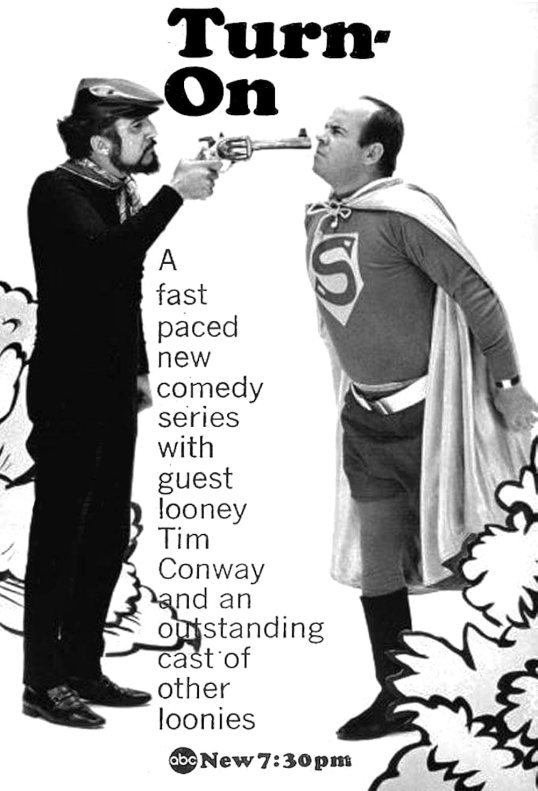
This is followed by Tim Conway dressed as superman and getting a gun pointed at him by a Fidel Castro.

A woman in a rocking chair sings “I got rhythm, I got rhythm,” while an audience sitting below her appears to try to stare up her short skirt.

A commercial for tired eyes ends with Tim Conway wearing elaborate eye makeup.

A black man glares at a white man and says, “Mom always did like you best.”

A woman in a sarong plays a tuba while a stuffed hippo puppet listens.  The woman laughs.

A busty woman stands in front of a brick wall, wearing a blindfold.  A soldier tells her that the firing squad has a last request.

A dancer twirls across the screen.

A swastika-shaped table appears on screen.  “You are now looking at table at the Paris Peace Talks,” an announcer tells us.

A military office tells another officer that he doesn’t think “Major Burns is stable enough to lead a platoon.”  “You’re right,” the other officer replies, “make it a regiment.”

We’re only two minutes into this and I’m already …. well, I’m not turned on.  I’m bored, to be honest.  All of the quick-cutting and the prophetic references to AI cannot change the fact that none of this really that funny.  I imagine the show’s defenders (and there are a few) would claim that this is all meant to be absurdist humor but actually, it’s a bit bland.  The jokes may be designed to appeal to what was then the counter-culture but the delivery is pure vaudeville.

The show continues.  A black woman appears on a park bench and says she feels guilty for lying around when she could be out shopping somewhere.

A man with a mustache tries to sell a cereal that is soaked with mescaline.  “Your family will say it’s wonderful.”  Okay, that made me chuckle.

On a screen divided into four squares, two women talk about a vulgar boyfriend.  A cardboard cut-out carrying a sign that reads, “God Save The Queens” wanders by.  Ha ha, “Queens” …. get it?

An old woman on a motorcycle announces, “It’s time to Turn-On!”

It’s time for the opening credits!  OH MY GOD, ALL OF THAT WAS JUST THE PRE-CREDIT SEQUENCE!?

This is followed by a fake commercial for Bufferin Aspirin (which actually did sponsor the first episode of Turn-On), in which Tim Conway is beat up at a maypole.  “It’s Bufferin time!” an announcer says.

Back the computer, the men have conversations like, “Are you a hawk or a dove?”

A woman asks Tim Conway if he loves her and he says that he does after she re-assures him that she’s a “smoking, jaded radical.”  The little cartoon figure walks by with a sign that reads “Keep the baby, Faith.”

A policeman runs through a park.  “Hello, young lovers,” he says, “wherever you are!”

The busty woman from the firing squad sketch appears sitting on a divan and says that, “Mr. Nixon, as President, now becomes the titular head of the Republican Party.”  An announcer says, “Ladies and gentleman, The Body Politic.”

Tim Conway appears a samurai.  “Down with haya education!” says the sign of a cardboard cut-out who speeds by on a motorcycle.

A man announces that the nuclear bomb test has been moved up to 8:30 a.m., so as not to inconvenience the people who are evacuating.

And it just keeps going and going.

“Where is the capital of South Vietnam?” one man asks.  “In Swiss bank accounts,” is the reply.

Tim Conway appears to say that, due to student unrest, high schools should be shut down “in the interest of education.”

A woman in a graduation gown throws a grenade.

The man with the mustache announces, “Girls, I want to be a friend to your feet.”  A cardboard cut-out walks by, carrying a sign that reads, “E. Eddie Edwards is a pervert.”

While this is going on, the opening credits are still playing out and we discover that Albert Brooks helped to write this episode.

Dollar signs appear on the screen, followed by “Yen.”

“Do you believe in capital punishment?” a woman asks Tim Conway.  “Only as a part of a rehabilitation program,” he replies.

A cop whistles while a purse snatcher attacks an old woman.  “Sorry,” the cop says, “we’re on strike.”

The Castro look-alike announced that he has suspended the constitution and dismissed the Senate and he will rule by decree “to prevent the overthrow of the government.”

A gun fires.

Having been convicted of murder, Tim Conway uses his one phone call to order some fried chicken.  A toy plane flies overhead with a banner asking, “Why not fly United?”

And it keeps going (and I should add that, 10 minutes in, the opening credits are still flashing on the screen).

A woman is angry when her drunk cop husband returns home.

A question mark appears on the screen, followed by a close-up of a woman’s eyes.

A cop eats a newspaper.

Hamilton Camp wears a straight-jacket.

A plane flies by with a banner that reads, “The Amsterdam levee is a dyke.”

Tim Conway does a commercial for deodorant.

A mugger says, “Your money or your life!” and is handed a Life Magazine.  (*sigh*  That did make me chuckle.)

A copy of Playboy is tossed on top of issues of the New York Times, Time, and Ramparts.  “It’s our job to expose,” a voice says.

A cop tells a prisoner to get his hands back in the cell.

A blonde woman smiles.

Tim Conway says that his son will not get a ride to school.  He can take a taxi.  Cut to an illustration of a teenage boy carrying a taxi.  (Again, I smiled.  So, that’s three laughs in fifteen minutes, for those keeping track.)

The woman on the divan says that the California Highway Patrol says that women obey traffic laws better than men.  “The one exception?  Failure to yield.”

An ugly woman with flowers in hair laughs.

Tim Conway smokes a cigar and says his friend Chauncey is much to valuable to be President of the United States.

The dancer appears.

A woman shows off a tattoo of a cat staring at her navel.

A red light bulb shatters.

A cardboard cut-out holds a sign reading, “Stamp out mass production.”

Tim Conway tells a student to “Shut your dirty mouth.”

Tim Conway performs a ballet.

Two women discuss whether they should try to be more seductive while a cardboard airplane flies by with a banner reading, “Free Oscar Willie.”

A woman says she and her husband make love “Two times for him and eight tenths for me.”  Tim Conway says that his wife doesn’t understand the new math.

Hamilton Camp appears, dressed as a monk, and announces that Moses was spoken to by a burning bush.

“Only thou,” a bear says, “can preventeth forest fires!”  (That was the fourth chuckle that this show got from me.)

Tim Conway offers a rich black man a shoe shine.

Tim Conway tells a married couple that their silence indicates that they are bored.

A cowboy complains about Moses marrying an Ethiopian woman.

“What are we going to do about inflation?” one woman asks.  “Well,” another replies, “I’ve been taking the Pill.”

The woman then gets birth control pills from a candy machine but — uh oh!  The machine’s not working!

A hotel clerk promises to send a bible up to “Mr. Gideon.”

A group of cowboys talk about their protective attitude towards “our womenfolk,” while cardboard cut-out walks by with a sign that reads, “We refuse the right to provide refuse to anyone.”

Tim Conway tells a man that, if his wife appears to be “out of sorts,” that “you have to understand …. it’s hostility!”

The word “Sex” appears on screen for five minutes while Tim Conway and a woman stare at each other.  The Pope briefly appears.

A woman plays Taps.

A cardboard monks wanders by with a sign reading, “Break glass and pull lever.”

A snake puppet says, “I could have given you the Apple and the Pill.”

Tim Conway turns off his TV.

The computer guys turn off their computer.

The show finally ends.

Of course, for much of America, the show ended after ten minutes.  That was the moment when many of the local affiliates, responding to calls from people demanding to know what they were watching, stopped showing Turn-On and instead put on whatever local programming they had in the archives.

Turn-On was an experimental show and an attempt to do something that had never been done before on television.  In many ways, it predicted both AI and the future of comedy.  That’s all great but the show itself, for all the quick cuts and the weird humor, was actually pretty dull.  Over the course of 27 minutes and a hundred jokes (and I didn’t include all of them in my review), I laughed a total of four times.  The show attempted to be subversive but it ultimately came across as being the “Hello, fellow kids!” meme come to life.

Turn-On was cancelled after one episode and has since regularly been described as one of the worst shows in the history of television.  I don’t know if I’d got that far, as there a lot of bad shows out there.  That said, I am glad that I only had to watch and review one episode.

Well, that concludes Turn-On!  Next week, we’ll look at a new show!

The Conquering Hero: Baby Blue Marine (1976, directed by John D. Hancock)


The year is 1943 and America is at war.  All young men are expected to join the Marines and fight for their country but the Corps is not willing to accept just anyone.  Marion (Jan-Michael Vincent) wants to continue a family tradition of service but, as his drill sergeant (Michael Conrad) puts it, Marion just is not pissed off enough to be a Marine.  Marion is kicked out basic training and told to go home.  He is given a blue uniform to wear on his jury so that anyone who sees him will know that he couldn’t cut it.

Ashamed of his failure and in no hurry to confront his family, Marion takes the long route home.   While having a drink in California, he meets a Marine (Richard Gere) who did not get kicked out of basic training.  Though not yet 30, this shell-shocked Marine already has a head of gray hair, which he says he got from the horrors of war.  The Marine is due to return to the fighting in Europe but, upon meeting Marion, he sees a way out. When Marion gets drunk, the Marine knocks him out, switches uniforms with him, and goes AWOL.

When Marion comes to, he discovers that everyone that he meets now judges him by his new uniform.  Strangers buy him drinks.  Other servicemen try to pick fights with him.  When he stops off in a small Colorado town, a local waitress (Glynnis O’Connor) falls in love with him and nearly everyone that he meets assumes that he must be a hero.  Marion doesn’t exactly lie about his past.  Instead, he simply allows people to believe whatever they want to believe about him.  It seems like an idyllic situation until three prisoners from a nearby Japanese internment camp escape and the towns people expect Marion to help capture them.

Loosely plotted and sentimental, Baby Blue Marine is a dramatic version of Preston Sturges’s Hail The Conquering Hero.  Though the film has a gentle anti-war message, it’s actually more about nostalgia for a simpler and more innocent time.  If the film had been made at height of the Vietnam War, it might have been more angrier and more cynical.  But, instead, this is one of the many post-Watergate films that wistfully looked back upon the past.  When Marion settles into the town, he finds what appears to be a perfect and friendly home.  Only the nearby internment camp and the town’s hysteria over the escape prisoners serve as reminders that things are never as ideal as they seem.  Jan-Michael Vincent gives one of his best performances as the well-meaning Marion and actors like Richard Gere, Bert Remsen, Katherine Helmond, Dana Elcar, Michael Conrad, Bruno Kirby, and Art Lund all make strong impressions in small roles.

One of the few films to be produced by television mogul Aaron Spelling, Baby Blue Marine is not easy to find but worth the search.

Playing Catch-Up: Crisscross, The Dust Factory, Gambit, In The Arms of a Killer, Overboard, Shy People


So, this year I am making a sincere effort to review every film that I see.  I know I say that every year but this time, I really mean it.

So, in an effort to catch up, here are four quick reviews of some of the movies that I watched over the past few weeks!

  • Crisscross
  • Released: 1992
  • Directed by Chris Menges
  • Starring David Arnott, Goldie Hawn, Arliss Howard, Keith Carradine, James Gammon, Steve Buscemi

An annoying kid named Chris Cross (David Arnott) tells us the story of his life.

In the year 1969, Chris and his mother, Tracy (Goldie Hawn), are living in Key West.  While the rest of the country is excitedly watching the first moon landing, Chris and Tracy are just trying to figure out how to survive day-to-day.  Tracy tries to keep her son from learning that she’s working as a stripper but, not surprisingly, he eventually finds out.  Chris comes across some drugs that are being smuggled into Florida and, wanting to help his mother, he decides to steal them and sell them himself.  Complicating matters is the fact that the members of the drug ring (one of whom is played by Steve Buscemi) don’t want the competition.  As well, Tracy is now dating Joe (Arliss Howard), who just happens to be an undercover cop.  And, finally, making things even more difficult is the fact that Chris just isn’t that smart.

There are actually a lot of good things to be said about Crisscross.  The film was directed by the renowned cinematographer, Chris Menges, so it looks great.  Both Arliss Howard and Goldie Hawn give sympathetic performances and Keith Carradine has a great cameo as Chris’s spaced out dad.  (Traumatized by his experiences in Vietnam, Chris’s Dad left his family and joined a commune.)  But, as a character, Chris is almost too stupid to be believed and his overwrought narration doesn’t do the story any good.  Directed and written with perhaps a less heavy hand, Crisscross could have been a really good movie but, as it is, it’s merely an interesting misfire.

  • The Dust Factory 
  • Released: 2004
  • Directed by Eric Small
  • Starring Armin Mueller-Stahl, Hayden Panettiere, Ryan Kelly, Kim Myers, George de la Pena, Michael Angarano, Peter Horton

Ryan (Ryan Kelly) is a teen who stopped speaking after his father died.  One day, Ryan falls off a bridge and promptly drowns.  However, he’s not quite dead yet!  Instead, he’s in The Dust Factory, which is apparently where you go when you’re on the verge of death.  It’s a very nice place to hang out while deciding whether you want to leap into the world of the dead or return to the land of the living.  Giving Ryan a tour of the Dust Factory is his grandfather (Armin Mueller-Stahl).  Suggesting that maybe Ryan should just stay in the Dust Factory forever is a girl named Melanie (Hayden Panettiere).  Showing up randomly and acting like a jerk is a character known as The Ringmaster (George De La Pena).  Will Ryan choose death or will he return with a new zest for living life?  And, even more importantly, will the fact that Ryan’s an unlikely hockey fan somehow play into the film’s climax?

The Dust Factory is the type of unabashedly sentimental and theologically confused film that just drives me crazy.  This is one of those films that so indulges every possible cliché that I was shocked to discover that it wasn’t based on some obscure YA tome.  I’m sure there’s some people who cry while watching this film but ultimately, it’s about as deep as Facebook meme.

  • Gambit
  • Released: 2012
  • Directed by Michael Hoffman
  • Starring Colin Firth, Cameron Diaz, Alan Rickman, Tom Courtenay, Stanley Tucci, Cloris Leachman, Togo Igawa

Harry Deane (Colin Firth) is beleaguered art collector who, for the sake of petty revenge (which, as we all know, is the best type of revenge), tries to trick the snobbish Lord Shabandar (Alan Rickman) into spending a lot of money on a fake Monet.  To do this, he will have to team up with both an eccentric art forger (Tom Courtenay) and a Texas rodeo star named PJ Puznowksi (Cameron Diaz).  The plan is to claim that PJ inherited the fake Monet from her grandfather who received the painting from Hermann Goering at the end of the World War II and…

Well, listen, let’s stop talking about the plot.  This is one of those elaborate heist films where everyone has a silly name and an elaborate back story.  It’s also one of those films where everything is overly complicated but not particularly clever.  The script was written by the Coen Brothers and, if they had directed it, they would have at least brought some visual flair to the proceedings.  Instead, the film was directed by Michael Hoffman and, for the most part, it falls flat.  The film is watchable because of the cast but ultimately, it’s not surprising that Gambit never received a theatrical release in the States.

On a personal note, I saw Gambit while Jeff & I were in London last month.  So, I’ll always have good memories of watching the movie.  So I guess the best way to watch Gambit is when you’re on vacation.

  • In The Arms of a Killer
  • Released: 1992
  • Directed by Robert L. Collins
  • Starring Jaclyn Smith, John Spencer, Nina Foch, Gerald S. O’Loughlin, Sandahl Bergman, Linda Dona, Kristoffer Tabori, Michael Nouri

This is the story of two homicide detectives.  Detective Vincent Cusack (John Spencer) is tough and cynical and world-weary.  Detective Maria Quinn (Jaclyn Smith) is dedicated and still naive about how messy a murder investigation can be when it involves a bunch of Manhattan socialites.  A reputed drug dealer is found dead during a party.  Apparently, someone intentionally gave him an overdose of heroin.  Detective Cusack thinks that the culprit was Dr. Brian Venible (Michael Nouri).  Detective Quinn thinks that there has to be some other solution.  Complicating things is that Quinn and Venible are … you guessed it … lovers!  Is Quinn truly allowing herself to be held in the arms of a killer or is the murderer someone else?

This sound like it should have been a fun movie but instead, it’s all a bit dull.  Nouri and Smith have next to no chemistry so you never really care whether the doctor is the killer or not.  John Spencer was one of those actors who was pretty much born to play world-weary detectives but, other than his performance, this is pretty forgettable movie.

  • Overboard
  • Released: 1987
  • Directed by Garry Marshall
  • Starring Goldie Hawn, Kurt Russell, Edward Herrmann, Katherine Helmond, Roddy McDowall, Michael G. Hagerty, Brian Price, Jared Rushton, Hector Elizondo

When a spoiled heiress named Joanne Slayton (Goldie Hawn) falls off of her luxury yacht, no one seems to care.  Even when her husband, Grant (Edward Herrmann), discovers that Joanne was rescued by a garbage boat and that she now has amnesia, he denies knowing who she is.  Instead, he takes off with the boat and proceeds to have a good time.  The servants (led by Roddy McDowall) who Joanne spent years terrorizing are happy to be away from her.  In fact, the only person who does care about Joanne is Dean Proffitt (Kurt Russell).  When Dean sees a news report about a woman suffering from amnesia, he heads over to the hospital and declares that Joanne is his wife, Annie.

Convinced that she is Annie, Joanne returns with Dean to his messy house and his four, unruly sons.  At first, Dean says that his plan is merely to have Joanne work off some money that she owes him.  (Before getting amnesia, Joanne refused to pay Dean for some work he did on her boat.)  But soon, Joanne bonds with Dean’s children and she and Dean start to fall in love.  However, as both Grant and Dean are about to learn, neither parties nor deception can go on forever…

This is one of those films that’s pretty much saved by movie star charisma.  The plot itself is extremely problematic and just about everything that Kurt Russell does in this movie would land him in prison in real life.  However, Russell and Goldie Hawn are such a likable couple that the film come close to overcoming its rather creepy premise.  Both Russell and Hawn radiate so much charm in this movie that they can make even the stalest of jokes tolerable and it’s always enjoyable to watch Roddy McDowall get snarky.  File this one under “Kurt Russell Can Get Away With Almost Anything.”

A remake of Overboard, with the genders swapped, is set to be released in early May.

  • Shy People
  • Released: 1987
  • Directed by Andrei Konchalovsky
  • Starring Jill Clayburgh, Barbara Hershey, Martha Plimpton, Merritt Butrick, John Philbin, Don Swayze, Pruitt Taylor Vince, Mare Winningham

Diana Sullivan (Jill Clayburgh) is a writer for Cosmopolitan and she’s got a problem!  It turns out that her teenager daughter, Grace (Martha Plimpton), is skipping school and snorting cocaine!  OH MY GOD!  (And, to think, I thought I was a rebel just because I used to skip Algebra so I could go down to Target and shoplift eyeliner!)  Diana knows that she has to do something but what!?

Diana’s solution is to get Grace out of New York.  It turns out that Diana has got some distant relatives living in Louisiana bayou.  After Cosmo commissions her to write a story about them, Diana grabs Grace and the head down south!

(Because if there’s anything that the readers of Cosmo are going to be interested in, it’s white trash bayou dwellers…)

The only problem is that Ruth (Barbara Hershey) doesn’t want to be interviewed and she’s not particularly happy when Diana and Grace show up.  Ruth and her four sons live in the bayous.  Three of the sons do whatever Ruth tells them to do.  The fourth son is often disobedient so he’s been locked up in a barn.  Diana, of course, cannot understand why her relatives aren’t impressed whenever she mentions that she writes for Cosmo.  Meanwhile, Grace introduces her cousins to cocaine, which causes them to go crazy.  “She’s got some strange white powder!” one of them declares.

So, this is a weird film.  On the one hand, you have an immensely talented actress like Jill Clayburgh giving one of the worst performances in cinematic history.  (In Clayburgh’s defense, Diana is such a poorly written character that I doubt any actress could have made her in any way believable.)  On the other hand, you have Barbara Hershey giving one of the best.  As played by Hershey, Ruth is a character who viewers will both fear and admire.  Ruth has both the inner strength to survive in the bayou and the type of unsentimental personality that lets you know that you don’t want to cross her.  I think we’re supposed to feel that both Diana and Ruth have much to learn from each other but Diana is such an annoying character that you spend most of the movie wishing she would just go away and leave Ruth alone.  In the thankless role of Grace, Martha Plimpton brings more depth to the role than was probably present in the script and Don Swayze has a few memorable moments as one of Ruth’s sons.  Shy People is full of flaws and never really works as a drama but I’d still recommend watching it for Hershey and Plimpton.

Film Review: The Hindenburg (dir by Robert Wise)


80 years ago, on May 6th, 1937, the Hindenburg, a German airship, exploded in the air over New Jersey.  The disaster was not only covered live by radio reporter Herbert Morrison (whose cry of “Oh the humanity!” continues to be parodied to this day) but it was also one of the first disasters to be recorded on film.  Looking at the footage of the Hindenburg exploding into flame and sinking to the ground, a mere skeleton of what it once was, it’s hard to believe that only 36 people died in the disaster.  The majority of those who died were crew members, most of whom lost their lives while helping passengers off of the airship.  (Fortunately, the Hindenburg was close enough to the ground that many of the passengers were able to escape by simply jumping.)

Not surprisingly, there was a lot of speculation about what led to the Hindenburg (which has successfully completed 63 flights before the disaster) exploding.  The most commonly accepted explanation was that it was simply an act of God, the result of either lightning or improperly stored helium.  Apparently, there was no official evidence found to suggest that sabotage was involved but, even back in 1937, people loved conspiracy theories.

And really, it’s not totally implausible to think that the Hindenburg was sabotaged.  The Hindenburg was making its first trans-Atlantic flight and it was viewed as being a symbol of Nazi Germany.  One of the ship’s passengers, Captain Ernest Lehman, was coming to the U.S. in order to lobby Congress to give Germany helium for their airships.  With Hitler regularly bragging about the superiority of German industry, the theory was that an anti-Nazi crewman or passengers planted a bomb on the Hindenburg.  Since no individual or group ever stepped forward to claim responsibility, the theory continues that the saboteur must have perished in the disaster.

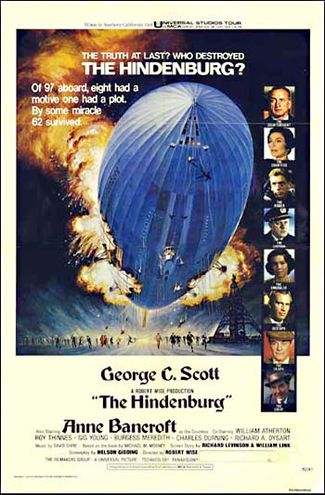
At the very least, that’s the theory put forward by a film that I watched earlier today, the 1975 disaster movie, The Hindenburg.

A mix of historical speculation and disaster film melodrama, The Hindenburg stars George C. Scott as Col. Franz Ritter, a veteran of the German air force who is assigned to travel on the Hindenburg and protect it from saboteurs.  Ritter is a Nazi but, the film argues, he’s a reluctant and disillusioned Nazi.  Just a few weeks before the launch of the airship, his teenage son was killed while vandalizing a synagogue.  Ritter is a patriot who no longer recognizes his country and George C. Scott actually does a pretty good job portraying him.  (You do have to wonder why a seasoned veteran of the German air force would have a gruff, slightly mid-Atlantic accent but oh well.  It’s a 70s disaster film.  These things happen.)

Ritter is assigned to work with Martin Vogel (Roy Thinnes), a member of the Gestapo who is working undercover as the Hindenburg’s photographer.  Tt soon becomes obvious that he is as much a fanatic as Ritter is reluctant.  Vogel is a sadist, convinced that every Jewish passenger is secretly a saboteur.  Thinnes is chilling in the role.  What makes him especially frightening is not just his prejudice but his casual assumption that everyone feels the same way that he does.

And yet, as good as Scott and Thinnes are, the rest of the cast is rather disappointing.  The Hindenburg features a large ensemble of actors, all playing characters who are dealing with their own privates dramas while hoping not to burn to death during the final 15 minutes of the film.  Unfortunately, even by the standards of a typical 70s disaster film, the passengers are thinly drawn.  I liked Burgess Meredith and Rene Auberjonois as two con artists but that was mostly because Meredith and Auberjonois are so charming that they’re fun to watch even if they don’t have anything to do.  Anne Bancroft has one or two good scenes as a German baroness and Robert Clary does well as a vaudeville performer who comes under suspicion because of his anti-Nazi leanings.  Otherwise, the passengers are forgettable.  Whether they die in the inferno and manage to make it to the ground, your main reaction will probably be to look at them and say, “Who was that again?”

Anyway, despite all of Ritter and Vogel’s sleuthing, it’s not much of mystery because it’s pretty easy to figure out that the saboteur is a crewman named Boerth (William Atherton).  Having seen Real GeniusDie Hard and the original Ghostbusters, I found it odd to see William Atherton playing a sympathetic character.  Atherton did okay in the role but his attempt at a German accent mostly served to remind me that absolutely no one else in the film was trying to sound German.

Anyway, the main problem with The Hindenburg is that it takes forever for the airship to actually explode.  The film tries to create some suspense over whether Ritter will keep the bomb from exploding but we already know that he’s not going to.  (Let’s be honest.  If you didn’t already know about the Hindenburg disaster, you probably wouldn’t be watching the movie in the first place.)  The film probably would have worked better if it had started with the Hindenburg exploding and then had an investigator working backwards, trying to figure out who the saboteur was.

However, the scenes of the explosion almost make up for everything that came before.  When that bomb goes off, the entire film suddenly switches to black-and-white.  That may sound like a cheap or even sensationalistic trick but it actually works quite well.  It also allows the scenes of passengers and crewmen trying to escape to be seamlessly integrated with actual footage of the Hindenburg bursting into flame and crashing to the ground.  The real-life footage is still shocking, especially if you’re scared of fire.  Watching the real-life inferno, I was again shocked to realize that only 36 people died in the disaster.

In the end, The Hindenburg is flawed but watchable.  George C. Scott was always at his most watchable when playing a character disappointed with humanity and the real-life footage of the Hindenburg disaster is morbidly fascinating.

Oh, the humanity indeed!

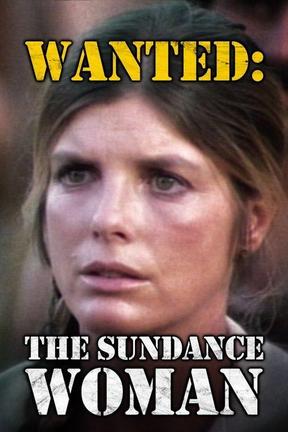
A Movie A Day #75: Wanted: The Sundance Woman (1976, directed by Lee Philips)


This made-for-TV sequel to Butch Cassidy and the Sundance Kid opens several years after the death of Butch and Sundance in Bolivia.  Etta Pace (Katharine Ross, reprising her role from the original film) is now a wanted woman.  Hiding out in Arizona, she does her best to keep a low profile.  But when Pinkerton detective Charlie Siringo (Steve Forrest) comes to town and one of Etta’s friends (Michael Constantine) is arrested, Etta knows that she’s going to need help to survive.  Crossing the border into Mexico, she teams up with revolutionary Pancho Vila (Hector Elizondo).  In return for helping him get his hands on a shipment of guns, Vila agrees to protect Etta.

Wanted: The Sundance Woman was ABC’s second pilot for a possible television series about Etta Pace’s adventures at the turn of the century.  The first pilot starred Elizabeth Montgomery as Etta and directly dealt with Etta’s attempts to come to terms with the death of Butch and Sundance.  While Katharine Ross returned to the role for the second pilot, Wanted: The Sundance Woman does not actually have much of a connection to Butch Cassidy and The Sundance Kid.  Katharine Ross could have just as easily been playing Etta Smith as Etta Pace.

Wanted: The Sundance Woman is held back by its origins as a TV movie and a rather silly romance between Etta and Pancho Vila.  Hector Elizondo is hardly convincing as a fiery revolutionary and Steve Forrest is reliably dull as Siringo.  It is not really surprising that this pilot didn’t lead to a weekly series.  On the positive side, the film does feature an exciting train robbery and Katharine Ross is just as good in this sequel as she was in the original.  Even though she was talented, beautiful, and had important roles in two of the most successful films of the 60s (The Graduate and Butch Cassidy and the Sundance Kid), Hollywood never seemed to know what do with Katharine Ross.  While she did have a starring role in The Stepford Wives, Katharine Ross spent most of the 70s appearing in stuff like The Swarm, They Only Kill Their Masters, and The Betsy.  It’s unfortunate that Hollywood apparently did not want Katharine Ross as much Pancho Vila wanted the Sundance Woman.

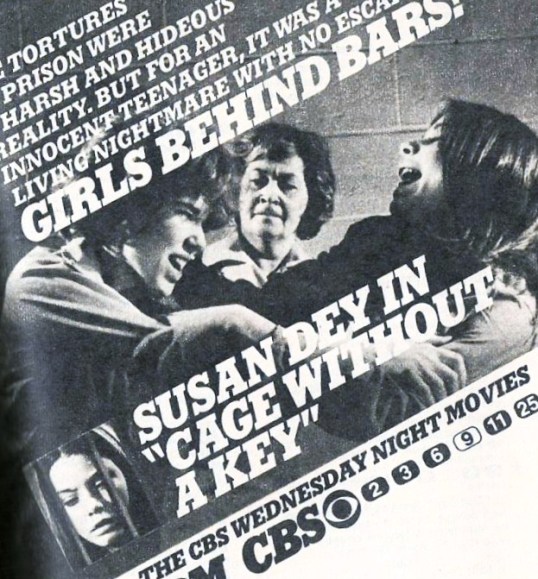
Back to School Part II #7: Cage Without A Key (dir by Buzz Kulik)


Cage-without-a-key_tv-guide-poster

For the fifth film in my Back To School series of reviews, I watched Cage Without A Key, a made-for-TV movie from 1975.

17 year-old Valerie Smith (Susan Dey) would appear to have everything.  She has a loving mother and a loyal best friend.  She just graduated from high school and has been accepted to a good college.  She’s looking forward to going down to San Francisco for the weekend before starting her summer job.  The future look great and, of course, that means that she’s about to make the biggest mistake of her life.

And she’s going to do it 70s style!

When her car breaks down on the way to San Francisco, she makes the mistake of accepting a ride from a long-haired guy in a Volkswagen microbus.  Buddy Goleta (Sam Bottoms, in full 70s weirdo mode) went to high school with Valerie and appears to have a crush on her.  Buddy also appears to be a little bit crazy himself as he tells everyone that he meets that Valerie is “my old lady.”  Finally, Buddy pulls over to a convenience store and kills everyone inside.  Since Valerie’s in the microbus, she gets arrested along with Buddy.  Since Buddy claims that he and Valerie are lovers, she’s convicted of being an accessory and is sentenced to a … REFORM SCHOOL!

(Cue dramatic music.)

The warden — Mrs. Little (Katharine Helmond) — insists that she’s not running a prison.  Instead, she’s running a very progressive school where the students all happen to be thieves and murderers.  The school even has pleasant euphemisms for all the standard prison film elements.  For instance, no one is put in solitary confinement.  Instead, they’re sent to meditation.

Anyway, while Valerie waits for her dedicated public defender (David Brandon) to prove her innocence and get her out of reform school, she finds herself being approached by the various gangs who run the school.  Valerie says she doesn’t want anything to do with any of that.  She just wants to fly under the radar until she’s set free.  But then she’s approached by a predatory lesbian and, as we all known from watching other prison films, nothing will make you join a gang faster than being approached by a predatory lesbian…

Okay, Cage Without A Key is not exactly Orange Is The New Black.  What it is, however, is a time capsule of the time it was made.  Everything from the slang to the clothes to the attitudes to the squishy, upper class liberalism of Valerie’s lawyer practically screams 1970s.

Add to that, classic film lovers will appreciate the fact that the evil gang leader is named Suzy Kurosawa!

Incidentally, Cage Without A Key was written by Joanna Lee, who readers of this site will probably best remember for playing one of the alien invaders in Plan 9 From Outer Space.

http://www.youtube.com/watch?v=8jU37bRN5t0