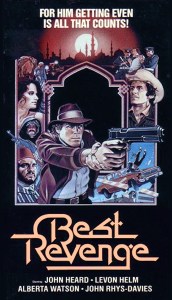
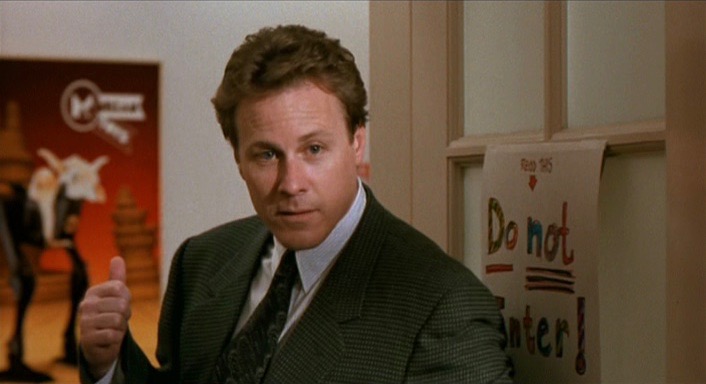
A Movie A Day #195: Best Revenge (1984, directed by John Trent)


Damn … John Heard died.

I know that almost everyone knows John Heard as either the father from Home Alone or as the detective on The Sopranos or maybe even the executive in Big.  Over the course of his long career, John Heard played a lot of neglectful fathers, greedy businessmen, and corrupt politicians.  Heard was good in all of those roles but he was capable of so much more.  Though he did not get many chances to do so, he could play heroes just as well as villains.

One of his best performances is also one of his least seen.  In Best Revenge, he plays Charlie.  Charlie is a laid back drug dealer, someone who would probably hate and be hated by most of the authority figures that Heard was best known for playing.  Charlie is the ultimate mellow dude, without a care in the world.  All he wants to do is play his harmonica and spend time with his girlfriend (Alberta Watson).  However, an old friend (Stephen McHattie) wants Charlie to help smuggle 500 keys of hash from Tangiers to America.  Charlie wants nothing to do with it but then he finds out that the Mafia will kill his friend unless the drugs make it across the ocean.  Charlie and his friend Bo (Levon Helm of The Band) fly over to Morocco but are betrayed.  Charlie ends up in a prison cell, from which he has to escape so that he can rescue Bo, smuggle the drugs, and get revenge on those who betrayed him.

Because of the prison aspect and the fact that Charlie wears a fedora, Best Revenge was sold as being a combination of Midnight Express and Raiders of the Lost Ark but actually it is a character study disguised as an action film.  Despite the title, Best Revenge is more interested in the real-life logistics and hassles of being an international drug dealer than in any sort of revenge.  Though it is a role far different from the ones he may be best known for, John Heard was perfectly cast as a small-time drug dealer who suddenly finds himself in over his head.  Heard gives such a good  and sympathetic performance that this film, along with his work in Cutter’s Way and Chilly Scenes of Winter, shows what a mistake was made when Heard became typecast as the bad guy.

Best Revenge was filmed in 1980 but not released until four years later.  Along with appreciating Heard’s performance, keep an eye out for Michael Ironside in an early, blink-and-you’ll-miss-it role.

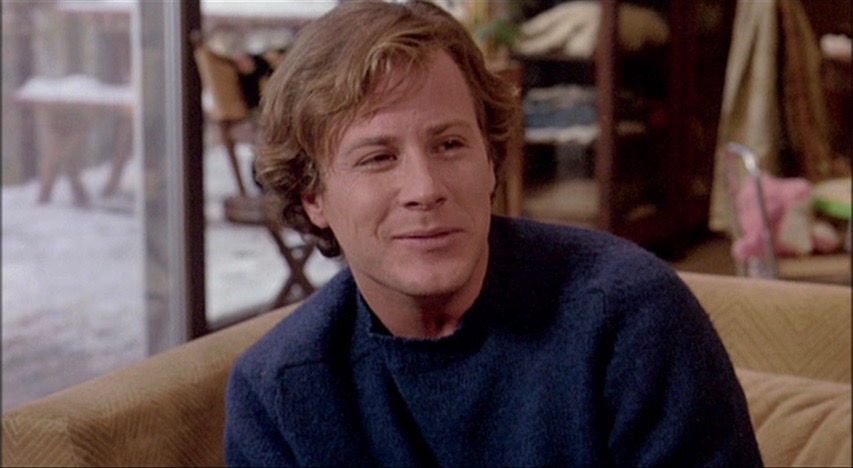
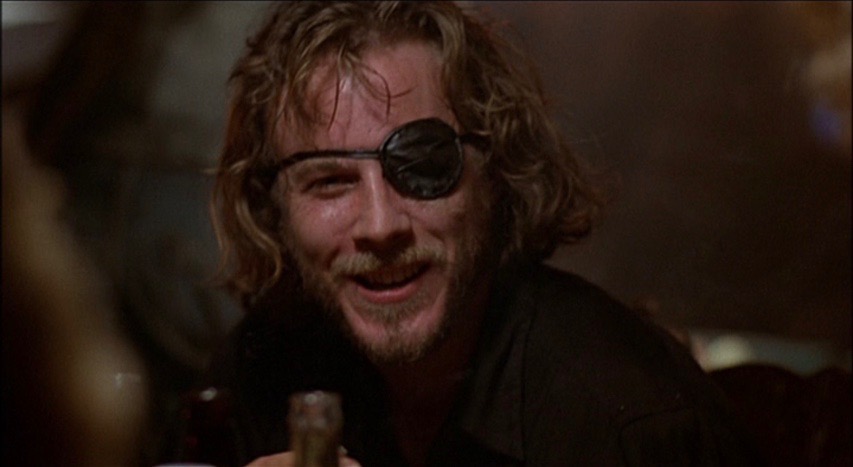
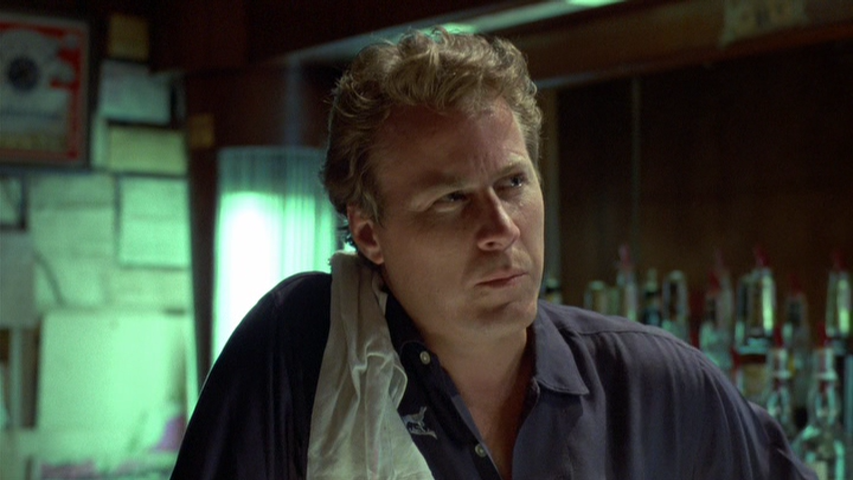
4 Shots From 4 Films (John Heard): Chilly Scenes Of Winter (1979), Cutter’s Way (1981), After Hours (1985), Big (1988)


I know everyone knew John Heard from the Home Alone series, but he did others things as well. Early on he was even given lead roles. I tried to pick a mixture of his early stuff, and when he was moved to largely playing character and supporting roles.

Rest in peace, John Heard.

Chilly Scenes Of Winter (1979, dir. Joan Micklin Silver)

Cutter’s Way (1981, dir. Ivan Passer)

After Hours (1985, dir. Martin Scorsese)

Big (1988, dir. Penny Marshall)

A Movie A Day #96: Gladiator (1992, directed by Rowdy Herrington)


What ever happened to James Marshall?

Whenever the subject of Twin Peaks comes up, that question gets asked a lot.  Marshall played the sensitive (and oft-ridiculed) motorcycle-riding rebel James Hurley on Twin Peaks and, after the show’s cancellation, he went on to play a key supporting role in A Few Good Men.  Marshall’s role may not have been huge but he managed to hold his own against actors like Tom Cruise, Jack Nicholson, and Kevin Bacon.

And then after A Few Good Men, nothing.

Why did James Marshall disappear?

He starred in a movie called Gladiator.

No, not the Russell Crowe movie that won all the Oscars.  This Gladiator is about Tommy Riley (played by James Marshall), a teenager who moves to Chicago from Massachusetts.  As one of the only white kids in his new neighborhood, Tommy finds himself being harassed by the local gangs.  One night, he gets into a fight in a parking lot.  (Fortunately, none of the neighborhood gangs carry guns or knives.  They settle everything with fists.)  Pappy Jack (Robert Loggia) is so impressed with Tommy’s fighting skills that he recruits Tommy to fight in illegal, underground boxing matches. Normally, Tommy would say no but he needs the money to help his father (John Heard) pay off his gambling debts.

Once recruited, Tommy is trained by the wise Noah (Ossie Davis) and works for boxing promoter, Jimmy Horn.  Horn is played by all-purpose bad guy Brian Dennehy, who gives such a villainous performance that even Lance Henriksen would say, “Dude, dial it down a notch.”  Tommy befriends two other boxers, Romano (Jon Seda) and Lincoln (Cuba Gooding, Jr.).  At the time that Gladiator was filmed, Marshall was hot off of Twin Peaks and Gooding was hot off of Boyz ‘n The Hood.  Fortunately, Gooding’s role is actually pretty small so he survived Gladiator and was able to go on to win an Oscar for Jerry Maguire and play O.J. Simpson in American Crime Story.  Marshall was less lucky.

At one time, I thought that no one could be a least convincing boxer than Damon Wayans was in The Great White Hype.  Then I watched Gladiator and saw James Marshall dancing around the ring and throwing punches.  Normally, good editing can be used to disguise a lack of athletic ability but both Marshall and Gooding are so miscast as boxers that all the editing in the world can’t help.  Jon Seda, who actually was an amateur boxer before getting into acting, is more convincing in the ring but his character is so saintly that anyone watching will know better than to get too attached to him.

A still notorious flop at the box office, Gladiator was directed by Rowdy Herrington but it’s no Roadhouse.

A Movie A Day #67: Animal Factory (2000, directed by Steve Buscemi)


Edward Furlong is Ron Decker, a spoiled 18 year-old from a rich family who is arrested and sent to prison when he’s caught with a small amount of marijuana.  Being younger and smaller than the other prisoners, Ron is soon being targeted by everyone from the prison’s Puerto Rican gang to the sadistic Buck Rowan (Tom Arnold).  Fortunately, for Ron, prison veteran Earl Copen (Williem DaFoe) takes him under his wing and provides him with protection.  Earl is the philosopher-king of the prison.  As he likes to put it, “This is my prison, after all.”  If he can stay out of trouble, Ron has a chance to get out early but, with Buck stalking him, that’s not going to be easy.
Based on a novel by ex-con Edward Bunker, Animal Factory was the second film to be directed by Bunker’s Reservoir Dogs co-stars, Steve Buscemi.  Though it was overlooked at the time, Animal Factory is a minor masterpiece.  Taking a low key approach, Buscemi emphasizes the monotony of prison life just as much as the sudden bursts of violence and shows why someone like Ron Decker can go into prison as an innocent and come out as an animal.  DaFoe and Furlong give two of their best performances as Earl and Ron while a cast of familiar faces — Danny Trejo, Mickey Rourke, Chris Bauer, Mark Boone Junior — make up the prison’s population.  Most surprising of all is Tom Arnold, giving Animal Factory‘s best performance as the prison’s most dangerous predator.

A Movie A Day #43: The Big Heist (2001, directed by Robert Markowitz)


the_big_heist_2001In 1978, low-level mob associate Jimmy Burke (Donald Sutherland) is released after serving a six years in prison.  As soon as he arrives home, he discovers that his son, Frank (Jamie Harris), has failed to keep up with the family business and that the Burke Crew is close to becoming a joke.  Looking for a big score, Jimmy masterminds a robbery at John F. Kennedy International Airport.  The so-called Lufthansa Heist becomes the largest cash robbery committed on American soil at that time.  Growing paranoid, Burke decides it would be easier to just kill all the members of his crew than to give them their cut of the robbery.  What Burke doesn’t realize is that his closest associates are destined to be his downfall.  Tommy DeSimone (Rocco Sisto) has offended John Gotti (Steven Randazzo) while Henry Hill (Nick Sandow) has become hooked on drugs and is considering turning informant.
If all this sounds familiar, that’s because part of this story was already told in Goodfellas.  The Big Heist was made for TNT and, because it focuses exclusively on the robbery, it goes into far more detail than Martin Scorsese’s film.  For instance, the character of Frank Burke was entirely left out of Goodfellas and it’s interesting to see how much more negatively Henry Hill is portrayed in The Big Heist.  Since it’s told from the viewpoint of Jimmy Burke instead of Henry Hill, The Big Heist makes for an interesting companion piece to Goodfellas but, at the same time, it never escapes the shadow of the other film.  With both movies employing voice over narration and frequent freeze frames, it’s impossible to watch The Big Heist without comparing it to Goodfellas.  Since Goodfellas was made by Martin Scorsese and The Big Heist was made for TNT, the former comes out on top.

It’s also hard to watch Donald Sutherland as Jimmy Burke without comparing his performance to Robert De Niro’s Jimmy Conway.  Though he never reaches the heights of De Niro’s performance, Sutherland is convincing as a sociopathic criminal mastermind.  Less convincing are Rocco Sisto and Nick Sandow, who both struggle to make an impression in roles previously made famous by Joe Pesci and Ray Liotta.

Back to School Part II #35: One Eight Seven (dir by Kevin Reynolds)


one_eight_seven_ver1

I’m writing this review from memory so you’re going to have to bear with me.  187 is one of those films that seems to show up on late night cable constantly, which is how I saw it.  I probably should rewatch it for this review but … no.  I don’t want to have to sit through it again.

See, here’s the thing with 187.  It’s a film where Samuel L. Jackson plays a high school science teacher and, just by definition, that should make it the greatest film ever and yet it isn’t.

Originally, Jackson’s working in New York but then he ends up failing one of his students (played by Method Man).  Method Man ends up giving Jackson a textbook on which he has written 187 on every single page.  Jackson immediately realizes that 187 is the name of the movie that he’s in.  “Always good to meet a fan,” he thinks but then suddenly, it dawns on him that 187 is also police code for homicide!  Jackson asks the school administration for help.  They ignore him (probably because everyone knows that Samuel L. Jackson is too much of a badass to be scared by some numbers in a textbook) and he ends up getting stabbed several times in the back.

Agck!

We jump forward 15 months.  Jackson has recovered from nearly being killed and he’s still determined to teach.  He wants to make a difference!  But he’s decided that New York kids are too homicidal so he transfers to a school in Los Angeles.  Surprise!  It turns out that students in Los Angeles are just as dangerous as the ones in New York.  During his first day as a substitute teacher, Jackson is writing his name on a chalk board.  Someone throws a crumpled ball of paper at him.  Jackson flinches as it hits his back.

FLASHBACK TIME!

Now, here’s the thing: the idea of Samuel L. Jackson teaching in an inner city high school and taking on a bunch of gang members sounds totally kickass.  And you spend this entire two-hour movie waiting for Samuel L. Jackson to have one of those wonderful Samuel L. Jackson moments when he fixes someone with that powerful glare and suddenly speaks in the voice of angry and vengeful God.  You keep waiting but, with the exception of a few moments, it never seems to happen.

I mean, don’t get me wrong.  I wasn’t expecting Jackson to say, “I’m sick of these motherfucking gangstas in this motherfucking classroom!”  It would have been great if he had said that but, after a few minutes of watching the movie, I realized that he probably wouldn’t.  187 is obviously meant to be a serious movie about America’s educational crisis.  Watching it, you get the feeling that 187‘s director, Kevin “I know Kevin Costner” Reynolds, woke up every morning and said, “I am making the most important film ever today!”

But whatever good intentions that the filmmakers may have had, it’s no excuse for totally wasting Samuel L. Jackson.  When you’ve got a powerful actor like Samuel L. Jackson, why do you waste him in such a thinly written role?  When you finally do allow him to do something big and Samuel L. Jackson-like, why do you waste so much dramatic potential by having him do almost all of it off-screen?  Jackson finally does get a great Samuel L. Jackson moment towards the end of the film but that’s just because there’s a big plot twist that doesn’t make any sense.  The end of 187 reminds the viewer that an ironic ending has to be earned.  It just can’t be slapped onto the film.

I mean, I don’t want to toss out any spoilers because, for all I know, 187 is going to be on Cinemax tonight.  If you’re up at 3 in the morning, you might end up watching it and God knows, I don’t want to be accused of giving away the ending.   But let me ask you this — if you’ve finally captured someone who you’ve spent an entire two-hour film trying to kill, would you then suddenly decide to play a game of Russian roulette?

Anyway, 187 should be avoided because it totally wastes Samuel L. Jackson and that’s kind of unforgivable.

Film Review: Animals (dir by Collin Schiffli)


Animals

Animals is a pretty depressing movie and I guess that’s appropriate since it’s a movie about two heroin addicts.  The script was written by David Dastmalchian, who also plays the role of Jude.  Reportedly, he based the script on his own experiences with drug addiction.  As a result, Animals is one of those movies that is full of believable details.  I’ve never used heroin and I don’t think I ever would.  However, even if there was a chance that I would touch heroin, Animals would probably change my mind.  It’s a seriously dark movie.

And don’t get me wrong — that’s a good thing.  If you’re going to make a movie about two people slowly killing themselves as a result of their drug addiction, the movie probably should be a bit on the dark side.  But, at the same time, that doesn’t necessarily make Animals a lot of fun to watch.

The film tells the story of Jude and his girlfriend, Bobbie (Kim Shaw).  They both come from upper middle class backgrounds, they’re both obviously well-educated (it’s suggested that Jude may have gone to medical school), and — even in the throes of drug addiction — they’re both still attractive enough that they can still blend in with “mainstream” society.  As we see, in a handful of flashbacks, they once owned a comfy apartment together.  Now, they live in a car that they park outside of the Chicago Zoo.  Jude and Bobbie spend most of their time trying to figure out how they’re going to make enough money to get their next fix.

And the best parts of the film are the parts that deal with Jude and Bobbie tricking unsuspecting people out of their money.  As tedious as Jude and Bobbie’s addiction-centered existence may sometimes be, it’s hard not to admire their determination.  Their schemes range from the simple to the complex.  They go to weddings and steal the gifts.  Pretending to be a high-priced online prostitute, Bobbie goes to men’s houses and, after grabbing their money, runs outside where Jude waits for her in a running car.  (Needless to say, none of the men are willing to risk the public shame of calling the police and admitting to how they met Bobbie in the first place.)  Probably their most impressive scheme involves tricking a mall security guard into splitting the reward money for finding a stolen laptop.  Jude and Bobbie are so good at cheating people that you do end up regretting that they couldn’t put their obviously intelligence to less self-destructive uses.

Eventually, of course, one of the two has an overdose and gets taken to the hospital.  For the first time, the two of them are separated and forced to realize just how destructive and co-dependent their relationship really is.  Will they stay apart and get clean or will true love (and heroin addiction) conquer all?

There’s a really harrowing scene in which Jude and Bobbie are harassed by some undercover cops who turns out to be just as brutal as the drug dealers that they claim to be fighting.  And both Shaw and Dastmalchian give good performances.  Even John Heard gets to play a character who isn’t a scheming and corrupt government official.  There’s a lot to admire about the film but, ultimately, it’s so dark and depressing that it’s difficult to recommend.  Unlike a film like Trainspotting, there’s not much going on underneath the grimy surface.  On the basis of their work here, I’ll watch anything else that Schiffli, Shaw, and Dastmalchian do but Animals is one of those films where one viewing is more than enough.

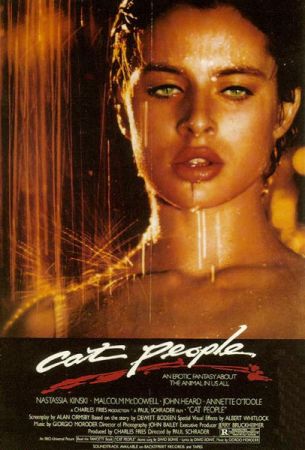
Horror Film Review: Cat People (dir by Paul Schrader)


Cat_People_1982_movie

Before I get around to actually reviewing Paul Schrader’s 1982 reimagining of Cat People, I’m going to suggest that you take a few minutes to watch the film’s opening credits.  Say what you will about Schrader’s Cat People, it has a great opening, one that perfectly sets up the rest of the film.

In this version of Cat People, Irena (Natassja Kinski) is a naive young woman (and virgin) who, after the death of her parents, has spent most of her previous life in foster care.  Irena travels to New Orleans, where she reconnects with her older brother, Paul (Malcolm McDowell).  From the minute that Irena meets her brother and his housekeeper (Ruby Dee), it’s obvious that something is off.  When Paul looks at her, he does so with an unsettling intensity.  At night, while Irena sleeps, Paul wanders the dark streets of New Orleans.

One morning, Irena wakes up to discover that Paul is missing.  Having nothing else to do, Irena wanders around New Orleans.  When she visits the zoo, she feels an immediate connection to a caged panther who stares at her with a familiar intensity.  It turns out that the panther was captured the previous night, after he mysteriously appeared in a sleazy motel and mauled a prostitute.

It’s at the zoo that Irena meets zookeeper Oliver Yates (John Heard).  Oliver gets Irena a job working at the zoo gift shop. where Irena is befriended by Oliver’s co-worker, Alice (Annette O’Toole).  One day, Irena witnesses the panther kill another zookeeper before it then escapes from its cage.

That night, Paul suddenly shows up in Irena’s bedroom.  He explains to her that they are a cursed species.  Having sex causes them to turn into panthers and the only way to avoid the curse is through incest.  A terrified Irena flees her brother and soon finds herself living with and falling in love with the increasingly obsessive Oliver, all the while knowing that giving herself to him physically will lead to her transformation.

From the very first second of the film. Schrader’s Cat People is an exercise in pure style.  If the original Cat People was largely distinguished by its restraint, Schrader’s version is all about excess.  Everything that was merely suggested in the original is made explicit in this version.  As tempting as it may be to try, it’s somewhat pointless to try to compare these two versions.  Though they may both be about a woman who turns into a panther when she has sex, they are two very different films.

Schrader’s Cat People walks a very fine line between moodiness and absurdity, which is perhaps why I enjoyed it.  Making great use of both the sultry New Orleans setting and Giorgio Moroder’s atmospheric score, Cat People is compulsively dream-like and enjoyably over-the-top.  Cat People is often described as being an example of a movie that could have only been made in the coked up 80s  and truly, this is one of those films that’s so excessive that it’s becomes fascinating to watch.

(I think that often we are too quick to assume that excess is necessarily a bad thing.  If you can’t be excessive when you’ve got Malcolm McDowell playing an incest-minded cat person in New Orleans, when can you be excessive?)

Schrader’s Cat People may not have much in common with the original version but the film’s best scene is the only one that is a direct recreation of a scene from the original.  In fact, in recreating the scene where Alice is menaced while swimming in a public pool, Schrader actually improves on the original.  Brilliantly performed by both Annette O’Toole and Natassja Kinski (whose cat-like features made her perfect for the role of Irena), it’s the only scene in the film that can truly be called scary.  Starting with a tracking shock that follows Alice as she jogs, the stalking scene is practically a master class in effective horror cinema.  If nothing else, you should see Cat People for that one scene.

And you should also see it for the wonderful soundtrack!  Let’s end this review with David Bowie’s theme song, which you may also remember from Quentin Tarantino’s Inglourious Basterds.


What Lisa Watched Last Night #137: The Murder Pact (dir by Colin Theys)


Last night, I watched the Lifetime original film, The Murder Pact!  And I’m glad that I did because it turned out to be one of the best Lifetime films of the years so far!

Why Was I Watching It?

Seriously, how could I not watch it?  It was a movie about murderous rich kids and it was on Lifetime!  There was no way I could resist watching The Murder Pact.

What Was It About?

It’s about murder, lies, greed, fame, guilt, and secrets.  It’s also about a beautiful house and a bunch of good-looking narcissists who have impeccable taste in clothing.  It’s exactly my type of film.

At an exclusive college, there are four friends.  Camille (Alexa PenaVega) wants to be a famous singer but, when she auditions, she is rather cruelly turned down because she’s a “nobody.”  Annabel (Renee Olstead) is a neurotic dancer who finds herself having to deal with a catty rival named Poppy (Bailey De Young, giving a wonderfully snarky performance).  Rick (Michael J. Willett) is a pill-popping athlete.  And then there’s the leader of their little group, Will (Beau Mirchoff).  Will is a wealthy model who wears blue contacts and who lives in an amazing mansion.

When these four friends are connected to the accidental death of another student, they try to cover up their involvement.  However, a rebellious student and photographer named Lisa (Sara Kapner) witnessed what happened.  Under Will’s direction, they plot to keep Lisa from revealing what she knows.

However, soon, everyone is being blackmailed by an unknown person who is demanding $4,000,000 to remain silent.  And a mysterious detective (Sean Patrick Thomas) suddenly shows up and starts asking questions…

What Worked?

Oh my God, this movie was soooooo good!  It was a stylish melodrama that kept viewers guessing up until the final scene.  All of the actors appeared to be having a ball playing their decadent characters.  They seemed to truly relish delivering every over-the-top line of dialogue and, as a result, they were all a lot of fun to watch.

I’ve always said that half the fun of a good Lifetime movie is getting to see where everyone lives and how everyone gets dressed in the morning and The Murder Pact certainly delivered on both counts.  I especially loved seeing Will’s mansion.  On twitter, the film’s screenwriter informed me that the house is currently for sale in Connecticut and I’m hoping it will still be on the market when I make my first million.

Also, I have to take a moment to appreciate the film’s cinematographer, Branden Maxham.  The film looked gorgeous.  I especially loved the chilly scenes of Will and friends plotting while standing outside in either snow or drizzling rain.

What Did Not Work?

It all worked!

“Oh my God!  Just like me!” Moments

Well, of course, I related to Lisa the photographer because we Lisas stick together!  However, as a dancer, I also knew what Annabel was going through.  I’ve known my shares of Poppys.

Lessons Learned

Rich people are dangerous.

movie-hp-the-murder-pact

In Memory of Robin Williams #3: Awakenings (dir by Penny Marshall)


Awakenings

The 1990 Best Picture nominee Awakenings is exactly the type of film that seems to have been designed to make me cry.

Taking place in 1969 and based (very loosely, I assume) on a true story, Awakenings features Robin Williams as Dr. Malcolm Sayer.  Dr. Sayer is a dedicated and caring physician but he also suffers from an almost crippling shyness.  He’s at his most comfortable when he’s dealing with a group of patients who have spent the last 40 years in a catatonic state, suffering from a tragic disease known as encephalitis lethargica.  (One thing that I learned from watching this film was that, from 1917 to 1928, there was an epidemic of this disease, with millions either dying or being left catatonic.)  While the rest of the medical establishment (led by John Heard, who always seems to be the embodiment of the establishment in films made in the 90s) assumes that the patients are destined to spend the rest of their lives in a vegetative state, Dr. Sayer is convinced that the patients can be awakened.  He soon discovers that, even in their catatonic state, the patients will react to certain stimulii.  One woman can catch a baseball.  Another appears to react well to music.  And finally, Leonard Lowe (Robert De Niro) — who fell ill with this disease when he was a child — tries to communicate with a Ouija board.

Over the objections of his supervisors, Dr. Sayer treats the patients with an experimental drug.  Leonard is the first one to get the drug and is also the first one to wake up.  While the rest of the patients wake up, Dr. Sayer tries to help Leonard adjust to the 1960s.  At first, everything seems to be going perfectly.  Leonard even manages to strike up a sweet romance with a woman named Paula (Penelope Ann Miller).  However, it soon becomes obvious that the awakening is only going to be a temporary one as Leonard and all the other patients start to descend back into their catatonic states…

It’s easy to criticize a film like Awakenings for being manipulative and sentimental.  And the fact of the matter is that the film is manipulative and it is sentimental and undoubtedly, it probably is a massive simplification of the true story.  (The character played by John Heard is such an obvious villain that he might as well have a mustache to twirl.)  And yes, you know even before it happens that there’s eventually going to be a montage of an amazed Leonard staring at a girl in a miniskirt while Time of the Season plays on the soundtrack.

But, no matter!  It’s a tremendously effective film and it earned the tears that I shed while watching it.  Both De Niro and Williams give excellent performances which add a good deal of depth to scenes that could otherwise come across as being overly sappy.  De Niro has the more showy role but it really but it’s the performance of Robin Williams that really carries the film.  As played by Williams, Dr. Sayer is a fragile soul who hides from the world behind his beard and his professional determination.  When he finally asks a nurse (Julie Kavner) out to dinner, it’s impossible not to cheer for him.

It’s also impossible not to cheer a little for Awakenings.

MCDAWAK EC015