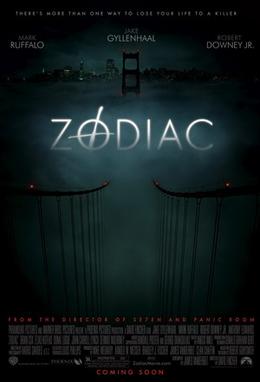
October True Crime: Zodiac (dir by David Fincher)


Who was the Zodiac Killer?

That is a question that has haunted journalists, cops, and true crime fans since the late 60s.  It is known that the Zodiac Killer murdered at least five people in Northern California in 1968 and 1969.  He targeted young couples, though he is also thought to have murdered on taxi driver as well.  What set Zodiac apart from other killers is that he was a prolific letter writer, who sent cards and ciphers to the police and the journalists who were reporting on his crimes.  In one of his ciphers, Zodiac claimed that he had killed 37 people.  Cartoonist Robert Graysmith later wrote two books about his personal obsession with the case.  He estimated that the Zodiac may have been responsible for hundred of murders, up through the 80s.  Of course, reading Graysmith’s first Zodiac book, it’s also easy to suspect that Graysmith reached a point where he saw the Zodiac’s hand in every unsolved murder in the San Francisco area.  Of all the unidentified serial killers in American history, Zodiac is one that most haunts us.  Zodiac was a serial killer who operated in an era when such things were still considered to be uncommon.  Much as Jack the Ripper did during the Victorian Age, Zodiac announced the arrival of a new age of evil.

Zodiac wrote about being a film fan and he was probably happy about the fact that he inspired quite a few films.  1971’s The Zodiac Killer came out while Zodiac was still sending letters to the police and cops actually staked out the theaters showing the film just to see if he  would show up.  Dirty Harry‘s Scorpio Killer was also based on Zodiac, right down to the taunting letters that he sent the mayor and again, one has to wonder if Zodiac ever showed up to watch Clint Eastwood take him down.

And, if Zodiac survived into the 21st Century, one has to wonder if he showed up in the theaters for 2007’s Zodiac.

One of the best true crime films ever made, Zodiac not only recreates the crimes of the Zodiac but it also examines the mental price of obsessing over the one unknown force of evil.  Mark Ruffalo plays Dave Toschi, the celebrity cop who nearly sacrificed his professional reputation in his search for the identity of the killer.  Jake Gyllenhaal plays cartoonist Robert Graysmith, who spends over a decade searching for the Zodiac’s identity and who loses his wife (Chloe Sevigny) in the process.  And Robert Downey, Jr. plays Paul Avery, the crime reporter to whom the Zodiac wrote and who sunk into paranoia and addiction as a result.  This is a film that is less about the Zodiac’s crime and more about how this unknown killer seemed to unleash a darkness that would come to envelope first a city and eventually an entire nation.

As one might expect from a film directed by David Fincher, Zodiac plays out like a filmed nightmare with the starkly portrayed murders being all the more disturbing because they often take place outside, where people would think they would be safe.  (The second murder is especially terrifying, as it plays out without even the sound of background music to allow us the escape of remembering that it’s only a movie.)  Fincher heightens our paranoia but having a different actor play the killer in each scene, reminding us that the Zodiac could literally be anyone.  Indeed, one of the scarier things about Zodiac is that, in the course of his investigation, Graysmith meets so many different people who seem like they could be the killer.  Even if they aren’t the Zodiac, the viewer is left with the feeling that the world is full of people who are capable of committing the same crimes.  The film becomes a journey into the heart of darkness, with the Zodiac becoming both a malevolent force and potentially your next door neighbor.  And with the film’s detailed recreation of the 60s and the 70s, the film becomes a portrait of a country on the verge of changing forever with the Zodaic and his crimes representing all the fear waiting in the future.

Again, as one might expect from a Fincher film, it’s a well-acted film, especially by Robert Downey, Jr.  Zodiac came out a year before Iron Man, when Downey was still better known for his personal troubles than for his talent.  Downey perfect captures his character’s descent into self-destruction, as he goes from being cocky and self-assured to being so paranoid that he’s carrying a gun.  (Paul Avery’s actual colleagues have disputed the film’s portrayal of Avery being mentally destroyed by the Zodiac.)  Ruffalo and Gyllenhaal also do a good job of portraying Toschi and Graysmith’s growing obsession with the case while Charles Fleischer and John Carroll Lynch both make strong (and creepy) impressions as two men who might (or might not) be the killer.

Though the film was not a success at the box office and it was totally ignored by the Academy, Zodiac has built up a strong reputation in the years since its released.  It’s inspired a whole new generation of web sleuths to search for the killer’s identity.  Personally, my favored suspect is Robert Ivan Nichols, an enigmatic engineer who abandoned his former life and changed his name to Joseph Newton Chandler III in the 70s and who committed suicide in 2002.  I think much like Jack the Ripper, the Zodiac’s identity will never be definitely known.  There have been many compelling suspects but most of the evidence seems to be circumstantial.  (That’s certainly the case when it comes to Nichols.)  The Zodiac was thought to be in his 30s or even his early 40s in 1969 so it’s doubtful that he’s still alive today.  In all probability, his identity and his motive will forever remain an unsolvable mystery.
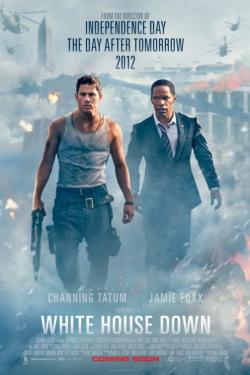
Shattered Politics #92: White House Down (dir by Roland Emmerich)


White_House_Down_poster_with_billing_block

To say that the 2012 film White House Down is stupid is probably unnecessary.  After all, the film was directed by Roland Emmerich and Emmerich specializes in making stupid films.

And, in many ways, White House Down is prototypical Emmerich film, a long and self-important collection of mayhem and heavy-handed pontification.  In the case of this film, liberal President Sawyer (Jamie Foxx) is pushing for a treaty that will magically bring about world police.  Naturally, a bunch of evil right-wingers (including characters played, somewhat inevitably, by James Woods and Richard Jenkins) don’t want world peace so they hire a bunch of mercenaries who attack the White House.  It’s all a part of a plot to force Sawyer to launch a nuclear attack on Iran because … well, why not?  Fortunately, aspiring secret service agent (and kick-ass combat veteran) John Cale (Channing Tatum) is there to work with the President and save the country.

And, since Emmerich is from the bigger is always better school of filmmaking, many familiar landmarks are blown up and it takes the film well over two hours to tell its simplistic story.  To be honest, if your action movie can’t get the job done in under two hours, then you’re going to have problems.  Once a viewer has spent two hours watching one movie, it’s inevitable that he or she will start to question the film’s logic.  If the film’s clever enough, all lapses and inconsistencies can be forgiving.  If the film is White House Down, it’s a lot less easy to be forgiving.

Of course, from a political point of view, Emmerich tries to have it both ways.  For anti-government types like me, it’s always fun to watch Washington D.C. blow up.  For those on the right, White House Down presents a situation that can only be solved by heroes with guns.  And, of course, Democrats can view White House Down as wish fulfillment, an alternative timeline where Barack Obama actually is as sincere and effective as they wish him to be.

In fact, if anything saves White House Down, it’s the chemistry between Foxx and Tatum.  Wisely, neither one of them appears to be taking the film that seriously and both of them seem to be having a lot of fun blowing things up.  Channing Tatum, in particular, deserves some sort of award.  How many bad films have been made tolerable by Tatum’s willingness to laugh at himself?  I’ve lost count but White House Down definitely benefits from his presence.  He and Foxx make Emmerich’s style of filmmaking as tolerable as it will ever be.

http://www.youtube.com/watch?v=4AXbiCdmXgw

Review: Abraham Lincoln: Vampire Hunter (dir. by Timur Bekmambetov)


Timur Bekmambetov is one filmmaker that can never be said to hold things back visually on any of his films. He has a style that can be called a combination of the Wachowski Brothers and Zack Snyder. Now one can read that and just groan. The Wachowskis and Snyder are not what one would call the paragon of the filmmaking community. What they do tend to do are create pop-friendly and consumer-friendly films. Whether thse films are of high quality is another thing altogether.

Bekmambetov is an interesting filmmaker from Kazakhstan (who could easily pass for what we imagine Genghis Khan to look like if he was still alive) whose brand of action films tend to focus on all style with little to no substance. For some audiences this just means dumb, brainless fare that has no reason to be paid to see, but I tend to think these same people who shout loudest about how these type of films are dumbing down it’s audiences secretly watch them like crack addicts once they’re on cable. Bekmambetov’s latest film, Abraham Lincoln: Vampire Hunter, definitely follows his unique action and storytelling template he’s established with past films as Nightwatch, Daywatch and Wanted.

The film lives and dies on the simple conceit that one of the United States’ greatest Presidents was also vampire hunter of some skill. We see how an encounter with the vampire which led to the death of Abe’s mother (who had died of the condition known at the time as milk sickness) propels him through the intervening years to plot revenge on the same vampire. It’s during a failed attempt at revenge that he’s noticed by one Henry Sturgess (played by Dominic Cooper) who sees another potential vampire hunter in the young man (adult Lincoln played by one Benjamin Walker who could easily pass for a very young Liam Neeson). We get the usual training montage where Sturgess teaches Abe the finer points in vampire hunting and killing. It’s only proper that Abe would end up picking the rail-splitting axe he’s more comfortable in using than the more practical firearms.

Abraham Lincoln: Vampire Hunter is almost a straight adaptation of Seth Grahame-Smith’s novel of the same name. Some minor subplots are discarded to keep the film moving in the one path the filmmakers and screenwriter (Grahame-Smith himself) decided to concentrate on. It’s this one thing that really pushes the film into a level that would win an audience to it’s cause or lose them altogether. This thing I speak of is the idea that slavery was due to the vampires who have set themselves as the so-called shadow aristocracy of the South and needed a ready source of food to keep themselves hidden from the humans. Yes, slavery was started and made into a near industrial level by vampires. This in turn moves Lincoln to move beyond just vengeance on the vampires who have affected his life from such an early age and instead go towards abolishing slavery from the country as a way to destroy the vampires once and for all.

These are heady ideas that doesn’t seem to fit well with historical facts and figures. Yet, the film does a good enough job of keeping things serious with just the right amount of over-the-top action sequences that Bekmambetov has become well-known for. One such action sequence involves Lincoln and a vampire having a chase scene involving a huge horse stampede. They fight in and amongst the stampeding equines and then on and above them. It’s a sequence that’s equal parts exciting and ludicrous that one just has to either sit back and enjoy it or stand up and walk out. Which is the film in a nutshell. One either goes all-in on the film’s story or folds mentally.

This is not to say that the film has no flaws. It has some glaring flaws that threatened to push the film over the edge of being a fun action flick into all-out dreck. For starters the vampires themselves made for good villains, but Rufus Sewell as the leader of the American vampires (who happens to call himself Adam) looked bored with the whole proceedings. There were brief moments when the charm that we expect from vampire leaders show, but it’s far and few between. Most of the time Sewell looks to be just standing in a particular scene looking bored. The rest of his clan of vampires are no better though Marton Csokas asBart, one of Adam’s lieutenants and main supplier of slaves, did such an over-the-top performance that one wouldn’t be surprised to catch a glimpses of scenery stuck between his teeth.

It’s really the performance by Benjamin Walker in the title role that keeps the film afloat. He has a commanding presence on the screen and he’s able to be convincing as Lincoln both as a young man and then as the elder statesman (some very good old man make-up effects that put the elder Peter Weyland make-up in Prometheus to shame). Mary Elizabeth Winstead as Mary Todd Lincoln also does a good job in what could’ve been a thankless role, but she didn’t look out of place in this peculiar period piece.

The action sequences themselves were choreographed well even though Bekmambetov was still relying a lot of his own brand of slo-mo to accentuate the cool kills Lincoln makes with his silver-coated axe. After awhile this gimmick began to get repetitious, but then again one shouldn’t be surprised to see such a thing over-used in a Bekmambetov film. If one has seen his three previous films then they should know what to expect. Yet, even this doesn’t detract from what this film ultimately turned out to be and that’s just plain fun despite lacking in the acting in certain roles and the sensational, some would say tasteless, use of the Civil War and slavery to tell a story about a vampire-killing President.

Abraham Lincoln: Vampire Hunter will not make filmmakers like Christopher Nolan, Lars Von Trier and Michael Haneke quake in their shoes. It’s not a film that was made to win awards (though I can see it being nominated for best fight sequence in the MTV Movie Awards). What this film does seem to succeed enough in doing is be a fun and exciting film that rises above it’s source material on the strength of it’s lead and the action created by it’s filmmaker. For a genre film it certainly did a better job of mashing together disparate ideas than last year’s Cowboys & Aliens. Maybe if this film is enough of a success we’ll finally get some movement in the planned film adaptation of Seth Grahame-Smith’s other literary classic mash-up: Pride and Prejudice and Zombies. One can only hope.