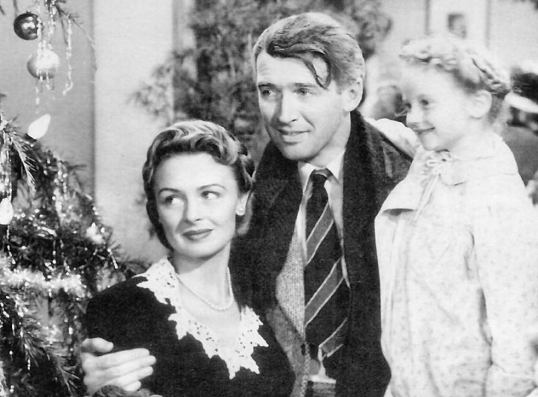
Jimmy Stewart is one of the great actors of all-time, and he’s personally one of my very favorites. I did not realize a movie had been made about him until I stumbled across this trailer today. Check it out!
Tag Archives: James Stewart
Brad reviews THE SHOP AROUND THE CORNER (1940), starring James Stewart and Margaret Sullavan!

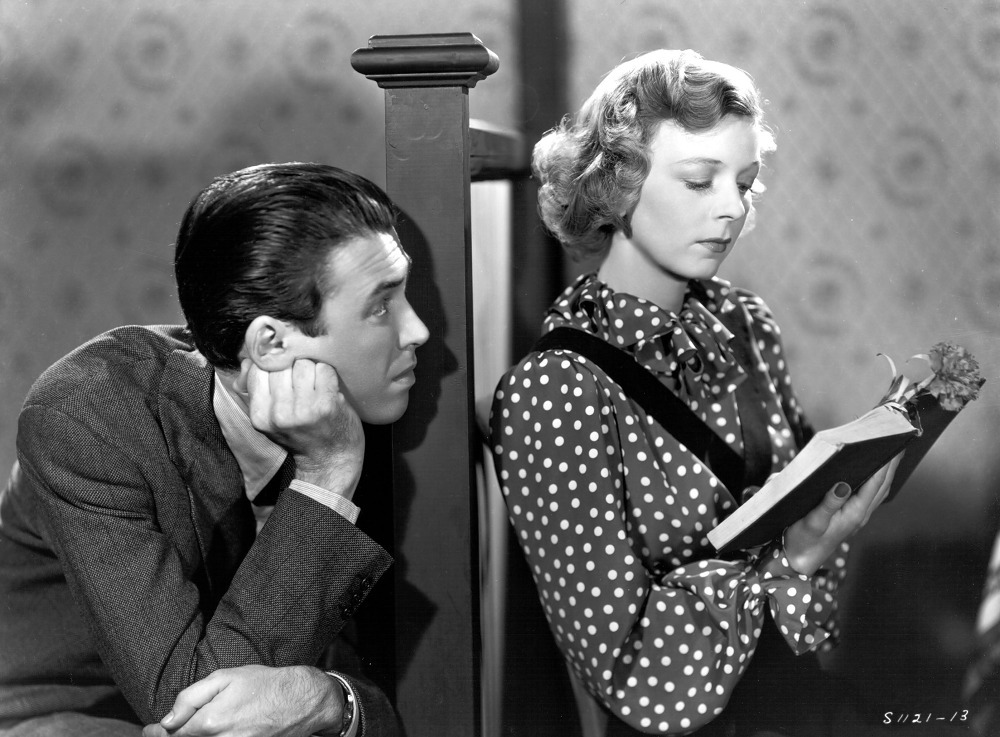
Set in Budapest, Hungary, we meet Alfred Kralik (James Stewart), the dependable head clerk at a retail establishment named Matuschek and Company. In walks Klara Novak (Margaret Sullavan), an attractive young lady who’s desperately in need of a job, so Mr. Matuschek (Frank Morgan) hires her as a new salesgirl. Alfred and Klara immediately take a disliking to each other and give each other quite a hard time at work. As we get to know Alfred and Klara, we find out that each of them is involved in a treasured “pen-pal” relationship with a mysterious someone who truly seems to understand their heart and soul. Wouldn’t you know it, even though they get on each other’s last nerves at the shop, Alfred and Klara are each other’s secret pen-pal! While navigating unexpected drama at work, mainly involving Mr. Matuschek, his wife, and a duplicitous employee, Alfred eventually discovers that Klara is his mystery correspondent without her knowing it. As he tries to reconcile the actions of the lady he knows from work with the heart of the person who wrote those letters, Alfred decides to show Klara who he really is to see if they can fall in love in real life!
THE SHOP AROUND THE CORNER is one of my very favorite romantic comedies, and I’d guess the lead performance of James Stewart is probably the main reason. He’s just perfect in the role of Alfred Kralik… earnest, proud, awkward, vulnerable, and above all else, decent. Stewart’s ability to portray characters with believable decency separate him as one of the all-time greats and that quality is well on display here. Margaret Sullavan, as Klara Novak, matches him perfectly. Known to have a good relationship off screen as well, the chemistry between Stewart and Sullavan is off the charts and their scenes together are quite powerful. Mostly known by me for his performance as the Wizard of Oz, Frank Morgan is also incredible as Mr. Matuschek, at times jealous, volatile, and ultimately benevolent.
Director Ernst Lubitsch, known for his “Lubitsch touch,” has made a movie that has stood the test of time because of its core of emotional truth. Even though it was made well before the days of social media or online dating, THE SHOP AROUND THE CORNER understands just how differently we present ourselves when writing (or online, or on social media), compared to how we actually behave in person. Maybe it’s because THE SHOP AROUND THE CORNER was made in 1940, but I love the way its time-tested story idea is used for comedy and sweet romance, without becoming cynical. That lack of cynicism leaves room not only for comedy and romance but also a genuine compassion for its characters as they deal with the very real emotions of loneliness, pride, jealousy, and fear.
All in all, THE SHOP AROUND THE CORNER may be 85 years old, but its tender and romantic payoff set on Christmas Eve still gets me every time. As far as I’m concerned, this is about as close to perfect as a romantic comedy can get!
(Author’s note: I’m also a fan of the 1998 remake, YOU’VE GOT MAIL, starring Tom Hanks and Meg Ryan, but I rate it below Lubitsch’s film.)
Scenes I Love: The Cross-Examination From Anatomy of a Murder
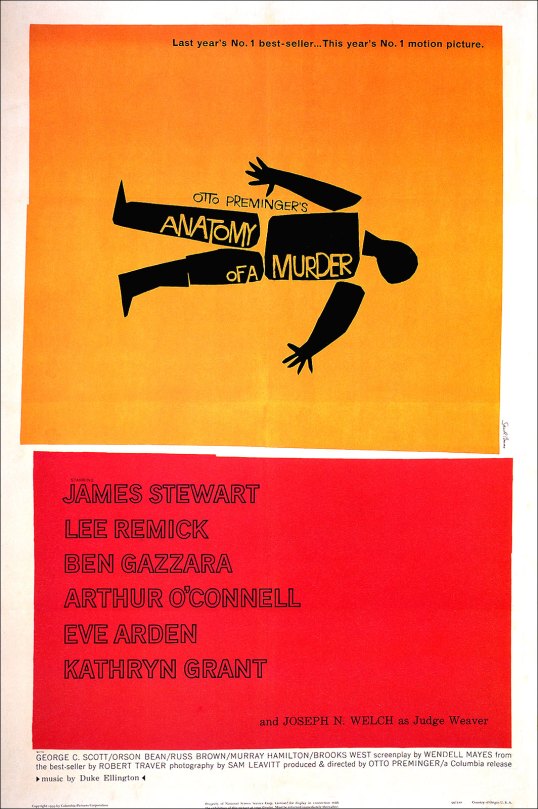
Since today is Otto Preminger’s birthday, I figured that this would be a good time to share a scene that I love from one of my favorite movies, Preminger’s 1959 film, Anatomy of a Murder.
In this scene, prosecutor Claude Dancer (played, in one of his first screen roles, by George C. Scott) cross-examined Laura Manion (Lee Remick), the wife of a man who has been accused of murder. Playing the role of the defense attorney is James Stewart. This scene is a master-class in great acting. Preminger could be a bit of an inconsistent director but his willingness to take on controversial subjects set him apart from many of his contemporaries. When he had the right material, as he did here, he could create the perfect mix of melodrama and art. Preminger’s best films, like Anatomy of a Murder, stand the test of time.
4 Shots From 4 Films: Special Alfred Hitchcock Edition
4 Or More Shots From 4 Or More Films is just what it says it is, 4 shots from 4 of our favorite films. As opposed to the reviews and recaps that we usually post, 4 Shots From 4 Films lets the visuals do the talking!
One of the all-time great directors in the history of cinema, Alfred Hitchcock, was born on this day in 1899. Today, I celebrate this master filmmaker with some images from some of his best films. Enjoy!


4 Shots From 4 Films – Thomas Mitchell Edition!
4 Shots From 4 Films is just what it says it is, 4 shots from 4 of our favorite films. As opposed to the reviews and recaps that we usually post, 4 Shots From 4 Films lets the visuals do the talking.
I noticed that today, July 11th, 2025, is actor Thomas Mitchell’s 133rd birthday in cinema heaven! I can guarantee that I, along with most of you, watch him every year around Christmas time. I also found out today that he worked with my movie hero Charles Bronson on THE O. HENRY PLAYHOUSE TV series back in 1957. That combination of appearances makes Mitchell about as close to a cinematic immortal as a person can get!
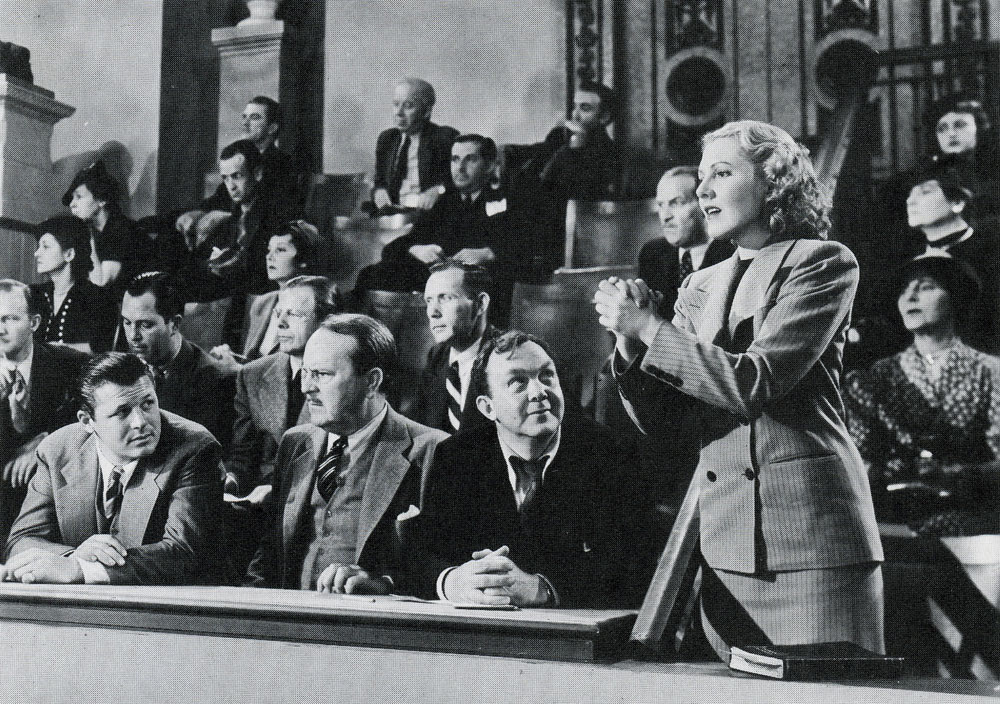
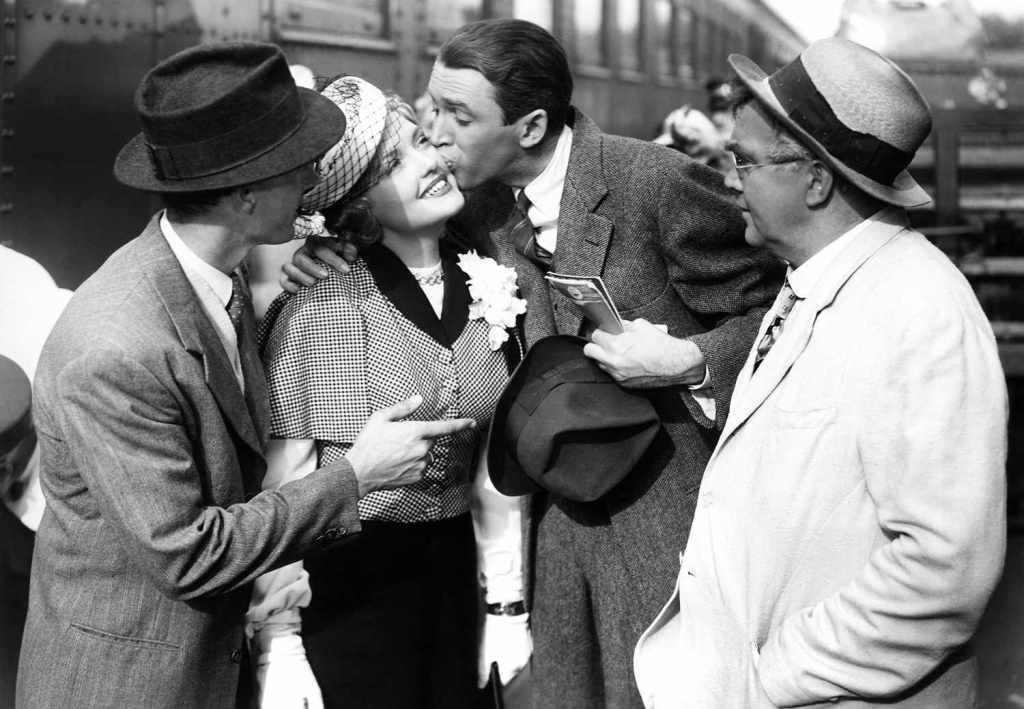
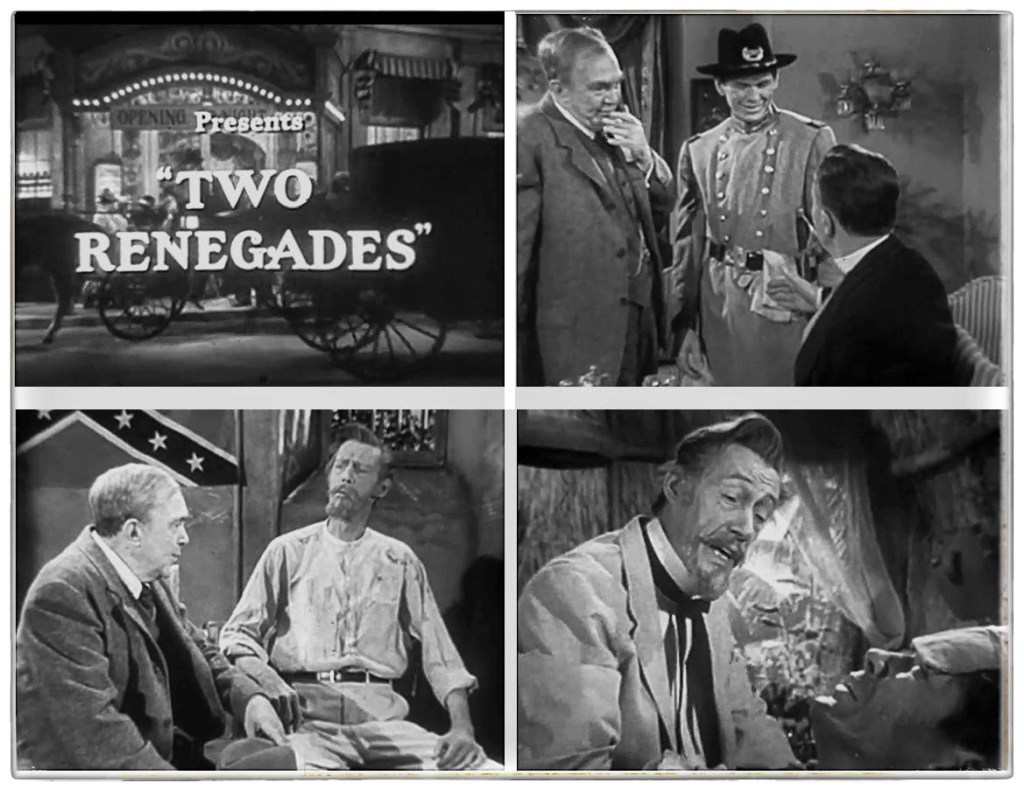
Enjoy 4 shots from 4 films, with Thomas Mitchell!


Brad’s “Scene of the Day” – Jimmy Stewart gets his hand blown off in THE MAN FROM LARAMIE (1955)!
There are people in this world who only know Jimmy Stewart from his performances in movies like IT’S A WONDERFUL LIFE (1946) and REAR WINDOW (1958). Those are both great movies to be sure, but I contend that Stewart was also one of the great “cowboys,” with his string of excellent westerns with director Anthony Mann, as well as his work with other great directors like John Ford and Delmer Daves.
Stewart’s performance in THE MAN FROM LARAMIE is one of my personal favorites. In this scene, his hand is shot from point blank range by a crazy man who’s never had to pay the consequences for his actions. That changes when the man from Laramie comes to town. I couldn’t imagine a more powerful performance than Stewart’s work here. He’s incredible and truly one of the great actors of all time!
I Watched Flashing Spikes (1962, Dir. by John Ford)
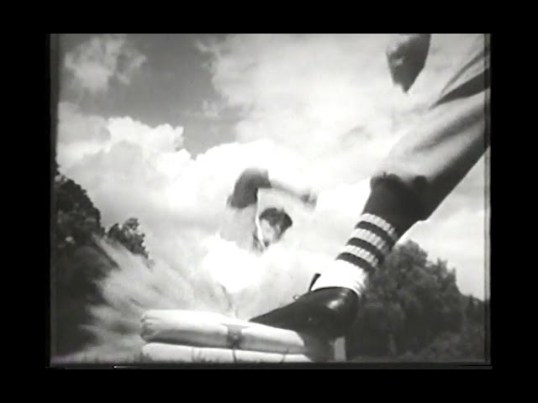
When infielder Bill Riley (Patrick Wayne) makes an error that costs his team the game, sports columnist Rex Short (Carleton Young) claims that he witnessed Bill being paid off by Slim Conway (James Stewart). Slim is a former player who was banned from Major League Baseball after he was accused of taking a bribe from a gambler.
Most the movie is a flashback, showing how Bill first met Slim when Slim was playing for a barnstorming team of former major leaguers. That was my favorite part of the movie. Slim and a collection of old, worn-out men stumble out of their bus and even though they might move a little slower and they might need to stretch a little more before swinging a bat, they still show up a cocky team made up of young local players. Even after the crowd nearly riots when they realize that Slim is one of the players, the old players keep their cool and their eye on the game. After Bill spikes Slim while sliding into home plate, Bill apologizes. Slim remembers the young man’s humility and, working with one of the few friends that he has left in the game, Slim helps Bill get his chance in the Majors.
Usually, when my sister yells at me to come watch something because “it’s got baseball!,” I’m prepared for it turn out to just be a movie with one scene of someone holding a bat. I’m glad that she called me to come watch Flashing Spikes with her because it really is a good and loving celebration of my favorite game. Even after Slim is treated so unfairly by the press, the League, and even some of the fans, he never stops loving the crack of the bats and the cheers of the crowd. Flashing Spikes is unabashedly pro-baseball and Slim stands in for every player who was ever unfairly railroaded out of the game by scandal mongers like Rex Short.
Film Review: The Naked Spur (dir by Anthony Mann)
First released in 1953, The Naked Spur is one of the most cynical and downbeat movies that I’ve ever seen.
It’s also one of the most visually beautiful. Filmed in the Rockies and presented in glorious Technicolor, The Naked Spur is a western that is full of amazing scenery, from green forests to snow-capped mountains to a river that, under different circumstances, would probably be a wonderful place to just sit down and think for a spell. Director Anthony Mann crafts an image of the American frontier that makes it easy to understand why anyone would want to explore it and build a new life there. Mann contrasts the beauty of nature with the ugliness of the people who trample across it.
Jesse Tate (Millard Mitchell) is a grizzled and somewhat sickly prospector who runs into a stranger named Howard Kemp (James Stewart). Kemp is, at first, antagonistic and paranoid but soon, he offers to pay Tate $20 if Tate will help him track down an outlaw named Ben Vandergroat. Vandergroat, wanted for the murder of a U.S. marshal, is believed to be hiding in the mountains. In need of the money, Jesse agrees. Soon, he and Kemp are joined by another wanderer, a recently discharged soldier named Roy Anderson (Ralph Meeker). From the minute that Roy shows up, it’s obvious that he’s not being totally honest about why he’s wandering around the Rockies.
As for Ben Vandergroat (Robert Ryan), he is indeed hiding in the mountains. He’s accompanied by Lina Patrch (Janet Leigh), a naive young woman whose late father was one of Ben’s partners-in-crime. Lina looks up to Ben as a father figure and refuses to believe that he could possibly be guilty of any of the things that he’s been accused of doing. Ben, meanwhile, manipulates Lina into doing his bidding.
After being captured by Kemp, Jesse, and Roy, Ben proves himself to be far more clever than he initially seems. After revealing that Kemp isn’t who Jesse assumed him to be, Ben works to try to turn the three men against each other. There’s a reward on Ben’s head and, after Kemp reluctantly agrees to share the money with Jesse and Roy, Ben mentions that there will be a lot more money if its split two ways instead of three. Soon, Ben has the three men distrusting each other even more than they already did. However, Lina finds herself falling in love with Kemp.
The Naked Spur is a great film. Featuring only five-speaking parts, it plays out like a particularly intense play and every single member of the cast does a great job of bringing the film’s characters to life. Robert Ryan is coolly manipulative as the cocky Ben while Ralph Meeker is crudely menacing as the untrustworthy Roy Anderson. Millard Mitchell is, at times, heart-breaking as the sickly prospector. Janet Leigh reveals the strength underneath Lina’s naive persona. Of course, the film is stolen by James Stewart, who is convincingly bitter and ultimately rather poignant as Howard Kemp. Kemp feels like a continuation of the character that Stewart played in Broken Arrow. He’s seen the worst that humanity has to offer. Even in the beautiful Rockies, Stewart’s character cannot escape the ugliness that he’s witnessed firsthand. Stewart’s performance as that haunted and angry Howard Kemp is one of his best.
The Naked Spur is an intelligent and well-acted western and one of eight movies that Stewart made with director Anthony Mann. It’s psychological complexity, beautiful scenery, compelling script, and brilliant cast make it a true classic.
The Unnominated #16: The Mortal Storm (dir by Frank Borzage)
Though the Academy of Motion Picture Arts and Sciences claim that the Oscars honor the best of the year, we all know that there are always worthy films and performances that end up getting overlooked. Sometimes, it’s because the competition too fierce. Sometimes, it’s because the film itself was too controversial. Often, it’s just a case of a film’s quality not being fully recognized until years after its initial released. This series of reviews takes a look at the films and performances that should have been nominated but were, for whatever reason, overlooked. These are the Unnominated.
Oh, how this movie made me cry!
Released in 1940, at a time when war was spreading across Europe, Asia, and Africa but the United States was still officially neutral, The Mortal Storm opens on January 30th, 1933. In the mountains of Germany, near the Austrian border, Professor Viktor Roth (Frank Morgan) is celebrating his 60th birthday. He starts the day being applauded by his students at the local college. In the evening, he returns home for a celebration with his family, including wife (Irene Rich), his daughter Freya (Margaret Sullivan), his son Rudi (Gene Reynolds), and his two stepsons, Otto (Robert Stack) and Erich von Rohn (William T. Orr). Also present are Freya’s fiancé, Fritz (Robert Young) and one of Roth’s students, a pacifist named Martin Breitner (James Stewart). It’s a joyous occasion and the film takes its time introducing us to Prof. Roth and his extended family. At first, everyone seems very kind. They seem like people who most viewers would want to spend time with or live next to….
But then, the family’s maid excitedly enters the room and announces that it’s just been announced that Adolf Hitler is the new chancellor of Germany. Otto and Erich are overjoyed and head out to celebrate with the other members of the Nazi Youth Leage. Martin is less happy and excuses himself to return home. Roth and his wife worry about what this means for people who do not agree with Hitler’s beliefs. Freya says that they shouldn’t talk politics. It is jokingly mentioned that Hitler has taken away Roth’s special day but Roth’s young son Rudi says that he’s learned in school that the needs of the individual will never be more important than the needs of the state. If Hitler wants to take away your day, it’s your duty to give it up or face the consequences.
Based on a 1937 novel, The Mortal Storm was not the first Hollywood production to take a stand against Hitler and the Nazis but it was one of the best. I say this despite the fact that the film only hints at the fact that Prof. Roth is Jewish, something that was made very clear in the book. (In the movie, Roth and his wife worry what will happen to “Non-Aryans” and “freethinkers.”) That said, the film perfectly captures how quickly and insidiously the authoritarian impulse can spread. The town, which once seemed so friendly, becomes a very dark place as the students at the university put on their swastika armbands and start to hunt down anyone who dissents from the party line. When Roth says that, as a scientist, he does not believe one race can be genetically superior to another, his students walk out on him. A local teacher is beaten when he fails to return to the Nazi salute. When Martin refuses to join the Party, Otto and Erich turn against him despite being lifelong friends. When Martina and Freya flee for the border, Fritz pursues them. And even after Prof. Roth is sent to a concentration camp, Otto and Erich continue to follow the orders of Hull (Dan Dailey), the sinister Youth Party Leader.
It’s a powerful film, one that remains just as relevant today as it was when it was first released. Hull and Erich’s fanaticism would, today, find a welcome home on social media. The scenes in which the townspeople eagerly threaten to report their former friends and neighbors for failing to salute or show proper enthusiasm for the government have far too many modern day equivalents for me to even begin to list them all. This film was also the last the James Stewart made with frequent co-star Margaret Sullivan and they both give great performances. (All-American Jimmy Stewart might seem a strange choice to play a German farmer but he is never less that convincing as Martin, one of the few people in the town not to surrender his principles and beliefs to the crowd.) The film’s final moments, with the camera panning around the empty Roth home, brought very real tears to my eyes.
Despite being a powerful film, The Mortal Storm was not nominated for a single Oscar. (Jimmy Stewart did win his only Oscar that year but it was for The Philadelphia Story.) It’s temping to assume that, at a time when America was still divided about how to react to the war in Europe and when many Americans still remembered the trauma of the first World War, The Mortal Storm was too explicitly political and anti-Nazi to get a nomination but, the same year, The Great Dictator was nominated for Best Picture. It seems more likely that, in those days when the studios ruled supreme, MGM decided to puts it weight behind The Philadelphia Story rather than The Mortal Storm.
That said, The Mortal Storm was definitely worthy of being nominated, for Picture, Director, Screenplay, Actress (Margaret Sullivan), Actor (Stewart), Supporting Actor (Frank Morgan and Robert Stack), and Supporting Actress (Irene Rich and, in the role of Stewart’s mother, Maria Ouspenskaya). The film may not have been nominated but it remains a powerful and important work of art.
Previous entries in The Unnominated:
Scenes I Love: James Stewart Explains The Four Ways To Defend Murder In Anatomy of a Murder
In honor of James Stewart’s birthday, our scene that I love comes from one of my favorite Stewart films, 1959’s Anatomy of a Murder.
In today’s scene that I love, James Stewart explains to his client (played by Ben Gazzara) that there are four ways that he can defend a murder charge. The contrast between Stewart’s classic style and Gazzara’s intense method style makes for an intense scene between two very talented and unique actors.