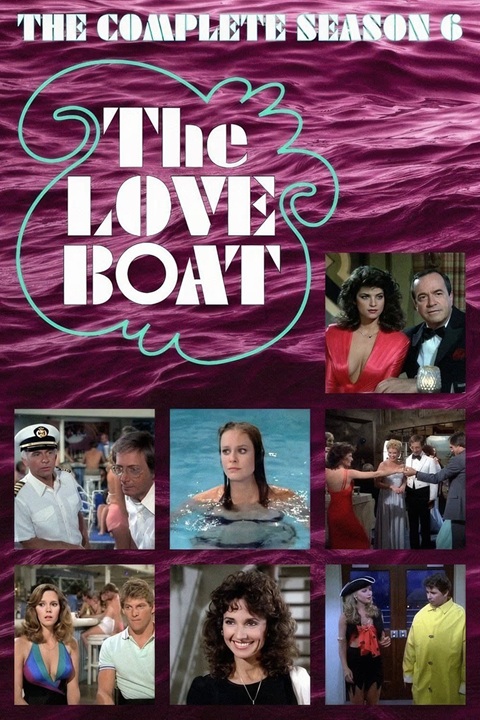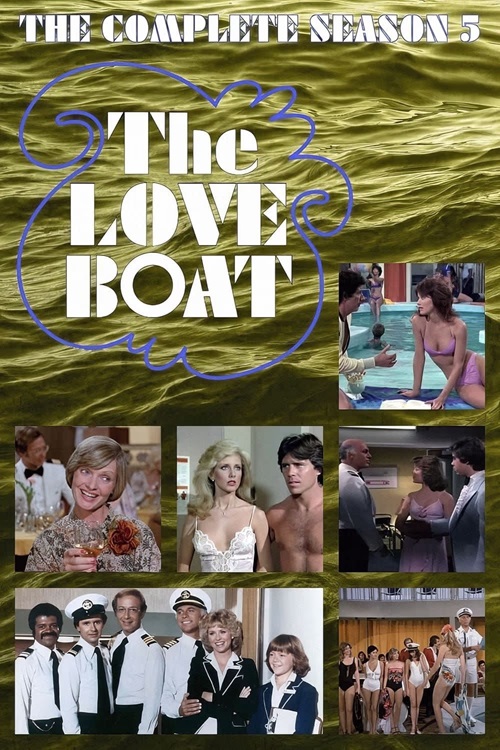
Retro Television Review: The Love Boat 6.16 “Doc’s Big Case/Senior Sinners/A Booming Romance”


Welcome to Retro Television Reviews, a feature where we review some of our favorite and least favorite shows of the past!  On Wednesdays, I will be reviewing the original Love Boat, which aired on ABC from 1977 to 1986!  The series can be streamed on Paramount Plus!

Love won’t hurt anymore….

Episode 6.16 “Doc’s Big Case/Senior Sinners/A Booming Romnace”

(Dir by Bob Sweeney, originally aired on January 22nd, 1983)

As usual, this episode has three stories.  However, this week, only one of the stories really works.

Dr. Elliott Norton (James Noble) attended medical school with Doc.  He is a world-renowned surgeon who has written a best-selling book and, as soon as he boards the boat, ol’ Doc Bricker starts to feel insecure.  It’s easy to see why.  Dr. Norton performs life-saving surgery on a daily basis.  Doc Bricker helps people recover from severe sun tan.  The fact that everyone on board wants Norton’s autograph doesn’t help.  Vicki is supposed to be writing a report on Doc but even Doc is like, “You should probably do it on Elliott.”

However, when a little girl (played by Tori Spelling, in what must have been one of the first roles that Aaron Spelling demanded she be cast in) asks Doc to diagnose what’s wrong with her doll, Bricker quickly figures out that both the doll and the girl are depressed because they’re not spending enough time with their father.  Norton may be getting the groupies but Doc Bricker gets invited to a tea party with the girl, her father, and the doll.

I’m sorry, are you smirking?

Okay, it is pretty silly.  Normally, I would smirk too but you know what?  Bernie Kopell really makes this story work.  In many ways, Doctor Adam Bricker was a bit of silly character, a supposed swinger who always came across as being rather mild-mannered and kind of conservative.  But Bernie Kopell was so likable in the role that it didn’t matter that the character often didn’t make much sense.  In this episode, Kopell does such a good job of playing up the character’s insecurities and regrets that my heart actually broke for the poor guy.  Was the tea party silly?  Yes.  But I still cheered when he was invited.

As for the other two stories, one featured Raymond St. Jacques and Theresa Merritt playing an elderly couple who were living together without being married.  Their children (played Brian Stokes Mitchell and Thelma Hopkins) were scandalized!  It was pretty boring.  The children weren’t particularly likable so I was kind of hoping the parents would just toss them overboard.

The final story …. I don’t even know how to describe it other than to say it was dumb.  Ross (Alan Young) wants to impress Kathy (Holland Taylor) and keep her from running off with Bob (Adam West, who was severely underused).  So, Ross builds a fake bomb, hides it in the engine room, pretends to discover it, and then defuses it while Kathy watches.  I mean, how am I supposed to care about someone who would do something that stupid?  And then, when Ross confesses the truth to her, Kathy laughs it off and forgives him.  I mean, it seems like he’s an obvious sociopath to me.  Run, Kathy, run!

This was an uneven episode but seriously, the story with Doc Bricker got to me.  This show was very lucky to have Bernie Kopell.

Retro Television Review: Fantasy Island 6.7 “Roller Derby Dolls/Thanks A Million”


Welcome to Retro Television Reviews, a feature where we review some of our favorite and least favorite shows of the past!  On Tuesdays, I will be reviewing the original Fantasy Island, which ran on ABC from 1977 to 1984.  Unfortunately, the show has been removed from most streaming sites.  Fortunately, I’ve got nearly every episode on my DVR.

This week, things get strange on the Island!

Episode 6.7 “Roller Derby Dolls/Thanks A Million”

(Dir by Don Weis, originally aired on December 4th, 1982)

Norman Hackett (Vic Tayback) is a sports fanatic who wants to coach his own athletic team.  Oddly, he doesn’t specify what type of team he wants to coach.  I would think that would be the first thing that a true sports fanatic would make clear.  “I want to coach the….”  Well, I can’t think of the names of any teams off the top of my head.  I’m not a sports person so …. okay, he could have said he wanted to coach the Cowboys.  You happy?  Yes, I’m from North Texas and our football team sucks,  Even I’m embarrassed by them and I don’t even follow football.  I’d be tempted to coach the Rangers except I know Erin would get mad at me if the team didn’t make it to the championship.  We also have a hockey team called the Stars but Leonard is the biggest hockey fan I know and, if anyone here at TSL deserves to coach hockey, it’s Leonard.  What’s that, you say?  The Mavericks?  Ehh.  I hate basketball.  Those squeaky shoes drive me nuts.  Plus Mark Cuban’s been kind of annoying ever since he decided to run for President in 2028.

Anyway, I’m rambling because this episode really wasn’t that interesting.  Because Norman didn’t make it clear what he wanted to coach, Mr. Roarke gives him a whistle and then introduces him to the Belles, an all-female roller derby team.  It turns out that roller derby is a big deal on Fantasy Island!  There’s a roller derby rink and everything.  It also turns out that Norman’s check bounced so, if he abandons the Belles, he’ll have to pay Mr. Roarke even more money …. wait, what?  Shouldn’t Norman just be sent home or something?  And doesn’t Roarke know enough to make sure the check clears before inviting someone to the Island?  No wonder Tattoo used to be in charge of the money.

Speaking of money, Suzanne (Janet Leigh), Roger (James Noble), and Eddie (Art Metrano) come to the Island to take part in a contest.  The winner will get $1.000.000 from a mysterious benefactor.  The benefactor, by the way, is actually Eddie and it turns out that the entire contest is a private bet between him and Mr. Roarke.  Eddie thinks that people will do anything to get money.  (This is largely true.  Up until a few weeks ago, this moronic woman was trying to sue my dead father’s estate for half a million.  Fear not, she got nothing.)  Roarke believes that people are good at heart.  Eddie puts Suzanne and Roger through a series of increasingly dangerous tests to see how far they’re willing to go.  In the end, both Roger and Suzanne prove themselves to be good people, though Suzanne is the one who gets the money.  Roarke wins his bet and we’re left wondering how all this came about in the first place.  (Seriously, how does Roarke even know Eddie?)

Anyway, this was kind of a strange trip to the Island.  I’m not really happy about an episode of Fantasy Island featuring a story that isn’t really a fantasy.  Still, at least the scenery was nice.  That’s a beautiful island!

Airplane II: The Sequel (1982, directed by Ken Finkleman)


It isn’t the past.  It isn’t the present.  It’s the future.

The moon has been colonized and, on Earth, the Mayflower II is preparing for its first international flight.  It will be carrying passengers from Houston to the lunar station.  Test pilot Ted Striker (Robert Hays) claims that the Mayflower II is not ready to make the trip but he’s been in the Ronald Reagan Hospital For The Mentally Ill ever since he had a nervous breakdown after losing his squadron during “the war.”

Aboard the Mayflower II is Ted’s ex-wife, Elaine (Julie Haggerty), and her new boyfriend, Simon (Chad Everett).  Simon says the Mayflower II is in perfect shape but he also turns into jelly whenever things get too rough.  Piloting the Mayflower II is Captain Clarence Oveur (Peter Graves) and waiting on the Moon is Commander Buck Murdock (William Shatner).  The crew of the Mayflower II is going to have a tough flight ahead of them.  Not only is the shipboard computer making plans of its own but one of the passengers (Sonny Bono) has a bomb in his briefcase.  Also, Ted has broken out of the hospital and is on the flight, boring people with his long stories.

Every successful film gets a sequel and when Airplane! was a surprise hit in 1980, it was inevitable that there would be an Airplane II.  Robert Hays, Julie Haggerty, Lloyd Bridges, Peter Graves, and Stephen Stucker all returned.  Unfortunately, Jim Abrahams, the Zucker brothers, Robert Stack, Kareem Abdul-Jabbar, and Leslie Nielsen did not.  (The directors and Nielsen were all working on Police Squad and their absence is strong felt.)  Airplane II recreates many of the same jokes as the first Airplane! but without the first film’s good nature or genuine affection for the disaster genre.  Airplane! was made for the love of comedy.  Airplane II was made for the love of money and, while there are more than a few amusing moments, the difference is obvious and there for all to see.

Not surprisingly, Airplane II is at its funniest whenever William Shatner is on screen.  In the role of Bud Murdock, Shatner pokes fun at his own image and shows himself to be a good sport.  He’s still not as funny as Leslie Nielsen or Robert Stack in the first film but that’s because, unlike Stack and Nielsen in their pre-Airplane! days, there had always been a hint of self-parody to Shatner, even in his most dramatic roles.  If Stack and Nielsen shocked people by showing that they could do deadpan comedy, Shatner’s performance just confirmed what most suspected, that he had always been in on the joke.  Still, he’s the funniest thing in Airplane II and, whenever I rewatch this movie, I am happy he was there.

Airplane II was a box office failure, which is why the world never got an Airplane III.  Fortunately, the world did get Hot Shots and The Naked Gun.

Retro Television Review: The Love Boat 5.5 “Country Blues/Daddy’s Little Girl/Jackpot”


Welcome to Retro Television Reviews, a feature where we review some of our favorite and least favorite shows of the past!  On Wednesdays, I will be reviewing the original Love Boat, which aired on ABC from 1977 to 1986!  The series can be streamed on Paramount Plus!

This week, Gopher almost gets rich!

Episode 5.5 “Country Blues/Daddy’s Little Girl/Jackpot”

(Dir by Don Weis, originally aired on October 31st, 1981)

I have to admit that I groaned a bit when I saw that Florence Henderson was going to be one of the passengers on this week’s cruise.  I still haven’t quite recovered from the trauma of reviewing The Brady Bunch Variety Hour and, whenever Florence Henderson showed up on any of these shows, she always had to sing a song.  Florence wasn’t a bad singer but she wasn’t a particularly interesting one either.  I remember that she always seemed like she was trying too hard to be Barbra Streisand whenever she performed a song of the Brady Bunch Variety Hour.  Her version of Broadway and easy listening was always adequate without being very memorable.

And, on this cruise, Florence does sing.  She’s playing Annabelle Folker, a country singer who is hired to provide entertainment for the cruise.  She sing a few country songs and speaks with a thick (and not very convincing) country accent.  Annabelle is happy to discover that her childhood friend, Martin Correll (James Noble), is on the cruise with his uptight girlfriend and campaign manager, Barbara (Carol Lawrence).  Martin — or Blinky as Annabelle calls him — is thrilled to be reunited with Annabelle.  Barbara is less enthused and she eventually tells Annabelle that, if Martin is ever going to be a success in politics, he can’t spend all of his time with a country singer who says whatever pops into her head.  What’s weird is that Annabelle decides that Barbara is right.  She and Martin aren’t meant for each other.  Martin is too much of a career politician.  In the end, Martin leaves with Barbara and Annabelle leaves alone.  It was a weird story.  Annabelle came across like a stalker but Barbara wasn’t particularly sympathetic either.  Martin was just kind of wimpy.

Meanwhile, Marcy Crane (Randi Oakes) boards the boat with her father, Richard Simmons (Mason Adams).  Marcy’s just gotten a divorce and Richard is very protective of her.  At first, he’s concerned when she meets Dr. Jonathan Hunt (Frank Bonner), a veterinarian.  Once Marcy explains that she’s not going to rush into another relationship and she’s just looking for casual sex, her father gives the couple his blessing.  This was an oddly inconsequential story.

Finally, Gopher finds a bag that’s full of money!  After he counts the money, he discovers that he is now $47,612 richer!  (Adjusted for inflation, that’s the equivalent of $130,000 today.)  Or, at least, that’ll be the case if Gopher keeps the money.  But Gopher’s a good man at heart so, ultimately, he tells Captain Stubing about the money.  Stubing says that money will be Gopher’s if no one claims it at the end of the cruise.  And indeed, it turns out that the money was not lost by any of the current passengers.  Gopher’s happy until he spots a little old woman crying on the dock in Los Angeles.  She says that she took a cruise two weeks ago and lost a bag with her life’s savings.  Gopher gives her the money.  Awwwww!

This was a sweet story and it was kind of nice to see Gopher get a plotline.  Fred Grandy was a likable actor and I always like the episodes where Gopher reveals that he’s actually got a good heart underneath his goofy exterior.  This story did feature one rather silly fantasy sequence, in which Gopher imagined riding in a limousine with Stubing as his chauffeur, Julie as his wife, and Viki as a little beggar child.  It was kind of a weird fantasy, to be honest.

One good story out of three does not make for a great cruise.  I enjoyed Gopher’s plotline but the other two stories alternated between being dull and annoying.  This was not a great cruise.

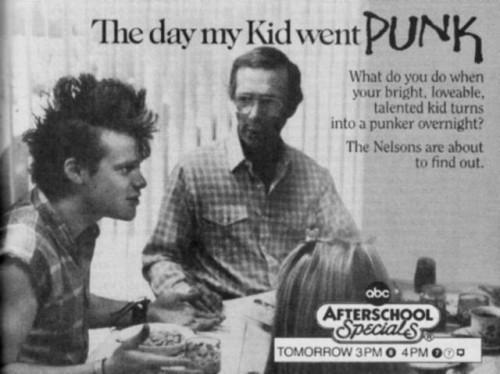
A Blast From The Past: The Day My Kid Went Punk (dir by Fern Field)


First produced in 1987, the short film The Day My Kid Went Punk tells the story of Terry Warner (Jay Underwood), a clean-cut teenager and aspiring violinist who lands a summer job working as a daycare counselor at a luxury hotel.

Feeling that he’s been neglected in favor of his high achieving older brother and his younger sister, Terry acts like a typical middle child and decides to change his image right after leaving home for his job.  (It worked for Jan Brady!)  He decides to become a punk.  (Jan Brady never went that far.)  Could this have something to do with his mother (Christine Belford) being the nation’s leading expert on the “Punk Syndrome,” that is terrifying parents everywhere?  Or could it just be because Terry knows that he’ll never be as cool as his father (Bernie Kopell), who might claim to be named Tom Warner but who is obviously just Adam Bricker living in the suburbs?  Every time Tom looks at his “punk” son, you can just see him dreading the thought of word of this getting back to Captain Stubing.

(Incidentally, the family in film is clearly named Warner but, in all of the advertisements that I’ve seen for this special, including the one at the top of the post, they’re identified as being the Nelson family.)

Needless to say, Terry Warner is, in no way, a convincing punk and judging from the film’s dialogue and plot, it would appear that the film doesn’t really know the difference between punk, goth, and heavy metal.  Everyone at the hotel is a bit taken aback by Terry’s appearance but he proves himself to be a good worker and the kids absolutely love riding horses with him.  I guess the message is that you shouldn’t judge someone based solely on how he looks.  That’s a good message except that it’s ultimately undercut by Terry himself and his decision abandon his punk look as soon as it inconveniences him at school.  So, I guess the message is that teens should dress the way they want unless it keeps them from winning first chair in the school band and parents shouldn’t worry because teenagers are so shallow that they’ll abandon anything after a month or two.  The film suggests that Punk is less of a syndrome and more of a fad that whiny middle children go through during the summer.

(Myself, I’m not a middle child.  I’m the youngest of four and I’ve never felt particularly ignored, even if there were times when it seemed like being left alone would be a nice change of pace.  That said, I definitely went through some phases while I was growing up.  During my junior and senior years of high school, I always made sure that I was wearing at least one black garment and I wrote emo poetry under the name Pandora DeSaad.)

Anyway, Halloween’s approaching and this very (and I do mean very) campy short film feels like a good way to welcome a month that encourages everyone, young and old, to think about putting on costumes.  Here is The Day My Kid Went Punk!

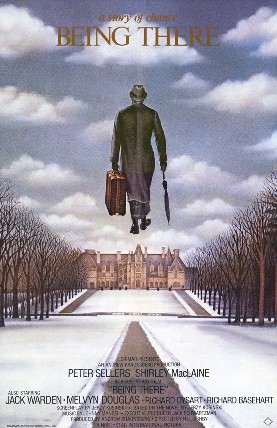
Shattered Politics #43: Being There (dir by Hal Ashby)


Original_movie_poster_for_Being_There

As a general rule, I don’t watch the news.  However, a few nights ago, I made an exception and I watched CNN.  The reason was because it was snowing in New York City and apparently, CNN anchorman Don Lemon was broadcasting from something called the Blizzardmobile.  I just had to see that!

Well, the Blizzardmobile turned out to be huge letdown.  I was hoping for something like the Snowpiercer train but instead, it just turned out to be a SUV with a camera crew and a pompous anchorman who hilariously kept insisting that he was knee-deep in a blizzard when even a Texas girl like me could tell that the Blizzardmobile was only encountering a few snow flurries.

So, I flipped around to see if any of the other news stations had anyone in a blizzardmobile.  What I discovered was that only CNN had a blizzardmobile but one thing that every news station did have was a panel of experts.  An anchorperson would say something like, “What does the future look like?” and the panel of experts would tell us what the future looked like to them.  What I found interesting was that I had no idea who these experts were but yet I was supposed to just believe that their opinions were worth considering.

I mean, for all I knew, those experts could have just been people who were spotted wandering around New York at night.  But, because they were introduced as experts and looked directly at the camera whenever they spoke, they were suddenly authoritative voices.

Oddly enough, the very next night, I watched a movie from 1979 that dealt with the exact same issue.

Being There tells the story of Chance (Peter Sellers), a dignified, middle-aged man who lives in Washington, D.C. and works as a gardener for a wealthy older man.  Chance cannot read.  Chance cannot write.  Chance goes through life with a blank smile on his face.  Chance has never experienced the outside world.  Instead, he spends all of his time working in the old man’s garden and obsessively watching TV.  When the old man dies, Chance finds himself exiled from the house.  Wandering around Washington D.C., Chance asks a random woman to make him dinner.  He politely speaks with a drug dealer who pulls a knife on him.  Finally, he finds himself entranced by a window display of televisions.  Backing away from the window, Chance stumbles into the street and is struck by a car.

Though he’s not seriously injured, the owner of the car, Eve Rand (Shirley MacClaine), insists that Chance come back to her mansion with him so that he can be checked out by her private physician (Richard Dysart).  As they drive back to the house, Eve asks Chance for his name.

“Chance the Gardner,” Chance replies.

“Chauncey Gardiner?” Eve asks.

Chance blankly nods.

Back the house, Chance meets Eve’s husband, Ben (Melvyn Douglas).  Ben is a wealthy industrialist who is dying of leukemia.  Ben takes an immediate liking to Chance.  Because Chance is wearing the old man’s suits, everyone assumes that Chance is a wealthy businessman.  When Chance says that he had to leave his home, they assume that his business must have failed due to government regulation.  When Chance talks about his garden, everyone assumes that he’s speaking in metaphors.

Soon, Ben is introducing Chance to his friend, Bobby (Jack Warden).  Bobby happens to be the President and when he quotes Chance in a speech, Chance the Gardner is suddenly the most famous man in the country.  When he appears on a TV talk show, the audience mistakes his emotionless comments for dry wit.  When he talks about how the garden reacts to different seasons, they assume that he’s an economic genius.  By the end of the film, Bobby has become so threatened by Chance’s popularity that he’s been rendered impotent while wealthy, rich men plot to make Chance the next President of the United States.
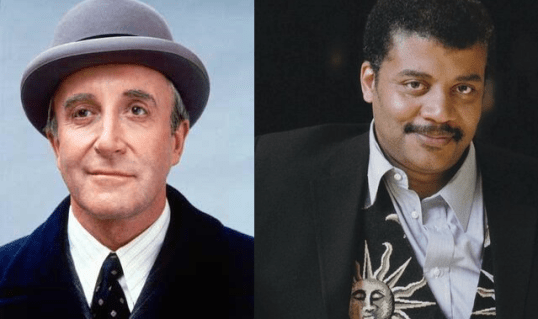
Chance and Neil

In many ways, Chauncey Gardiner was the Neil deGrasse Tyson of his era.

Being There is a one joke film and the idea of someone having no emotional skills beyond what he’s seen on television was probably a lot more mind-blowing back in 1979 than it is in 2015.  But I still enjoyed the film.  Peter Sellers gave a great performance as Chance, never sentimentalizing the character.  As well, the film’s point is still relevant.  If Being There were made today, Chance would be the subject of clickbait articles and Facebook memes.  (Chauncey Gardiner listed his ten top movies and number 8 will surprise you!  Or maybe This boy asked Chauncey Gardiner about his garden and his response was perfect.)

At its best, Being There is a film that will encourage you to question every expert you may see.  Especially if he’s just stepped out of a blizzardmobile…