Scene That I Love: Warren Beatty, Jack Warden, and James Mason In Heaven Can Wait


Today, we wish a happy birthday to actor, director, and producer Warren Beatty!

This wonderfully-acted scene that I love comes from Beatty’s 1978 film, Heaven Can Wait.  In this scene Warren Beatty plays a character who attempts to convince his friend (Jack Warden) that he has come back from the dead and is inhabiting the body of an old millionaire.  (Watch the film, it makes sense.)  James Mason plays the erudite angel that only Beatty can see.

COLD SWEAT (1970) – starring Charles Bronson’s biceps!


Charles Bronson plays a boat captain named Joe Martin who seems be living the good life in the south of France.  He has a great job renting out boats to tourists!  He has great luck beating his friends out of big stacks of cash in poker.  He has a beautiful wife (Liv Ullman), and most importantly, he has about the biggest biceps I’ve seen in a movie not starring Arnold Schwarzenegger.  This idyllic existence falls apart when some men from his past show up and force him to use his boat to help them smuggle drugs.  It seems these guys feel like Martin owes them something since they had to go to prison for killing a cop, while ace driver Martin, escaped.  As you might expect, nobody’s plans go as expected and much action ensues!

The first thing that stands out in this film is the cast, that includes James Mason, Liv Ullman, Michael Constantin, and Jill Ireland.  Bronson’s European films uniformly had tremendous casts and this one is no different.  Even with these well known actors, Jean Topart as the villainous Katanga, is a real standout.  Second, this is the first of three films that Bronson completed with director Terence Young, who is most famous for kicking off the James Bond franchise with DR. NO, THUNDERBALL, and FROM RUSSIA WITH LOVE.  Young knows how to stage action scenes, and with the help of famous French stuntman Remy Julienne, the two men cook up some impressive car stunts and chase sequences.  Finally, Bronson himself exudes charisma and is in maximum physical condition in this film.  In a career defined largely by his supreme conditioning, this may be Bronson’s most impressive physical performance.

Charles Bronson became an international superstar when he went to Europe in 1968, where he made a series of good films with great international casts. COLD SWEAT doesn’t come together quite as well as some of his other European films like RIDER ON THE RAIN, VIOLENT CITY & RED SUN, but it’s still a fun film with good action sequences and an impressively pumped up Charles Bronson. And the film has never looked better. After decades of shabby VHS and DVD copies, Kino Lorber put out a very nice blu ray in 2019. It’s nice seeing the movie in such a high quality presentation.

Check out the trailer for COLD SWEAT below:

Film Review: Voyage of the Damned (dir by Stuart Rosenberg)


In 1939, an ocean liner named the MS St. Louis set sail from Hamburg.  Along with the crew, the ship carried 937 passengers, all of whom were Jewish and leaving Germany to escape Nazi persecution.  The ship was meant to go to Havana, where the passengers had been told that they would be given asylum.  Many were hoping to reunite with family members who had already taken the voyage.

What neither the passengers nor Captain Gustav Schroeder knew was that the entire voyage was merely a propaganda operation.  No sooner had the St. Louis left Hamburg than German agents and Nazi sympathizers started to rile up anti-Semitic feelings in Cuba.  The plan was to prevent the passengers from disembarking in Cuba and to force the St. Louis to then return to Germany.  The Nazis would be able to claim that they had given the Jews a chance to leave but that the rest of the world would not take them in.  Not only would the Jews be cast as pariahs but the Germans would be able to use the world’s actions as a way to defend their own crimes.

Captain Schroeder, however, refused to play along.  After he was refused permission to dock in Cuba, he then attempted to take the ship to both America and Canada.  When both of those countries refused to allow him to dock, Schroeder turned the St. Louis toward England, where he planned to stage a shipwreck so that the passengers could be rescued at sea.  Before that happened, Belgium, France, the Netherlands, and the United Kingdom jointly announced that they would accept the refugees.

Tragically, just a few days after the passengers disembarked, World War II officially began and Belgium, France, and the Netherlands all fell to the Nazi war machine.  It is estimated that, of the 937 passengers on the St. Louis, more than 600 of them subsequently died in the Nazi concentration camps.

The journey of the St. Louis was recreated in the 1976 film, Voyage of the Damned, with Max von Sydow as Captain Schroeder and a collection of familiar faces playing not only the ship’s passengers and crew but also the men and women in Cuba who all played a role in the fate of the ship.  In fact, one could argue that there’s a few too many familiar faces in Voyage of the Damned.  One cannot fault the performances of Max von Sydow, Malcolm McDowell, and Helmut Griem as members of the crew.  And, amongst the passengers, Lee Grant, Jonathan Pryce, Paul Koslo, Sam Wanamaker, and Julie Harris all make a good impression.  Even the glamorous Faye Dunaway doesn’t seem to be too out-of-place on the ship.  But then, in Havana, actors like Orson Welles and James Mason are awkwardly cast as Cubans and the fact that they are very obviously not Cuban serves to take the viewer out of the story.  It reminds the viewer that, as heart-breaking as the story of the St. Louis may be, they’re still just watching a movie.

That said, Voyage of the Damned still tells an important true story, one that deserves to be better-known.  In its best moments, the film captures the helplessness of having nowhere to go.  With Cuba corrupt and the rest of the world more interested in maintaining the illusion of peace than seriously confronting what was happening in Germany, the Jewish passengers of the St. Louis truly find themselves as a people without a home.  They also discover that they cannot depend on leaders the other nations of the world to defend them.

Defending the passengers falls to a few people who are willing to defy the leaders of their own country.  At the start of the film, Nazi Intelligence Chief Wilhelm Canaris (Denholm Elliott) explains that Captain Schroeder was selected specifically because he wasn’t a member of the Nazi Party and could not be accused of having ulterior motives for ultimately returning the passengers to Germany.  Canaris and his fellow Nazis assume that anti-Semitism is so natural that even a non-Nazi will not care what happens to the Jewish passengers.  Instead, Schroeder and his crew take it upon themselves to save the lives of the passengers.  It is not Franklin Roosevelt who tries to save the passengers of St. Louis.  Instead, it’s just a handful of people who, despite unrelenting pressure to do otherwise, step up to do the right thing.  Max von Sydow, who was so often cast in villainous roles, gives a strong performance as the captain who is willing to sacrifice his ship to save his passengers.

Flaws and all, Voyage of the Damned is a powerful film about a moment in history that must never be forgotten.

A Bonus Horrorthon Blast From The Past: The Tell Tale Heart (dir by Ted Parmlee)


This short, animated film is from 1953 and it features James Mason reading a story from America’s first master of suspense, Edgar Allan Poe!

Here, for your listening and visual enjoyment, is The Tell Tale Heart!  Along with featuring the voice of James Mason, the film was directed by Ted Parmlee.  It was the first animated film to ever be given an X rating by the British Film Board of Censors.

Get In The Mood for Halloween with James Mason Reading The Tell-Tale Heart


I just came across this earlier this morning.  This short, animated film is from 1953 and it features James Mason reading a story from America’s first master of suspense, Edgar Allan Poe!

Here, for your listening and visual enjoyment, is The Tell Tale Heart!  Along with featuring the voice of James Mason, the film was directed by Ted Parmlee.  It was the first animated film to ever be given an X rating by the British Film Board of Censors.

https://www.youtube.com/watch?v=B-So0VCW3uA

Film Review: The Fall of the Roman Empire (dir by Anthony Mann)


Why did the Roman Empire fall?

Well, historically, there were several reasons but they can all basically be boiled down to the fact that the Empire got too big to manage and that having two separate capitols certainly didn’t help matters.  The Empire got so large and overextended that the once fabled Roman army was no match for the barbarians.

Of course, if you’ve ever watched a movie about the Roman period, you know exactly why the Empire fell.  It all had to do with decadence, gladiators, human sacrifices, and crazed emperors with unfortunate names like Caligula and Commodus.  The Roman Empire fell because the imperial government descended into soap opera, complete with love triangles, betrayals, and whispered plotting inside the Senate.

Another thing that we’ve learned from the movies is that the fall of the Roman Empire was damn entertaining.  Between the orgies and the men wearing those weird helmets with the brushes on top of them, there’s nothing more fun that watching the Roman Empire fall.

Case in point: the 1964 film, The Fall of the Roman Empire.

This three and a half hour epic begins with the last of the good Roman emperors, Marcus Aurelius (Alec Guiness), battling to keep the Germanic barbarians from invading the empire.  Marcus is a wise man and a great leader but he knows that his time is coming to an end and he needs to name a successor.  His daughter, Lucilla (Sophia Loren), is an intelligent and compassionate philosopher but, on the basis of her sex, is not eligible to succeed him.  His son, Commodus (Christopher Plummer), may be a great and charismatic warrior but he’s also immature and given to instability.  Marcus’s most trusted adviser, Timonides (James Mason), would never be accepted as a successor because of his Greek birth and background as a former slave.  (Add to that, Timonides is secretly a Christian.)

That leaves Livius (Stephen Boyd).  Livius is one of Marcus’s generals, a man who is not only renowned for his honesty and integrity but one who is also close to the royal family.  Not only is he a former lover of Lucilla’s but he’s also been a longtime friend to Commodus.  Unfortunately, before Marcus can officially name Livius as his heir, the emperor is poisoned.  Commodus is named emperor and things quickly go downhill.  Whereas Marcus ruled with wisdom and compassion, Commodus is a tyrant who crushes anyone who he views as being a potential threat.  Lucilla is married off to a distant king (Omar Sharif).  Timonides is declared an enemy after he suggests that the conquered Germans should be allowed to peacefully farm on Italian land.  Rebellion starts to ferment in every corner of the Empire and Livius finds himself trapped in the middle.  Which side will he join?

Despite all the drama, Commodus is not necessarily an unpopular emperor.  One of the more interesting things about The Fall of the Roman Empire is that Commodus’s popularity grows with his insanity.  The crueler that he is, the more the people seem to love him.  Soon, Commodus is fighting as a gladiator and having people burned at the stake.  While some Romans are horrified, many more love their emperor no matter what.  People love power, regardless of what it’s used for.  Perhaps that’s the main lesson and the main warning that the final centuries of the Roman Empire have to give us.

The Fall of the Roman Empire is surprisingly intimate historical epic.  While there’s all the grandeur that one would normally expect to see in a film about the Roman Empire, the film works best when it concentrates on the characters.  While Boyd and Loren do their best with their thinly drawn roles, the film is stolen by great character actors like Alec Guinness, James Mason, and Christopher Plummer.  Plummer, in particular, seems to be having a blast playing the flamboyantly evil yet undeniably charismatic Commodus.  Even with the Empire collapsing around then, both Plummer as an actor and Commodus as a character seems to be having a blast.  Add to that, there’s all of the usual battles and ancient decadence that you would expect to find in a film about the Roman Empire and the end result is a truly enjoyable epic.

As I watched The Fall of the Roman Empire, it was hard for me not to compare the film to Ridley Scott’s Gladiator.  That’s because they’re both basically the same damn movie.  The main difference is that The Fall of the Roman Empire is far more entertaining.  The Fall of the Roman Empire, made in the days before CGI and featuring real people in the streets of Rome as opposed to animated cells, feels real in a way that Gladiator never does.  If Gladiator felt like a big-budget video game, The Fall of the Roman Empire feels like a trip in a time machine.  If I ever do go back to 180 A.D., I fully expect to discover James Mason giving a speech to the Roman Senate while Christopher Plummer struts his way through the gladiatorial arena.

Finally, to answer the question that started this review, why did the Roman Empire fall?

It was all Christopher Plummer’s fault, but at least he had a good time.

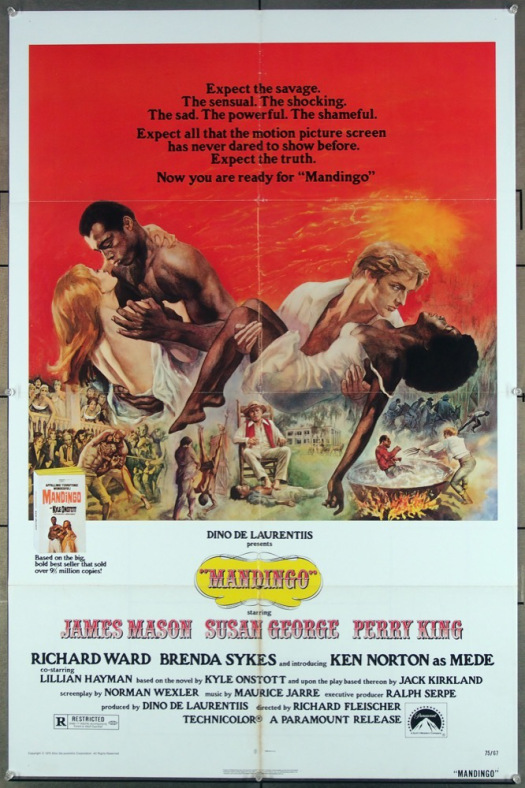
Gone With The Whaaat?: MANDINGO (Paramount 1975)


gary loggins's avatarcracked rear viewer

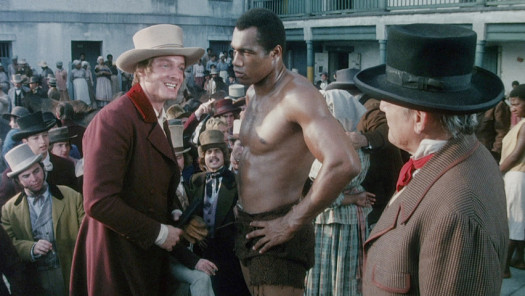
If you’ve never seen MANDINGO, be prepared for loads of gratuitous sex, violence, debauchery, depravity, racism, incest, nudity, and other such unsavory stuff! Some people today discuss the film in a scholarly manner, dissecting the sociological implications of pre-Civil War decadence in the deep South, the plight of the abused slaves, the overindulgent cruelty of the slave owners, and blah blah blah. I’m gonna talk about what the movie really is: pure, unadulterated Exploitation trash, in which some scenes will have your jaw dropping in shock, while others will leave you laughing at the exaggerated overacting and ludicrous dialog!

The movie centers around the Maxwell family and their plantation home, Falconhurst. It’s no Tara; Falconhurst is a run-down, gloomy, decrepit mansion that looks like it belongs in one of those “hillbilly horror” schlockfests of the 60’s or 70’s. Family patriarch Warren Maxwell wants a grandson to carry on the family…

View original post 771 more words

4 Of My Favorite Fictional Oscar Winners!


For 9 decades, the Oscars have been an important part of American life.  As I’ve said on this site many times, Oscar Sunday is as much of an unofficial holiday as Super Bowl Sunday.  For many of us, the new year doesn’t even begin until the morning after the Oscars.

However, some of the most memorable Oscar winners didn’t even exist!  The Academy Awards have been used as a plot device in any number of movies.  Here are four of my favorite fictional Oscar winners:

  1. Johnny Fontane (Al Martino) in The Godfather (1972)

Oh, Johnny Fontane.  He had such a good singing career going until he started to lose his voice.  But, fortunately, there was a part for him in an upcoming picture.  As Johnny explained it, the part was a guy just like him.  “I wouldn’t even have to act.”  The only problem was that studio head Jack Woltz didn’t want to give him that role.

It’s a good thing that Johnny had a Godfather like Vito Corleone.  And it’s a good thing that the Godfather had a lawyer like Tom Hagen, a lawyer who didn’t mind arranging for a horse to be beheaded.  Khartoun may not have survived but Johnny Fontane got his part and his Oscar.

(Johnny’s adventures at the Oscars are detailed in all their loving glory in Mario Puzo’s novel.  Perhaps not wanting to harm its own Oscar chances, the film left out the majority of Johnny’s Hollywood adventures.)

2. Margaret Elliott (Bette Davis) in The Star (1953)

“C’mon, Oscar!  Let’s get drunk!”

Listen, you may think that winning an Oscar means that you’re set for life but often, the exact opposite is true.  Winning an Oscar has killed many a career.  They even have a name for it: The Oscar Curse.

Take Margaret Elliott for instance.  She won an Oscar.  And now, just a few years later, she’s broke, drunk, and deeply in denial.  Can her daughter (Natalie Wood) convince Margaret that it’s time to stop drinking and admit that fame is a hideous bitch goddess?  Or will Margaret continue to get drunk with her Oscar staring at her in judgment?

3. Vicki Lester (Judy Garland) in A Star is Born (1954)

Sadly, Vicki is better remembered for what happened during her acceptance speech than for the speech itself.  When her husband, notorious alcoholic Norman Maine (James Mason), took the stage and struck his wife while drunkenly motioning, it shocked Oscar watchers everywhere.  But Vicki never stopped loving him and, after his tragic death, she let the world know that, “This is Mrs. Norman Maine.”

4. Jerilee Randall (Pia Zadora) in The Lonely Lady (1983)

“I don’t suppose I’m the only one whose had to fuck her way to the top.”

Greatest fake Oscar acceptance speech ever!

Celebrate National Trivia Day With The Actors Who Could Have Been James Bond!


Today is National Trivia Day so I thought why not share some trivia?  I love film trivia.  I especially love trivia about who was considered for certain films.  Hell, one of my most popular posts on the Shattered Lens dealt with all of the actors who were considered for the Godfather!

(I even came up with an alternative cast for The Godfather, even though I consider the actual film to be the best cast film in history.)

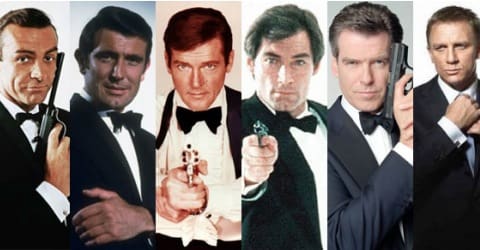
I also happen to love the James Bond films.  (Well, not so much the recent Bond films.  I’ve made my feelings on SPECTRE clear.)  As a franchise, I absolutely love them.  So, with all that in mind, here is a look at the actors who could have been Bond.  I’ve compiled this article from many sources.  And yes, you could probably just find a lot of the information on Wikipedia but then you’d miss out on my editorial commentary.
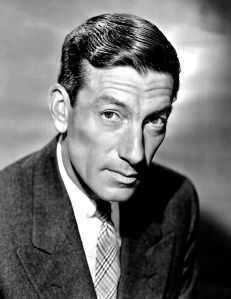
Hoagy Carmichael

Ian Fleming himself always said that his pick for Bond would have been the musician, Hoagy Carmichael.  He even made a point, in Casino Royale, of having Vesper Lynd exclaim that Bond looked like Hoagy Carmichael.  Of course, the first actor to actually play Bond was Barry Nelson in a 1954 television adaptation of Casino Royale.  Nelson is probably best remembered for playing Mr. Ullman in Stanley Kubrick’s The Shining.
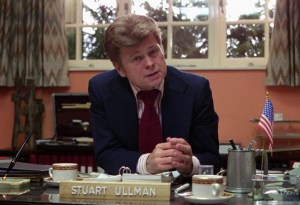
Barry Nelson, the first James Bond

When Dr. No went into production in 1961, many actors were considered for the role before Sean Connery was eventually cast.  Many of them were very well-known actors and, had they been cast, Dr. No would not have been remembered as a Bond movie.  Instead, it would be remembered as a star vehicle for … well, let’s take a look at some of the better-known possibilities:

Among the famous actors who were mentioned for Bond in 1961: Cary Grant, Richard Burton, James Mason, Trevor Howard, Stanley Baker, George Baker, Jimmy Stewart, Rex Harrison, and David Niven.  (Of that list, I think Burton would have made for an interesting Bond.  If the Bond films had been made in the 1940s, Grant would have been my first choice.  Trying to imagine Jimmy Stewart as a British secret agent is … interesting.)

Once it became obvious that a star was not going to play Bond, the role was offered to Patrick McGoohan and Rod Taylor.  McGoohan had moral objections to the character.  Rod Taylor reportedly felt that the film would flop.  Steve Reeves, the American body builder who became famous for playing Hercules in Italy, was reportedly strongly considered.  At one point, director Terrence Young wanted to offer the role to Richard Johnson, who later played Dr. Menard in Lucio Fulci’s Zombi 2.

Of course, the role went to Sean Connery and made Connery a huge star.  In 1967, after Connery announced that he would no longer play the world’s most famous secret agent, there was a huge and widely publicized search for his replacement.  Some of the names that were considered are intriguing.  Others are just bizarre.
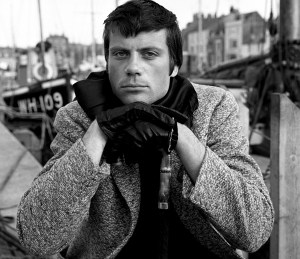
Oliver Reed

To me, perhaps the most intriguing name mentioned was that of Oliver Reed.  Reed definitely would have brought a rougher edge of the role than some of the other actors considered.  However, that’s one reason why Reed wasn’t picked.  Apparently, it was felt that he did not have the right public image to play the suave Mr. Bond.

Somewhat inevitably, Michael Caine was sought out for the role.  Caine, however, refused to consider it because he had already starred in three back-to-back spy thrillers and didn’t want to get typecast.  Caine’s former roommate, Terrence Stamp, was another possibility but wanted too much control over the future direction of the Bond films.  Future Bond Timothy Dalton was considered to be too young.  Another future Bond, Roger Moore, didn’t want to give up his television career.  Eric Braeden has the right look for Bond but was German.  Rumor has it that producer Cubby Broccoli even considered Dick Van Dyke for the role, though I find that hard to believe.  An even more surprising possibility was the nobleman Lord Lucan, who was offered a screen test in 1967 and who, ten years later, would vanish after being accused of murdering his children’s nanny.
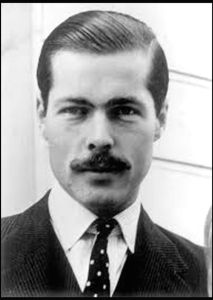
Lord Lucan

Among the actors who auditioned before George Lazenby was cast in On Her Majesty’s Secret Service: Michael Billington, Jeremy Brett, Peter Purves, Robert Campbell, Patrick Mower, Daniel Pilon, John Richardson, Anthony Rogers, Hans De Vries, and Peter Snow.

After the mixed reception of both Lazenby’s performance and On Her Majesty’s Secret Service, Lazenby was soon out as James Bond.  Even today, there’s a lot of controversy about what led to Lazenby being dismissed from the role.  Some say Lazenby demanded too much money.  Some say that Lazenby was merely used a pawn to try to get Sean Connery to return to the role.  Regardless, Lazenby only made one film as Bond.  (Of course, On Her Majesty’s Secret Service has retroactively been recognized as being one of the best of the series.)

With Connery still claiming that he would never return to the role, the film’s producers went through the motions of looking for a new Bond.  Once again, Roger Moore and Timothy Dalton were considered.  Connery suggested that a talk show host named Simon Dee should play the role.  An actor named Roger Green auditioned.  So did Michael Gambon, though he later said he was turned down because, in his own words, he “had tits like a woman.”  Interestingly, several Americans were mentioned.  Clint Eastwood as James Bond?  Burt Reynolds?  Adam “Batman” West? The mind boggles but their names were mentioned.
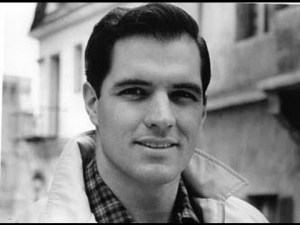
John Gavin

And interestingly enough, an American was cast.  John Gavin is best known for playing Sam Loomis in Psycho but he was also, briefly, James Bond.  After Gavin accepted he role and signed a contract, Sean Connery announced that he would be willing to return to the role.  Gavin was paid off and Connery went on to star in Diamonds are Forever.

After Diamonds, Connery left the role for a second time and, once again, Bond was recast.  This time, Roger Moore would finally accept the role.  However, before Moore was cast, several other actors were considered.  Some of the regular possibilities were mentioned again: John Gavin, Simon Oates, Timothy Dalton, and Michael Billington.  Others considered included Jon Finch, Ranulph Fiennes, Peter Laughton, and Guy Peters.  Some of those names are probably as unknown to you as they are to me but it’s intriguing to think that Guy Peters may not be a well-known name but, at one time, there was a possibility that he could suddenly become one of the biggest stars in the world.

Looking over the history of the Bond franchise, it’s interesting to see the number of times that Moore tried to leave the role, just to be talked into returning.  Every time that Moore considered quitting, a new group of actors would be considered for the role of Bond.  In 1979, when Moore said he might not return after Moonraker, Timothy Dalton, Michael Jayston, Patrick Mower (who was also considered for On Her Majesty’s Secret Service), and Michael Billington were all considered as replacements.  So was Julian Glover.  Ironically, when Moore did agree to return to the role, Glover was cast as the villain in For Your Eyes Only.
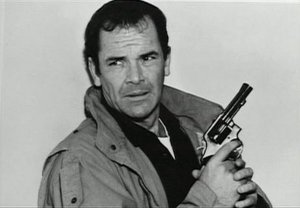
David Warbeck

To me, the most intriguing actor mentioned as a replacement for Roger Moore was David Warbeck.  Warbeck was a television actor and model who subsequently had a nearly legendary film career in Italy.  Not only did he play a key role in Sergio Leone’s Duck You Sucker!, but he also starred in Lucio Fulci’s The Black Cat and The Beyond.  He also appeared in the best of Italian Apocalypse Now rip-offs, The Last Hunter.  In interviews, Warbeck claimed that he was under contract to Cubby Broccoli to step into the role in case Roger Moore ever walked off the set.  The likable and rugged Warbeck would have been an interesting Bond.

In 1983, when Moore again said he might not return to the role, Michael Billington (who actually did appear in a Bond film when he played a KGB agent killed at the start of The Spy Who Loved Me) would be once more considered as a replacement.  British TV actors Lewis Collins and Ian Ogilvy were also considered for the role.  In a repeat of what happened with John Gavin in Diamonds are Forever, American actor James Brolin was actually put under contract until Moore agreed to play the role in Octopussy.

James Brolin, in a screen test for Octopussy

After A View To A Kill, Moore left the role for the final time.  Famously, future Bond Pierce Brosnan was actually cast as his replacement until the surge of interest created by his casting led to the renewal of Remington Steele, the American television show in which Brosnan was starring.  Once the show was renewed, Brosnan could no longer work the Bond films into his schedule.

Among the other names mentioned: Sean Bean, Simon MacCorkindale, Andrew Clarke, Finlay Light, Mark Greenstreet, Neil Dickson, Christopher Lambert, Mel Gibson, and Antony Hamilton.  Sam Neill was another possibility and reportedly came very close to getting the role.  Watch any of the films that Neill made when he was younger and you can definitely see hints of Bond.
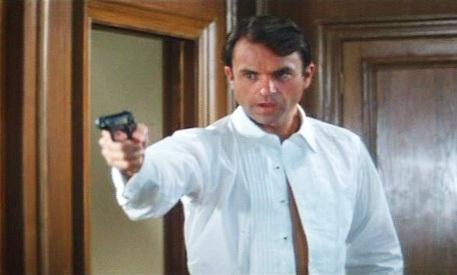
Sam Neill

In the end, Timothy Dalton finally accepted the role.  Ironically, for an actor who spent 20 years being courted for the role, Dalton turned out to be a bit of a flop as Bond.  He made two movies (both of which were considered to be disappointing when compared to the previous Bond films) and then left the role.

Looking over the contemporary reviews of Dalton as Bond, one thing that comes through clearly is that a lot of people resented him for taking a role that they felt should have gone to Pierce Brosnan.  When the Bond films resumed production with Goldeneye in 1994, Brosnan finally stepped into the role.  Reportedly, if Brosnan had turned down the role, the second choice was Sean Bean.  Much like Julian Glover, Bean may have lost out on 007 but he did end up playing the villain.
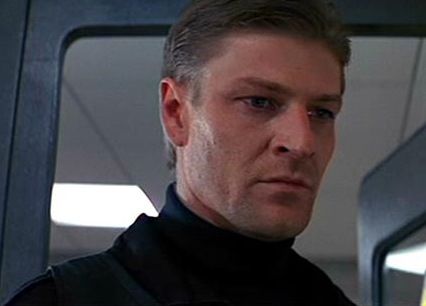
Sean Bean

Among the other actors who were reportedly considered before Brosnan accepted the role: Mark Frankel, Paul McGann, Liam Neeson, Russell Crowe, and Lambert Wilson.  Ralph Fiennes, who has been M since Skyfall, was also considered.

As opposed to his predecessors, Brosnan seemed to be very comfortable with the idea of playing Bond and never threatened to leave the role.  Looking over the Bond-related articles that were published from 1995 to 2004, I found the occasional speculation about whether Rupert Everett would be the first gay James Bond or if Sharon Stone would be the first female James Bond but I found very little speculation about Brosnan actually leaving the role.  Indeed, when Brosnan officially retired as Bond in 2004, it was less his decision and more at the prodding of the franchise’s producers, who felt that the series needed to be rejuvenated with a new (and younger) actor.  After Brosnan left, the series was rebooted and Daniel Craig played the role in Casino Royale.

In the past, I’ve made it clear that Daniel Craig is hardly my favorite Bond.  I loved Skyfall (and I consider it to the 2nd best Bond film, after From Russia With Love) but, even in that case, I felt that the film succeeded despite Craig instead of because of him.  With Casino Royale, we were supposed to be seeing a young and inexperienced Bond.  That’s never come through to me, probably because Craig looked like he was nearly 50 years old when he made Casino Royale.

Among the actors who were mentioned for the role before Craig received the role: Ralph Fiennes (again), Colin Salmon, Ewan McGregor, Henry Cavill, Rupert Friend, Julian McMahon, Alex O’Laughlin, Clive Owen, Dougray Scott, and Goran Visjnic.  Dominic West, who I think would have been great in the role, reportedly ruled himself out because he heard a rumor that Brosnan would be returning to the role.
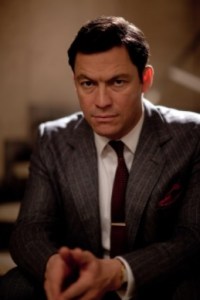
Dominic West

Daniel Craig, of course, has been talking about leaving the role ever since he was first cast.  I think Skyfall would have been a perfect movie for him to leave on.  (It would have saved the world from SPECTRE.)  However, Craig has apparently agreed to do at least one more Bond film.  Maybe two.

When Craig does leave, who will replace him?  Idris Elba, of course, is probably the most widely discussed possibility.  James Norton has also been named as a possibility.  Others that I’ve seen mentioned: Tom Hardy, Jack Huston, Aidan Turner, Tom Hiddleston, Michael Fassbender, Jamie Bell, and Henry Cavill (again).

My personal choice?  Dominic Cooper.  He’d be an off-center Bond but I think it would still be an intriguing pick.
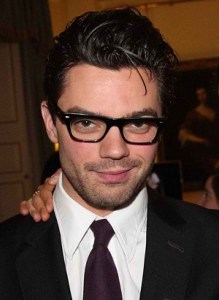
Dominic Cooper

Who knows what the future may hold for 007?  All I know is that I look forward to the speculation.

Happy National Trivia Day, everyone!
A Movie A Day #5: ffolkes (1979, directed by Andrew V. McLaglen)


A group of terrorists, led by Lou Kramer (Anthony Perkins, at his bitchiest) and Harold Schulman (Michael Parks), have hijacked Esther, a supply ship that services two North Sea oil rigs, Ruth and Jennifer.  Kramer demands that the British government pay him 25 millions pounds.  If he’s not paid, he’ll blow up the two oil rigs, destroying the British economy and causing a catastrophic environmental disaster.  Kramer has also rigged the Esther with explosives.  If anyone tries to board the boat, he will blow both the ship and himself up, taking the crew with him.

The British Prime Minister (Faith Brook, playing Margaret Thatcher) could pay the ransom or she could call in counter terrorism expert, Rufus Excalibur ffolkes (Roger Moore).

(Though the name undoubtedly looked odd to American audiences, ffolkes is a common Welsh surname and is often spelled with both fs lowercase.)

Made in between The Spy Who Loved Me and Moonraker, ffolkes was Roger Moore’s attempt to defy the typecasting that had defined his career.  Other than his loyalty to Queen and country, ffolkes has very little in common with James Bond.  James Bond was a suave smoker who bedded several women per film, lived in a hip London flat, drank Martinis, and was always ready with a quip.  ffolkes is humorless, drinks Scotch, hates cigarette smoke, and lives in an isolated castle.  The biggest difference between Bond and ffolkes?  Embittered by one bad marriage, ffolkes has no interest in women and refuses to work with them.  Instead, ffolkes loves cats.

ffolkes had always been overshadowed by Moore’s work as James Bond but it holds up well as a good, old-fashioned adventure film.  In many ways, Anthony Perkins’s Kramer feels like a predecessor to Die Hard‘s Hans Gruber and, if ffolkes had been released ten years later, it probably would have been referred to as being “Die Hard at sea.”  If you can get used to him playing someone other than James Bond, Roger Moore does a good job as the eccentric ffolkes and James Mason provides welcome support as ffolkes’s only friend.

Though ffolkes was a box office disappointment, it retains a cult following and it used to show up regularly on British television.  (I saw it at least once every summer that I went to the UK.)  When it was originally released in the U.K., it was called North Sea Hijack.   When it was released in the U.S., presumably under the assumption that American audiences wouldn’t be able to find the North Sea on a map, the title was changed to ffolkes, which probably left audiences more confused than the North Sea ever would have.  When the movie was first broadcast on American television, the title was changed yet again, this time to Assault Force.

To quote Roger Moore: “The film has so many title changes that I’ve lost count.  But everyone seems to like the character I played.”

For tomorrow’s movie a day, it’s another film where Roger Moore did not play James Bond, The Cannonball Run.

roger-moore-is-ffolkes