Today would have been Peter Fonda’s 86th birthday.
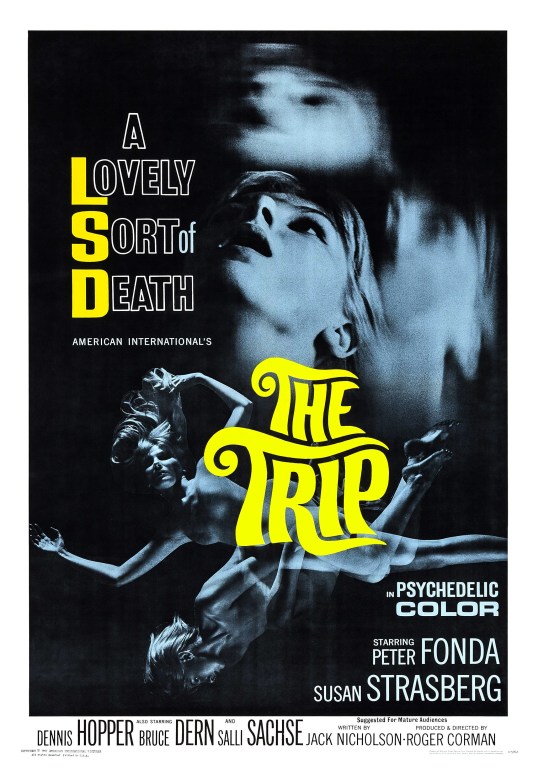
This scene is from Roger Corman’s 1967 film, The Trip. Corman dropped acid himself before filming Peter Fonda doing the same thing in this film. Regardless of how one views Corman’s cinematic recreation of Fonda’s experience with acid, The Trip is considered to be one of the first nuanced drug films. While it doesn’t endorse drug use, it also doesn’t descend into the hysterics of a film like Reefer Madness. Interestingly enough, the script was written by Jack Nicholson.
Here is Peter Fonda, exploring the city on LSD, in The Trip:
There are some Poverty Row westerns that even I can’t defend.
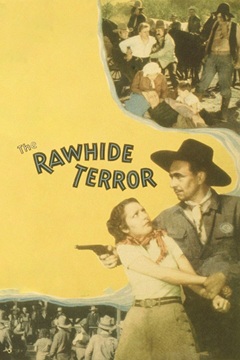
A group of bandits, disguised as Indians, attack a pioneer family. The father and the mother are killed but their twin boys survive. One wanders into the wilderness while the other stays with the remains of his family and waits for help. Years later, the town of Red Dog is thriving, with the former bandits as its leading citizens. Someone has been gunning down the former bandits. The townspeople demand that Sheriff Luke (Edmund Cobb) do something about the man that they’ve nicknamed the Rawhide Killer. First, however, Luke has to deal with Jim Briggs (William Barrymore), who has been abusing his son (Tommy Bupp). It also turns out that Jim Briggs is the Rawhide Killer and he’s looking for vengeance against those who killed his parents. Jim’s brother also lives in the town. Guess who!
The Rawhide Terror gets off to a good start with the bandit attack but it falls apart soon afterwards. I don’t know if it was just because I was watching a bad print but the sound quality was terrible and the lack of an original score really highlighted just how boring it is to watch men silently ride their horses from one side of the screen to the other. This movie was only 47 minutes long and half of it was made up of shots of people riding horses. Add some really bad acting and you’ve got a western that was bad even by the standards of a 1934 second feature.
Two men are credited with directing the film, though the production was actually supervised by Victor Adamson, the father of the notorious schlock filmmaker, Al Adamson.
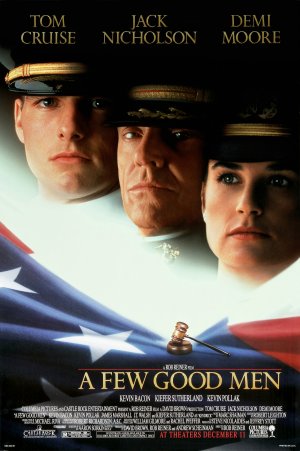
For today’s scene that I love, I decided to pick from the only Rob Reiner-directed film to be nominated for Best Picture of the Year, 1992’s A Few Good Men.
This scene features great work from two legitimate film stars, Tom Cruise and Jack Nicholson. It’s also the type of potentially stagey scene that would have proved problematic for a lot of other directors. Rob Reiner, however, handled it perfectly.
Whenever it’s time to share this film for Horrorthon, I have a little story that I like to tell:
Enter singing.
Little Shop.…Little Shop of Horrors.…Little Shop.…Little Shop of Terrors….
When I was 19 years old, I was in a community theater production of the musical Little Shop of Horrors. Though I think I would have made the perfect Audrey, everybody always snickered whenever I sang so I ended up as a part of “the ensemble.” Being in the ensemble basically meant that I spent a lot of time dancing and showing off lots of cleavage. And you know what? The girl who did play Audrey was screechy, off-key, and annoying and after every show, all the old people in the audience always came back stage and ignored her and went straight over to me. So there.
Anyway, during rehearsals, our director thought it would be so funny if we all watched the original film. Now, I’m sorry to say, much like just about everyone else in the cast, this was my first exposure to the original and I even had to be told that the masochistic dentist patient was being played by Jack Nicholson. However, I’m also very proud to say that — out of that entire cast — I’m the only one who understood that the zero-budget film I was watching was actually better than the big spectacle we were attempting to perform on stage. Certainly, I understood the film better than that screechy little thing that was playing Audrey.
The first Little Shop of Horrors certainly isn’t scary and there’s nobody singing about somewhere that’s green (I always tear up when I hear that song, by the way). However, it is a very, very funny film with the just the right amount of a dark streak to make it perfect Halloween viewing.
So, if you have 72 minutes to kill, check out the original and the best Little Shop of Horrors….
Will Randall (Jack Nicholson), the editor-in-chief of a New York Publishing house, doesn’t get much respect, not from his wife (Kate Nelligan), not from his boss (Christopher Plummer), and certainly not from Stuart Swinton (James Spader), the sleazy executive who is plotting to steal his job and destroy his marriage. But then, one night, Will runs over a black wolf on a country road. When he tries to helps it, the wolf bites him. Soon after, Will starts to feel different whenever the moon is full.
I remember that, when Wolf came out in 1994, some people said that casting Jack Nicholson as a werewolf seemed like typecasting. Nicholson apparently understood this as well so he actually downplays his usual mannerisms for the first part of the movie and gives a convincing performance as a harried executive who is worried he’s about to lose his job. It’s only after he is bitten that Will Randall starts to come alive. Not only does he develop the predator instinct necessary to survive in New York City but he also, without fear, pursues his boss’s daughter, Laura (Michelle Pfeiffer, at her most beautiful). Typecast or not, Jack Nicholson is excellent in Wolf. Equally good is James Spader as Will’s business rival, who starts to show some predator-like aspects of his own.
Director Mike Nichols was not normally a horror director and, around the midway point, his direction falters and there are times when he just seems to be going through the motions. He gets good performances from his cast but doesn’t know how to craft a good jump scare. The best parts of the movie are when Wolf uses lycanthropy as a metaphor for petty office politics, with Will “marking” his territory while talking to Stewart and showing a renewed killer instinct. Wolf works better as a social satire than as a horror movie.
Fans of Frasier will be happy to see David Hyde Pierce in a small but key role. He delivers the film’s best line. Fans of Friends may also notice David Schwimmer in a small role. He says nothing worth remembering. Their presence, though, is a reminder of just how much American culture changed in 1994. By the end of the year, both went from small roles in Wolf to co-starring in the two of the most popular sitcoms in America.
That’s a question that’s asked frequently in the 1975 film, Tommy. An adaptation of the famous rock opera by the Who (though Pete Townshend apparently felt that the film’s vision was more director Ken Russell’s than anything that he had meant to say), Tommy tells the story of a “deaf, dumb, and blind kid” who grows up to play a mean pinball and then become a cult leader. Why pinball? Who knows? Townshend’s the one who wrote Pinball Wizard but Ken Russell is the one who decided to have Elton John sing it while wearing giant platform shoes.
Tommy opens, like so many British films of the 70s, with the blitz. With London in ruins, Captain Walker (the almost beatifically handsome Robert Powell) leaves his wife behind as he fights for his country. When Walker is believed to be dead, Nora (Ann-Margaret) takes Tommy to a holiday camp run by Frank (Oliver Reed). Oliver Reed might not be the first person you would expect to see in a musical and it is true that he wasn’t much of a singer. However, it’s also true that he was Oliver Reed and, as such, he was impossible to look away from. Even his tuneless warbling is somehow charmingly dangerous. Nora falls for Frank but — uh oh! — Captain Walker’s not dead. When the scarred captain surprises Frank in bed with Nora, Frank hits him over the head and kills him. Young Tommy witnesses the crime and is told that he didn’t see anything and he didn’t hear anything and that he’s not going to say anything.
And so, as played by Roger Daltrey, Tommy grows up to be “deaf, dumb, and blind.” Various cures — from drugs to religion to therapy — are pursued to no avail. As the Acid Queen, Tina Turner sings and dances as if she’s stealing Tommy’s soul. As the Therapist, Jack Nicholson is all smarmy charm as he gently croons to Ann-Margaret. Eric Clapton performs in front of a statue of Marilyn Monroe. Ann-Margaret dances in a pool of beans and chocolate and rides a phallic shaped pillow. As for Tommy, he eventually becomes the Pinball Wizard and also a new age messiah. But it turns out that his new followers are just as destructive as the people who exploited him when he was younger. It’s very much a Ken Russell film, full of imagery that is shocking and occasionally campy but always memorable.
I love Tommy. It’s just so over-the-top and absurd that there’s no way you can ignore it. Ann-Margaret sings and dances as if the fate of the world depends upon it while Oliver Reed drinks and glowers with the type of dangerous charisma that makes it clear why he was apparently seriously considered as Sean Connery’s replacement in the roles of James Bond. As every scene is surreal and every line of dialogue is sung, it’s probably easy to read too much into the film. It could very well be Ken Russell’s commentary on the New Age movement and the dangers of false messiahs. It could also just be that Ken Russell enjoyed confusing people and 1975 was a year when directors could still get away with doing that. With each subsequent viewing of Tommy, I become more convinced that some of the film’s most enigmatic moments are just Russell having a bit of fun. The scenes of Tommy running underwater are so crudely put together that you can’t help but feel that Russell was having a laugh at the expense of people looking for some sort of deeper meaning in Tommy’s journey. In the end, Tommy is a true masterpiece of pop art, an explosion of style and mystery.
Tommy may seem like a strange film for me to review in October. It’s not a horror film, though it does contain elements of the genre, from the scarred face of the returned to Captain Walker to the Acid Queen sequence to a memorable side story that features a singer who looks like a junior Frankenstein. To me, though, Tommy is a great Halloween film. Halloween is about costumes and Tommy is ultimately about the costumes that people wear and the personas that they assume as they go through their lives. Oliver Reed goes from wearing the polo shirt of a holiday camp owner to the monocle of a tycoon to the drab jumpsuits of a communist cult leader. Ann-Margaret’s wardrobe is literally a character of its own. Everyone in the film is looking for meaning and identity and the ultimate message (if there is one) appears to be that the search never ends.
Who wouldn’t love to see a movie where a youngish Jack Nicholson played a French soldier who, while searching for a mysterious woman, comes across a castle that’s inhabited by both Dick Miller and Boris Karloff?
In Roger Corman’s 1963 film The Terror, New Jersey-accented Jack Nicholson is the least believable 19th century French soldier ever. However, it’s still interesting to watch him before he became a cinematic icon. His performance here is rather earnest, with little of the sarcasm that would later become his trademark. Boris Karloff is, as usual, great and familiar Corman actor Dick Miller gets a much larger role than usual. Pay attention to the actress playing the mysterious woman. That’s Sandra Knight who, at the time of filming, was married to Jack Nicholson.
Reportedly, The Terror was one of those films that Corman made because he still had the sets from his much more acclaimed film version of The Raven. The script was never finished, the story was made up as filming moved alone, and no less than five directors shot different parts of this 81 minute movie. Boris Karloff’s scenes were filmed first, with the other actors performing in front of a body double during their scenes. Among the many directors who filmed bits and pieces of TheTerror: Roger Corman, Jack Hill, Monte Hellman, Francis Ford Coppola, Coppola’s roommate Dennis Jakob, and even Jack Nicholson himself! (Despite this number of directors involved, Corman received the sole directorial credit.) Perhaps not surprisingly, the final film is a total mess but it does have a definite historical value.
(In typical Corman fashion, scenes from The Terror were later used in the 1968 film, Targets. In that film, Karloff plays a version of himself, an aging horror actor who watches The Terror and dismisses it as being “terrible.”)
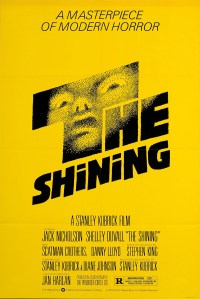
The Shining is one of the few horror movies that still scares me.
I say this despite the fact that I’ve lost track of the number of times that I’ve watched Stanley Kubrick’s 1980 adaptation of Stephen King’s third novel. It’s a film that I watch nearly every October and it’s a film that I’ve pretty much memorized. Whenever I watch the film, I do so with the knowledge that Jack Torrance (Jack Nicholson), the caretaker of the Overlook Hotel, is eventually going to start talking to ghosts and he’s going to try to kill his wife Wendy (Shelley Duvall) and his son, Danny (Danny Lloyd). Whenever I watch this film, I know what Jack is going to find Room 237. I know about the blood pouring out the elevator like the Tampax commercial from Hell. I know what Danny means when he says, “Redrum….” I know about the twins and their request of “Come play with us, Danny.” And, of course, I know about the film’s famous ending.
Whenever I start watching this film, I know everything that is going to happen. And yet, as soon as I hear the booming beat of of Wendy Carlos’s theme music and I see the overhead shot of the mountain roads leading to the Overlook Hotel, I start to feel uneasy. Whenever Barry Nelson (played the hotel’s general manager) starts to blandly explain that a previous caretaker got cabin fever and chopped up his twin daughters, I smile because Nelson delivers the lines so casually. But I also get nervous because I know Charles (or is it Delbert) Grady is going to show up later.
(Incidentally, Barry Nelson never gets enough credit for his brilliant cameo as the friendly but guarded hotel manager. In Stephen King’s original novel, the character was a stereotypically unsympathetic middle manager, a martinet who existed largely to be told off. In Kubrick’s film, the manager is one of the most fascinating of the supporting characters.)
I still get nervous when I see Wendy and Danny, sitting in their disturbingly sterile Colorado home while Jack interviews for the caretaker job. Wendy smokes and Danny talks about how his imaginary friend, Tony, doesn’t want to go to the hotel. With her unwashed her and her tentative voice, Shelley Duvall is a far cry from the book’s version of Wendy. However, Duvall’s Wendy is also a far more compelling character, an abused woman who finds her strength when her son is put in danger. Duvall is the perfect choice for Wendy because she seems like someone who you might see in the parking lot of your local grocery store, trying to load the bags in her car and keep an eye on her young child at the same time. She seems real and her reactions remind us of how we would probably react if we found ourselves in the same situation. Wendy makes the mistakes that we would all probably make but she refuses to surrender to her fear.
Why does The Shining remain so powerful and so frightening, even after repeated viewings? Most of the credit has to go to Stanley Kubrick. Stephen King has been very vocal about his dislike of the film, claiming that The Shining was more Kubrick’s version than his. King has a point. Film is a director’s medium and few directors were as brilliant as Stanley Kubrick. (Along with The Shining, Kubrick also directed Paths of Glory, 2001, Barry Lyndon, Dr, Strangelove, Spartacus, Lolita, The Killing, A Clockwork Orange, Eyes Wife Shut, and Full Metal Jacket. Stephen King directed Maximum Overdrive.) From the minute we see the tracking shots that wind their way through the desolate mountains and the empty hallways of the Overlook, we know that we’re watching a Kubrick film. Those tracking shots also put us in the same role as the spirits in the Overlook. We’re watching and following the characters, observing and reacting to their actions without being able to interact with them. King has complained that Kubrick’s version of The Shining offers up no hope. But, honestly, what kind of hope can one have after discovering that ghosts are real and they want to kill you? Once Jack Torrance finally accepts that drink from Joe Turkel’s Lloyd and meets Phillip Stone’s Grady, there is no more room for hope. King’s book ends with the Overlook destroyed and Jack Torrance perhaps redeeming himself in his last moments. Kubrick’s film suggests that Jack Torrance never cared enough about his family to be worthy of redemption and that the evil that infected the Overlook is never going to be destroyed. In the end, not even the kindly presence of Scatman Crothers in the role of Dick Halloran can bring any real hope to the Overlook.
The Shining is unsettling because, more than being a ghost story, it’s a film about being tapped. Physically, the Torrances are trapped by the blizzard. Mentally, Jack is trapped by his addictions and his resentments. One gets the feeling that he’s deeply jealous of Danny, viewing him as someone who came along and took away all of Wendy’s attention. Wendy is trapped in a bad and abusive marriage and there’s something very poignant about the way Duvall both captures Wendy’s yearning for outside contact (like when she uses the radio to communicate with the local rangers station) and her hope that, if she’s just supportive enough, Jack will get his life together. Danny’s trapped by his psychic visions and his knowledge of what’s to come. The victims of the Overlook appear to be trapped as well. Grady’s daughters are fated to always roam the hallways, looking for someone to play with them. The Woman in 237 will always wait in her bathtub. Were these spirits evil before they died or were the twisted by the Overlook? It’s an unanswered question that sticks with you.
As I mentioned earlier, Stephen King has been very vocal about his dislike of both The Shining and its director. (King once boasted about outliving Kubrick, a comment that showed a definite lack of class on the part of America’s most commercially successful writer.) Why does King hate the Kubrick film with such a passion?
I have a theory. Both King’s second novel, Salem’s Lot, and The Shining feature a writer as the man character. In both cases, King obviously related to the main character. Ben Mears in Salem’s Lot is charming, confident, articulate, and successful. He’s a writer that everyone respects and he’s even well-known enough to have a file with the FBI. Jack Torrance, on the other hand, is a struggling writer who has a drinking problem, resents authority figures (like the hotel manager), and has issues with his father. Torrance is a much more interesting character than Ben Mears, precisely because Torrance is so flawed. (King, and I give him full credit for this, has been open about his own struggles with substance abuse and how he brought his own experiences to the character of Jack Torrance.) I’ve always suspected that, at the time that King wrote Salem’s Lot and The Shining, Ben Mears was King’s idealized version of himself while Jack Torrance, with all of his struggles and flaws, reflected how King actually felt about himself. (That the Wendy Torrance of the novel is a beautiful blonde who sticks with her husband despite his drinking problem feels like a bit of wish fulfillment on the part of King.) When Stanley Kubrick made his version of The Shining and presented Jack Torrance as essentially being a self-centered jerk who, even before arriving at the hotel, had a history of abusing his wife and son, it’s possible King took it a bit personally. Since King had poured so much of himself into Jack Torrance, it was probably difficult to see Kubrick present the character an abusive narcissist whose great novel turned out to be literally a joke. And so, Stephen King has spent the last 45 years talking about how much he hates Kubrick’s film.
King’s opinion aside, Kubrick’s The Shining is probably the most effective Stephen King adaptation ever made, precisely because Kubrick knew which parts of the book would work cinematically and which parts were best excised from the plot. As opposed to later directors who often seem intimidated by King’s fame, Kubrick was able to bring his own signature style to the story. Stanley Kubrick’s The Shining is a masterpiece and one that I look forward to revisiting this October.
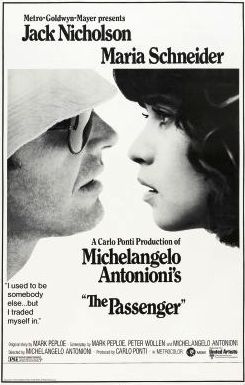
Today’s scene that I love comes from 1975’s The Passenger, a film directed by Michelangelo Antonioni. Antonioni was born 113 years ago today, in what was then the “Kingdom of Italy.”
In The Passenger, Jack Nicholson plays a journalist who, because he’s bored with his life, impulsively assumes the identity of a deceased American businessman. What he discovers is that the businessman was an arms dealer and that the people that the arms dealer were doing business with still expect to get their weapons. Despite the fact that he knows that it might cost him his life, Nicholson is still drawn to see just how far he can take his new existence.
The film’s enigmatic final scene, in which Nicholson goes to a hotel to wait as both the people who double-crossed and his wife search for him, is Antonioni at his best.
The scene below is, of course, from Stanley Kubrick’s 1980 masterpiece, The Shining.
In this scene, Jack Torrance (Jack Nicholson) stumbles into the Overlook Hotel’s ballroom, still fuming over having been accused of abusing his son. A recovering alcoholic, Jack sits at the bar and thinks about how he would give up his soul for just one one drink. And, on cue, Lloyd (Joe Turkel) appears.
As I was watching this scene, it occurred to me that, way back in 1980, there probably was some guy named Lloyd who saw this movie in a theater and was probably totally shocked when Jack suddenly stared straight at him and said, “Hey, Lloyd.”
The brilliance of this scene is that we never actually see Lloyd materialize. We see him only after Jack has seen him. So, yes, Lloyd could be a ghost. But he could also just be a figment of Jack’s imagination. Jack very well could just be suffering from cabin fever. Of course, by the end of the movie, we learn the truth.
Everyone always talks about Jack Nicholson’s performance as Jack. Some people love it and some people hate it. (I’m in the first camp.) However, let’s take a minute to appreciate just how totally creepy Joe Turkel is in this scene. Turkel was a veteran character actor and had appeared in two previous Kubrick films, The Killing and Paths of Glory. Two years after appearing in The Shining, Turkel played what may be his best-known role, Dr. Eldon Tyrell in Blade Runner. Today, incidentally, would have been Joe Turkel’s 98th birthday.
From Stanley Kubrick’s The Shining, here’s Jack Nicholson and Joe Turkel:


 Through the Shattered Lens