1973’s The Norliss Tapes begins with a disappearance.
David Norliss (Roy Thinnes), a California-based journalist, has vanished. Before he disappeared, he had started work on a book that would have detailed his own adventures investigating the paranormal. Though Norliss vanishes, he leaves behind several audiotapes in which he discusses some of the frightening things that he has seen. Searching for clue about Norliss’s disappearance, his editor, Sanford T. Evans (Don Porter), sits down and listens to the tapes.
(Incidentally, Sanford T. Evans is a wonderful name for an editor. It’s a name that just says, “My father knew Hemingway and I went to the University of Pennsylvania as a legacy.’)
As Evans listens to each tape, we watch the story unfold from Norliss’s point of view. In this film, we watch as Norliss investigates an incident in which Ellen Sterns Cort (Angie Dickinson) claims that she was recently attacked by her dead husband, James Cort (Nicki Dimitri). James was an artist who, in his final days, became obsessed with the occult and fell under the influence of the Mademoiselle Jeckiel (Vonetta McGee), a mysterious woman who claimed to appreciate James’s art and who gave him a scarab ring that he insisted on being buried with.
Norliss interviews Ellen and investigates her story. He’s far more sympathetic to the idea of James having returned from the dead than the local sheriff (Claude Akins) is. Of course, the sheriff has problems of his own. Dead bodies keep turning up in his county, their skin gray and their bodies drained of blood. Hmmm …. I wonder if that could have anything to do with James Cort and his scarab ring….
The Norliss Tapes is a pretty simple film. Norliss shows up and then basically waits around until James Cort makes an appearance. The film only runs 72 minutes and it’s very much a pilot for a television series that never went into production, Apparently, each episode would have featured Stanford listening to a different tape and hearing about David Norliss and a weekly guest star dealing with some sort of supernatural occurrence. Director Dan Curtis was also responsible for the cult television series, Kolchak: The Night Stalker, and The Norliss Tapes feels very much like a dry run for that show. The main difference is that Roy Thinnes’s David Norliss is nowhere near as nervous as Darren McGavin’s Carl Kolchak.
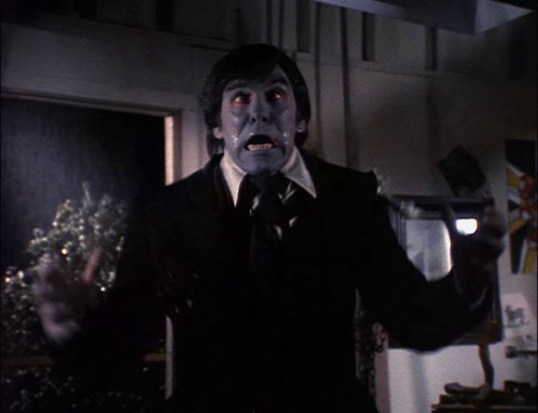
That said, the exact details for what’s going on with James Cort are almost ludicrously complicated. It turns out that James Cort is not only trying to cheat death but he’s also helping an ancient Egyptian deity invade our world. It’s best to ignore the nonsense about the Egyptian Gods and instead just focus on how creepy the undead James Cort is. With his hulking frame, his gray skin, and his nearly glowing eyes, Cort is a truly frightening monster and he’s certainly the most impressive thing about this movie. What makes Cort such an effective villain is how angry he seems to be. Whenever he’s on screen, he’s either bursting through a door or chasing someone. He’s pure nightmare fuel.
TheNorlissTapes never became a series but it did do well in Europe, where it was released in theaters. The Norliss Tapes still has a cult following, not bad for a failed pilot. Who knows what other adventures David Norliss could have had?
Today’s Horror on the Lens is The Norliss Tapes, a 1973 made-for-TV movie that was also a pilot for a television series that, unfortunately, was never put into production.
Reporter David Norliss (Roy Thinnes) has disappeared. His friend and publisher, Stanford Evans (Don Porter), listens to the tapes that Norliss recorded before vanishing. (Stanford Evans, it must be said, is a great name for an editor.) Each tape details yet another paranormal investigation. (Presumably, had the series been picked up, each tape would have been a different episode.) The first tape tells how Norliss investigated the mysterious death of an artist who apparently returned from the grave.
For a made-for-TV movie, The Norliss Tapes is pretty good. It’s full of atmosphere and features a genuinely menaching yellow-eyed zombie monster. The film was directed by Dan Curtis, who was responsible for several made-for-TV horror films and who also created the deathless TV show, Dark Shadows. Curtis also directed a few feature films. Burnt Offerings,for instance, will be forever beloved for its scene of annoying little Lee Montgomery getting crushed by a chimney. If you ever get a chance to listen to the director’s commentary that Dan Curtis recorded for the Burnt Offerings DVD release, you must do so. Curtis comes across as the crankiest man on the planet and it’s actually kind of fascinating to listen to. His irritation when Karen Black keeps asking him if he knows the name of the actor who played the ghostly chauffeur is truly an amazing thing to here. (For the record, the actor’s name was Anthony James, he also had important supporting roles in two best picture winners — In The Heat of the Night and Unforgiven — and yes, he was one of the best things about Burnt Offerings. Karen Black knew what she was talking about.)
But back to The Norliss Tapes!
Admittedly, this is not the first Halloween in which I’ve shared The Norliss Tapes with our readers. Back in both 2015 and 2021, The Norliss Tapes was one of our “horrors on the lens.” Unfortunately, there’s only so many good quality, public domain horror films available on YouTube so, occasionally, a movie is going to show up more than once over the years. But, as long as it’s good film, who cares?
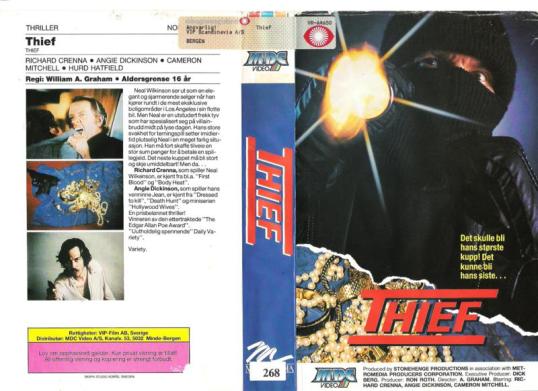
Welcome to Retro Television Reviews, a feature where we review some of our favorite and least favorite shows of the past! On Sundays, I will be reviewing the made-for-television movies that used to be a primetime mainstay. Today’s film is 1971’s Thief! It can be viewed on Tubi and YouTube.
Neal Wilkinson (Richard Crenna) would appear to be living a great life. He has a nice house in the suburbs. He has a beautiful girlfriend named Jean Melville (Angie Dickinson). As he heads into middle-age, he is still fit and handsome and charming. He dresses well, or at least well by the standards of the early 70s. (By the standards of today, a few of his ties are a bit too wide.) Everyone believes that Neal has a nice and comfortable job as an insurance agent.
Of course, the truth is far different.
Neal is a veteran con man and a thief. He’s just recently been released from prison and his deceptively friendly parole officer (played by the great character actor, Michael Lerner) is convinced that Neal will screw up again eventually. And, of course, Neal has screwed up. A gambling addict, he is $30,000 in debt. Can Neal steal enough jewelry from enough suburban homes to pay off his debt? Can a man like Neal change his ways?
This is a surprisingly somber made-for-TV movie. Just from the plot description and the film’s first few minutes, you might expect Thief to be a light-hearted caper film in which Neal and Jean work together to pull off one last heist so that Neal can retire. Instead, Neal spends almost the entire film lying to Jean and there’s hardly a light moment to be found. Neal says that he wants to retire from his life of crime but, as the film makes clear, that’s a lie that he’s telling himself. Neal cannot stop stealing and gambling because he’s as much of an addict as the wild-haired junkie (Michael C. Gwynne) who briefly confronts Neal at the parole office. At one point, Jean tells Neal, “The more I know you, the less I know you,” but the truth of the matter is that Neal is so deep in denial about the futility of his life that he doesn’t even know himself.
It’s not a particularly happy film. Richard Crenna is ideally cast as Neal, playing him with enough charm that the viewer can buy that he could talk his way out of being caught in a stranger’s backyard but with also with vulnerability that the viewer can see his fate, even if he can’t. Thief also provides a rare opportunity to see Cameron Mitchell playing a sympathetic role. Mitchell is cast as Neal’s attorney, who continually tries to get Neal to stop messing up but who ultimately knows that his attempts to reform Neal are just as futile as Neal’s attempts to go straight.
The movie ends on a surprisingly fatalistic note, one that suggests that there’s only one way to truly escape from a life of crime. I can only imagine how viewers responded in 1971, when they turned on their television and found themselves watching not a light-hearted caper film but instead a bleak examination of criminal ennui. It’s not a happy film but it is more than worth watching for Richard Crenna’s lead performance.
Today’s Horror on the Lens is The Norliss Tapes, a 1973 made-for-TV movie that was also a pilot for a television series that, unfortunately, was never put into production.
Reporter David Norliss (Roy Thinnes) has disappeared. His friend and publisher, Stanford Evans (Don Porter), listens to the tapes that Norliss recorded before vanishing. (Stanford Evans, it must be said, is a great name for an editor.) Each tape details yet another paranormal investigation. (Presumably, had the series been picked up, each tape would have been a different episode.) The first tape tells how Norliss investigated the mysterious death of an artist who apparently returned from the grave.
For a made-for-TV movie, The Norliss Tapes is pretty good. It’s full of atmosphere and features a genuinely menaching yellow-eyed zombie monster. The film was directed by Dan Curtis, who was responsible for several made-for-TV horror films and who also created the deathless TV show, Dark Shadows. Curtis also directed a few feature films. Burnt Offerings,for instance, will be forever beloved for its scene of annoying little Lee Montgomery getting crushed by a chimney. If you ever get a chance to listen to the director’s commentary that Dan Curtis recorded for the Burnt Offerings DVD release, you must do so. Curtis comes across as the crankiest man on the planet and it’s actually kind of fascinating to listen to. His irritation when Karen Black keeps asking him if he knows the name of the actor who played the ghostly chauffeur is truly an amazing thing to here. (For the record, the actor’s name was Anthony James, he also had important supporting roles in two best picture winners — In The Heat of the Night and Unforgiven — and yes, he was one of the best things about Burnt Offerings. Karen Black knew what she was talking about.)
But back to The Norliss Tapes!
Admittedly, this is not the first Halloween in which I’ve shared The Norliss Tapes with our readers. Back in 2015, The Norliss Tapes was one of our “horrors on the lens.” Unfortunately, there’s only so many good quality, public domain horror films available on YouTube so, occasionally, a movie is going to show up more than once over the years. But, as long as it’s good film, who cares?
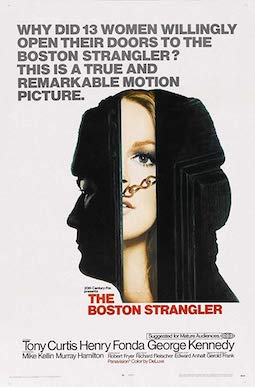
Between June 14, 1962 and January 4, 1964, 13 women between the ages of 19 and 85 were murdered in the Boston area. It was felt that they had all been killed by the same man, a monster known as The Boston Strangler. Though the police investigated many suspects, they never made an arrest. (One should remember that this was before the time of DNA testing or criminal profiling. The term “serial killer” had not even been coined. Today, sad to say, we take the existence of serial killers for granted. In the 60s, it was still an exotic concept.)
In October of 1964, a man named Albert DeSalvo was arrested and charged with being “the Green Man,” a serial rapist who pretended to be a maintenance man in order to gain access to single women’s apartments. After he was charged with rape, detectives were surprised when DeSalvo confessed to being the Boston Strangler. When confessing to the murders, DeSalvo got a few minor details wrong but he also consistently included other details that the police hadn’t released to the general public. Even when put under hypnosis, DeSalvo’s recalled those previously unreleased details. Because DeSalvo was already going to get a life sentence on the rape charges and because there wasn’t any physical evidence that, in those pre-DNA, could have conclusively linked DeSalvo to the crimes, he was never actually charged with any of the murders. Still, with his confessions, the cases were considered to be closed.
In 1966, before DeSalvo was even sentenced for the Green Man rapes, Gerold Frank wrote The Boston Strangler, a book about the murders, the investigations, and DeSalvo’s confessions. It was one of the first true crime books and, in 1968, it was adapted into one of the first true crime films.
Directed by Richard Fleischer (whose filmography somehow includes not only this film but also Dr. Dolittle, Fantastic Voyage, 20,000 Leagues Under the Sea, Conan The Destroyer, and Red Sonja), The Boston Strangler is really two films in one. The first half deals with the crimes and the police (represented by Henry Fonda, George Kennedy, Murray Hamilton, and James Brolin) investigation. This half of the film is pulpy and crudely effective, full of scenes of the cops rounding up every sex offender who they can find. There’s a scene where Henry Fonda talks to a prominent man in a gay bar that’s handled with about as much sensitivity as you could expect from a 1960s studio film. (On the one hand, the man is portrayed with respect and dignity and he’s even allowed to call out the patron saint of 1960s mainstream liberal piety, Henry Fonda, for being close-minded. On the other hand, everyone else in the bar is a stereotype and we’re meant to laugh at the idea that anyone could think that Henry Fonda could be gay.) Director Richard Fleischer makes good use of split screens, creating an effective atmosphere of paranoia. The scene where a woman tries to keep an obscene caller on the phone long enough for the police to trace his location made my skin crawl and served as a reminder that perverts predate social media. Another scene where a flamboyant psychic tries to help the police goes on for a bit too long but, at the same time, you’re happy for a little relief from crime scenes and terrified, elderly women discovering that their neighbors have been murdered.
The second half of the film features Tony Curtis as Albert DeSalvo. Curtis is effective as DeSalvo, playing him as being a self-loathing brute who is incapable of controlling his impulses. (Before committing one of his crimes, DeSalvo watches the funeral of John Kennedy, his face wracked with pain. Is the film suggesting that DeSalvo murdered to deal with the stress of life in America or is it suggesting that the hate that killed Kennedy was a symptom of the same sickness that drove DeSalvo? Or is the film just tossing in a then-recent event to get an easy emotional reaction from the audience?) As one might expect from a mainstream film made in 1968, The Boston Strangler takes something of a wishy washy approach to the question of whether DeSalvo’s crimes were due to sickness or evil. Yes, the film says, DeSalvo was bad but it’s still society’s fault for not realizing that he was bad. It’s the type of approach designed to keep both the law-and-order types and the criminal justice reformers happy but it ultimately feels a bit like a cop out. Still, the shots of DeSalvo isolated in his padding cell have an undeniable power and Curtis is both pathetic and frightening in the role. In its more effective moments, the second half of the film works as a profile of a man imprisoned both physically and mentally.
Watching the film today, it’s hard not to consider how different The Boston Strangler is from the serial killer films that would follow it. DeSalvo is not portrayed as being some sort of charming or interesting Hannibal Lecter or Dexter-type of killer. Instead, he’s a loser, a barely literate idiot who struggled to articulate even the simplest of thoughts. The cops aren’t rule-breakers or renegades. Instead, they’re doing their jobs the best that they can. Though the film ends with a title card saying that it’s important for society to make more of an effort to spot people like DeSalvo before they kill, The Boston Strangler has a surprising amount of faith in both the police and the law and it assumes that you feel the same way. It’s a film that takes it for granted the audience respects and trusts authority. It’s portrayal of the police is quite a contrast to the rebel cops who dominate pop culture today.
After the film came out, DeSalvo recanted his confessions and said that he had never killed anyone. He was subsequently murdered in prison in 1971, not due to his crimes but instead because he was independently selling drugs for prices cheaper than what had been agreed upon by the prison’s syndicate. After his death, many books were written proclaiming that DeSalvo was innocent and that the real Boston Strangler was still on the streets. Others theorized that the actual Strangler was DeSalvo’s cellmate and DeSalvo, knowing he was going to prison for life regardless, confessed in return for money being sent to his family. That said, in 2013, DNA evidence did appear to conclusively link DeSalvo to the murder of 19 year-old Mary Sullivan. Of course, that doesn’t mean that DeSalvo necessarily committed the other 12 murders. In fact, from what we’ve since learned about the pathology of serial killers, it would actually make more sense for the murders to have been committed by multiple killers as opposed to just one man.
Regardless of whether DeSalvo was guilty or not, The Boston Strangler is an uneven but ultimately effective journey into the heart of darkness.
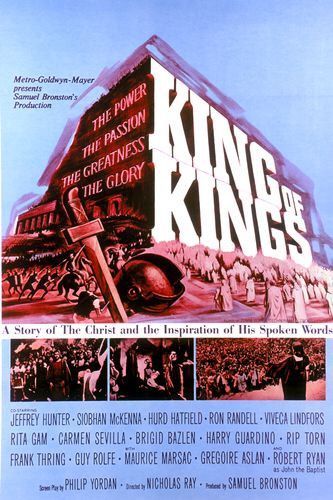
The 1961 film, King of Kings, was the final biblical film that I watched on Easter. Like The Greatest Story Ever Told, it tells the story of Jesus from the Nativity to the Ascension. Like The Greatest Story Ever Told, it’s an epic film that was directed by a renowned director. (In this case, Nicholas Ray.) Like The Greatest Story Ever Told, King of Kings also has a huge cast and there’s a few familiar faces to be seen, though it doesn’t really take the all-star approach that George Stevens did with his telling of the story.
Probably the biggest star in King of Kings was Jeffrey Hunter, who played Jesus. Hunter was in his 30s at the time but he still looked young enough that the film was nicknamed I Was A Teenage Jesus. (Some of that also probably had to do with the fact that Nicholas Ray was best known for directing Rebel Without A Cause.) But then again, for a man who had so many followers, Jesus was young. He hadn’t even reached his 40th birthday before he was crucified. As well, his followers were also young while his many opponents were representatives of the establishment and the old way of doing things. It makes perfect sense that Jesus should be played by a young man and Hunter gives a good performance. As opposed to so many of the other actors who have played Jesus in the movies, Jeffrey Hunter is credible as someone who could convince fishermen to throw down their nets and follow him. He’s passionate without being fanatical and serious without being grim. He’s a leader even before he performs his first miracle.
King of Kings is one of the better films that I’ve seen about the life of Jesus. While remaining respectful of its subject, it also feels alive in the way that so many other biblical films don’t. Perhaps not surprisingly, Nicholas Ray focuses on the idea of Jesus as a rebel against the establishment. Ray emphasizes the casual cruelty of the Romans and their collaborators. When John the Baptist (Robert Ryan) is arrested by Herod (Frank Thring), it’s not just so the filmmakers can have an excuse to work Salome (Brigid Bazlen) in the film. It’s also to show what will happen to anyone who dares to challenge the establishment. When Jesus visits John the Baptist in his cell, it’s a summit between two rebels who know that they’re both destined to die for the greater good. When Pilate (Hurd Hatfield) makes his appearance, he’s smug and rather complacent in his power. He’s not the quasi-sympathetic figure who appears in so many other biblical films. Instead, he’s the epitome of establishment arrogance.
As a director, Nicholas Ray keeps things simple. This isn’t Ben-Hur or The Ten Commandments. The emphasis is not on grandeur. Instead, the film is about common people trying to improve the world in which they’re living, while also preparing for the next. Jeffrey Hunter gives an excellent performance as Jesus and, all in all, this is one of the better and more relatable biblical films out there.
A film about David, the young shepherd and musician who eventually became the second king of Israel?
That sounds like a great idea!
After all, David is one of the most compelling figures in history. Whether it’s the slaying of Goliath or his ill-fated friendship with Jonathan or his uneasy relationship with Saul, every detail about David’s youth feels perfect for cinematic drama. And then, once David become king of Israel, the drama doesn’t end. David finds himself dealing with both politics and temptation. He falls in lust with Bathsheba and, in a moment of terrible weakness, he arranges for her husband to be killed in battle. His own son, Absalom, turns against him and then, despite David’s very clear orders to the contrary, Absalom is executed while he helplessly hangs from a tree. For every triumph in David’s life (like the time he used a slingshot to take down Goliath), there’s a tragedy. For all of David’s attempts to be a good and wise king, he still struggles with his own weaknesses. Every detail of David’s life seems like it belongs on the big screen.
So, now that we’ve agreed that the life of David would be perfect for a movie, consider this: A film about David, a master of both poetry and politics who was known for his deep emotions, starring Richard Gere?
Uhmmmm….
The 1985 film, King David, has all the potential to be a great film but it’s pretty much doomed by the fact that David is played by Richard Gere. Today, of course, Richard Gere is an above average character actor who is well-cast as older, seemingly successful men who have never quite conquered their own self-doubt. That’s not the Richard Gere who shows up in King David. The Richard Gere who shows up in King David is the blank-faced, youngish Richard Gere who was best-known for films like An Officer and a Gentleman and American Gigolo. Richard Gere is so miscast as David that just the sight of him takes you out of the film’s reality. While the film plays out, you find yourself saying, “Richard Gere just killed Goliath. Richard Gere just spied on Bathsheba. Richard Gere is dancing through the streets of Jerusalem.”
There are a few good things about King David. Edward Woodward gives a good performance as Saul, who has always been overshadowed David but who was, in his own way, almost as compelling a character. The film does a credible-enough job recreating the ancient world and it’s entertaining to see the iconic Italian actor George Eastman show up as Goliath. Far too often, though, King David becomes one of those films where every big action scene is shown in slow motion and there’s too many close-ups of swords being tossed into the air.
According to Wikipedia (that’s right, I did some “serious” research for this review), King David was actually made because it was felt that the film would be able to draw in the same audience that loved Star Wars. That turned out to not be true as the film was a huge flop and apparently damaged a lot of careers. But, flop or not, it was still on TV last night, which just proves that movies are forever.
As a classic film blogger, I’m contractually obligated to cover film noir during the month of “Noirvember”, so every Tuesday this month I’ll be shining the spotlight on movies of this dark genre!
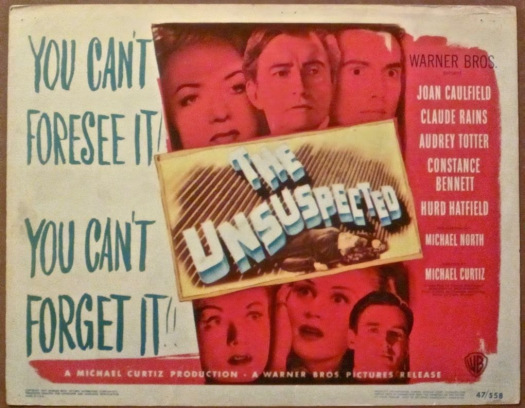
Claude Rains received second billing in 1947’s THE UNSUSPECTED, but there’s no doubt who’s the star of this show. Nobody could steal a picture like Rains, as I’ve stated several times before – his sheer talent commands your attention! Here, he gives a chilling portrayal of a cold, calculating murderer in a Michael Curtiz noir based on a novel by Edgar Award-winning mystery writer Charlotte Armstrong, and runs away with the film. Joan Caulfield gets top billing, but let’s be honest – it’s Claude’s movie all the way!
The film begins with a frightening scene played mostly in shadow, as a figure creeps into the office of Victor Grandison (Rains) and murders his secretary Robyn Wright while…
Tom Selleck is Phil Blackwood, a best-selling mystery author who is suffering from writer’s block. Paulina Porizkova in Nina, a beautiful Romanian who has been accused of murder. When Phil sees Nina being arraigned in court, it is love at first sight. He provides her with a false alibi and invites her to stay with him while he writes a book based on her case. At first, Phil thinks that she is innocent but he soon has his doubts, especially after Nina shows off her skills as a knife thrower.
1989 was a strange year for Australian director Bruce Beresford. On the one hand, he directed Driving Miss Daisy, which went on to win the Oscar for the best picture. On the other hand, he also directed Her Alibi, a disjointed comedy that feels like an extended episode of Magnum P.I. (Even Sellecks’ narration feels like a throwback to his star-making role. But if Phil is a best-selling writer, why does his narration sound so clunky and clichéd?) Her Alibi is a predictable film, not really bad but just very bland. It tries to duplicate the style of a classic screwball comedy but it lacks the bite necessary to make much of an impression. On the plus side, the great William Daniels was given a few good lines as Phil’s caustic agent and Paulina Porizkova was absolutely beautiful. The scene where Nina gives Phil a haircut almost makes the movie worth it.
One final note: When watching Her Alibi, be sure to pay attention to the scene where Phil holds up his latest novel. The book is so thin that it looks like it is only 20 pages long, at the most.



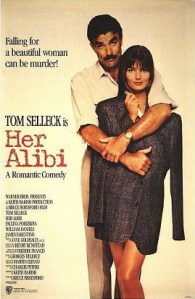 Tom Selleck is Phil Blackwood, a best-selling mystery author who is suffering from writer’s block. Paulina Porizkova in Nina, a beautiful Romanian who has been accused of murder. When Phil sees Nina being arraigned in court, it is love at first sight. He provides her with a false alibi and invites her to stay with him while he writes a book based on her case. At first, Phil thinks that she is innocent but he soon has his doubts, especially after Nina shows off her skills as a knife thrower.
 Through the Shattered Lens