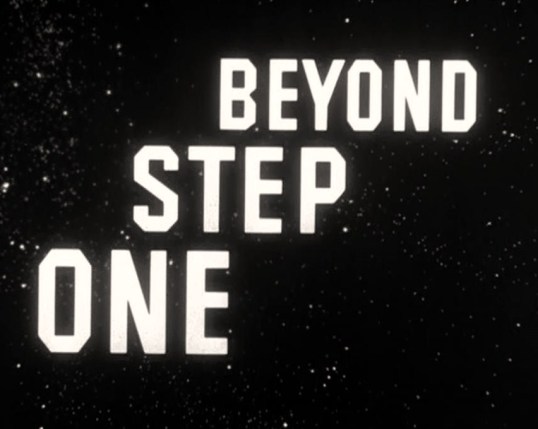
On tonight’s episode of One Step Beyond, Cloris Leachman plays Rita Wallace, an American photographer in France. She’s looking for a model whose face will serve as the ultimate symbol of the country. One day, a haunted-looking man (Marel Dalio) shows up at her apartment. She thinks he’s a model. The truth, needless to say, is something quite different….
This episode features good performances from both Leachman and Dalio. In real life, Dalio was an icon of French cinema and a favorite of Jean Renoir’s. When the Nazis invaded France, the Jewish Dalio fled Paris and, after a harrowing journey, eventually made it to America. In America, he played the croupier in Casablanca and appeared in several other films. Tragically, the rest of his family did not escape and were murdered by the Nazis. Dalio returned to France after the end of the war and remained an in-demand character actor for several more decades, making his final film appearance in 1980.
The Darkroom originally aired on February 10th, 1959.
Today’s horror on the lens is The Screaming Woman, a 1972 made-for-TV movie that’s based on a Ray Bradbury short story.
Olivia de Havilland plays Laura Wynant, who has just returned home from a stay at a mental institution. Soon after her arrival, Laura starts to hear a woman crying for help. Laura becomes convinced that the woman has been buried alive on her property but, because of her debilitating arthritis, she can’t dig the woman up on her own. And, because of her own mental history, no one believes her when she tries to tell them about what she’s hearing!
The Screaming Woman features screen legend Olivia De Havilland giving a sympathetic performance as Laura. It also features two other luminaries of the golden age of Hollywood — Joseph Cotten and Walter Pidgeon — in supporting roles. It’s a good little thriller so watch and enjoy!
(And of course, I should mention that the great Olivia De Havilland is still with us, 103 years old and living in France.)
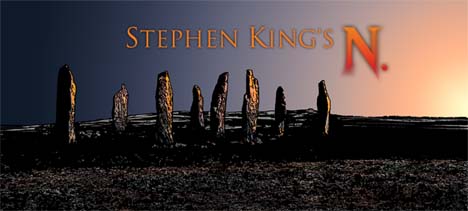
What if you’re not crazy? What if you’re finally seeing the truth that everyone else is too afraid to see? Is the revelation too much for your mind? Could your mind be both the doorway to hell and the gate keeping the evil old ones at bay? Most importantly, can a person’s mental illness infect another person? Stephen King’s “N” is a hybrid of Lovecraft and Modern Psychology where we are forced to learn the answers to these questions.
The story was both a novella and adapted as a comic book/olde-timey radio-show. Confused? Let me explain. N was first published as a novella, but instead of getting made into a comic book or as is typical of King’s work- a movie or miniseries, it became something else. Marc Guggenheim adapted the work as an all dialogue webseries similar to the serials of the 1930s and 40s and presented the story as a series of hyper-detailed comic illustrations. You can see it in its entirety below.
I have also read the novella several times. Honestly, sometimes I’m not sure why I like a particular Stephen King story more than another, but it seems to be when the characters are so real that they could be you or your neighbor. Yes, the monsters are spooky, but it’s the people, their story, their lives, who just happen to have to also deal with a monster or four.
The story begins with Sheila Bonsaint who is in mourning from her brother’s suicide. She is calling her friend who is reminiscent of Anderson Cooper to look into why her brother John killed himself. She believes it’s because of his contact with a patient named N. The story shifts to John’s perspective describing a patient N who suffers from extreme OCD. N believes his OCD rituals keep the portals between our world and the hell world closed.
N describes how he encountered a field with rocks similar to Stonehenge in Maine and that by viewing the structure, he caused the structure to activate and potentially release an ancient evil that will consume mankind. He begins to do OCD rituals to keep the portal closed, but realizes that he must sacrifice his life in order to shut the gate forever. Unfortunately, John becomes infected by N’s mental disorder and becomes overcome with the need to investigate the structure, which activates it again and causes him to spiral into the same OCD as N.
This story struck a very strong chord with me. Last year, I began to take a long road into facing my own PTSD experiences in the Army. When I would tell the medical professionals in the VA about what happened, one cried. My stories had infected them and left them different afterwards. The world was less clean, less safe, and much darker. Now, like N, if I have to tell a person the stories, I begin by saying that I am sorry because what I will tell you, will change you. I suppose that is what humanity does; we share our burdens and our curses. Maybe that’s how we keep the gate to hell closed?
It’s another year and another October here at Through the Shattered Lens. Those who have continued to follow our shenanigans and escapades here know that October is a favorite month for us here. Co-founder Lisa Marie Bowman is one who loves this month. As I pop my head in to see how things are going I would like to add my two-bits to make this latest month-long horror theme be as memorable as years past.
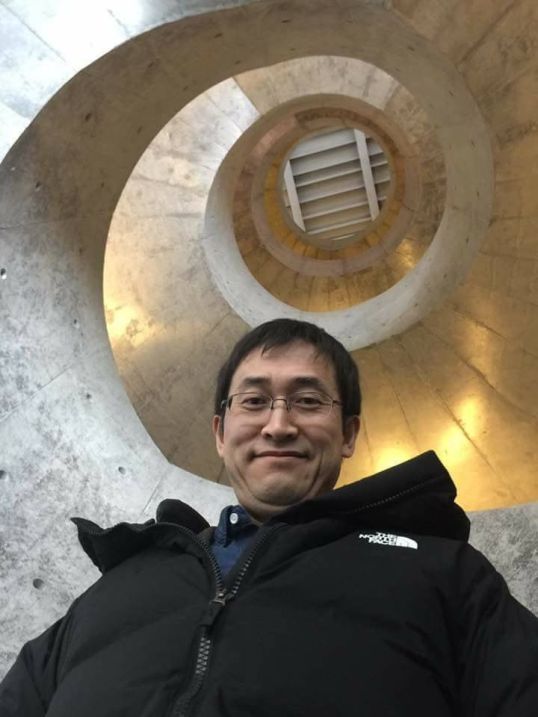
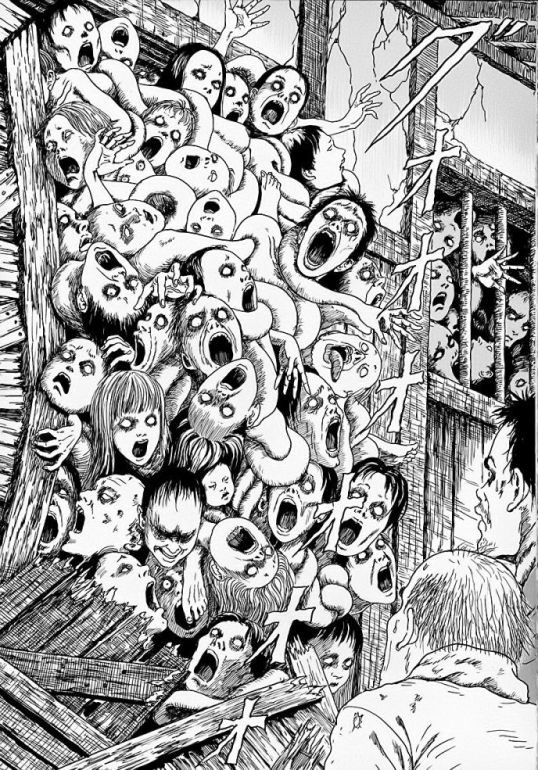
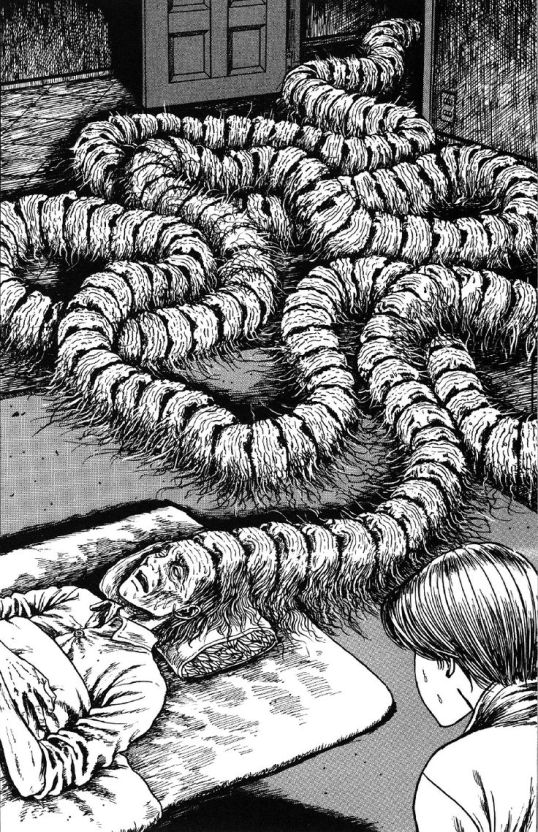
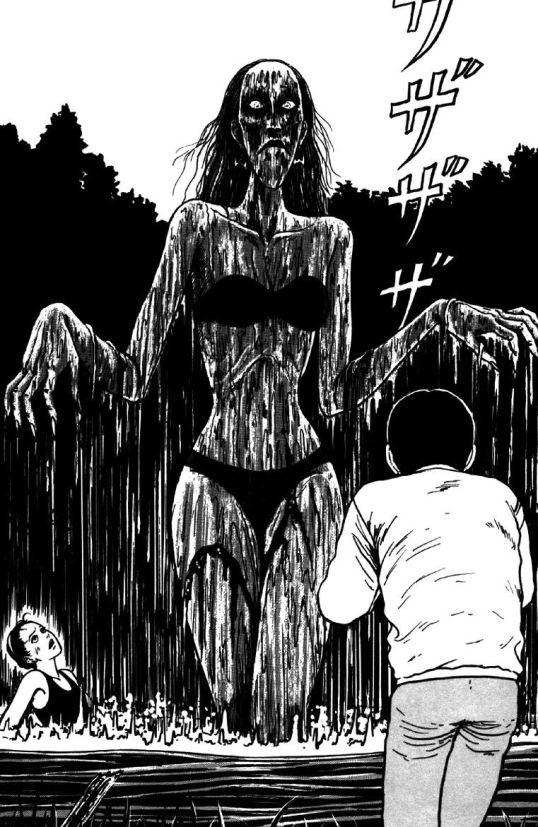
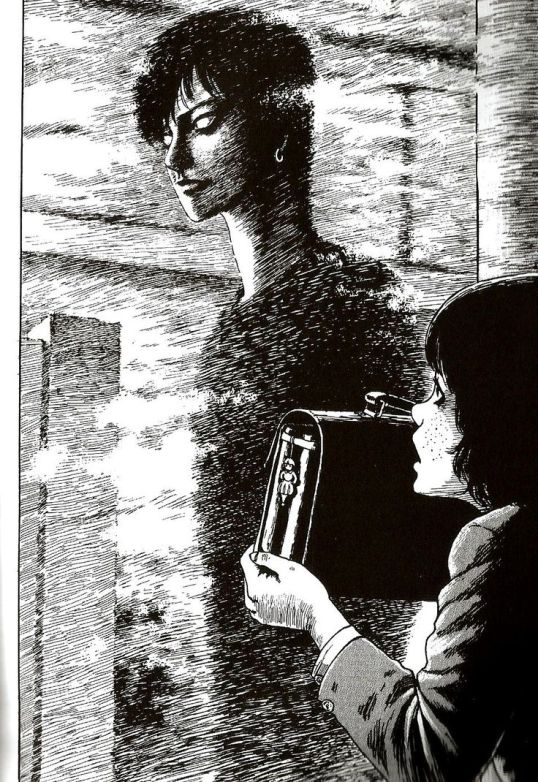
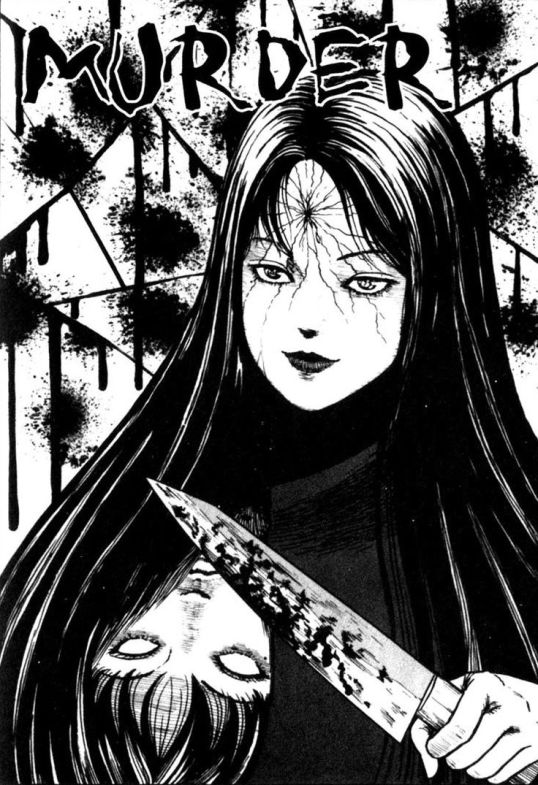
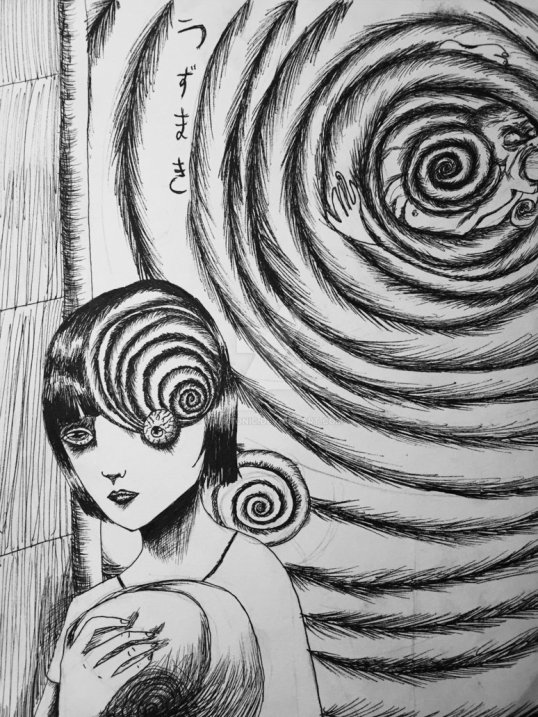
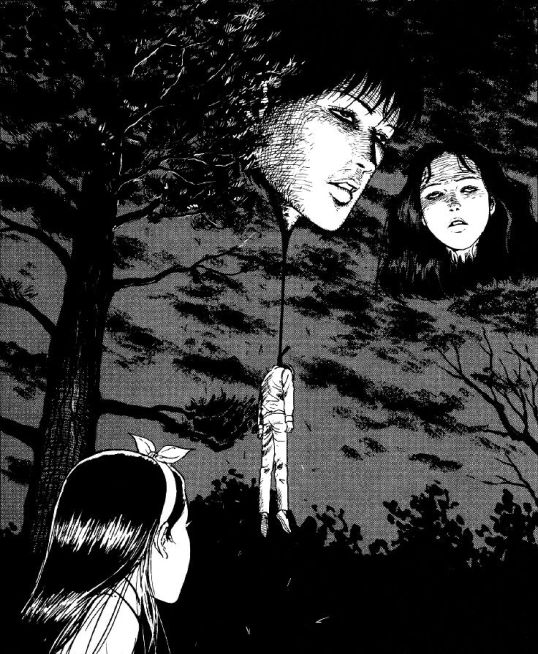
I begin the month-long horror celebration by highlighting a favorite horror genius who might not be as well-known by the casual horror fan. I am talking about mangaka Jujin Ito.
Jujin Ito is a giant in the Japanese manga industry. His work as a horror mangaka has been lauded throughout the years with some of his more famous works getting not just anime adaptations but live-action ones, as well.
He has stated in the past that his work has been influenced by authors and fellow mangaka such has Hideshi Hino, Yasutaka Tsutsui and H.P. Lovecraft. His work shares much similar themes as Lovecraft’s in that they both tell tales of a capricious and uncaring universe where the protagonists cannot comprehend and/or escape the cosmic, unknowable horror that plagues them.
Jujin Ito’s artwork often depicts a world where it’s inhabitants (sometimes including the protagonist) body horror sometimes becomes the norm which adds to the uneasiness and existential horror which permeates his stories.
Some of his more famous works include this Tomie series which has been adapted into a 3-episode tv drama and Uzumaki which has been adapted by director Akihiro Higuchi.
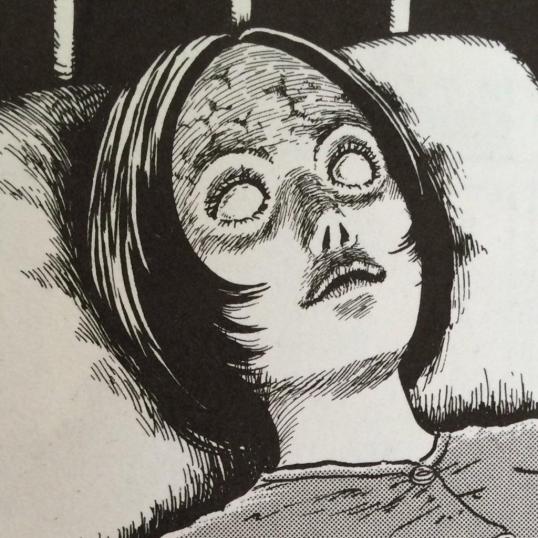
The former is a long-running series about a mysterious, beautiful woman named Tomie who impacts the lives of the men and women around her. Individuals who fall under sway will commit brutal acts of violence with some being driven to insanity. It would spoil too much to mention much more, but I do recommend for those who want to check out Japanese horror and why it’s very different from Western horror, the Tomie series is one to check out.
In fact, I would recommend that horror fans check out his entire body of work. They’ll definitely leave a mark on those who try.
How far would you go if all you had to do was follow orders? That is the question posed by The Belko Experiment.
A violent and disturbingly plausible social satire/horror film, The Belko Experiment was released into theaters on March 17th. It was one of the best films of the first half of 2017 but, as so often happens whenever a genre film subverts the traditional narrative, The Belko Experiment is also one of the most overlooked films of 2017. It got mixed reviews, with most critics focusing on the fact that the script was written by James Gunn. (Though Gunn may be best known for directing Guardians of the Galaxy, his non-MCU work has always been distinguished by a subversive, often transgressive sensibility.) A few critics dismissed it as being just another lurid celebration of violence, showing once again that you can always count on certain mainstream critics to unfairly categorize any film that doesn’t neatly fit into their preconceptions. Yes, The Belko Experiment is violent. And yes, it is gory and sometimes hard to watch. However, to dismiss The Belko Experiment as merely being that latest entry in the torture porn genre is to totally miss the point.
Mike Milch (John Gallagher, Jr.) is one of the many employees of Belko Industries. He’s a nice enough guy. In fact, if I worked for Belko Industries, Mike would probably be one of my favorite co-workers. He’s friendly. He’s funny. He’s not unattractive. He’s kind of a less smirky version of The Office‘s Jim Halpert. I’d want to be his friend. Since Belko’s offices are located in a remote area of Colombia, I would want to make all the friends that I could.
(Early on in the film, we’re informed that every employee of Belko Industries has been required to get a tracking device implanted at the base of their skull. They’re told that this is because there’s always the risk that one of them will be kidnapped by drug traffickers. Of course, as the film plays out, we discover that it’s actually for a totally different reason.)
When The Belko Experiment begins, it’s a day like any other. People show up for work. Some people actually do work. Some people slack off. Everyone tries to look busy whenever the boss, Barry Norris (Tony Goldwyn), wanders by. The maintenance workers (Michael Rooker and David Dastmalchian) do their thing. A few employees sneak up to the roof of the office building and get high. Everyone tries to avoid Wendell Dukes (John C. McGinely), a pervy executive. The security guard (James Earl) watches the door. The newest employee (Melonie Diaz) learns about her new job and coworkers.
Of course, there are a few strange things. Some new security guards have shown up and they don’t appear to be particularly friendly. They turn away all of the locals who work at the office, only allowing in the American employees. Everyone agrees that it’s strange but, instead of thinking about it too much, they just keep going about their day.
Then, the steel shutters slam down, effectively sealing the building off.
Then a voice (Gregg Henry) demands that they select two co-workers to die. When the employees of Belko Industries refuse (with several dismissing the whole thing as being a tasteless prank), tracking devices start to randomly explode until four employees are dead. The voice goes on to say that, unless 30 employees are killed in the next two hours, 60 people will be randomly killed…
Some of the co-workers refuse to kill their friends but many more do not. And soon, even those who refused to take part in the murders, are forced to start killing just to keep from being killed themselves…
The Belko Experiment wastes no time in establishing that anyone can die at any moment. It doesn’t matter how funny you were a few seconds ago or how likable you may be. If the unseen voice decides to flip your switch, that “tracking device” will explode and it’ll take your head with it. And, even if the unseen voice doesn’t get you, your coworkers might.
That, by itself, would be disturbing enough. However, The Belko Experiment ultimately succeeds as a work of horror because it illustrates a truth that many people would prefer to ignore. When the employees of Belko Industries start to kill each other, it feels all too plausible. Culturally, human beings are conditioned to follow orders. We like to have an authoritarian around to tell us what to do. It’s a good way of avoiding responsibility for our own actions. (“I was following orders.” “I was following protocol.” “I’m just doing my job.”) As The Belko Experiment demonstrates, most people would never dream of hurting someone else … unless they were ordered to do so. The characters in The Belko Experiment start the movie as individuals but, as the experiment unfolds, all quirks and differences vanish. All that is left are drones who slavishly do what they’re told.
Making the nightmare scenario feel all the more believable is a large and strong cast of familiar faces. As the closest thing that this film has to a hero, John Gallagher, Jr. is likable and you find yourself hoping that he’ll somehow manage to survive all of this with his humanity intact. Tony Goldwyn brings some interesting shades to his role while John C. McGinley is memorably creepy as Wendell. Micheal Rooker, Abraham Benrubi, Sean Gunn, Josh Brener, Melonie Diaz, Brent Sexton, and Adria Arjone all shine in smaller roles. To be honest, you really don’t want to see any of these people suffer, which makes their inevitable fate all the more disturbing.
The Belko Experiment is ultimately a portrait of how easily people can be persuaded (or ordered) to surrender their humanity. It’s the exact mentality that we currently see everyday, with people willingly becoming slaves to one ideology or another and then tossing around terms like “treason” whenever anyone dares to do something other than obey. It’s the exact mentality that leads to people accusing you of being “selfish” when you refuse to surrender your right to self-determination. Our real-life Belko Experiment has been going on for several years now and it doesn’t appear to be ending anytime soon. This movie is frightening because it’s real.

 Through the Shattered Lens