4 Shots From Horror History: The 1920s Part Two


This October, I’m going to be doing something a little bit different with my contribution to 4 Shots From 4 Films.  I’m going to be taking a little chronological tour of the history of horror cinema, moving from decade to decade.

Today, we take a look at the latter half of the 1920s.

4 Shots From 4 Horror Films

The Phantom of the Opera (1925, dir by Rupert Julian)

The Phantom of the Opera (1925, dir by Rupert Julian)

Faust (1926, dir by F.W. Murnau)

Faust (1926, dir by F.W. Murnau)

London After Midnight (1927, dir by Tod Browning)

London After Midnight (1927, dir by Tod Browning)

The Fall of the House of Usher (1928, dir by Jean Epstein)

The Fall of the House of Usher (1928, dir by Jean Epstein)

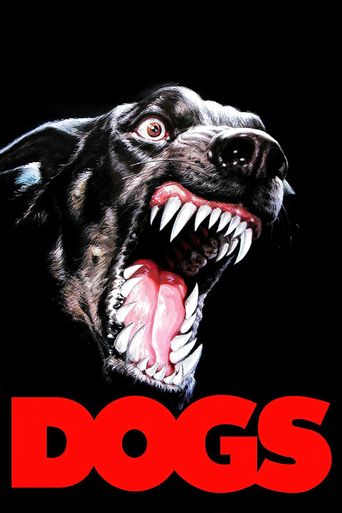
Horror Film Review: Dogs (dir by Burt Brinckerhoff)


I’ll admit it right now.  I’ve never really been a dog person.

That’s the way it’s been my entire life.  According to my sisters, I was bitten by a dog when I was two years old.  Needless to say, I don’t remember that happening but that still might explain why, when I was growing up, I was scared to death of dogs.  Seriously, if I was outside and I heard a dog barking or if I saw a dog running around loose (or even on a leash), I would immediately start shaking.  It didn’t help that, for some reason, I always seemed to run into the big dogs that wanted to jump and slobber all over me.  (“Don’t be scared,” one dog owner shouted at me, “that’ll just make him more wild,” as if it was somehow my responsibility to keep his dog under control.)

Then there was that time when was I was ten and I was visiting Lake Texoma with my family.  There was another family there and they had a big black dog with them.  When I first saw him, the dog was very friendly.  He ran up to me and, tentatively and with my sisters standing beside me for moral support, I even patted his head,.  He seemed so nice!  Finally, I had met a dog that didn’t scare me.  My family was really happy.  We went down to the lake and everyone told me how proud they were that I had managed to face a dog without running away.  As we came back from the lake, I saw the dog laying down next to his family’s van.  I smiled at the sight of him.  He raised his head, looked at me, and started to growl.  He wasn’t growling at my sisters or my parents.  He was growling at me.  Terrified, I went over to my family’s car and I ducked down behind it.  I could hear my Dad telling the dog to stop and then I heard the loudest barking and saw the dog running towards me.  I jumped in the car and locked the doors.  The dog’s owners eventually grabbed their dog and took him back to their van.  They said that I probably looked like someone who had been mean to it a few weeks earlier.  One thing that they did not really do was apologize.  Instead, they just made me feel like it was somehow my fault.  They didn’t seem sympathetic when my Mom explained that I was terrified of dogs.  When they realized my Dad was on the verge of punching someone, they retreated to their van and quickly left.  At that time, I decided that 1) I would never trust another dog and that 2) dog owners are the most selfish people on the planet.  I know that sounds harsh but seriously, I was traumatized!

As I grew up, I mellowed a bit.  I met nice dog owners who actually made the effort to control their pets.  I even met some friendly dogs and slowly realized that not all of them were going to try to kill me.  I became less scared of dogs but they still definitely make me nervous.  I still cringe when listening to the barking and I still reflexively step back whenever I see a big dog anywhere near me.  Now that I know more about dogs, I have to admit that I feel a little bit guilty about not liking them more.  Knowing that dogs actually blame themselves for me not liking them is kind of heart-breaking and I have been making more of an effort to be, if nothing else, at least polite to the canines who lives in the neighborhood.  That said, I’m a cat person and I’ll always be cat person.  Cats don’t care if you like them or not nor do they blame themselves if you’re in a bad mood, which is lot less of an emotional responsibility to deal with.

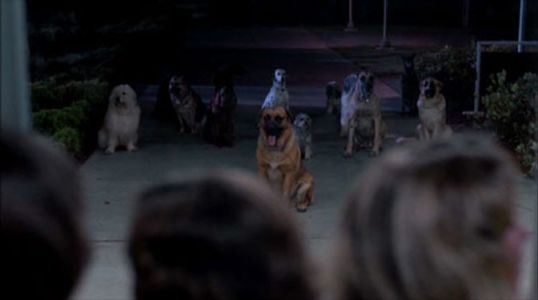
1977’s Dogs is a film that seems like it was especially made to give people like me nightmares.  It’s a pretty simple movie.  At a college in Southern California, the students and the faculty find themselves under siege from a bunch of dogs that have been driven mad by pheromones being sprayed into the atmosphere by a nearby, top secret government experiment.  Two professors (David McCallum and George Wyner) attempt to convince everyone to evacuate the college and the town but, in typical Jaws fashion, no one wants to admit the truth about what’s happening.  By the end, nearly everyone is dead (and the final scene of all the dead bodies spread across campus is genuinely haunting) and the cats are starting to hiss at humans.

Dogs is a low-budget drive-in flick but it’s still a frightening film, largely because the dogs are relentless and the victims may be largely stupid but they’re all stupid in realistic ways.  A group of college students is told to wait inside until George Wyner comes back for them but Wyner takes so long in returning that the terrified students decide to make a run for it themselves.  It doesn’t end well but it’s the sort of thing that I can actually imagine happening.  No one likes being told to wait and, with no idea of what’s actually going on, making a run for it might actually seem like as good an idea as any.  Even when the movie recreates the Psycho shower scene (with dogs instead of Norman Bates), it’s far more effective than it perhaps has any right to be.

Would this film be as effective from the point of view of someone who doesn’t have a history of being scared of dogs?  It’s a legitimate question.  Dogs aren’t like sharks.  Most people like dogs.  But when they’re barking and growling and determined to bite your throat, they can be pretty scary!  I’ll just say that Dogs is a film that seemed to be uniquely designed to give me nightmares.

Horror Film Review: The Hideous Sun Demon (dir by Tom Boutross and Robert Clarke)


“It’s never late until the sun comes up.”

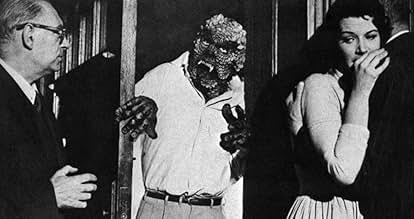
Those words are spoken in the 1958 film, The Hideous Sun Demon.  Sultry pianist Trudy (Nan Peterson) may just be talking about her own nocturnal lifestyle and her job as the entertainment at a bar but those words also have a double meaning to scientist Gil McKenna (Robert Clarke).  Whenever the sun comes up, Gil is transformed into the Hideous Sun Demon!

In theory, of course, this is an interesting take on the werewolf legend or even a traditional vampire tale.  Typically, monsters aren’t supposed to come out until the sun goes down and they can move under the cover of darkness.  The werewolf is transformed by the moonlight.  The vampire is destroyed by the sun.  (Or, at least, he used to be.  Largely due to authorial laziness, many modern vampire tales have abandoned the whole idea of not being able to go out during the day.)  Gil, however, reverses the trend.  By night, he’s a handsome and brooding scientist.  By day, he’s not just the sun demon.  He’s the …. HIDEOUS SUN DEMON!

(Seriously, that can’t be good for his self-esteem.)

Like all great monsters, Gil doesn’t want to be the sun demon.  He tries to stay in his house until night falls so that he won’t be transformed into a monster.  But it’s difficult when he finds himself talking to Trudy and getting lost in their conversation.  The beach looks so nice at night but it looks even better at dawn!

Why is Gil found himself in this position?  It won’t shock you to know that Gil was once a research scientist who was working a new radioactive isotope.  That’s right …. it was the radiation!  In the 50s and the 60s, the radiation was blamed for just about everything.  There was literally nothing that the radiation couldn’t do.  The radiation woke up Godzilla The radiation turned a tree stump into a walking monsterThe radiation caused Col. Glen Manning to become the Amazing Colossal Man.  Wherever there was radiation, you could be sure that giant animals and deformed monsters would follow.  Tor Johnson was just fine until he drove out to Yucca Flats.  The aliens were so concerned about man’s love for radiation that they decided they had no choice but to raise the dead in an attempt to stop us from exploding atoms and the sunlight itselfSome scientisteven  suspected that radiation — in this case, space radiation — led the first zombie apocalypse.  (Regardless, they were all messed up.)  In fact, the only thing that couldn’t be stopped by radiation was the Martian invasion.  We had to depend on good old germs for that!

As for Gil, he’s got a lot of scientists working on a cure for his condition but he knows it’s hopeless and he’s pretty bitter about it.  Poor guy.  I may not turn into a demon but I do have red hair so I could slightly relate to his feelings.  Redheads don’t tan as much as we just burn.  I guess that’s one reason why I love this time of year.  The skies are full of clouds and one can safely walk around during the daylight hours.

As for The Hideous Sun Demon, it is a ludicrous and fun B-movie, a quick 74-minute beach romp with a convincing performance from Robert Clarke and an effective monster costume.  The scientists investigating Gil’s case are all extremely sober while Gil is extremely mopey and Trudy is extremely sultry and George (Peter Similuk), a bar patron who also likes Trudy, is a true middle-aged 50s tough guy.  It’s very much a film for the 50s drive-in crowd and all the more entertaining because of it.

Horror On The Lens: Incubus (dir by Leslie Stevens)


Remember Esperanto?

Esperanto was an international language that was briefly promoted by one-world government weirdos but which never really caught on.  Four movie have been made in Esperanto but only one is still remembered.  1966’s Incubus features William Shatner, giving a very Shatnerish performance, as a solider who is tempted by a mysterious woman.  The cinematography of the legendary Conrad Hall gives this one a very dream-like feel, even before everyone starts to talk.

Yes, this movie has subtitles.  But, so what?  Who hasn’t wanted to see William Shatner speak Esperanto?

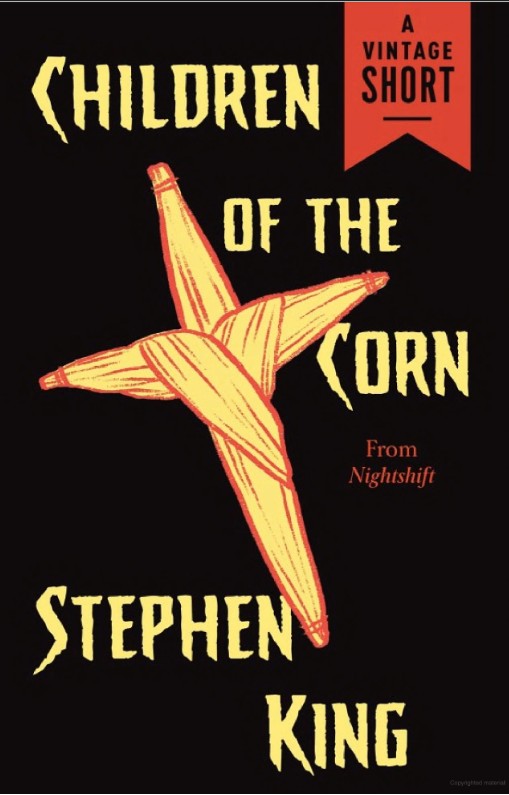
Children of the Corn, Book Review by Case Wright


Horrorthon is in full swing; so, it’s time to review a classic: Children of the Corn from Night Shift. Night Shift is an anthology devoted to failure. It’s all about Men not measuring up and people getting hurt by their failings. Poor Stephen, he needs a hug. Children of the Corn was published in 1977 in Penthouse…the 60s and 70s were weird. I’m not anti-p0rn because I really don’t care, but why mix it with literature? Was it that the WWII and Boomer generations wanted a one-stop shop? If so, why not merge the p0rn, literature, fishing gear, and fire extinguishers?

If you’re reading an early King novel, be prepared to be depressed because it is always a gruesome and unhappy ending because a guy failed. Children of the Corn is no exception. I wonder if Night Shift wasn’t this clever anthology I always thought it was, but was actually Stephen King’s clumsy pitch meeting short story compilation? Many of the stories that were adapted to film were way better written. To be honest, the film versions of Stephen King’s short stories are usually significantly better than his books.

The plot is that Burt and his wife Vicky are trying to do a cross country trip to save their marriage. Once they arrive in Nebraska, they get trapped and sacrificed to a pagan corn god who likes to use children as his henchmen- a typical Nebraska custom. The Cornhuskers draw a big crowd, but in the off season, it’s always about the pagan corn god murders. During the Cornhusker season, the residents still do sacrifices, but the victims are deep fried with the other Fair Foods, which means that the victims are all A salted and Battered. *BOOM*

There are a few more details that I am leaving here like the He Who Walks Behind the Rows etc., but once you’ve seen one pagan corn god, you’ve seen them all.

Horror On TV: Hammer House Of Horror Episode #3: Rude Awakening (dir by Peter Sasdy)


In the third episode of Hammer House of Horror, Denholm Elliott plays an estate agent who finds himself having a series of nightmares about his wife (Pat Heywood) and his secretary (Lucy Gutteridge) and a murder that may or may not have happened on Friday the 13th.  This episode is an enjoyably surreal trip into the subconscious.

In the UK, Rude Awakening originally aired on September 27th, 1980.

October Hacks: Grim Reaper (dir by James Ian Mair)


In 2021’s Grim Reaper, escaped mental patient Victor Cunningham (Deron Cunningham) is wandering around a small country town and killing people.

That’s pretty much the entire plot.  Grim Reaper is only a 70-minute film and the majority of those minutes are made up of either Cunningham wandering around in his grim reaper mask, Cunningham’s victims being stalked, and the police being ineffective.  (The main detective wears a baseball cap that read: POLICE.  It’s a good thing that the guy was wearing that baseball cap because, otherwise, I would have just mistaken him for a local bartender.)  Our final girl has a big bruise on her face and is trying to escape an abusive relationship, which adds a level of poignance to her story.

There’s a tendency amongst many to be automatically dismissive of DIY slasher films like Grim Reaper.  It’s true that Grim Reaper has its amateurish moments and that the soundtrack leans a bit too heavy on the metal and it’s also obvious that most of the actors were not professionals but I have to admit that I kind of enjoyed the movie and not just in an ironic sense.  It helps that the film was obviously made by people who appreciate the genre and, watching the film, one gets the feeling that it was a fun set.  It may seem like a backhanded compliment to say that the film is comfortable with being what it is but you need only compare it to some of the current big budget horror films to see the difference between a horror film made be fans of the genre and people who think that they’re somehow better than the horror label.  Even shot on video, the film still had somewhat effective shots.  Director James Ian Mair appears to have a good eye and he even manages to make good use of natural light.  That’s the same thing that got Chloe Zhao an Oscar and a Marvel movie.

Sometimes, you just have to be willing to appreciate a film for what it is.

Charles Bronson interviews the slasher in 10 TO MIDNIGHT (1983)!


Charles Bronson played a cop a bunch of times in the 1980’s, but my personal favorite is Leo Kessler from 10 TO MIDNIGHT. Kessler wants to be a better dad to his daughter Lori (Lisa Eilbacher), but first he needs to catch a psychotic killer who’s murdering beautiful young women. One of the most interesting things about 10 TO MIDNIGHT is the way it tries to fuse a badass cop film with the popular slasher films of the 1980’s. It’s arguably Bronson’s best Cannon film, and Gene Davis is a certifiable creep as the slasher, Warren Stacy. Enjoy this infamous scene where Kessler confronts Stacy about his, ummm… private sexual activities!

The TSL Horror Grindhouse: The Toolbox Murders (dir by Dennis Donnelly)


In 1979’s The Toolbox Murders, someone is murdering the female tenants of a building in Los Angeles.  The killer, who wears a mask and a leather jacket, uses tools.  One woman is killed by a hammer to the head.  Another is skewered by a power drill.  One is stabbed with a screwdriver.  Another is shot with a nail gun.  The identity of the killer would be a total mystery if not for the fact that we’ve already seen Cameron Mitchell’s name in the cast list.

Indeed, it’s a bit pointless to cast Cameron Mitchell in any sort of whodunit-type of film.  Nine times out of ten, Mitchell being in a movie means that that Mitchell (who, in the early days of his career, originated the role of Death of a Salesman‘s Happy Loman on Broadway) is going to be revealed as the murderer.  In this case, Mitchell plays Vance Kingsley, the owner of the building.  Vance has never recovered from the death of his daughter so he’s punishing women who he considered to be sinful.

The actual toolbox murders are pretty much finished after the first twenty minutes of the film.  The rest of the movie deals with Laurie (Pamelyn Ferdin), a 15 year-old girl who is kidnapped by Vance and his nephew, Kent (Wesley Eure).  Joey (Nicholas Beauvy), who is Laurie’s brother, attempts to find and then rescue his sister and turns out to very much not up to the task.  The film itself ends on a rather sick note, one that is followed by a title card that informs us that the film is based on a true story.  Yeah, sure, it was.

The Toolbox Murders has somehow earned a reputation for being a gory and shocking grindhouse film.  It was among the films that was banned in the UK for several years.  It’s actually not that gory and the use of tools to commit the murders is not quite as clever as the film seems to think it is.  Even the nail gun murder (which is the film’s best known moment) feels rather awkward as the victim (Kelly Nichols) never really makes a run for it despite the fact that Vance has to stop to reload after every nail that he fires.

The scenes with Laurie being held hostage are far more disturbing and weird, largely due to Mitchell’s characteristically over-the-top portrayal of Vance’s psychosis.  When you watch a movie called The Toolbox Murders, you’re probably not expecting a lengthy scene where Laurie — pretending to be Vance’s dead daughter — tells a long story about what it’s like in the afterlife.  In the role of Vance’s nephew, Wesley Eure is even more disturbing than Mitchell.  As opposed to the sinister-looking Mitchell, Eure actually has the look of a nice, young community college student and that makes his actions at the end of the film all the more icky to watch.

The Toolbox Murders doesn’t quite live up to its bloody reputation but it’s still a disturbing film nonetheless.  Did you know that Heaven smells like lollipops?  After this film, you’ll never forget.