4 Shots From 4 Films is just what it says it is, 4 shots from 4 of our favorite films. As opposed to the reviews and recaps that we usually post, 4 Shots From 4 Films lets the visuals do the talking!
This October, we’re using 4 Shots From 4 Films to look at some of the best years that horror has to offer!
4 Shots from 4 2016 Horror Films
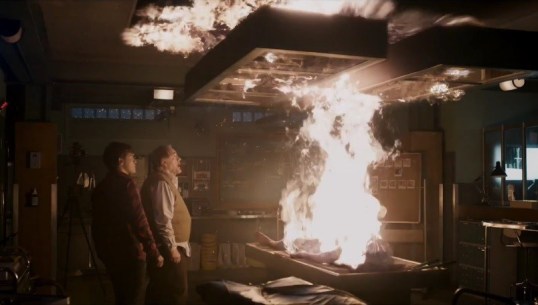
The Autopsy of Jane Doe (2016, dir by Andre Ovredal)
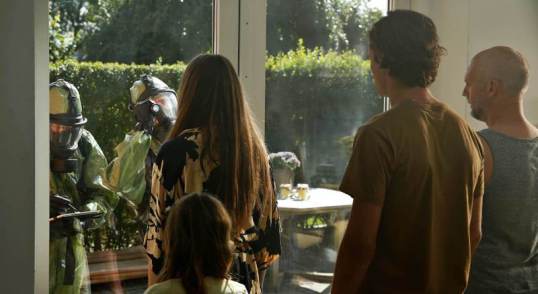
The Belko Experiment (2016, dir by Greg McLean)
The Neon Demon (2016, dir by Nicolas Winding Refn)
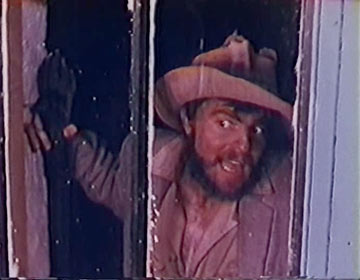
I should start things off with a confession. This is actually not the first time that I’ve shared Manos: The Hands of Fate here on the Shattered Lens. I previously shared it on both October 8th of 2013 and October 15th of 2015 and, both times, I even used the exact same picture of Torgo.
However, Manos proved to be such a popular choice that I simply had to post it again. As I pointed out two years ago, Manos has a reputation for being one of the worst films ever made. And, honestly, who am I to disagree? However, it’s also a film that is so bad that it simply has to be seen.
By the way, everyone who watches Manos ends up making fun of Torgo, who was played by John Reynolds. What they may not know is that Reynolds committed suicide shortly after filming on Manos wrapped. So, as tempting at it may be to ridicule poor Mr. Reynolds’s performance, save your barbs for Torgo and leave John Reynolds alone.
Glass, as you may remember, came out in January and was one of the first big cinematic disappointments of the 2019. People were certainly excited about it before the film was released. Glass was a sequel to not only Split but also Unbreakable. James McAvoy, Samuel L. Jackson, and Bruce Willis would all be returning to the roles that they played in those original films. Glass was viewed as being the film that would establish whether director M. Night Shyamalan was truly back after the critical and commercial success of Split or if he was going to return to being the kinda hacky director who we all remembered from the mid to late-aughts.
Actually, it can probably be argued that, as a director, M. Night Shyamalan managed to go from being slightly overrated to being wildly underrated. Even his worse films aren’t exactly terrible. Even the incredibly silly The Happening had a few effective scenes. Shyamalan wasn’t a bad director as much as he was a director who, at times, seemed to be way too convinced of his own cleverness. The Shyamalan twist became both his trademark and his curse. I can still remember an entire theater audibly groaning during The Village, not because the twist was necessarily bad as much as just because it was so expected. Was Shyamalan capable of making a film that didn’t end with a gimmicky twist? Interestingly, for most of its running time, Split seemed like a straight forward story about a psychotic man with multiple personalities. It was only at the last minute, when Bruce Willis showed up in that bar, the people realized that Split had a Shyamalan twist.
Glass has a few twists of its own, most of them dealing with how Kevin Wendell Crumb (James McAvoy) became the killer known as The Beast. It’s all connected to Elijah Price (Samuel L. Jackson), who is also the supervillain named Mr. Glass. Kevin, Elijah, and David Dunn (Bruce Willis) all end up in a mental asylum together. Dr. Ellie Staple (Sarah Paulson) insists that the three of them do not have any super powers and instead, they’re all suffering from a shared delusion. Of course, Dr. Staple has an agenda of her own. It’s not a particularly interesting agenda but then again, who cares, right? I mean, the main reason people are going to watch this movie is so they can watch James McAvoy and Bruce Willis square off against each other, right?
Well, those people are out of luck. The audience may not care about Dr. Staple’s agenda but Shyamalan certainly does and, as a result, McAvoy, Jackson, and Willis often seem to be bystanders in their own film. When the long-promised confrontations between our three main characters finally do occur, it all leads to a finale that leaves a rather sour aftertaste. You can’t help but feel that the characters (and their actors) deserved better. What ultimately happens to David Dunn in Glass feels almost like an extended middle finger to anyone who has ever defended Unbreakable. One gets the feeling that Shyamalan was so eager to work in one of his trademark surprises that he never stopped to consider whether the film’s storyline was strong enough to support his ambition.
The other problem is that Bruce Willis’s David Dunn and James McAvoy’s The Beast really don’t belong in the same movie together. Willis gives an understated and rather haunted performance as David but McAvoy is so flamboyantly evil as the Beast that it destroys whatever gritty reality Willis had managed to develop. Both McAvoy and Willis give good performances but they appear to be performing in different films. As for Jackson, nobody glowers with the power of Samuel L. Jackson. But, oddly, he never seems to have much to do. Glass may be named after his character but Mr. Glass often feels superfluous to the overall plot.
Glass is ultimately a rather forgettable movie. One gets the feeling that Shyamalan was truly trying to say something profound about heroism and pulp mythology in the final part of the trilogy that began with Unbreakable. But, ultimately, Glass‘s message is too muddled to have much of an effect. In the end, Glass leaves Shyamalan’s ambitions unfulfilled.
Or maybe you don’t. Sometimes, I forget that not everyone can read my mind. Anyway, I used to do a weekly post of my favorite grindhouse trailers. Eventually, it went from being a weekly thing to being an occasional thing, largely due to the fact that there’s only so many trailers available on YouTube. Now, Lisa Marie’s Favorite Grindhouse and Exploitation Film Trailers is something that I usually only bring out on a holiday.
Like today!
So, here are 6 trailers for the last week of October!
Last House On The Left (1972)
“Two girls from the suburbs. Going to the city to have …. good time….” Wow, thanks for explaining that, Mr. Creepy Narrator Dude. That classic tag line about how to avoid fainting would be imitated time and again for …. well, actually, it’s still being imitated. This was Wes Craven’s 1st film and also one of the most influential horror films of all time.
2. The Texas Chainsaw Massacre (1974)
Speaking of influential horror movies, the trailer for The Texas Chainsaw Massacre is almost scarier than the film itself!
3. Lisa Lisa (1977)
I have actually never watched this film but I love the trailer. Can you guess why?
4. Ruby (1977)
Ruby, starring Piper Laurie! I’m going to assume this was after Piper Laurie played Margaret White in Carrie. Don’t take your love to town, Ruby.
5. Jennifer (1978)
Jennifer was another film that pretty obviously inspired by Carrie. In this one, Jennifer has psychic control over snakes. So, don’t mess with Jennifer.
6. The Visitor (1979)
Finally, this Italian Omen rip-off features Franco Nero as Jesus, so it’s automatically the greatest film ever made.
At this point, there’s been so many zombie films that I’m a bit burned out on the whole genre. I can still get enthusiastic for zombie films that attempt to put a new spin on the material and I still love the classic zombie films of the past. But, for the most part, new zombie films just leave me bored.
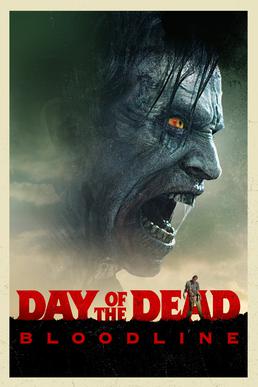
2018’s Day Of The Dead: Bloodline is technically a remake of George Romero’s Day of the Dead but, then again, almost every American zombie film that’s come out over the past twenty or so years has been a remake of something that Romero did earlier. The whole idea of an isolated military compound where soldiers plot to kill zombies (or rotters, as they’re called here) while scientists try to understand and maybe cure them has been done to death. Once again, we’ve got a fascist army guy (Jeff Gum) and, once again, we’ve got a dedicated scientist who doesn’t like taking orders from the military. The scientist is named Zoe (Sophie Skelton). She was a medical student when the zombie apocalypse began. Now, five years later, she’s trying to find a way to end it and blah blah blah, wake me when it’s over.
A good deal of the film centers around Max (Jonathon Schaech). In life, Max was a pervy stalker who was so obsessed with Zoe that he craved her name into his arm. In death, he’s a rotter who has retained some of his personality and bits of memory. For instance, he’s still obsessed with Zoe and spends a lot of time saying, “You are mine, you are mine….” However, Max’s blood potentially holds the cure for the zombie plague. And, to be honest, that’s kind of an interesting premise. In life, Max was the worst that humanity had to offer. In death, he might hold the secret for saving the world. Even as a rotter, he remains obsessed with Zoe and Zoe has to decide whether or not to destroy the man who tried to rape her or to keep him functional for the good of the world.
But …. eh. I mean, it’s intriguing but the film doesn’t really do much with it. It just becomes another zombie movie with a bunch of hardass soldiers and some scientists who don’t understand why the soldiers keep shooting everything. Who cares? We’ve already seen all of this in a hundred other movies, not to mention on shows like The Walking Dead. Neither the script nor the characters in this film are interesting enough to really justify seeing it again.
On January 24th, 1989, Ted Bundy — then America’s most notorious serial killer — was executed by the state of Florida. Before he died, he confessed to all of his crimes and then gave an interview where he blamed it all on an addiction to pornography. It was all a part of a scheme to avoid the electric chair but it didn’t work and he was put to death while thousands stood outside the prison and cheered.
Or was he?
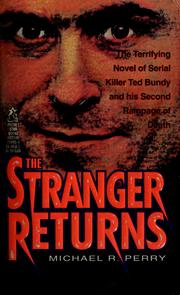
The 1992 novel, The Stranger Returns, suggests that Bundy — who was once as notorious for his ability to escape custody as for his murderous rampage — escaped one last time. A duplicate was sent to the electric chair while Bundy made his escape. I know that probably made no sense when you read it in this review. It really doesn’t make much sense in the book either. But I guess things had to start somewhere.
Now believed to be dead, Bundy is free to change his identity, romance a young mother, and once again resume his murderous ways. Only one man suspects that Bundy may have cheated the executioner, the father of one of his victims. While he tries to get someone to listen to his theory about Bundy being alive, Bundy continues to move across the landscape like a dark shadow of death.
Earlier this year, it seemed like the entire nation briefly went Bundy crazy. There was a documentary on Netflix. Zac Efron starred in a movie. It seem like almost every true crime show around did at least one episode on Bundy this year. 30 years after his execution, Ted Bundy was trending on twitter, a macabre testament to the power of celebrity.
I found myself thinking about Bundy’s morbid fame as I read The Stranger Returns. The book was well-written and it was a quick read but it was still a bit troublesome that the book was essentially a novel starring Ted Bundy. Too often, the book treated him like some sort of Hannibal Lecter-type character whereas Bundy was actually, by most accounts, an impotent drunk who was never as handsome, charming, or intelligent as he is frequently made out to be. What is this power that a loser like Bundy holds over the popular imagination?
The Stranger Returns is a testament to that power. I mean, how many other real-life serial killers have starred in a novel? That’s usually an honor reserved for vampire hunters like Abraham Lincoln. To be honest, I probably would have liked this book better if it had been about someone who thought he was Ted Bundy as opposed to being Ted Bundy himself. In fact, I probably would have enjoyed the book if it had featured Bundy’s ghost or if Bundy had used some other supernatural check to come back to life. But making Bundy into some sort of criminal genius was just a bit too icky for me.
Incidentally, I found this book in my aunt’s paperback collection. According to her, she found the book being sold in the “true crime” section of Half-Price Books. Fortunately, it’s not true crime. Ted Bundy is dead and good riddance.
Louise (Alexandra Pic) and Henriette (Isabelle Teboul) are two orphaned sisters. They’re both blind and, as the nuns at the orphanage explains to Dr. Dennary (Bernard Charnacé), innocent to the ways of the world. When Dr. Dennary adopts them, everyone tells him that he’s made the right choice. Never have there been two sisters as sweet and beatific as Louise and Henriette.
Of course, what neither the nuns nor Dr. Dennary know is that, when the sun goes down, Louise and Henriette’s vision returns. They sneak out of Dennary’s home, exploring the nearby cemeteries and meeting other beings who can only move freely during the night. The sisters tells each other stories of their past and we see memories that seem to suggest that they have been alive for centuries. But, the sisters also often talk about how they can’t remember their past and it’s suggested that their “memories” are just stories that they’ve created to give themselves a history that they don’t otherwise possess.
At times, you wonder if they’re even sisters. Perhaps they’re just two vampires who manged to find each other at some point over the past few centuries. Still, you can never doubt the strength of their bond. When one of them is weak from a lack of blood, the other allows her to drink from her neck. When they find themselves being pursued by angry villagers, they refuse to be separated. Even if it means dying, at least they’ll die together.
Throughout the film, the orphans eagerly await for night to fall so that they can see and sneak out of the house. But, at the same time, they know that their time is limited. When the sun rises, they will again lose their sight. These vampires don’t need to sleep in coffins. In fact, they don’t need to sleep at all. But they need the night to see the world around them.
Unfortunately, Dr. Dennary may be kind-hearted but he’s still not happy about the idea of the two orphans sneaking out of his house during the night. When the sisters go to drastic means to ensure their freedom, they find themselves in even greater danger….
First released in 1997, The Two Orphan Vampires is perhaps my favorite Jean Rollin film. Rollin, himself, once described it was being one of his best films because it was a film that told a story that went beyond his own personal obsessions. That may be true but this is definitely a Jean Rollin film. It’s not just the use of the vampirism or the fact that frequent Rollin co-star Brigitte Lahaie has a cameo. It’s that the film centers not just on the supernatural but also the way that our memories and our fantasies can provide comfort in an uncertain world, which was a favorite Rollin theme. Whether their memories are true or not is not important. What’s important is that the two sisters share them.
In typical Rollin fashion, the movie unfolds at its own deceptively leisurely pace. The imagery is frequently dream-like, with the orphan vampires discovering an underworld of paranormal creatures. The film also reflect Rollin’s love of the old serials, with frequent cliffhangers. By the final third of the movie, you can already guess what’s going to end up happening to the two orphan vampires but I still had tears in my eyes by the time the end credits started to roll up the screen.
For whatever reason, Two Orphan Vampires seems to get a mixed reaction from several Rollin fans, who perhaps are disappointed that it’s considerably less bloody and/or sordid as some of Rollin’s other vampire films. The film is one of Rollin’s more contemplative films and it has more in common with The Night of the Hunted and The Iron Rosethan some of Rollin’s other vampire films. That said, Two Orphan Vampires is my personal favorite of Rollin’s filmography. It’s a film that bring me to tears every time that I watch it.
4 Shots From 4 Films is just what it says it is, 4 shots from 4 of our favorite films. As opposed to the reviews and recaps that we usually post, 4 Shots From 4 Films lets the visuals do the talking!
This October, we’re using 4 Shots From 4 Films to look at some of the best years that horror has to offer!
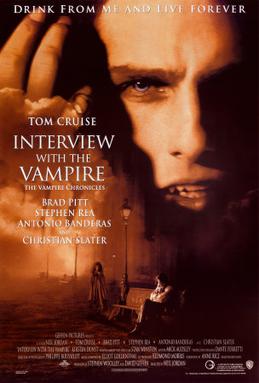
There are a lot of vampires and other cursed beings wandering through the 1994 film adaptation of Interview With A Vampire but Claudia (Kisten Dunst) is the only one for whom I have any sympathy.
Louis (Brad Pitt) may be the main character and the vampire giving the interview but it’s hard to have much sympathy for him. He’s just such a whiny little bitch. The Louisiana aristocrat is transformed into a vampire in 1791 and basically spends the next 200 years complaining about it. You want to have sympathy for him but sometimes, you just have to accept stuff and move on. It doesn’t help that Brad Pitt, who has always given his best performances when cast as men of action, is somewhat miscast as the effete and self-loathing Louis.
Lestat (Tom Cruise) may be the most charismatic of the vampires but he’s never exactly sympathetic. He turns Louis into a vampire and then spends years following him across Louisiana and Europe. Lestat is decadence personified and he never whines and, as a result, he’s far more enjoyable to spend time with than Louis. Cruise is as perfectly cast as Lestat as Pitt was miscat as Louis. Lestat is a star and Tom Cruise has always been one of the few true movie stars around. That said, Lestat is still far too self-indulgent and thoughtlessly self-destructive to really be a sympathetic character. Instead, he’s like Lord Byron, destroying happy families but at least writing a poem about it afterwards.
Armand (Antonio Banderas) runs the Théâtre des Vampires in Paris and he becomes Louis’s companion for a time. Louis is charismatic because he’s played by Antonio Banderas but, ultimately, he proves to be a rather ineffectual leader. Armand puts on a good show but, in the end, that’s all he has to offer. He’s a bit shallow, despite all of the theatrics.
Santiago (Stephen Rea) isn’t sympathetic at all but at least he really seems to get into being evil. Good for him!
And then there’s Daniel Malloy (Christian Slater), the journalist who conducts the interview with Louis. In the film, Malloy starts out as a cynic, the type of writer who theatrically pours himself a glass of whiskey before dramatically turning to his typewriter. All he needs is a fedora with a press pass tucked into the headband. It’s difficult to take him seriously.
But then there’s Claudia. Poor Claudia. In the book, Claudia was only five years old when she was turned into a vampire. In the movie, she’s played by 12 year-old Kirsten Dunst and it’s left ambiguous as to how young Claudia actually was when Lestat turned her into a vampire, though it’s still made clear that was too young to be cursed without her consent. Claudia becomes Lestat and Louis’s companion. Louis treats her like the daughter that he will never have. Lestart treats her like an apprentice, teaching her how to kill. Claudia grows up but is forever trapped in the body of a child. It’s impossible not to feel sorry for Claudia, who never asked to become a vampire, who indeed was just turned so that Lestat could use her as a pawn to keep control of Louis. Claudia spends a good deal of the movie in a rage and who can blame her?
Interview With A Vampire is a messy and uneven film. Brad Pitt is miscast and the whole film is oddly paced, with the New Orleans scenes taking too long and the Paris scenes going by almost too quickly. At the same time, Tom Cruise brings the proper joie de mort to the role of Lestat and Claudia and her fate will simply break your heart. Interview With The Vampire is not the best vampire movie that I’ve ever seen but it definitely has its pleasures.






 Through the Shattered Lens