On-Stage On The Lens: Hamlet From The Lunt-Fontaine Theater (dir by Bill Colleran and John Gielgud)


That Richard Burton is today best-remembered for his tumultuous marriages to Elizabeth Taylor and for his performances in several less-than-worthy films is unfortunate as Burton was also one of the most highly regarded staged actors of his generation.  In fact, late in his life, Burton often expressed regret that he had ever left the stage for films to begin with.

In 1964, Burton played Hamlet on Broadway, in a production that was directed by John Gielgud.  (Gielgud also provided the voice of the Ghost.)  This is a video-recording of both that production and Burton’s acclaimed performance.  Burton brings an intense and almost divine madness to the role.  Watching, one can see why Burton would have preferred to have been remembered for this instead of for playing Mark Antony.


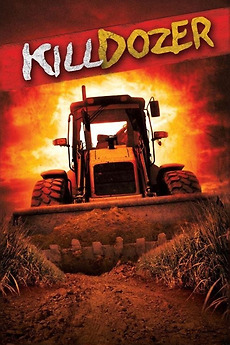
Killdozer (1974, directed by Jerry London)


Six construction workers (played by Clint Walker, Carl Betz, Neville Brand, James Wainwright, James A. Watson, and Robert Urich) are boated to an isolated island off the coast of Africa.  An oil company has assigned them to build an airstrip on the island.  On the first day of work, they come across a meteorite buried in the ground.  When one of the men tries to pick up the meteorite with the bulldozer, a blue light envelops the bulldozer and, at the same time, fatally injures Robert Urich.  Possessed by the meteorite, the bulldozer starts to track the remaining workers down, killing them one-at-a-time.  It’s a killdozer!

Based on a short story by Theodore Surgeon and made-for-television, Killdozer asks the question, “Have you ever seen a big, bulky bulldozer attempt to sneak up on someone?”  Given that Killdozer is not fast and it’s not very agile, it should be easy to escape it but the construction keep doing dumb things, like getting drunk or trying to hide inside a copper tube instead of just running away.  The surviving men wonder how they are going to make it until help eventually arrives.  Maybe if you hear Killdozer coming, you should could just step to the side or maybe you could even run behind Killdozer.  Instead, the construction workers keep trying to fight it head-on.  Every time Killdozer pauses from noisily rolling across the island and sits still because it senses one of the workers might be nearby, I’m reminded that Killdozer is an absolutely ludicrous film but that it’s also wonderfully strange and that it’s also impossible to enjoy it on some level.

The cast is good and, for the most part, so is the straight-forward, waste-no-time direction.  The Killdozer deserved an Emmy and maybe its own series but instead, it just had to settle for cult stardom.

The Magic Voyage of Sinbad (1953/1962, directed by Aleksandr Ptushko)


When is a Sinbad film not a Sinbad film?

When it’s The Magic Voyage of Sinbad!

Sinbad (Sergei Stolyarov) returns to his land after going on a great quest.  He sees that half of the citizens are rich and happy and always dancing.  He sees that the other half are poor and never happy.  Those of us watching see that the film’s version of Persia looks a lot like Russia.  Sinbad announces that he is going to capture the Bird of Happiness and bring it back to his people.  He sets sail and is given help by the daughter of Neptune.  Sinbad visits many lands and spend some time underwater, where Neptune offers him the hand of his daughters and there’s also an octopus hanging around and watching in the background.  Sinbad never finds the Bird of Happiness but it doesn’t matter because he realizes that his people have all the happiness that they need in Persia.

The Magic Voyage 0f Sinbad may seem like a strange Sinbad film and that’s because it was never a Sinbad film in the first place.  It was actually a Russian film called Sadko, about a young Russian man who tries to prove himself by finding the Bird of Happiness.  In America, Sadko was even released under its original name and plot in 1953.  No one paid much attention to it.

Then, in 1962, Roger Corman got his hands on the American distribution rights for the film and he decided to rerelease it.  He changed the title to The Magic Voyage of Sinbad and he hired a young film student to write narration for the film and to also “translate” the film’s dialogue so that it could be dubbed into English.  The very Russian Sadko instead became a film about Sinbad, the legendary Persian sailor.

The Corman version went on to become the better-known version, largely because it was featured on Mystery Science Theater 3000.  Personally, I prefer the Corman version because the badness of the dialogue and the overly solemn narration go a long way toward making up for the fact that this is a 79-minute movie about someone searching for something and failing to find it.  After making so many grand promises, Sinbad returns to his home and tells everyone that he actually lied and they don’t need the Bird of Happiness to be happy.  The film ends abruptly, probably because the people rose up and tossed Sinbad in the ocean at that point.

As for that film student who wrote the script, Francis Ford Coppola later did alright for himself.

October True Crime: Hostage (dir by Frank Shields)


First released in 1983, Hostage is an Australian film about Christine (Kerry Mack) and Walter Maresch (Ralph Schicha).

Christine is a young woman who escapes from her abusive father by going on the road with a traveling carnival.  She runs the dart-throwing booth.  It’s a simple life but she’s happy with it.  She has friends and she has freedom.  When Walter, an enigmatic German drifter, joins the carnival, there’s an immediate attraction between him and Christine.  Christine sleeps with him a few times but she makes it clear that she’s not looking for anything serious or permanent.  Walter announces that, if Christine doesn’t marry him, he’s going to shoot himself.  Christine rolls her eyes and leaves his trailer, just to hear a gunshot as she walks away.  At the hospital, Walter refuses to get treated until Christine promises to marry him.

Christine does marry Walter, both to keep him from dying and also because she’s pregnant.  Walter survives his gunshot wound and turns out to be the type of husband who alternates between being wildly romantic and being coldly abusive.  Walter wants to have lot of a children.  He’s upset when Christine gives birth to a girl.  “The next one will be a son!” he announces.  Walter also spends a lot of time complaining about how weak the Australians are compared to the Germans.  And, of course, there’s another huge issue with Walter.

HE’S A NAZI!

Walter is a neo-Nazi.  For whatever reason, it takes Christine forever to figure this out.  Walter drags to Christine to Germany and then gets mad when Christine doesn’t stand along with all of his friends while watching The Triumph of the Will.  Christine opens up Walter’s keepsake box and finds a picture of his father wearing a Nazi uniform and also an iron cross.  Walter’s friends are all blonde Aryan types who are constantly talking about how Germany has lost its way.  And yet Christine doesn’t really seem to get that Walter is a Nazi until Walter starts talking about blowing up buildings and robbing banks.

Eventually, back in Australia, Walter and Christine rob a string of banks and the tabloids are soon describing them as being a modern-day Bonnie and Clyde.  Walter is happy but Christine just wants to grab her daughter and escape from him.  That proves to be easier said than done.  Walter’s not just a Neo-Nazi.  He’s also totally insane….

Amazingly enough, this is based on a true story.  Christine wrote about her ordeal and her book was adapted into Hostage, a film that may look like a typical exploitation film but which is actually a rather engrossing drama about a naive girl who finds herself trapped with a monster.  The film is full of moments that stick with you, like when a policeman comes by Christine’s trailer and manages to totally miss her signals that she’s currently being held, at gunpoint, by Walter.  Kerry Mack and Ralph Schicha both give strong performances as Christine and Walter.  Schicha especially deserves a lot of credit for turning Walter into a believable villain as opposed to just a caricature.  One reason why Walter is so dangerous is because he’s such an idiot and Schicha does a great job of showing what happens when stupidity mixes with confidence.  In one of the film’s more over-the-top moments, Walter and his friend Wolfgang drag Christine to Turkey.  At first, Walter and Wolfgang are cocky but the trip becomes a violent and (literally) bloody disaster.

Hostage brings a real nightmare to life.  Sadly, even after she freed herself of Walter, Christine continued to live a difficult life.  She died of hypothermia in 2019.

Horror Song of the Day: Season of the Witch by Donovan


Since we are now halfway through October, it only seems appropriate to share what may be the most famous (and perhaps the most covered) song about witchcraft, Donavon’s Season of the Witch!

This song was originally recorded in 1966 and it’s gone on to become a Halloween mainstay.  One fan of the song was future director Martin Scorsese, who originally planned to borrow the song’s title for one of his own films.  However, George Romero beat Scorsese out the gate with a film called Season of the Witch and Scorsese ended up renaming his film, Mean Streets.

4 Shots From 4 Horror Films: The 1960s Part Two


This October, I’m going to be doing something a little bit different with my contribution to 4 Shots From 4 Films.  I’m going to be taking a little chronological tour of the history of horror cinema, moving from decade to decade.

Today, we continue the 1960s!

4 Shots From 4 Horror Films

Blood and Black Lace (1964, dir by Mario Bava)

Blood and Black Lace (1964, dir by Mario Bava)

2,000 Maniacs (1964, dir by Herschell Gordon Lewis)

2,000 Maniacs (1964, dir by Herschell Gordon Lewis)

Repulsion (1965, dir by Roman Polanski)

Repulsion (1965, dir by Roman Polanski)

Kill, Baby, Kill (1966, dir by Mario Bava)

Kill, Baby, Kill (1966, dir by Mario Bava)

Horror On The Lens: It Conquered The World (dir by Roger Corman)


“Man is a feeling creature, and because of it, the greatest in the universe….”

Hell yeah!  You tell ’em, Peter Graves!

Today’s Horror on the Lens is 1956’s It Conquered The World.  Graves plays a scientist who watches in horror as his small town and all of the people who he loves and works with are taken over by an alien.  Rival scientist Lee Van Cleef thinks that the alien is going to make the world a better place but Graves understands that a world without individual freedom isn’t one that’s worth living in.

This is one of Corman’s most entertaining films, featuring not only Graves and Van Cleef but also the great Beverly Garland.  Like many horror and science fiction films of the 50s, it’s subtext is one of anti-collectivism.  Depending on your politics, you could view the film as either a criticism of communism or McCarthyism.  Watching the film today, with its scenes of the police and the other towns people hunting anyone who fails to conform or follow orders, it’s hard not to see the excesses of the COVID era.

Of course, there’s also a very persuasive argument to be made that maybe we shouldn’t worry too much about subtext and we should just enjoy the film as a 50s B-movie that was directed with the Corman touch.

Regardless of how interpret the film, I defy anyone not to smile at the sight of ultra-serious Peter Graves riding his bicycle from one location to another.

Here, for your viewing pleasure, is It Conquered The World!


Music Video of the Day: Mirror Man by The Human League (1982, directed by Brian Duffy)


The music video may be about a ghost (Philip Oakley) haunting a theater but Oakley has always said that this song is actually about Adam Ant.

Director Brian Duffy was best-known for his work as a fashion photographer.

Enjoy!