A group of miners are sent into a dangerous environment by an evil corporation. When they explore an abandoned ship, they unknowingly bring a hostile creature onto their own vessel. One of the crewman is killed when the creature mutates inside of his body. The rest of the crew includes a scientist, one strong woman, one woman who cries, and a strong, silent captain.
Sound familiar?
No, it’s not Alien.
Instead, it’s Leviathan, which could best be described as being Alien underwater with a dash of The Thing tossed in. The main difference between Leviathan and the films that inspired it is that people are still watching Alien and The Thing while Leviathan is one of the most forgettable films that I have ever seen. Peter Weller is the captain. Richard Crenna is the scientist. Amanda Pays has the Ripley role and Ernie Hudson fills in for Yaphet Kotto. Daniel Stern plays Sixpack, who turns into a monster after he drinks contaminated Russian vodka. (It happens to the best of us.) Meg Foster, with her translucent eyes, represents the corporation.
That’s a good cast and the script was written by David Peoples (who also wrote Blade Runner, Unforgiven, and 12 Monkeys) and Jeb Stuart (who wrote Die Hard and The Fugitive). The above average special effects were designed by Stan Winston. Why, with all of these talented people involved in the production, is Leviathan so by the numbers and forgettable? It probably had something to do with the presence of George Pan Cosmatos in the directing chair. Cosmatos is also credited with directing Rambo: First Blood II, Cobra, and Tombstone. The first two films starred Sylvester Stallone, who was known for directing all of his 80s films in every way but name only and everyone knows that Kurt Russell was in charge on Tombstone.
If you want to see Alien underwater done right, watch Deepstar Six.
(Lisa is currently in the process of cleaning out her DVR! She’s got over 170 films to watch before the end of 2017! Will she make it? Who knows? She recorded 1983’s Women of San Quentin off of Retroplex on January 25th.)
For some reason, back in January, I felt the need to record several prison movies off of cable. I’m not sure where my mind was at that I would see a title like Women of San Quentin listed in the guide and think to myself, “That’s something I definitely need to record.” Maybe I was thinking of pursuing a career as a prison guard. That seems to be the easiest way to get a show on A&E nowadays.
Anyway, I imagine that anyone reading this review is looking that title and considering the VHS cover art and they’re probably assuming that Women of San Quentin is some sort of Cirio Santiago-directed women in prison film. And then consider the film’s cast: Amy Steel is best known for Friday the 13th Part II and April Fool’s Day. Stella Stevens is an exploitation film vet. One of the prisoners is played by Rockne Tarkington, who starred in a handful of blaxploitation films. William Sanderson, star of the infamous Fight For Your Life, has a small role. Yaphet Kotto plays a prison guard here but he’s best known for playing the villain in Live and Let Die. Gregg Henry plays a sociopath. Hector Elizondo and Debbie Allen play sympathetic guards. Even Ernie Hudson, a now-respectable actor with several less-than-savory films on his resume, shows up. Finally, consider this: Women of San Quentin was written by Larry Cohen, the man who directed both Black Caesar and It’s Alive.
However, despite all of that, Women of San Quentin is not an exploitation film. Instead, it’s a made-for-TV movie. (Director William A. Graham has over a hundred TV shows and made-for-TV movies to his credit.) It follows several storylines. Lt. Janet Alexander (Stella Stevens) is the tough-but-fair captain who is in charge of one of San Quentin’s most intimidating cell blocks. She’s great at her job and she has a vaguely romantic relationship with Hector Elizondo but she’s also tempted to find a new career. Charles Wilson (Ernie Hudson) steps up to lead the prison’s black inmates after another activist is assassinated. Meanwhile, the leader of the Mexican Mafia plots a prison riot and Yaphet Kotto and Debbie Allen use any means necessary to discover what’s going to happen.
And then there’s Liz Larson (Amy Steel), the newest prison guard who struggles to prove that she belongs in San Quentin. Sexist colleagues play cruel pranks on her. The prisoners shout at her whenever she walks past their cells. When she has to use a gun to break up a fight, she hesitates just a second too long. Will she be able to step up when real trouble breaks out? Among horror fans, Amy Steel is remembered for “surviving” several slasher films. (Her performance as Ginny in Friday the 13th Part 2 largely set the standard for which all final girls are judged.) Steel does a pretty good job as Liz but, actually, the entire movie is well-acted. The script is frequently rudimentary but the cast is full of unique talent and it’s always fun to watch so many good actors playing opposite each other.
I assume that the Women of San Quentin was meant to be a pilot for a TV show or something. It just has that feel to it. If just for the cast alone, I would recommend watching Women of San Quentin if you get a chance. I’m as surprised as anyone but, after all, where else are going to get a chance to watch Hector Elizondo, Yaphet Kotto, Stella Stevens, and Amy Steel all hanging out in a bar together? There are certain opportunities that you just don’t miss.
Jimmy Dworski (Jim Belushi) is a convicted car thief who only has a few days left in his criminal sentence but still decides to break out of prison so he can go see the Cubs play in the World Series. Spencer Barnes (Charles Grodin) is an uptight ad executive who needs to learn how to relax and have a good time. When Spencer loses his organizer, Jimmy finds it. Before you can say “The prince and the pauper,” Jimmy has access to all of Spencer’s money and the mansion that Spencer is supposed to be staying at over the weekend. While Spencer tries to survive on the streets and track down his organizer, Jimmy is living it up, spending money, impressing a Japanese businessman (Mako), romancing the boss’s daughter, and taking care of business.
Made in the uncertain period between the end of the culture of 80s materialism and the start of the 90s indie boom, Taking Care of Business is a rip-off of Trading Places that came out six years too late to be effective. Everything that needs to be known about Jimmy and Spencer is apparentl from the minute that Charles Grodin’s and Jim Belushi’s names appear in the credits. Grodin was usually the best when it came to playing uptight yuppies but he seems bored in Taking Care of Business. Belushi mugs through his role, overplaying his character’s blue collar roots. The movie builds up to a huge confrontation between Belushi and Grodin but it never really delivers, instead devolving into a predictable buddy comedy, complete with a trip to Wrigley Field and an elaborate plan to sneak Belushi back into prison before the warden (Hector Elizondo) discovers that he’s been gone for the weekend. Taking Care of Business has a few laughs but it’s never as good as the BTO song.
REPORT TO THE COMMISSIONER usually gets lumped in with the plethora of 70’s cop films, but I viewed it as a neo-noir. It’s structure tells the tale mainly in flashback, from the participating character’s differing perspective, and is dark as hell. I’m sure co-screenwriters Abby Mann and Ernest Tidyman were well aware of what they were doing: both men were former Oscar winners (Mann for JUDGEMENT AT NUREMBERG, Tidyman for THE FRENCH CONNECTION ) familiar with the conventions of the genre. The solid cast features a powerhouse collection of 70’s character actors, led by Michael Moriarty’s patented over-the-edge performance as protagonist Bo Lockley.
Lockley is a young, idealistic cop caught up in circumstances beyond his control, snaring him in an inescapable downward spiral. The film opens with a pair of New York City detectives discovering the body of a young woman, who turns out to be one of their own, an undercover…
This made-for-TV sequel to Butch Cassidy and the Sundance Kid opens several years after the death of Butch and Sundance in Bolivia. Etta Pace (Katharine Ross, reprising her role from the original film) is now a wanted woman. Hiding out in Arizona, she does her best to keep a low profile. But when Pinkerton detective Charlie Siringo (Steve Forrest) comes to town and one of Etta’s friends (Michael Constantine) is arrested, Etta knows that she’s going to need help to survive. Crossing the border into Mexico, she teams up with revolutionary Pancho Vila (Hector Elizondo). In return for helping him get his hands on a shipment of guns, Vila agrees to protect Etta.
Wanted: The Sundance Woman was ABC’s second pilot for a possible television series about Etta Pace’s adventures at the turn of the century. The first pilot starred Elizabeth Montgomery as Etta and directly dealt with Etta’s attempts to come to terms with the death of Butch and Sundance. While Katharine Ross returned to the role for the second pilot, Wanted: The Sundance Woman does not actually have much of a connection to Butch Cassidy and The Sundance Kid. Katharine Ross could have just as easily been playing Etta Smith as Etta Pace.
Wanted: The Sundance Woman is held back by its origins as a TV movie and a rather silly romance between Etta and Pancho Vila. Hector Elizondo is hardly convincing as a fiery revolutionary and Steve Forrest is reliably dull as Siringo. It is not really surprising that this pilot didn’t lead to a weekly series. On the positive side, the film does feature an exciting train robbery and Katharine Ross is just as good in this sequel as she was in the original. Even though she was talented, beautiful, and had important roles in two of the most successful films of the 60s (The Graduate and Butch Cassidy and the Sundance Kid), Hollywood never seemed to know what do with Katharine Ross. While she did have a starring role in The Stepford Wives, Katharine Ross spent most of the 70s appearing in stuff like The Swarm, They Only Kill Their Masters, and The Betsy. It’s unfortunate that Hollywood apparently did not want Katharine Ross as much Pancho Vila wanted the Sundance Woman.
Here are six mini-reviews of six films that I saw in 2016!
Alice Through The Looking Glass (dir by James Bobin)
In a word — BORING!
Personally, I’ve always thought that, as a work of literature, Through The Looking Glass is actually superior to Alice’s Adventures in Wonderland. That’s largely because Through The Looking Glass is a lot darker than Wonderland and the satire is a lot more fierce. You wouldn’t know that from watching the latest film adaptation, though. Alice Through The Looking Glass doesn’t really seem to care much about the source material. Instead, it’s all about making money and if that means ignoring everything that made the story a classic and instead turning it into a rip-off of every other recent blockbuster, so be it. At times, I wondered if I was watching a film based on Lewis Carroll or a film based on Suicide Squad. Well, regardless, the whole enterprise is way too cynical to really enjoy.
(On the plus side, the CGI is fairly well-done. If you listen, you’ll hear the voice of Alan Rickman.)
Gods of Egypt (dir by Alex Proyas)
I don’t even know where to begin when it comes to describing the plot of Gods of Egypt. This was one of the most confusing films that I’ve ever seen but then again, I’m also not exactly an expert when it comes to Egyptian mythology. As far as I could tell, it was about Egyptian Gods fighting some sort of war with each other but I was never quite sure who was who or why they were fighting or anything else. My ADHD went crazy while I was watching Gods of Egypt. There were so much plot and so many superfluous distractions that I couldn’t really concentrate on what the Hell was actually going on.
But you know what? With all that in mind, Gods of Egypt is still not as bad as you’ve heard. It’s a big and ludicrous film but ultimately, it’s so big and so ludicrous that it becomes oddly charming. Director Alex Proyas had a definite vision in mind when he made this film and that alone makes Gods of Egypt better than some of the other films that I’m reviewing in this post.
Is Gods of Egypt so bad that its good? I wouldn’t necessarily say that. Instead, I would say that it’s so ludicrous that it’s unexpectedly watchable.
The Huntsman: Winter’s War (dir by Cedric Nicolas-Troyan)
Bleh. Who cares? I mean, I hate to put it like that but The Huntsman: Winter’s War felt pretty much like every other wannabe blockbuster that was released in April of last year. Big battles, big cast, big visuals, big production but the movie itself was way too predictable to be interesting.
Did we really need a follow-up to Snow White and The Huntsman? Judging by this film, we did not.
Me Before You (dir by Thea Sharrock)
Me Before You was assisted suicide propaganda, disguised as a Nicolas Sparks-style love story. Emilia Clarke is hired to serve as a caregiver to a paralyzed and bitter former banker played by Sam Claflin. At first they hate each other but then they love each other but it may be too late because Claflin is determined to end his life in Switzerland. Trying to change his mind, Clarke tries to prove to him that it’s a big beautiful world out there. Claflin appreciates the effort but it turns out that he really, really wants to die. It helps, of course, that Switzerland is a really beautiful and romantic country. I mean, if you’re going to end your life, Switzerland is the place to do it. Take that, Sea of Trees.
Anyway, Me Before You makes its points with all the subtlety and nuance of a sledge-hammer that’s been borrowed from the Final Exit Network. It doesn’t help that Clarke and Claflin have next to no chemistry. Even without all the propaganda, Me Before You would have been forgettable. The propaganda just pushes the movie over the line that separates mediocre from terrible.
Mother’s Day (dir by Garry Marshall)
Y’know, the only reason that I’ve put off writing about how much I hated this film is because Garry Marshall died shortly after it was released and I read so many tweets and interviews from people talking about what a nice and sincere guy he was that I actually started to feel guilty for hating his final movie.
But seriously, Mother’s Day was really bad. This was the third of Marshall’s holiday films. All three of them were ensemble pieces that ascribed a ludicrous amount of importance to one particular holiday. None of them were any good, largely because they all felt like cynical cash-ins. If you didn’t see Valentine’s Day, you hated love. If you didn’t see New Year’s Eve, you didn’t care about the future of the world. And if you didn’t see Mother’s Day … well, let’s just not go there, okay?
Mother’s Day takes place in Atlanta and it deals with a group of people who are all either mothers or dealing with a mother. The ensemble is made up of familiar faces — Jennifer Aniston, Julia Roberts, Kate Hudson, and others! — but nobody really seems to be making much of an effort to act. Instead, they simple show up, recite a few lines in whatever their trademark style may be, and then cash their paycheck. The whole thing feels so incredibly manipulative and shallow and fake that it leaves you wondering if maybe all future holidays should be canceled.
I know Garry Marshall was a great guy but seriously, Mother’s Day is just the worst.
As far as recent Biblical films go, Risen is not that bad. It takes place shortly after the Crucifixion and stars Joseph Fiennes as a Roman centurion who is assigned to discover why the body of Jesus has disappeared from its tomb. You can probably guess what happens next. The film may be a little bit heavy-handed but the Roman Empire is convincingly recreated, Joseph Fiennes gives a pretty good performance, and Kevin Reynolds keeps the action moving quickly. As a faith-based film that never becomes preachy, Risen is far superior to something like God’s Not Dead 2.
Well, here we are! A month and two days ago, I announced the start of Embracing the Melodrama Part II, a 126-film series of reviews. At the time, I somewhat foolishly declared that I would manage to review all of these films in just three weeks! Four weeks later and we have finally reached the halfway point.
So yeah…
Anyway! We started this series of reviews with 1927’s Sunrise and we have worked our way through the films of the 30s, the 40s, the 50s, the 60s, and the 70s. And now, as we hit the halfway point, it’s appropriate that we start a new cinematic decade.
In other words, welcome to the 80s!
Let’s start the 80s off with the 1980 film, American Gigolo. Directed by Paul Schrader, American Gigolo is — much like Schrader’s Hardcore and The Canyons — a look at the sleazier side of life in California. Julian Kaye (Richard Gere) is the most successful male escort in Los Angeles. He’s handsome, he’s confident, he speaks multiple languages, and he maintains a proper emotional distance from … well, from everyone. He’s got a fast car, expensive clothes, a great apartment, and — because it is the 80s after all — a small mirror that is perpetually coated in cocaine residue.
We don’t really learn much about Julian’s past. We don’t know much about who he was before he became the American Gigolo. (If this movie were made today, American Gigolo would be a part of the MCU and would end up joining The Avengers.) However, the film is littered with clues. For instance, we know that he used to work exclusively for Anne (Nina Van Pallandt) but he’s become so successful that Anne has lost her hold over him. Before Julian worked for Anne, he worked for Leon (Bill Duke), a gay pimp.
Julian’s sexuality is a big question mark throughout the entire film. Though all of his current clients are female and Julian brags about his ability to leave a woman feeling sexually satisifed, the film leaves it ambiguous as to whether or not he actually likes women. (It’s suggested — though never explicitly stated — that Julian slept with men while he was working for Leon.) Ultimately, for someone who has sex for a living, Julian seems oddly asexual. It’s hard not to feel that Julian is only truly capable of desiring his own carefully constructed image.
Is Julian capable of love? That’s the question that Michelle Stratton (Lauren Hutton) has to consider. Michelle is unhappily married to a member of the U.S. Senate but she’s having an affair with Julian.
Michelle’s relationship with Julian is tested when Julian is accused of murdering one of his clients. While Julian begs both his clients and his business associated to provide him with an alibi, he discovers that he’s basically alone. Convinced that someone’s trying to frame him, Julian destroys his apartment and his car searching for clues. As he grows more and more paranoid, his perfect image starts to crack and Michelle has to decide whether or not to sacrifice her marriage to protect him.
American Gigolo is technically a murder mystery but the murder doesn’t really matter. Instead, it’s a character study of a man who is empty inside until, in Job-like fashion, he loses everything. It’s also a very watchable exercise in pure, sleek, and probably cocaine-fueled style. Richard Gere has always been an oddly hollow actor (and that’s not necessarily meant as a criticism) and that suggestion of inner emptiness makes him the perfect choice for the role of Julian Kaye.
American Gigolo is making the premium cable rounds right now. Keep an eye out for it and don’t be surprised if you find yourself singing Call Me afterwards.
 A group of miners are sent into a dangerous environment by an evil corporation. When they explore an abandoned ship, they unknowingly bring a hostile creature onto their own vessel. One of the crewman is killed when the creature mutates inside of his body. The rest of the crew includes a scientist, one strong woman, one woman who cries, and a strong, silent captain.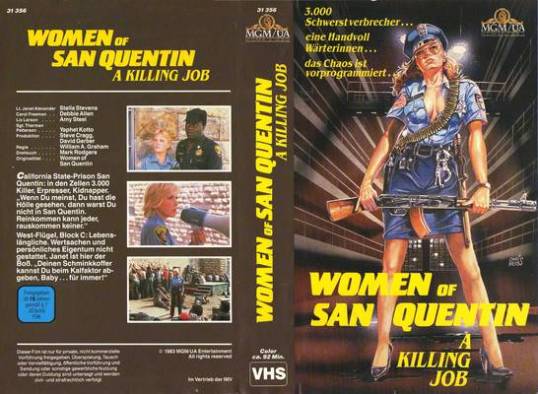
 Jimmy Dworski (Jim Belushi) is a convicted car thief who only has a few days left in his criminal sentence but still decides to break out of prison so he can go see the Cubs play in the World Series. Spencer Barnes (Charles Grodin) is an uptight ad executive who needs to learn how to relax and have a good time. When Spencer loses his organizer, Jimmy finds it. Before you can say “The prince and the pauper,” Jimmy has access to all of Spencer’s money and the mansion that Spencer is supposed to be staying at over the weekend. While Spencer tries to survive on the streets and track down his organizer, Jimmy is living it up, spending money, impressing a Japanese businessman (Mako), romancing the boss’s daughter, and taking care of business.

 This made-for-TV sequel to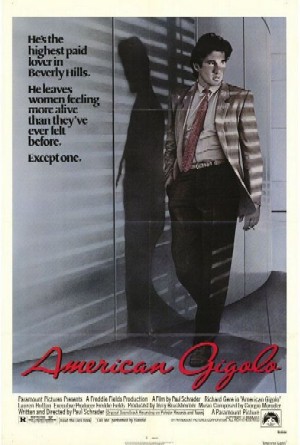
 Through the Shattered Lens