Both on his own and as a member of Goblin. Claudio Simonetti has been responsible for some of the most iconic scores in the history of Italian horror cinema. He is probably best known for Goblin’s score for Dario Argento’s Suspiria. The minute you hear the opening of that score, you are immediately transported into Argento’s nightmarish world of witches, death, and ballet.
In 1999, Simonetti formed Daemonia, a heavy mental band that played updated version of his classic horror scores, along with new material. In this video, they perform Suspiria and the end result is a perfect video for October!
Hell of the Living Dead, a 1980 Italian zombie film, is a movie known by many different names. Some of these names are more memorable than others.
For instance, it’s known as Virus, which isn’t a very good name. It’s kind of boring. Plus, a virus could lead to anything. Sure, a virus could turn someone into a zombie but it could also just mean a week in bed. Plus, there’s already a thousand movies called Virus.
Night of the Zombies is a bit more specific, though still rather generic. Just about every Italian horror film that came out in 1980 was about zombies and most of them took place at night.
Island of the Living Dead, at the very least, let’s you know where the majority of the movie takes place. That said, it’s kind of a dishonest title. The island isn’t just occupied by the living dead. There’s also a primitive tribe, the members of which pop up occasionally to throw spears at a group of soldiers and a journalist.
I absolutely love the title Zombie Creeping Flesh. Seriously, I don’t know why they bothered to come up with so many alternate titles when they already had Zombie Creeping Flesh.
However, this film is best known as Hell of the Living Dead and, actually, I guess that’s a pretty good title. I mean, it’s totally and completely over the top. Add to that the title almost feels like a challenge being specifically issued to the fans of George Romero’s zombie films. It’s as if the film is saying, “If you can’t handle the Night or the Dawn, the Hell is absolutely going to kill you!”
Anyway, this is an extremely low-budget film from director Bruno Mettei and screenwriter Claudio Fragasso. The team of Mattei/Fragasso were famous for producing some of the most ludicrously silly horror films to ever come out of Italy. (Outside of his collaboration with Mattei, Fragasso is best known for directing Troll 2.) A typical Mattei/Fragasso film is entertaining without being particularly good. They were never ones to allow a thing like a lack of money to stand in the way of their narrative ambitions.
For instance, in Hell of the Living Dead, there’s one isolated scene that’s supposed to take place at the United Nations. The scene appears to have been filmed in a lecture hall at a small university. One delegate angrily declares that he is sick of everyone exploiting his zombie-occupied country. Someone else suggests that maybe they should take a break until tomorrow. It’s an incredibly inauthentic scene that adds nothing to the story but that didn’t keep the team of Mattei and Fragasso from including it in the film. They were determined to have a UN scene and they weren’t going to let a lack of money or access stop them.
Anyway, the majority of the film deals with a zombie outbreak on a small tropical island. The island is almost exclusively made up of stock footage. A typical scene will feature a character like journalist Lia (played by Margit Evelyn Newtown) standing in the middle of the frame. She looks to the right and we get some grainy stock footage of a bat or something similar. She looks to her left and we get some faded stock footage of a tiger.
As I mentioned previously, the island also has primitive natives. Whenever you hear the drums in the distance, it’s important to toss off your shirt, paint your face, and start jogging. Otherwise, you might get killed. You know how that goes.
And then there’s the zombies, of course. The zombies get an origin story, something to do with an accident at top secret chemical plant. At the start of the film, a rat attacks a scientist. I’m assuming the rat was carrying the virus but it’s just as possible that Mattei just decided to throw in a random rat attack. (His best film was literally just 90 minutes of rat attacks.) Regardless, the zombie effects actually aren’t that bad but the problem is that whenever the zombies show up, they have to compete with all of the stock footage. When the zombies aren’t dealing with animal footage that was originally shot for a mondo film, they keep busy by eating nearly everyone that they meet. A group of soldiers have been sent to take care of the zombies but since none of them are particularly bright, they don’t have much luck.
Hell of the Living Dead has a reputation for being one of the worst zombie films ever made. I don’t know if I would go that far. It’s watchable in a “what the Hell did I just see?” sort of way. And in the end, isn’t that kind of the point of a film like this?
I’ve been using this year’s horrorthon as an excuse to watch and review all (well, almost all) of Dario Argento’s films! Today, I take a look at one of Argento’s best — 1975’s Deep Red!
After the successful release of Four Flies on Grey Velvetin 1971, Dario Argento announced his retirement from the giallo genre. His next film was 1973’s The Five Days of Milan, a historical comedy-drama with a political subtext. The Five Days of Milan was a huge box office flop in Italy and, to the best of my knowledge, it was never even released in the United States. To date, it is Argento’s most obscure film and one that is almost impossible to see. In fact, it’s so obscure that, in two of my previous posts, I accidentally called the film The Four Days of Milan and apparently, no one noticed.
Forgotten Argento
After the failure of Five Days, Argento returned to the giallo genre. And while he was undoubtedly stunned by the failure of his previous film, Argento ended up directing one of the greatest Italian films of all time. If The Bird With The Crystal Plumage and Four Flies on Grey Velvet were both great giallo films, Deep Red is a great film period. It is Argento at his over the top best.
Now, before I go any further, I should point out that there are many different versions of Deep Red floating around. For instance, it was released in the United States under the title The Hatchet Murders and with 26 minutes of footage cut from the film. For this review, I watched the original 126-minute Italian version. I’ve always preferred the original to the shorter version that was released in America. Oddly enough, Argento has said that he prefers the shorter version.
Deep Red opens with a blast of music that both announces Argento’s return to the giallo genre and also provides some hints to his future as a filmmaker. Whereas his previous films had all featured an excellent but rather serious score by Ennio Morricone, Deep Red was the first Argento film to be scored by Goblin. There’s a gothic, almost operatic playfulness to Goblin’s work on the film. (If the Phantom of the Opera had ended up working in Hollywood and writing film scores, the end result would have sounded a lot like Goblin.) Goblin’s deafening score works as the perfect sonic companion to Argento’s constantly roving camera and vibrantly colorful images. (The blood spilled in Deep Red is the reddest blood imaginable.)
Deep Red‘s protagonist is Marcus Daly (David Hemmings) and, like so many Argento protagonists, he’s both an artist and a man without a definite home. At one point, he explains that he was born in England, grew up in America, and now lives in Italy. He’s a jazz pianist but he supports himself by giving music lessons. In a scene excised from the American cut, Marcus tells his students that, while classical music should be respected and appreciated, it’s also necessary to be willing to embrace art that some critics would dismiss as being “trashy.” Marcus, of course, is talking about jazz but he could just as easily be Dario Argento, defending his decision to return to the giallo genre.
While Marcus plays piano and tries to help his alcoholic friend, Carlo (Gabriele Lavia), a German psychic named Helga Ulmann (Macha Meril) is giving a lecture when she suddenly announces that someone in the audience is a murderer. Later, Helga is brutally murdered by a gloved, hatchet-wielding attacker.
(Helga’s murder scene is always difficult for me to watch, even if Argento doesn’t — as Kim Newman pointed out in a review written for Monthly Film Bulletin — linger over the carnage in the way that certain other horror directors would have. I have to admit that I also always find it interesting that Helga is played by the same actress who, that same year, would play the evil Lady On The Train in Aldo Lado’s The Night Train Murders. Playing one of the Lady’s victims was Irene Miracle, who later co-starred in Argento’s Inferno.)
The only witness to Helga’s murder? Marcus Daly, of course. He’s standing out in the street, having just talked to Carlos, when he looks up and sees Helga being murdered in her apartment. Marcus runs up to the apartment to help, arriving just too late. And yet, Marcus is convinced that he saw something in the apartment that he can’t quite remember. Deep Red is yet another Argento film that deals with not only the power of memory but the difficulties of perception. Marcus knows that he saw something but what?
Well, I’m not going to spoil it for you! In this case, the mystery and its solution makes a bit more sense than the mysteries in Argento’s first three films. Argento isn’t forced to resort to debunked science, like he did in both Cat o’Nine Tails and Four Flies on Grey Velvet. One reason why Deep Red is so compulsively watchable is because, for perhaps the first time, Argento plays fair with the mystery. After you watch the film the first time, go back and rewatch and you’ll discover that all the clues were there. You just had to know where to look.
That said, the way that Argento tells the story is still far more important than the story itself. Argento’s first three films may have been stylish but Deep Red finds Argento fully unleashed. The camera never stops moving, the visuals are never less than stunning with the screen often bathed in red, and Goblin’s propulsive score ties it all together. This is one of those films from which you can’t look away. It captures you from first scene and continues to hold you through the gory conclusion. Deep Red is an undeniably fun thrill ride and, even today, you can easily see why Argento frequently refers to it as being his personal favorite of his many films. In fact, Argento even owns a store in Rome that is called Profondo Rosso.
But you know why I really love Deep Red?
It’s all because of the relationship between David Hemmings and Daria Nicolodi. Daria Nicolodi plays Gianna Brezzi, a reporter who helps Marcus with his investigation. After three films that featured women as either victims or killers, Gianna is the first truly strong and independent woman to show up in an Argento film. I know that some people have criticized the scenes between Hemmings and Nicolodi, feeling that they drag down the pace of the movie. I could not disagree more. Both Hemmings and Nicolodi give wonderful performances and their likable chemistry feels very real.
Gianna and Marcus arm westle. (Gianna wins. Twice.)
To me, that’s what sets Deep Red apart. You care about Marcus and you care about Gianna. Yes, the mystery is intriguing and the murder set pieces are brilliantly choreographed, and Deep Red is definitely Argento at his best. But for me, the heart and soul of the film will always belong to the characters of Marcus and Gianna and the performers who brought them to life.
Deep Red was the start of Dario Argento and Daria Nicolodi’s long and often contentious relationship. (Dario and Daria’s daughter, Asia Argento, was born around the same time that Deep Red was released and has directed two films, Scarlet Divaand Misunderstood, that deal with her often chaotic childhood.) This relationship would play out over the course of six films and, as much as I love those six films, it’s always a little sad to consider that, when watched in order, the provide a portrait of a doomed and dying romance, one that did not particularly end well. (It is possibly not a coincidence that, with the exception of Deep Red and Tenebrae, Daria Nicolodi suffered some type of terrible death in every film she made with Argento.)
But, regardless of what may or may not have been going on behind the scenes, Deep Red remains a triumph for both its director and its stars.
Anyone who have gotten to know me throughout the years (decades even) know one indisputable fact and that’s one of my favorite films of all-time is George A. Romero’s classic horror masterpiece, Dawn of the Dead.
This film is not just a great horror film, but just a great film. Sure, some have said that it hasn’t aged well, but those detractors only see the era it was filmed in. If one looks part that then they can see that Dawn of the Dead works just as well now as it did when it premiered in 1978.
One of my favorite scenes in the film is actually the beginning of the film. It’s rare that a film can fully capture and explain an overriding theme in the film’s narrative right from the beginning, but Romero did it and did it well.
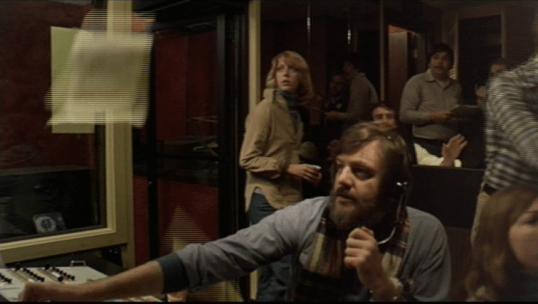
The scene I’m talking about is the film’s intro that’s set in a chaotic Pittsburgh TV station. It’s a scene of chaos because the zombie apocalypse is already in full swing and people have begun to lose their trust in the fourth estate. In times of crisis the people depend on the news to bring to them answers or, at the very least, the correct information to survive said crisis. In Dawn of the Dead, the fourth estate has failed as in that they’ve become just as unreliable as the rest of the mechanisms which make civilization operate.
Even when the right information was being relayed by the the guest scientist in the scene, the audience reaction (the tv station crew themselves) was one of exasperation and disbelief. This scene would influence future zombie apocalypse stories both in film, tv and print in that the people would lose faith and trust in the very institution who were supposed to be trusted to be objective and informative.
This is just one of several scenes from Dawn of the Dead which I consider a favorite, but then the entire film I would consider a favorite scene as a whole in a story that hasn’t ended.
I just had to start out with this because it represents everything that I love about these old school exploitation trailers. It’s just so shameless and cheerful about it all. This film is from Herschell Gordon Lewis and it features ESP, a really kinda scary witch, and a random LSD trip. The title of this film also inspired the name of one of my favorite companies, Something Weird Video. (I make it a point to buy something from Something Weird every chance I get. My most recent Something Weird video is a film from the 60s called Sinderella and the Golden Bra. Haven’t gotten a chance to watch it yet but with a title like that, how could it be bad?)
This is actually a really, really bad movie and I think the trailer goes on for a bit too long but it does have a few vaguely effective moments — i.e., when Dennis Christopher stares at the camera with half of his face painted. Plus, you can catch a young Mickey Rourke acting a lot like Michael Madsen.
3) Monster Shark (1984)
Now you may think that since this Italian film was directed by Lamberto Bava (credited here as John Old, Jr. because his father, Mario, was occasionally credited as John Old, Sr.) and has the word “shark” in the title that it’s yet another rip-off of Jaws. Well, joke’s on you because, as they state repeatedly in the trailer, “It’s not a shark!” Even if you didn’t know this was an Italian film before watching the trailer, it wouldn’t be hard to guess. First off, there’s the dubbing. Then there’s the scene of the film’s main character wandering around aimlessly. (Most Italian horror trailers feature at least one scene of someone just walking around.) And finally, there’s the fact that this is yet another trailer that uses a sped-up version of Goblin’s Beyond The Darkness soundtrack for its background music. While I haven’t seen this film yet, I plan to just to find out who Bob is.
Originally, I was planning on including the trailer for a Ted V. Mikels’ film called The Worm Eaters right here but I reconsidered because, quite frankly, The Worm Eaters is one of the most disgusting, stomach-churning things I’ve ever seen. I’m going to wait until I find five other equally disgusting trailers to feature it with and then I’m going to put them all up under the heading: 6 Trailers To Inspire Vomit. Until then, enjoy a far more pleasant trailer — Van Nuys Blvd. This trailer rhymes! I’m tempted to say that I could have written it but then again, I only write free verse poetry. Anyway, where was I? Oh yeah, Van Nuys Blvd.
However, there was a darker side to Van Nuys Blvd. and here it is: Vice Squad, starring Wings Hauser. Eventually, I’ll review this film but until I do, check out our new friend Trash Film Guru’s review.
6) Crosstalk (1982)
We’ll conclude with the only thing scarier than Wings Hauser in Vice Squad — a computer that has not only witnessed a murder but enjoyed it!
One of my favorite movies of all time is Joe D’Amato’s haunting 1979 romance Beyond The Darkness. Not only is it one of the best Italian films ever (and the best film ever directed by D’Amato) but I think it’s also one of the best films ever made.
One reason the film is so effective is because of its soundtrack, which was composed and performed by (who else?) Goblin. The music will be familiar to any Italian horror fan, largely because it was reused by about a thousand other movies that came out in the years after Beyond The Darkness. (Director Bruno Mattei, in particular, was fond of it.)
We’ve now reached the final day of what has been a week-long horror-themed “Song of the Day” feature for the site. It’s quite appropriate that this final day also lands on Halloween and I’m sure many will approve of this final choice to cap off the week.
A week which has seen Italian film composers and prog-rock bands chosen for creating and contributing some of the best and most memorable themes to horror films which will stand the march of time. We’ve seen an epic song from a Montreal band whose music has the apocalyptic sound to it. There’s also two entries from films created by a master of the horror genre in John Carpenter.
The week began with Goblin’s main title theme for George A. Romero’s original Dawn of the Dead. With Halloween night the premiere of the long-awaited and heavily-hyped tv adaptation of Robert Kirkman’s The Walking Dead comic book series (by none other than Frank Darabont himself) I thought what better way to bookend Goblin’s theme for the Romero zombie epic than by picking Johnny Cash’s song “The Man Comes Around”. One of the last songs penned and sang by The Man In Black himself and properly used by filmmaker Zack Snyder to be the intro music for his remake of Dawn of the Dead.
This song with its gospel-like (though not as hopeful as most) sound and it’s apocalyptic and Biblical lyrics just speaks of the apocalypse like no other song from this past week has done. It comes off almost like a prophecy come down and spoken by one of God’s main dudes. This song when paired with the scenes of the zombie apocalypse crashing down on an unsuspecting world in Snyder’s film instantly made it a favorite with all zombie fans everywhere and introduced The Man In Black to a whole new set of fans.
I would like to think that when the zombie apocalypse does arrive it would be to this song as I and those who share my belief in how to survive such an event ready ourselves for whatever may come.
The Man Comes Around
And I heard as it were the noise of thunder One of the four beasts saying come and see and I saw And behold a white horse
There’s a man going around taking names And he decides who to free and who to blame Everybody won’t be treated all the same There’ll be a golden ladder reaching down When the Man comes around
The hairs on your arm will stand up At the terror in each sip and in each sup Will you partake of that last offered cup? Or disappear into the potter’s ground When the Man comes around
Hear the trumpets, hear the pipers One hundred million angels singing Multitudes are marching to the big kettledrum Voices calling, voices crying Some are born and some are dying It’s Alpha and Omega’s kingdom come
And the whirlwind is in the thorn tree The virgins are all trimming their wicks The whirlwind is in the thorn tree It’s hard for thee to kick against the pricks
Till Armageddon no shalam, no shalom Then the father hen will call his chickens home The wise man will bow down before the throne And at His feet they’ll cast their golden crowns When the Man comes around
Whoever is unjust let him be unjust still Whoever is righteous let him be righteous still Whoever is filthy let him be filthy still Listen to the words long written down When the Man comes around
Hear the trumpets, hear the pipers One hundred million angels singing Multitudes are marching to the big kettledrum Voices calling and voices crying Some are born and some are dying It’s Alpha and Omega’s kingdom come
And the whirlwind is in the thorn tree The virgins are all trimming their wicks The whirlwind is in the thorn tree It’s hard for thee to kick against the pricks
In measured hundredweight and penneypound When the Man comes around.
Close (Spoken part) And I heard a voice in the midst of the four beasts And I looked and behold, a pale horse And his name that sat on him was Death And Hell followed with him.
Halloween is less than a week away and for the next few days there’ll be more song of the day choices and this time around it will all be centered on horror. To start things off I chose the theme from George A. Romero’s Dawn of the Dead which was composed by the Italian prog-rock band Goblin.
The theme’s titled “L’alba Dei Morti Viventi” and it definitely creates a dissonant tone which just creeps along and makes one feel more than just a bit uncomfortable. Goblin used a lot of their electronic music background to make this such a signature and iconic horror theme. Anyone who has seen the original Dawn of the Dead will automatically recognize this theme and the feeling it brings up. A feeling of dread and of creeping horror which perfectly describes the zombies from Romero’s grand opus.
Horror fans everywhere have Italian horror maestro Dario Argento for having gotten Goblin to create the score for Romero’s film (Argento was one of the key producers for the film and even re-cut it for the European market). Goblin had already worked with Argento on previous films with their best early work with the filmmaker being the score for ProfondoRosso (known as Deep Red in the US and English market). But no matter how many other Italian horror scores the band has made since Dawn of the Dead (and the ones after have been great in their own right) it will be their score for that film which will indelibly link the band in film music history.
PS: as an added bonus below is the band’s theme for Argento’s Profondo Rosso.
While the goth ballerina side of me will always have a special place in my heart for Suspiria and its two sequels, I think that 1982’s Tenebraemay very well be director Dario Argento’s best film. Certainly, it was (to date) his last truly great film before he entered the current, frustratingly uneven stage of his career.
Tenebrae was a return to Argento’s giallo roots after the supernatural-themed horror of Suspiria, Zombi, and Inferno. It was also the work of an audaciously confident director. That confidence is fully on display in the scene below in which the film’s killer menaces a journalist and her lover. Featuring a truly impressive tracking shot in which the camera appears to literally swoop in, out, and over a journalists house without a single cut, the scene ends with one of Argento’s more memorable murders.