Yesterday, the great character actor Harry Dean Stanton passed away at the age of 91. Cisco Pike is not one of Stanton’s best films but it is a film that highlight why Stanton was such a compelling actor and why his unique presence will be missed.
Cisco Pike (Kris Kristofferson) is a musician who has fallen on hard time. After having been busted several times for dealing drugs, Cisco now just wants to spend time with his “old lady” (Karen Black) and plot his comeback as a musician. However, a corrupt narcotics detective, Leo Holland (Gene Hackman), approaches Cisco with an offer that he cannot refuse. Holland has come into possession of 100 kilos of marijuana. He wants Cisco to sell it for him and then Leo plans to take the money and retire. Cisco has the weekend to sell all of the weed. If he doesn’t, Holland will arrest him for dealing and sent him back to prison,
About halfway through this loose and improvisational look at dealers, hippies, and squares in 1970s Los Angeles, Harry Dean Stanton shows up in the role of Jesse Dupree, an old friend and former bandmate of Cisco’s. Jesse is a free-living wanderer, too old to be a hippie but too unconventional to be a member of the establishment. Unfortunately, Jesse also has a nasty heroin habit. Jesse Dupree is a prototypical Harry Dean Stanton role. Like many of Stanton’s best roles, Jesse may be sad and full of regrets but he is not going to let that keep him from enjoying life. Stanton may not appear in much of the film but he still takes over every scene in which he appears.
Stanton is, by far, the best thing about Cisco Pike. As always, Gene Hackman is entertaining, playing the inverse of The French Connection‘s Popeye Doyle and Karen Black is her usual mix of sexy and weird. The weakest part of the movie is Kris Kristofferson, who was still a few years away from becoming a good actor when he starred in Cisco Pike. It is interesting to consider how different Cisco Pike would have been if Stanton and Kristofferson had switched roles. Stanton may not have had Kristofferon’s movie star looks but, unlike Kristofferson, he feels real in everything that he does. With his air of resignation and his non-Hollywood persona, Stanton brought authenticity to not only Cisco Pike but to every film in which he appeared.
Along with Stanton, several other familiar faces appear in Cisco Pike. Keep an eye out for Roscoe Lee Browne, Howard Hesseman, Viva, Allan Arbus, and everyone’s favorite spaced-out hippie chick, the one and only Joy Bang.
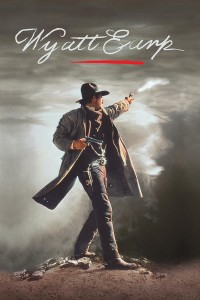
Once upon a time, there were two movies about the legendary Western lawman (or outlaw, depending on who is telling the story) Wyatt Earp. One came out in 1993 and the other came out in 1994.
The 1993 movie was called Tombstone. That is the one that starred Kurt Russell was Wyatt, with Sam Elliott and Bill Paxton in the roles of his brothers and Val Kilmer playing Doc Holliday. Tombstone deals with the circumstances that led to the Gunfight at the O.K. Corral. “I’m your huckleberry,” Doc Holliday says right before his gunfight with Michael Biehn’s Johnny Ringo. Tombstone is the movie that everyone remembers.
The 1994 movies was called Wyatt Earp. This was a big budget extravaganza that was directed by Lawrence Kasdan and starred Kevin Costner as Wyatt. Dennis Quaid played Doc Holliday and supporting roles were played by almost everyone who was an active SAG member in 1994. If they were not in Tombstone, they were probably in Wyatt Earp. Gene Hackman, Michael Madsen, Tom Sizemore, Jeff Fahey, Mark Harmon, Annabeth Gish, Gene Hackman, Bill Pullman, Isabella Rossellini, JoBeth Williams, Mare Winningham, and many others all appeared as supporting characters in the (very) long story of Wyatt Earp’s life.
Of course, Wyatt Earp features the famous Gunfight at the O.K. Corral but it also deals with every other chapter of Earp’s life, including his multiple marriages, his career as a buffalo hunter, and his time as a gold prospector. With a three-hour running time, there is little about Wyatt Earp’s life that is not included. Unfortunately, with the exception of his time in Tomstone, Wyatt Earp’s life was not that interesting. Neither was Kevin Costner’s performance. Costner tried to channel Gary Cooper in his performance but Cooper would have known better than to have starred in a slowly paced, three-hour movie. The film is so centered around Costner and his all-American persona that, with the exception of Dennis Quaid, the impressive cast is wasted in glorified cameos. Wyatt Earp the movie tries to be an elegy for the old west but neither Wyatt Earp as a character nor Kevin Costner’s performance was strong enough to carry such heavy symbolism. A good western should never be boring and that is a rule that Wyatt Earp breaks from the minute that Costner delivers his first line.
Costner was originally cast in Tombstone, just to leave the project so he could produce his own Wyatt Earp film. As a big, Oscar-winnng star, Costner went as far as to try to have production of Tombstone canceled. Ironically, Tombstone turned out to be the film that everyone remember while Wyatt Earp is the film that most people want to forget.
Craig Sheffer seeks symbolic revenge and Gene Hackman picks up a paycheck in Split Decisions!
Ray McGuinn (Jeff Fahey) is a contender. Ever since he let his father’s gym and signed with a sleazy boxing promoter, Ray has been waiting for his title shot. His father, an ex-boxer turned trainer named Dan (Gene Hackman), has never forgiven Ray for leaving him. Meanwhile, his younger brother — an amateur boxer and Olympic aspirant named Eddie (Craig Sheffer) — worships Ray and is overjoyed when Ray returns to the old neighborhood to fight “The Snake” Pedroza (Eddie Velez). But then Ray is told that if he doesn’t throw the fight, he’ll never get a shot at a title bout. When Ray refuses, The Snake and a group of thugs are sent to change his mind and Ray gets tossed out of a window.
Eddie is determined to avenge his brother’s death. Does he do it by turning vigilante and tracking down the men who murdered his brother? No, he turns pro and takes his brother’s place in the boxing ring! Dan reluctantly trains him and Eddie enters the ring, looking for symbolic justice. Symbolic justice just doesn’t have the same impact as Charles Bronson-style justice.
The idea of a barely known amateur turning professional and getting a chance to fight a contender feels just as implausible here as it did in Creed. The difference is that Creed was a great movie so it did not matter if it was implausible. To put it gently, Split Decisions is no Creed. The boxing scenes are uninspired and even the training montage feels tired. Look at Craig Sheffer run down the street while generic 80s music plays in the background. Watch him spar in the ring. Listen to Gene Hackman shout, “You’re dragging your ass out there!” In the late 80s, Gene Hackman could have played a role like Dan in his sleep and he proves it by doing so here. Underweight pretty boy Craig Sheffer is actually less convincing as a boxer than Damon Wayans was in The Great White Hype.
Split Decisions is another boxing movie that should have taken Duke’s advice.
Even though it has only been a week since I last did a movie a day, I feel like I’ve been gone forever. Thank you to everyone who commented or messaged me while I was gone. It turned out that I just had a bad sinus infection. It was painful as Hell but, with the help of antibiotics and the greatest care in the world, I’m recovering.
Last week, I asked if anyone had any suggestions for what the 68th movie a day should be. Case suggested Hoosiers and so it shall be.
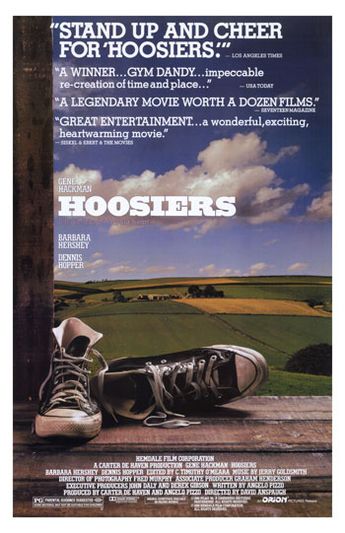
In 1951, Norman Dale (Gene Hackman) arrives in the small Indiana town of Hickory. He is a former college basketball coach who has been hired to coach the high school’s perennially struggling basketball team. Emphasizing the fundamentals and demanding discipline from his players, Dale struggles at first with both the team and the townspeople. When he makes an alcoholic former basketball star named Shooter (Dennis Hopper) an assistant coach, he nearly loses his job. Eventually, though, the Hickory team starts winning and soon, this small town high school is playing for the state championship against highly favored South Bend High School.
For many people, Hoosiers is not just “a basketball movie.” Instead, it is the basketball movie, the movie by which all other sport films are judged. Hoosiers is inspired by a true story. In 1954, small town Milan High School did defeat Muncie for the Indiana State Championship and they did it by two points. Otherwise, Hoosiers is heavily fictionalized and manages to include almost every sports film cliché that has ever existed. How good a coach is Norman Dale, really? Almost every game that Hickory wins is won by only one basket.
Why, then, is Hoosiers a classic? Much of it is due to director David Anspaugh’s attention to period and detail. Some of it is due to Gene Hackman, who gives a tough and unsentimental performance. Whenever Hoosiers starts to cross the line from sentimental to maudlin, Hackman is there to pull it back to reality with a gruff line delivery. Even his romance with the one-note anti-basketball teacher (Barbara Hershey) works. Hickory feels like a real place, with a real history and inhabited by real people.
And then there’s Dennis Hopper. Along with Blue Velvet, Hoosiers was Hopper’s comeback film. After spending twenty years lost in the Hollywood wilderness, better known for abusing drugs and shooting guns than acting, Hopper had just come out of rehab when he was offered the role of Shooter. Amazingly, he turned the role down and told the producers to offer it to his friend, Harry Dean Stanton.
According to Peter L. Winkler’s Dennis Hopper: Portrait of an American Rebel, this is what happened next:
Stanton (who, ironically, was also considered for Hopper’s role in Blue Velvet) called Hopper up and asked, “Aren’t you from Kansas?”
“Yeah.”
“Didn’t you have a hoop on your barn?”
“Yeah.”
“I think you may be the guy that David Anspaugh’s looking for.”
Harry Dean Stanton was right. Dennis Hopper, still very much in recovery, totally inhabited the role of the alcoholic Shooter and gave one of the best performances of his often underrated career. Both Shooter and the actor playing him surprised everyone by doing a good job and Hopper received his only Oscar nomination for acting for his performance in Hoosiers. (He had previously been nominated for co-writing Easy Rider.)
You don’t have to like basketball to enjoy the Hell out of Hoosiers.
If you’re ever visiting my former hometown of Denton, Texas, you owe it to yourself to do two things.
Number one, go to Recycled Books and Records. It’s right across the street from the old courthouse and it’s perhaps the greatest used bookstore in the world. When I was going to college at UNT, I would spend hours in Recycled Books. Not only do they have three floors of books but they have some really nice apartments on the fourth floor. I attended my share of hazily remembered parties in those apartments.
The second thing that you must do is stop by the Campus Theater. The Camps Theater is located on the other side of the old courthouse and it is a true historical landmark. (It’s also the home of the Denton Community Theatre.) When you step inside of the theater, be sure to look for a plaque on the wall. The plaque will inform you that, in 1967, Arthur Penn’s Bonnie and Clyde premiered at the Campus Theater.
Bonnie and Clyde not only premiered in Denton but it was also filmed around North Texas. This was a pragmatic decision, made to minimize studio interference. Even with that in mind, that’s still the way it should have been because Bonnie Parker and Clyde Barrow are true Texas legends. In the 1930s, they were young, they robbed banks, and they killed people. Much like many of the outlaws of the era, they became folk heroes and they died in a hail of bullets.
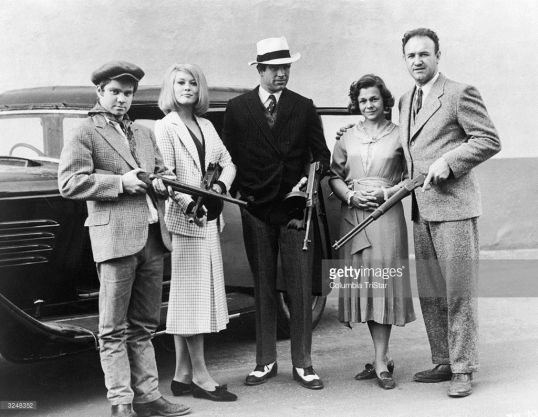
In the picture above, Clyde is short, scrawny, and slightly handsome in a class clown sort of way. Bonnie, meanwhile, is even shorter than Clyde and has the hard look of someone who has never known an easy life. Both of them have a look that should be familiar to anyone who has spent any time in the small towns that dot the North Texas landscape. They look like real people. They don’t look like film stars.
Here’s the movie’s version of Bonnie and Clyde:
In other words, Bonnie and Clyde is not a documentary. But that doesn’t matter. 50 years after it was first released Bonnie and Clyde remains a powerful and, even more importantly, extremely entertaining film. When the film was released, it was controversial for it violence and, having recently rewatched it, I have to say that the violence still makes an impression. When guns are fired, the shots seem to literally explode in your ear. When people are torn apart by bullets, they die terrible deaths and the film’s most graphic demises are reserved for its most likable characters. Towards the end of the film, with the Texas Rangers relentlessly closing in on Bonnie and Clyde, the tension becomes almost unbearable.
What makes the violence all the more disturbing is that it often interrupts scenes that, until the bullets started flying, were often humorous. A bank robbery starts out as a lark, becomes an exciting chase scene as Bonnie and Clyde attempt to escape, and suddenly turns into an act of shocking of violence when Clyde fire a gun and shoots a man point-blank in the face. Later, stopping to help an old farmer change a tire leads to a sudden ambush. Perhaps the film’s outlook is best captured in a scene in which the Barrow gang cheerfully bonds with a hostage until they suddenly find out that he’s an undertaker, a reminder that the promise of death is always present.
“Get him out of here!” Bonnie snaps.
Like many of the great gangster films, Bonnie and Clyde presents its outlaws as being folk heroes. They may rob banks and occasionally kill people but they look good doing it and they seem like they would be fun to hang out with. The thing that set Bonnie and Clyde apart from previous gangster films is that it refused to even pretend to condemn its bank robbers. The cops and the Texas Rangers are all on the side of the banks and the banks are on the side of big business. Bonnie and Clyde aren’t outlaws. They’re rebels. When they rob banks, they’re not just taking money. They’re standing up to the same establishment that was feared in the 30s, resented in the 60s, and hated today.
Clyde is played by Warren Beatty (who also produced the film) and Bonnie is played by Faye Dunaway and both of them give performances that literally define screen charisma. You never forget that you’re watching two movie stars but, at the risk of repeating myself, Bonnie and Clyde is not meant to be a documentary. At times, it almost seems as if Beatty’s Clyde and Dunaway’s Bonnie know that they’re characters in a gangster movie. They know that they’re doomed because that’s how gangster movies work so, as a result, they’re determined to live as much life as possible before that final reel. The supporting cast — Gene Hackman, Estelle Parsons, Michael J. Pollard, Gene Wilder — are all great but the film is definitely a celebration of Beatty and Dunaway.
Bonnie and Clyde went from premiering at the Campus Theater to a best picture nomination. However, it lost to In The Heat of the Night.
The Story of Suicide Sal
A Poem by Bonnie Parker
We each of us have a good “alibi”
For being down here in the “joint”;
But few of them really are justified
If you get right down to the point.
You’ve heard of a woman’s “glory”
Being spent on a “downright cur,”
Still you can’t always judge the story
As true, being told by her.
As long as I’ve stayed on this “island,”
And heard “confidence tales” from each “gal,”
Only one seemed interesting and truthful —
The story of “Suicide Sal.”
Now “Sal” was a gal of rare beauty,
Though her features were coarse and tough;
She never once faltered from duty
To play on the “up and up.”
“Sal” told me this tale on the evening
Before she was turned out “free,”
And I’ll do my best to relate it
Just as she told it to me:
I was born on a ranch in Wyoming;
Not treated like Helen of Troy;
I was taught that “rods were rulers”
And “ranked” as a greasy cowboy.”
Then I left my old home for the city
To play in its mad dizzy whirl,
Not knowing how little of pity
It holds for a country girl.
There I fell for “the line” of a “henchman,”
A “professional killer” from “Chi”;
I couldn’t help loving him madly;
For him even now I would die.
One year we were desperately happy;
Our “ill gotten gains” we spent free;
I was taught the ways of the “underworld”;
Jack was just like a “god” to me.
I got on the “F.B.A.” payroll
To get the “inside lay” of the “job”;
The bank was “turning big money”!
It looked like a “cinch” for the “mob.”
Eighty grand without even a “rumble” —
Jack was last with the “loot” in the door,
When the “teller” dead-aimed a revolver
From where they forced him to lie on the floor.
I knew I had only a moment —
He would surely get Jack as he ran;
So I “staged” a “big fade out” beside him
And knocked the forty-five out of his hand.
They “rapped me down big” at the station,
And informed me that I’d get the blame
For the “dramatic stunt” pulled on the “teller”
Looked to them too much like a “game.”
The “police” called it a “frame-up,”
Said it was an “inside job,”
But I steadily denied any knowledge
Or dealings with “underworld mobs.”
The “gang” hired a couple of lawyers,
The best “fixers” in any man’s town,
But it takes more than lawyers and money
When Uncle Sam starts “shaking you down.”
I was charged as a “scion of gangland”
And tried for my wages of sin;
The “dirty dozen” found me guilty —
From five to fifty years in the pen.
I took the “rap” like good people,
And never one “squawk” did I make.
Jake “dropped himself” on the promise
That we make a “sensational break.”
Well, to shorten a sad lengthy story,
Five years have gone over my head
Without even so much as a letter–
At first I thought he was dead.
But not long ago I discovered
From a gal in the joint named Lyle,
That Jack and his “moll” had “got over”
And were living in true “gangster style.”
If he had returned to me sometime,
Though he hadn’t a cent to give,
I’d forget all this hell that he’s caused me,
And love him as long as I live.
But there’s no chance of his ever coming,
For he and his moll have no fears
But that I will die in this prison,
Or “flatten” this fifty years.
Tomorrow I’ll be on the “outside”
And I’ll “drop myself” on it today;
I’ll “bump ’em” if they give me the “hotsquat”
On this island out here in the bay…
The iron doors swung wide next morning
For a gruesome woman of waste,
Who at last had a chance to “fix it,”
Murder showed in her cynical face.
Not long ago I read in the paper
That a gal on the East Side got “hot,”
And when the smoke finally retreated
Two of gangdom were found “on the spot.”
It related the colorful story
of a “jilted gangster gal.”
Two days later, a “sub-gun” ended
The story of “Suicide Sal.”
The Story of Bonnie and Clyde
Another Poem by Bonnie Parker
You’ve read the story of Jesse James
Of how he lived and died;
If you’re still in need
Of something to read,
Here’s the story of Bonnie and Clyde.
Now Bonnie and Clyde are the Barrow gang,
I’m sure you all have read
How they rob and steal
And those who squeal
Are usually found dying or dead.
There’s lots of untruths to these write-ups;
They’re not so ruthless as that;
Their nature is raw;
They hate all the law
The stool pigeons, spotters, and rats.
They call them cold-blooded killers;
They say they are heartless and mean;
But I say this with pride,
That I once knew Clyde
When he was honest and upright and clean.
But the laws fooled around,
Kept taking him down
And locking him up in a cell,
Till he said to me,
“I’ll never be free,
So I’ll meet a few of them in hell.”
The road was so dimly lighted;
There were no highway signs to guide;
But they made up their minds
If all roads were blind,
They wouldn’t give up till they died.
The road gets dimmer and dimmer;
Sometimes you can hardly see;
But it’s fight, man to man,
And do all you can,
For they know they can never be free.
From heart-break some people have suffered;
From weariness some people have died;
But take it all in all,
Our troubles are small
Till we get like Bonnie and Clyde.
If a policeman is killed in Dallas,
And they have no clue or guide;
If they can’t find a fiend,
They just wipe their slate clean
And hand it on Bonnie and Clyde.
There’s two crimes committed in America
Not accredited to the Barrow mob;
They had no hand
In the kidnap demand,
Nor the Kansas City depot job.
A newsboy once said to his buddy;
“I wish old Clyde would get jumped;
In these awful hard times
We’d make a few dimes
If five or six cops would get bumped.”
The police haven’t got the report yet,
But Clyde called me up today;
He said, “Don’t start any fights
We aren’t working nights
We’re joining the NRA.”
From Irving to West Dallas viaduct
Is known as the Great Divide,
Where the women are kin,
And the men are men,
And they won’t “stool” on Bonnie and Clyde.
If they try to act like citizens
And rent them a nice little flat,
About the third night
They’re invited to fight
By a sub-gun’s rat-tat-tat.
They don’t think they’re too tough or desperate,
They know that the law always wins;
They’ve been shot at before,
But they do not ignore
That death is the wages of sin.
Some day they’ll go down together;
And they’ll bury them side by side;
To few it’ll be grief
To the law a relief
But it’s death for Bonnie and Clyde.
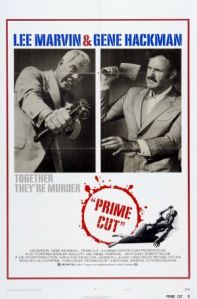
Nick Devlin (Lee Marvin) is a veteran enforcer for the Chicago mob. His latest assignment has taken him out of the city and sent him to the farmlands of Kansas. Nick is the third enforcer to be sent to Kansas, all to collect a $500,000 debt from a local crime boss named Mary Ann (Gene Hackman). The first one ended up floating face down in the Missouri River. The second was chopped up into sausages at the local slaughterhouse. Nick might have better luck because he once had an affair with Mary Ann’s wife, Clarabelle (Angel Tompkins).
When Nick tracks down Mary Ann to demand the money, he discovers that Mary Ann and his brother Weenie (Gregory Walcott, best remembered for his starring role in Plan 9 From Outer Space) are running a white slavery ring. Kidnapping girls from a nearby orphanage, Mary Ann and Weenie keep them naked and doped up in a barn. One of the girls, Poppy (Sissy Spacek, in her film debut), looks up at Nick and says, “Help me.” Nick takes Poppy with him, claiming that he’s holding her for collateral until he gets the money.
The main attraction here is to see two iconic tough guys — Lee Marvin and Gene Hackman — fighting over Sissy Spacek, who is only slightly less spacey here than in her breakthrough role in Badlands. In Prime Cut, the ruthless Chicago mobster turns out to have more of a conscience than the rural good old boys who work for Mary Ann and Weenie. Nothing sums up Prime Cut better than the scene where Lee Marvin, wearing a black suit, and Sissy Spacek are pursued through a wheat field by a thrasher that’s being driven by a roly-poly farmer wearing overalls. Prime Cut is both an exciting crime film and a trenchant satire of both the American heartland and the type of gangster movies that made Lee Marvin famous.
2016 is an election year and things are looking pretty grim right now. It’s enough to make you throw your hands up in frustrating and demand that someone push the reset button. However, things could always be worse. From the world of film, here are 8 President so incompetent, corrupt, and sometimes murderous that they will make you long for the dull mediocrity of a Jeb Bush or a Martin O’Malley.
1) The President (William Devane) in The Dark Knight Rises (2012)
You’re the leader of the free world and a masked terrorist has just launched a deadly attack on a major U.S. city. He has blown up a major sporting event on national television. He has killed the mayor. He is allowing a crazy sociopath to preside over show trials. The terrorist demands that you neither send troops into the city nor do you aid anyone who is trying to leave. What do you? If you are the President played by William Devane in The Dark Knight Rises, you say, “Okay,” and then breathe a sigh of relief when Batman turns out not to be dead after all. William Devane also played JFK in The Missiles of October and President James Heller on 24. Neither of them would have backed down to Bane as quickly as the President in The Dark Knight Rises.
2) The President (Billy Bob Thornton) in Love Actually (2003)
This President thinks that he can bully the world until he makes the mistake of getting on the bad side of the new British Prime Minister (Hugh Grant). How are you going to call yourself the leader of the free world when even Hugh Grant can make you look like a fool?
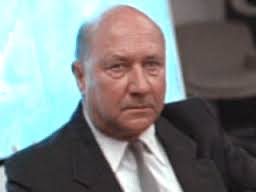
3) The President (Donald Pleasence) in Escape From New York (1981)
Hey, Mr. President, when Snake Plisskin nearly gets killed trying to save your life, you might want to try showing a little gratitude. Escape From New York ends with Snake asking The President who he feels about all the people who died rescuing him from New York. When the President can only mutter a few words of regret, Snake responds by destroying the tape that would have presumably prevented World War IV. Way to go, Mr. President! Would it have killed you to shed a few crocodile tears, at least over the fate of Cabbie?
4) The President (Cliff Robertson) inEscape From L.A. (1996)
The President from Escape From New York was practically Lincolnesque compared to the jerk who succeeded him. A theocrat who claimed to have an open line to God, this President banned smoking, drinking, cursing, red meat, guns, atheism, pre-marital sex, and everything else that made life fun. Anyone who disagreed got exiled to the island of California. Good thing that Snake Plisskin was still around to set things straight, even if it did mean that Florida ended up getting conquered by Cuba. Why doesn’t Snake ever run for President?
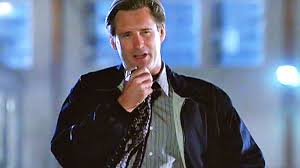
5) President Thomas J. Whitmore (Bill Pullman) in Independence Day (1996)
In a word, overrated. Yes, President Whitmore did lead the army that repealed the alien invaders but he would not have had to do that in the first place if he had prevented the Earth from being invaded in the first place. How many warning signs did the Whitmore administration ignore until it was too late? And how much funding did his administration cut from the military that the Air Force was left in such poor shape that they could get shown up by Randy Quaid in a crop duster? As for Whitmore’s famous speech and the battle that followed, a sequel to Independence Day is coming in June so he must not have done that good of a job of scaring the aliens off.
6) President James Dale (Jack Nicholson) in Mars Attacks! (1996)
At least President Whitmore got a chance to redeem himself by leading the battle against the invaders. James Dale did not even get that far. After foolishly believing everyone who told him that the aliens came in peace, he made the mistake of offering his hand in friendship and ended up with a flag sticking out of his chest.
7) President Alan Richmond (Gene Hackman) in Absolute Power (1997)
Not only did President Richmond think that he could get away with murder, he also thought he could outsmart Clint Eastwood. Big mistake. Clint Eastwood is no Hugh Grant.
8) President Merkin Muffley (Peter Sellers) in Dr. Strangelove: Or How I Learned To Stop Worrying And Love The Bomb (1964)
Mixing the raw charisma of Adlai Stevenson and the phone skills of Bob Newhart, President Merkin Muffley attempts to stop the end of the world and fails miserably. He even allows the Soviet ambassador to get a picture of the Big Board! But don’t worry. President Muffley may have failed to prevent nuclear war but he will not allow there to be a mineshaft gap!
When this election year get you down, just remember: things could always be worse!
First of all, I’d like to thank Kellee Pratt of Outspoken and Freckled for inviting me to participate in the 31Days of Oscar Blogathon. It’s cool to be part of the film blogging community, and even cooler because I get to write about THE FRENCH CONNECTION, a groundbreaking movie in many ways. It was the first R-Rated film to win the Academy Award for Best Picture, and scored four other golden statuettes as well. It also helped (along with the Clint Eastwood/Don Siegel DIRTY HARRY) usher in the 70’s “tough cop” genre, which in turn spawned the proliferation of all those 70’s cop shows that dominated (KOJAK, STARSKY & HUTCH, BARETTA, etc, etc).
The story follows New York City cops Jimmy “Popeye” Doyle and his partner Sonny “Cloudy” Russo as they investigate a large shipment of heroin being brought in from France. The detectives focus on Sal Boca, a small time hood…
The Split is one of the many films to be based on one of Donald Westlake’s Parker novels. A classic antihero, Parker was a ruthless professional criminal who was only partially redeemed by being so much better at his job than all the other lowlifes around him. In the movies, Parker has been played by everyone from Lee Marvin to Robert Duvall to Mel Gibson to Jason Statham. In The Split, Parker is renamed McClain and he is played by Jim Brown.
McClain and his partner, Gladys (Julie Harris), have a plan to rob the Los Angeles Coliseum during a football game. (Actual footage of the Rams playing the Falcons was used.) McClain personally recruits a crew of criminals to help him pull off the heist. Harry Kifka (Jack Klugman) is the getaway driver. Bert Clinger (Ernest Borgnine) is the muscle. Marty Gough (Warren Oates) is the electronic expert. Dave Negli (Donald Sutherland) is the sharpshooter.
After pulling off the robbery, McClain stashes the money with his ex-girlfriend, Ellie (Diahann Carroll). When her landlord, Herb Sutro (James Whitmore), finds out that Ellie has the money, he murders her and steals it. When homicide detective Walter Brill (Gene Hackman) solves Ellie’s murder, he kills Herb and takes the money for himself. Meanwhile, Gladys and the crew are convinced that McClain knows where the money is. With everyone out to kill him, McClain tries to find the money.
The Split is mostly interesting because of its cast. For all of his physical presence, Jim Brown was never much of an actor but the large supporting cast more than makes up for his limitations. It’s fun to watch Sutherland, Borgnine, Harris, and Klugman compete to see who can steal the most scenes. Meanwhile, a youngish Gene Hackman is as cantankerous as ever. Then there’s the great Warren Oates. Warren Oates was one of the greatest actors of all time and he spent his far too brief career stealing movies like The Split.
(The Split was released a year after Jim Brown, Ernest Borgnine, and Donald Sutherland had all appeared in The Dirty Dozen. A year after The Split, Warren Oates and Ernest Borgnine would both be members of The Wild Bunch while Hackman and Brown would costar in Riot.)
The Split has some historical significance as the first film to ever be given an R rating. Though tame by today’s standards, at the time of its release, The Split was considered to be extremely violent and audiences were also shocked by a brief flash of nudity. Seen today, The Split is a conventional heist movie but it still shows what a group of good actors can do with so-so material.
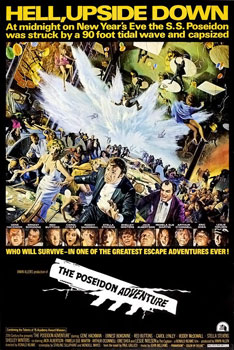
A few years ago, when I first told Arleigh that I had recently watched the 1972 film The Poseidon Adventure, I remember him as being a bit shocked and amazed that I had made it through the entire film. This was because Arleigh knows that I have a morbid obsession with drowning and that the mere sight of someone struggling underwater is enough to send me into a panic attack.
And The Poseidon Adventure is a film that is totally about drowning. The majority of the cast drowns over the course of the film. The few who survive spend all of their time trying not to drown. The main villain in The Poseidon Adventure is the ocean. The Poseidon Adventure is a film specifically designed to terrify aquaphobes like me.
And there are certain parts of The Poseidon Adventure that freaked me out when I first watched it and which continue to freak me out whenever I rewatch it.
For instance, just the film’s plot freaks me out. On New Year’s Day, an ocean liner is capsized by a huge tidal wave. With the boat upside down, a small group of survivors struggle to make their way up to the hull where, hopefully, they might be rescued. That involves a lot of fighting, arguing, climbing, and drowning.
It freaks me out whenever I see the huge tidal wave crash into the bridge and drown Captain Leslie Nielsen. That’s largely because it’s impossible for me to look at Leslie Nielsen without smiling. (I’ve already written about my reaction to seeing him in the original Prom Night.) When he suddenly drowns, it’s not funny at all.
It freaks me out when the boat turns over and hundred of extras are tossed around the ballroom. I always feel especially bad for the people who vainly try to hold onto the upside down tables before eventually plunging to their deaths. (Did I mention that I’m scared of heights as well?)
It freaks me out when Roddy McDowall plunges to his death because who wants to see Roddy McDowall die? Whenever I see him in an old movie, he always come across as being such a super nice guy. (Except in Cleopatra, of course…) Plus, Roddy had an absolutely chilling death scream. They need to replace the Wilhelm Scream with the Roddy Scream.
It freaks me out when survivor Shelley Winters has a heart attack right after swimming from one part of the ship to another. Because seriously, Shelley totally deserved the Oscar nomination that she got for this film.
And it really freaks me out when Stella Stevens plunges to her death because I related to Stella’s character. Stella was tough, she didn’t take any crap from anyone, and she still didn’t make it. If Stella Stevens can’t make it, what hope would there be for me?
And yet, at the same time, The Poseidon Adventure is such an entertaining film that I’m willing to be freaked out. The Poseidon Adventure was one of the first of the classic disaster films and it’s so well done that even the parts of the film that don’t work somehow do work.
For instance, Gene Hackman plays the Rev. Frank Scott, the leader of the group of survivors. And Hackman, who can legitimately be called one of the best actors ever, gives an absolutely terrible performance. His performance is amazingly shrill and totally lacking in nuance. When, toward the end of the film, he starts to angrily yell at God, you actually feel sorry for God. And yet, Hackman’s terrible performance somehow works perfectly for the film. It’s such an over-the-top performance that it sets the tone for the whole film. The Poseidon Adventure is an over-the-top film and, if Hackman had invested his character with any sort of nuance, the film would not have worked as well as it did.
And then there’s Ernest Borgnine, who plays Stella Stevens’s husband. Borgnine spends the entire film arguing with Gene Hackman. Whenever something bad happens, Borgnine starts acting like Edward G. Robinson in The Ten Commandments. He never actually says, “Where is your God now!?” but it wouldn’t have been inappropriate if he had. And yet, again, it’s exactly the type of performance that a film like this needs.
And finally, there’s that theme song. “There has to be a morning after…” It won an Oscar, defeating Strange Are The Ways Of Love from The Stepmother. And is it a good song? No, not really. It’s incredibly vapid and, while it does get stuck in your head, you don’t necessarily want it there. But you know what? It’s the perfect song for this film.
The Poseidon Adventure is not a deep film, regardless of how many times Hackman and Borgnine argue about the role of God in the disaster. It’s an amazingly shallow film about people drowning. But it’s so well-made and so perfectly manipulative that you can’t help but be entertained.
The Poseidon Adventure totally freaks me out. But I will probably always be willing to find time to watch it.
 Yesterday, the great character actor Harry Dean Stanton passed away at the age of 91. Cisco Pike is not one of Stanton’s best films but it is a film that highlight why Stanton was such a compelling actor and why his unique presence will be missed.
 Once upon a time, there were two movies about the legendary Western lawman (or outlaw, depending on who is telling the story) Wyatt Earp. One came out in 1993 and the other came out in 1994.

 In 1951, Norman Dale (Gene Hackman) arrives in the small Indiana town of Hickory. He is a former college basketball coach who has been hired to coach the high school’s perennially struggling basketball team. Emphasizing the fundamentals and demanding discipline from his players, Dale struggles at first with both the team and the townspeople. When he makes an alcoholic former basketball star named Shooter (Dennis Hopper) an assistant coach, he nearly loses his job. Eventually, though, the Hickory team starts winning and soon, this small town high school is playing for the state championship against highly favored South Bend High School.



 Nick Devlin (Lee Marvin) is a veteran enforcer for the Chicago mob. His latest assignment has taken him out of the city and sent him to the farmlands of Kansas. Nick is the third enforcer to be sent to Kansas, all to collect a $500,000 debt from a local crime boss named Mary Ann (Gene Hackman). The first one ended up floating face down in the Missouri River. The second was chopped up into sausages at the local slaughterhouse. Nick might have better luck because he once had an affair with Mary Ann’s wife, Clarabelle (Angel Tompkins).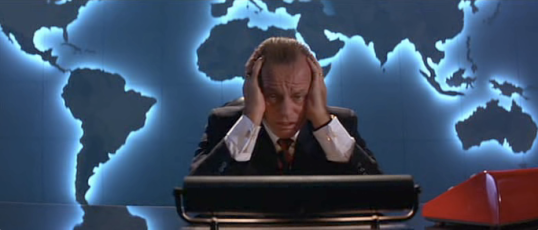
 You’re the leader of the free world and a masked terrorist has just launched a deadly attack on a major U.S. city. He has blown up a major sporting event on national television. He has killed the mayor. He is allowing a crazy sociopath to preside over show trials. The terrorist demands that you neither send troops into the city nor do you aid anyone who is trying to leave. What do you? If you are the President played by William Devane in The Dark Knight Rises, you say, “Okay,” and then breathe a sigh of relief when Batman turns out not to be dead after all. William Devane also played JFK in The Missiles of October and President James Heller on 24. Neither of them would have backed down to Bane as quickly as the President in The Dark Knight Rises.
 Hey, Mr. President, when Snake Plisskin nearly gets killed trying to save your life, you might want to try showing a little gratitude. Escape From New York ends with Snake asking The President who he feels about all the people who died rescuing him from New York. When the President can only mutter a few words of regret, Snake responds by destroying the tape that would have presumably prevented World War IV. Way to go, Mr. President! Would it have killed you to shed a few crocodile tears, at least over the fate of Cabbie?
 In a word, overrated. Yes, President Whitmore did lead the army that repealed the alien invaders but he would not have had to do that in the first place if he had prevented the Earth from being invaded in the first place. How many warning signs did the Whitmore administration ignore until it was too late? And how much funding did his administration cut from the military that the Air Force was left in such poor shape that they could get shown up by Randy Quaid in a crop duster? As for Whitmore’s famous speech and the battle that followed, a sequel to Independence Day is coming in June so he must not have done that good of a job of scaring the aliens off.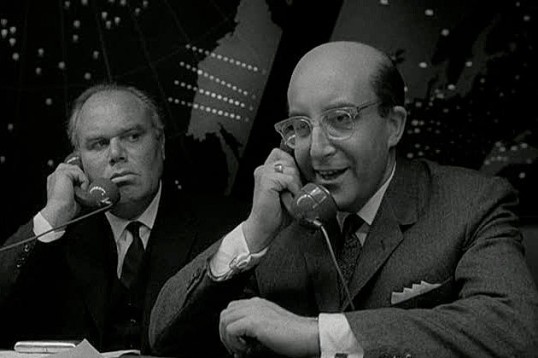


 Through the Shattered Lens