THE CORRUPTOR (1999) – Chow Yun-Fat and Mark Wahlberg fight corruption in Chinatown!


In the late 90’s, I was all in on actor Chow Yun-Fat. Having only discovered his excellent Hong Kong film work a couple of years earlier, I was so excited to see what kind of splash he would make in American films. I loved his first American film THE REPLACEMENT KILLERS (1998), but I will admit it was an exercise in style over substance, and it really didn’t show off his acting abilities. Chow was working hard to improve his English language skills during this time, but that limited his performance the first time around. As I settled into my seat on the film’s opening weekend at the box office in March of 1999, I was hoping to see the Chow Yun-Fat I loved from his Hong Kong movies. But more on that later…

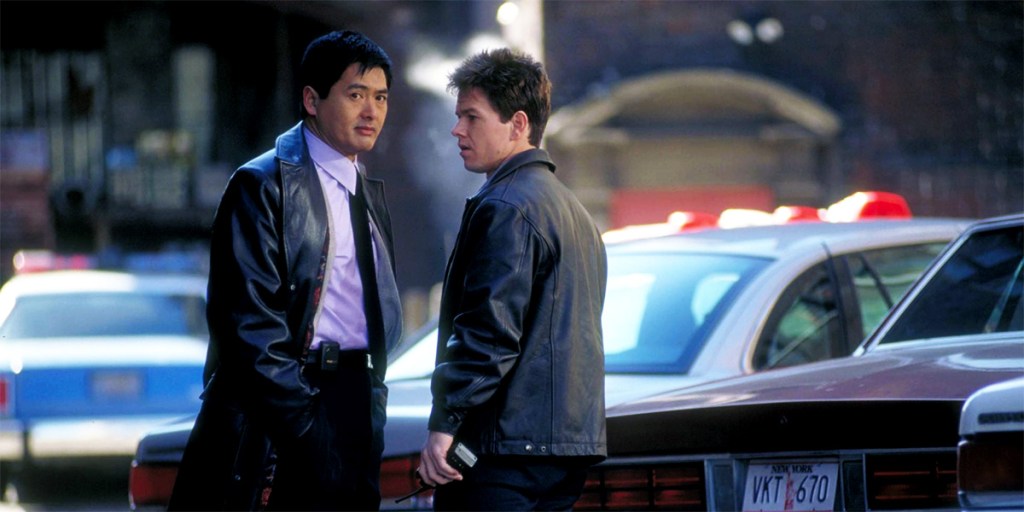
THE CORRUPTOR opens with a bomb going off in Chinatown, followed by a sidewalk assassination in broad daylight. It seems there’s a turf war being fought between a street gang called the Fukienese Dragons, led by Bobby Vu (Byron Mann), and a Chinese criminal organization called the Tung Fung Benevolence Association, led by Uncle Benny Wong (Kim Chan) and Henry Lee (Ric Young). We then meet Nicholas Chen (Chow Yun-Fat), a heroic, highly decorated NYPD cop who runs the Asian Gang Unit. His unit is tasked with trying to keep the peace in Chinatown, but with all the recent violence, they’re clearly failing. Knowing he needs more help, Chen requests additional manpower and gets the young and eager Danny Wallace (Mark Wahlberg). The two men don’t hit it off immediately as Chen had wanted a more experienced, Asian cop. Over time, however, Chen begins to trust Wallace and begins to let him into the inner workings of the unit. 

We soon find out that things are much more complicated in Chinatown police work than they might have appeared at first. Chen is not quite as heroic as initially presented. He’s a morally conflicted man who wants to do good work for the people of Chinatown, but in the process, he’s compromised himself by taking sides and forming a delicate alliance with Uncle Benny and Henry Lee. And Danny isn’t quite the young, green cop he was presented as either. In fact, he’s been secretly tasked by Internal Affairs to monitor Chen and his unit. As Wallace sees what’s really going on in Chinatown, and after Chen saves his ass on multiple occasions, it becomes harder and harder for him to do his job and build a case against Chen. As the film reaches its conclusion in this world of grey, we will see if Chen and Wallace can work together and take down Henry Lee and Bobby Vu, who have formed an alliance to take over Chinatown’s criminal activities. And we will find out what Wallace will do with the information he has on Chen.
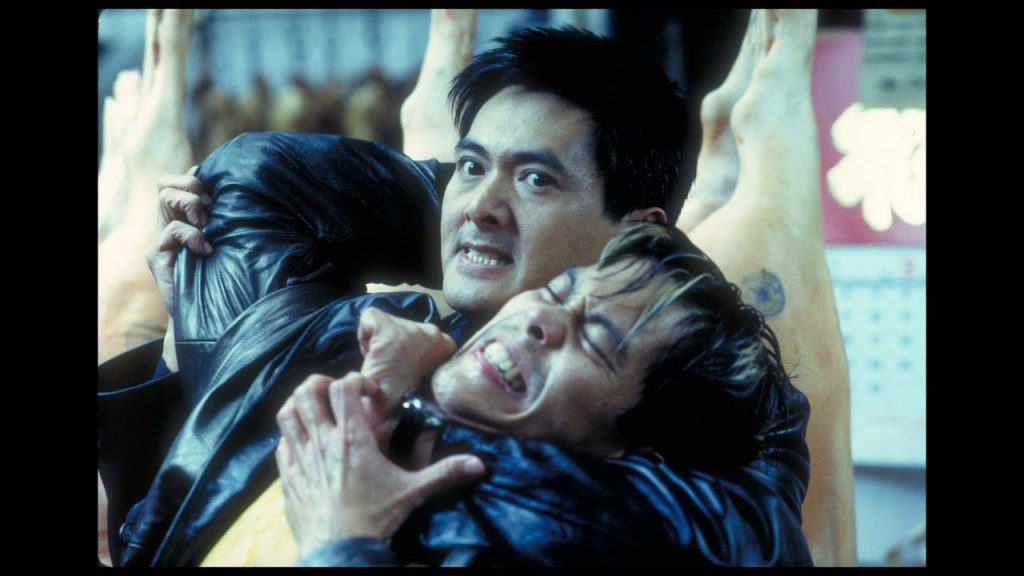
I’m a big fan of THE CORRUPTOR, and the primary reason is the excellent performance of Chow Yun-Fat. No other American made action film showed off the extraordinary charisma that made him a superstar in Asia in the 1980’s. In this film, Chow is able to play both sides of the law and still remain incredibly likable. He pulls this balancing act off in a way that appears effortless, and yet there are very few actors in the world who are capable of doing it. Mark Wahlberg had emerged as a major film star a couple of years earlier with the runaway success of BOOGIE NIGHTS (1997). I think he’s very good in this film as well, as his character must reconcile his ideals against the reality of fighting crime in such a dangerous environment. There’s a scene near the end where Chen has been informed that Wallace is internal affairs and confronts him about it. Wahlberg is incredible in the scene, setting the stage for the exciting resolution of the film.

THE CORRUPTOR has several excellent action set-pieces, beginning with a shootout at a lamp shop. This is when I knew this movie was going to present the Chow Yun-Fat I know and love. His personality is displayed in the scene, along with his two guns blazing in slow motion. There’s also an intense car chase through crowded streets and a final showdown on a cargo ship that really stood out to me. Director James Foley was probably hired based on his prior work that showed an ability to deal with moral ambiguity in films like AT CLOSE RANGE (1986) and GLENGARRY GLEN ROSS (1992). While he wouldn’t be my first directorial choice for an action film, he does a fine job in my opinion. 

Overall, I recommend THE CORRUPTOR to any person who likes Chow Yun-Fat, Mark Wahlberg, or an entertaining action film. It’s not in the league of Chow’s best Hong Kong films, but it is his best American action film, because it actually gives him a strong character to play. That went a long way with me. 

I’ve included the trailer for the film below:
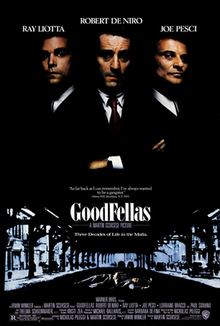
Lisa Marie Reviews An Oscar Nominee: Goodfellas (dir by Martin Scorsese)


First released in 1990 and continuously acclaimed ever since, Goodfellas did not win the Oscar for Best Picture.

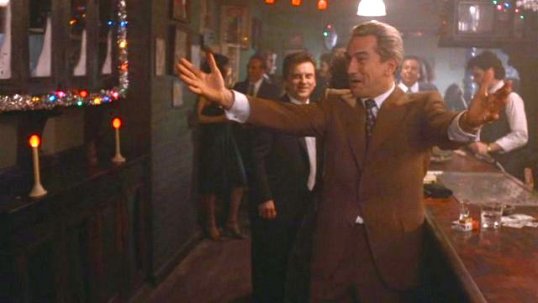
I’m always a bit surprised whenever I remember that.  Goodfellas didn’t win Best Picture?  That just doesn’t seem right.  It’s not the other films nominated that year were bad but Goodfellas was so brilliant that it’s hard to imagine someone actually voting for something else.  Seriously, it’s hard to think of a film that has been more influential than Goodfellas.  Every gangster film with a soundtrack of kitschy tunes from the 6os and 70s owes huge debt to Goodfellas.  Every actor who has ever been cast as a wild and out-of-control psycho gangster owes a debt to Joe Pesci’s performance as Tommy DeVito.  When Ray Liotta passed away two years ago, we all immediately heard him saying, “I always wanted to be a gangster.”  Robert De Niro’s Jimmy Conway remains the epitome of the ruthless gangster.  For many, Paul Sorvino’s neighborhood godfather redefined what it meant to be a crime boss.  Lorraine Bracco made such an impression as Karen Hill that it somehow seemed appropriate that she was one of the first people cast in The Sopranos, a show that itself would probably have not existed if not for Goodfellas.  Frank Sivero, Samuel L. Jackson, Tobin Bell, Debi Mazer, Vincent Gallo, Ileana Douglas, Frank Vincent, Tony Sirico, Michael Imperioli, Tony Darrow, Mike Starr, Chuck Low, all of them can be seen in Goodfellas.  It’s a film that many still consider to be the best of Martin Scorsese’s legendary career.  Who can forget Robert De Niro smoking that cigarette while Sunshine of Your Love blared on the soundtrack?  Who can forget “Maury’s wigs don’t come off!” or “Rossi, you are nothing but whore!?”  Who can forget the cheery Christmas music playing in the background while De Niro’s Jimmy Conway grows more and more paranoid after pulling off the biggest heist of his career?

Plus, it’s a Christmas movie!

And yet, it did not win Best Picture.

Myself, whenever I’m sitting behind a garbage truck in traffic, I immediately start to hear the piano coda from Layla.  For that matter, whenever I see a helicopter in the sky, I flash back to a coke-addled Henry Hill getting paranoid as he tries to pick up his brother from the hospital.  Whenever I see someone walking across the street in the suburbs, I remember the scene where Henry coolly pistol-whips the country club guy and then tells Karen to hide his gun.  I always remember Karen saying that she knows that many of her best friends would have run off as soon as their boyfriend gave them a gun to hide but “it turned me on.”  It would have turned me on as well.  Henry might be a gangster and his friends might be murderers but he doesn’t make any apologies for who he is, unlike everyone else in the world.

But it did not win Best Picture.

How many people have imitated Joe Pesci saying, “How am I funny?”  How many times did Pesci and Frank Vincent have to listen to people telling them to “go home and get your fucking shinebox?”  A lot of people remember the brutality of the scene where Pesci and De Niro team up to attack Vincent’s crude gangster but I always remember the sound of Donavon’s Atlantis playing on the soundtrack.

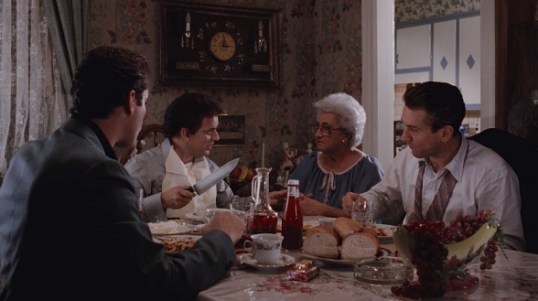
And then there’s Catherine Scorsese, showing up as Tommy’s mom and cooking for everyone while Vincent struggles to escape from the trunk of a car.  “He is content to be a jerk,” Tommy says about Henry Hill.  Just a few hours earlier, Tommy was apologizing to Henry for getting blood on his floor.

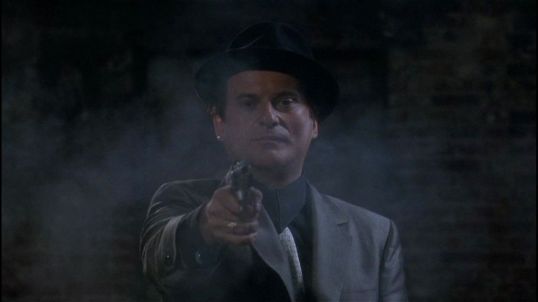
Goodfellas is a fast-paced look at organized crime, spanning from the 50s to the early 80s.  Ray Liotta plays Henry Hill, who goes from idolizing gangsters to being a gangster to ultimately fearing his associates after he gets busted for dealing drugs.  It’s a dizzying film, full of so many classic scenes and lines that it feels almost pointless to try to list them all here or to pretend like whoever is reading this review doesn’t remember the scene where the camera pans through the club and we meet the members of the crew.  (“And then there was Pete The Killer….”)  Goodfellas is a film that spend two hours showing us how much fun being a gangster can be and then thirty minutes showing us just how bad it can get when you’re high on coke, the police are after you, and you’ve recently learned that your associates are willing to kill even their oldest friends.  No matter how many times I watch Goodfellas, I always get very anxious towards the end of the film.  With the music pounding and the camera spinning, with Henry looking for helicopters, and with all of his plans going wrong over the course of one day, it’s almost a relief when Bo Dietl points that gun at Henry’s head and yells at him, revealing that Henry has been captured by the cops and not the Gambinos.  Karen desperately running through the house, flushing drugs and hiding a gun in her underwear, always leaves me unsettled.  It’s such a nice house but now, everything is crashing down.

There’s a tendency to compare Goodfellas to The Godfather, as their both films that re-imagine American history and culture through the lens of the gangster genre.  I think they’re both great but I also think that they are ultimately two very different films.  If The Godfather is sweeping and operatic, Goodfellas is the film that reminds us that gangsters also live in the suburbs and go to cookouts and that their wives take care of the kids and watch movies while the FBI searches their home.  If The Godfather is about the bosses, Goodfellas is about the blue collar soldiers.  The Godfather represents what we wish the Mafia was like while Goodfellas represents the reality.

Goodfellas is one of the greatest films ever made but it lost the Best Picture Oscar to Dances With Wolves, a film that left audiences feeling good as opposed to anxious.  To be honest, Martin Scorsese losing Best Director to Kevin Costner feels like an even bigger injustice than Goodfellas losing Best Picture.  One can understand the desire to reward Dances With Wolves, a film that attempts to correct a decades worth of negative stereotypes about Native Americans.  But Scorsese’s direction was so brilliant that it’s truly a shame that he didn’t win and that Lorraine Bracco didn’t win Best Supporting Actress.  It’s also a shame that Ray Liotta wasn’t nominated for playing Henry Hill.  At least Joe Pesci won an Oscar for redefining what it meant to be a gangster.

Goodfellas is proof that the best film doesn’t always win at the Oscars.  But it’s also proof that a great film doesn’t need an Oscar to be remembered.

Horror On TV: The Hitchhiker 6.2 “Tough Guys Don’t Whine” (dir by Jorge Montesi)


Let’s give some credit to whoever came up with the title of tonight’s episode of The Hitchhiker!

In this episode, Alan Thicke plays a skeevy movie director who likes to pretend to be a tough guy.  When he hooks up with the girlfriend of a genuine tough guy, the director discovers that he’s not quite as streetwiswe as he thought he was.  The Hitchhiker doesn’t seem to have much sympathy for anyone involved.

This episode originally aired on September 28th, 1990.

Stallone Acts: Cop Land (1997, directed by James Mangold)


Garrison, New Jersey is a middle class suburb that is known as Cop Land.  Under the direction of Lt. Ray Donlan (Harvey Keitel), several NYPD cops have made their home in Garrison, financing their homes with bribes that they received from mob boss Tony Torillo (Tony Sirico).  The corrupt cops of Garrison, New Jersey live, work, and play together, secure in the knowledge that they can do whatever they want because Donlan has handpicked the sheriff.

Sheriff Freddy Heflin (Sylvester Stallone) always dreamed of being a New York cop but, as the result of diving into icy waters to save a drowning girl, Freddy is now deaf in one ear.  Even though he knows that they are all corrupt, Freddy still idolizes cops like Donlan, especially when Donlan dangles the possibility of pulling a few strings and getting Freddy an NYPD job in front of him.  The overweight and quiet Freddy spends most of his time at the local bar, where he’s the subject of constant ribbing from the “real” cops.  Among the cops, Freddy’s only real friend appears to be disgraced narcotics detective, Gary Figgis (Ray Liotta).

After Donlan’s nephew, Murray Babitch (Michael Rapaport), kills two African-American teenagers and then fakes his own death to escape prosecution, Internal Affairs Lt. Moe Tilden (Robert De Niro) approaches Freddy and asks for his help in investigating the corrupt cops of Garrison.  At first, Freddy refuses but he is soon forced to reconsider.

After he became a star, the idea that Sylvester Stallone was a bad actor because so universally accepted that people forgot that, before he played Rocky and Rambo, Stallone was a busy and respectable character actor.  Though his range may have been limited and Stallone went through a period where he seemed to always pick the worst scripts available, Stallone was never as terrible as the critics often claimed.  In the 90s, when it became clear that both the Rocky and the Rambo films had temporarily run their course, Stallone attempted to reinvent his image.  Demolition Man showed that Stallone could laugh at himself and Cop Land was meant to show that Stallone could act.

For the most part, Stallone succeeded.  Though there are a few scenes where the movie does seem to be trying too hard to remind us that Freddy is not a typical action hero, this is still one of Sylvester Stallone’s best performances.  Stallone plays Freddy as a tired and beaten-down man who knows that he’s getting one final chance to prove himself.  It helps that Stallone’s surrounded by some of the best tough guy actors of the 90s.  Freddy’s awkwardness around the “real” cops is mirrored by how strange it initially is to see Stallone acting opposite actors like Harvey Keitel, Robert De Niro, and Ray Liotta.  Cop Land becomes not only about Freddy proving himself as a cop but Stallone proving himself as an actor.

The film itself is sometimes overstuffed.  Along with the corruption investigation and the search for Murray Babitch, there’s also a subplot about Freddy’s unrequited love for Liz Randone (Annabella Sciorra) and her husband’s (Peter Berg) affair with Donlan’s wife (Cathy Moriarty).  There’s enough plot here for a Scorsese epic and it’s more than Cop Land‘s 108-minute run time can handle.  Cop Land is at its best when it concentrates on Freddy and his attempt to prove to himself that he’s something more than everyone else believes.  The most effective scenes are the ones where Freddy quietly drinks at the local tavern, listening to Gary shoot his mouth off and stoically dealing with the taunts of the people that he’s supposed to police.  By the time that Freddy finally stands up for himself, both you and he have had enough of everyone talking down to him.  The film’s climax, in which a deafened Freddy battles the corrupt cops of Garrison, is an action classic.

Though the story centers on Stallone, Cop Land has got a huge ensemble cast.  While it’s hard to buy Janeane Garofalo as a rookie deputy, Ray Liotta and Robert Patrick almost steal the film as two very different cops.  Interestingly, many members of the cast would go on to appear on The Sopranos.  Along with Sirico, Sciorra, Patrick, and Garofalo, keep an eye out for Frank Vincent, Arthur Nascarella, Frank Pelligrino, John Ventimiglia, Garry Pastore,  and Edie Falco in small roles.

Cop Land was considered to be a box office disappointment when it was released and Stallone has said that the film’s failure convinced people that he was just an over-the-hill action star and that, for eight years after it was released, he couldn’t get anyone to take his phone calls.  At the time, Cop Land‘s mixed critical and box office reception was due to the high expectations for both the film and Stallone’s performance.  In hindsight, it’s clear that Cop Land was a flawed but worthy film and that Stallone’s performance remains one of his best.