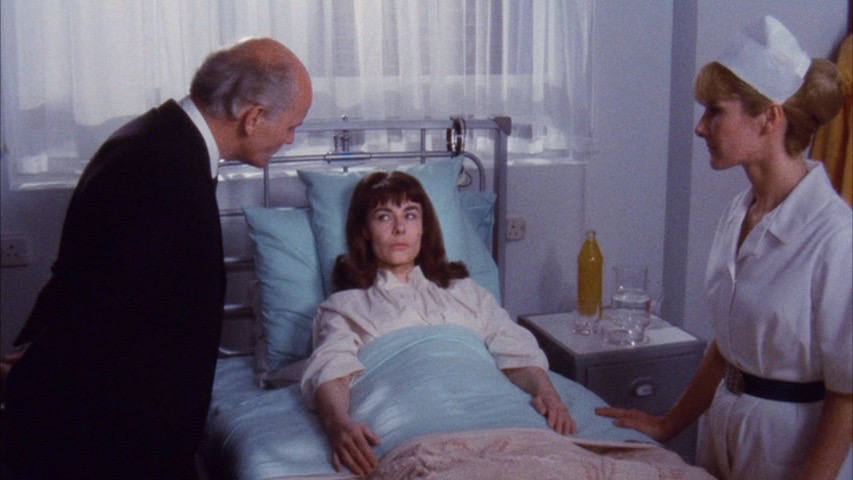
Film Review: Pregnant At 17 (dir by Curtis Crawford)


Pregnant-1-620x362

Before I talk too much about the last night’s Lifetime premiere, Pregnant at 17, I want to share something with you.  As of 10:00 pm on the night at February 20th, this is the imdb plot description, which was posted by Reel One Entertainment:

When Sonia finds out her husband of 10 years is having an affair, she decides to get to know the young woman, Chelsea, he’s fallen in love with. Chelsea, a free-spirit who believes in polyamory, brings a happiness and fulfillment to Sonia that she’s never experienced before– especially since her miscarriage which left her depressed and hopeless. The three form a polyamorous relationship until an unexpected turn of events sends all of their lives into a tailspin.

Wow, that sounds like a lot of fun, doesn’t it!?  Certainly, this is the first time that I’ve seen the term “polyamory” used in a plot description since Utopia went off the air!

However, by the time you read this review, I imagine that the plot description will probably have been changed because it’s absolutely inaccurate.  It is true that Sonia (Josie Bissett) does find out that her husband, Jeff (Roark Critchlow), is having an affair with Chelsea (Zoe De Grand Maison).  However, Chelsea is not a polyamorous free spirit.  Instead, she’s a 17 year-old girl who works at an ice cream parlor.  (The name of the parlor is Stella Lama.)  And, though Jeff does have an affair with her, he never falls in love with Chelsea.  In fact, when Chelsea tells him that she’s pregnant (at 17!), he promptly attempts to pay her off.

That’s right — Pregnant at 17 is yet another installment in Lifetime’s endless series of “…at 17” films.  Over the past few years, we’ve seen everything from Betrayed At 17 to Stalked At 17 to Framed At 17 to Accused at 17.  Seriously, it’s not easy being a 17 year-old girl on Lifetime!  The worst things are always happening to you.  Since I had a lot of melodrama in my life when I was 17, I always enjoy and relate to the “…at 17” movies.  Pregnant at 17 was a film that I could especially relate to because it was about a girl who had both red hair and a boyfriend named Jeff!

Even without the promised softcore polyamory, Pregnant at 17 was still wonderfully melodramatic in the way that only a good Lifetime film can be.  After Sonia discovers that Chelsea has been sleeping with her husband, she goes down to the ice parlor to confront her.  However, within seconds of their first meeting, Chelsea is offering Sonia free ice cream and talking about how difficult her life is.  Sonia feels sorry for Chelsea and, instead of confronting her, ends up befriending her.

And Chelsea really needs a friend!  Not only has she been abandoned by her married boyfriend but she’s also being stalked by Greg Foster (Rogan Christopher).  Apparently, before she met Jeff, Chelsea witnessed Greg robbing a convenience store.  Chelsea identified Greg to the police and Greg has spent the last year in jail.  Now, he’s out and he wants revenge!  Helping Greg is his sister, Laren (Corina Bizem).  We know that Laren is dangerous because she wears way too much dark eyeliner.

When Sonia confronts Jeff about his affair, he replies, “You’re not perfect, either.”  Guys, if you’re reading this — if you are ever caught cheating, do not attempt to excuse your actions by saying, “You’re not perfect, either.”  SERIOUSLY, THAT IS THE WORST POSSIBLE THING YOU CAN SAY IN THOSE CIRCUMSTANCES.

(Forgive me for the all caps but I think this is an important message to impart.  If I can teach a lesson, I am always happy to do so.)

Now, at this point, I was thinking about a friend of mine who found out that her boyfriend was cheating on her and she responded by supergluing his penis to his stomach.  (Yes, that is a true story and yes, the person who suggested it to her was inspired by Reservoir Dogs.)  However, Sonia doesn’t go that far.  Instead, she just makes Jeff sleep in the guest room.  The next morning, Jeff gets hit by a car and ends up laid up at the hospital.

That now means that there’s extra room in Sonia’s house!  And who better to move in but her husband’s pregnant mistress!?  Of course, by doing so, Sonia is now being stalked by the same people who have been stalking Chelsea…

Seriously, being pregnant at 17 is the least of Chelsea’s problems.  This is pure Choas at 17.

And no, there’s no polyamory.  There’s no threesomes.  I know that the plot description promised a threesome but that’s not the type of movie that Pregnant at 17 is.  This is not Carnal Wishes or Big Bad Mama. And really, that’s okay.  Pregnant at 17 is a lot of fun, just the way it is.  This film epitomizes everything that we love about Lifetime movies.  It’s so over the top that watching it is a pure delight.

Both Josie Bissett and Zoe De Grande Maison also deserve a lot of credit for fully committing to their roles.  Bissett, who was so good in A Mother’s Instinct, gives another excellent performance here.  Meanwhile, Maison does all of us redheads proud!

Keep an eye out for Pregnant at 17!  You will not be disappointed.


You Too Can Be A Cinema Snob: La chambre (1972), Wavelength (1967), Zorns Lemma (1970), Rose Hobart (1936)


I haven’t done one of these in awhile. This is when I showcase four movies available at the time of posting that any cinema snob should watch. I was going to go more mainstream, but decided to swing to the totally opposite side and go with experimental/underground movies. The upside is, that means they are short. The downside is, you may or may not have any idea what’s going on. Please don’t let that stop you from soaking these films up anyways. It’s well worth it. Never stay away from films such as these because you are afraid of a turned up nose and someone saying, “Clearly you just don’t understand.” Hogwash! Sometimes something as simple as letting images wash over you can be an amazing experience.

Oh, and for those who know. I’m not putting it here this time. Maybe for Mother’s Day, but right now we’ll leave him and that particular film out.

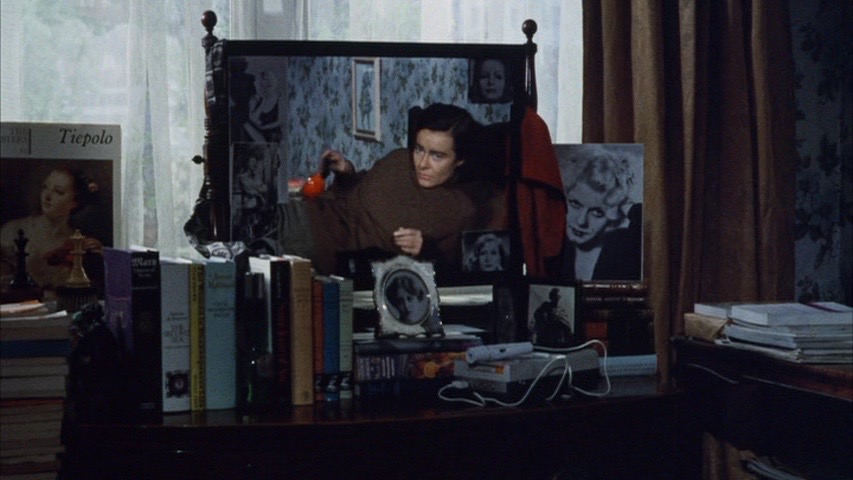
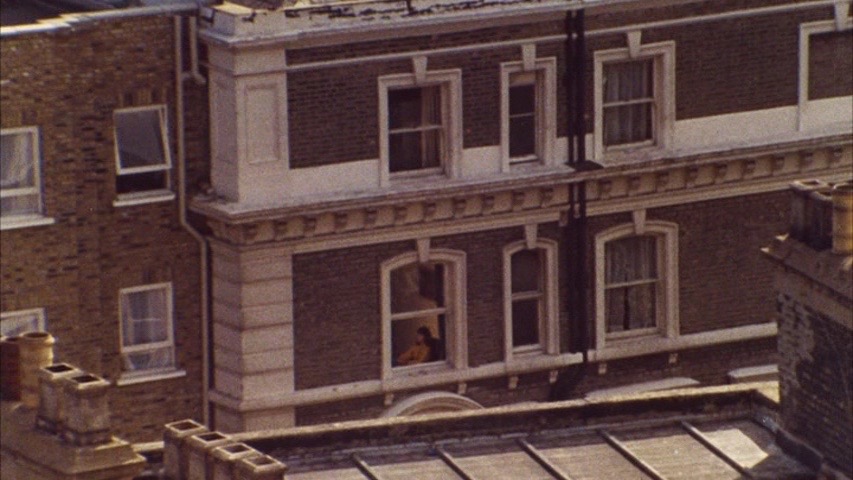
La chambre (1972, dir. Chantal Akerman) – Last year we lost Belgian director Chantal Akerman. She is probably best known for her film Jeanne Dielman (1975), but prior to that she came to America and made some experimental films. I’m taking a guess, but this is probably the most watched of those films. The movie takes place in an apartment as the camera does 360 pans. The woman in the bed is Akerman herself. I’m not going to try and explain this one. It’s only about 10 minutes. Just make sure to pay attention to her, the degree to which the camera pans, and anything else that seems important to you. These are all films meant to be interpreted by you, not by someone else for you.

Wavelength (1967, dir. Michael Snow) – Michael Snow is an experimental filmmaker from Canada. This is definitely thee Michael Snow movie. I know I can’t force you to, but really try to not mute it. The sound is important even if it is annoying. This one I can tell you a little about. If I recall correctly, the point is that unlike most films where people are the characters that pass through the sets, the film wants you to spend so much time with the set itself that it becomes the character. At least that’s what I remember a book telling me once. Regardless, this is essentially viewing for a cinema snob. You’ll find it on list after list after list.

Zorns Lemma (1970, dir. Hollis Frampton) – No idea what the stuff is at the beginning nor at the end means. I’ll leave that to you. However, what takes place in between I think I can explain. Put simply, it’s a film that slowly, but surely replaces the written alphabet with the language of images. If you keep that in mind while you watch it, then I believe you will enjoy it.

Rose Hobart (1936, dir. Joseph Cornell) – Ah, this is the experimental for Hollywood Snobs like Gary. To make this movie, director Joseph Cornell reedited and reworked footage from the 1931 film East Of Borneo to…I don’t really have a clue. I’ll just borrow from IMDb and say the obvious. It’s the footage put together in order to highlight the actress in the title of the film. Once again, essentially viewing here. The film the footage is from on the other hand is interesting, but it’s not something I would seek out unless you’re big into anything pre-code.

Hallmark Review: Anything For Love (2016, dir. Terry Ingram)


IMG_5884

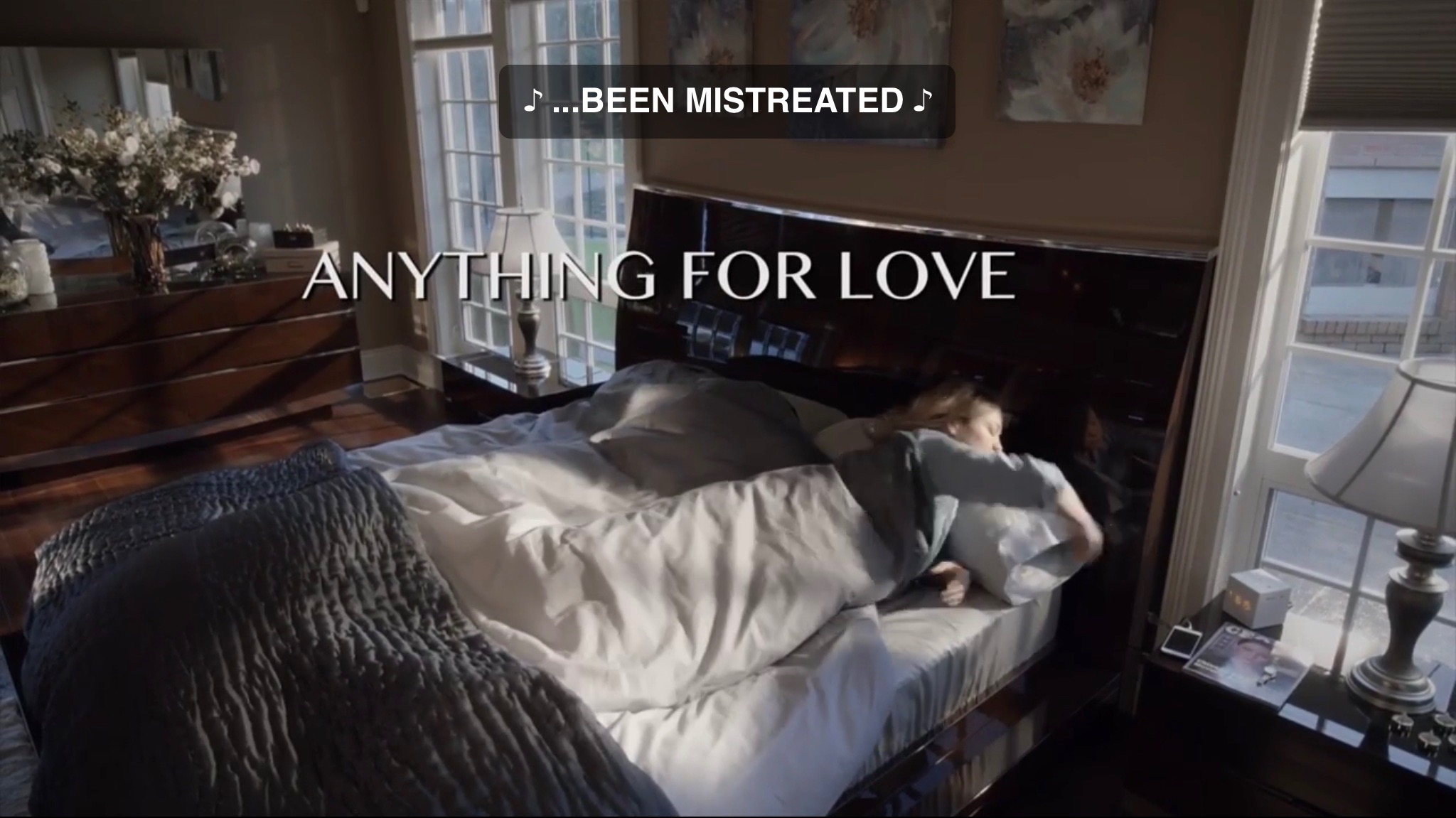
“And I would do anything for love. I’d run right into hell and back. I would do anything for love. I’ll never lie to you, and that’s a fact. But I’ll never forget the way you feel right now. Oh, no. No way. And I would do anything for love. But I won’t do that. No I won’t do that. Anything for love. Oh, I would do anything for love. I would do anything for love. But I won’t do that. No I won’t do that.”
-I’d Do Anything For Love (But I Won’t Do That) performed by Meatloaf and written by David Steinman

Okay, as much as that song fits the tile, they really couldn’t open a romantic comedy with such a serious operatic song. Instead, we dip into another 1970’s artist’s repertoire for a song. Well, 1970s when she was solo. That being Linda Ronstadt singing When Will I Be Loved.

The movie begins and we are introduced to Katherine Benson (Erika Christensen) and Jack Cooper (Paul Greene) as they both get ready for work. She’s a president of a real estate firm and he is a nurse. I have to admit that while I recognized Linda’s voice, I wasn’t sure who it was till I looked it up later. Also, it didn’t help that the movie cuts to Jack in bed during the song and his Great Dane is named Roxy. Of course that made me think of Roxy Music and their song More Than This.

However, while Bill Murray was in Lost In Translation, sang the song, it was directed by Sofia Coppola, and Paul Greene was in her film Somewhere (2010), there is a more appropriate Roxy Music song for a later scene.

As soon as Katherine arrives at work we meet her secretary named Debbie.

IMG_5927

I’m really not sure if we are meant to look down on Debbie for dating so many men or not. I get the feeling that we aren’t. She is supposed to stand in contrast to Katherine as someone who may be just an executive assistant, but seems to be a whole lot happier because she puts herself out there. Katherine seems wound pretty tight and isolated even if she is rich and powerful.

Despite her tough exterior and what she soon says to her father, I’d say Katherine wants to know what love is (I Want To Know What Love Is by Foreigner).

Hey! If Hallmark can start whipping out Billy Joel, REO Speedwagon, and Linda Ronstadt, then I can add some great music to my reviews too.

We now meet Katherine’s father named Edward Benson (Tom Butler). He walks right in and tells us her it’s about time she gets serious with her boyfriend named Charles (Antonio Cupo). She’s worried that he might just want to get his hands on her company. That’s when Dad pulls out the big guns.

IMG_5975

That’s right! A picture of her on a pony. He reminds her of how scared she was to get on it till he got her on it and walked with her the whole way. He says he would walk “a million circles before I’d ever let any harm come to you”. That may be true, but she deserves a man who would walk 500 miles just to fall down at her door (I’m Gonna Be (500 Miles)).

I kind of feel bad if the movie is going to make this so easy for me. Nevertheless, since he did whip out the pony and they did start with Ronstadt, I simply can’t let it slide. Here is The Stone Poneys’ Different Drum. Even if it is getting a little ahead of myself.

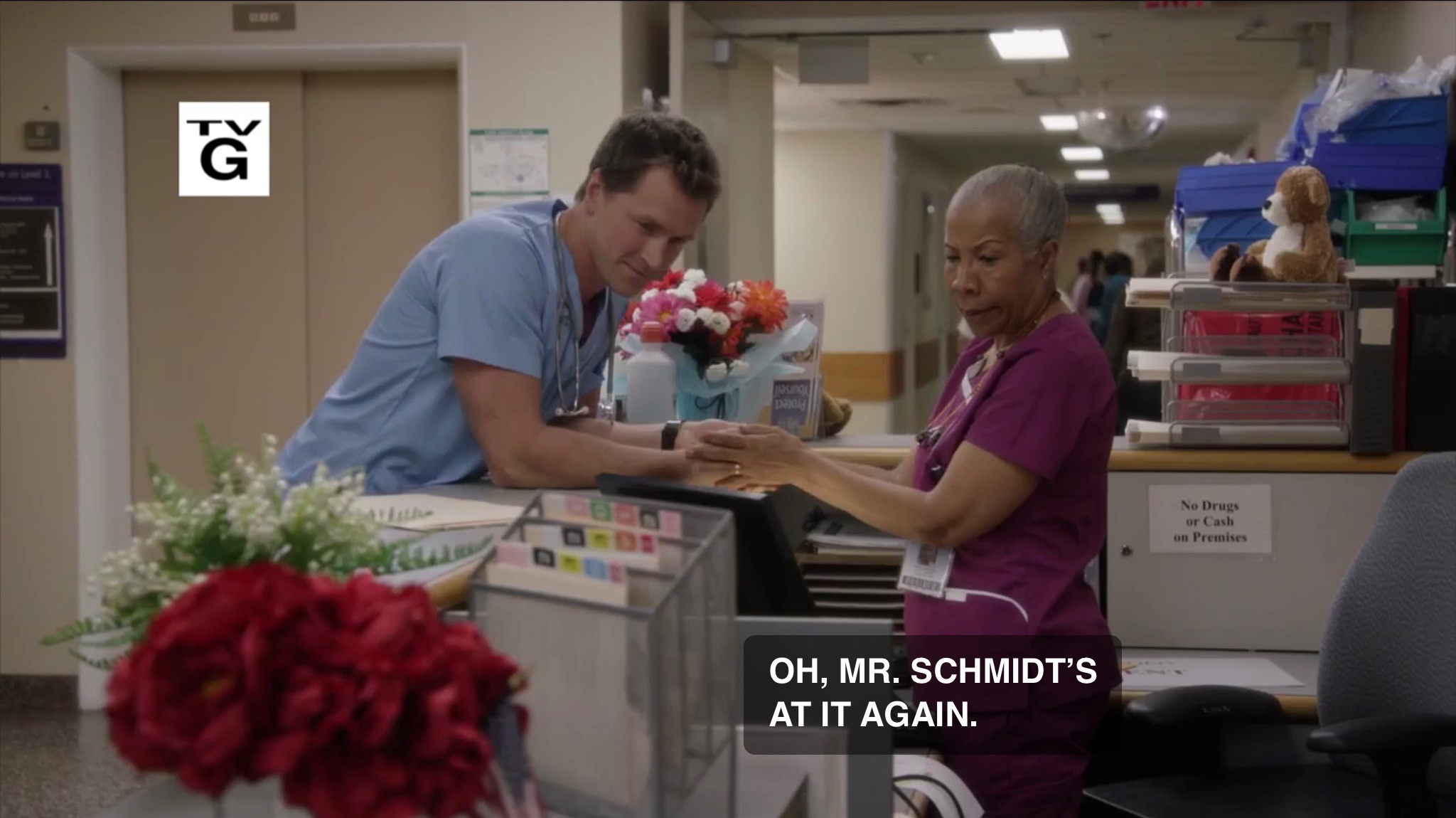
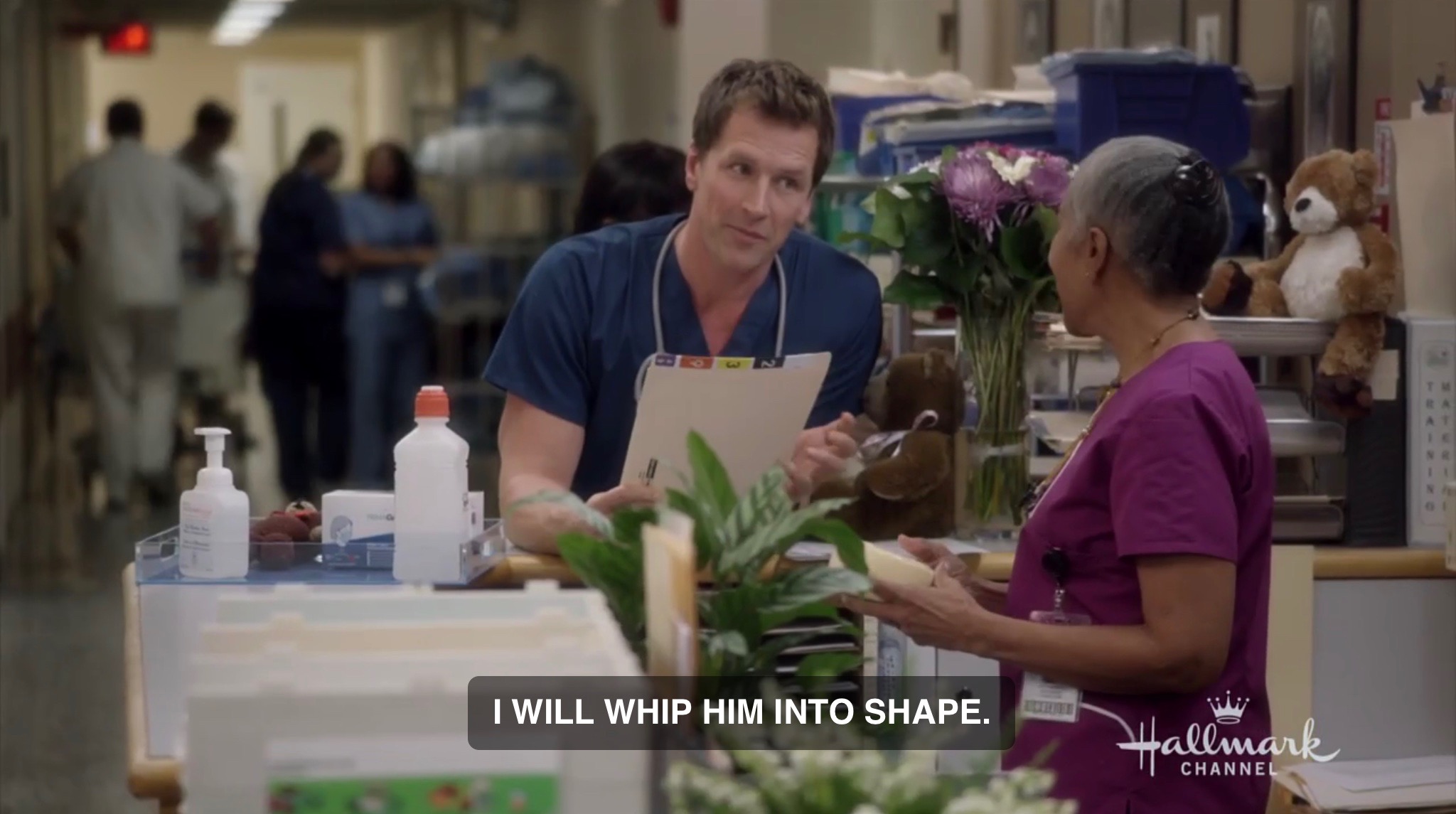
Now we go to work with Jack at the hospital. There is a little subplot here, but I’m gonna be blunt. That subplot is really just there for one reason. So that we can at least see Jack do some nursing. He just basically tries to help the kid from shutting himself out from the world and only living in fear of his upcoming surgery. He sort of takes away his gaming device to give him a book. I thought it was a bit ridiculous since studies have shown that gaming really helps patients in hospitals. However, honestly, it isn’t helping this particular kid. It still comes across as a bit of pandering to a fear of technology and modern culture, but I’m okay with it here.

IMG_6034

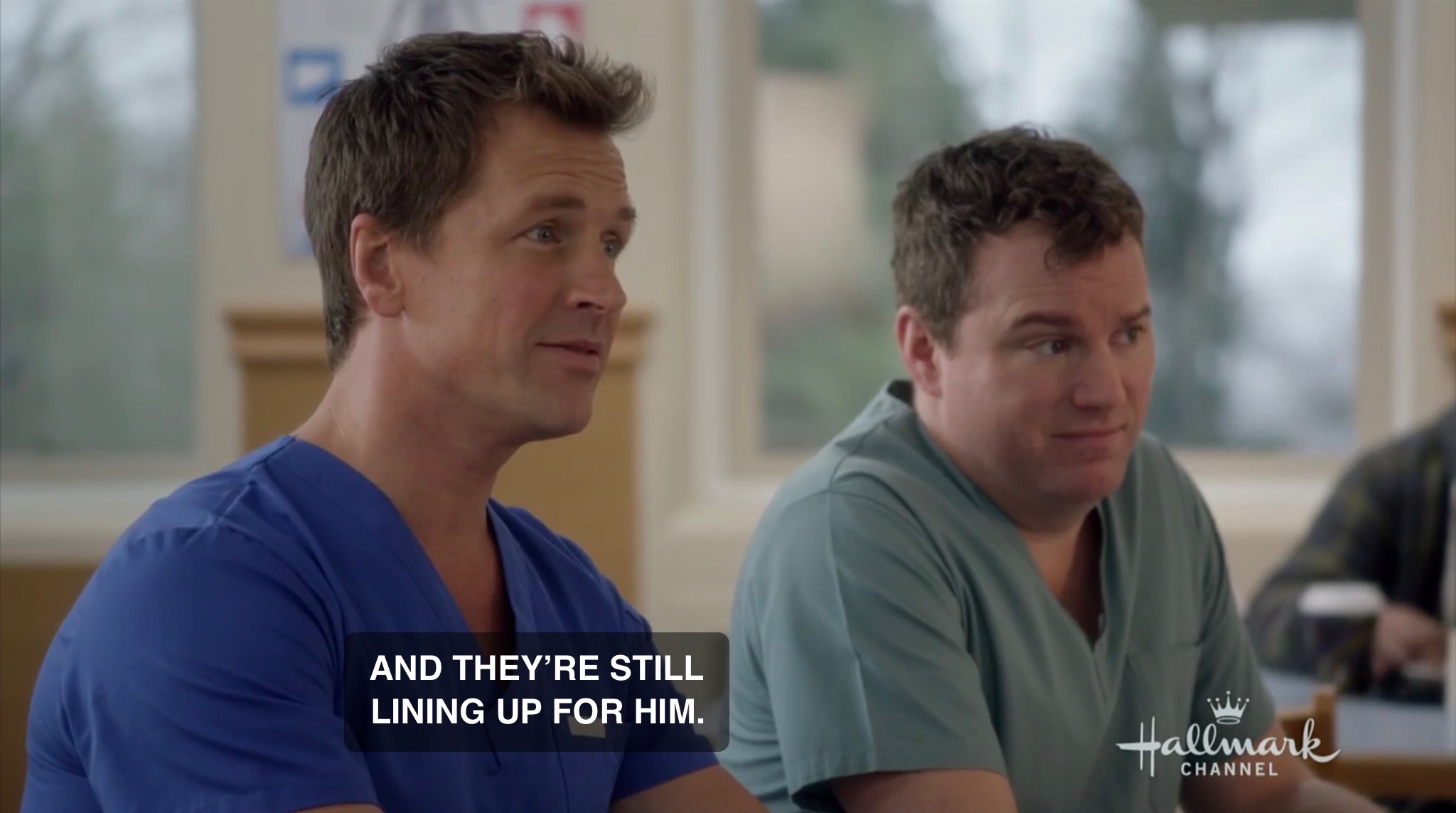
This is as good a time as any to mention that any weirdness about male nurses in this movie is kind of stupid. I mean if this were the pre-ER days, then sure. But it isn’t. That show had plenty of male nurses and was extremely popular. It just seemed dumb to me. Luckily, our man Jack basically feels the same way even if his unhelpful friend here is making him a bit of a jealous guy when they are looking at ladies throwing themselves at the doctors. I’m going with the Roxy Music cover version here since I promised at least one more their songs (Jealous Guy by Roxy Music).

Now we go out with Katherine and her boyfriend Charles. Charles does the standard low key I’m not the right guy Hallmark thing. He also proposes. Well, sort of.

IMG_6109

He seems to want to pin her and go steady. I’d cue up Neil Sedaka, but that would imply this is them going steady again. I’d say he’s thinking more When In Rome’s The Promise…

while she’s feeling more like Real Life’s Send Me An Angel rather than sticking me with Charles.

IMG_6163

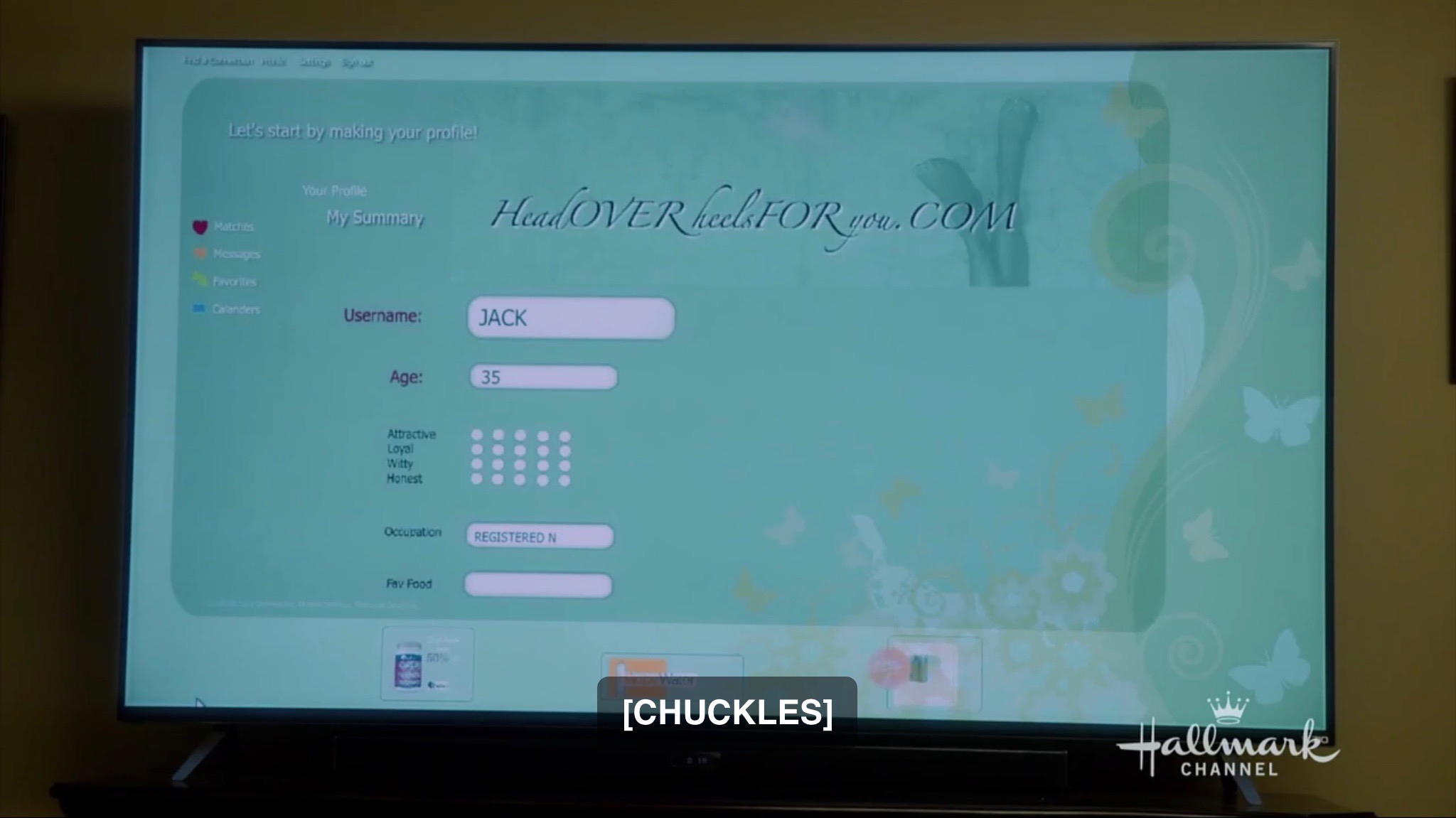
That awkward moment when you spend a bunch of time looking for the appropriate song for a scene, go with Send Me An Angel, then come to the next scene only to remember that one of the minor characters is named Angel. These girls are just here to setup what both Katherine and Jack are going to do for love. We find out from Jack’s friend that he should lie about his job to get girls. In his case it’s upscaling to a doctor. In the next scene, it’s Debbie convincing Katherine that she should downscale to an executive assistant like herself in order to get men. This leads both to put up fake profiles on a dating website. It also means I get to post Lies by The Knickerbockers.

IMG_6283

Yes, you are reading the title of the website right. So here you go with The Go-Go’s Head Over Heels.

And yes, Debbie is signing Katherine up as if she is her. I love that her favorite food is “Black Coffee”. That, and is that a fake pharmaceutical type ad at the bottom of the dating website?

IMG_6297

I guess that’s a yes. You can see that Jack is being honest. Sadly, his friend is in the room. While Jack steps out of the room, he changes Jack’s occupation to a doctor and submits the profile causing Jack to not know he hasn’t been truthful.

IMG_6321

The funny thing is, that’s a real dating website run in the UK.

Now we get something that I just plain don’t get.

IMG_6359

The sign behind the lady. There’s no drugs on the premises? What? This is a hospital. Wouldn’t drugs be all over the place. Please if you have an explanation for this then tell me cause it makes no sense to me. However, I think it’s a mistake cause the sign is covered over later in the movie.

IMG_7276

Now they start dating which begins with bowling. I’m sorry, but we’ll just have to imagine they left the skinheads at home cause Camper Van Beethoven has the only bowling song I know (Take The Skinheads Bowling by Camper Van Beethoven).

I like the sweet scene that follows. Katherine walks into her office to find two sets of flowers. One is from Charles and the other is for Debbie, as Katherine tells her father. However, they are for Katherine and she treasures them. It’s a nice scene.

So there’s your setup. You have Jack who believes he is dating a woman named Debbie who is an executive assistant that thinks he is a doctor. You have Katherine who is playing along, but only in that she is named Debbie and an executive assistant. Not in her feelings for him. Jack does figure it out though, but decides to play along that he is a doctor.

Ultimately, they are going to end up together after a minor speed bump. Yes, the whole he’s not a doctor thing of course, and Charles is behind the reveal. We have stuck with largely 1980s songs so let’s go with what Charles does to get information on Jack. Sing it, Hall & Oates!

She actually breaks it off with Jack and nearly ends up with Charles, but after saying things that are important to a relationship, she throws him a curve ball. He asks him if he would want her if she had Debbie’s job. This is not the face you want to give anyone you want to believe that you are never gonna give up.

IMG_7860

And yes, that means Rick Astley.

Didn’t think you were going to get away without him, did you?

The movie has a cute scene where Katherine goes to the hospital and pages Jack. Jack hears it then pages her. They briefly talk, then kiss.

IMG_8004

The movie doesn’t explicitly say it really, but it’s very much implied that this is one step away from marriage. In other words, together forever, which of course were the words I used so that I could include Rick Astley again.

Oh, and of course the kid goes off to surgery okay. The book did help him to stop ruminating, calm down, and go forward with what he needed to do.

What are my final thoughts? It’s just a little above average I would say. It avoids some of the typical cliches and doesn’t feel cheap. Case in point, when they are on the roof of a building, they are actually outside. Sadly, that is not a given in Hallmark movies. Don’t seek it out, but if it’s on, then I don’t think you’ll be disappointed if you like Hallmark romance movies.

If you’ve put up with all my musical references, then I end this with probably the most bizarre music video for a love song I’ve ever seen: I Believe In A Thing Called Love by The Darkness.

Here’s The Trailer for Amityville: The Awakening


PCAS

Oh God.

Okay, maybe I’m being a bit too quick to dismiss the possibility that Amityville: The Awakening could be a great film but …

No, it’s not going to happen.  I love horror movies.  I love grindhouse films.  I think they deserve a lot more respect than they receive.  But I just cannot enthusiastic about this film or this trailer.  From the minute that poor Jennifer Jason Leigh says, “Home sweet home,” the trailer promises your standard PG-13 horror movie.

(Yes, I know the movie has been rated R but this trailer screams PG-13.  You want to see an R-rated Amityville film?  Go see 1980’s Amityville: The Possession.  Now, that is pure nightmare fuel…)


Transgender Film Review: I Want What I Want (1972, dir. John Dexter)


vlcsnap-2016-02-13-13h59m55s813

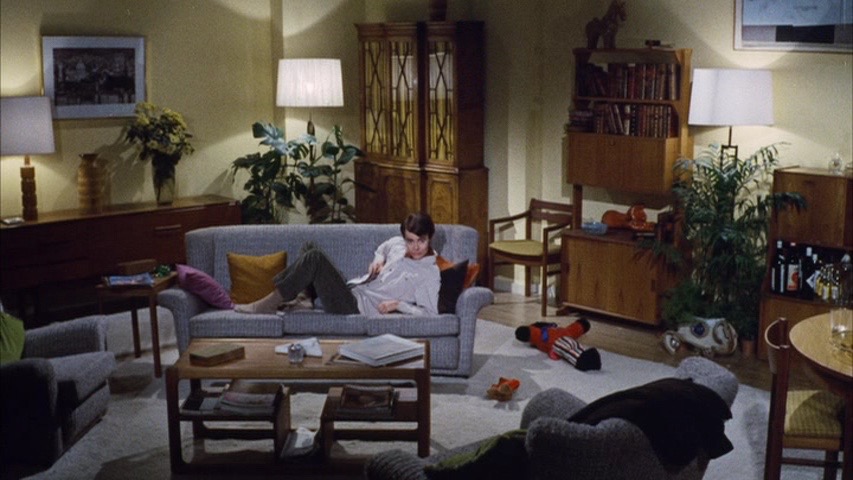
I can’t get my hands on a copy of The Danish Girl through Netflix until March. As a result, I decided to finally do something I promised on this site last August. That being, among other things, that I would review the film I Want What I Want. I came across this film on a list of Queer Cinema I found on Letterboxd. Well, it’s sort of a transgender movie. Kind of. Not exactly. More like a feminist film from the early 1970s that happens to have a trans woman at the center of it. If that sent shivers down your spine, then you are probably transgender like myself.

Before we actually get to this film we need to look at the full DVD title for it: “I don’t want to live the rest of my life as a man…I want what I want…to be a woman.”

First off, she always was a woman. Trans women are women. End of story. Any mythical idea of transition is only to make ourselves feel more comfortable with who we are. That means we don’t have to do anything whatsoever and we are women. The same goes for trans men. A point lost on people even today so I guess I can let it slide in 1972 even though I don’t want to.

Secondly, was it necessary for Geoff Brown, who wrote the book, and the filmmakers to choose the same words for their title as what a child would say when their parents ask why they need a Wii U in addition to the PS4 and Xbox One they already own? The answer of course being no. They wanted to sell tickets. The same reason Doris Wishman entitled her 1977 mondo movie Let Me Die A Woman. Well, at least the DVD cover is very honest about what you are going to see, right?

IMG_0506

See! The cover clearly shows us that a genetic male played by Harry Andrews will play the trans woman prior to transition as shown by the man standing in front of the mirror. Then Anne Heywood will take over to play the main role after the transition as shown by the woman in the mirror.

vlcsnap-2016-02-13-14h03m16s677

Well, that DVD cover is a little misleading. By the way, if IMDb is to be believed, then this is how The Danish Girl was going to be except that cisgender woman would have been Nicole Kidman. Hmm….I guess that might have been better. Then the Women Film Critics Circle could have awarded their “Invisible Woman” award (performance by a woman whose exceptional impact on the film dramatically, socially or historically, has been ignored) to the person playing the titular trans woman character instead of Alicia Vikander playing a cisgender woman who isn’t the “invisible woman” the movie is supposed to be about.

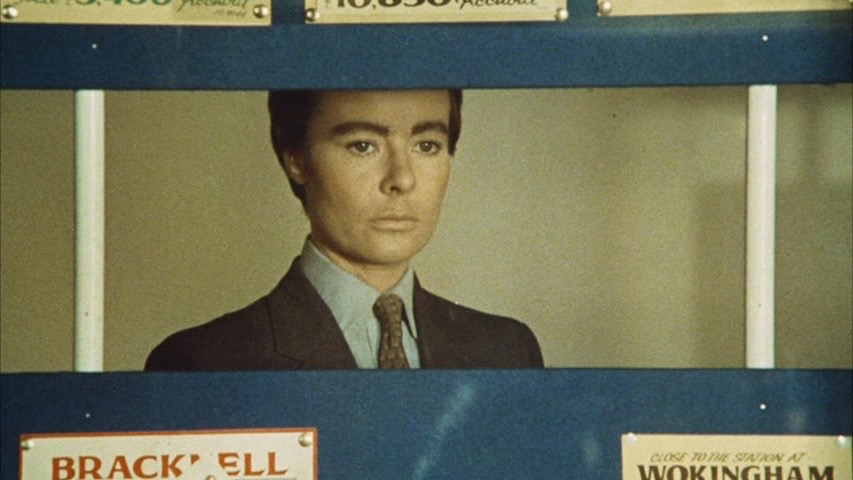
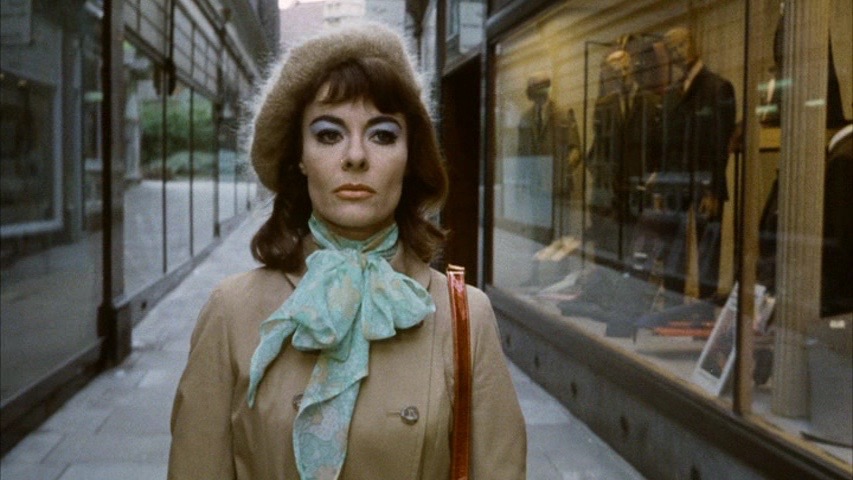
The movie begins and we see Roy played by Anne Heywood. Yes, I know the deadname thing and all, but at this point in the film she hasn’t chosen a female name. She’s looking out at the women passing by, some who are talking amongst themselves, and others are talking with men. She doesn’t look happy. For trans women who aren’t happy with their bodies and/or presentation, we call this everyday of the week. At least I do.

Now Roy leaves her office. She walks down the street looking at some women and female clothes in a window before passing right through a visual metaphor.

vlcsnap-2016-02-13-14h05m54s560

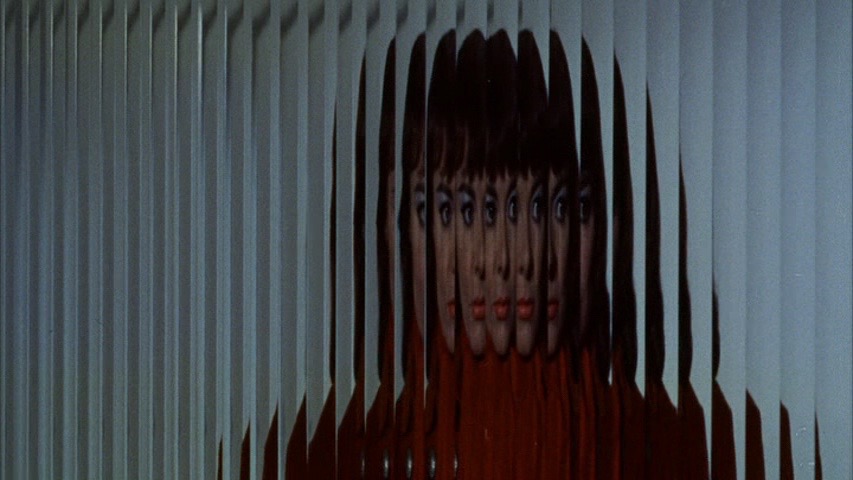
We go home with Roy and once again are greeted with a visual metaphor.

vlcsnap-2016-02-13-14h09m13s629

I look over at my mirror and all I see in it is my reflection, a stack of unreviewed DVDs in the closet, a couple of prom dresses, and an Ao Dai. Hey! I took a course on the history of Vietnam in college and those Vietnamese dresses are gorgeous. Don’t you judge me! No seriously, I do own one of those. The prom dresses are another story. But now it’s time for Roy to go downstairs so we can meet her sister Shirley played by Virginia Stride.

This is as good a time as any to bring up two things to do with the voices in this movie:
1. The audio on the DVD isn’t perfect. It has some issues that combined with British accents can cause you to miss a word here or there if you aren’t say, British yourself. I grew up watching Are You Being Served? with some of those accents, and even I had trouble with these otherwise very easy to process accents.
2. You are probably wondering what Anne Heywood sounds like. If you’re close to my age (32), or grew up in the 1980s, then I have a good way for you to picture how she sounds. It’s like the movie Just One Of The Guys (1985). Trying a little bit to deepen the voice, but largely just altering the presentation towards something stereotypically masculine.

Now we meet dad played by Harry Andrews. He’s not so happy with Roy. Hey, it could be worse dad. Roy could grow a mustache and then your “son” would look a little like Rita Pavone in Rita The Field Marshall (1967).

media

Honestly, that’s what I expected when I found out this movie had Anne Heywood playing a trans woman and saw a picture of her on the back cover.

I get the next scene. It makes sense. Roy is babysitting for her sister and looks at her clothes as well as her wig. That all makes sense to me. What doesn’t make sense is why this was the final shot they chose to go with when Roy’s sister comes home.

vlcsnap-2016-02-13-14h40m52s904

Roy, you’re trying to seduce me. Aren’t you? Even Elizabeth Shue was more presentable at the end of Adventures In Babysitting (1987).

Regardless, now we get a scene of Roy at work. It doesn’t really matter what she does. All you need to know in that department is that she has money of her own.

If we weren’t sure the Dad was an asshole, then we get a scene of Roy and him at the grocery store. Basically, the entire scene is Dad telling Roy to leave the upcoming dinner party early so he can go out with a woman.

vlcsnap-2016-02-13-14h44m49s567

Then the film reminds us it’s arty, but without water falling from the sky like in Laurence Anyways (2012).

vlcsnap-2016-02-13-14h47m38s980

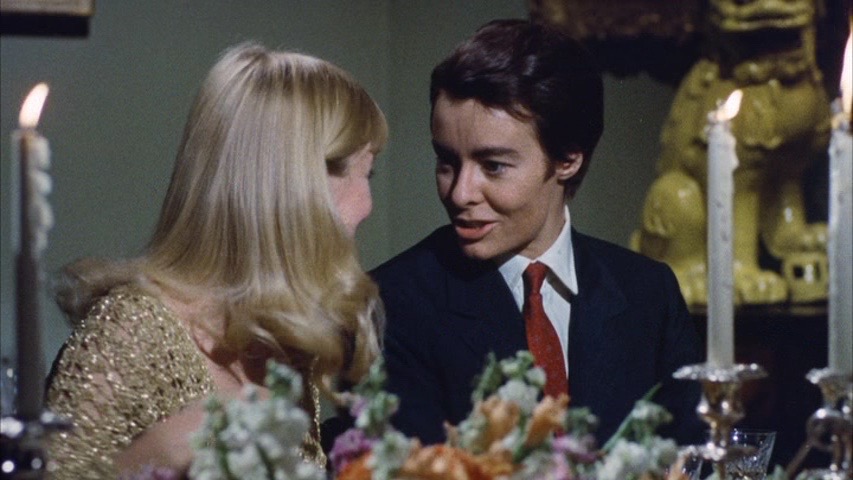
Next Roy is having a conversation with this woman about fashion. The woman is obviously interested and likes him. She will even state this explicitly in the next scene. So why does the father look upset? I mean assuming I buy into all the BS out there about men, which I don’t, wouldn’t this guy love that his “son” is being so devious and taking advantage of women’s supposed only interest to potentially get laid? One of the other guys at the table even points out that Roy is doing very well “for someone who hasn’t been keeping up with the mark.” I guess it’s just supposed to tell us he is already suspicious. Came across as a little weird to me.

After another shot from the top of the table, it’s time to separate the men from the women for the after dinner part. The women seem to like it because it means they “can tear them to pieces” afterwards. Now we cut to Dad who apparently is in the middle of a lecture. He says “there’s change for a reason, then there’s change just for the sake of change.” I totally agree with the man. I don’t buy the universal app excuse from Twitter for the new iPad app. I also don’t appreciate the YouTube app looking like a Speak ‘N Spell.

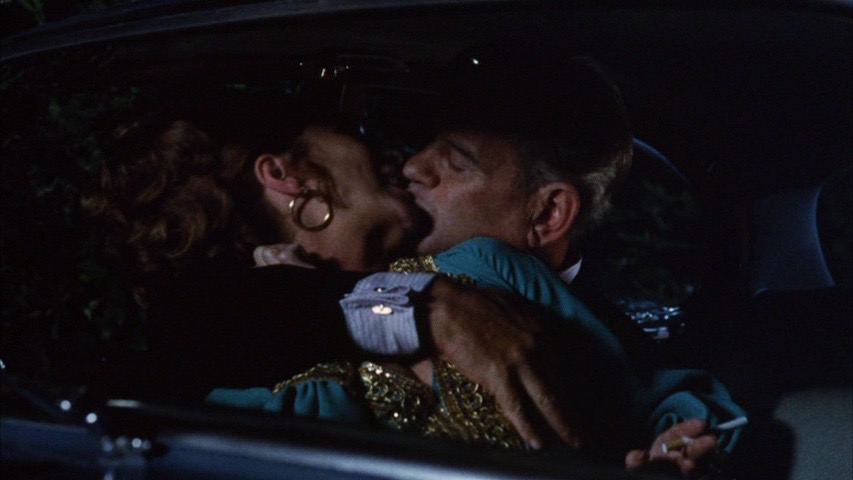
Anyways, we now see the Dad try and make a move on a woman in a car. I’m sorry, but once you’ve seen Ruthless People (1986), then it’s a little hard to look at this…

vlcsnap-2016-02-13-14h57m28s317

and not think of Bill Pullman throwing up.

Now shit gets real cause Dad comes home with her, and after trying to feel her up, discovers the reality about Roy.

vlcsnap-2016-02-13-15h01m29s859

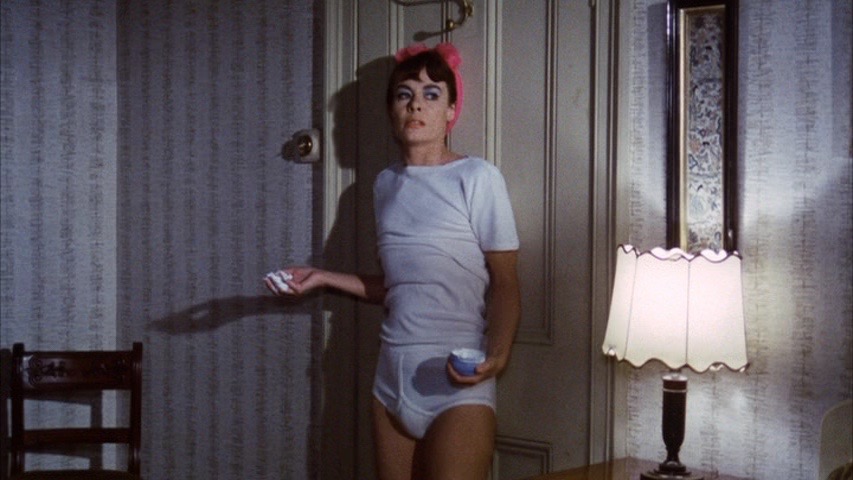
The review of this movie on the inside of the DVD by Dennis Dermody is right! The 1970’s really wasn’t the greatest era for women’s fashion. Also, she has heavy blue eyeshadow on. Maybe it’s just me, but after binge watching 7 seasons of Sabrina, The Teenage Witch last year where they seemed to wear nothing but blue eyeshadow, I’m a little sick of it. Also, I would take this otherwise cringe worthy scene more seriously if it didn’t end with Roy leaving with enough money to be completely independent and start presenting as a woman in the blink of an eye. In reality, things like this end with far more deadly outcomes such as the suicide of Leelah Alcorn in December of 2014.

I do like that throughout all of this anger and beating, Roy stands up for herself. She even gives the right answer about how long it’s been going on. She says, “All my life”. Technically that’s not true for all trans women, but some do figure it out quite early like Jazz Jennings. He threatens her with cures. Then he asks her if she’s a homosexual. That means he’s actually asking if she’s straight. Her response is “no”. That would mean she’s a lesbian, but the movie is wishy washy about her sexuality. However, I believe she is meant to be straight.

We now find out that Roy’s mother is dead. She says it’s his fault and he throws her. Then he says that the Germans used to send people like her to the gas chambers. She responds that they used to decorate “people like you”. There’s another line here, but then…yeah…here’s the line after that one:

“God made man in his own image, and he blew it.”

That’s when you start to realize this is less of a transgender film and more a feminist one. Unfortunately, a nasty feminist one considering the ending. Some of you probably reasoned out what that is, but I will get to it eventually for everyone else.

Roy flees for good. Makeover!

vlcsnap-2016-02-13-15h39m12s899

I actually appreciate this scene. So many movies spend all the time in the world making it seem like heels are the hardest thing in the world, but almost never mention makeup or anything else.

This movie even has her have difficultly putting on a bra. Makes sense. She is doing it from the back, which takes some practice and no one was around to teach her the trick of doing it in the front, then simply turning the bra around. Of course this movie absolutely couldn’t do that because Anne Heywood may have put up with binding for the film, but she isn’t going to have chest reconstruction surgery. Although, they do use a male stand-in later for a brief shot, but that doesn’t count because the movie will also show her with a woman’s figure for one scene even though there’s no mention of hormones.

There’s another limitation too caused by hiring a genetic girl for the role. Unless we are going to put fake hair on her legs and arms, then we really can’t show her shave them without breaking the illusion.

Let me just tell you now that they don’t show a fake penis unlike more recent films and TV Shows have. Thank God! Anyone who has or has had one only needs to see that fake penis twice and the illusion is broken. Unless the film uses multiple fake penises, which I haven’t seen done, then the movie has a penis that will look identical every single time it’s shown. The penis don’t work that way.

Finally she’s ready! Meet Wendy Ross.

vlcsnap-2016-02-13-15h57m10s014

That Girl! Unfortunately, this film will tell her she’s not what every girl should be till the unfortunate ending.

She goes around town and seems to pass just fine. She’s a little nervous about her voice, but that doesn’t appear to be a problem. Even a police officer calls her “Miss”. Then those damn visual metaphors attack again.

vlcsnap-2016-02-13-16h00m40s490

Hmm…I had no idea that the UK had a large giant female population in the 1970s. Think this is going to lead to anything? Well, you’re out of luck. All that happens is a couple of guys who were clearly just about 10 years early to appear in Fulci’s The New York Ripper (1982) and Gorris’ A Question of Silence (1982) scare her, causing her to run into the “Ladies Room”. Nothing happens in there. No bathroom usage. She just washes her hands and says something that is incomprehensible to a woman in there. I think she is saying “driving a truck”, but that makes no sense and it is just a guess.

After a few more lines to remind us men are pigs and all that, we get this shot to make sure you don’t forget feminism.

vlcsnap-2016-02-13-16h24m44s300

Can’t leave out the novel that is credited with starting the second wave of feminism which had people like Gloria Steinem referring to trans women as…don’t want to spoil the ending.

Wendy gets herself a room adjoining with another girl in the house of a woman named Margaret (Jill Bennett). Margaret is married to man named Philip (Philip Bond) and works as a teacher. She is friendly with a man named Frank (Michael Coles) as well. I’m still confused about his character in relation to Margaret. I get the impression she is or wants to have an affair with him…maybe…this movie can be a little tough. What I’m not confused about is this shot.

vlcsnap-2016-02-13-16h29m28s320

It’s not uncommon for a trans woman or a trans man to start dressing in the “appropriate” clothing, but go over the top at the start. That’s my story of the prom dresses. However, this will be a running thing throughout the film to differeniate Wendy from other women. Note that by comparison, she looks like a 1950s housewife/hausfrau next to this clearly modern day 1970s woman. It’s the girl she’s living next to.

Think maybe the hausfrau comment is too much. Don’t worry, cause in one of the scenes almost immediately after this Margaret says the word herself to describe herself while serving drinks at a party. She also says that Wendy is “all a front” to Frank. I don’t think she actually knows, but the line is dropped in there anyways the second Wendy pays attention to Frank. Oh, and then she says, “The only thing that sets Wendy apart from us is she has a private income.”

I know all this can be chalked up to general cattiness if you will over a guy they are both interested in, but it all kind of weaves together into something that doesn’t go down all that well. Then we get this scene.

vlcsnap-2016-02-13-16h46m27s958

Basically the scene is there to remind us that Margaret is very much a feminist. She talks down about women who are pretty and dumb as happy to be considered inferior, but that if you show any independence or a mind of your own that you’ll be determined as unfeminine. Okay, so she’s a little angry. So of course they have Wendy respond that she likes bras and wouldn’t mind depending. In other words, they make sure you know how much Wendy stands in contrast to Margaret. Margaret responds to what Wendy says by telling her that she’s a “strange girl”. Don’t worry, we’re getting to the wonderful ending, but first another assault by a visual metaphor.

vlcsnap-2016-02-13-16h49m48s663

Wendy goes to get a job. What kind of a job you might ask? A beautician. Why? We know she has plenty of experience in other areas since we saw her in a business position earlier. Yes, I’m aware that in Boy Meets Girl (2014) she does fashion. Yes, I’m aware that in Orange Is The New Black they have Laverne Cox doing the other girls’ hair. However, this follows immediately after she’s called strange and all but unacceptable by Margaret. She doesn’t get the job. Then the film goofs.

vlcsnap-2016-02-13-16h55m18s462

That is a woman’s figure. A genetic male’s body doesn’t get into that shape without hormones, which this film has given us no indication to tell us she’s on. In fact, later she is told by a doctor that her thinking she is growing breasts is imaginary. That is also when they use a male stand-in to emphasize that fact, which also has a straight up and down figure.

By the way, she’s tucking in this scene. I use a gaff personally. It’s basically a strong pair of panties that pulls down, flattens, and also in the process, pops your testicles back into your body. Some use surgical tape to hold the penis between the legs. An example of that on film is in the Danish movie A Soap (2006). This is the first time I’ve seen tucking done this way by what appears to be her wrapping everything in a gauze of some sort. Whatever works for you. The penis is the primary issue, not the testicles. They really do just pop away. Heck, Sumo wrestlers do that before a match to protect them.

vlcsnap-2016-02-13-17h01m15s706

Time to visit Sis! I love that when Wendy’s sister calls her Roy, she responds by saying that she’ll call her Sam then. Oh, and Sis does mess up once after being told that and immediately is met with the name Sam. Notice again, the strong difference in clothes. Her sister even digs into her about how she looks. Sis even suggests a cure to which Wendy says, “I am cured.” Doesn’t dig into me, but the correct response would be to say I was never sick. Gone too long without a visual metaphor?

vlcsnap-2016-02-13-17h06m28s522

The sister brings up that women’s clothes are similar to men’s clothes nowadays. Wendy says that she doesn’t care. Wendy says, “If women’s clothes were made out of old sacking. I’d want to wear them.” Again, that feminist stuff slipping in here by making her seem superficial and not a real woman for wanting to wear stereotypically feminine clothes. And again in contrast to a cisgender woman in modern 1970s clothes who even has a baby to prove she’s a genetic girl.

Now we get Frank acting like a jerk. It’s relatively light-hearted actually, but of course Wendy is deathly afraid of anyone finding out. Then it gets dark literally and figuratively.

vlcsnap-2016-02-13-17h13m12s549

Tossing down a lamp she seems furious that she is attracted to a man. She says nasty things about herself such as being fake, a bitch, and insane.

That scene ends quickly and she tries to borrow money from her sister to go see a doctor. She asks her sister to not tell the baby about her. She says to just let the baby believe what she sees. She gives a nice speech here about not committing any crimes or doing anything wrong. Of course she shouldn’t have to say that or specifically mention she isn’t having any kind of sexual relations. She does say that though.

Now we meet the doctor. We are very near the end of the film.

vlcsnap-2016-02-13-17h18m21s273

You could probably do a whole post picking apart only this part of the film if you wanted to. I don’t.

The doctor is not all bad by any means. However, he basically does do two things:
1. Makes it clear that nothing will make her a real woman. By that I mean someone who will 100% pass as a genetic girl even under the scrutiny of a man.
2. That it will take a long time and a lot of work before she will be granted the chance to have bottom surgery. This is an area that is a difficult thing. This can be blatant gatekeeping. Other people deciding your life against your will. However, this is not something I believe should be tossed aside completely either. It is important for the person involved to be given a chance to basically vet themselves. For example, a lot of trans women don’t have bottom surgery. They just decide it’s not important to them. Same goes for trans men. Watch the movie Mr. Angel (2013) about the male porn star Buck Angel. If you come away with nothing else, it’s that Buck loves his vagina. Also, you are asking surgeons to permanently alter your body in a rather significant way. We aren’t talking about a boob job here. We’re talking about something that if done in haste could put you in a David Reimer situation. He was a boy that lost his penis in a botched circumcision, had his parents told to raise him as a girl, figured it out, transitioned back, there’s a book, he went on Oprah, and then killed himself. I think some of this is okay, but it often can be taken way too far and push people to take drastic actions. In this case, she is told that it’s going to take a full year of being analyzed.

She leaves and goes to pack. She has a line here that says: “Is the point of no return the only point.” I read this as meaning she is considering that she doesn’t have to have surgery to be a real woman. However, she then follows that with lines about how she could wake up one morning and find she’s a middle aged man. The gist is that the surgery is that important to her, but she seems to have given up even if that means being a woman only in her own head. She also mentions about not buying more clothes because it means living beyond her means and her sex. Again the feminist thing there.

vlcsnap-2016-02-13-17h31m49s872

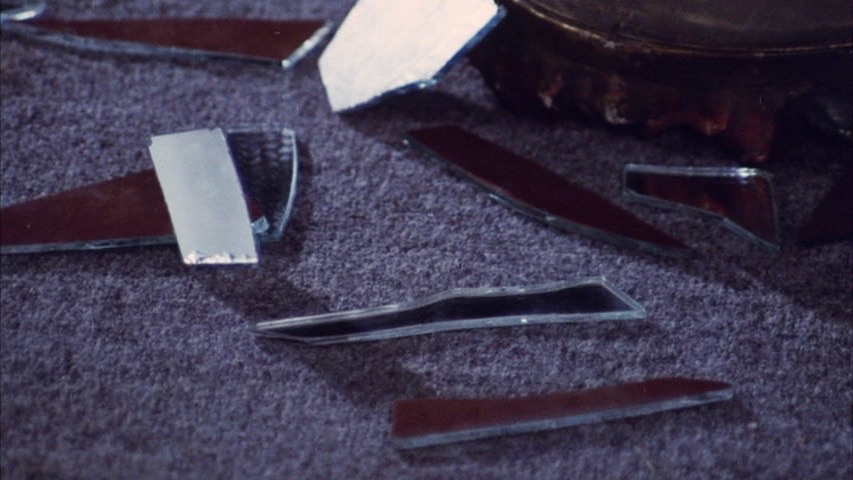
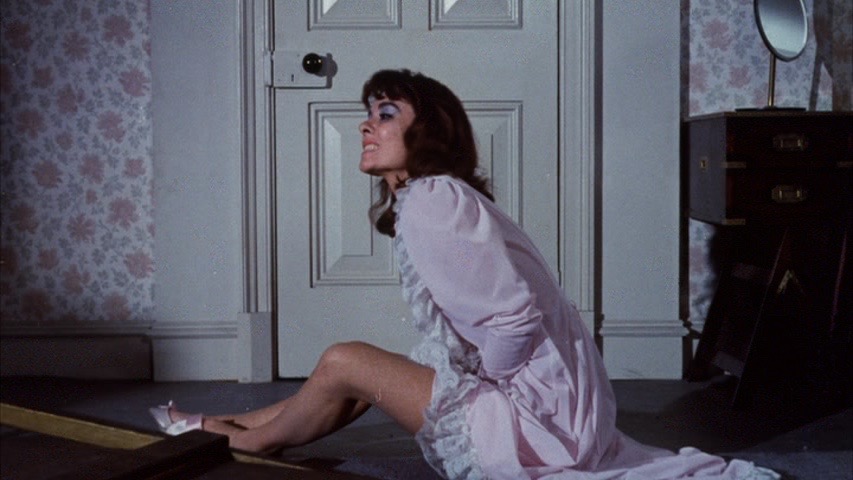
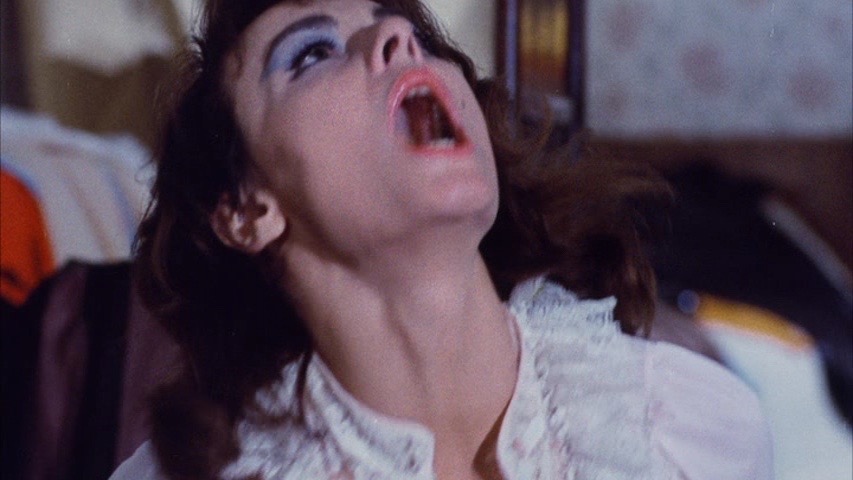
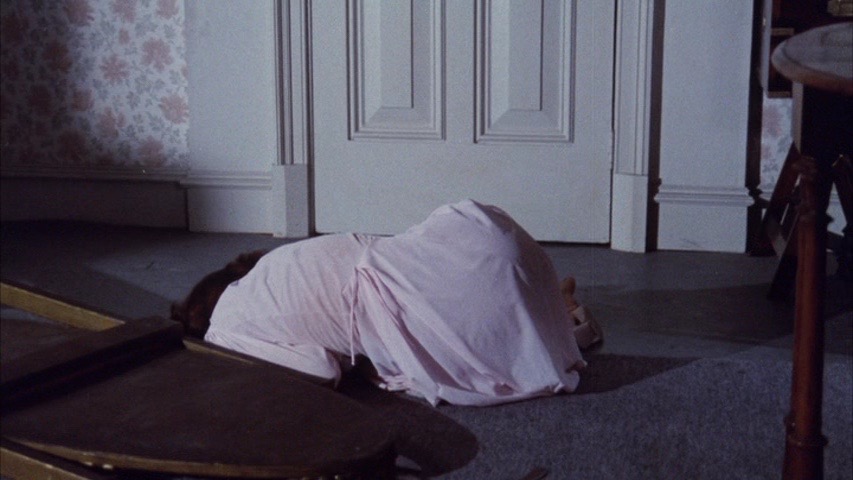
Now Frank enters the room. This part alone is tough to sit through. What’s weird is that they really haven’t established a relationship on his end. We get Wendy’s side, but he’s barely been in the movie. He tries to kiss her to strongly tell her how much he loves her and to not leave. She is into it at first, then becomes repulsed by herself. She doesn’t believe anyone can really love her. They don’t really make it clear at first, but Frank glances down slightly, then gets violent. He kicks her where it hurts. She goes down and takes a mirror with her which breaks. Here’s the ending…sort of.

vlcsnap-2016-02-13-17h36m18s919

vlcsnap-2016-02-13-17h36m40s980

vlcsnap-2016-02-13-17h36m41s828

vlcsnap-2016-02-13-17h36m49s352

She appears to cut off her genitals with a shard of glass. I mentioned Gloria Steinem before. She and other feminists of her time referred to trans women as people who mutilate themselves. That’s not all she said either. I don’t care to go into that any further. It’s a huge mess even to this day.

However, I did say “sort of” for a reason. The movie is still going.

vlcsnap-2016-02-13-17h40m05s473

That’s right! She’s alive! Didn’t bleed out or anything. Suddenly she’s just in a hospital bed where she acts like that was a dream or maybe wasn’t. She says, “She was confused for a moment”. She says, “It was about a year ago she woke up in a bed like this.” Regardless, the doctor tells her the operation was a success and that he’ll check in again with her later. He calls her “Miss Ross”.

vlcsnap-2016-02-13-17h41m27s911

We now cut to a regular room and find that she has a proper passport now. She’s not in a hospital. Then she says, “I must always remember. How lucky I am to be a girl.” And cut to the end of Working Girl (1988)…

vlcsnap-2016-02-13-17h42m25s513

as the camera zooms out from the window till it stops and the credits roll. Yes, I know that’s also the ending of King Vidor’s The Crowd (1928).

So if I am reading this right. She tried to cut off her genitals, but failed and survived. She had bottom surgery, which made her a real woman in the eyes of the British government. Then she ends the film by saying how lucky she is to be a girl? What? You mean as opposed to the men who she said earlier were made in God’s image which he screwed up? This was supposed to be a transgender movie, right? It certainly has a lot of the elements, but there really is this constant anti-man thing going on here. It’s more like the story of a woman who is trapped in a man’s world. She tries to become a woman be merely adorning herself with the appearance of a woman. She is berated for not essentially being a modern woman/feminist. The person who ultimately drives her to a suicidal action is a man. Then she wakes up with female genitalia, accepted as a woman, and says to herself that she must remember she is lucky not to finally be living as the gender she is, not to be accepted as woman, or anything that makes sense. She says she must remember she is lucky not to be a man.

And to drive all this home about her being lucky not to be a man.

vlcsnap-2016-02-13-17h41m47s866

She says the line after she picks up and looks at the picture of, to the best of my knowledge, her dead mother. The mother she said her father drove to death.

What I do love about all this is that the movie with the ending like this is quite similar to A Clockwork Orange that came out one year prior to this film. The two books are separated by 4 years. Alex has an apparent disease and is given a superficial cure that opens him up to hatred by society and in the end is driven to a suicidal action that truly cures him. In his case it returned him to his previous state. However, the book actually has an additional 21st chapter where Alex decides to give up his violent ways. In I Want What I Want, a woman with an apparent disease gives herself a superficial cure that opens her up to hatred by society and in the end is driven to a suicidal action that truly cures her. Yeah, I wouldn’t be surprised if there was a little borrowing going on here.

I’d be really remiss if I didn’t mention that according to the review of the film inside the DVD box it says that the director was quoted as saying: “I am known to be difficult, British, homosexual and expensive and whilst I can, with modified rapture, admit to the first three charges, the last is deeply wounding.” Also according to that review, the author of the book Geoff Brown wrote only one other book which was about a schizophrenic. Both things could have played a role in how this film turned out.

You can say a lot of things about this movie, the DVD itself, the box, the reviews, my own review, etc. What you can’t say though is that Anne Heywood didn’t give it her all here. She did. I may not like what I saw in the film, but she did a good job with very difficult material.

I don’t recommend the film. I just can’t. But if you think you can handle it, then just like Let Me Die A Woman, it’s a historical curiosity.

Lisa Watches An Oscar Nominee: Auntie Mame (dir by Morton DaCosta)


Oh Lord, Auntie Mame.

There were two reasons why I watched the 1958 film Auntie Mame.

First off, as I’ve mentioned before, TCM has been doing their 31 Days of Oscar this month.  They’ve been showing a lot of films — both good and bad — that were nominated for best picture.  Since it’s long been my goal to see and review every single film that has ever nominated for best picture, I have made it a point to DVR and watch every best picture nominee that has shown up on TCM this month.  Auntie Mame was nominated for best picture of 1958 and was broadcast on TCM this month so I really had no choice but to watch it.

My other reason for wanting to see Auntie Mame was because, when I was 19, I was cast in a community theater production of Mame.  (Mame, of course, is the musical version of Auntie Mame.)  Though everyone who saw the auditions agreed that I should have played the role of Gloria Upson, I was cast in the ensemble.  (Gloria was played by the daughter of a friend of the director.  Typical community theater politics.)  As a member of the ensemble, I didn’t get any lines but I still had fun.  In the opening party scene, I dressed up like a flapper and I got to show off my legs.  And then in another scene, I was an artist’s model and I got show off my cleavage.  (If you don’t use being in the ensemble as an excuse to show off what you’ve got, you’re doing community theater wrong.)  Towards the end of the play, I appeared as one of Gloria’s friends and whenever she delivered her lines, I would make sure to have the most over-the-top reactions possible.  She may have stolen the part but I stole the scene.  It was a lot of fun.

But, even while I was having fun, I have to admit that I didn’t care much for Mame.  It was an extremely long and kind of annoying show and there’s only so many times you can listen to someone sing We Need A Little Christmas before you’re tempted to rip out the hair of the actress who stole the role of Gloria Upson from you.

So, when I recently sat down and watched Auntie Mame, I was genuinely curious to see if the story itself worked better without everyone breaking out into song.  After all, Auntie Mame was the number one box office hit of 1958, it was nominated for best picture, and it was apparently so beloved that it inspired a musical!  There had to be something good about it, right!?

Right.

Auntie Mame tells the story of Mame Dennis (Rosalind Russell, attempting to be manic and just coming across as hyper) who is rich and quirky and irrepressibly irresponsible.  When her brother dies, Mame suddenly finds herself entrusted with raising his son, Patrick (played, as a child, by the charmless Jan Hadzlik and, as an adult, by the stiff Roger Smith).  Mame is a wild nonconformist (which I suppose is easy to be when you’ve got as much money as she does) and she tries to teach Patrick to always think for himself.  However, once Patrick grows up and decides that he wants to marry snobby Gloria Upson, Mame decides maybe Patrick shouldn’t think for himself and goes out of her way to prevent the wedding.

Auntie Mame is an episodic film that follows Mame as she goes through a series of oppressively zany adventures.  When the Great Depression hits, she’s forced to work as an actress, a saleswoman, and a telephone operator and she’s not very good at any of them.  She does eventually meet and marry the wealthy Beauregard Jackson Pickett Burnside (Forrest Tucker).  As you can probably guess from the man’s name, he’s supposed to be from the south.  (And yet Tucker plays the role with a western accent…)  He loves Mame but then he ends up falling off a mountain.  So much for Beau.

(In the production of Mame that I appeared in, Beau was played by this 50 year-old guy who simply would not stop hitting on me and every other girl in the cast and who was always “accidentally” entering the dressing room while we were all changing.  Whenever Mame mentioned Beau’s death, all of us ensemble girls would cheer backstage.)

Anyway, as a film, Auntie Mame doesn’t hold up extremely well.  I can understand, to an extent, why it was so popular when it was first released.  It was an elaborate adaptation of a Broadway play and, in 1958, I’m sure that its theme of nonconformity probably seemed somewhat daring.  When you watch it today, though, the whole film seems almost oppressively heavy-handed and simplistic.  It’s easy to embrace Mame’s philosophy when everyone else in the film is essentially a sitcom creation.

As I mentioned previously, Auntie Mame was nominated for best picture.  However, it lost to the musical Gigi.

Hallmark Review: Valentine Ever After (2016, dir. Don McBrearty)


IMG_3548

Note About Music: If you have come looking for the song at the end, then your answer is This Girl by Justin James. Thanks to Kayla Holder in the comments and Robert Carli for responding to her request about the song. You can find the song here on Justin James’ YouTube channel.

I’ve seen Northern Exposure, Doc Hollywood (1991), Finding Normal (2013), and Christmas Under Wraps (2014). All four of these use the same plot of a doctor who either gets in trouble in a small town or through normal unlucky circumstances winds up having to perform their doctoring services in a small town for a certain amount of time. In Northern Exposure, the doctor simply didn’t read the conditions of his scholarship and wound up being a doctor in a small town in Alaska. In Doc Hollywood, a doctor nearly hits a couple of people walking cattle on a street, but swerves to avoid them and destroys most of a judge’s fence so he has to do a handful of days as doctor in the town. In Finding Normal, a woman taking a cross country trip is pulled over by a cop for speeding and has a litany of past unpaid tickets as well as a warrant out for her arrest. She is sentenced to work as a local doctor in the town she was speeding through. In Christmas Under Wraps, a woman ends up getting an internship at the last minute which means just like Northern Exposure, it’s to Alaska she goes to serve as a local doctor. In all four of those movies/TV Shows, working as a doctor there meant helping to save lives and those towns were in need of a doctor. So let’s see Valentine Ever After’s rehashing of this story.
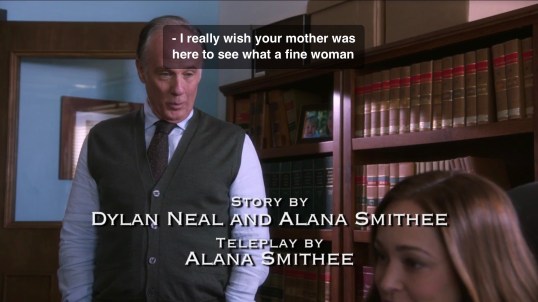
IMG_3586

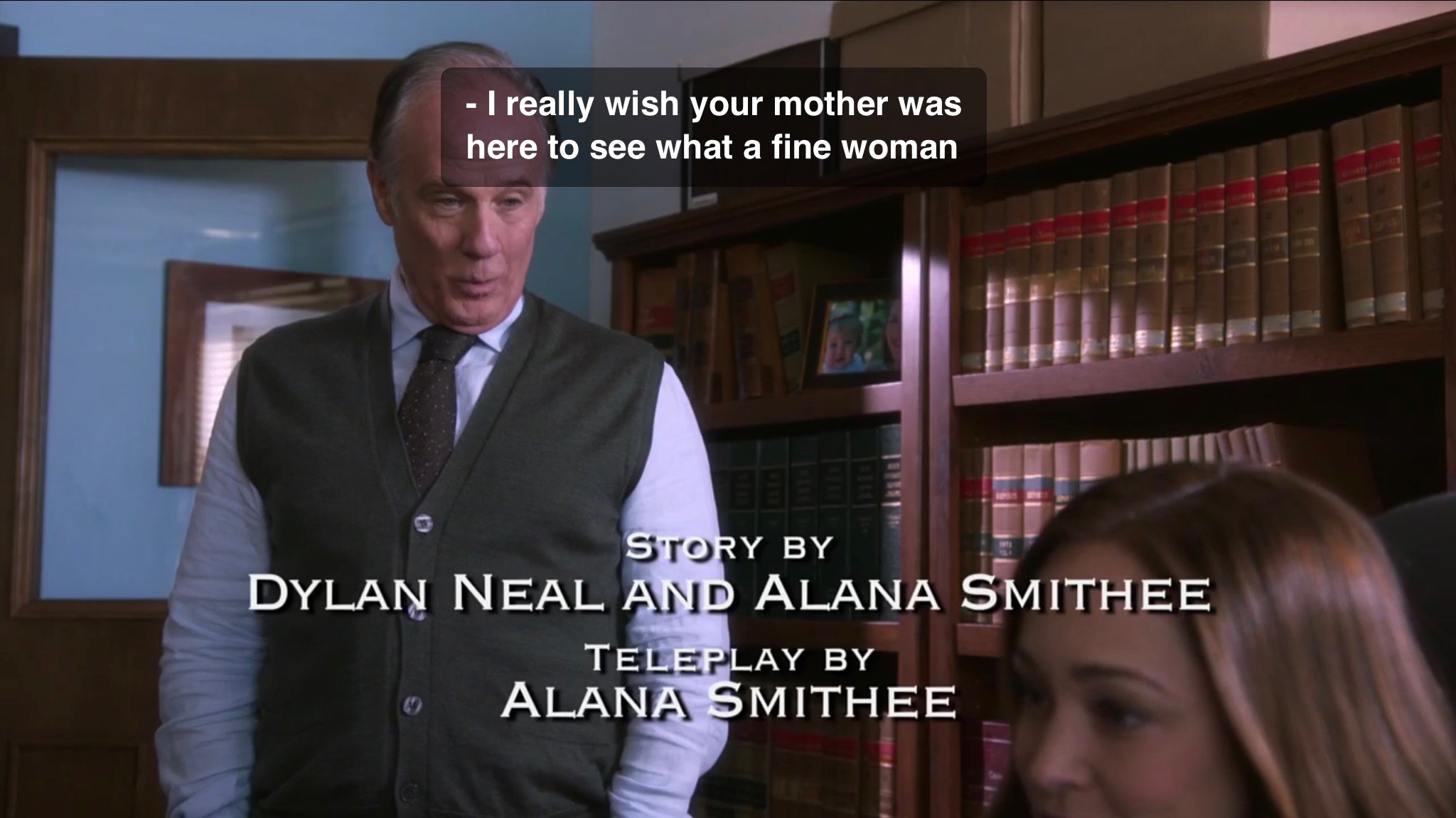
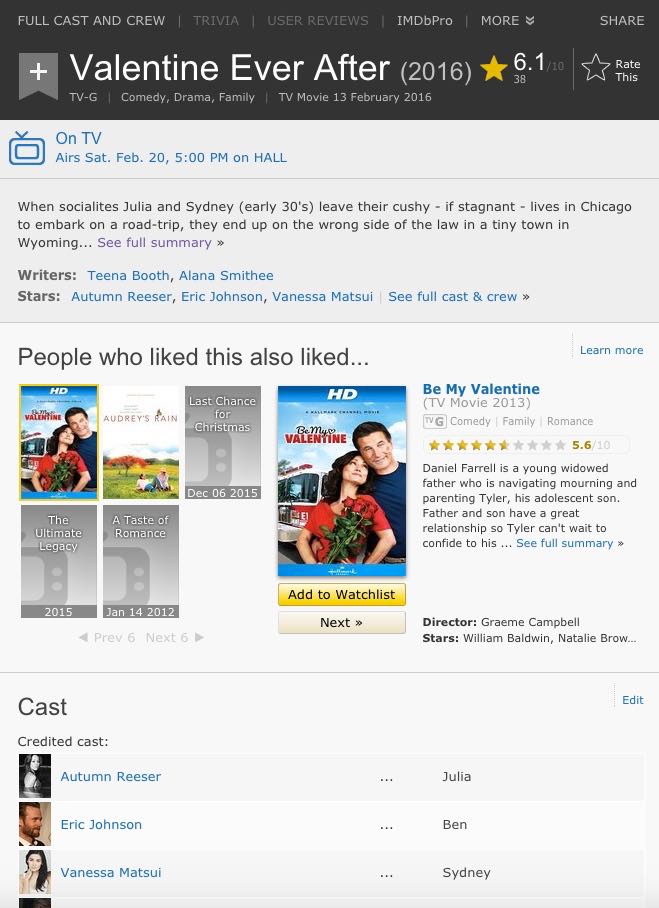
First off, take a look at those credits. Dylan Neal we know from The Gourmet Detective series. However, Alana Smithee is a new one on me and IMDb…sort of. It is a long standing tradition for people working on films, especially directors, to ask to be credited as Alan Smithee because the film was so taken away from them, recut, or basically changed so heavily that they don’t want to be associated with the movie. Alana Smithee sure reads like that is what happened here to the person who wrote the teleplay for this film and co-wrote the story with Dylan Neal. What’s really interesting is that until I changed it last night on IMDb to match the onscreen credits–you can still find the name on other sites–Teena Booth who has written numerous Hallmark movies was credited as one of the writers. She could be this Alana Smithee since I have no reason to believe there is an actual person with that name who has a completely blank profile with this film as their only credit.
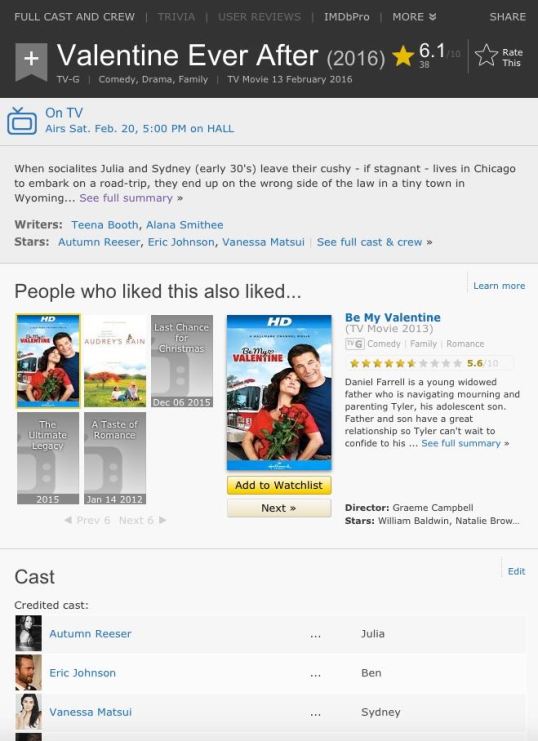
The way it looked last night on IMDb before I updated the page myself.

The way it looked last night on IMDb before I updated the page myself.

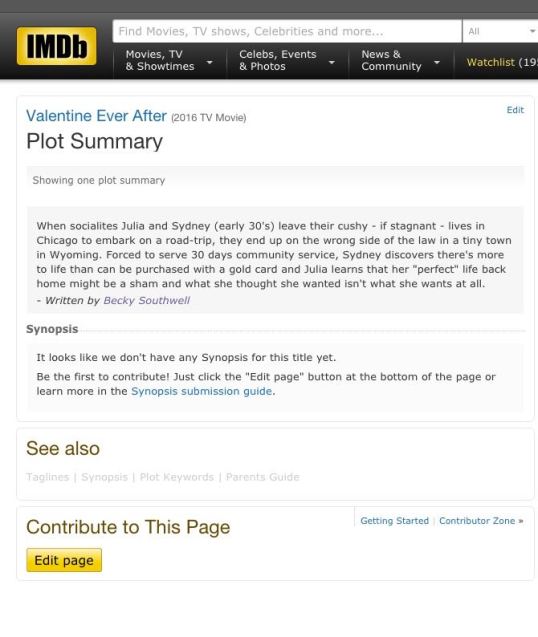
This could mean that Teena Booth is Alana Smithee. It could also be a simple mis-crediting. However, there are some other things that are a little funny here. If you go to the plot summary on IMDb, you will find it is written by Becky Southwell. Becky Southwell is Dylan Neal’s wife.
Screen Shot 2016-02-15 at 12.10.27 PM

It’s a little weird to me that she would have put in the plot summary, but not noticed that her husband doesn’t have writing credits listed on IMDb.

Then if you go to IMDb and look at the full credits for the film you will see Dylan Neal listed as an executive producer for the film.

Screen Shot 2016-02-15 at 2.25.40 PM

There is no onscreen credit for Dylan Neal as an executive producer. There are three onscreen credits for producing the film: Steve Solomos, Jonas Prupas, and Joel S. Rice.

Adding even more confusion to the matter, if you go to Muse Entertainment’s website, who was the production company, they list only Jonas Prupas and Joel S. Rice as Executive Producers.
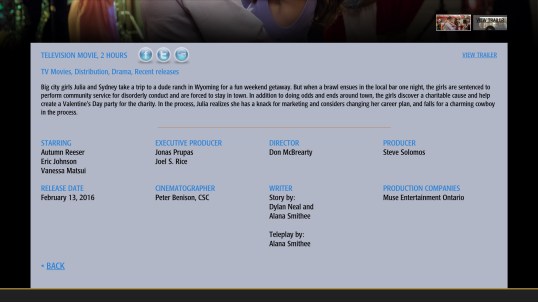
IMG_0505

It’s a mess. At the very least, I think it’s highly likely that unless an actual person named Alana Smithee comes forward, then this is probably someone who wanted nothing to do with this film. If you look at the film Hidden 3D (2011) you can see the writers used the names Alan Smithy and Alana Smithy. Considering the material of this movie, I get why someone wouldn’t want to be credited for it. I thought I should lay this out there for you since even last night a question about it had already popped up on IMDb’s message boards for the movie.

Now let’s talk about the actual film. If you know that you are going to watch this movie no matter what I have to say, then skip to the end of the review where I give my advice about how to do that and spare yourself some trouble. I know this is a long review and all. I also mention a list of tactics for figuring out the music in a Hallmark movie. I have noticed that quite a few people look for that information.

The movie opens up in a lawyer’s office and we meet our leading lady named Julia (Autumn Reeser). We find out that not only has her mother passed on, but that she is planning to become a lawyer herself but hasn’t passed the bar exam the first two times. She is working on the website for her father’s firm. The dad offers to have her come over for the weekend so he can help her study to take the bar exam again in a couple of weeks. He is proud of her and says he wishes her mother were here to see how well she has done “filling the empty space in this office” left by her dead mother. The scene began with him congratulating her on a brief she wrote for a case that reminded him of how her mother used to construct an argument. But now it’s off to meet her current boyfriend Gavin (Damon Runyan).

He proposes to her. The movie makes sure we know he is a little odd seeing as he starts the proposal by saying “if there’s one thing you know about me it’s that I pick winners.” On the surface, I will grant you that’s not the most romantic way to begin a proposal. Hallmark movies like to setup the wrong boyfriend with these less than subtle hints that the guy doesn’t see it as a union of two people who love each other, will make a great team together, and will do great things, but simply the latter two parts.

His parents jump in and are little rude about the wedding. Standard stuff for a Hallmark movie.
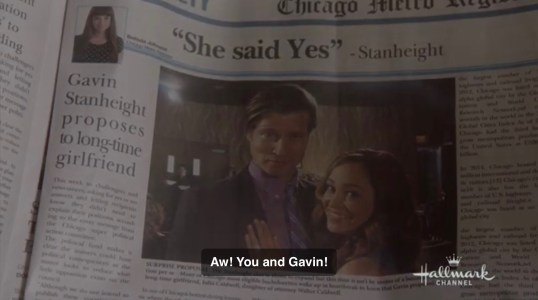
IMG_3704

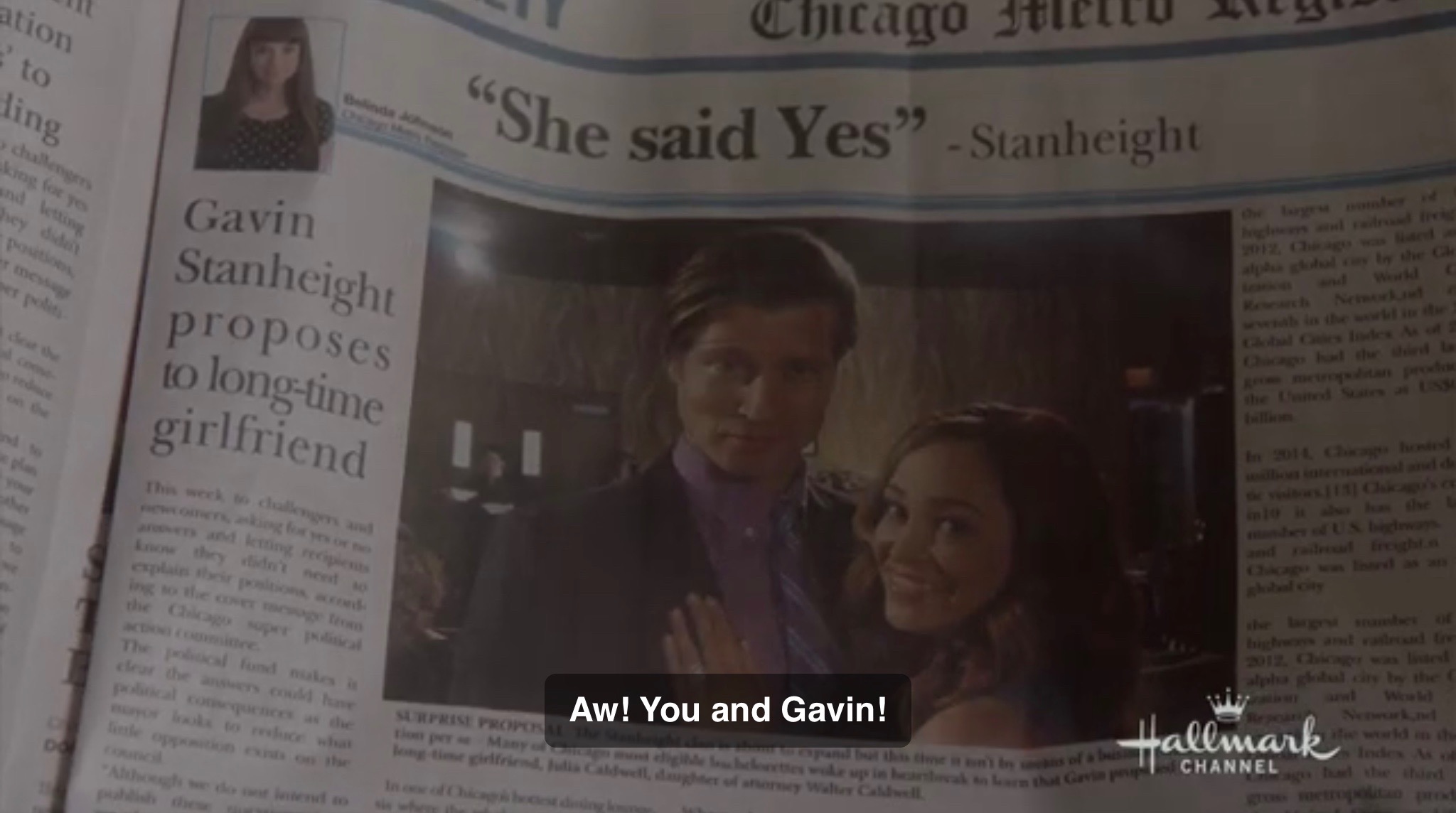
Now we go to meet Julia’s friend Sydney (Vanessa Matsui). We also see that Julia’s wedding made the papers so we know that she is well known in Chicago where she lives. Sydney speaks tells us her cousin announced at her father’s birthday party that a man named Chad was cheating on her. We also find out that people are calling her all the time about it. Sydney tells her, “Welcome to the upper crust. Say hello to five-star restaurants and goodbye to privacy.” We find out that while Sydney was born into the upper crust lifestyle, Julia had to work her way to get where she is. They decide it would be fun to get out of town for a while and visit Wyoming to go skiing. Sounds neat to me.

Gavin is a little mad that she just suddenly decided to leave town right after he proposed to her. I can understand. He even offers to just drop all the crazy wedding stuff if that is what’s bothering her and just simply go get married now. She doesn’t want to and so he says as long as she comes back. Again, not the perfect choice of words, but nothing here to indicate this is a bad guy. Off to Wyoming we go!

This means we get a shot of a plane and driving on one of those beautiful highways that take you through the mountains. Makes me long for the days when I used to take trips to Lake Tahoe with my parents. Then Sydney tells Julia that the GPS says turn right.

IMG_3805

I’m grateful that this is one of those Hallmark movies that knows how GPS works. It doesn’t require cell towers, but just visibility by a couple of satellites orbiting the Earth. However, sometimes the maps can fail you. I haven’t had it happen often, but it does occur. The United States is big. It also doesn’t help when you apparently think you can clear a rock, but it hits the underside of your car. Course they don’t show it cause budget and it really isn’t necessary. Seeing as they really got themselves lost, they are out of range of any cell coverage. To my knowledge, rare in 2016. Even in rural areas where having a way to call for help is rather important.

IMG_3865

Lucky for them, a cowboy shows up named Ben (Eric Johnson). I love that he knows about this rock that they hit. Why don’t they move it seeing as they obviously have had other people who have hit it and probably have been stranded out there? Well, don’t worry. It will fit right along with the logic of the upcoming scenes. He helps to take them back to his family ranch called the “Destiny Ridge Ranch”.

Now we have a surprisingly normal conversation around the dinner table. We even find out that Ben wants to make the place a dude ranch. Seems like a great idea to me. He’s quite enthusiastic about it actually. One of the great things about living even next door to San Francisco in a suburb, I can’t tell you how wonderful it is to be able to go only a few miles and encounter endless parks. Even if places like “Destiny Ridge Ranch” aren’t somewhere you’d want to live, they are great places to visit and help to support the people who do want to live there. However, Sydney stumbles upon something that I guess Ben didn’t think of. That being the question of what are these people going to do at night. All the activities he lists are daytime ones. I can honestly see Ben completely missing that himself. Given where he lives he must be exhausted come night time and probably checks out early to sleep. However, this is when mom chimes in and things start to get weird.
IMG_3942

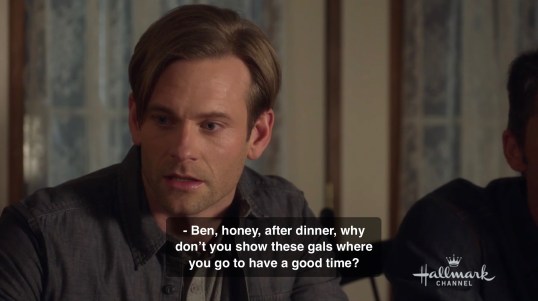
His mom tells him to take the ladies where he goes to have a good time. He takes them to a place called “Million Dollar Cowboy Bar”.

IMG_3945

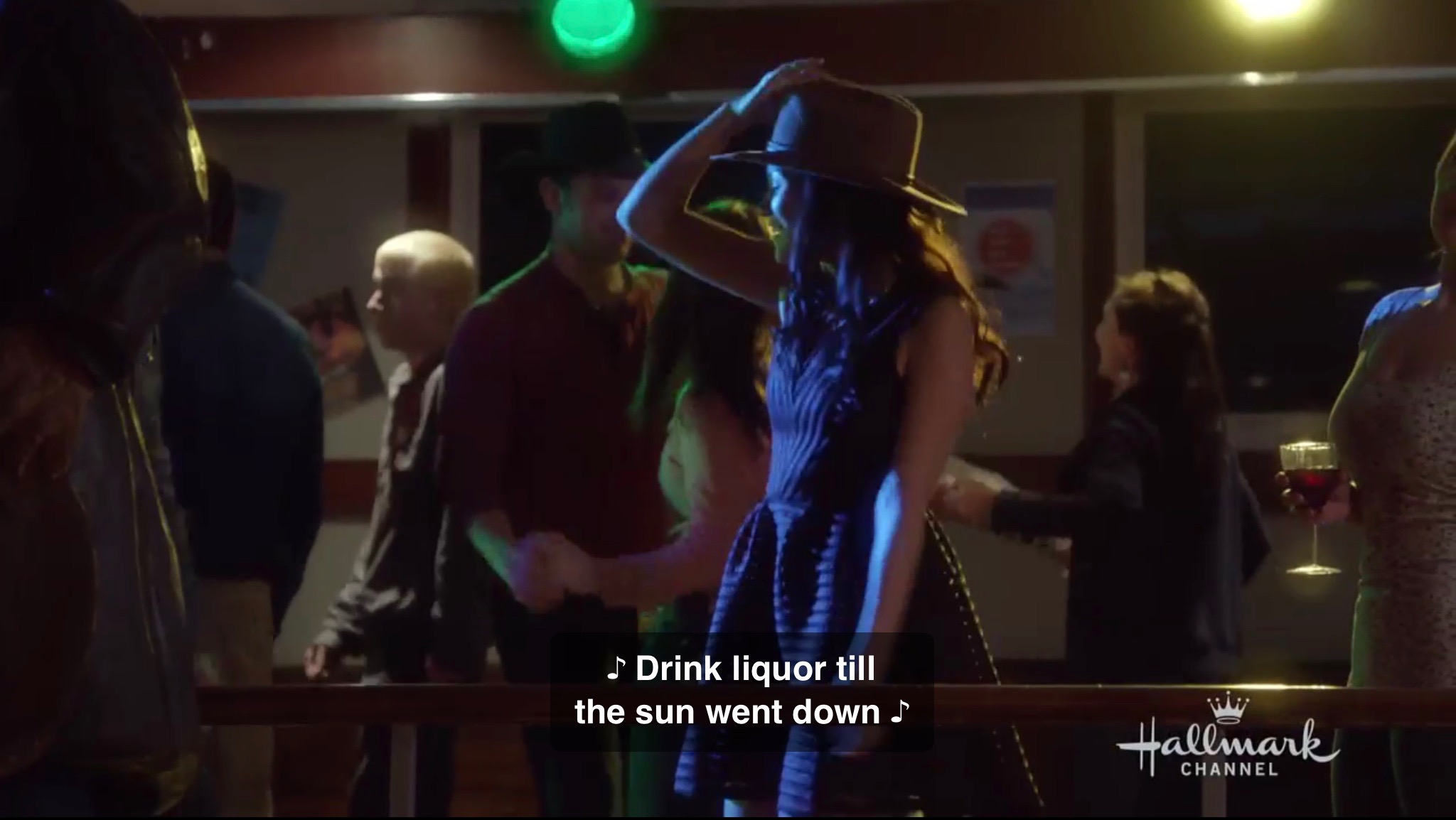
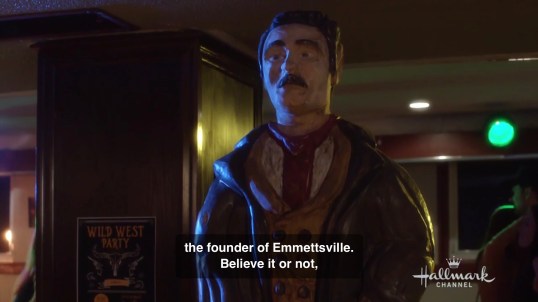
Seems innocent enough. He tells them “it’s a little different than the bars you’re used to.” Doesn’t seem that different to me. We see a waitress serving alcohol. There’s pool tables. There’s live music. There’s a dance floor. I guess because the live music is country music? Definitely a stereotype, but he’s kind about it. He doesn’t call them hicks or drop lines about Italian boots like Autumn Reeser did in the film A Country Wedding. Sydney makes a beeline for the dance floor and Julia sits down at a table with Ben. She takes notice of a statue in the bar.
IMG_3960

It’s an important and historical statue for the community. Like the kind of statue a town would keep in a town square or at the local historical society so that it doesn’t get damaged or anything. It’s even worth a “pretty penny”. She asks the obvious about why would you keep it in a bar. Ben tells her that they keep it there where they serve drinks and place it right next to a dance floor so that it’s “where people will be to enjoy it.” Does that sound anywhere near logical to you? Does that mean the bar is the most popular place in town? That statement also doesn’t explain away why something worth a “pretty penny” would be somewhere that even an innocent stumble by a waitress could spill a drink on it. Not to mention all the other hazards introduced by keeping such a important and expensive statue uncovered and in the middle of a bar. But that is enough for Julia and she doesn’t follow this up with any more lines.

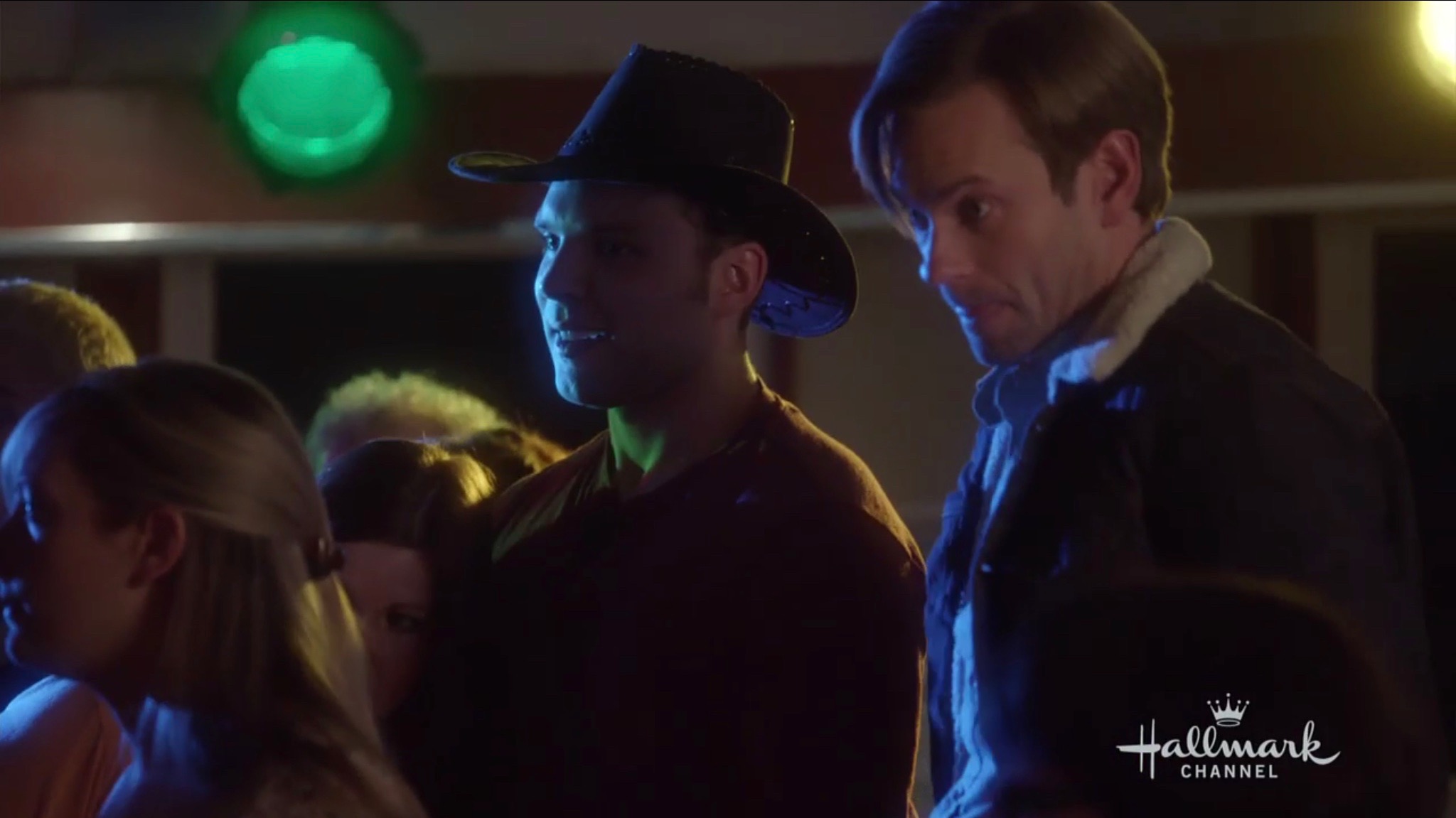
We also get a brief appearance by an old school friend of Ben’s who wants to dance, but he obviously doesn’t share her feelings. He doesn’t say that, but just that he’s known her since grade school. Julia says she’s obviously waiting on you to get a clue and notice her. True. Not the best choice of words, but we get no impression that he has told her no and doesn’t respond to Julia’s statement except with the grade school comment. Earlier at dinner there is a little girl who likes to “dote” on him. Julia refers to this lady as another woman who dotes on him. The point being that he is a hot item in town and well liked. He’s also responsible and only orders a club soda since he’s going to be doing the driving.

Here’s a nice shot of how things are laid out in the bar.
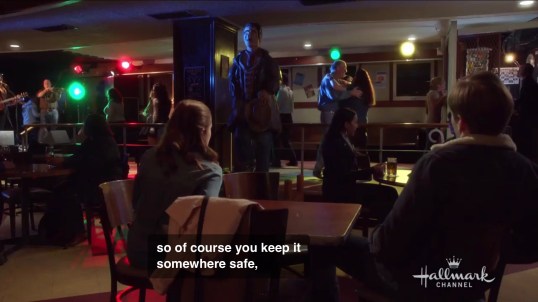
IMG_3963

Note where the table, Julia (on the left), Ben (on the right), the statue, and the dance floor all are in relation to each other. Now comes the incident.

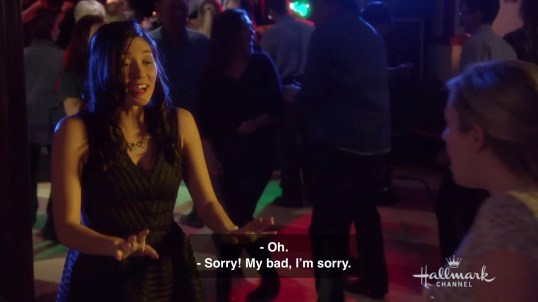
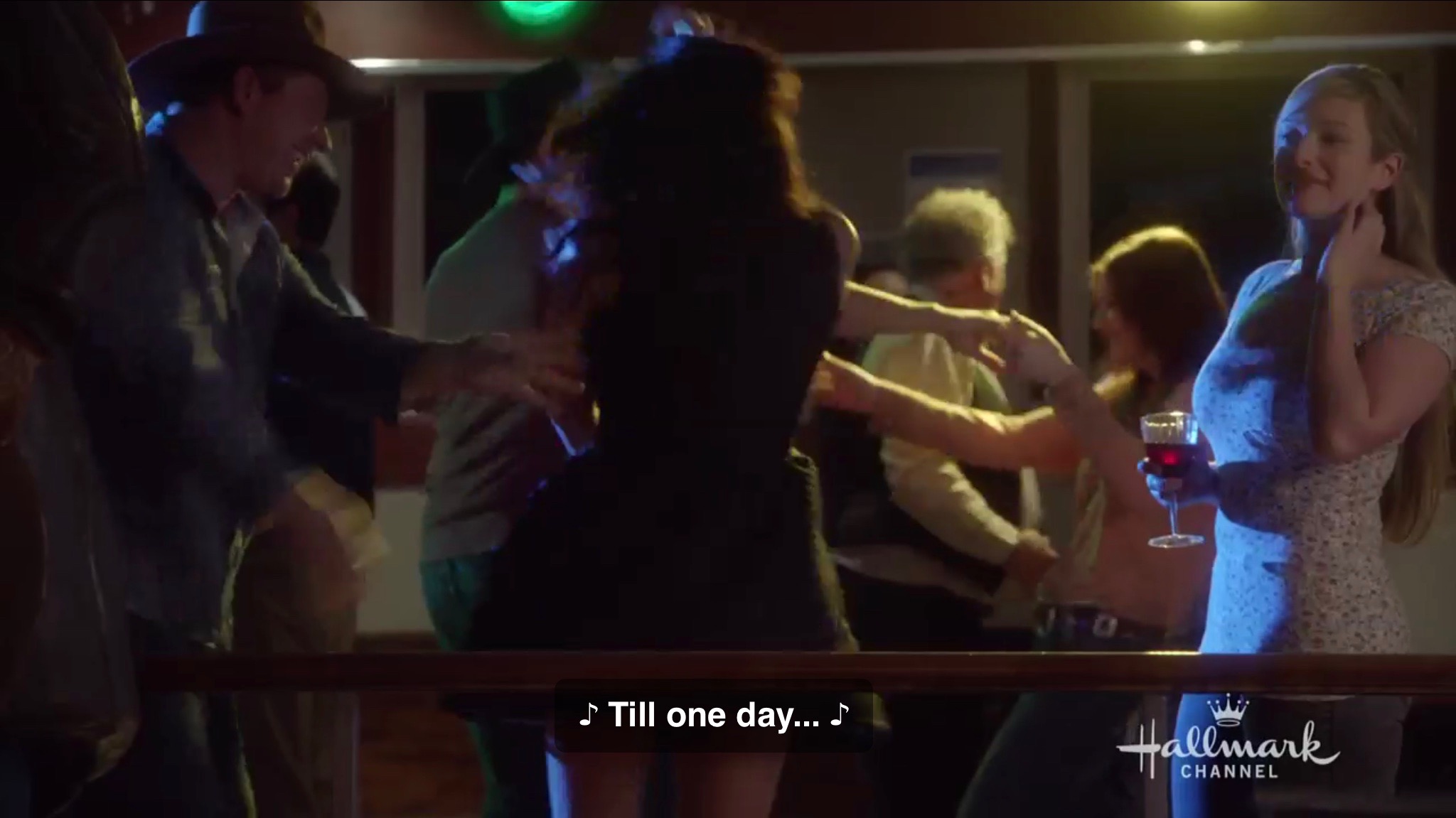
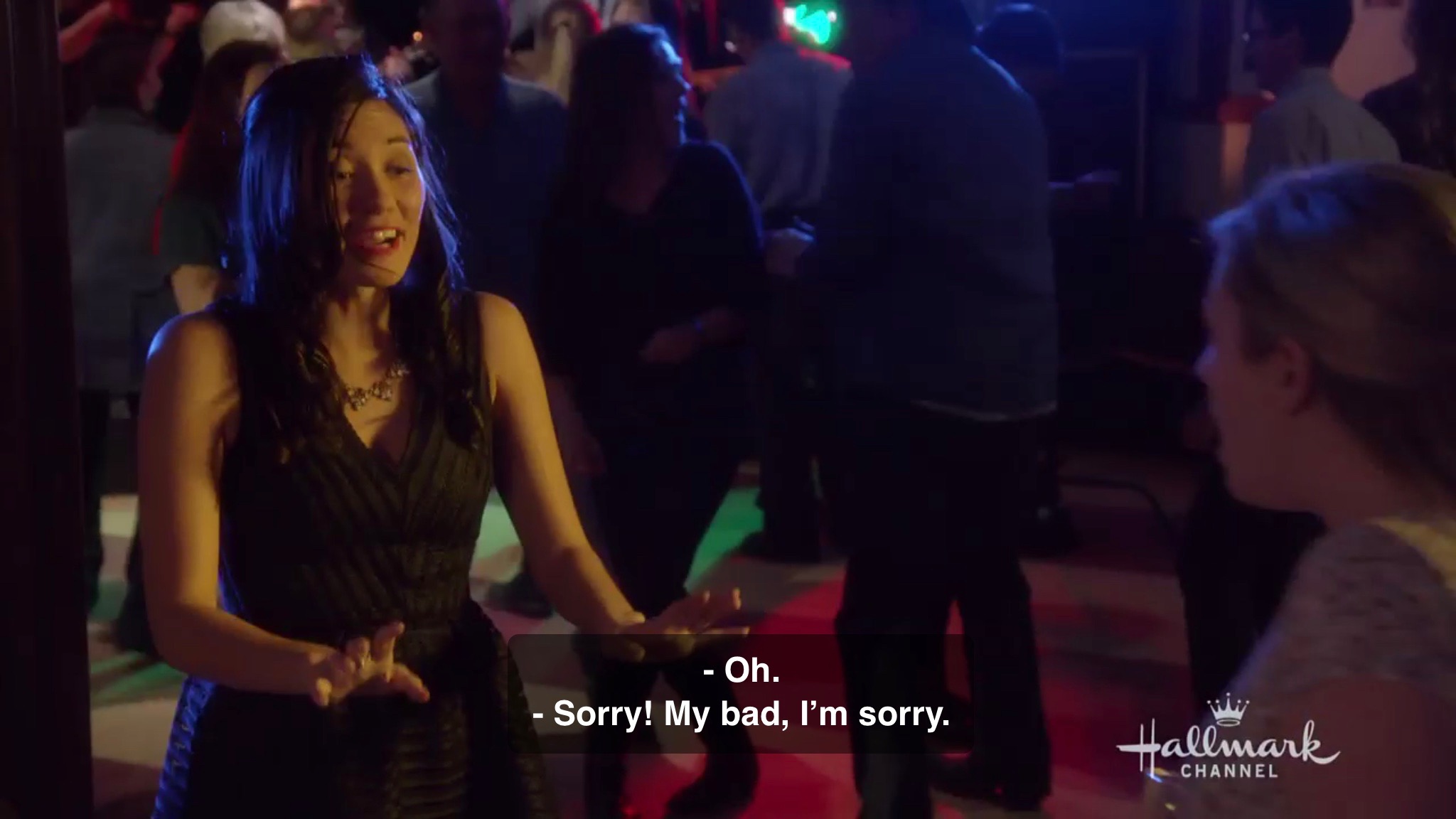
Sydney is dancing with a man. The man appears to twirl her, but it’s not a full handholding thing. It’s more like she twirled on her own. It causes her to bump into the woman standing behind her holding a drink which spills onto her shirt. The woman asks “What’s wrong with you?!” Sydney apologizes to the woman. She even offers to pay to replace the woman’s shirt. I would call this a simple incident that both of them are at fault for, but it’s the right thing to do on Sydney’s part to offer to pay to replace the shirt she potentially damaged. The woman responds with “I’m asking what you think you’re doing, waltzing in here wearing that getup and flailing all over the place.”

Here is the shot showing Sydney “flailing all over the place” while the woman behind her is flung way far out by her partner.
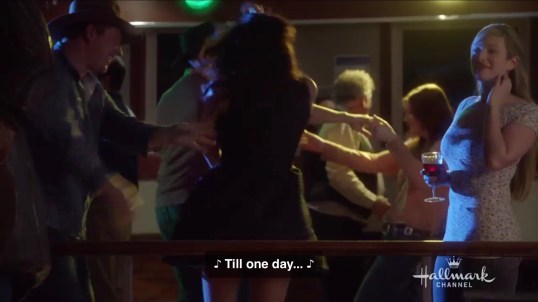
IMG_4001

Here are two shots of the “getup” Sydney is wearing.
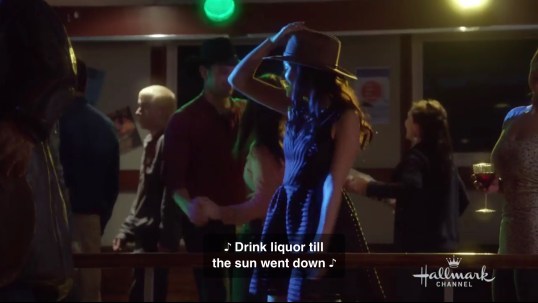
IMG_3996

IMG_4003

She waltzed in there because Ben’s mother told him to take them there. That’s why they are at this bar. Sydney didn’t do anything wrong by dancing on a dance floor.

Now Sydney says, “Ok. You can insult my dancing, but not my fashion sense. I’m not the one wearing country floral in the winter.” Very restrained response to an insult that implies Sydney is a big city slut for simply wearing an expensive dress and dancing on a dance floor.

At this point, Ben and Julia stand up from the table. The lady now says, “This is my favorite shirt. Let’s see how you like it.” The woman throws her drink onto Sydney.
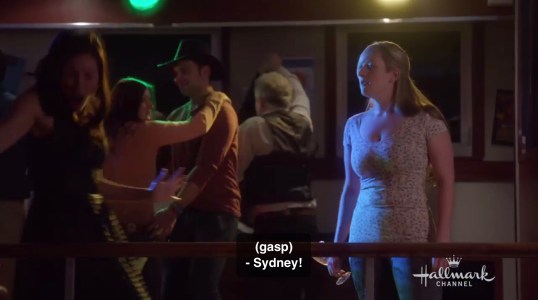
IMG_5826

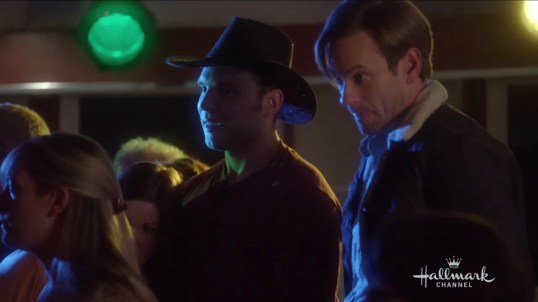
Sydney is surprised by this, stumbles back, and reaches out for something to stabilize her after she has been attacked by the this other woman. She of course ends up touching the statue which causes it to fall over. Julia appears to get up and try and save the statue from falling, but can’t move quickly enough from the table to do so. We don’t see Ben do anything here. The next shot we get of him shows him appearing to be on the dance floor.
IMG_5880

That means he appears to have done nothing to stop the statue from falling over even though he was only a few steps from it and was already standing. So of course this goes right where you think it does. The woman who threw her drink on Sydney is arrested, Sydney and Julia are questioned by the cops, and Ben who witnessed the whole thing explains what happened. Nope!
IMG_5881

IMG_4017

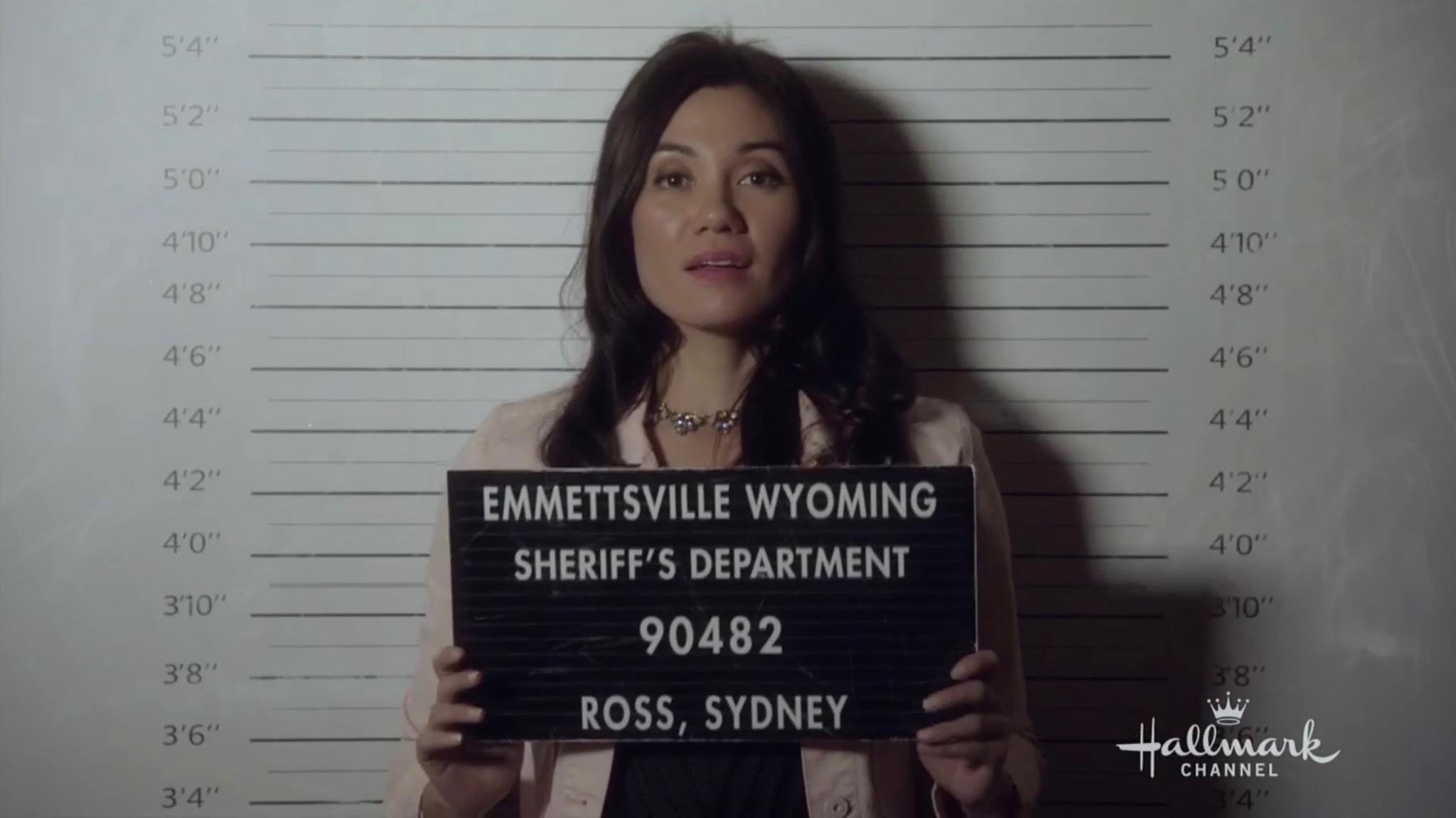
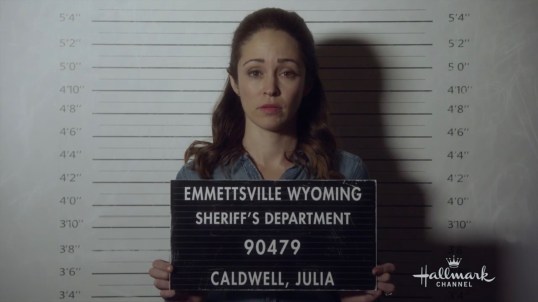
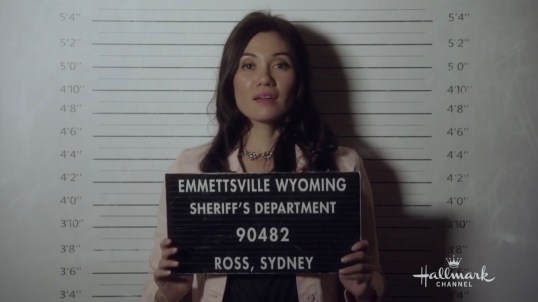
Sydney, who was attacked, is booked and has a mug shot taken of her. Julia, who was sitting at a table, stood up, and tried to stop the statue from falling is also booked and has a mug shot taken of her. Nothing happens to Ben and the girl who attacked Sydney. This all occurred in a room filled with witnesses. Most notably Ben, who saw the whole thing.
IMG_4021

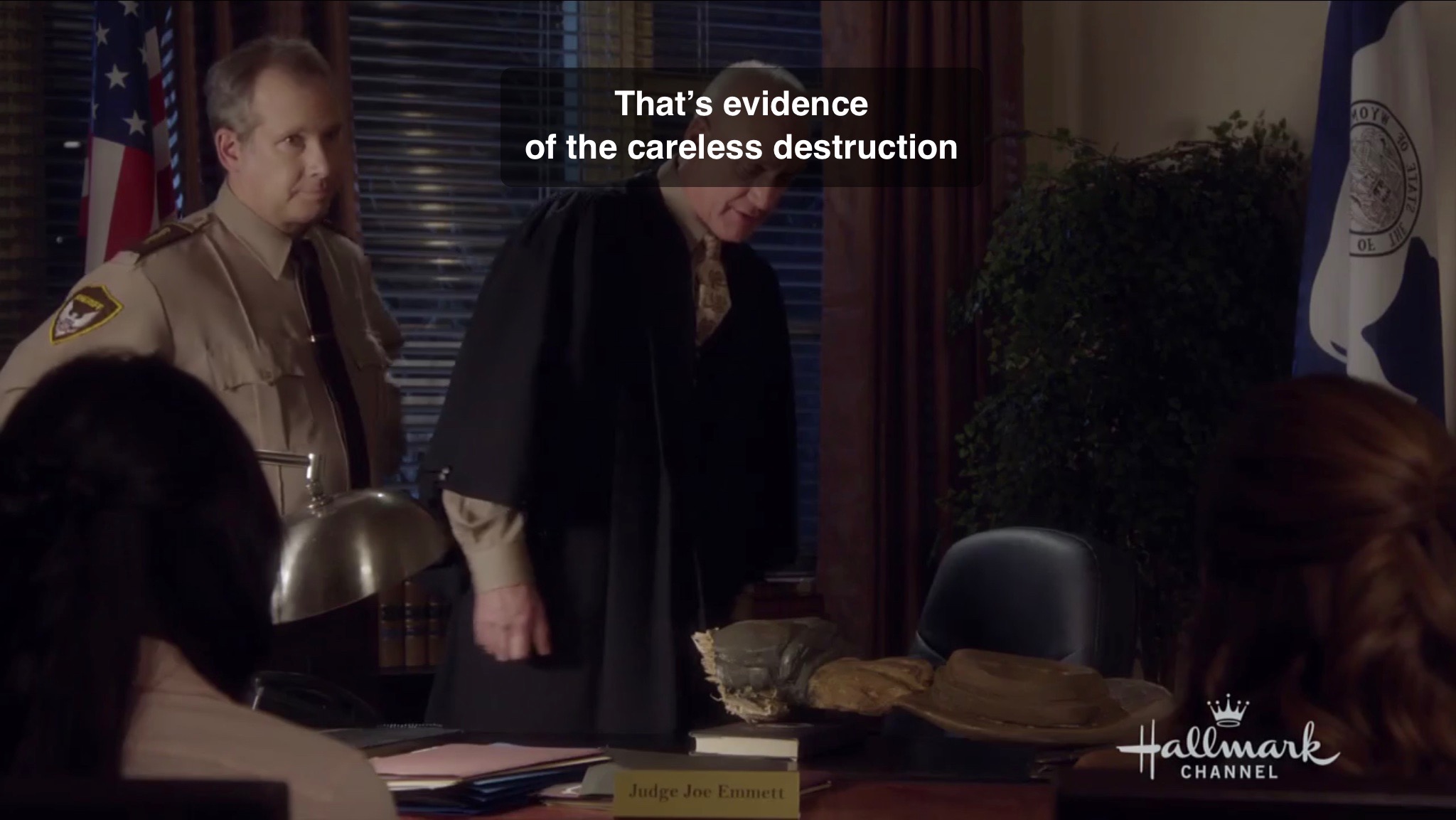
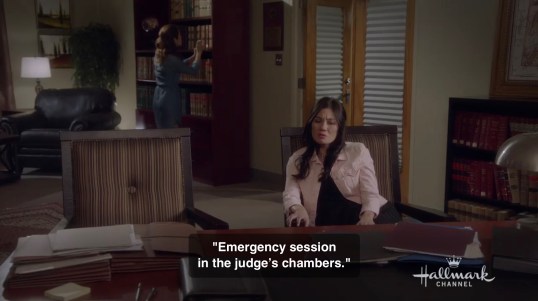
Now Julia and Sydney are dragged into the judge’s chamber for an “emergency session”. Note that Julia who is going to become a lawyer is looking at the law books on the shelf. She says, “It means they’re not sure they arrested us on the right charge and they want the judge to weigh in,” when Sydney says she doesn’t understand what an “emergency session” with the judge means. Guess what Julia is looking for on that shelf? She is looking for and finds the “Emmettsville Municipal Code”. That’s when the judge enters the room and immediately takes the book away from her telling her “this is not a library”. The judge, his deputy, and Ben follow in after him.
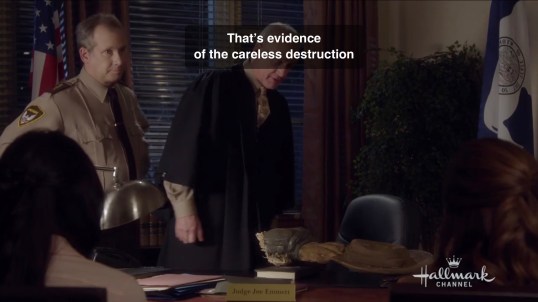
IMG_4031

The judge lays down the hand of the statue and tells them it’s “evidence of the careless destruction of a historical monument. And that’s a felony.” To that Sydney tells the judge it was “an accidental felony”. I would have mentioned that a drink was thrown at me, but the next thing we hear is the deputy tell her that witnesses saw Julia “rush at the statue and push it right over.” Not Sydney who reached out for something to stabilize herself, but Julia who got up and barely had a chance to move towards the statue.

Now we find out from the judge that the “statue was a monument to my great-grandfather, with an appraised value of $30,000.” When Julia asks to see the statute covering this situation because it might be being misinterpreted, she receives a response from the judge saying “are you saying I don’t know the laws of my own county?” She tries to speak, but is interrupted by the judge who tells her “you two are responsible for the willful destruction of this town’s most cherished possession” which they keep in a bar next to a dance floor. And note that he now blames both of them for this supposed felony even though the deputy just said they only have witnesses that said Julia rushed the statue and pushed it over. Ben still hasn’t said a word even though he saw the whole thing.

Now the judge says he’s not an unreasonable man. He threatens to send them to two years in prison. However, he’s willing to be so reasonable and in this room located in the middle of nowhere where they have been dragged to they are going to be offered a plea bargain. He says the charge would be “disorderly conduct”. Apparently, that would only be a misdemeanor and it would give them 30 days in jail. After being asked if this could be settled by a fine, we find out that the judge doesn’t like fines. “He doesn’t feel that people actually learn their lesson that way.”

Finally, Ben actually speaks up. He says why not community service instead of jail. He says he can “personally vouch for these two, that they meant your granddaddy’s statue no harm.” He is willing to “vouch” that they meant his “granddaddy’s statue no harm”, but he’s not going to speak up in their defense as the only witness to this supposed felony. That’s too much for Ben apparently.

The judge finds this reasonable. He says that would be fine with him if Ben kept them at his place. Where? The judge says, “put them in one of those worker’s cabins you got.” He seems to like the fact that it would save “the town the cost of putting them up.” Shockingly Ben responds that it sounds like the judge is trying to punish him, not them. So he considers having to spend any more time with these women as a punishment, but has no problem with them being sent to jail for two years for an accident he witnessed. What’s the judge’s response to this?
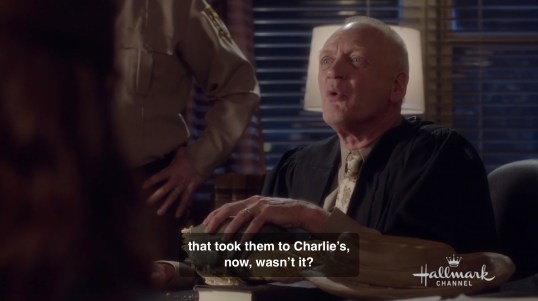
IMG_4080

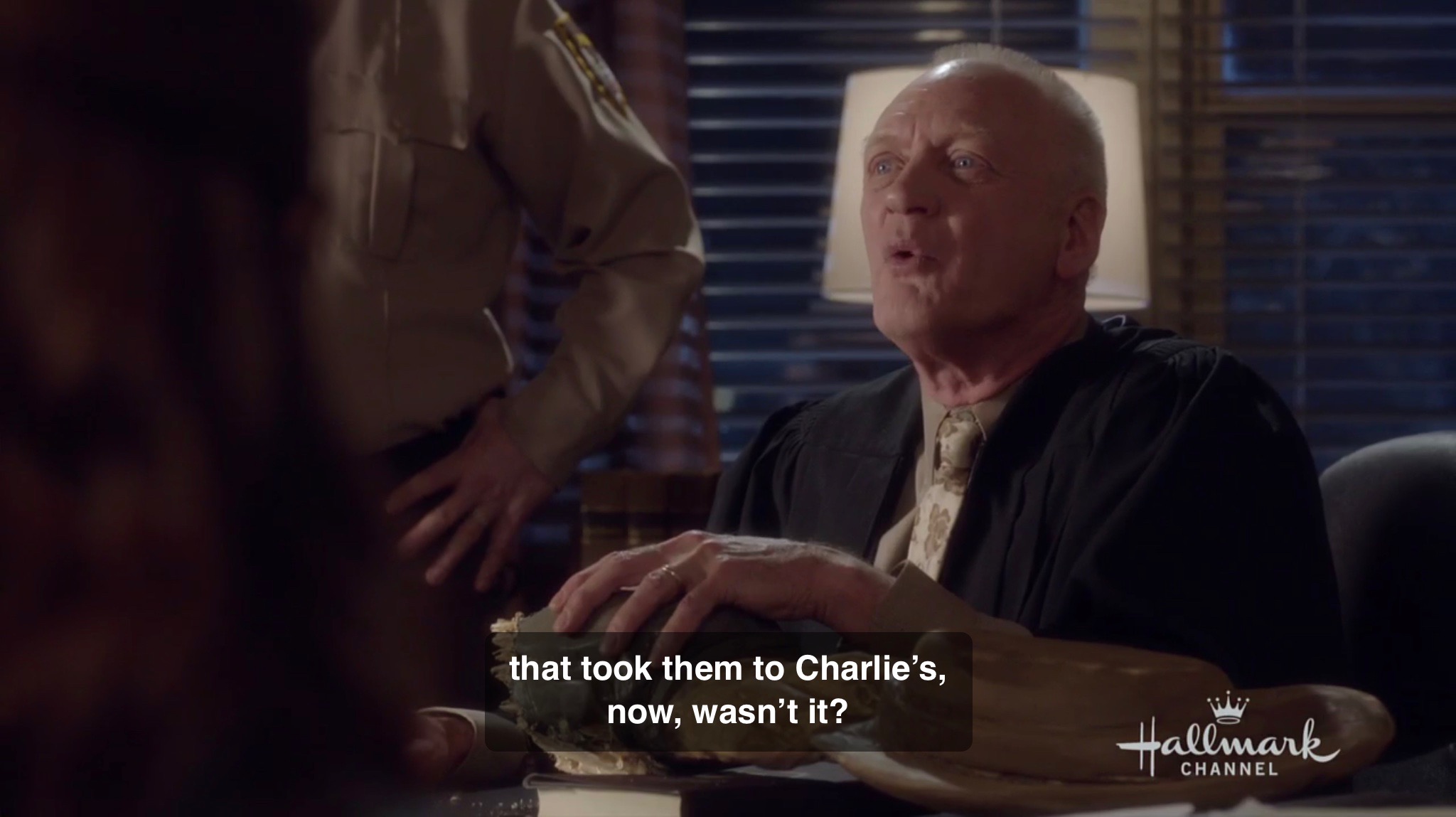
He condemns Ben for taking them Charlie’s, which by the way, isn’t even the name of the bar as is clearly seen in the shot of the town. As you can see in the screenshot above, the bar is called the Million Dollar Cowboy Bar actually located in Jackson, Wyoming. It even had a big sign saying WELCOME. Also, it wasn’t Ben who even suggested the idea. His mother told him to take them there. Now it’s time to lay into them a little more for being from Chicago.
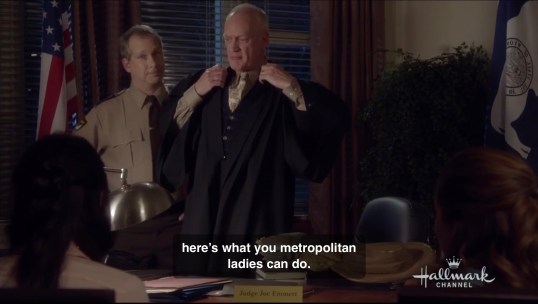
IMG_4083

He gives them a choice between jail or “community service”. So what’s Julia’s response?
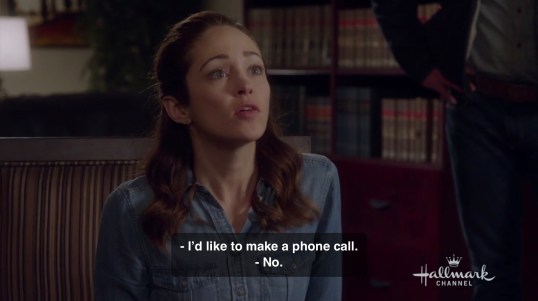
IMG_4092

She asks to make a phone call before being forced to be charged with a felony or take a plea bargain. He refuses her request. No opportunity to defend herself. No legal representation. No opportunity to call for legal representation. She just takes the plea bargain. Who knows how long they would actually be held in the county jail for a felony they didn’t commit.

So let’s sum this up. A woman and her friend get lost and a nice man helps them to get to town. The mother of this man tells him to take them to a bar. This bar has a statue valued at $30,000 sitting in the middle of a place that serves liquid that causes you to lose control of your mind and body. They also place it next to a dance floor. Then one of these woman twirls on the dance floor, doesn’t fling out far from her partner, but bumps a drink another woman is holding behind her. She offers to pay to replace this woman’s shirt. That woman responds by attacking her by throwing her drink at her. While shocked by the drink thrown on her, she reaches out, and touches this statue. As the statue begins to fall, this woman’s friend tries to prevent it from falling. These two woman, not the woman who caused the incident, are arrested and dragged before a judge. The judge threatens, insults, and intimidates them into either spending two years in jail or serving 30 days of labor with the suggestion they be held in “worker’s cabins”.

And that is only 21 minutes and 23 seconds into this film. Are you happy or want to sit through this Valentine’s Day romance film? I sure as hell wasn’t and didn’t want to. No wonder it appears the screenwriter didn’t want their name on this. The original title of the movie was Disorderly Conduct. I can only imagine the screenplay laid this out in a manner that makes sense, but after seeing how the filmmakers actually implemented it, they didn’t want anything to do with it.

I’ve taken up a lot of your time so let’s try and get through the rest of this fast.

The two ladies are then put up in the cabin and given a heater. Then the next morning comes and someone must have realized they really needed a way to explain away the previous scenes. Julia wakes up to a call on her cellphone. It’s her fiancee. He can’t believe she took a plea bargain on a “bogus charge”. He asks if she called her father who runs a legal firm. She says yes, but that he told her “that in a small town, the judge can basically do anything he likes.” Julia then says, “Technically, we did break the law, even though we didn’t do it on purpose, and we were lucky to get this offer.” Any follow up on that? Nope, just implications that maybe she took this judge’s offer because she didn’t want to marry him. Also, no I’m on my way honey from the father because you should have at least been allowed legal defense, you’re my daughter, and I should come there. None of that. The movie is now setup for the typical woman from the city discovers she prefers country life that Hallmark has done so many times over.

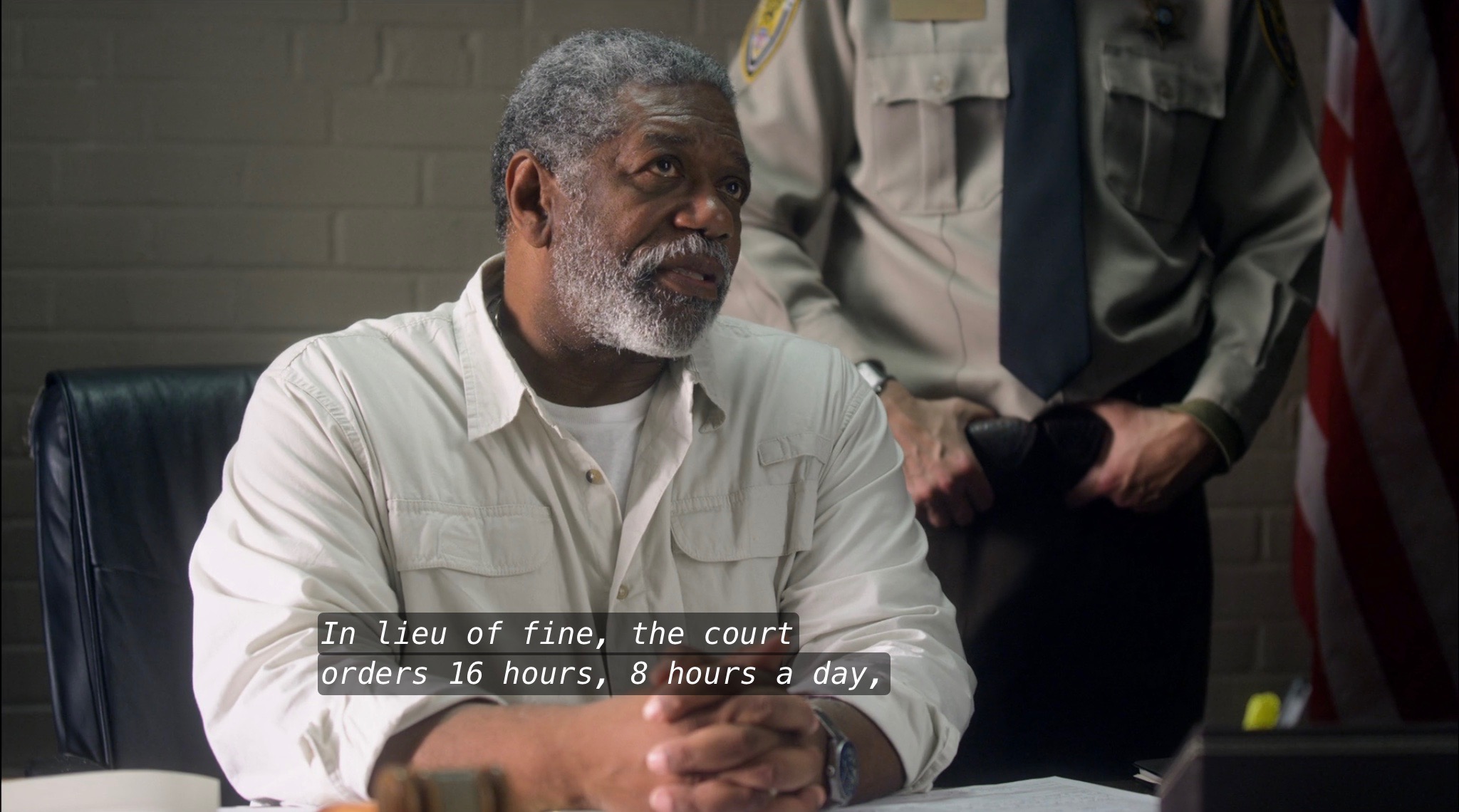
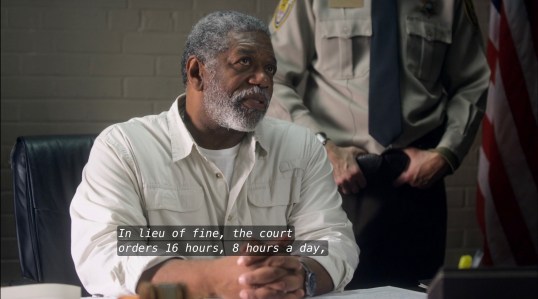
In Finding Normal (2013) they had the judge be smart, kind, reasonable, and offer her the option to pay a fine. Also, his charge is “16 hours, 8 hours a day, community service”.
IMG_5874

Finding Normal (2013, dir. Brian Herzlinger)

Now you get the normal stuff. The ladies learn the typical duties on a ranch. Some are fun like learning to ride horses. Some are not so fun, but they are the realities of living on a ranch. They also are able to help out in the community. Julia even overhears that Ben’s ranch isn’t doing so well and tries to help. Of course you know he’s stubborn about that, but she pushes. The mother gives Julia some backstory one how the ranch ended up in the financial predicament it’s in. Basically, the big corporations are to blame, development in the town, and one thing lead to another. The recession didn’t help either. Strangely, the mother tells her that’s why he won’t take her money to help out. No mention of this dude ranch he was obviously trying to put together to transform his place into a source of revenue.

During this stuff they make sure to show that Sydney is clumsy by having her mess up driving a tractor and dropping a window. Nope, she was attacked in that bar. This doesn’t change that fact.

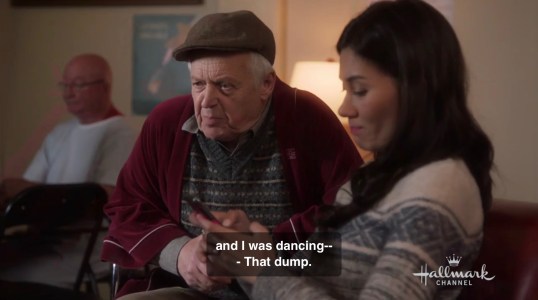
There’s a scene during this that I actually like. Sydney gets assigned to work with a stubborn old guy at a hospital. Well, not stubborn for long. Sydney is checking Twitter instead of talking to him. He says that the last girl “was so chatty, she got on my nerves but right now, I’m starting to miss her.” To her response that she is checking Twitter, he says he knows what Twitter is. He is even interested in what she is doing on there. But it gets better. He asks her exactly how she ended up having to do this for him. As she starts to explain that it was “just a disorderly accident” and that it was at Charlie’s bar he interrupts her and calls the place a dump.
IMG_4582

Yeah, this guy calls the place with this apparent town treasure “a dump”. It’s like the screenwriters came in after those earlier scenes and tried to rewrite the remainder of the film to try and make up for it. Or this is some of the original screenplay. Don’t believe me? After a brief conversation with the mother we cut to the judge.
IMG_4653 (1)

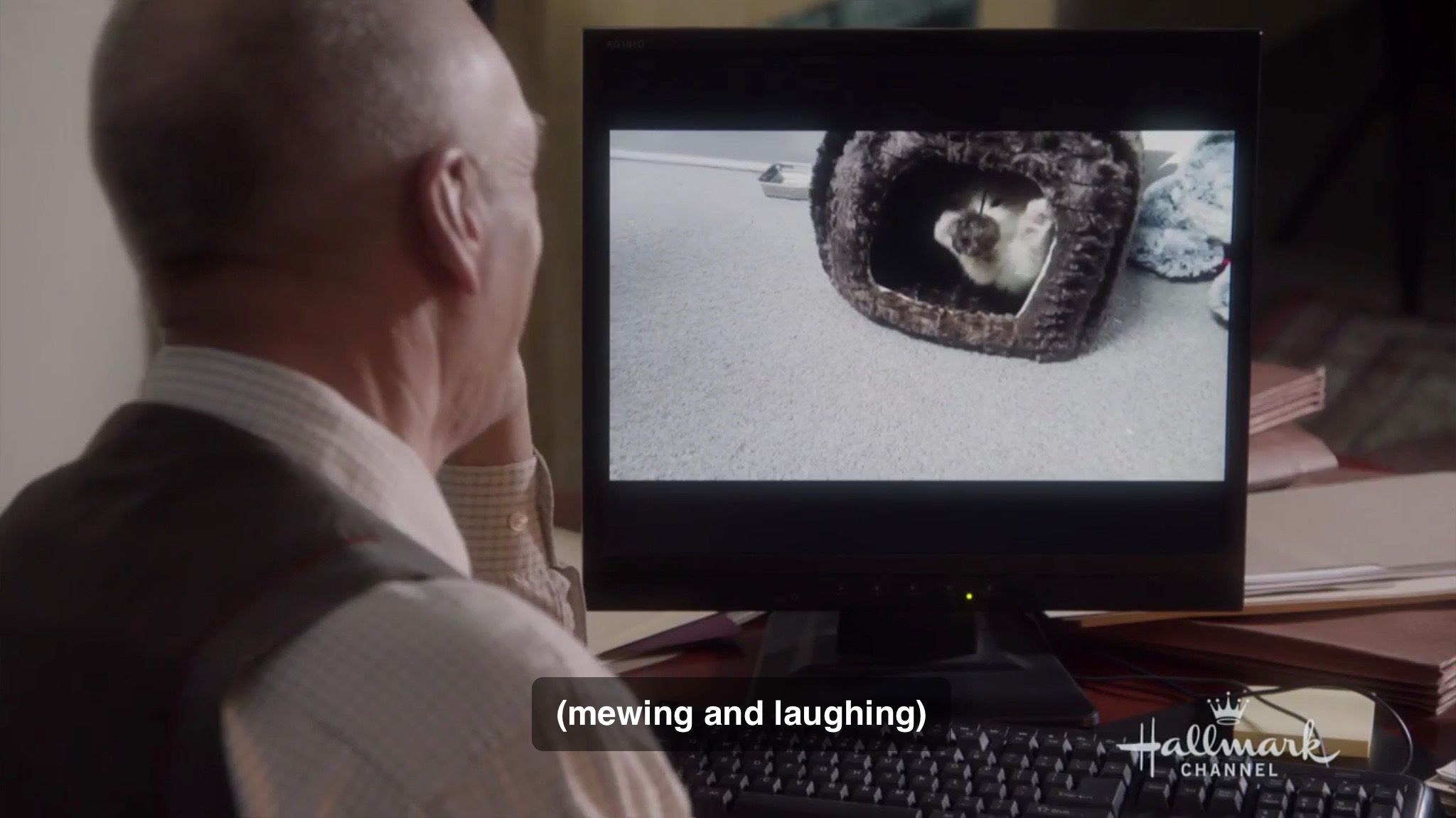
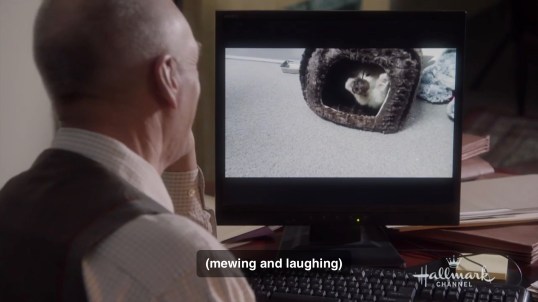
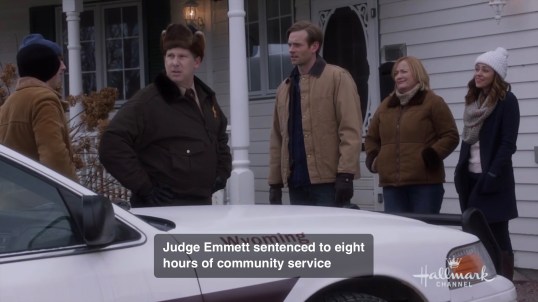
He’s watching cat videos. We even get the girls visiting him in a comical matter as if he is actually a lovable judge who really does have a kind heart. The girls come to him because they want to do something a little unusual to raise money for the hospital that is need. The ranch is going to host it. The judge even likes the idea. However, then we get two more sets of people who are sent by the judge to the ranch for community service.
IMG_4819

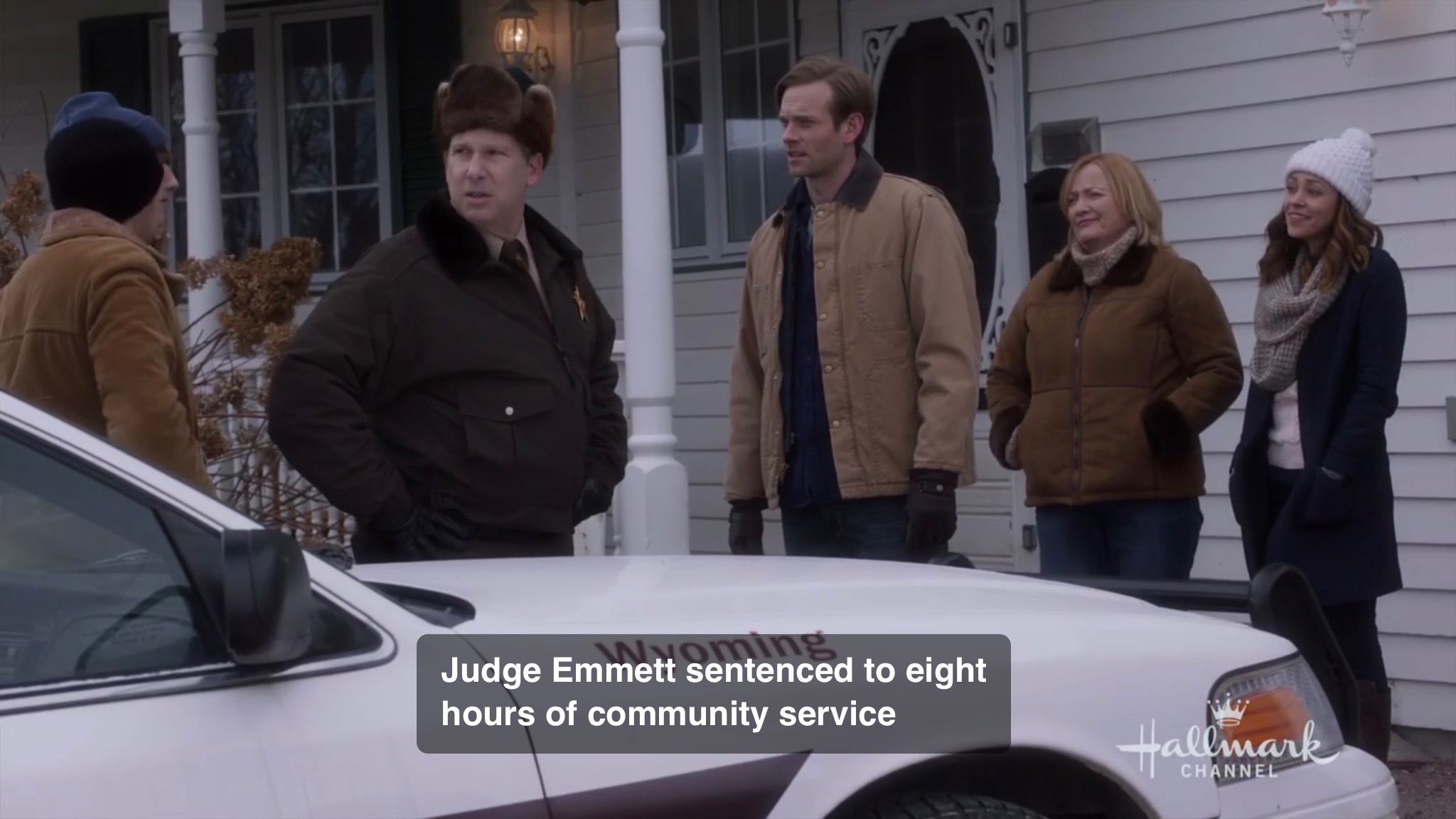
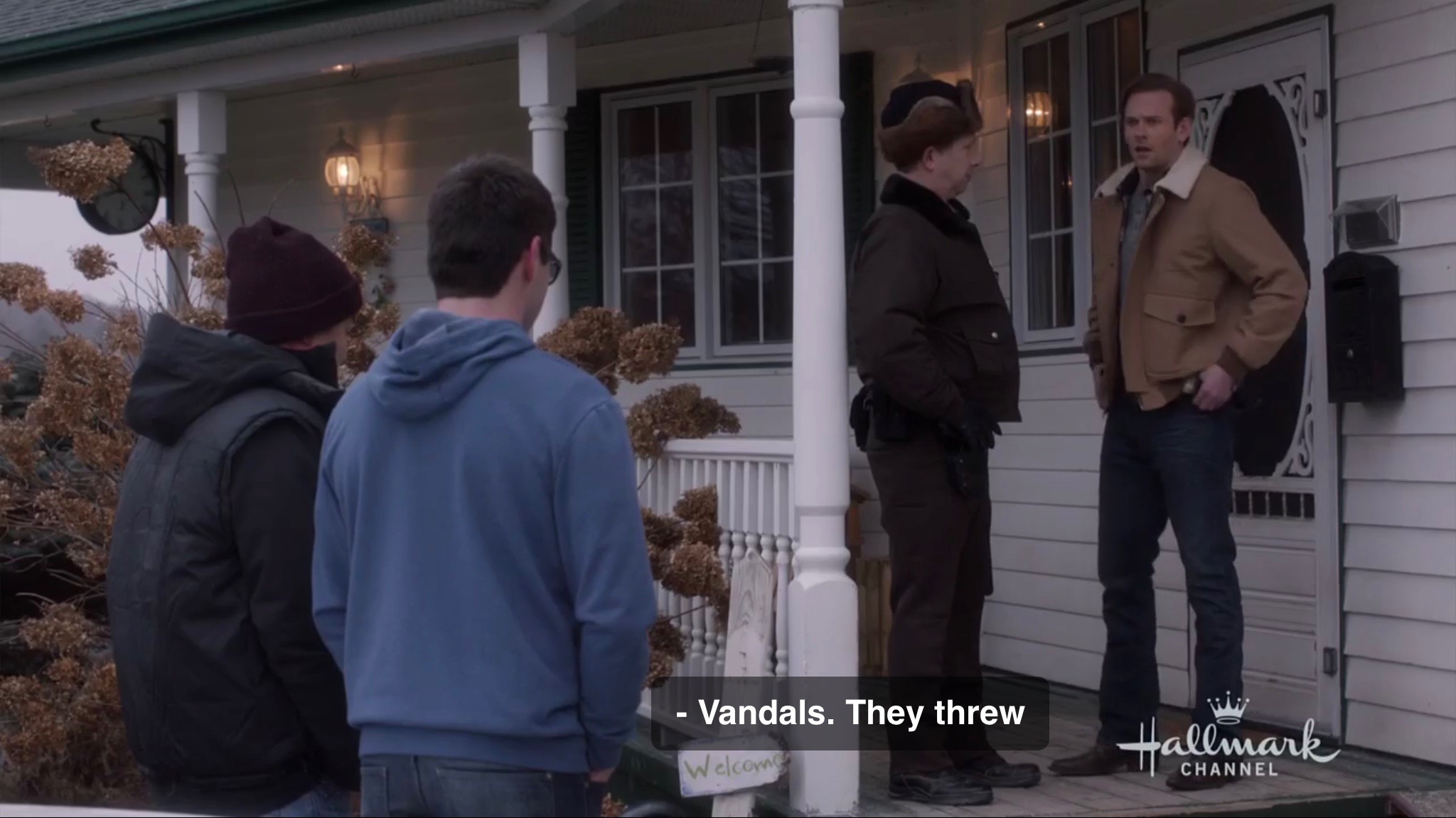
Umm…considering how Julia and Sydney wound up there it makes me wonder if these people’s “multiple parking tickets” are real. This happens one more time too.
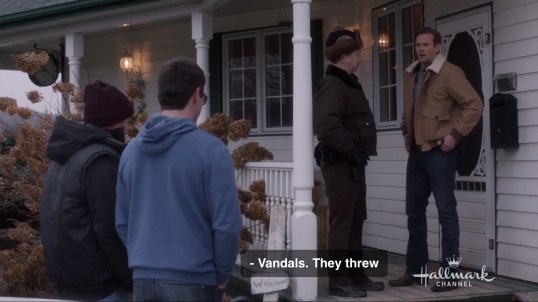
IMG_4890

I get a weird feeling that we are supposed to read these as volunteers that are sent there under the cover of doing community service cause the judge knows they need the help, but considering the beginning, I don’t know.

Now the film goes on auto-pilot. All you really need to know is that the fiancee shows up along with Julia’s family for this grand fundraiser. That’s when we get the scene to make the fiancee a villain. After starting out kind, then being a little nasty talking about Julia, he says “but if Julia develops a taste for the coddling the downtrodden, well, I’ll just have to put my foot down.” Sound familiar? There is a near identical scene in Unleashing Mr. Darcy. Except there it’s not to vilify Mr. Darcy, but simply to provide a last minute romantic speed bump. Unleashing Mr. Darcy was written by Teena Booth. I can’t help but wondering if she is Alana Smithee.

Now the film has Julia kick Gavin to the curb and go after Ben. She buys him in a cowboy auction, and they dance. What’s weird is how uncomfortable he is dancing with her. It’s probably nothing, but in addition to his behavior around the woman he knew from grade school at the bar, it seems a little odd. Regardless, they end up together.
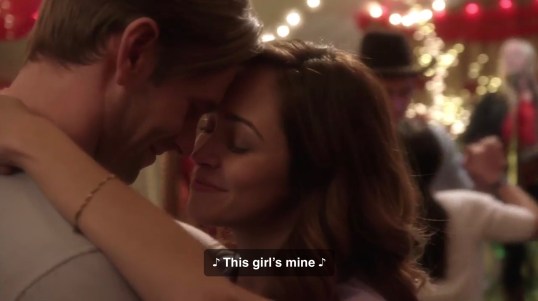
IMG_5800

So why the setup that I’m sorry, is offensive. It could have been fixed so easily too. That’s what angers me more than anything. I felt the same way about A Gift Of Miracles. The simplest thing would have been to have Julia just decide this town is an interesting place to take her vacation after accidentally ending up there. I know there are stupid people out there, but I don’t expect the movie to make me believe that two girls on vacation must be forced to spend time in the town or they would leave. The place where the bar is located is in Jackson, Wyoming. That’s a town surrounded by a bunch of large parks including Yellowstone National Park. If they wanted to keep as much of the script as possible, then start by having the girl who attacked get punished appropriately. If you carefully watch the scene at the bar when the incident occurs then you’ll notice they made sure to direct all the non-principle actors to be completely oblivious to what is going on till Julia has rushed forward to try and save the statue. It’s a little ridiculous, but it’s also a movie and I think most people would have let that slide if they were paying attention to notice that everyone else was just minding their own business. Have Ben go use the restroom and come out just afterwards so he isn’t shown as lying to the judge and his deputy. Have the judge suggest the community service in the first place. I wouldn’t like the judge so much for not offering or even demanding the money to repair the statue, but again, it’s a movie and I can let that slide. These would have all been little changes that wouldn’t have cost a dime to make. They wouldn’t even have had to have the lady who threw the drink appear in the movie again and thus potentially pay her more. Ugh! It’s not as bad as Your Love Never Fails/A Valentine’s Date. That one is disturbing. I still do not recommend this movie.

If you are going to watch this anyways, then I highly recommend recording it or in some way not coming till after 22 minutes of the movie. The rest really isn’t bad at all.

I said it already, but I’ll say it again. The guy at the hospital is pretty awesome. He really is. I loved him. The character’s name is George and he is played by actor Eric Peterson. Kudos, Eric! The world needs more small, but excellent character actors like you.

For those who are looking for things like the songs in this or any Hallmark movie: I try to pay attention to the search terms on my reviews and also always try to respond to comments. I have noticed people looking for the name of songs in Hallmark movies and winding up on my reviews. Luckily for the person who did so to find out the song at the end of Dater’s Handbook, it was an REO Speedwagon song and was prominently featured in the movie and my review. Another time I was asked kindly in the comments section if I knew who did a particular song in a Hallmark Christmas movie. I bent over backwards trying to find the answer for them. I did and responded to them. I didn’t receive a thank you, but was suddenly greeted by a down vote on my review the very next day instead. Regardless of whether it was the same person or a coincidence, I’m going to give you a little lesson on how to figure this stuff out for yourself. Here’s what I would do:

1. Check the movie’s credits. This doesn’t always work, but some Hallmark movies do credit the songs that are in the film.
2. Get to the relevant scene, turn up the volume, and use an app such as SoundHound. That’s an application for phones that is amazingly powerful at listening to small snippets of a song and managing to find out exactly who the song is by and on what album you can find it. That’s how I was finally able to answer the person who had asked for my help.
3. Turn on captioning so if the song has lyrics then you have something to Google. Make sure you get the words right and place them within quotes. Sometimes adding the word “lyrics” outside the actual lyrics can help. Again, surprisingly effective. It helps if the song is well known, but it’s Google. They have reached into every dark corner of the Internet.
4. This one is a little bit of a long shot, but not too much. Try contacting someone involved in the movie. Hallmark has an official Twitter account and I’m sure has a presence on Facebook. Shoot the production company a message if you can find them. Sometimes you can get really lucky and there is actually an official Twitter account for the movie in question. I know The Christmas Note and Love On The Sidelines have/had them. Also, you can find people who worked on the film on social media. It can’t hurt to ask. People can be remarkably responsive and kind if you are to them.

I probably should create a whole post to lay out these instructions, but I have gone ahead and included them here as well.

I know that the majority of people appreciate me not acting like a PR department, but trying to give you my honest opinion about Hallmark films I see. However, my disabilities make it very hard for me to take things such as totally anonymous down votes when I can clearly see exactly what in my review triggered it. I have disabled my ability to see those so I can continue to write these reviews. I hope you can understand.

If you’ve reached here, then I thank you for putting up with me.

Lisa Reviews An Oscar Nominee: Imitation of Life (dir by John M. Stahl)


Louise Beavers and Fredi Washington in Imitation Of Life

Louise Beavers and Fredi Washington in Imitation Of Life

The 1934 film Imitation of Life opens with Delilah Johnson (Louise Beavers) standing on the back porch of a house owned by widowed mother Bea Pullman (Claudette Colbert).  Delilah says that she’s come for the housekeeping position.  Bea tells her that there is no housekeeping position and quickly figures out that Delilah has the wrong address.  As Delilah wonders how she’s going to get to the other side of town in time to interview for the job, Bea hears her toddler daughter falling into the bathtub upstairs.  After Bea rescues her daughter, she agrees to hire Delilah as a housekeeper.

The rest of the film tells the story of their friendship.  It turns out that, because she knows an old family recipe, Delilah can make the world’s greatest pancakes.  Bea decides to go into business, selling Delilah’s pancakes and using Delilah as the product’s mascot.  Soon Delilah’s smiling face is on billboards and she’s known as Aunt Delilah.  When it comes time to incorporate the business, Bea and her partner, Elmer (Ned Sparks), offer Delilah 20% of the profits.  They tell Delilah that they’re all going to be rich but Delilah protests that she doesn’t want to be rich.  She just wants to take care of Bea and help to raise Bea’s daughter.

Delilah, incidentally, is African-American while Bea is white.

Despite the fact that Imitation of Life is considered to be an important landmark as far as Hollywood’s depiction of race is concerned, I have to admit that I was really uncomfortable with that scene.  First off, considering that Delilah was the one who came up with recipe and her face was being used to sell it, it was hard not to feel that she deserved a lot more than just 20%.  Beyond that, her refusal felt like it was largely included to let white audiences off the hook.  “Yes,” the film says at this point, “Delilah may be a servant but that’s the way she wants it!”

It was a definite false note in a film that, up to that point and particularly when compared to other movies released in the 30s, felt almost progressive in its depiction of American race relations.  Up until that scene, Bea and Delilah had been portrayed as friends and equals but, when Delilah refused that money, it felt like the film had lost the courage of its convictions.

However, there’s a shot that occurs just a few scenes afterwards.  Several years have passed.  Bea is rich.  Delilah is still her housekeeper but now the house has gotten much larger.  After having a conversation about Delilah’s daughter, Bea and Delilah walk over to a staircase and say goodnight.  Bea walks upstairs to her luxurious bedroom while, at the same time, Delilah walks downstairs to her much smaller apartment.  It’s a striking image of these two women heading different directions on the same staircase.  But it also visualizes what we all know.  For all of Delilah’s hard work, Bea is the one who is sleeping on the top floor.  It’s a scene that says that, even if it couldn’t openly acknowledge it, the film understands that Delilah deserves more than she’s been given.  It’s also a scene that reminds us that even someone as well-intentioned and kind-hearted as Bea cannot really hope understand what life is truly like for Delilah.

The film itself tells two stories, one of which we care about and one of which we don’t.  The story we don’t care about deals with Bea and her spoiled child, Jessie (Rochelle Hudson).  Jessie develops a crush on her mom’s boyfriend, Steve (Warren William).  It’s really not that interesting.

The other story is the reason why Imitation of Life is a historically important film.  Delilah’s daughter, Peola (Fredi Washington), is of mixed-race ancestry and is so light-skinned that she can pass for white.  Throughout the film, Peola desperately denies being black and, at one point, stares at herself in a mirror and demands to know why she can’t be white.  When Peola goes to school, she tells her classmates she is white and is mortified when Delilah shows up at her classroom.  When Peola gets older, she attends an all-black college in the South but, eventually, she runs away.

When Delilah tracks her daughter down, Peola is working as a cashier in a restaurant.  When Delilah confronts her, she is almost immediately confronted by the restaurant’s owner, who angrily tells her that the restaurant is a “whites only” establishment.  Peola pretends not to know her mother.

Beyond the confrontation between Peola and Delilah, that scene in the restaurant is important for another reason.  It’s the only time that the film provides any direct evidence as to why Peola wants to pass for white.  Oh, don’t get me wrong.  We all know why Peola thinks that society will treat her differently if it believes that she’s white.  (And we also know that she’s right.)  But this scene is the first time that the film itself acknowledges the fact that, in America, a white girl is going to have more opportunities than a black girl.  Up until that point, white audiences in 1934 would have been able to dismiss Peola as just being selfish or unappreciative but, with this scene, the film reminds viewers that Peola has every reason to believe that life would be easier for her as a white girl than as an African-American.  It’s a scene that would hopefully make audiences consider that maybe they should be angrier with a society that allows a restaurant to serve only whites than they are with Peola.  It’s a scene that says to the audience, “Who are you to sit there and judge Peola when you probably wouldn’t even allow Delilah to enter the theater and watch the movie with you?”

Imitation of Life was nominated for best picture of the year and, though it lost to It Happened One Night,  Imitation of Life is still historically important as the first best picture nominee to attempt to deal with racism in America.  (Despite a strong pre-nomination campaign, Louise Beavers failed to receive a nomination.  It would be another 5 years before Hattie McDaniel would be the first African-American nominee and winner for her role as Mammy in Gone With The Wind.  Interestingly enough, McDaniel got the role after Beavers turned it down.)

Following the box office success of Imitation of Life, there were several films made about “passing.”  The majority of them starred white actresses as light-skinned African-American characters.  Imitation of Life was unique in that Fredi Washington, who played Peola, actually was African-American.  As will be obvious to anyone who watches Imitation of Life, Fredi Washington had both the talent and the beauty to be a major star.  However, she was considered to be too sophisticated to play a maid or to take on any of the comedy relief roles that were usually given to African-American performers.  (And, as an African-American, no major studio would cast her in a lead or romantic role.)  As such, her film career ended just three years after Imitation of Life and she spent the next 50 years as a stage performer and a civil rights activist.  (For an interesting look at the history of African-Americans in the film industry, I would suggest checking out Donald Bogle’s Bright Boulevards, Bold Dreams: The Story of Black Hollywood.)  

Like Peola, Washington herself could have passed for white.  She was often asked if she was ever tempted to do so.  I’m going to end this review with the answer that she gave to a reporter from The Chicago Defender:

“I have never tried to pass for white and never had any desire, I am proud of my race. In ‘Imitation of Life’, I was showing how a girl might feel under the circumstances but I am not showing how I felt.  I am an American citizen and by God, we all have inalienable rights and wherever those rights are tampered with, there is nothing left to do but fight…and I fight. How many people do you think there are in this country who do not have mixed blood, there’s very few if any, what makes us who we are, are our culture and experience. No matter how white I look, on the inside I feel black. There are many whites who are mixed blood, but still go by white, why such a big deal if I go as Negro, because people can’t believe that I am proud to be a Negro and not white. To prove I don’t buy white superiority I chose to be a Negro.”

Lisa Reviews An Oscar Nominee: She Done Him Wrong (dir by Lowell Sherman)


She-done-him-wrong

When watching the 1933 film She Done Him Wrong, it helps to know a little something about American history.

It helps to know that the film was made at the tail end of the failed progressive experiment known as prohibition, an attempt to ban liquor in the U.S. which only served to make people idolize criminals and feel nostalgic for the time when you could just safely hang out in a saloon and get drunk with bunch of shady characters.

It helps to know that this film was made at a time when America was struggling through the Great Depression and, more than ever, movies were seen as an escape from reality.  The Depression also created a situation where, much like today, most Americans felt as if they were on the outside of the good life and, as a result, the most successful films of the time deal with outsiders getting something over on the smug and judgmental insiders.

It also helps to know that She Done Him Wrong was one of the last of the pre-Code films.  Though, by modern standards, the film may seem outwardly tame, the innuendo and subtext is anything but.  In fact, She Done Him Wrong was considered to be so racy that some people were actually scandalized when it became the biggest box office success of 1933.  (These were largely the same people who, 13 years before, celebrated the passage of prohibition.)  The infamous production code was largely instituted to make sure that a film like She Done Him Wrong could never be given another chance to corrupt filmgoers.

What exactly made She Done Him Wrong so controversial?

Well, it took place in a saloon in 1890s.  The saloon is owned by Gus (Noah Beery), who uses it as a front for prostitution and counterfeiting.  This is a film that features a lot of people drinking a lot of alcohol and it’s also a film that goes so far as to suggest that having a drink or two is not necessarily the worst thing in the world.  Captain Cummings (Cary Grant) runs a city mission that has opened up next to the bar and the film devotes a lot of time to poking fun at Cummings’s upright morality.  (Of course, Cummings has a secret of his own, one which suggests that his crusading attitude is just a convenient disguise.)  Though it would be repealed by the end of the year, Prohibition was still the law of the land when She Done Him Wrong was released and it’s fun to see how much the film has at the law’s expense.  That’s the type of fun that would basically be banned by the Production Code.

The Production Code would also require that all criminals be punished for their crimes by the end of a film.  In She Done Him Wrong, singer Lady Lou (Mae West) stabs to death the viscous Russian Rita (Rafaela Ottiano) and basically gets away with it.  It’s true that Lou was acting in self-defense but what makes She Done Him Wrong unique (for its time) is that Lou shows no remorse and that the killing is handled rather flippantly.  When the police, who have been searching the saloon for another criminal, burst into the room after Rita has been stabbed, Lou fools them by placing Rita’s corpse in a chair and combing her hair.  (“Haven’t you ever seen anyone comb someone’s hair before?”)  After the police leave, Lou has her bodyguard dispose of the body and Rita is never mentioned again.  Again, this is something that would never be allowed happen under the Production Code.

And then there’s the naked painting of Lou that hangs in the saloon.  Whenever it’s shown a screen, a man in a hat happens to be standing in just the right position to block the viewer from seeing the entire portrait.  Again, this would never have been allowed to happen under the Production Code.

And perhaps the biggest indication that this is a Pre-Code film is Mae West herself.  Reportedly, She Done Him Wrong was an extremely toned down version of West’s stage act but what was heard on-screen would certainly be enough to throw the guardians of decent society into a panic.  Nearly every line that she utters in this film is a double entendre but it’s not only what Mae West says.  It’s the way that she says it.  West may not have been a great actress but she had enough attitude that she didn’t need to be.  With every line, with every glance, with every movement, Mae West announces that she not only has sex but she enjoys it too.  In the Pre-Code days, that was unusual.  Once the Production Code went into effect, such a portrayal would be impossible.

As for the film itself — well, it’s pretty much just an excuse for Mae to be Mae.  There’s a plot, of course.  Lady Lou has many suitors and they all converge on the saloon at the same time.  However, Lou’s got her eye on the upstanding Captain Cummings.  (He’s a man in uniform, after all.)  It’s not a great film by any stretch of the imagination but, if you’re into film history or if you’re curious to see how American social mores have changed (and occasionally, not changed) over the years, She Done Him Wrong is a must see.
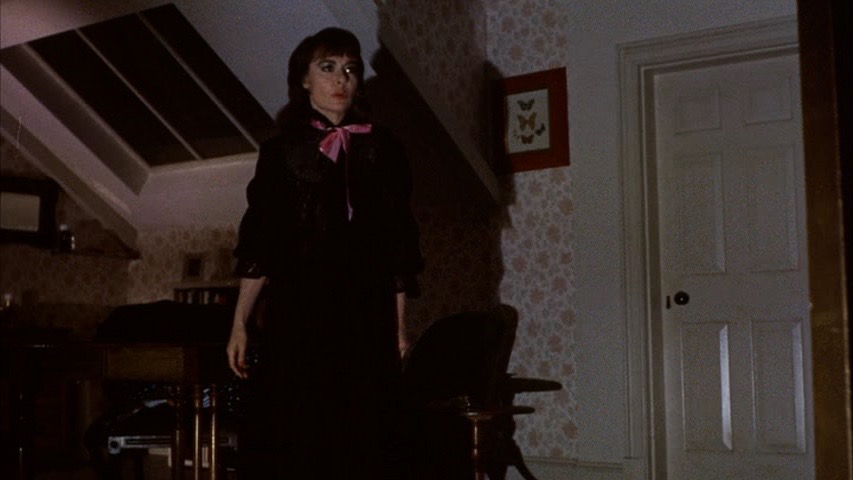
She Done Him Wrong is only 66 minutes long and it’s the shortest film to ever receive an Oscar nomination for best picture.  It received no other nominations and lost to Cavalcade.
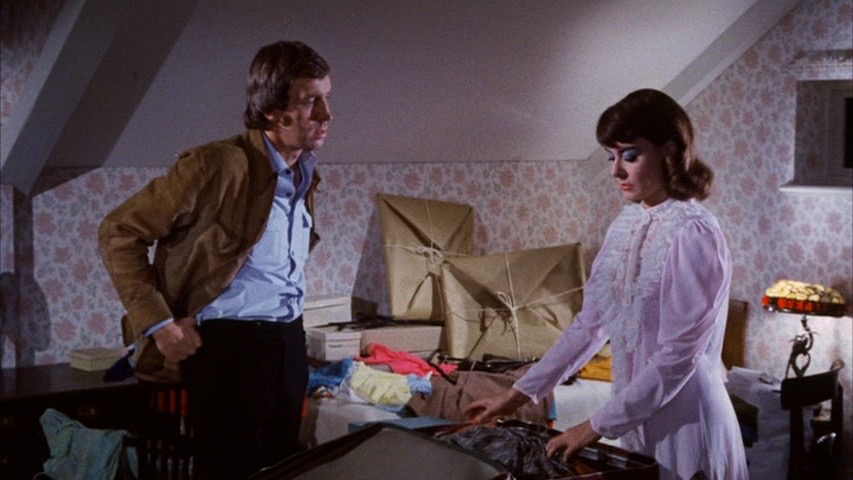
Lisa Reviews An Oscar Nominee: A Farewell to Arms (dir by Frank Borzage)


220px-Poster_-_A_Farewell_to_Arms_(1932)_01

Reportedly, Ernest Hemingway hated the 1932 film adaptation of his great novel, A Farewell To Arms.  The novel, of course, tells the story of ambulance driver Frederic Henry (played in the film by Gary Cooper), his service in World War I, and his doomed love affair with an English nurse named Catherine (played by the very American Helen Hayes).  The novel was acclaimed for being tough and unsentimental.  The film is the exact opposite, revealing itself to be more typical of the work of director Frank Borzage than Ernest Hemingway.

How romantic was Borzage’s adaptation of A Farewell to Arms?  It was so romantic that it even changed the novel’s famous ending.  The novel ended with Catherine dying and Frederic Henry walking away, alone and in the rain.  The film, however, ended with Catherine miraculously recovering.  Never mind, of course, that having Catherine survive pretty much defeated the entire purpose of the story.  What was important was to give American audiences a happy ending!

However, European audiences got a more downbeat ending.  In the European version, Catherine does die.  After she dies, Frederic picks up her body and looks up into heaven, which is certainly far more dramatic (and, in its way, sentimentally spiritual) than anything to be found in Hemingway’s novel.  If, like me, you see A Farewell To Arms on TCM, you’ll see the European ending.

So, yes, I can understand why Hemingway would have hated this film.  But I have to admit that I rather enjoyed it.  The film adaptation makes for terrible Hemingway but it’s great Borzage.  Borzage specialized in making grand, lyrical, and sweeping romantic melodramas and that’s what his version of A Farewell To Arms truly is.  Helen Hayes may not be convincingly English and Gary Cooper may be a bit overly earnest for a Hemingway hero but they both look good together and they have great chemistry.  (Plus, Adolphe Menjou gives a good supporting performance as Frederic’s best friend.)  As a director, Borzage keeps the story moving at a steady pace and plays up the romance in every single scene.  There’s a great sequence that’s filmed entirely from the wounded Frederic’s point-of-view as he’s brought into a hospital and looked over by a series of officious nurses.  We see everything through Frederic’s eyes until Catherine finally enters the room and kisses him.  Only then do we see Frederic and Catherine together, leaving us with no doubt that these two belong together.  A Farewell To Arms may not be a great literary adaptation but it is a great cinematic romance.

A Farewell To Arms was nominated for best picture but it won to a largely forgotten film called Cavalcade.