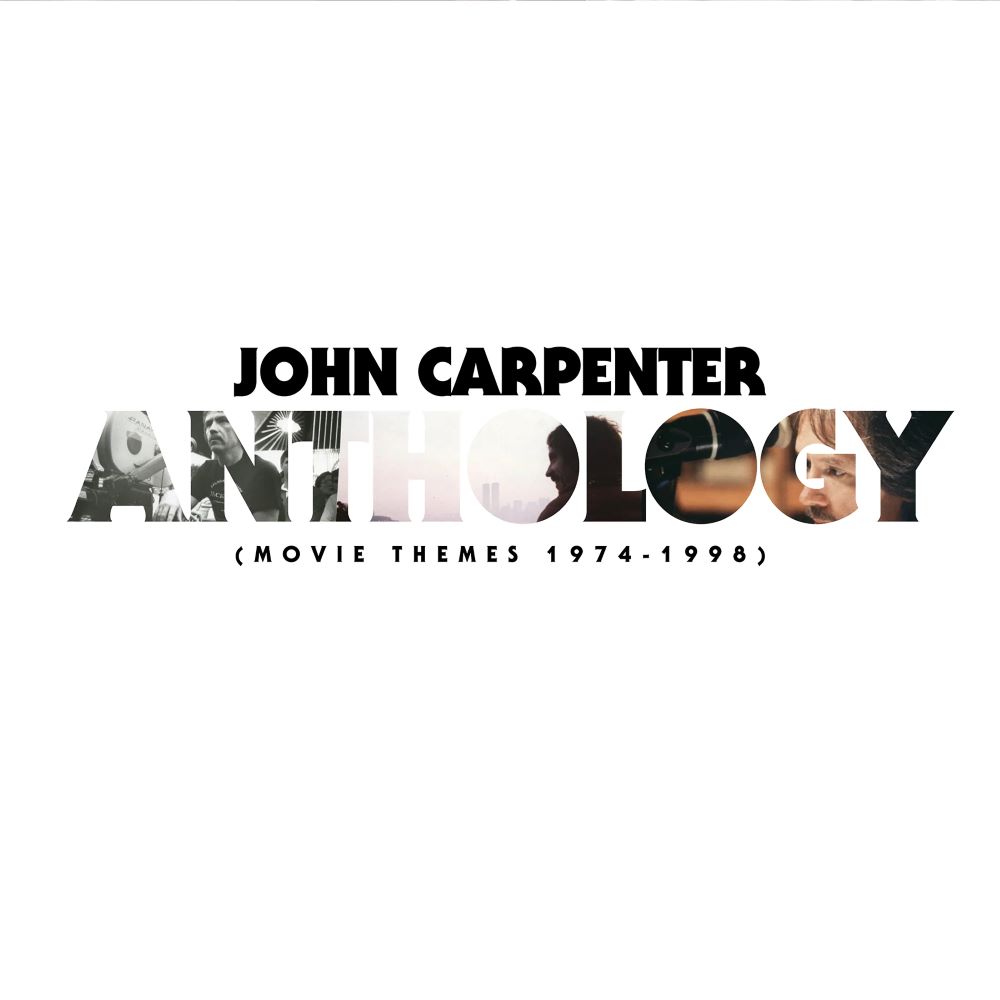
Anthology: Movie Themes 1974-1998 (by John Carpenter) Review


John Carpenter’s Anthology: Movie Themes 1974-1998 is an absolute gem of a compilation, breathing new life into 13 of his most unforgettable film themes with a killer mix of synth menace and live-band muscle that feels both nostalgic and freshly electrifying. Released in 2017 on the indie powerhouse Sacred Bones Records, this project pulls straight from Carpenter’s golden era of directing, spanning the lo-fi space oddities of Dark Star in 1974 all the way to the blood-soaked Western vibes of Vampires in 1998. Here, the master himself teams up with his son Cody Carpenter handling keyboards and his godson Daniel Davies ripping on guitar, delivering rerecorded versions that aren’t just facsimiles of the originals but revitalized beasts with modern production muscle. Clocking in at a tight 42 minutes, the album strikes that sweet spot between crystalline clarity and the warm, gritty analog fuzz of vintage synths, making it an essential spin for horror fans, synthwave enthusiasts, or anyone craving pure cinematic chills without firing up the projector. It’s the kind of record that turns your living room into a foggy, neon-lit nightmare factory, proving Carpenter’s scores were never mere background noise—they’re standalone monsters.

Right out of the gate, the album spotlights three absolute titans as its major standouts: the themes from The ThingHalloween, and Escape from New York. These aren’t just tracks; they’re the sonic DNA of horror and sci-fi tension, retooled here to hit even harder with the benefit of hindsight and better gear. Take the Halloween theme—it’s the undisputed king of the collection, that iconic, haunting piano riff slicing through stabbing synth accents and a relentless, mechanical beat that creates this perfect off-kilter unease. It mirrors Michael Myers’ unstoppable, shambling lurch so viscerally that you can practically hear the Shape breathing down your neck; the simplicity is its genius—repetitive enough to burrow into your skull like a parasite, yet layered just right with those eerie high-end whistles and a pulse that never lets up. In this rerecord, the piano feels more intimate and ominous, the synths sharper, turning what was already a cultural earworm into something that demands volume cranked to 11.

Then there’s Escape from New York, which cranks everything up to gritty, dystopian overdrive with its crunchy guitar riff chewing through swelling synth waves and pounding, no-nonsense drums. It evokes Snake Plissken’s lone-wolf crawl through a prison-island Manhattan like a bluesy battle cry—mid-tempo swagger that’s tailor-made for high-stakes heists, shadowy escapes, and that pure ’80s anti-hero cool. Fans often mix it up with his Big Trouble in Little China groove because of the shared tough-guy energy, but here the rerecord leans harder into the guitar’s snarl and the synths’ ominous undercurrent, making it feel tougher, meaner, and ready for a modern apocalypse playlist. And don’t sleep on The Thing—it grabs Ennio Morricone’s frosty original cue and mutates it into peak Carpenter dread: deep, throbbing synth pulses underpin eerie, isolated stabs and desolate windswept effects that build a suffocating frozen isolation. This one’s all about the paranoia of shape-shifting aliens in an Antarctic hellscape—slow-burn horror that creeps under your skin, rewarding patient listeners with layers of tension that unfold over multiple spins. Critics might tuck it behind the flashier hits, but its subtlety makes it a powerhouse, especially in this version where the low-end rumble feels like cracking ice underfoot.

While those three rightfully dominate every conversation about the album (and they should, as they’re the heart-pounding peaks that define Carpenter’s sound), two deeply underrated gems absolutely deserve way more shine: the Christine theme and “Santiago (Vampires).” Christine sneaks up on you, opening with these foggy, ambient synth washes that evoke a quiet garage at midnight before exploding into full-on rock fury—fuzzy guitars screech, driving rhythms kick in, and it all nails the possessed Plymouth Fury’s vengeful, supernatural roar. It’s often overlooked amid the bigger icons, but this rerecord injects fresh menace, highlighting its dynamic arc from subtle creep to all-out chaos; imagine the car’s headlights flickering to life as the music revs up—pure possessed-machine terror that lingers like burnt rubber. “Santiago (Vampires)” is the other hidden firecracker, completely ditching the synth-heavy storm for sparse acoustic strums and reverb-drenched electric guitar in a sun-baked, dusty groove that screams Southwestern vampire hunt. It’s a total mood shifter—breezy yet tense, like a standoff in a ghost town at high noon—and criminally underappreciated next to the heavier hitters; the modal twang and open spaces give it a unique flavor that breaks up the album’s darker pulse beautifully, begging for more road-trip spins.

The rest of the tracklist does a stellar job setting up and framing these peaks without ever overshadowing them. “Assault on Precinct 13” barrels in early with its oppressive synth riff and militaristic pounding, hammering home that raw siege-mentality dread—still a total banger, but it takes a slight backseat to The Thing‘s more nuanced chill. “In the Mouth of Madness” dives from aggressive guitar riffs into vast ambient drifts, perfectly suiting the film’s reality-warping madness. “The Fog” floats delicate piano over misty, reverb-soaked swells that build a supernatural haze, like fog horns calling from the deep. “Prince of Darkness” broods heavy with slow, echoing riffs and a sense of gathering evil, feeding right into the album’s cohesive horror heartbeat. “Porkchop Express (Big Trouble in Little China)” grooves with that infectious trucker-rock energy, echoing Escape‘s swagger but with brighter, adventure-ready lifts for Kurt Russell’s wild ride. “They Live” layers in bluesy harmonica and slide guitar for a laconic, consumerist snarl, while “Starman” blooms into warm, romantic synth-orchestral bliss—think soaring melodies and rolling timpani for heartfelt ’80s alien love. The ultra-brief “Dark Star” blasts a proto-synth drone in under 90 seconds, more historical sketch than full banger, but it nods to Carpenter’s early experiments. All these solid supporting players keep the energy flowing, ensuring the majors land with maximum impact.

What ties it all together is Carpenter’s effortlessly cool style: deep, pulsating synth bass locks in with fuzzy, overdriven guitars and tight, hypnotic drumming to create grooves that build tension like a jump scare coiled to spring. The production is a standout—crisp and punchy, with Cody owning the rumbling low end while Davies carves sharp midrange bite, sidestepping the muffled haze of some vintage OST pressings. These themes thrive completely standalone now, untethered from their films but still evoking every shadowy corner. Yeah, there’s a touch of repetition in the fuzzy guitar tones and mid-tempo plods that can make straight-through listens feel a bit samey—it’s more killer playlist than wildly eclectic LP—but that’s a tiny nitpick when the big guns (The ThingHalloweenEscape from New York, plus the slept-on Christine and Vampires) deliver one haymaker after another.

This collection doesn’t just compile; it cements Carpenter’s legacy as a shoestring-budget genius who scored generational nightmares with a handful of synths, guitars, and sheer instinct, directly inspiring synthwave legions like Perturbator, Carpenter Brut, and beyond. Don’t sleep on it; these tracks don’t just play—they haunt, they pump, and they endure for life, turning everyday moments into edge-of-your-seat thrills.

Song of the Day: In the House – In a Heartbeat (by John Murphy)


It’s been 23 years since the world was introduced to Danny Boyle’s genre-defining horror film 28 Days Later. The film helped reinvigorate the zombie horror genre by introducing the so-called “fast zombies” to the horror lexicon.

It was a divisive change of pace, so to speak, within the zombie genre fandom. Some welcomed the change since it brought a new type of energy to what had become a stale, oft-ridiculed zombie film trope of the slow, shambling undead. The purists saw it as separate from the rules introduced by the zombie subgenre’s godfather, George A. Romero, with his Living Dead films. Yet, it doesn’t matter which side of the debate someone was on (something even I have fallen into spending way too much time with) there was no denying the fact that Boyle made a great horror film…no, let me correct that. He made a great film.

This was followed 5 years later by 28 Weeks Later (minus the involvement of the first film’s director and screenwriter, Danny Boyle and Alex Garland) with Spanish filmmaker Juan Carlos Fresnadillo. While not on the same level as the first film, it did add something new to the world created with the first film. It even had a mid-credit sequence that gave a hint as to how the series could move forward.

The latest “Song of the Day” comes courtesy of the series film composer John Murphy. He did the soundtrack for the the first film and the sequel. The song I picked was used in the first film, but took center stage in the sequel. The piece of music is the track titled “In the House – In a Heartbeat” that becomes the main theme for 28 Weeks Later.

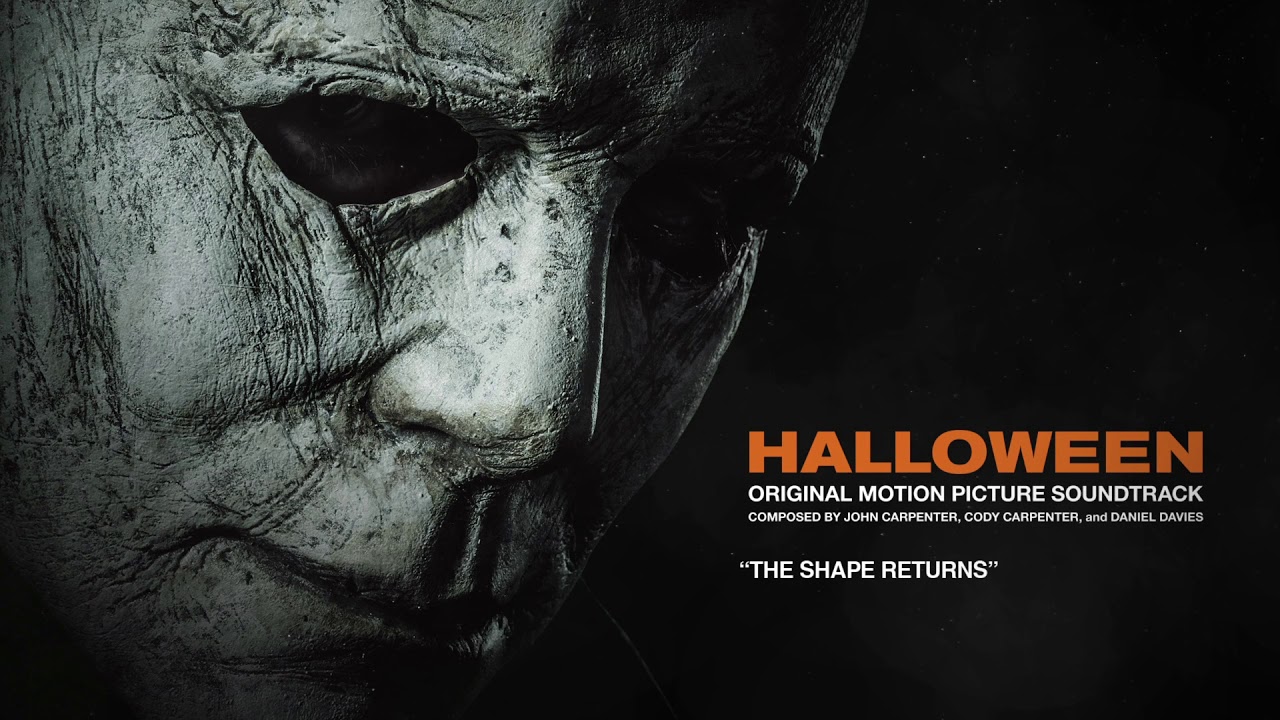
Horror Song of the Day: The Shape Returns “Halloween 2018” (by John Carpenter, Cody Carpenter and Daniel Davies)


Halloween

Today we see the wide release of David Gordon-Green’s sequel to John Carpenter’s Halloween. A film that’s a direct sequel to the horror classic, David Gordon-Green was able to bring in John Carpenter himself to compose the film’s score just as he did for the original film.

This time around, Carpenter is accompanied this time around by his son, Cody Carpenter, and godson, Daniel Davies. So, we have three generations with the original Halloween in their DNA attempting to improve or, at the very least, not make the score to this official sequel sound like just a copy and paste of the original score.

I would say, after listening to the full score a couple times, that these trio have succeeded where others have failed in scoring the other films in the franchise. My favorite track from this new score has to be the one titled, “The Shape Returns.”

With more modern electronic and synthesizer equipment available for use, Carpenter and his helpers were able to take the main Halloween theme and give it a more modern, angrier and menacing (if that’s even possible) sound for “The Shape Returns.”

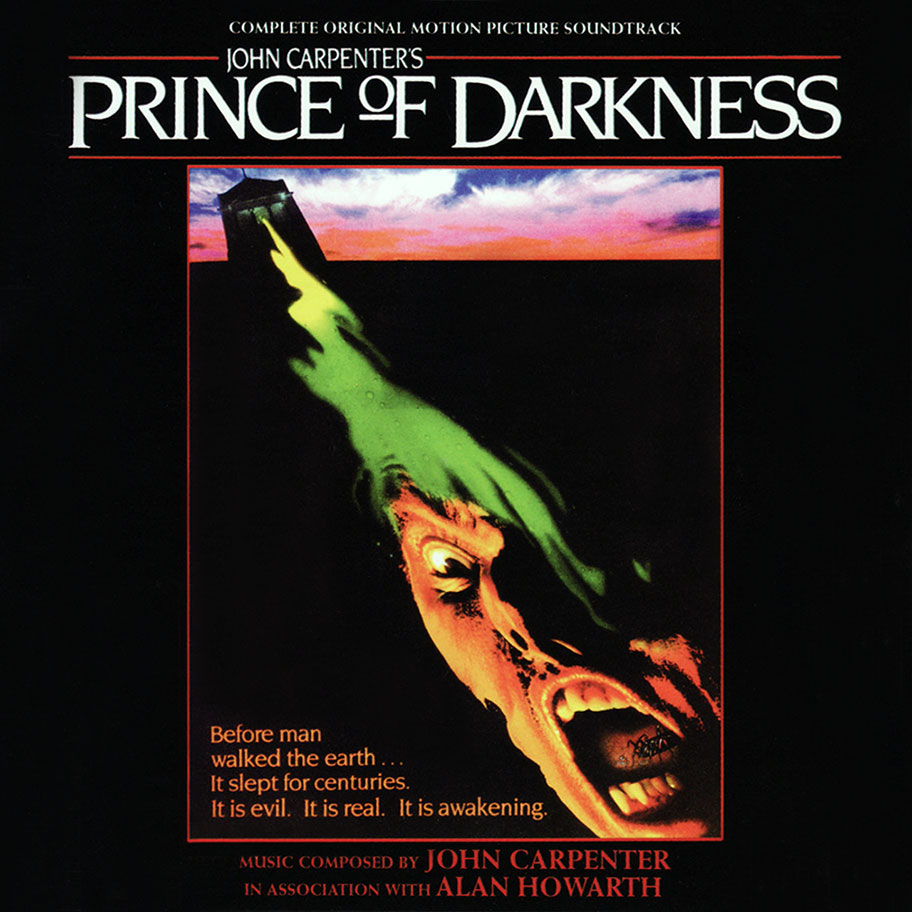
Horror Song of the Day: Prince of Darkness Opening Credits (by John Carpenter and Alan Howarth)


Prince of Darkness

John Carpenter, as most long-time readers and visitors to the site will know, is one of my favorite filmmakers. While he has been in a self-imposed retirement these last 15 or so years from directing, his works for two decades prior have to be considered some of the best genre films.

While some of his films have been critically-acclaimed from the start, others weren’t treated as well when they first released. It would only be years later when genre fans would finally come to appreciate some of his lesser works.

One such film is Prince of Darkness. The second film in his unofficial “Apocalypse Trilogy”, this one would be lambasted by most film critics upon it’s release. Even fans of his films would mostly avoid this entry.

Yet, years later it has turned out to be one of his most underappreciated films. It’s soundtrack, one Carpenter did himself with assistance from long-time collaborator Alan Howarth, would become a favorite.

The expanded “Opening Credits” section of the Prince of Darkness soundtrack is a great example of the sort of mood Carpenter can create with his preferred usage of synthesizer and electronic keyboards when it came to composing his film’s soundtracks.

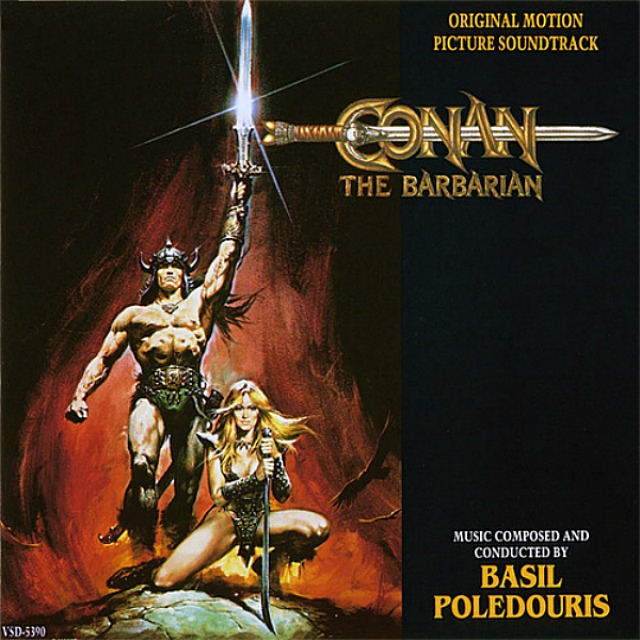
Song of the Day: The Leaving/The Search from Conan the Barbarian (by Basil Poledouris)


Conan the Barbarian OST

If there’s been one constant in this site right from the beginning it’s been my love for the film Conan the Barbarian and it’s equally great orchestral score that was composed by the very underappreciated film composer Basil Poledouris. Sure, everyone loves John Williams and rightly so. Then there’s the inexplicable love and worship of Hans Zimmer. Zimmer does some good, and sometimes, great work, but his overall work all tends to sound the same.

Basil Poledouris, on the other hand, seem to have been pushed to the sidelines despite creating some very iconic pieces of film scores in his lifetime. The peak of which will always be the orchestral score he composed for John Milius’ Conan the Barbarian.

I’ve chosen some key pieces from this soundtrack throughout the years. From the Carmina Burana inspired “Riddle of Steel/Riders of Doom” to the rousing “Anvil of Crom” intro all the way to the melancholy and introspective “Orphans of Doom/Awakening”. I think in time every piece of music from this score will make it onto this site. That is just how great this soundtrack from start to finish really has become. Even it’s weakest moments have elements of to them that make them stand out from the latest Zimmer.

Today, it shall be the section of the score for the film that accentuates Conan’s decision to take on a quest that will finally bring him to the very warlord who destroyed his people and killed his family: “The Leaving/The Search”.

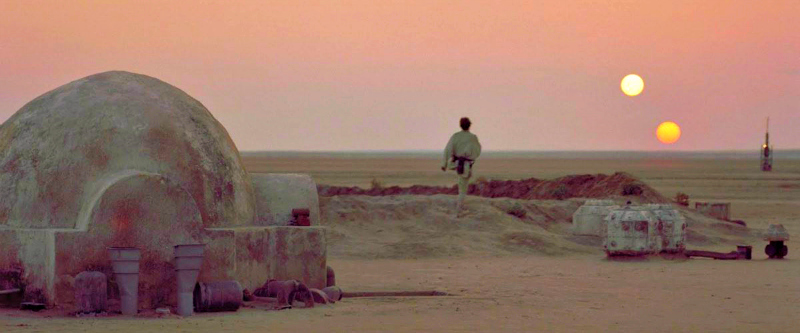
Song of the Day: Binary Sunset (by John Williams)


StarWarsBinarySunset

2015 will see the return of Star Wars to the big-screen. Will it erase the underwhelming memories left behind by the prequels which came out at the start of the new millenium? Will it return the franchise to it’s rightful place as a pop culture juggernaut that began many decades ago?

We shall soon find out this coming Christmas when Star Wars: The Force Awakens premieres around the world. Until then here’s the latest “Song of the Day” from John Williams.

May the 4th be with you.

Song of the Day: “Cloud Atlas End Title” (by Tom Tykwer, Johnny Klimek & Reinhold Heil)


CloudAtlas

I think it appropriate to end today with one of the most beautiful and haunting piece of cinematic music in recent years.

Cloud Atlas might have been like Icarus as it flew too high to the sun but only to crash into the sea. The same couldn’t be said about the orchestral score composed by Tom Tykwer, Johnny Klimek & Reinhold Heil. It’s a great piece of film score composing that managed to lend true emotions with every note without a hint of cynicism.

The “End Title” part of the score completely encompasses every piece character motif the three composers came up for each and every vital character in the film. What we get is a song that’s a pure distillation of everything that came before it.

Just like the film, this song marks the ending of one journey and the beginning of a new one for one of us. Fair winds and following seas.

Song of the Day: Taking A Stand (Henry Jackman)


cap2_c

I’m a bit biased in that I do believe that at this very moment whatever film Marvel Studios releases I will probably like it. I’m very close to having drunk the MCU Kool-Aid. Which is a good thing that trashfilguru is here to keep me from drinking that delicious, overly sweetened drink by the liters.

I know that the MCU is not what one would call high-brow art, but I will admit that it’s a very entertaining piece of world-building that we really haven’t seen done in film history. Well, at least not in the scale that Kevin Feige and the creative minds over at Marvel Studios have been attempting (and succeeding) these past 7-8 years.

One film that I highly enjoyed and consider one of my favorites of 2014 (if not one of the best) was the sequel to Captain America: The First Avenger. This sequel was a game-changer in regards to the very cinematic universe that Marvel had been building since the first Iron Man. Captain America: The Winter Soldier looked to up-end the very foundation of this universe by making one of it’s bricks become something to not be trusted.

Lisa Marie did a great job in conveying my thoughts about what made Captain America: The Winter Soldier such a good film (I would say great, but again I have that glass of Kool-Aid). One aspect of the film that has been given little to know attention to has been Henry Jackman’s work as film composer for the sequel. In fact, the film’s score has been much-maligned just because the filmmakers made the decision to veer away from the Alan Silvestri musical cues and motifs that had become recognizable as Captain America.

Alan Silvestri did the film score for the first film, but Jackman was tasked with recoding the very musical DNA for the sequel. What we get is a film score that’s very minimalist and supplements well the very paranoia and conspiracy tone the film’s narrative took. This was quite the opposite of Silvestri’s score for the first film mirrored that film’s nostalgic and heroic themes.

The track “Taking A Stand” which scores the David Mack illustrated and Jim Steranko-influenced end credits sequence is a perfect example of why Jackman’s score for Captain America: The Winter Soldier should be put on more “best of 2014” lists.

Song of the Day: Orphans of Doom/The Awakening (by Basil Poledouris)


Basil-Pictures-2

We’re closing out another year and it’s always time to reflect back on the events the we all experienced.

Here in Through the Shattered Lens we saw a new writer join the ranks with the arrival and addition of Alexandre Rothier. We also saw more and more of our writers grow in confidence with their writing. This didn’t just translate into more writing from them, but better as well. There’s Dazzling Erin with her constant surprise of finding new artists to share. Then leonth3duke who finally made the jump to truly appreciating horror. Leonard Wilson continued to find his voice with each new review he wrote.

I can’t forget necromoonyeti who continues to be my source of all things music and with each new band written I pick up something new to experience. Semtex Skittle showed the world his appreciation not just for the franchise of Final Fantasy but Sailor Moon as well and to that otaku are grateful. Speaking of otaku there’s the site’s own big bear of one with pantsukudasai56 who always brings in his choice recommendations in anime.

Then there’s Dork Geekus giving us his thoughts on things comic book. We also have trashfilmguru gracious enough to take time to share his unique take on horror, comic books both high and low-brow who also keeps the rest of us from drinking the Marvel Kool-Aid wholesale which makes for a better site.

Finally there’s my co-founder and partner-in-crime Lisa Marie Bowman who upped her game as she literally propped up the site at times with her voluminous, insightful and unique brand of writing. I will be forever grateful for her continued support and for becoming one of my closest friends.

I’ve chosen the latest “Song of the Day” as an analogue to what I saw myself and this site go through this year of 2014. I had just lost my father at the tail end of 2013 (it is a loss still felt even today) and then had fallen deathly ill around the holidays. Through it all I was thankful and proud of the work my fellow writers were able to do in my absence through my grief and sickness.

Basil Poledouris remains an artist I’ve admired from the moment I heard his music transform John Milius’ screen adaptation of Robert E. Howard’s Cimmerian barbarian from just your standard violent sword-and-sorcery matinee piece to something close to a perfect blend of epic fantasy and primal storytelling. Poledouris would go on to make other memorable film scores, but it’s his work in Conan the Barbarian that always remains his most iconic piece of work.

With the final denouement that follows the climax of the film we have a somber piece titled “Orphans of Doom/The Awakening” closing off the film. I chose this piece to symbolize the year Through the Shattered Lens went through. The piece begins on a somber note with the use of a choir adding a layer of the ethereal, but as the piece continues to it’s conclusion it gradually segues into something triumphant with hope for the future.

This song perfectly encapsulates Through the Shattered Lens circa 2014 and it’s my hope that brighter future awaits me and mine as the new year dawns.

Horror Song of the Day: Ave Satani (by Jerry Goldsmith)


theomenfeat-1024x847

One cannot think of horror and not bring up Richard Donner’s The Omen. A film made during the turbulent late 1970’s when the world was literally on the brink of ripping itself apart. The Omen was a film that told the tale of the birth of the Anti-Christ which would herald the coming of the Apocalypse. Outside of William Friedkin’s The Exorcist there wasn’t a film during this era which put the fear of God’s Judgment on the faithful than The Omen.

It helped that it’s own film score was determined to hammer the point of it’s blasphemous subject matter by taking one of the most holy rituals in Roman Catholicism and inverting it to praise Satan instead of the Virgin Mary. Jerry Goldsmith took the rite of consecration and came up with what one could call the rite of desecration for a purported Black Mass.

One must say that “Ave Satani” was all the creation of Jerry Goldsmith and a fellow choir-master in London. This was a work of art created to accompany a film that some would label art as well, but for some whose own faith has superseded all thoughts of art appreciation “Ave Satani” was very real and was a real danger to one’s eternal soul.

I will say that it’s an effective use of the Gregorian chant and more than just a tad hair-raising.

Ave Satani

Sanguis bibimus
Corpus edibus
Sanguis bibimus
Corpus edibus
Sanguis bibimus
Corpus edibus
Rolle corpus Satani, ave
Sanguis bibimus
Corpus edibus
Rolle corpus Satani, ave

Ave, ave, versus Christus

Ave Satani
Sanguis bibimus
Corpus edibus
Rolle corpus Satani,
Satani, Satani

Ave, ave, Satani