Film Review: Barabbas (dir by Richard Fleischer)


Who was Barabbas?

The simple answer to that is that Barabbas was the prisoner who, according to the Gospels, Pontius Pilate released during Passover.  As the story goes, Pilate gave the people the choice.  He could either release Barabbas or Jesus.  For what crime was Barabbas being held?  The Gospel of Matthew merely says that Barabbas was a “notorious prisoner.”  Mark and Luke both write that he was involved in a recent riot and that he was a murderer.  The Gospel of John refers to him as being a bandit, which may have been another term for revolutionary.  Regardless of what crime he had committed, the people overwhelmingly called for Barabbas to be released and for Jesus to be crucified.  What happened to Barabbas after he was set free is not recorded but has been the subject of a good deal of speculation over the centuries.

(Of course, there are some scholars who believe that the Barabbas story was simply an invention of later writers, designed to shift the responsibility for the crucifixion away from the Romans.  There’s also some who say that Jesus and Barabbas were actually the same person and that the inclusion of the Barabbas story was meant to indicate that Jesus was actually a revolutionary who was working to free Judea from Roman role.  I imagine Dan Brown will eventually base a novel on this theory, so look forward to hearing your grandma debating the historicity of Barabbas at some point in the future.)

Back to the original question, who was Barabbas?

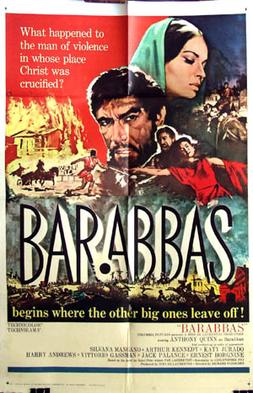
According to the 1961 film of the same name, Barabbas was Anthony Quinn.

Based on a novel by the Nobel Prize-winning Swedish author, Pär Lagerkvist, Barabbas opens with Pilate (Anthony Kennedy) making his infamous offer.  Barabbas or Jesus?  Perhaps the only person more shocked than Pilate by the people’s decision is Barabbas himself.  A brutish and violent man, Barabbas is looking forward to returning to his old life but, as he leaves the prison, he finds himself fascinated by the sight of Jesus stoically carrying the cross, heading to the fate that Barabbas was spared.  Later, Barabbas witnesses the Crucifixion and is shaken when, upon Jesus’s death, the sky turns black.

(Director Richard Fleischer shot the Crucifixion during an actual solar eclipse, so that the sky actually did turn black during filming.  It’s a stunning scene.)

For the rest of his life, Barabbas is haunted by both his narrow escape from death and his subsequent notoriety.  When Barabbas tries to reunite with his former lover, Rachel (Silvana Mangano), he discovers that not only does she now want nothing to do with him but that she has also become a follower of Jesus.  (Later, in a surprisingly graphic scene, Rachel is stoned to death.)  Barabbas becomes convinced that he cannot die and he becomes increasingly reckless in his behavior.  Over the next few decades, he finds himself sold into slavery and forced to spend 20 years working in the harsh sulfur mines of Sicily.  He befriends a Christian named Sahak (Vittorio Gassman) and, with him, is trained to be a gladiator by the sadistic Torvald (Jack Palance).  Eventually, Barabbas finds himself rejected by both the Romans and the Christians while Rome burns all around him.

Barabbas is a film that really took me by surprise.  I’ve seen a lot of Biblical and Roman films from the 50s and 60s and I was expecting that Barabbas would be another sumptuously produced but slow-paced epic, one that would inevitably feature stiff dialogue and overly reverential performances.  I mean, don’t me wrong.  I happen to love spectacle and therefore, I enjoy watching most of those old historical and religious epics.  But still, for modern audiences, these films can often seem rather … well, hokey.

But Barabbas was totally different from what I was expecting.  As wonderfully played by Anthony Quinn, Barabbas wanders through most of the film in a state of haunted confusion.  Even at the end of the film, after he’s met St. Peter (Harry Andrews), Barabbas doesn’t seem to fully understand what he believes or how he’s become one of the most notorious men in Rome.  Quinn plays Barabbas almost like a wild animal, one that has been cornered and trapped by his own infamy.  The more Barabbas struggles against his fate, the more trapped he becomes.  Barabbas may be a brute but, the film suggests, even a brute can find some sort of redemption.  Quinn gets good support from the entire supporting cast.  Jack Palance is perfectly evil as Torvald while Vittorio Gassman, Silvana Mangano, and Ernest Borgnine bring some needed nuance to characters who, in lesser hands, could have just been cardboard believers.

Barabbas is a surprisingly dark film.  When Rachel is stoned, the camera doesn’t flinch from showing just how cruel an execution that was.  Nor does the camera flinch from the violent brutality of the gladiatorial games.  When Barabbas is sold into slavery, the sulfur mines of Sicily are depicted in Hellish detail and practically the only thing that saves Barabbas from spending the rest of his life being smothered under a cloud of sulfur is a giggly Roman woman who decides to buy Barabbas so that he can serve as a good luck charm.  The scenes of Barabbas’s skill of a gladiator are contrasted with the bloodthirsty crowd demanding and cheering death.  Even when Barabbas joins the Christians in the Roman catacombs, he discovers that they want nothing to do with him, suggesting that they believe in forgiveness for everyone but him.  The spectacle of Rome is displayed but so is the terror of what lies underneath the city’s ornate surface.  If Barabbas is occasionally a ruthless or unsentimental character, one need only look at the world he lives in to understand why.

With the exception of a few slow scenes at the start of the film, director Richard Fleischer does a good job of keeping the action moving.  It’s a long film but it never becomes a boring one.  In the end, thanks to Quinn’s performance and the film’s unflinching portrayal of life in ancient Rome, Barabbas is a biblical epic for people who usually don’t like biblical epics.
 

Recipe for Disaster: THE POSEIDON ADVENTURE (20th Century-Fox 1972)


gary loggins's avatarcracked rear viewer

Although 1970’s AIRPORT is generally credited as the first “disaster movie”, it was 1972’s THE POSEIDON ADVENTURE that made the biggest splash for the genre. Producer Irwin Allen loaded up his cast with five- count ’em!- Academy Award winners, including the previous year’s winner Gene Hackman (THE FRENCH CONNECTION ). The special effects laden extravaganza wound up nominated for 9 Oscars, winning 2, and was the second highest grossing film of the year, behind only THE GODFATHER!

And unlike many of the “disasters” that followed in its wake, THE POSEIDON ADVENTURE holds up surprisingly well. The story serves as an instruction manual for all disaster movies to come. First, introduce your premise: The S.S. Poseidon is sailing on its final voyage, and Captain Leslie Nielsen is ordered by the new ownership to go full steam ahead, despite the ship no longer being in ship-shape. (You won’t be able to take…

View original post 539 more words

Creepy Crawlies: WILLARD (Cinerama 1971)


gary loggins's avatarcracked rear viewer

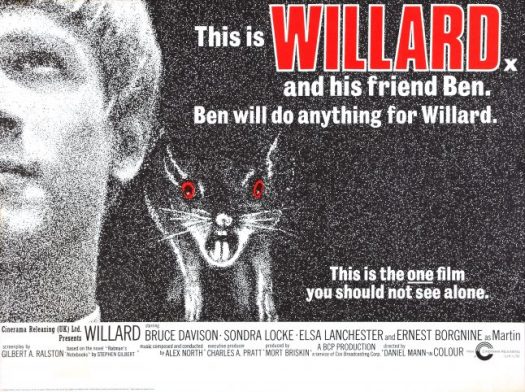
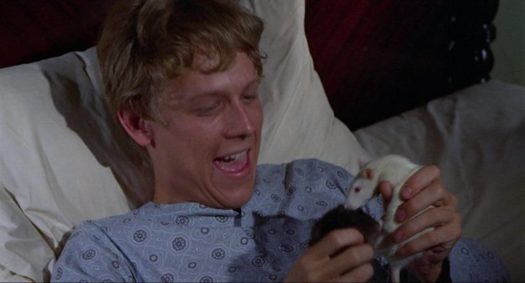
Rats are not cute’n’cuddly little creatures. They’re disgusting, disease-infested vermin that should be avoided at all costs. But don’t tell that to WILLARD, title character in this 1971 chiller that started a regular revolution of “animals run amok” horror movies. Bruce Davison, later to become one of his generation’s finest actors (SHORT EYES, THE LATHE OF HEAVEN, LONGTIME COMPANION), is a regular rodent Dr. Doolittle here, not only talking to the animals, but handling them fondly while he trains them to kill his enemies. Rats – yuck!

Willard Stiles is a lonely loser who shares a rambling, decrepit manse with his  domineering mother (Elsa Lanchester) and works for bullying boss Martin (Ernest Borgnine ), who stole the family business from Willard’s late father. Office temp Joan (Sondra Locke) feels sorry for Willard, but the socially awkward nerd is uncomfortable around people, preferring instead to spend time with the rats in…

View original post 365 more words

A Movie A Day #185: Emperor of the North Pole (1973, directed by Robert Aldrich)


Emperor of the North Pole is the story of depression-era hobos and one man who is determined to kill them.

The year is 1933 and Shack (Ernest Borgnine) is one of the toughest conductors around.  At a time when destitute and desperate men are riding the rails in search of work and food, Shack has declared that no one will ride his train for free.  When Shack is first introduced, the sadistic conductor is seen shoving a hobo off of his train and onto the tracks.  Shack smiles with satisfaction when the man is chopped in half under the train’s wheels.

A-No.1 (Lee Marvin) is a legend, the unofficial king of the hobos.  A grizzled veteran, A-No. 1 has been riding the rails for most of his life.  (The title comes from the hobo saying that great hobos, like A-No. 1, are like the Emperor of the North Pole, the ruler of a vast wasteland).  A-No. 1 is determined to do what no hobo has ever done, successfully hitch a ride on Shack’s train.  He even tags a water tower, announcing to everyone that he intends to take Shack’s train all the way to Portland.

If A-No. 1 did not have enough to worry about with Shack determined to get him, he is also being tailed by Cigaret (Keith Carradine), a young and cocky hobo who is determined to become as big a legend as A-No. 1.  Cigaret and A. No. 1 may work together but they never trust each other.

Like many of Robert Aldrich’s later films, Emperor of the North Pole is too long and the rambling narrative often promises more than it can deliver.  Like almost all movies that were released at the time, Emperor of North Pole attempts to turn its story into a contemporary allegory, with Shack standing in for the establishment, A-No. 1 representing the liberal anti-establishment, and, most problematically, Cigaret serving as a symbol for the callow counter culture, eager to take credit for A-No. 1’s accomplishments but not willing to put in any hard work himself.

As an allegory, Emperor of the North Pole is too heavy-handed but, as a gritty adventure film, it works wonderfully.  Lee Marvin is perfectly cast as the wise, no-nonsense A-No. 1.  This was the sixth film in which Marvin and Borgnine co-starred and the two old pros both go at each other with gusto.  Carradine does the best he can with an underwritten part but this is Borgnine and Marvin’s film all the way.  Marvin’s trademark underacting meshes perfectly with Borgnine’s trademark overacting, with the movie making perfect use of both men’s distinctive screen personas.  As staged by Aldrich, the final fight between Shack and A-No. 1 is a classic.

Even at a time when almost every anti-establishment film of the early 70s is being rediscovered, Emperor of the North Pole remains unjustly obscure.  When it was first released, it struggled at the box office.  Unsure of how to sell a movie about hobos and worrying that audiences were staying away because they thought it might be a Christmas film, 20th Century Fox pulled the movie from circulation and then rereleased it under a slightly altered name: Emperor of the North.  As far as titles go, Emperor of the North makes even less sense than Emperor of the North Pole.  Even with the title change, Emperor of the North Pole flopped at the box office but, fortunately for him, Aldrich was already working on what would become his biggest hit: The Longest Yard.

Keep an eye out for Lance Henriksen, in one of his earliest roles.  Supposedly, he plays a railroad worker.  If you spot him, let me know because I have watched Emperor of the North Pole three times and I still can’t find him.


Following The Amazon Prime Recommendation Worm #8: Oliviero Rising (2007), A Scandalous Journey (2002), Little Lili (2003), Blindspot (2008)


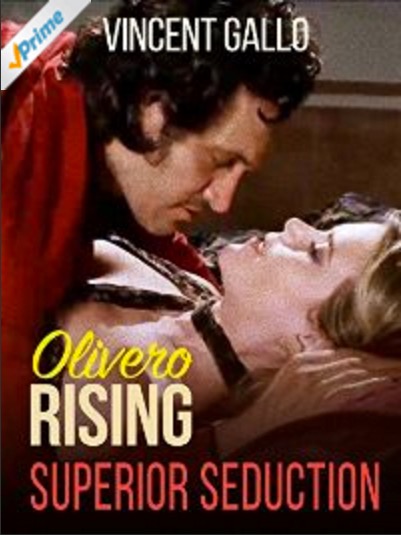
I had to get these four out before they completely faded from my memory. We do have more misleading Amazon Prime posters, which I know is what you really come for with these posts so I will try not to disappoint. Sadly, I do have the first film on this list to bring you. I think it will end up being the worst movie I see this year. It will really take something awful to beat it. Here we go!

Screen Shot 2016-03-30 at 5.18.06 PM

Oliviero Rising (2007, dir. Riki Roseo) – I know you can’t hear it, but I am chuckling as I am writing this. First off, that’s a scene from the very end of the film. Second off:

rs_634x1005-141114095132-10644711_665591963557478_6990185292071945908_n

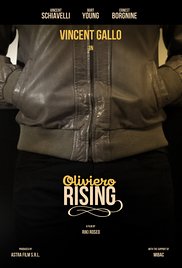
Thirdly, they didn’t even get the right title in their fake poster. Here’s the realistic poster for the movie. Sort of.

MV5BMjEyMTkxMjIyNF5BMl5BanBnXkFtZTcwNTM1Mjg1OA@@._V1_UY268_CR4,0,182,268_AL_

Fourth, the plot summary on IMDb has nothing to do with the movie: “A young and charming employee (Gallo) finds himself victim of an ‘office intrigue’ engineered by his attractive female boss.” Finally, I’m pretty sure that the “Rising” in Oliviero Rising refers to Vincent Gallo’s penis. I’m not kidding. The story is about Gallo getting over his mentally induced erectial disfunction. Shall we talk about this a bit? It does have a scene I can’t avoid telling you about. Shivers just ran down my spine.

Usually when I write about these movies I just watch them on the big screen so I don’t have screenshots to share. Sometimes there’s that rare film that causes me to stop and switch to my iPad. This was one of them. As a result, I do have a few of them to share.

The movie begins and we meet Oliviero who appears to drive a tuck for a living. We see him stop the truck and lift up air without showing the actual person in the scene. I’m pretty sure that Gallo wasn’t present for this scene or any of the truck driving parts. We see later that air is a baby porcupine. After a really weird and inappropriate scene with a psychiatrist, Gallo and his family are off to Italy. They are there for a family funeral. Nothing really happens there except bad directing. Here’s the “highlights”, if I dare to call them that.

IMG_9649

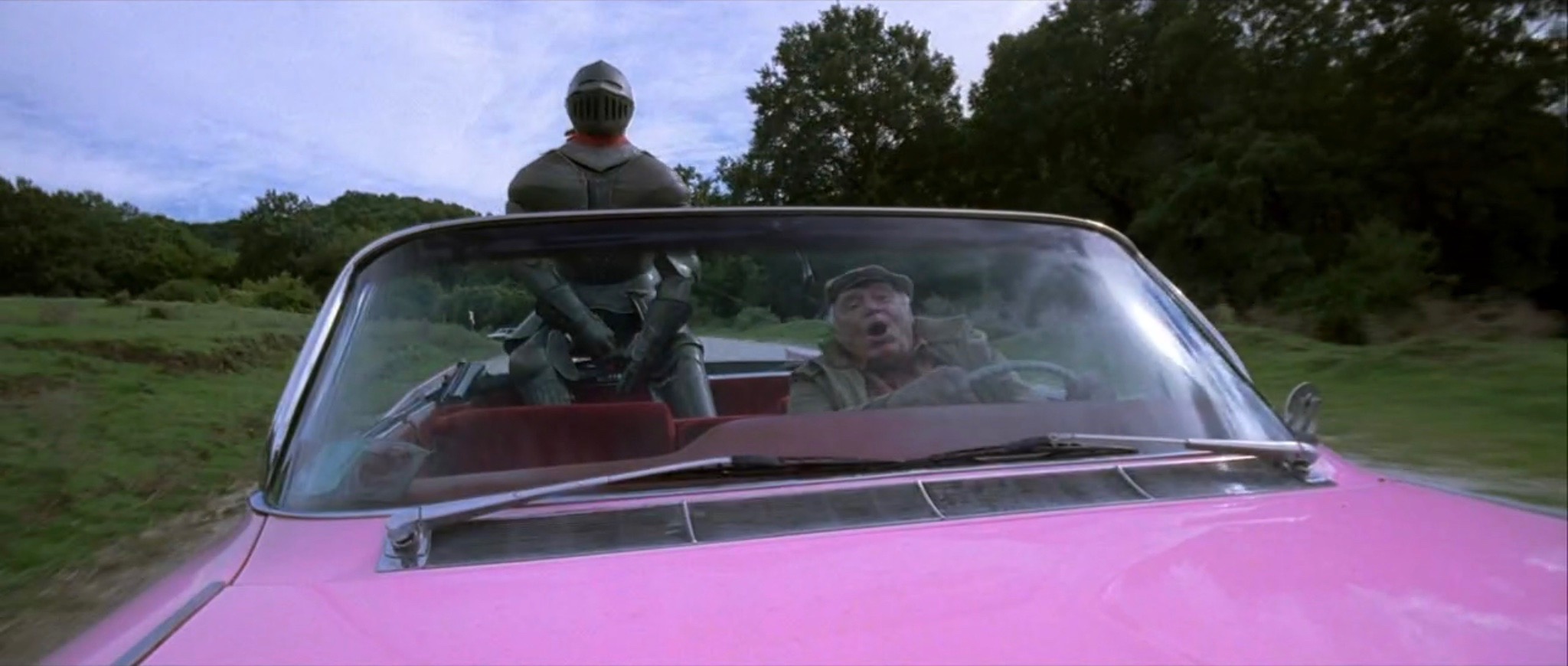
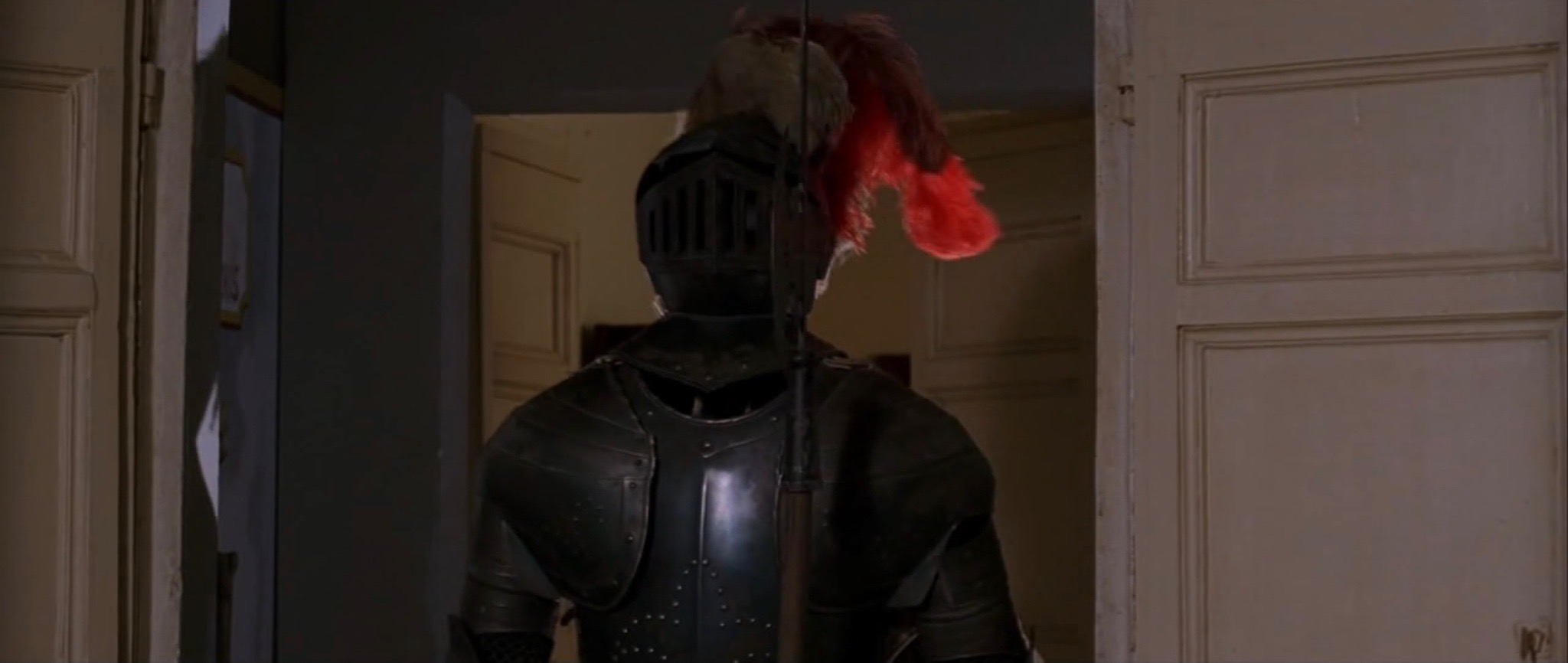
Ernest Borgnine riding while singing in a pink cadillac with a suit of armor in the back seat.

IMG_9650

A small jump cut as Ernest Borgnine rolls in the armor because either he wasn’t actually there or he knocked it over so they reshot it from the point where it fell over. There is a lot of lazy and awkward editing in this movie. Some of it very obviously done because not all the actors were there or sets couldn’t be used at the time they were needed.

IMG_9659

IMG_9660

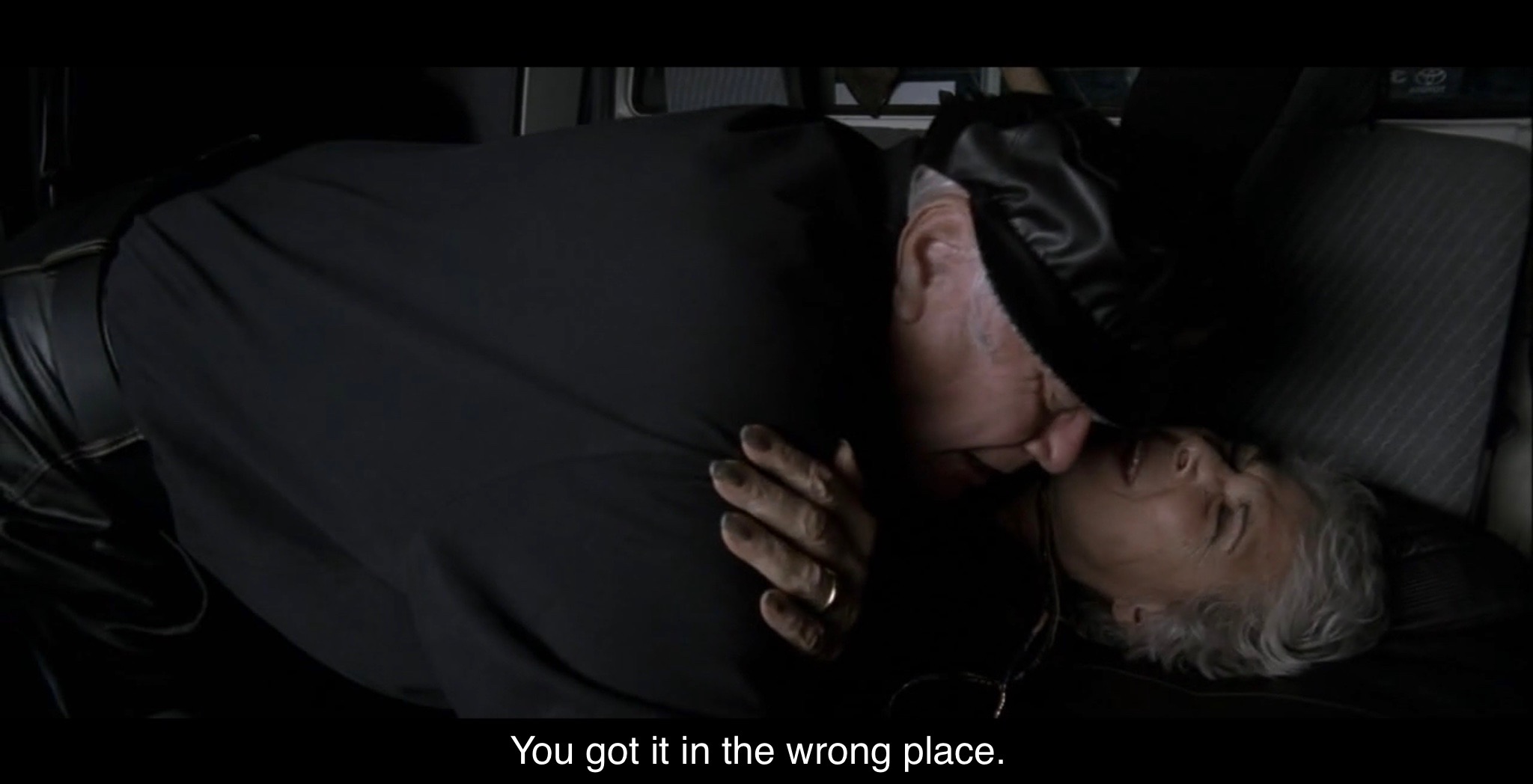
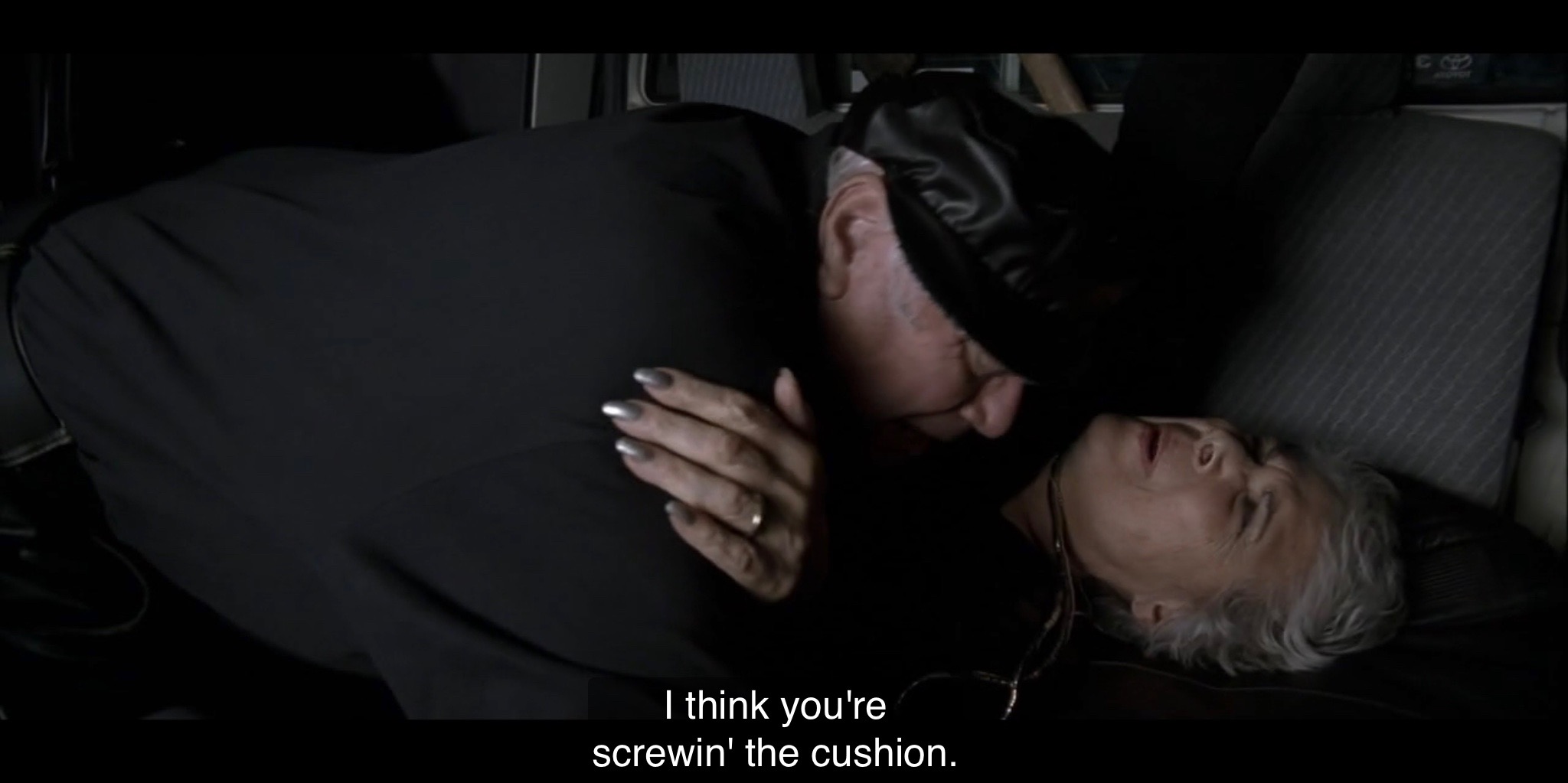
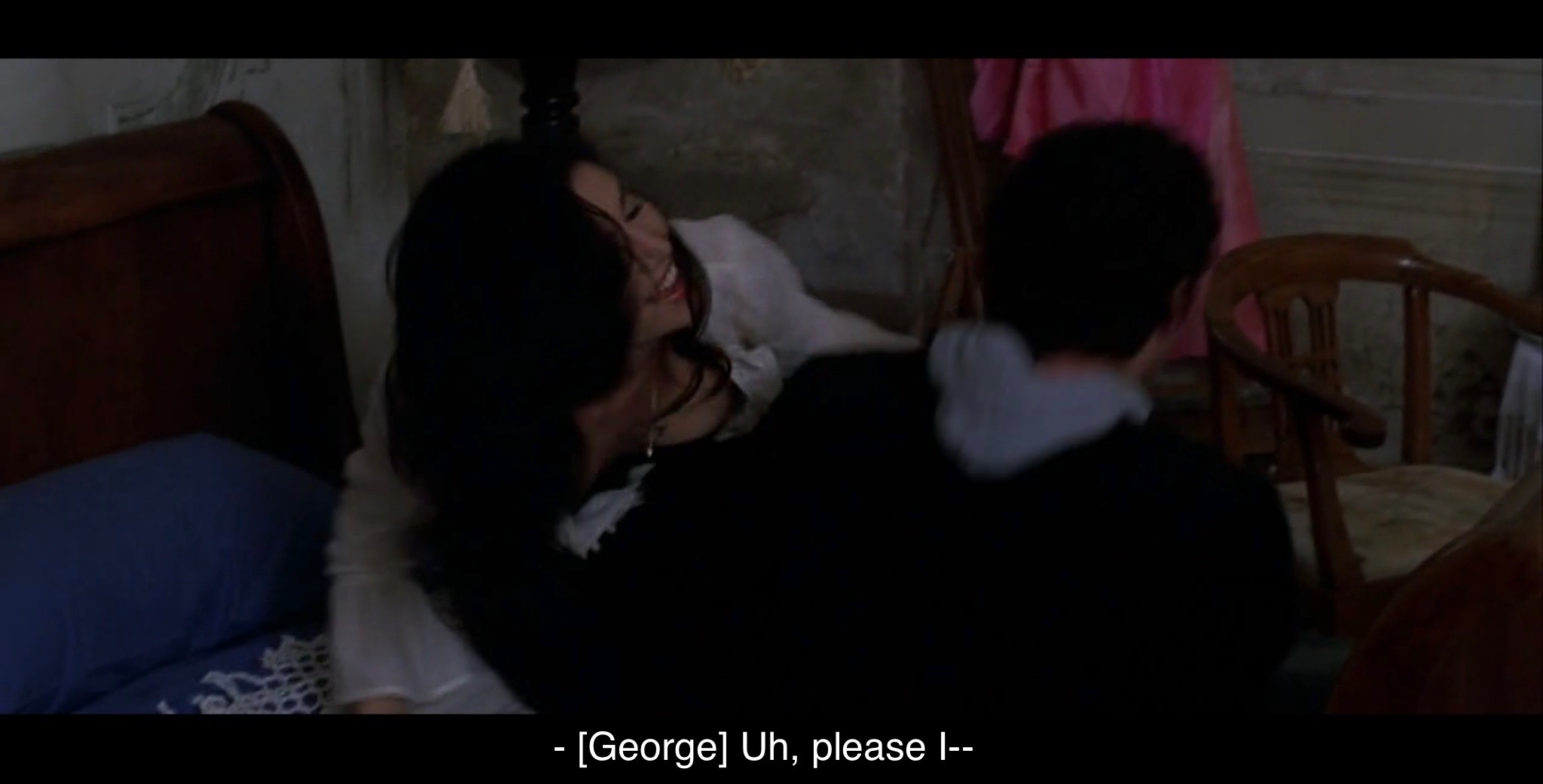
Enest Borgnine not putting his penis into her vagina meaning he is screwin’ the cushion. I know Borgnine shows up in many different films in much the same way Whoopi Goldberg does, but this? Why? Why? Why?

IMG_9668

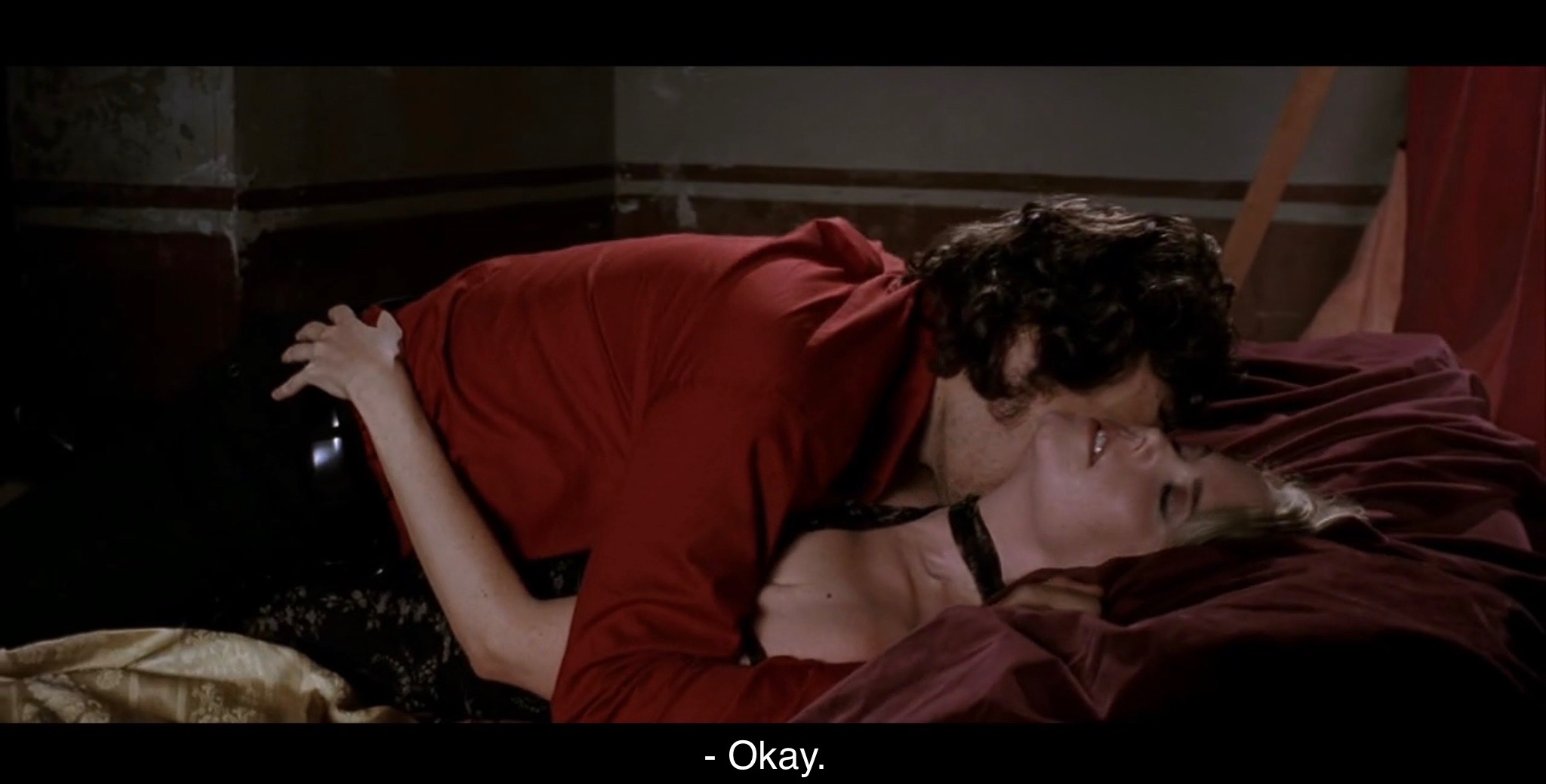
This is the “Superior Seduction” the poster was referring to.

IMG_9654

She tries to seduce him, which he has no interest in.

I must apologize, but I don’t have the scene with Vincent Schiavelli who you may recall as the angry subway ghost from Ghost (1990). He is trying to help Oliviero get over his ED. He actually stops, looks into the camera, and lectures women in the audience about their alleged worship of the penis. First off, I’m sure lesbians are rather indifferent towards the penis. They probably just feel men’s pain for all the weird things it does out their control. If a straight girl leaves you because you can’t get it up or keep your penis hard, then she is a horrible person. She is the guy who leaves a straight girl because her sex drive has taken a dip. Penises are weird. People with that equipment are not lying or exaggerating when they say it has a mind of its own. It takes a fair amount of work to try and get any modicum of control of it during sex. However, none of this translates to worship of the penis.

There is also the scene where Gallo’s wife has sex with his girlfriend because he can’t get it up for her. Seriously. Wife gets frustrated, goes right over to the girlfriend’s room, and they have sex while Gallo is in the hallway.

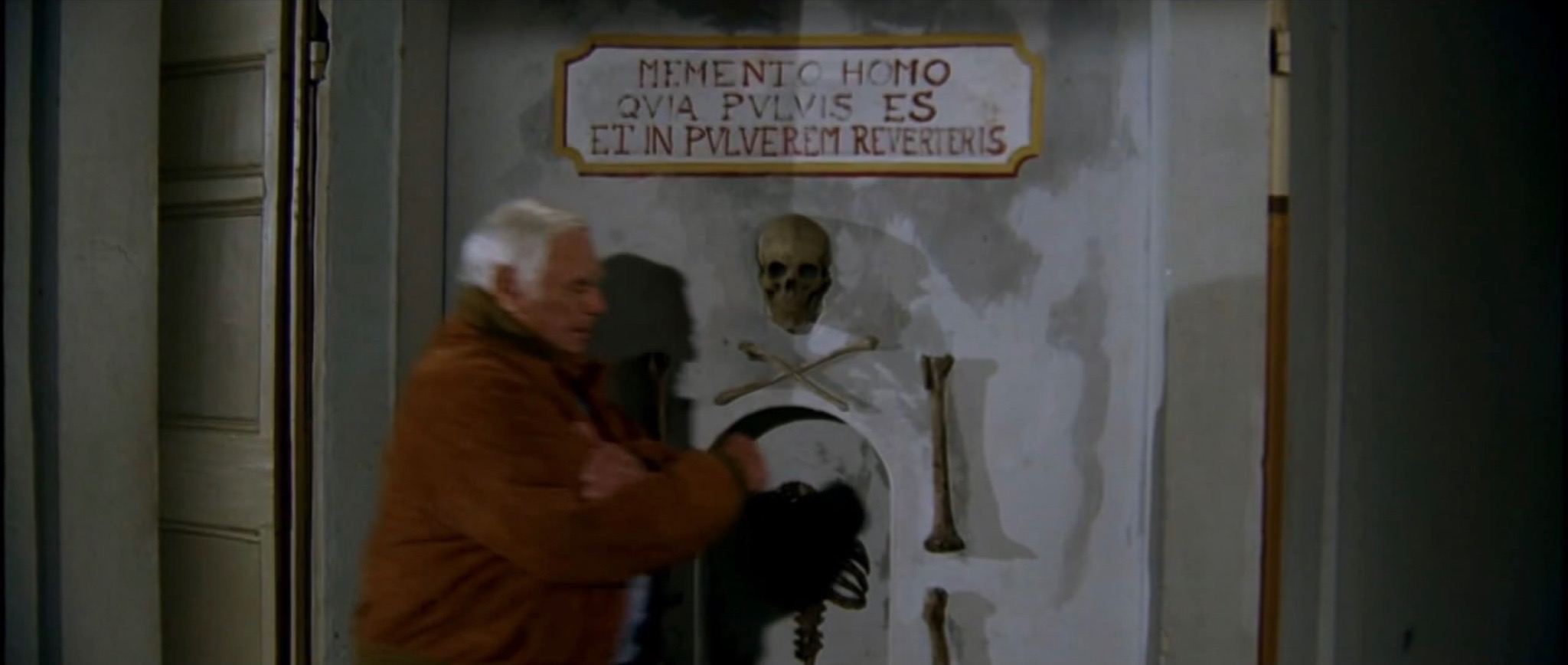
I think Ernest Borgnine summed up my feelings about this movie when he walks past the bones in the castle and tells them, “fuck you”.

IMG_9671

Screen Shot 2016-03-30 at 6.12.57 PM

A Scandalous Journey (2002, dir. Michele Placido) – If by scandalous you mean the story of a woman who writes poetry, meets a guy, then seems to stop writing, and instead supports her now mentally disturbed husband who also writes before he winds up in a mental institution. It’s not scandalous in the slightest. It has a beginning and an end. So I guess it technical it is a journey since they don’t stay in one spot the whole time. That’s really it. The rest is just how much you like good performances in a really boring story that grates on your nerves. I wish I could provide you with more details, but this was so incredibly forgettable that I can’t. I remember the next one more and it was forgettable, but at least it had an irredeemable asshole that the film is blind to seeing as such. That made it stick in my mind more. Even the more realistic poster is misleading.

MV5BMTQzNjIzOTI2NF5BMl5BanBnXkFtZTcwMzk4NDQzMQ@@._V1_UY1200_CR98,0,630,1200_AL_

You basically get a film made by an Italian director who probably wishes this was still the era of films like The Night of the Shooting Stars (1982) or 1900 (1976). It isn’t. Moving on.

Screen Shot 2016-03-30 at 6.33.35 PM

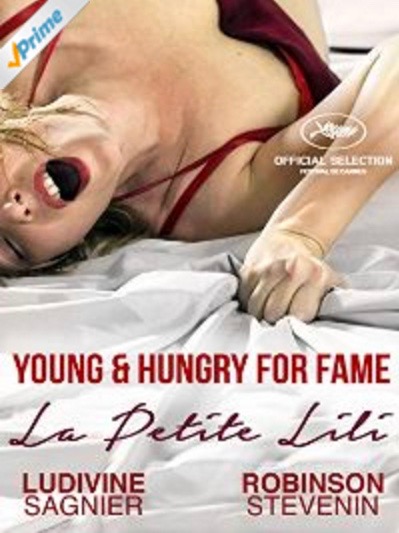
Little Lili (2003, dir. Claude Miller) – Wow! They’re “Young & Hungry For Fame.” I could understand if they were just young, but also hungry for fame? This is clearly going be story about Ludivine Sagnier who is so hungry for fame that she’ll sleep with Robinson Stevenin to get to the top. I mean what else are you going to read from that poster? Well, I read that this is a movie based on a play by Chekov about a young pretentious self-loving asshole who makes a shitty short film that his family defends as if he is some guardian of pure unadulterated cinema as characters wander around to make sure we spend way too much time with this twit before the movie decides it has no idea how to redeem the character so it suddenly leaps over many years where he is now going to reshoot the events of the film on an artificial looking set that belongs in a Douglas Sirk movie before the film finally ends. That’s what I see. I also see that dickwad we are told to cheer for not listed on the poster. That character is played by Bernard Giraudeau who of course went on to do next to nothing after this film rather then the two actors whose names are on the poster. Oh, and after it leaps over all that time, he’s still a jerk who looks down with contempt at people who dare to not make shitty foreign films like the one you will be seeing if you watch this movie. Also, it continues to remind you of better directors, films, and actors throughout. I think I even spotted a reference to Rohmer’s film Claire’s Knee (1970). Amazing! Stay as far as you can from this garbage. I want the film that poster promised me. It sounds stupid, but I doubt it’s as bad as this thing was.

Screen Shot 2016-03-30 at 6.47.20 PM

Blindspot (2008, dir. Ad Bol) – The poster is certainly accurate about “You cannot see.” I could barely make out the opening scenes because they were so dark. That was followed by the remainder of the film that I couldn’t understand. The movie begins with a woman doing a weird dance before she wakes up. It was a nightmare. Then we see a guy take a woman hostage in a room. I thought things were going to progress there, but then it seemed to come apart when they were talking, but it was in a voiceover while they were in clearly different places. After that, it goes off to tell the story of some guy who gets involved with a woman who died and her sister who needs to confront her father about him abusing both of them as children. There are some affairs in here. How any of this ties together, especially with the opening scenes, I have no idea. It’s a confusing mess. I wanted to scream at the director that if he didn’t know how to this kind of non-linear plot, then to stop trying. It didn’t help that it would suddenly cut at odd times. There is also an audio lead-in that I think was the only one in the movie and it only adds to the viewer’s frustration. Hell, this could have been linear, but it was so disorienting that I couldn’t tell. Skip!

Sadly, I can’t recommend a single one of these this time. Maybe I’ll have better luck next time.

“It’s A Shame To Get It Shot Full Of Holes.” Hannie Caulder (1971, directed by Burt Kennedy)


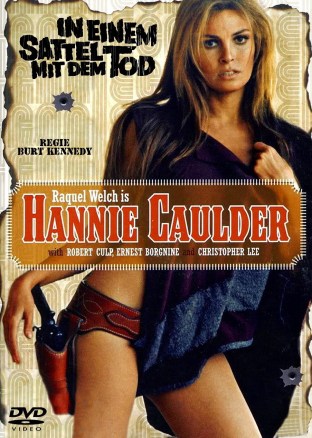
hannie-posterA century before Beatrix Kiddo killed Bill and The Deadly Viper Assassination Squad, there was Hannie Caulder.
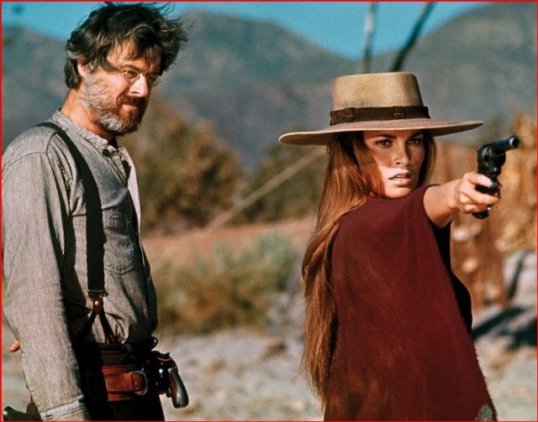
Hannie Caulder (played by Raquel Welch) lives at a horse station on the Texas/Mexico border.  When the outlaw Clemmons brothers — Emmett (Ernest Borgnine), Frank (Jack Elam), and Rufus (Strother Martin) — arrive at the station following a disastrous bank robbery, they brutally murder her husband and take turns raping her.  After setting the station on fire, the Clemmons Brothers leave Hannie for dead.

What they do not realize is that Hannie has managed to crawl out of the burning building.  The next day, when a bounty hunter named Thomas Luther Price (Robert Culp) approached the burned out remains of the station, Hannie begs him to teach her how to shoot a gun.

“If I taught you the gun,” Tom says, “you’d go out and get your ass shot off!”

“It’s my ass!” Hannie replies.

“It’s a shame to get it shot full of holes,” Tom says, “It’s as pretty a one as I’ve ever seen.”

Tom refuses to teacher her how to handle a gun but he does allow her to ride with him.  Before she mounts Tom’s second horse, Hannie sees that there is a body lying across the saddle.  “I hope you don’t mind riding with a dead man,” Tom says.

After Tom realizes that she was raped, he agrees to her how to shoot.  But first, he takes her into Mexico to meet a former Confederate gunsmith named Bailey so that Bailey can make her a gun.  Bailey is played by Christopher Lee.  In a career that spanned 70 years, Hannie Caulder was the only Western that Christopher Lee ever appeared in.  At first, it’s strange to see Christopher Lee in a Western, using his Winchester rifle to gun down a group of bandits who threaten his family.  But Lee is a natural and eventually, you stop seeing him as Dracula in a western and you just see him as Bailey.

hc-pic-5

As Bailey and Tom watch Hannie practice her shooting, Bailey says, “Fine-looking woman.”

“She wants to be a man,” Tom responds.

Bailey nods.  “She’ll never make it.”

As an actress, Raquel Welch was often miscast in roles that were only meant to highlight her looks.  She was always at her best when she played tough characters who were not afraid to fight and Hannie is one of her toughest.  While the film certainly takes advantage of her appearance (she spends a good deal of it wearing nothing but a poncho), Welch also gives one of her best performances.  Even with Culp, Borgnine, Elam, and Martin acting up a storm, she more than holds her own.  She not only looks good with a gun but she knows how to use it too.

Though the film was obviously influenced by the violent Spaghetti westerns that were coming out of Italy at the time, Hannie Caulder was directed by Hollywood veteran Burt Kennedy.  Kennedy was best known for comedic westerns like Support Your Local Sheriff  and Hannie Caulder awkwardly mixes drama with comedy.  Scenes of the Clemmons Brothers bickering and grizzled old west types doing a double take whenever Hannie walks by are mixed with Peckinpah-style violence and flashbacks of Hannie being raped.  If the film had a director more suited to the material, it could have been a classic but under Kennedy’s direction, the end result is uneven but always watchable.

hc-pic-3


Hallmark Review: The Wishing Well (2009, dir. David Jackson)


IMG_7594

It’s not often that I review two movies from two relatively different sources that are both by the same director, but that’s the case this time. David Jackson is also the director who brought the Halloweentown series to an end with Return To Halloweentown. This time he took on something much easier than ripping off Harry Potter with a miscast lead. It’s about a wishing well! Sort of.

IMG_7593

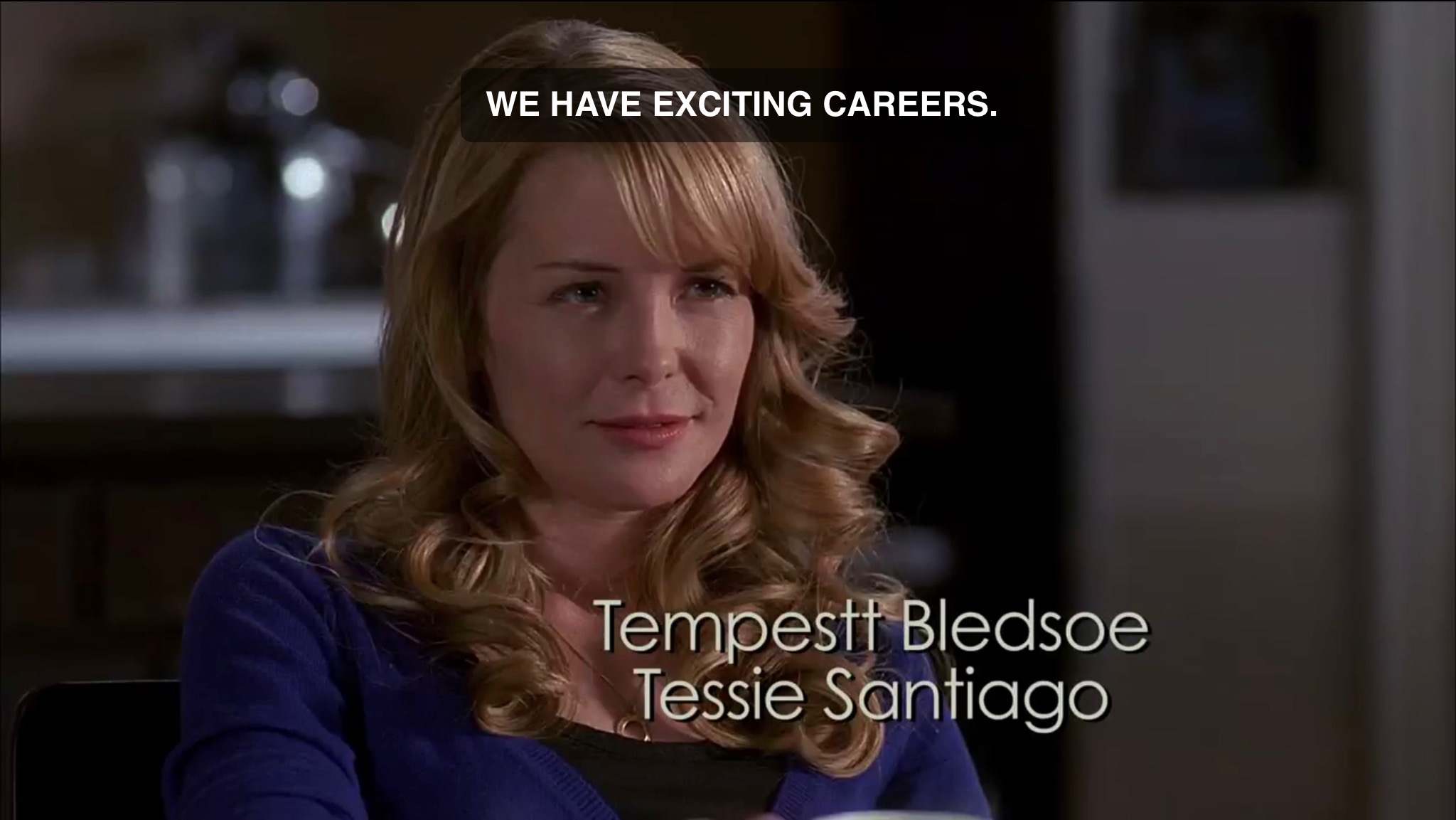
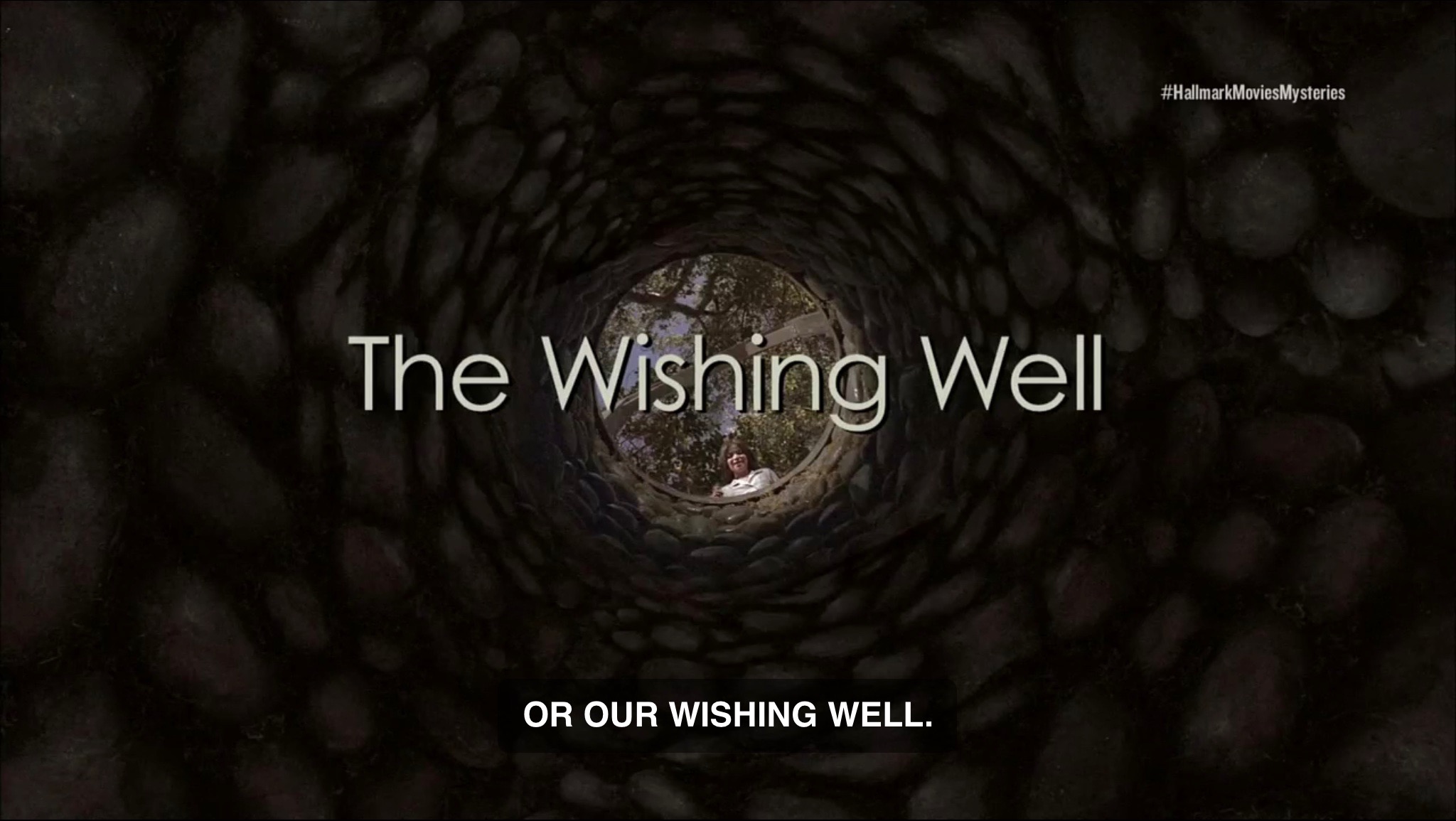
The movie begins before the title card appears, and we meet Abby Jansen played by Jadin Gould. She will be your smiling one-dimensional little girl for the movie. I mean your Hallmark Bailee Madison stand-in for the movie. Then we cut to stock footage of New York City before we meet our leading lady named Cynthia Tamerline played by Jordan Ladd.

IMG_7601

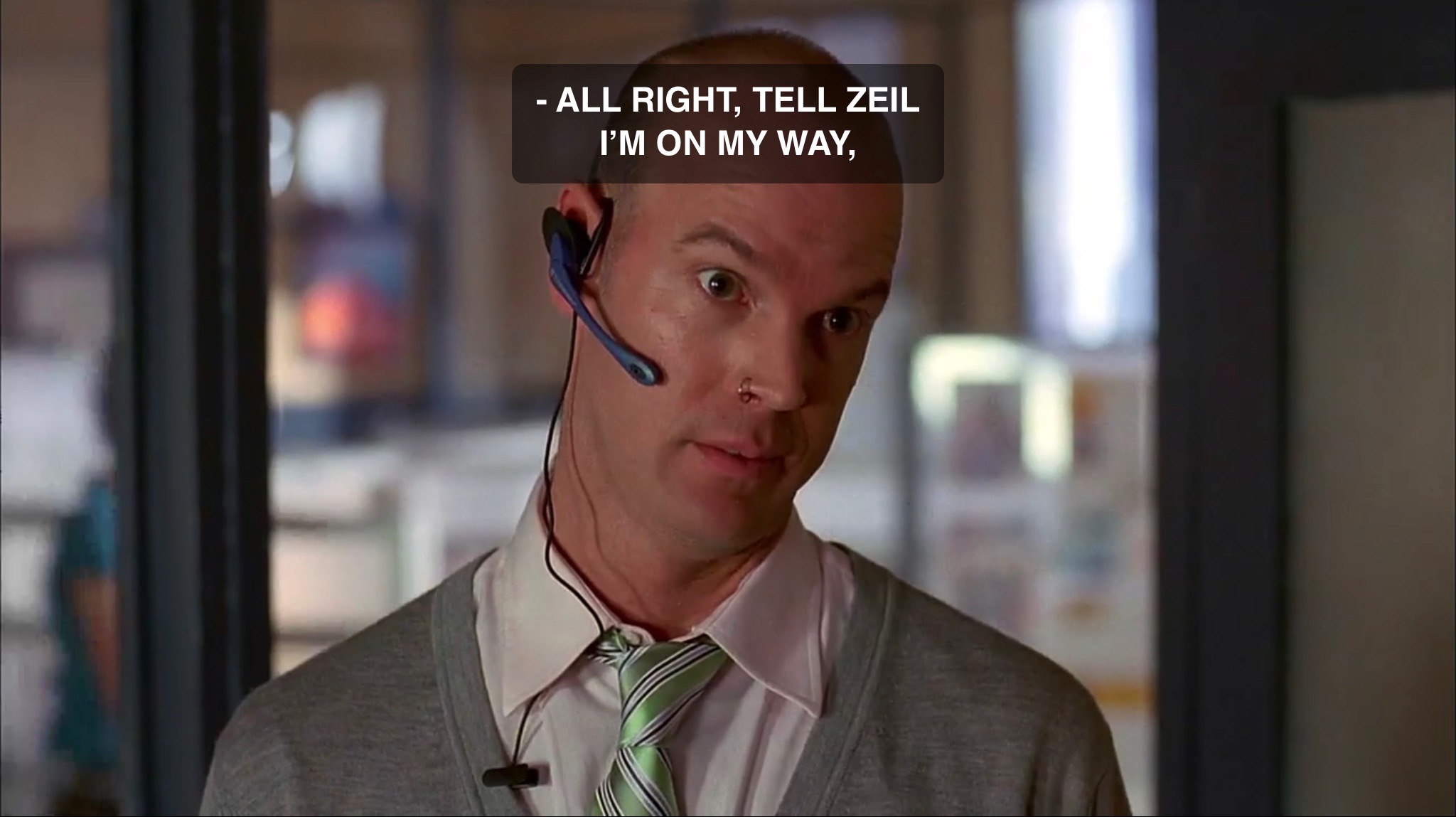
She works for Celeb magazine where not only is Charles Shaughnessy her boss, but her secretary is Lurch with a nose ring.

IMG_7610

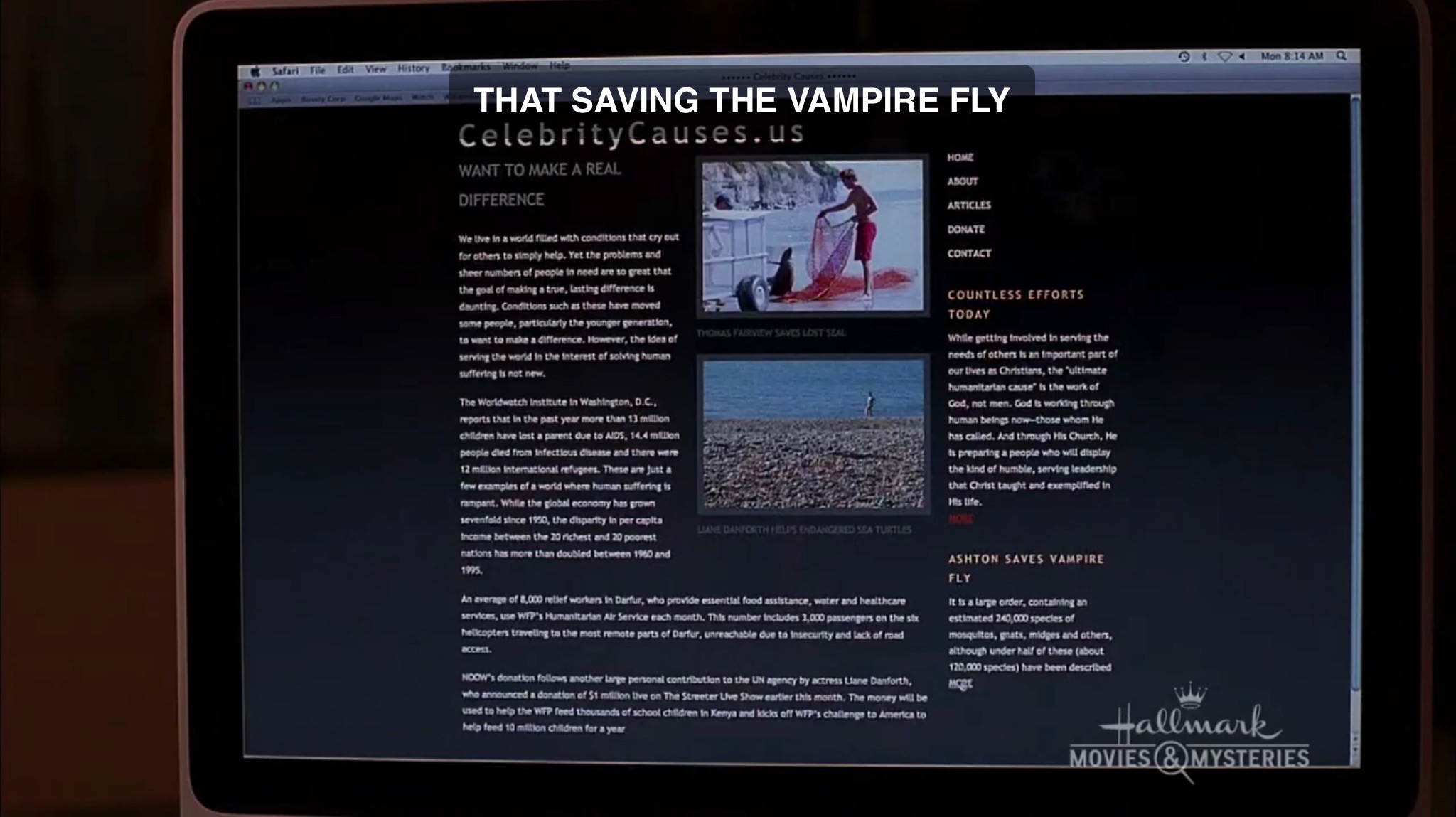
Obviously this movie needs to find an excuse to get Cynthia out with the country folk now. That’s why Shaughnessy calls her in and tells her either publish, perish, or become a nanny for my kids. He suggests that she write a story for one of his other magazines called Great Housekeeping. It’s for people who think Good Housekeeping just isn’t good enough. I thought she chose to write about a woman named Angela and her charity to save the vampire flies, but somehow that will cause her to end up in Slow Creek, Illinois to find a celebrity who may have visited their wishing well. But before that, she looks up Angela’s push to save the vampire fly on CelebrityCauses.us. No affiliation with CelebrityCauses.org. This one has Darcy from A Gift Of Miracles writing for it too.

IMG_7641

IMG_7642

This time she ripped off numerous encyclopedia entries about flies, but it is a little odd that she copied from the United Church Of God’s magazine Vertical Thought.

IMG_7644

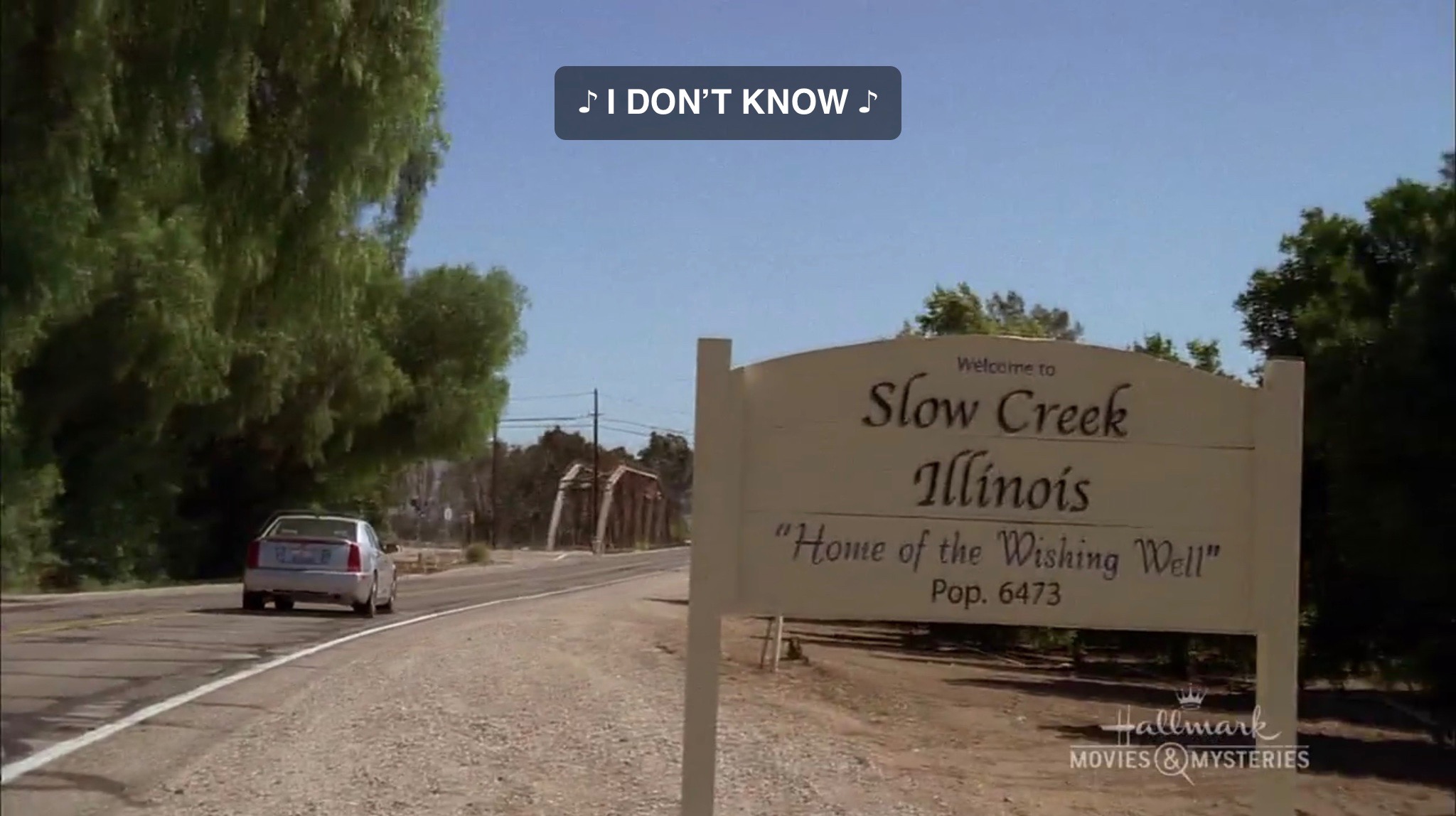
Anyways, she’s off to Slow Creek, Illinois, which is the “Home of the Wishing Well.” Not just any wishing well, but the Wishing Well. That is till the 2011 Canadian film Wishing Well came out to give them some stiff competition for that title.

She arrives at the hotel where she is going to stay and finds that Ernest Borgnine runs the place. Cynthia is in town for a story that she can take back to Celeb magazine…I thought. Regardless, this is where I am obligated to say that these townsfolk are probably hiding a terrible secret about a Muslim American solider who died overseas and whose father was murdered in the town. I mean the movie has Borgnine, it’s a small town, and Cynthia’s last name is Tamerline which is close enough to Cass Timberlane played by Spencer Tracy in the movie of the same name. That meant while watching this movie, I immediately thought of the film Bad Day At Black Rock (1955) which had Tracy and Borgnine in it. Great movie by the way that I simply updated to a modern context. Here’s the trailer.

But onward with this movie now.

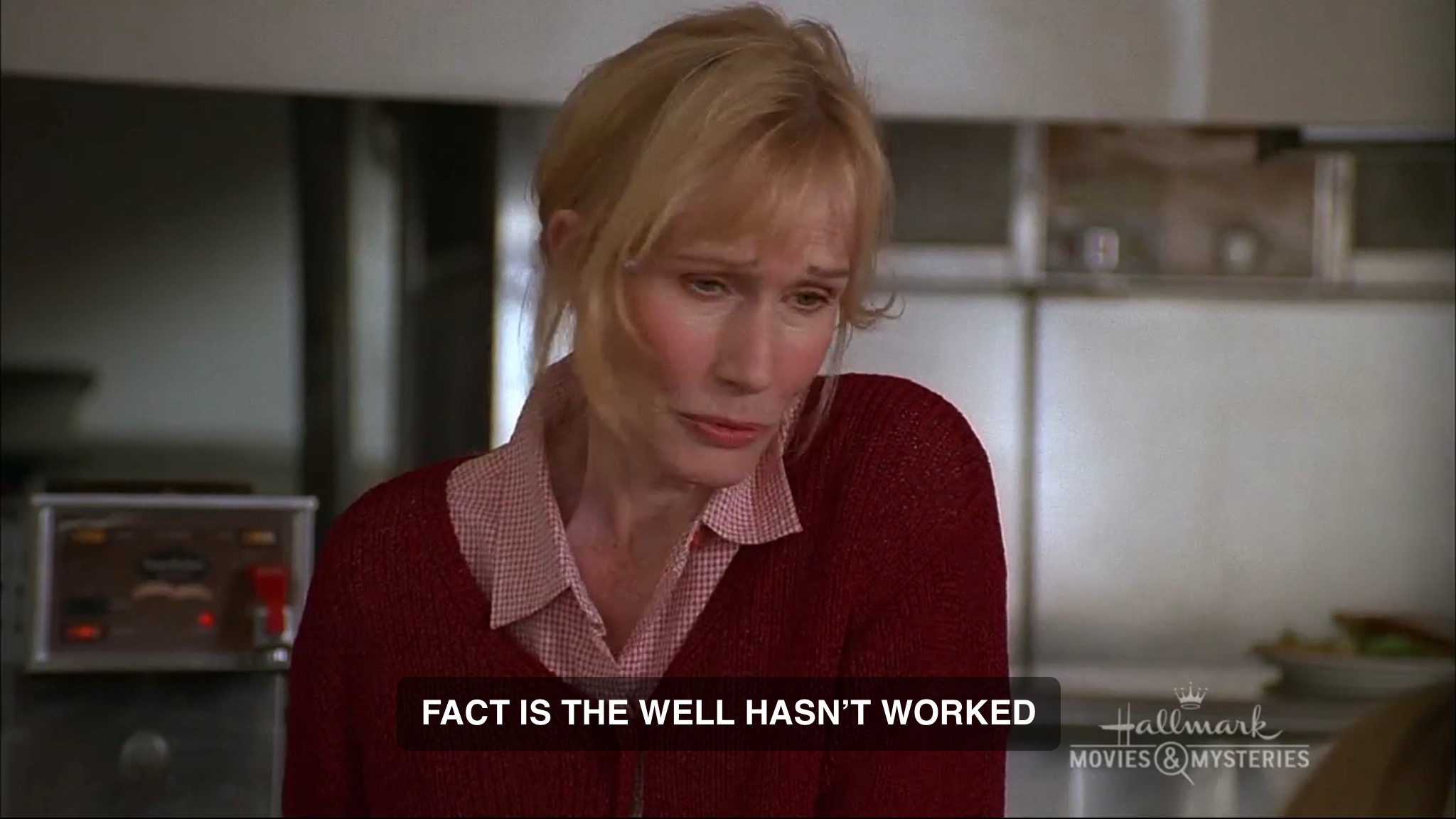
Annoying little girl tells us that wishes come true if you believe and make the right wish. Then we find out that not only is the hotel run by someone Retired and Extremely Dangerous, but that the diner is run by ‘Hot Lips’ O’Houlihan (Sally Kellerman).

IMG_7704

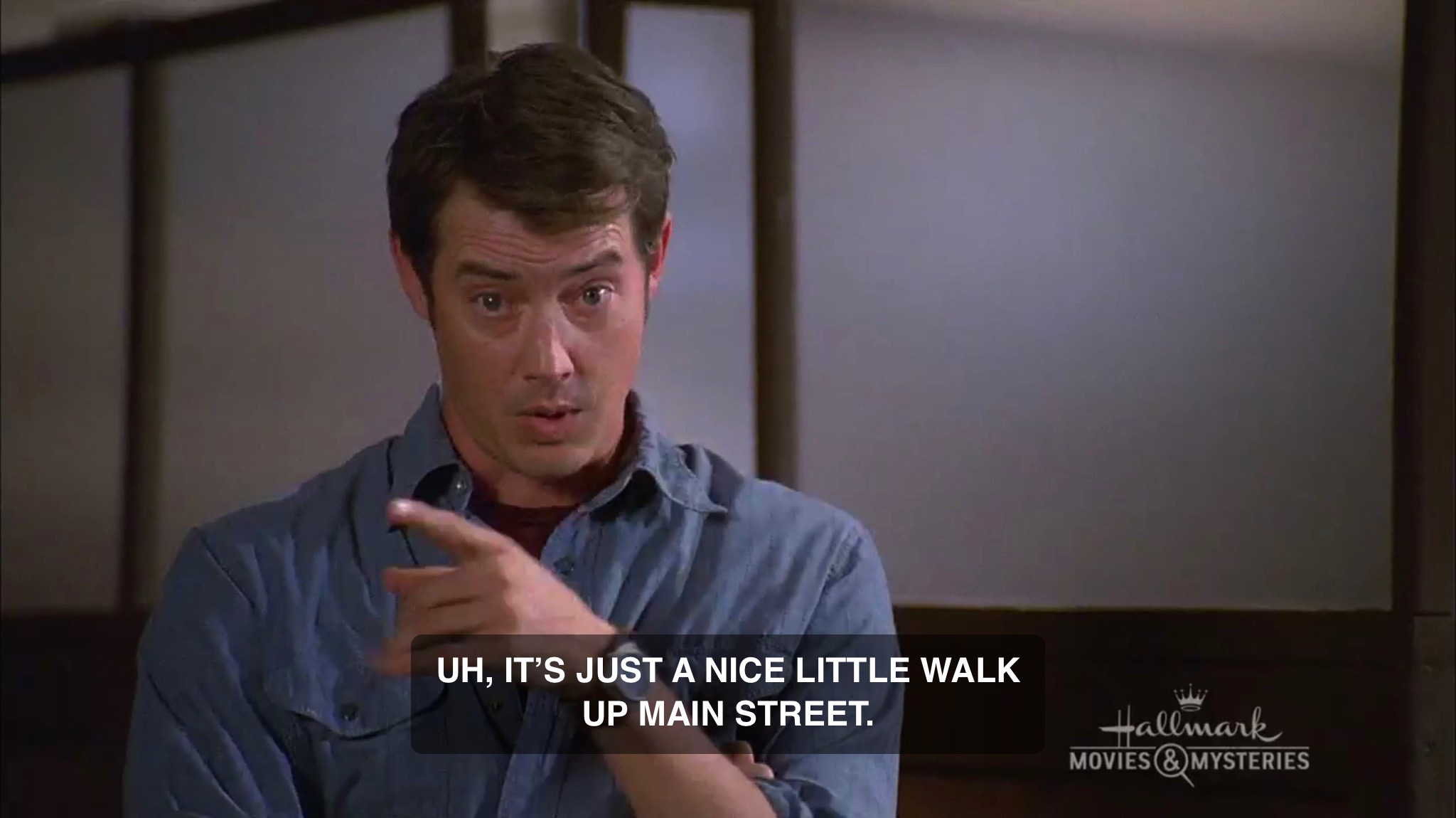
Now Cynthia visits the local paper and finds out that it’s run by the little girl’s dad played by Jason London.

IMG_7730

So this is what happened to Eric Camden’s associate pastor’s twin brother.

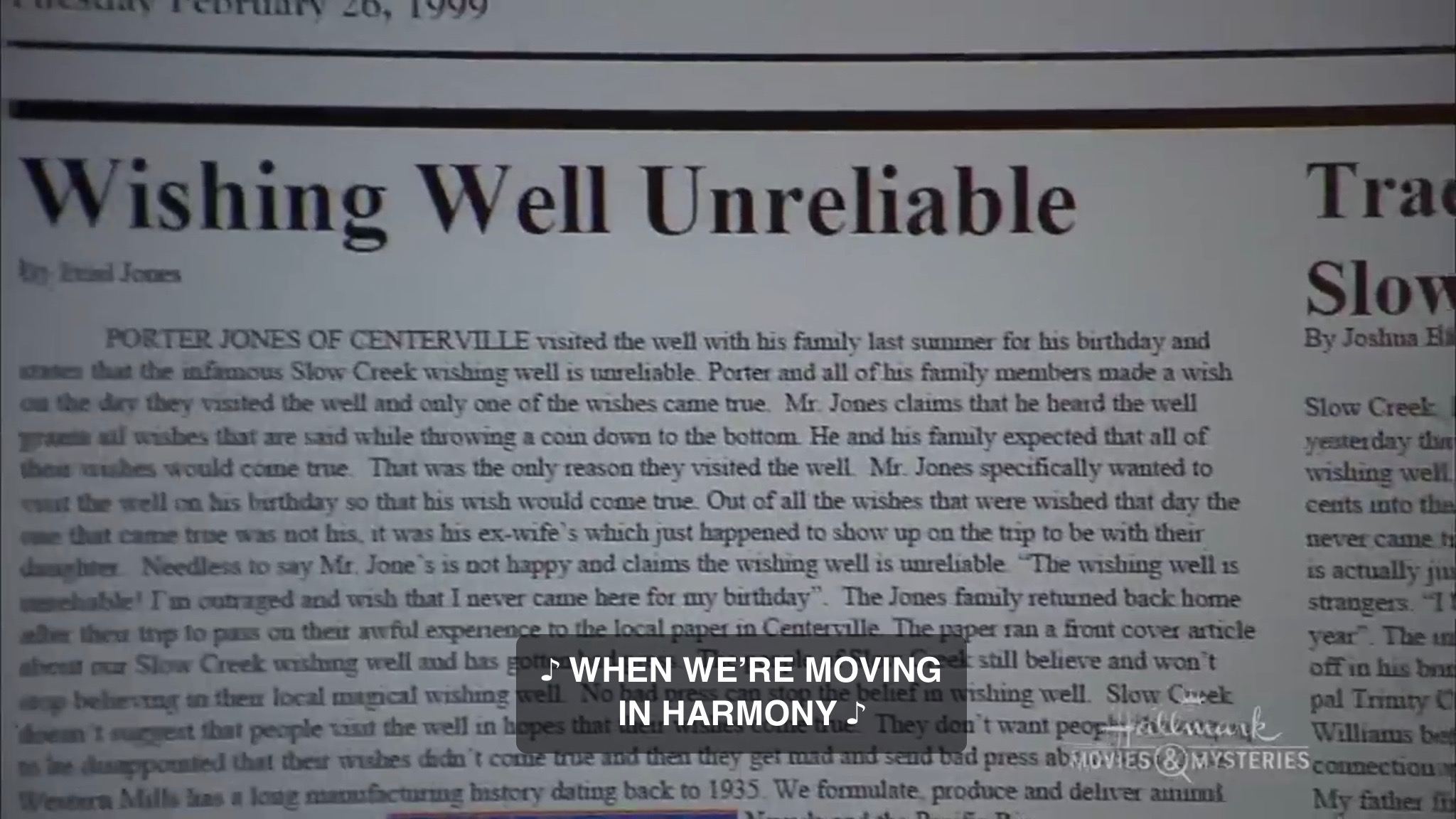
Cynthia starts to look into this wishing well of theirs. Turns out it was once a hot attraction, but then this happened.

IMG_7736

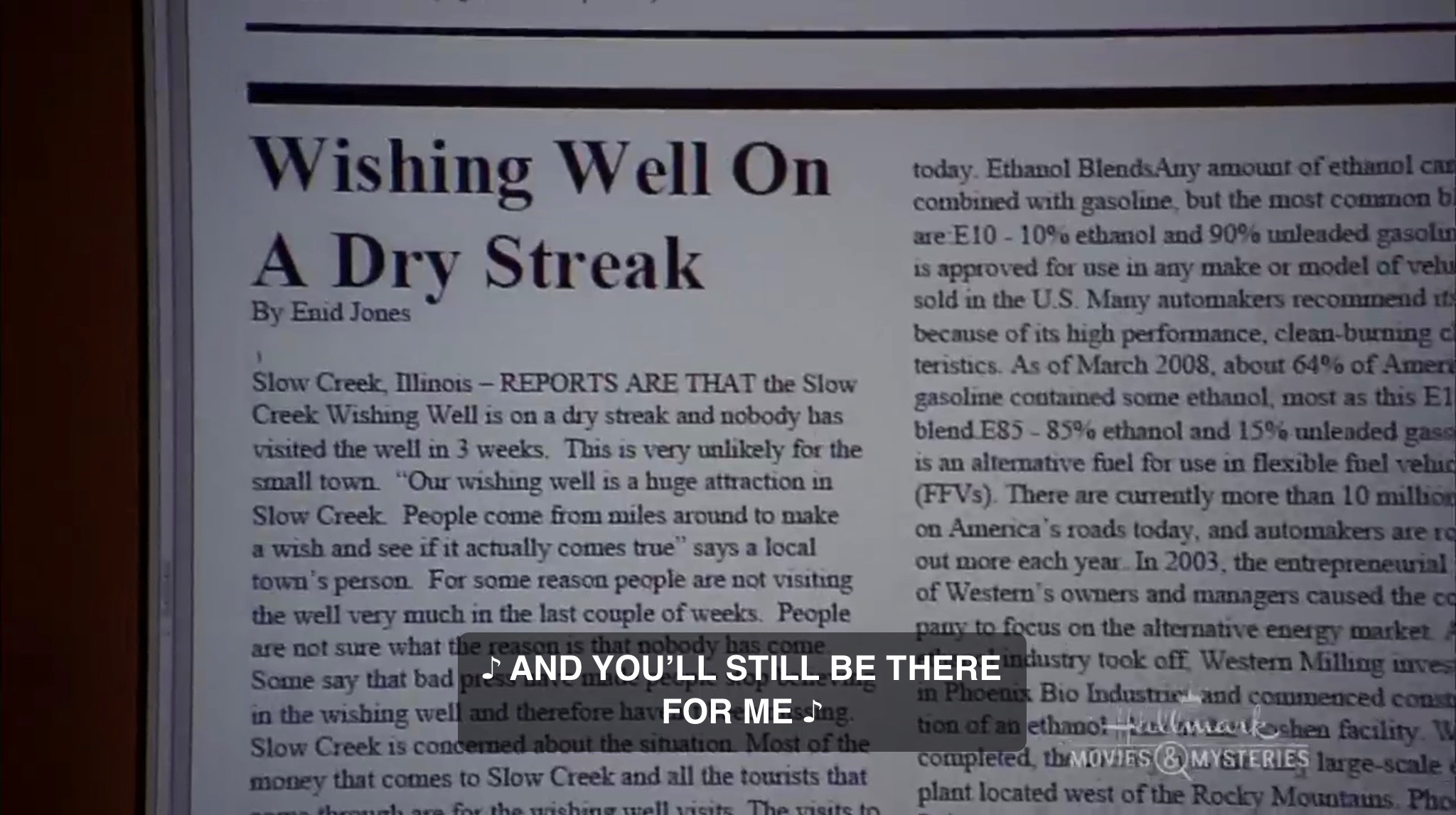
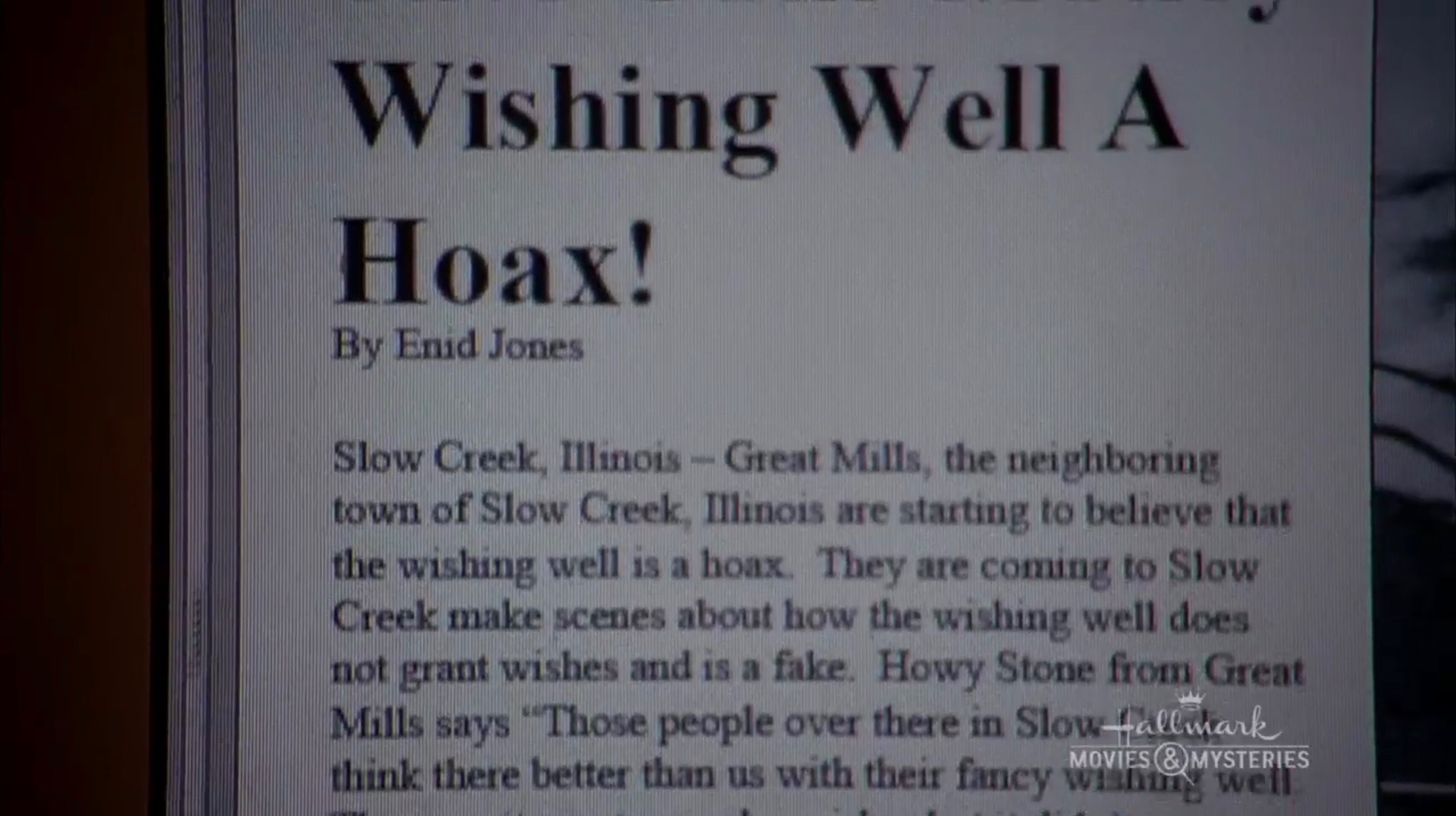
Don’t you just hate it when your ex shows up and your wish doesn’t come true, but your ex’s does. Now writer Enid Jones had it out for the well.

IMG_7738

IMG_7739

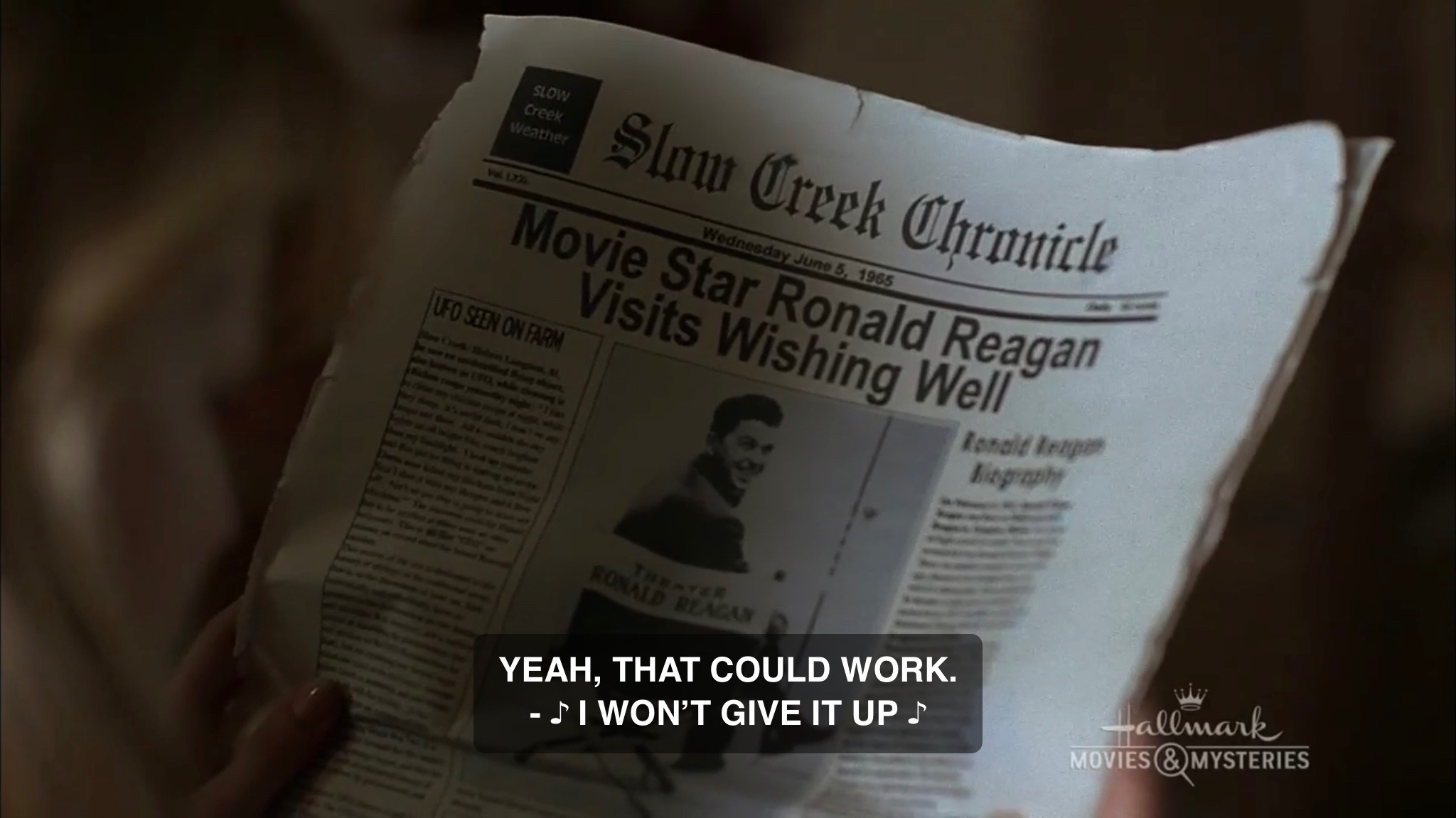
But this isn’t enough for her so she goes to dig in the archives. Long story short, Ronald Reagan once visited their well back in the 1960’s.

IMG_7789

That and a UFO was seen on a farm in Slow Creek. Interesting! What else is interesting is that they didn’t pull this Reagan and a wishing well thing completely out of their ass. Reagan actually did visit a wishing well in Dublin, Ireland back in the 1980s. Hmmm…I guess that means I need to listen to some Irish music while I finish writing this review. Well, Dropkick Murphys (Flannigan’s Ball) is Irish enough for someone who is a quarter Irish and from the Bay Area.

Oh, and since Reagan was mentioned. I guess I need to break out Genesis’ Land Of Confusion as well.

More annoying girl, and then Cynthia wakes up the next day to find out that she is now in the Twilight Zone. She is just somebody who has been hired as a local reporter. She calls up people back in New York City, but they don’t know who she is. She doesn’t try to tell them anything personal that only she would know, but just keeps calling.

This is when you can say the film goes on autopilot. Cynthia becomes more of a fixture in the town and discovers just how important this paper is to its residents. The paper is in trouble and might be bought out soon. The little girl is still annoying. A guy dies and she writes his obituary. Another guy sets his house on fire trying to beat his record for how many of his collectible lighters he can have going at once. I’m not making that up. During the scene where he explains his little game and current record I said to my dad that he didn’t mention this is the third house he’s gone through playing this game. Then she is waking up in bed to a phone call telling her his place is burning down. Of course! She writes an article that moves people about the fire. Finally, the townsfolk watch a meteor storm.

IMG_8227

Then this big city guy’s mustache shows up to buy the paper. It’s okay though because it turns out the guy who died left a huge amount of money to the paper in his will. I guess that’s better than the huge wad of cash in a can from Christmas Land.

Now just in case you thought you were finally getting this Twilight Zone like story, she wakes up on a plane back to New York City to receive praise for the story she wrote for the magazine. Yep, makes as much sense as you think it does. By that, I mean very little. She leaves her job at Celeb magazine and goes back to Slow Creek where smiley and her dad know who she is. Then it just ends abruptly.

IMG_8317

That’s it! It’s quite lousy. Even my Dad said this was a stinker and he’s usually easy to please with these movies. No reason to waste your time with this. Go watch Bad Day At Black Rock instead.

Since I happened to catch her this way. I’m really sorry Jordan.

IMG_7794

Now if you’ll excuse me, I need to throw a coin in a wishing well because I’m shipping up to Boston to find my wooden leg and I can use all the luck I can get.

Film Review: The Split (1968, directed by Gordon Flemyng)


The Split2The Split is one of the many films to be based on one of Donald Westlake’s Parker novels.  A classic antihero, Parker was a ruthless professional criminal who was only partially redeemed by being so much better at his job than all the other lowlifes around him.  In the movies, Parker has been played by everyone from Lee Marvin to Robert Duvall to Mel Gibson to Jason Statham.  In The Split, Parker is renamed McClain and he is played by Jim Brown.

McClain and his partner, Gladys (Julie Harris), have a plan to rob the Los Angeles Coliseum during a football game.  (Actual footage of the Rams playing the Falcons was used.)  McClain personally recruits a crew of criminals to help him pull off the heist.  Harry Kifka (Jack Klugman) is the getaway driver.  Bert Clinger (Ernest Borgnine) is the muscle.  Marty Gough (Warren Oates) is the electronic expert.  Dave Negli (Donald Sutherland) is the sharpshooter.

After pulling off the robbery, McClain stashes the money with his ex-girlfriend, Ellie (Diahann Carroll).  When her landlord, Herb Sutro (James Whitmore), finds out that Ellie has the money, he murders her and steals it.  When homicide detective Walter Brill (Gene Hackman) solves Ellie’s murder, he kills Herb and takes the money for himself.  Meanwhile, Gladys and the crew are convinced that McClain knows where the money is.  With everyone out to kill him, McClain tries to find the money.

The Split is mostly interesting because of its cast.  For all of his physical presence, Jim Brown was never much of an actor but the large supporting cast more than makes up for his limitations.  It’s fun to watch Sutherland, Borgnine, Harris, and Klugman compete to see who can steal the most scenes.  Meanwhile, a youngish Gene Hackman is as cantankerous as ever.  Then there’s the great Warren Oates.  Warren Oates was one of the greatest actors of all time and he spent his far too brief career stealing movies like The Split.

(The Split was released a year after Jim Brown, Ernest Borgnine, and Donald Sutherland had all appeared in The Dirty Dozen.  A year after The Split, Warren Oates and Ernest Borgnine would both be members of The Wild Bunch while Hackman and Brown would costar in Riot.)

The Split has some historical significance as the first film to ever be given an R rating.  Though tame by today’s standards, at the time of its release, The Split was considered to be extremely violent and audiences were also shocked by a brief flash of nudity.  Seen today, The Split is a conventional heist movie but it still shows what a group of good actors can do with so-so material.

The Split

Film Review: The Greatest (1977, dir by Tom Gries and Monte Hellman)


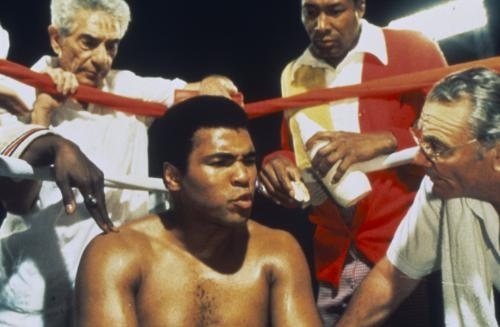
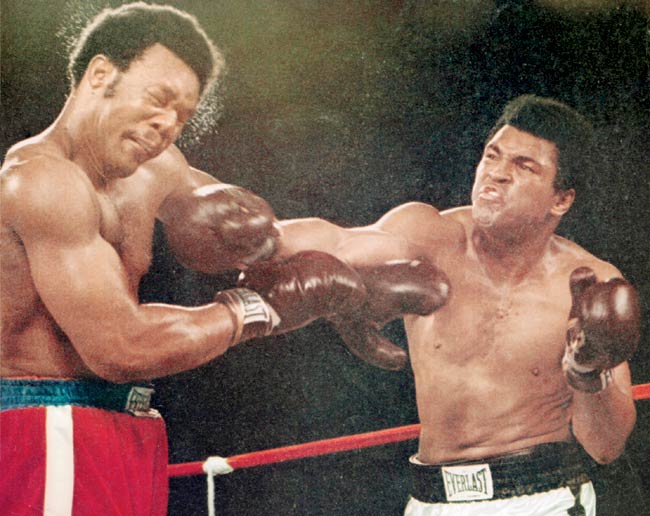
the_greatest_1977_portrait_w858The Greatest opens with 18 year-old Cassius Clay (played by Chip McAllister as a teenager and, as an adult, by Muhammad Ali himself) winning the light heavyweight gold medal at the 1960 Rome Olympics.  Returning home to Kentucky, Clay discovers that not even a gold medal can protect him from racism.  Angered after a restaurant refuses to serve him and his friend, Clay throws his gold medal into the Ohio River.  Under the training of Angelo Dundee (Ernest Borgnine), Clay turns pro and defeats Sonny Liston (Roger E. Mosley) for the heavyweight championship.  Inspired by Malcolm X (James Earl Jones), Clay also joins the Nation of Islam and changes his name to Muhammad Ali.  As heavyweight champion, Ali battles not only his opponents in the ring but racism outside of it.  The Greatest follows Ali as he loses his title for refusing to be drafted and concludes with the famous Rumble in the Jungle, where Ali won the title back from George Foreman.

Sadly, Muhammad Ali has never been the subject of a truly great feature film.  Even Michael Mann’s Ali failed to really capture the mystique that made Ali into such an iconic figure.  The Greatest is interesting because Ali plays himself.  Unfortunately, The Greatest proves that Ali may have been a great showman but he was not a natural actor.  You only have to watch the scene where Ali tries to hold his own with Robert Duvall to see just how stiff an actor Muhammad Ali really was.  Ali’s best scenes are the ones where he is trash talking his opponents or training.  The film opens with Ali jogging while George Benson sings The Greatest Love Of All, a scene that is made all the more poignant when you compare the athletic and confident Muhammad Ali of 1977 with the frail, Parkinson’s stricken Ali of today.

29Muhammad-Ali-1Instead of recreating any of Ali’s legendary fights, The Greatest instead uses actual footage of the matches.  The real life footage is the best part of the film.  After all these years, Ali’s fights against Sonny Liston, Joe Frazier, Ken Norton, and George Foreman remain exciting to watch.  Otherwise, The Greatest is too episodic and low budget to do justice to Muhammad Ali’s story.

If you want to see a truly great film about Ali and his legacy, watch the 1996 documentary When We Were Kings, 2009’s Facing Ali or 2013’s The Trials of Muhammad Ali.  Ali is such an iconic figure that it may be impossible for any feature film to properly do justice to his life and legacy.  These three documentaries come close.

(Director Tom Gries died during the filming of The Greatest.  The movie was completed by Monte Hellman.)

Embracing the Melodrama Part II #49: Hustle (dir by Robert Aldrich)


HustleContinuing our journey into the dark Hell of the 1970s, we now take a quick look at the 1975 cop film, Hustle.

Taking place in Los Angeles, Hustle tells the story of several different people who find their lives intertwined in the desperate dance of existence.  (Does that sound overdramatic?  Well, that’s the type of film that this is.)

There’s Leo Sellers (Eddie Albert), a lawyer with bright rosy cheeks and a friendly manner.  You look at Leo and you automatically assume that he must be a nice guy, the type of guy who puts on a fake beard and plays Santa Claus down at the local orphanage.  But actually, Leo is a lawyer for the mob.  He’s gotten rich through crime and his mansion hides all sorts of secrets.  He also has a weakness for violently abusing prostitutes.

Speaking of prostitutes, one of Leo’s favorite is Nicole (Catherine Deneuve), an icy French beauty who survives by holding the world at a distance.  Though Nicole doesn’t like Leo, she has to keep him happy because Leo could easily arrange for her to be deported back to France.

Nicole is also the girlfriend of Phil Gaines (Burt Reynolds), a cynical homicide detective who, like her, tries to keep the world at a distance.  Phil is obsessed with old films and frequently speaks of how much he wishes the real world could be like a movie.  Throughout the film, he talks about eventually moving to Rome.

Phil’s partner is Louis Belgrave (Paul Winfield), who is not quite as cynical as Phil but who is definitely getting there.  Whereas Phil is always talking about how much the world has disappointed him, Louis mostly accepts things without complaint.  He just wants to do his job and go home at the end of the day.

Phil and Louis’s boss is Santoro (Ernest Borgnine, giving a typical Ernest Borgnine performance).  Santoro is not a bad guy but, in order to hold onto his job, he has to keep powerful men like Leo Sellers happy.

Santoro also has to deal with the complaints of people like the Hollingers.  Marty Hollinger (Ben Johnson) is a veteran of the Korean War and handles the world in a gruff and suspicious manner.  Paula (Eileen Brennan) is Marty’s wife and, as a result of his emotional distance, has recently started having an affair.

And then there’s Gloria (Colleen Brennan), Marty and Paula’s daughter.  Gloria ran away from home a while ago and soon found herself working as a stripper, a porn actress, and eventually as a prostitute.  When Gloria is found dead, Phil and Louis get the case.  It’s obvious to them that Gloria committed suicide.  It’s not so obvious to Marty, who is convinced that his daughter was murdered and, disgusted by Phil’s cynical attitude, sets out to investigate the case on his own.

One of the more interesting things about Hustle is that really is no murder mystery.  Despite what Marty believes, Gloria really did commit suicide.  Marty’s insistence that she was murdered has more to do with his guilt over being a bad father than it does with any real evidence.  As Marty investigates his daughter’s life, he is exposed to a sordid world of strip clubs and prostitution.  He discovers that Gloria’s clients included many powerful men and he decides that the last client she saw must have murdered Gloria.

That client is Leo Sellers.  And while Leo may not have murdered Gloria, he is willing to kill Marty to keep his secret life from being exposed.  Phil and Louis are forced to choose between remaining detached or protecting Marty from himself.

And, since this film was made in the 70s, it all ends on a really dark note!

Hustle shows up on Encore occasionally.  It’s a strange film to watch, as it alternates between being a fairly predictable cop film and being a portrait of existential dread.  The movie doesn’t really work; it’s too long, it features some amazingly pretentious dialogue, and Reynolds, Winfield, and Deneuve all seem to be bored with their characters.  Probably the film’s best performance comes from Ben Johnson.  I imagine that has to do with the fact that Johnson is playing the only character who behaves in a fairly consistent way.

And yet, if you’re like me and you’re fascinated with the nonstop fatalism of 70s cinema, Hustle does have some historical value.  It’s one of those films that you watch and you wonder how anyone survived the 1970s!