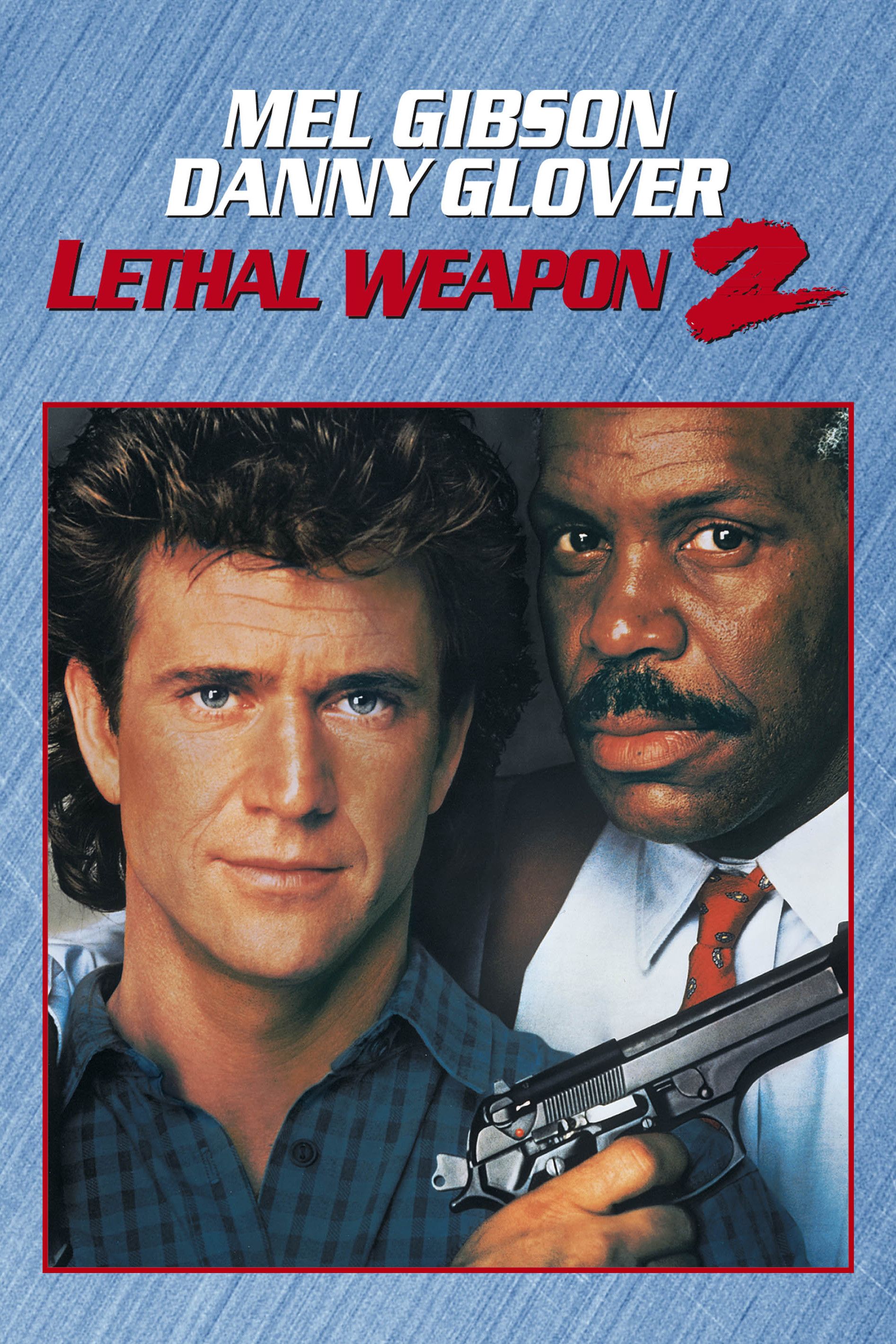
Review: Lethal Weapon 2 (dir. by Richard Donner)


“We’re back, we’re bad. You’re black, I’m mad. Let’s go!” — Martin Riggs

Lethal Weapon 2 is the kind of sequel that doesn’t really try to reinvent what worked the first time so much as crank the volume on everything: the action is bigger, the jokes come faster, and the chaos feels almost constant. Depending on what you loved about Lethal Weapon, that approach delivers more of the high-energy partnership in a flashier package. It’s a confident, very entertaining 80s action movie that knows it’s a sequel and leans into the spectacle that status allows.

Plot-wise, Lethal Weapon 2 wastes no time reminding you what this world feels like. It drops Riggs and Murtaugh into a wild car chase almost immediately, and from there the story locks onto a case involving South African diplomats hiding behind apartheid-era “diplomatic immunity” while running a massive drug and money-laundering operation. It’s a cleaner, more high-concept hook than the original’s murkier web of Vietnam vets and heroin smuggling, and the script makes the villains broad on purpose, almost cartoonishly arrogant, to give the audience someone very easy to hate. The trade-off is that the plot feels a bit more mechanical this time; you always know who the bad guys are and what the destination is, so the film’s real energy comes from the detours, jokes, and set-pieces rather than any mystery.

One of the big shifts from Lethal Weapon to Lethal Weapon 2 is tone. The first film balanced brutal violence and dark humor with a surprisingly heavy focus on Riggs’ suicidal grief and Murtaugh’s fear of getting too old for the job. The sequel keeps those elements in the background but leans harder into banter, slapstick timing, and outrageous gags like the now-famous exploding toilet sequence, with Richard Donner’s direction pushing the script toward action comedy. It’s still R-rated and not shy about blood or cruelty, but the emotional intensity is dialed down compared to the original’s raw edges.

Mel Gibson and Danny Glover remain the anchor, and their chemistry is as sharp as ever. Gibson’s Riggs is still reckless and unhinged, but there’s a looser, more playful side to him this time; he’s less haunted and more of a live-wire prankster until the story gives him something personal to latch onto. Glover’s Murtaugh continues to be the grounded center, constantly exasperated and always half a step away from just walking off the job, and the film has a lot of fun putting his straight-man persona through increasingly humiliating situations while still letting him be competent when it counts. Compared to the first film, where their partnership slowly thawed from suspicion to genuine trust, Lethal Weapon 2 starts from “these guys are already a team” and builds its best moments from how comfortably they now bounce off each other.

The biggest new ingredient is Joe Pesci as Leo Getz, a federal witness turned tagalong who basically functions as the franchise’s third stooge. Pesci leans into the motor-mouthed, paranoid, endlessly complaining energy that would become his signature, and his presence tips some scenes from gritty cop story into broad comedy. He undercuts tension at times, but he also gives the movie a different rhythm, especially in the quieter in-between beats where the first film might have lingered more on Riggs’ inner damage.

In terms of action, Donner clearly has more money and confidence to play with, and it shows. The chases are bigger, the shootouts are staged with a slicker sense of geography, and there’s a steady escalation in scale that makes the film feel like a genuine summer sequel rather than just another mid-budget cop movie. The original had a grimy, street-level intensity, with brutal fistfights and sudden bursts of violence; Lethal Weapon 2 is more interested in creative set-pieces, crowd-pleasing payoffs, and moments designed to make an audience cheer. It’s less intimate, but it is rarely dull.

Where the film lands in a more complicated space is its attempt to keep some emotional stakes alive while also going bigger and funnier. Riggs’ grief over the loss of his wife is still part of his character, and the story finds ways to poke at that wound again, including a new relationship that lets him imagine some kind of future beyond the constant death wish. Those beats are there to echo what worked so well in the first movie, but they have less room to breathe, often getting squeezed between an action scene and a joke instead of shaping the entire film’s tone. You can feel the push and pull between wanting to keep the darker emotional spine and delivering the kind of lighter, more easily marketable sequel a studio would understandably chase.

The villains themselves are effective in that pulpy 80s way: not nuanced, but very punchable. Arjen Rudd, with his smug talk of “diplomatic immunity,” is a villain designed to make audiences grind their teeth, and his main henchman adds a physically intimidating, quietly sadistic presence to the mix. Compared to the original’s more grounded ex-military antagonists, these guys feel one step closer to Bond territory, and that shift mirrors the film’s overall move toward heightened, almost comic-book stakes. What the sequel loses in plausibility, it gains in revenge-fantasy satisfaction.

When stacked directly against Lethal Weapon, the second film feels like a classic case of “if you liked hanging out with these characters once, here’s more time with them.” The original is tighter, more emotionally focused, and arguably more distinctive, with a stronger sense of danger and genuine unpredictability around Riggs’ mental state. Lethal Weapon 2 smooths some of those jagged edges and replaces them with quips, bigger set-pieces, and a more overtly crowd-pleasing structure, which makes it an easier, more consistently fun watch but also a slightly less resonant one. It is still a good film, but in many ways it is also the moment where the franchise shifts from a character-driven cop thriller with action to a full-on action-comedy machine.

As a fair, middle-of-the-road assessment, Lethal Weapon 2 works very well on its own terms and delivers exactly what most people want out of a late-80s buddy-cop sequel. The chemistry is intact, the action is energetic, and the film moves with the kind of confident pace that never really lets you get bored. At the same time, the tonal tilt toward broader humor and more cartoonish villains means it doesn’t quite have the same staying power or emotional punch as Lethal Weapon, especially if what hooked you the first time was how wounded and volatile it all felt. For fans of the original, it’s an enjoyable continuation—a louder, flashier second round that may not hit as hard, but still knows how to entertain.
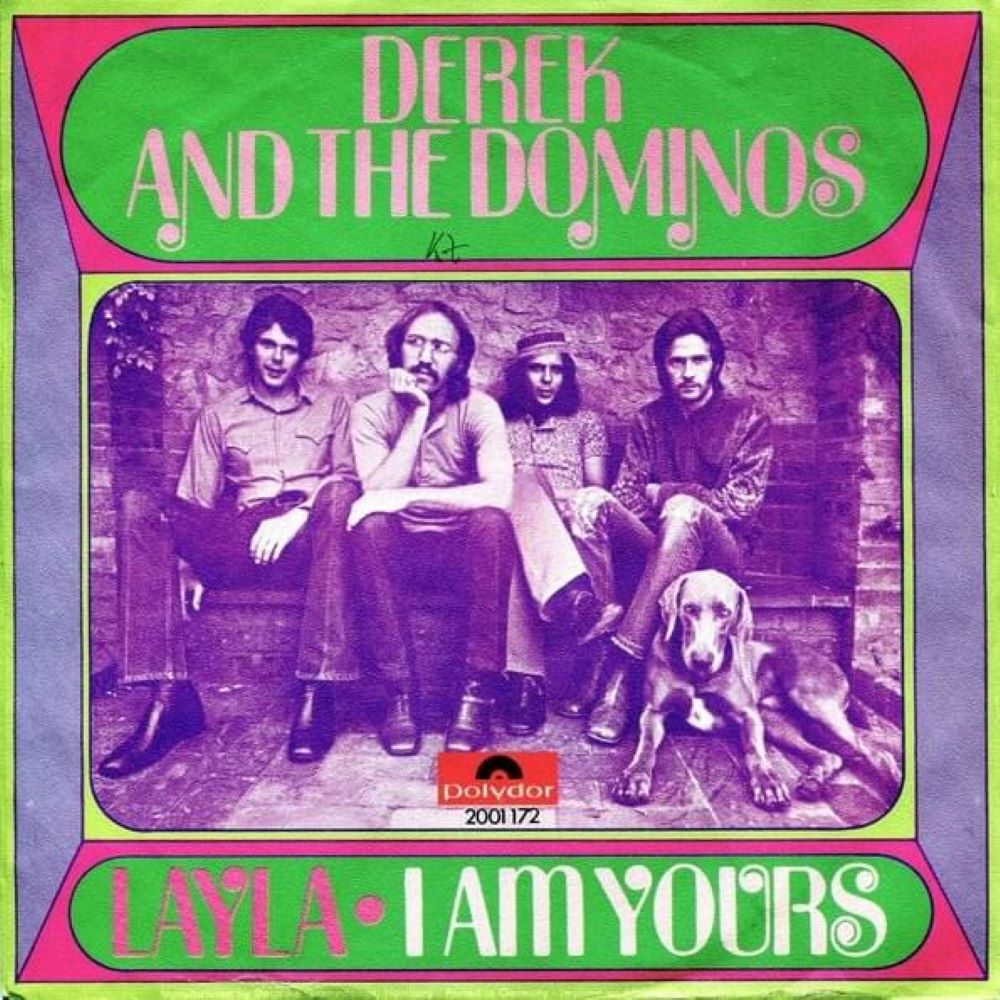
Song of the Day: Layla (by Derek & The Dominoes)


“Layla” is still one of those solos guitar players treat like a rite of passage. It’s not just the famous riff; the way Clapton and Duane Allman tear into the lead lines makes the whole first half feel like it’s permanently on the edge of falling apart, in the best way. The solo really starts to bloom once the main riff gives way to the verse lead around the 2:20 mark, with the piano-driven section kicking in later at about 3:10 on the original studio version.

A big part of why musicians and fans rate it so highly is the balance between flash and feel. The bends, slides, and quick little runs are impressive, but they always come back to short, singable phrases instead of just running scales. Allman’s slide work, especially those pushed, “beyond the fretboard” high notes, is a huge talking point among players because it sounds wild and emotional while still landing dead-on pitch.

People also love how the solo feels like one long emotional unraveling rather than a neat, contained spotlight moment. The guitar gradually hands things over to the piano section instead of ending on a standard rock climax, so the solo feels like it spills into that second movement of the song. That journey—from searing, tangled guitar lines to that almost resigned, melodic outro—is a big reason “Layla” keeps showing up on “greatest solos” lists and in conversations between working guitarists and casual fans alike.

Layla

What’ll you do when you get lonely
And nobody’s waiting by your side?
You’ve been running and hiding much too long
You know it’s just your foolish pride

Layla
You’ve got me on my knees
Layla
I’m begging, darling, please
Layla
Darling, won’t you ease my worried mind?

I tried to give you consolation
When your old man had let you down
Like a fool, I fell in love with you
You turned my whole world upside down

Layla
You’ve got me on my knees
Layla
I’m begging, darling, please
Layla
Darling, won’t you ease my worried mind?

Let’s make the best of the situation
Before I finally go insane
Please, don’t say we’ll never find a way
And tell me all my love’s in vain

Layla
You’ve got me on my knees
Layla
I’m begging, darling, please
Layla
Darling, won’t you ease my worried mind?
Layla
You’ve got me on my knees
Layla
I’m begging, darling, please
Layla
Darling, won’t you ease my worried mind?

[guitar solo]

Great Guitar Solos Series

Music Film Review: Tommy (dir by Ken Russell)


“Tommy, can you hear me?”

That’s a question that’s asked frequently in the 1975 film, Tommy.  An adaptation of the famous rock opera by the Who (though Pete Townshend apparently felt that the film’s vision was more director Ken Russell’s than anything that he had meant to say), Tommy tells the story of a “deaf, dumb, and blind kid” who grows up to play a mean pinball and then become a cult leader.  Why pinball?  Who knows?  Townshend’s the one who wrote Pinball Wizard but Ken Russell is the one who decided to have Elton John sing it while wearing giant platform shoes.

Tommy opens, like so many British films of the 70s, with the blitz.  With London in ruins, Captain Walker (the almost beatifically handsome Robert Powell) leaves his wife behind as he fights for his country.  When Walker is believed to be dead, Nora (Ann-Margaret) takes Tommy to a holiday camp run by Frank (Oliver Reed).  Oliver Reed might not be the first person you would expect to see in a musical and it is true that he wasn’t much of a singer.  However, it’s also true that he was Oliver Reed and, as such, he was impossible to look away from.  Even his tuneless warbling is somehow charmingly dangerous.  Nora falls for Frank but — uh oh! — Captain Walker’s not dead.  When the scarred captain surprises Frank in bed with Nora, Frank hits him over the head and kills him.  Young Tommy witnesses the crime and is told that he didn’t see anything and he didn’t hear anything and that he’s not going to say anything.

And so, as played by Roger Daltrey, Tommy grows up to be “deaf, dumb, and blind.”  Various cures — from drugs to religion to therapy — are pursued to no avail.  As the Acid Queen, Tina Turner sings and dances as if she’s stealing Tommy’s soul.  As the Therapist, Jack Nicholson is all smarmy charm as he gently croons to Ann-Margaret.  Eric Clapton performs in front of a statue of Marilyn Monroe.  Ann-Margaret dances in a pool of beans and chocolate and rides a phallic shaped pillow. As for Tommy, he eventually becomes the Pinball Wizard and also a new age messiah.  But it turns out that his new followers are just as destructive as the people who exploited him when he was younger.   It’s very much a Ken Russell film, full of imagery that is shocking and occasionally campy but always memorable.

I love Tommy.  It’s just so over-the-top and absurd that there’s no way you can ignore it.  Ann-Margaret sings and dances as if the fate of the world depends upon it while Oliver Reed drinks and glowers with the type of dangerous charisma that makes it clear why he was apparently seriously considered as Sean Connery’s replacement in the roles of James Bond.  As every scene is surreal and every line of dialogue is sung, it’s probably easy to read too much into the film.  It could very well be Ken Russell’s commentary on the New Age movement and the dangers of false messiahs.  It could also just be that Ken Russell enjoyed confusing people and 1975 was a year when directors could still get away with doing that.  With each subsequent viewing of Tommy, I become more convinced that some of the film’s most enigmatic moments are just Russell having a bit of fun.  The scenes of Tommy running underwater are so crudely put together that you can’t help but feel that Russell was having a laugh at the expense of people looking for some sort of deeper meaning in Tommy’s journey.  In the end, Tommy is a true masterpiece of pop art, an explosion of style and mystery.

Tommy may seem like a strange film for me to review in October.  It’s not a horror film, though it does contain elements of the genre, from the scarred face of the returned to Captain Walker to the Acid Queen sequence to a memorable side story that features a singer who looks like a junior Frankenstein.  To me, though, Tommy is a great Halloween film.  Halloween is about costumes and Tommy is ultimately about the costumes that people wear and the personas that they assume as they go through their lives.  Oliver Reed goes from wearing the polo shirt of a holiday camp owner to the monocle of a tycoon to the drab jumpsuits of a communist cult leader.  Ann-Margaret’s wardrobe is literally a character of its own.  Everyone in the film is looking for meaning and identity and the ultimate message (if there is one) appears to be that the search never ends.


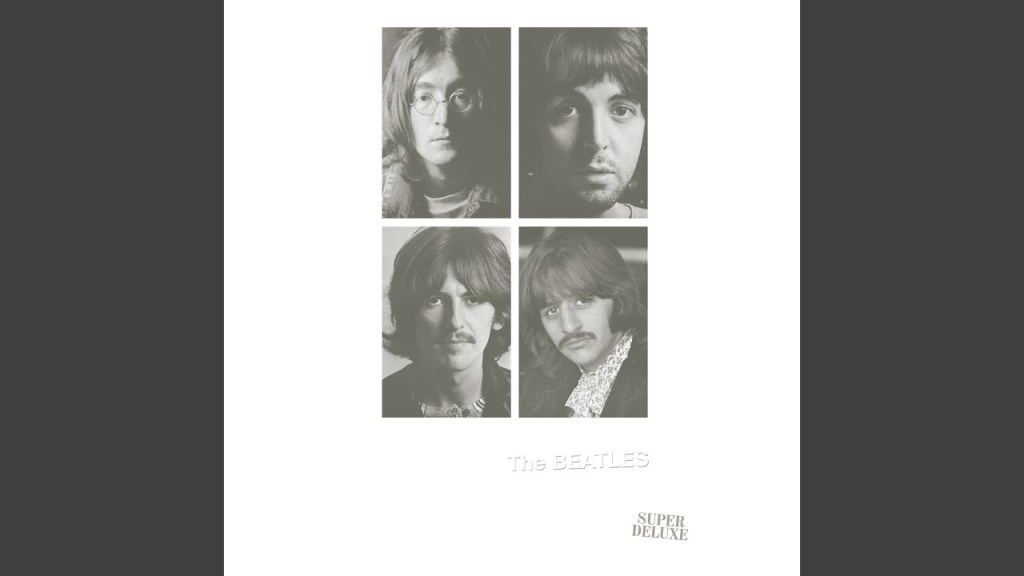
Song of the Day: While My Guitar Gently Weeps (by The Beatles)


Continuing our series of greatest guitar solo series, I present “While My Guitar Gently Weeps” by The Beatles.

The song was written by George Harrison and was composed at a time after the band had just returned from a trip and stay in India to study Transcendental Meditation. Harrison, inspired by his stay in India, re-discovered his passion for the guitar and began to write songs with it as his main instrument. Thus begins an era of The Beatles and George Harrison as a maturing songwriter than made a huge contribution to the band becoming more than just the global rock phenomena pre-1968 and one where the group began to release songs and albums that reflected their new world views.

Yet, as great as the song has become since its release on November 22, 1968, it’s also well-remembered as the song that began a series of collaborations between George Harrison and Eric Clapton (a close friend) who plays lead guitar on the song. It is Clapton’s lead guitar work on “While My Guitar Gently Weeps” that has mesmerized listeners throughout the decades.

Clapton plays two guitar solos, the first occurring during first bridge section of the song, and the second the song’s outro. Both solos accentuates and focuses on the song’s lyrical tradition styling where the musical instrument provides the emotions that propel the song.

The outro guitar solo has also reached a new level of immortality in 2004 when Harrison was posthumously inducted into the Rock and Roll Hall of Fame. The collaboration of artists that included Tom Petty, Jeff Lynne, Steve Winwood, Marc Mann, Dhani Harrison, Prince, Steve Ferrone, Scott Thurston, Jeff Young, and Jim Capaldi. It was Prince’s extended performance of the outro solo that’s become legendary.

While My Guitar Gently Weeps

I look at you all, see the love there that’s sleeping

While my guitar gently weeps
I look at the floor and I see it needs sweeping
Still my guitar gently weeps

I don’t know why nobody told you how to unfold your love
I don’t know how someone controlled you
They bought and sold you

I look at the world and I notice it’s turning
While my guitar gently weeps
With every mistake we must surely be learning
Still my guitar gently weeps

[guitar solo]

I don’t know how you were diverted
You were perverted too
I don’t know how you were inverted
No-one alerted you

I look at you all, see the love there that’s sleeping
While my guitar gently weeps
Look at you all……
Still my guitar gently weeps

I look at you all, see the love there that’s sleeping
While my guitar gently weeps
I look at the floor and I see it needs sweeping
Still my guitar gently weeps

I don’t know why nobody told you how to unfold your love
I don’t know how someone controlled you
They bought and sold you

I look at the world and I notice it’s turning
While my guitar gently weeps
With every mistake we must surely be learning
Still my guitar gently weeps

I don’t know how you were diverted
You were perverted too
I don’t know how you were inverted
No-one alerted you

I look at you all, see the love there that’s sleeping
While my guitar gently weeps
Look at you all……
Still my guitar gently weeps

[guitar solo]

Great Guitar Solos Series

Music Video of the Day: It’s In The Way That You Use It by Eric Clapton (1986, directed by Oley Sassone)


Today’s music video of the day was written for Martin Scorsese’s The Color of Money.  The video mixes clips of Clapton performing the song with scenes taken from the film.  This use to be a very popular format on MTV, back when MTV played videos and every movie was advertised with a music video.

Director Oley Sassone is perhaps best-known for directing the never released 1996 Fantastic Four for Roger Corman.

Enjoy!

Music Video of the Day: One of Those Days by Ozzy Osbourne and Eric Clapton (2022, directed by Todd McFarlane)


It looks like Ozzy Osbourne is having one of those days, complete with upside down crosses, trips to the graveyard, and drinks from a bottle of sin.  Luckily, he’s got Eric Clapton backing him up with some killer guitar moves.

This video features the Ozzy Osbourne that parents used to warn their kids about, the one who was thought to be in league with Satan and who happily drank from bottles of sin and bit the heads off of bats.  It all seems pretty foolish today but, then again, it seemed pretty foolish back then as well.  I have never bought into the idea that Ozzy worshipped Satan but I’ve also never bought into the other story that is often told about Ozzy, that’s he’s secretly a devout member of the Church of England.  If Ozzy worships anything, it would appear to be rock and roll and why not?  It’s been good to him.

The animated video was directed by comic book artist and Spawn creator Todd McFarlane.

This feels like the right way to start October.

Enjoy!

Music Video of the Day: I Wish It Would Rain Down by Phil Collins (1990, directed by Jim Yukich)


This lengthy music video finds Phil Collins playing a drummer-turned-singer in the 1930s. With the help of his friend, a guitar player named Eric (and played, of course, by Eric Clapton), Collins auditions for a demanding theater owner (Jeffrey Tambor). While he auditions, he imagines what his life would be like if he becomes a success. He might even win an Oscar, probably for writing a song for a Disney film.

This video is more like a short film than a traditional music video, with over two minutes of “acting” before the singing even begins. This video came out at the time when Collins was still trying to make a career as an actor. I like the video but I wouldn’t be surprised to find out that, for some people, it probably represents everything that they didn’t like about Phil Collins back in the day.

This video was directed by Jim Yukich, who directed several videos for Collins. Yukich’s name can be spotted on a clapboard when Collins is imagining what it would be like to be a film star.

In the scenes in which Collins is acting opposite of Humphrey Bogart, Bogart is played by Robert Sacchi. Sacchi built an entire career out of his resemblance to Humphrey Bogart. Whenever a sitcom in the 80s or the 90s needed Humphrey Bogart to appear in a dream sequence, the call went out to Sacchi. Sacchi also appeared in several movies, playing characters with names like Sam Marlowe, Inspector Bogie, and The Bogeyman. According to the imdb, he also appeared in The Erotic Adventures of Three Musketeers as Athos. I’m not sure if I believe that.

Enjoy!

Music Video of the Day: Taxman, performed by George Harrison and Eric Clapton (1991, directed by ????)


Today is Tax Day here in the States so this music video of the day feels especially appropriate.

George Harrison originally wrote this song in 1966. It appeared on Revolver. The song was inspired by the fact that, even tough the Beatles were making a huge amount of money, they were also expected to give a huge amount of that money to the government. Harrison said that the music was inspired by the theme song for the Batman TV series and once you learn that, it’s impossible to listen to this song without thinking, “Batman!”

This performance is from a 1991 concert in Japan and features Harrison’s frequent collaborator and friend, Eric Clapton. Eric Clapton has said that he originally disliked the Beatles because he felt that they were too “poppy,” and that he preferred the blues. Clapton, of course, went on to collaborate with all four of the Beatles on several different projects. When it appeared that Harrison had left the Beatles during the tense recording of the album that would become Let It Be, John Lennon briefly speculated about replacing him with Clapton. Harrison, however, returned to the band and the Beatles broke up shortly afterwards.

(Clapton, for his part, says that if Lennon ever had made the offer, he would have refused because of his friendship with Harrison.)

In 1969, following his famous spiritual awakening, George Harrison would tell BBC Radio, “”No matter how much money you’ve got, you can’t be happy anyway. So you have to find your happiness with the problems you have and you have to not worry too much about them.”

Enjoy!

Rockin’ in the Film World #18: The Who’s TOMMY (Columbia 1975)


gary loggins's avatarcracked rear viewer


Before MTV ever hit the airwaves, there was TOMMY, Ken Russell’s stylized cinematic vision of The Who’s 1969 ‘rock opera’. It was a match made in heaven, teaming Britain’s Wild Man of Cinema with the anarchic rock and roll of Pete Townshend, Roger Daltrey, John Entwistle, and Keith Moon (not to mention England’s own enfant terrible,Oliver Reed ). Russell both captures the spirit of Townsend’s hard rock opus and expands on it visually with an all-out assault-on-the-senses musical featuring an all-star cast that includes an Oscar-nominated performance by Ann-Margret as the mother of “that deaf, dumb, and blind kid” who “sure plays a mean pinball”!

The Who’s original album cover

Townshend, the group’s primary songwriter, had been experimenting with long-form rock’n’roll since the beginning, notably the nine minute suite “A Quick One While He’s Away” on their second album A QUICK ONE (retitled in America HAPPY JACK). TOMMY was…

View original post 467 more words

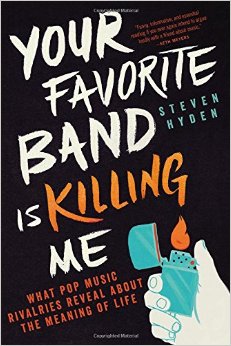
Airport Reading: Your Favorite Band Is Killing Me by Steven Hyden


51y-hABo2ML._SY344_BO1,204,203,200_Today, I have flown from Baltimore to Chicago and, after a three-hour layover at O’Hare, from Chicago to Atlanta.  Now I have to wait two hours until I board a plane to Dallas.  Luckily, I have a good book to read.

Steven Hyden’s Your Favorite Band Is Killing Me takes a look at some famous pop music rivalries and what they may or may not reveal about the meaning of life.  Hyden examines 19 different rivalries, everyone from Oasis vs. Blur to Neil Young vs. Lynard Skynard to the Smashing Pumpkins vs. Pavement, Beatles vs. the Rolling Stones and, naturally, Roger Waters vs. everyone else in Pink Floyd.  And, of course, he also writes about Biggie vs. Tupac because, as he puts it, that’s the only rivalry that he “was required by law to write about in this book.”

The best chapter, in my opinion, is Hyden’s look at the rivalry between Jimi Hendrix’s legacy and Eric Clapton’s continued existence.  He asks a very important question: If Hendrix had lived and was currently living the life of Eric Clapton, would we still consider Jimi to be the greatest guitar God of all time?  A close second to the Hendrix/Clapton chapter is Hyden’s look at the rivalry between Nirvana and Pearl Jam.  Hyden makes a convincing argument that not only did Kurt Cobain never really grow to like Pearl Jam but that Bruce Springsteen really does not like Chris Christie that much either.

Steven Hyden’s an opinionated guy and, reading the book, I have disagreed with him almost as much as I’ve agreed.  But he is also a very good writer and he definitely knows his music.  Your Favorite Band Is Killing Me has made this day of airports and flying bearable.  I highly recommend it!