Reblog: Lisa’s Thoughts on Halloween II (directed by Rick Rosenthal)


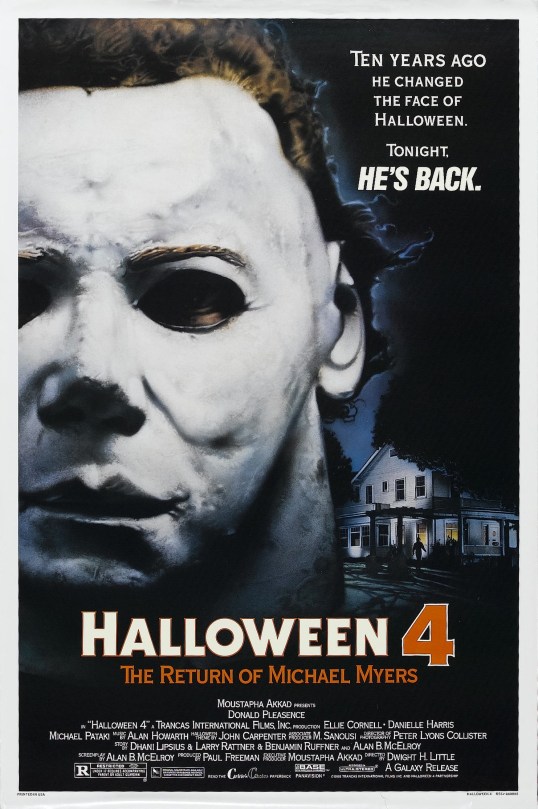
And now that you’ve re-read Arleigh’s review of the original Halloween, why not check out my review of the original Halloween II? This was originally published in 2012! After reading this, be sure to check back in about 90 minutes for Case’s review of Halloween 4! And then come back on Thursday for Halloween 5! (Where’s Halloween 3? It will be dealt with as soon as we finish the saga of Michael Myers…)

Lisa Marie Bowman's avatarThrough the Shattered Lens

Last night, I watched Halloween II.  No, I’m not referring to the rather disturbing Rob Zombie movie that came out in 2009.  Instead, this Halloween II was the original sequel to the original Halloween.  This version was written by John Carpenter and Debra Hill.  It was released in 1981 and I saw it in 2012, via Cinemax.

Why Was I Watching It?

Because it’s October, of course!  It’s horror month and Halloween is one of the great horror movies.  Would Halloween II turn out to be another great horror movie?  Well, to be honest, I figured it probably wouldn’t but I decided to watch it anyway.

What Was It About?

Halloween II picks up exactly from where the first Halloween ended.  The sole surviving babysitter, Laurie Strode (Jamie Lee Curtis), is being rushed to the hospital by two paramedics, one nice (Lance Guest) and one kinda crude and pervy (Leo Rossi). …

View original post 640 more words

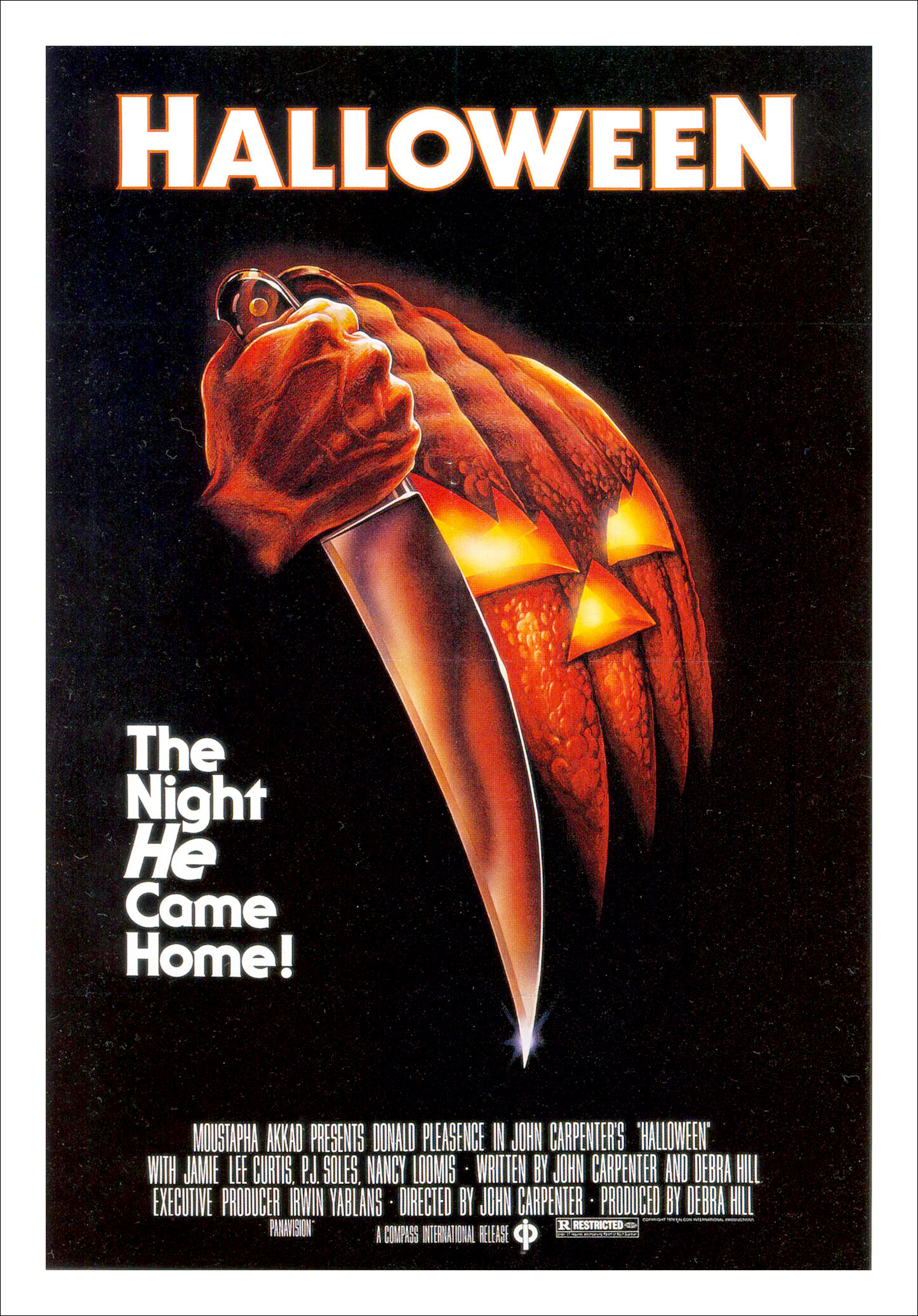
Reblog: Arleigh’s Review Of The Original Halloween (dir. by John Carpenter)


Hi everyone! Lisa here! As Halloween approaches, now is the perfect time for us to take a look back at the infamous and trend-setting career of Michael Myers. In about 90 minutes, Case will be posting his review of Halloween 4. However, before reading that, why not re-read Arleigh’s thoughts on the one that started it all, the original Halloween! From 2010, here’s Arleigh’s review…

Arleigh's avatarThrough the Shattered Lens

What better way to bring back a new daily grindhouse than the film which started the teen slasher genre. I speak of John Carpenter’s Halloween.

The film was truly a child of 1970’s independent filmmaking. With a budget of just $320,000 (even adjusting for inflation it’s still quite low) Carpenter made what’s considered one of horror’s defining films. Carpenter’s film was a smash hit when it was released in 1978. It played mostly in drive-in’s, grindhouse cinema houses before finally appearing in more mainstream venues. By then the film had become one of those must-see titles that many films both independent and mainstream try for but fail to do.

Some have commented that since Halloween was such a success in the box-office then it shouldn’t be considered grindhouse. I look at such thinking as quite narrow. Grindhouse was never synonymous with bad filmmaking. If one said the term meant…

View original post 177 more words

Horror Film Review: Dracula (dir by John Badham)


I have to admit that, when I first sat down to watch the 1979 version of Dracula, I wasn’t expecting much.  I hadn’t even heard of the film until I came across it on Encore and, when I considered that it was made in 1979, I immediately assumed it would be a disco Dracula film.

And, let’s be honest — a disco Dracula film sounds kinda fun.  But still, it’s Halloween.  Dracula is an icon of horror.  And somehow, the idea of watching disco Dracula just was not appealing.  It would be appealing in November or September.  BUT THIS IS OCTOBER!

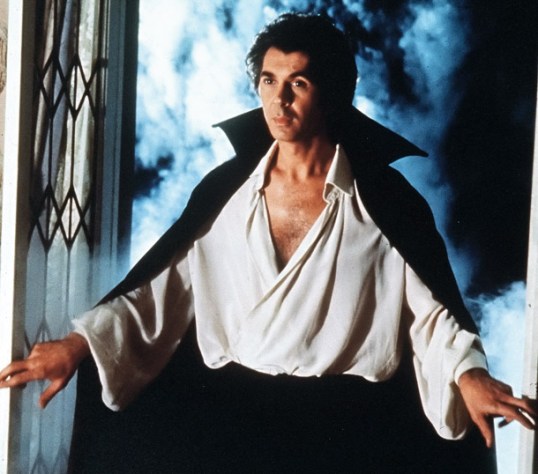
Well, despite my misgivings, I watched the film and I quickly discovered that it wasn’t a disco Dracula at all.  This Dracula takes place in 1913 and there’s actually very little about it that would lead you to suspect that it had been made in the 1970s.  Instead, it feels more like a tribute to the colorful and lushly erotic Dracula films that Hammer produced in the 60s.  Except, oddly, the Hammer films were far more bloody than the 1979 version.  Oh, don’t get me wrong.  There’s a few gory scenes in 1979’s Dracula.  Towards the end of the film, there’s a rather bloody impaling.  Dracula graphically breaks another character’s neck as we watch.  But, even with those scenes in mind, the 1979 Dracula feels oddly restrained at times.

In this version of Dracula, the title character is played by a youngish Frank Langella.  I have to admit that it was a bit odd to see Langella playing someone other than a corrupt authority figure.  Dare I say it, Langella is almost sexy in this film and his somewhat feral features are perfect for a character who considers wolves to be “the children of the night.”  Langella’s performance falls between the haughty charm of Bela Lugosi and the animalistic fury of Christopher Lee.  And while Langella’s performance never quite reaches the heights of those two actors, he’s still effectively cast.

As for the film itself, it starts with a shipwreck near a local asylum.  One of the passengers on that ship is the charming but mysterious Count Dracula.  Dracula introduces himself to the head of the asylum, Dr. Jack Seward (Donald Pleasence, stealing almost every scene in which he appears).  There’s an immediate attraction between Dracula and Seward’s daughter, Lucy (Kate Nelligan).  That does not amuse Lucy’s fiancee, Jonathan Harker (Trevor Eve, who is perhaps the whiniest Harker in film history).

Meanwhile, Lucy’s best friend, Mina (Jan Francis), has been taken ill and it might have something to do with the two puncture marks on her neck.  After Mina dies, her father (played by Laurence Olivier) comes to investigate.  Her father’s name?  Abraham Van Helsing.

As I said, I was not expecting much from this version of Dracula so I was actually pleasantly surprised during the first hour of the film.  This version gets off to a nice start, with director John Badham giving us a mix of lush romanticism and gothic moodiness.  I’ve already talked about Langella’s performance but  Donald Pleasence and Laurence Olivier also distinguish themselves.  It’s obvious that these veteran performers enjoyed playing opposite each other and there’s a lot of pleasure to be found from watching Pleasence and Olivier compete to see who can steal the most scenes.

Unfortunately, after that strong first hour, Dracula slows down.  Once Seward and Van Helsing know that Dracula is a vampire, the whole movie becomes about finding excuses for them to not do anything about it.  The final 40 minutes feel almost like filler and, at one point, you’re required to believe that an elderly man, who has been seriously wounded, could still find the strength to swing a hook into a much stronger person’s back.

In the end, the 1979 Dracula is more of an intriguing oddity than a definitive version.

You Say You Want A Revolution: Power Play (1978, directed by Martyn Burke)


PowerPlay1978

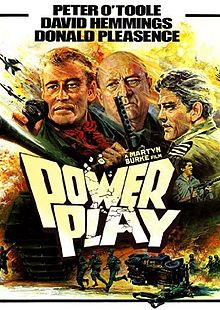
When I was 16, I would spend every weekend down at a small, used video store that was a few blocks away from my house.  One afternoon, I was looking for a video to rent when I came across a battered VHS box.  On the front of the box, Peter O’Toole smoked a cigar and sat on top of a tank.  The back cover described the film as being about revolution and promised exciting action.  A critic was quoted as saying that the movie was “an intelligent political thriller!”  Because I was obsessed with politics, that caught my attention.  I rented the movie, took it home, and watched it twice.

The name of the movie was Power Play.

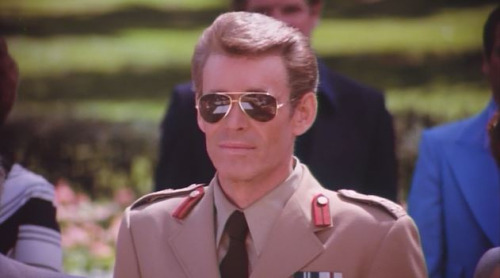
In an unnamed Eastern European country, a corrupt and despotic dictator rules with an iron hand.  Dissidents are regularly arrested and executed.  Corrupt government officials live in luxury while the rest of the country is trapped in poverty.  After a friend’s daughter is tortured and murdered by the secret police, Colonel Narriman (David Hemmings) teams up with Dr. Rosseau (Barry Morse) to plot a coup.  In order to the overthrow the government, the conspirators have to hide their plans from Blair (Donald Pleasence), the sadistic head of the secret police, and convince Colonel Zeller (Peter O’Toole) to join them and bring his tanks over to their side.

power

Power Play may be forgotten today but it made a big impression on me when I first watched it.  Power Play not only showed what it was like to live in a totalitarian society but also attempted to realistically portray what it would take to overthrow a dictatorship.  Power Play spends as much time on the plotting of the revolution as it does on the revolution itself, with special attention given to Rousseau’s attempts to secure international support for the coup.  David Hemmings is great in the main role and Donald Pleasence is Himmleresque as Blair.  Even Peter O’Toole’s infamous 1970s hamminess seems appropriate for the character of Col. Zeller.  Power Play is a must see for aspiring revolutionaries every where.

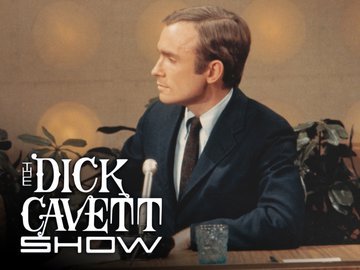
Incidentally, Power Play opens with one of the conspirators being interviewed by Dick Cavett, meaning that Power Play can be added to Annie Hall and A Nightmare On Elm Street 3: Dream Warriors on the list of films in which Dick Cavett has played himself.

the-dick-cavett-show

6 Action-Filled Trailers For Memorial Day Weekend!


PCAS

Well, it’s Memorial Day weekend!  As some of you may remember, I ran into some trouble last weekend when I got my dates mixed up and I was forced to post a hastily compiled, somewhat random edition of Lisa Marie’s Favorite Grindhouse and Exploitation Film Trailers!

Fortunately, I’ve got my dates correct this weekend!

Anyway, without further ado, here are 6 action-filled trailers for Memorial Day!

Inglorious Bastards (1978)

No, not the Quentin Tarantino Oscar winner!  This is the film that gave its name to Tarantino’s later work.  The 1978 version of Inglorious Bastards was directed by Enzo G. Castellari and stars Bo Svenson and Fred Williamson.

From Hell To Victory (1979)

This World War II film was directed by Umberto Lenzi and features a surprisingly impressive cast for a Lenzi epic.  (Surprisingly, for a Lenzi film of this period, it does not appear that Mel Ferrer is anywhere to be found in From Hell To Victory.)

The Last Hunter (1980)

This is actually one of the best Italian war films ever made.  It was directed by Antonio Margheriti (who was given a shout out in Tarantino’s Inglourious Basterds) and stars David Warbeck, Tony King, John Steiner, and Mia Farrow’s sister, Tisa.  Tisa also starred in Lucio Fulci’s Zombi 2.

Tiger Joe (1982)

Margheriti followed up The Last Hunter with Tiger Joe.  Also returning (though in different roles from The Last Hunter): David Warbeck and Tony King.  The female lead was played by Annie Belle, who is probably best remembered for her co-starring role in Ruggero Deodato’s The House On The Edge of the Park.

Tornado (1983)

Tiger Joe was enough of a success that Margheriti made one more Vietnam-set film, Tornado.

Last Platoon (1988)

I’ve never seen this movie but the title was probably meant to fool audiences into thinking that it was a sequel to Oliver Stone’s Platoon.  I will say that, having watched the trailer, it’s interesting to see Donald Pleasence playing an American army officer.  This Italian film was directed by Ignazio Dolce.

To all of our readers in the U.S: Have a safe Memorial Day weekend!

Things Could Be Worse: 8 Fictional Presidents Who Were Terrible At Their Job


Jack Nicholson

2016 is an election year and things are looking pretty grim right now.  It’s enough to make you throw your hands up in frustrating and demand that someone push the reset button.  However, things could always be worse.  From the world of film, here are 8 President so incompetent, corrupt, and sometimes murderous that they will make you long for the dull mediocrity of a Jeb Bush or a Martin O’Malley.

1) The President (William Devane) in The Dark Knight Rises (2012)

devaneYou’re the leader of the free world and a masked terrorist has just launched a deadly attack on a major U.S. city.  He has blown up a major sporting event on national television.  He has killed the mayor.  He is allowing a crazy sociopath to preside over show trials.  The terrorist demands that you neither send troops into the city nor do you aid anyone who is trying to leave.  What do you?  If you are the President played by William Devane in The Dark Knight Rises, you say, “Okay,” and then breathe a sigh of relief when Batman turns out not to be dead after all.  William Devane also played JFK in The Missiles of October and President James Heller on 24.  Neither of them would have backed down to Bane as quickly as the President in The Dark Knight Rises.
2) The President (Billy Bob Thornton) in Love Actually (2003)

This President thinks that he can bully the world until he makes the mistake of getting on the bad side of the new British Prime Minister (Hugh Grant).  How are you going to call yourself the leader of the free world when even Hugh Grant can make you look like a fool?

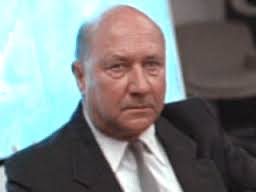
3) The President (Donald Pleasence) in Escape From New York (1981)

DonaldHey, Mr. President, when Snake Plisskin nearly gets killed trying to save your life, you might want to try showing a little gratitude.  Escape From New York ends with Snake asking The President who he feels about all the people who died rescuing him from New York.  When the President can only mutter a few words of regret, Snake responds by destroying the tape that would have presumably prevented World War IV.  Way to go, Mr. President!  Would it have killed you to shed a few crocodile tears, at least over the fate of Cabbie?
4) The President (Cliff Robertson) in Escape From L.A. (1996)

The President from Escape From New York was practically Lincolnesque compared to the jerk who succeeded him.  A theocrat who claimed to have an open line to God, this President banned smoking, drinking, cursing, red meat, guns, atheism, pre-marital sex, and everything else that made life fun.  Anyone who disagreed got exiled to the island of California.  Good thing that Snake Plisskin was still around to set things straight, even if it did mean that Florida ended up getting conquered by Cuba.  Why doesn’t Snake ever run for President?

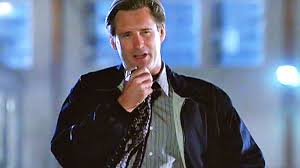
5) President Thomas J. Whitmore (Bill Pullman) in Independence Day (1996)

billIn a word, overrated.  Yes, President Whitmore did lead the army that repealed the alien invaders but he would not have had to do that in the first place if he had prevented the Earth from being invaded in the first place.  How many warning signs did the Whitmore administration ignore until it was too late?  And how much funding did his administration cut from the military that the Air Force was left in such poor shape that they could get shown up by Randy Quaid in a crop duster?  As for Whitmore’s famous speech and the battle that followed, a sequel to Independence Day is coming in June so he must not have done that good of a job of scaring the aliens off.
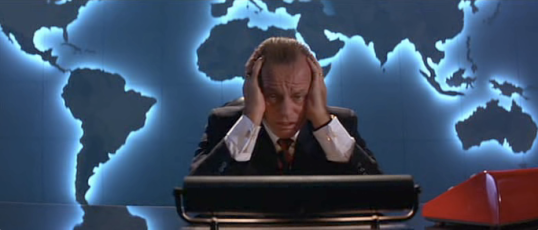
6) President James Dale (Jack Nicholson) in Mars Attacks! (1996)

At least President Whitmore got a chance to redeem himself by leading the battle against the invaders.  James Dale did not even get that far.  After foolishly believing everyone who told him that the aliens came in peace, he made the mistake of offering his hand in friendship and ended up with a flag sticking out of his chest.

7) President Alan Richmond (Gene Hackman) in Absolute Power (1997)

Not only did President Richmond think that he could get away with murder, he also thought he could outsmart Clint Eastwood.  Big mistake.  Clint Eastwood is no Hugh Grant.

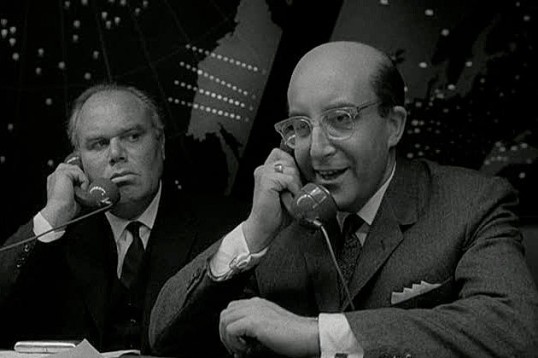
8) President Merkin Muffley (Peter Sellers) in Dr. Strangelove: Or How I Learned To Stop Worrying And Love The Bomb (1964)

Mixing the raw charisma of Adlai Stevenson and the phone skills of Bob Newhart, President Merkin Muffley attempts to stop the end of the world and fails miserably.  He even allows the Soviet ambassador to get a picture of the Big Board!  But don’t worry.  President Muffley may have failed to prevent nuclear war but he will not allow there to be a mineshaft gap!

When this election year get you down, just remember: things could always be worse!

strangelove


Horror Film Review: Death Line (dir by Gary Sherman)


“Mind the doors!”

— The Man (Hugh Armstrong) in Death Line (1972)

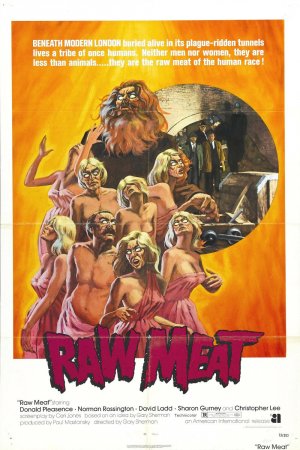
Before I get to far into reviewing the unjustly obscure British horror film, Death Line, I want you to take a look at the film poster below.

Deathlinerawmeat

This is the poster that was used when Death Line was released in the United States.  Now, I have to admit that I like this poster but that’s largely because I’m a lover of old grindhouse and exploitation films.  And this poster is a perfect example of the grindhouse aesthetic.  Of course, it’s not surprising that this poster is largely misleading.

First off, the title has been changed to Raw Meat.  That makes sense when you consider that the film is about a cannibal but it also creates the mistaken impression that this film is primarily about cannibalism.  It’s not.  Actually, Death Line is a film about class differences and government secrecy.  (Though it’s probably best to leave this as a topic for another post, I think it can be argued that almost every film made in the UK is, in some way, about class and secrecy.)

The bearded man is obviously meant to be a stand-in for Death Line‘s cannibal.  Known as the Man and played by Hugh Armstrong, he is the last descendant of a group of Victorian railway workers who were buried alive during the construction of the London underground.  The Man is the product of generations of cross-breeding.  And while the Man is definitely frightening at first, he ultimately emerges as the film’s only truly sympathetic figure.  He’s hardly the intimidating figure pictured above.  Instead, he’s a heart-breakingly pathetic figure who, having grown up in the shadows of the underground, is only capable of uttering three words: “Mind the doors.”  There’s a lengthy scene in which the Man howls in anguish after the death of his wife.  I don’t care if he was a cannibal, it still brought tears to my eyes.

The poster does offer up a glimpse of two men who appear to be searching an underground tunnel.  This image, at the very least, is accurate.  The two men are Inspector Calhoun (Donald Pleasence) and his partner, Detective Sergeant Rogers (Norman Rossington).  When the Man makes the mistake of attacking, murdering, and eating a member of a Parliament, Calhoun and Rogers are the ones who end up investigating the case.  What’s interesting is that neither Calhoun nor Rogers are presented as being sympathetic characters.  In fact, Calhoun is something as a fascist.  When Christopher Lee tells them to stop investigating the case, Calhoun is less upset over the government cover-up and more angered by the fact that he doesn’t like being told what to do.

There are two other people investigating the case, though neither one of them are present on the poster.  Alex Campbell (David Ladd) is an American college student and, though Alex starts out as sympathetic to the Man, that changes when the Man kidnaps his girlfriend (Sharon Gurney) and tries to make her into his new wife.  Alex serves as a stand-in for the self-righteous activists who, in most films, would be responsible for saving the day.  It’s telling of just how cynical a film Death Line is that Alex ultimately turns out to be even more ineffectual than Calhoun and Rogers.

Finally, the poster offers up a group of half-naked people.  I have no idea who these people are supposed to represent but I’m sure they helped to sell tickets!

As for Death Line, it’s an unjustly obscure film.  Whether you track it down under the original title or the Americanized title of Raw Meat, be sure to watch it.

http://www.youtube.com/watch?v=r97IHkxbU8A

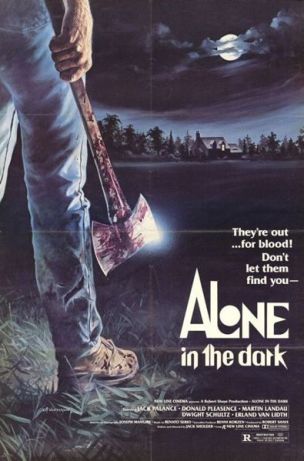
Horror Film Review: Alone in the Dark (dir by Jack Sholder)


Alone_in_the_dark_ver1

“There are no crazy people, doctor.  We’re all just on vacation.”

— Frank Hawkes in Alone In The Dark (1982)

What is the difference between being crazy and being sane?  Why are some forms of delusion considered to be socially acceptable while others are condemned?  Who is the ultimate authority on what is normal and what is abnormal?  These are just some of the issues that are raised by the gleefully subversive 1982 horror film, Alone In The Dark.

We know that there’s something off about Dr. Leo Bain (Donald Pleasence) from the minute we meet him.  His smile is a little too nervous and his constant patter of positive words sound a little bit too rehearsed and convenient.  When he greets another doctor, he insists on hugging him but it’s an awkward hug.  Dr. Bain seems to be trying just a little bit too hard.  (In many ways, Pleasence seems to be poking fun at his best-known role, Halloween‘s intense and dramatic Dr. Loomis.)

Dr. Bain is in charge of a psychiatric hospital.  He doesn’t believe in conventional therapy.  Instead, his hospital is perhaps the most oppressively positive place in the world, a place where every delusion is treated as being perfectly normal and where the patients are treated very leniently.

In fact, security is only present on the third floor of the hospital.  That’s because the third floor is home to four inmates who are criminally insane.  Frank Hawkes (Jack Palance) is a former POW who suffers from paranoia and gets mad whenever he hears anyone curse.  Bryon “Preacher” Sutcliffe (Martin Landau) is a pyromaniac.  Ronald Estler (Erland van Lidth) is a gigantic child molester.  And finally, there’s The Bleeder, who always hides his face.  The Bleeder is a serial killer who is called the Bleeder because, whenever he kills, his nose starts to bleed.

Dr. Bain scoffs at the idea that these four even need security but, as he explains it, the state requires it.  However, one night, the power goes out and the four of them manage to escape.  As they make their way into the nearby town, they rather easily blend into the mob of “normal” people who are using the blackout as an excuse to go looting.

However, these four patients are on a very specific mission.  They had all grown to trust their psychiatrist, Dr. Merton.  However, Dr. Merton was eventually hired away by another hospital.  Frank is convinced — and has convinced the others — that Dr. Merton was murdered by their new psychiatrist, Dr. Dan Potter (Dwight Schultz).  They’re goal now is to track down Dr. Potter and kill him and his family.

Meanwhile, Dr. Potter has issues of his own to deal with.  He’s a nice guy but he’s also a bit too uptight and rational for his own good.  (Early on in the film, he gets upset when his wife tries to get him to go see a band called the Sic Fucks.)  His younger sister, Toni (Lee Taylor-Allan), is visiting while she recovers from a nervous breakdown of her own.  She manages to get arrested while protesting a nuclear power plant and, when she gets out of jail, she insists on bringing another protester, Tom (Phillip Clark), home with her.

It all leads to one long night, during which the inmates lay siege to Dan’s house.  And, all the while, Dr. Bain worries about whether or not they’re all mad at him…

Alone in the Dark may come disguised as a slasher movie but actually, it’s a pitch black comedy, with a lot of the humor coming from the contrast between Dan’s rationality, Bain’s nonstop optimism, and the fact that every one else in the film is literally batshit insane.  The final siege is a masterpiece of suspense and Palance, van Lidth, and especially Martin Landau are memorably frightening in their menacing roles.  The film’s final scene deserves to be iconic.

Alone in the Dark is one of those horror films that definitely deserves to be better known.  Do NOT mistake it for the Uwe Boll film.

http://www.youtube.com/watch?v=WhUA4VAd6_0

Horror Film Review: The Devonsville Terror (dir by Ulli Lommel)


DevonsvilleTerror

Who is the world’s worst director?

That’s a question that can really lead to lot of conflict.  First off, it’s a deceptively simple question.  The more you think about it, the more you realize how fragile concepts like good and bad truly are.  Some of the greatest films ever made were critical flops.  Some of the films that have been embraced by contemporary critics will definitely be less acclaimed by future viewers.  There’s a lot to take into consideration when it comes to determining whether or not a filmmaker is good, mediocre, or one of the worst of all time.  It’s something that requires a lot of careful thought and consideration and research.

Of course, if you don’t have time for all that, you can just say that the world’s worst director is Ulli Lommel and save yourself the trouble.

This German director has been making movies for longer than I’ve been alive.  He got his start in the early 70s, as an actor who frequently collaborated with the great German filmmaker Rainer Werner Fassbinder.  With Fassbinder as his producer, Lommel made a few surrealistic (and, it should be stated, critically acclaimed) films in Germany and then, in 1977, he moved to the U.S, and became friends with Andy Warhol.  He also married Suzanna Love, an actress who was the heiress to the Standard Oil Fortune and who starred in a handful of Lommel’s early films.

Today, Lommel’s reputation for being the world’s worst director is largely the result of an endless series of low-budget, straight-to-DVD films that he’s made about various real-life serial killers.  I’ve seen quite a few of these movies (and I reviewed Lommel’s Curse of the Zodiac three years ago) and they are truly bad.  Normally, I can find something to love about almost every movie that I watch but Lommel’s serial killer films are beyond terrible.  They’re so bad that they are almost impossible to review.  I mean, how many different ways can you find to say that a movie sucks so much that it will make you question whether Eadweard Muybride should ever have filmed Sallie Gardner at a Gallop in the first place?

But here’s the thing with Ulli Lommel and this what makes it especially so frustrating to see him currently doing a thousand variations on Curse of the Zodiac.  His first two horror films — both of which were filmed in the early 80s and starred Love — are not that bad.  Don’t misunderstand me.  They’re not particularly good but they still feature enough hints of genuine talent and inspiration that you have to wonder just what the Hell happened.

The first (and best known) of Lommel’s horror films was 1980’s The Boogeyman, an incredibly stupid film that still featured some good atmosphere and a few memorable deaths.  Lommel followed The Boogeyman with 1983’s The Devonsville Terror.

The Devonsville Terror may not have the same cult status as The Boogeyman but it’s actually a far more interesting film.  The film opens in the 17th Century.  In the Massachusetts town of Devonsville, three women are executed for being witches.  After the final witch is burned, her spirit appears in the sky and announces that the town is now cursed.

We then jump forward 300 years.  Dr. Warley is researching the Devonsville curse.  By researching, I mean that he continually invites citizens in Devonsville into his office and hypnotizes them, which leads to them having flashbacks to 1683 and those of us in the audience having to continually rewatch the first few minutes of the movie.  The spirit of the witch curses Dr. Warley and soon, he’s having to pull maggots out of his arm.  It doesn’t add up too much but Dr. Warley is played by Donald Pleasence so he’s at least entertaining.

Meanwhile, a new school teacher, Jenny (played by Suzanna Love), has moved into town and she’s teaching the kids to think for themselves and even goes as far as to suggest that God might be a woman!  The town leaders are shocked and more than a few of them start to suspect that she might be a reincarnated witch…

At the same time, a loser named Walter (Paull Wilson) has just murdered his wife and soon finds himself having nightmares where Jenny allows him to drown in a swamp.  “The legend’s true!” Walter shouts in his dream, “You are a witch!”

On top of that, two other liberated women have recently moved into town, which leads to a panic as the townfathers realize that their town — best known for executing three witches — is now home to three feminists!

Of course, it all leads to an attempt to duplicate the executions of 1683.  Heads explode.  Faces melt.  Don’t mess with the witches, y’all.  That’s all I’m saying.

The Devonsville Terror is a huge mess but, much like The Boogeyman, the film has a lot of atmosphere and features a good performance from Suzanna Love.  (As well, just as The Boogeyman features John Carradine not doing much of anything, Devonsville Terror features Donald Pleasence not doing much of anything.)  But the main thing I liked about The Devonsville Terror was its feminist subtext, which is not something you would typically expect to find in a horror film from the early 80s.

You have to ask yourself — how did the director of The Devonsville Terror ends up becoming the guy who directed Curse of the Zodiac and Mondo Americana?  One huge clue is probably found in the fact that Suzanna Love is nowhere to be found in any of Lommel’s later films.  According to the imdb, Lommel and Love divorced in 1987.

With Suzanna Love, Ulli Lommel was an occasionally interesting, if uneven, filmmaker.

Without her, he’s just the guy who directed Curse of the Zodiac.

4 Shots From 4 Films: Dr. Crippen, Cul-de-sac, Wake In Fright, The Mutations


Yesterday would have been Donald Pleasence’s 96th birthday.  Pleasence is best remembered for playing Blofeld in You Only Live Twice and the obsessive Dr. Sam Loomis in the Halloween films but, over the course of his long career, he appeared in over a hundred other films.  These 4 shots come from 4 of them.

4 Shots From 4 Films

Dr. Crippen (1963, directed by Robert Lynn)

Dr. Crippen (1963, directed by Robert Lynn)

Cul-de-sac (1966, directed by Roman Polanski)

Cul-de-sac (1966, directed by Roman Polanski)

Wake in Fright (1971, directed by Ted Kotcheff)

Wake in Fright (1971, directed by Ted Kotcheff)

The Mutations (1974, directed by Jack Cardiff)

The Mutations (1974, directed by Jack Cardiff)