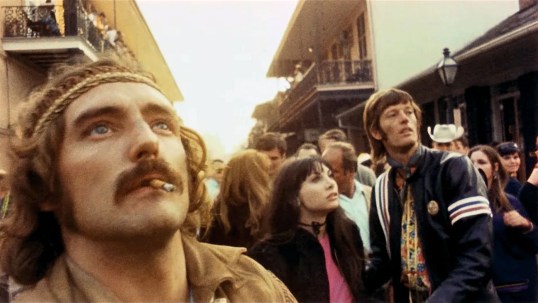
Here is the Mardi Gras sequence from 1969’s Easy Rider. Featuring Peter Fonda, Dennis Hopper, Karen Black, and Toni Basil walking through the streets of New Orleans, this scene was actually filmed during Mardi Gras. Those are real Mardi Gras floats and real Mardi Gras participants staring at the camera. That’s an actual citizen of New Orleans with whom Dennis Hopper appears to have nearly gotten into a fight. Personally, I relate to Toni Basil in this scene. She is having a good time no matter what!
I just love how Toni Basil can’t help but dance, no matter what.
4 (or more) Shots From 4 (or more) Films is just what it says it is, 4 (or more) shots from 4 (or more) of our favorite films. As opposed to the reviews and recaps that we usually post, 4 (or more) Shots From 4 (or more) Films lets the visuals do the talking.
Today, the Shattered Lens pays homage to the greatest of Mardi Gras cities, New Orleans!
4 Shots From 4 New Orleans-Set Films
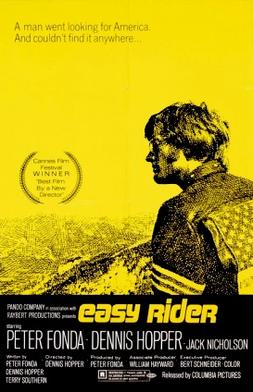
Easy Rider (1969, dir by Dennis Hopper, DP: Laszlo Kovacs)
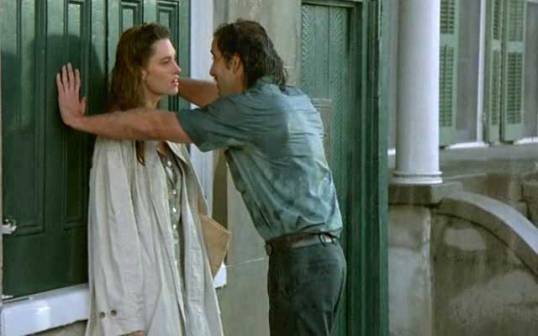
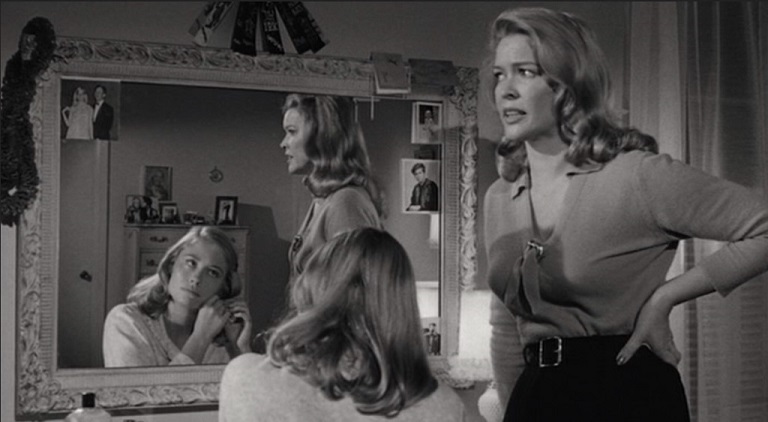
Zandalee (1990, dir by Sam Pillsbury, DP: Walt Lloyd)
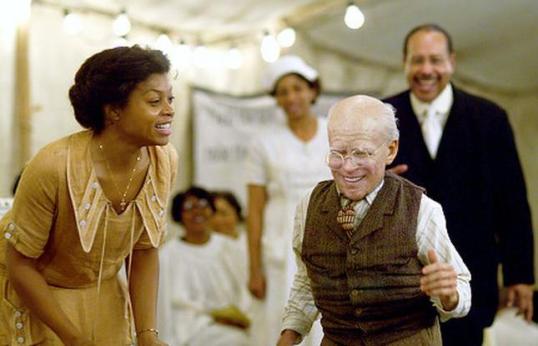
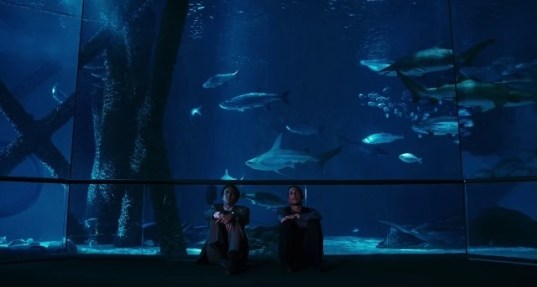
The Curious Case of Benjamin Button (2008, dir by David Fincher, DP: Claudio Miranda)
Bad Lieutenant: Port of Call New Orleans (2009, dir by Werner Herzog, DP: Peter Zieitlinger)
1979’s Apocalypse Now reimagines the Vietnam War as pop art.
Jim Morrison sings The End in the background as slow-motion helicopters pass in front of a lush jungle. The jungle erupts into flame while in a dingy hotel room, Captain Benjamin Willard (Martin Sheen) gets drunks, practices his karate moves, and smashes a mirror before collapsing to the floor in tears. The next morning, the hung-over and bandaged Willard ends up at a U.S. military base where he has a nice lunch with Lt. General Corman (G.D. Spradlin) and Col. Lucas (Harrison Ford) and a nearly silent man wearing an undone tie. Willard is asked if it’s true that he assassinated an enemy colonel. Willard replies that he did not and that the operation was classified, proving that he can both lie and follow military protocol. Willard is told that a Col. Walter Kurtz (Marlon Brando) has gone rogue and his mission is to go into Cambodia and terminate his command with “extreme” prejudice. It’s a famous scene that features G.D. Spradlin delivering a brilliant monologue about good and evil and yet it’s often missed that Willard is getting his orders from Roger Corman and George Lucas.
(Roger Corman was the mentor of director Francis Ford Coppola while the pre-Star Wars George Lucas was Coppola’s business partner. Indeed, Apocalypse Now was originally somewhat improbably planned to be a George Lucas film.)
Up the river, Willard heads on a patrol boat that is populated with characters who could have come out of an old World War II service drama. Chief (Albert Hall) is tough and no-nonsense. Lance (Sam Bottoms) is the goofy comic relief who likes to surf. Clean (Laurence Fishburne) is the kid who is obviously doomed from the minute we first see him. Chef (Fredric Forrest) is the overage, tightly-wound soldier who just wants to find mangoes in the jungle and who worries that, if he dies in a bad place, his soul won’t be able to find Heaven. The Rolling Stones are heard on the boat’s radio. Soldiers on the other patrol boats moon the boat and toss incendiary devices on the roof. It’s like a frat prank war in the middle of a war.
Colonel Bill Kilgore (Robert Duvall) is a badass calvary officer whose helicopter raids are legendary amongst the enemy and a dedicated surfer who tries to turn every night into the equivalent of an AIP Beach Party film. He’s a brilliant warrior who speaks with Malibu accent (“Charlie don’t surf!”) and who doesn’t flinch when a bomb goes off near him. “I love the smell a napalm in the morning,” he says and, for a few moments, you really wish the film would just abandon Willard so we could spend more time with Kilgore. “Some day this war is going to end,” he says with a reassuring nod, showing a non-neurotic attitude that is the opposite of Kurtz’s. Willard says that he could tell Kilgore was going to get through the war without even a scratch and it’s true. Kilgore doesn’t try to rationalize or understand things. He just accepts the reality and adjusts. He’s a true surfer.
The film grows progressively more surreal the closer the boat heads up the river and gets closer to Cambodia. A USO show turns violent as soldiers go crazy at the sight of the Playboy Bunnies, dressed in denim outfits and cowboy hats and twirling cap guns like the love interest in a John Wayne western. A visit to a bridge that is built every day and blown up every night is a neon-lit, beautiful nightmare. Who’s the commanding officer? No one knows and no one cares.
The closer Willard gets to Kurtz, the stranger the world gets. Fog covers the jungles. A tiger leaps out of nowhere. Dennis Hopper shows up as a photojournalist who rambles as if Billy from Easy Rider headed over to Vietnam instead of going to Mardi Gras. Scott Glenn stands silently in front of a temple, surrounded by dead bodies that feel as if they could have been brought over from an Italian cannibal film. Kurtz, when he shows up, is an overweight, bald behemoth who talks in riddles and who hardly seem to be the fearsome warrior that he’s been described as being. “The horror, the horror,” he says at one point in one of the few moments that links Apocalypse Now to its inspiration, Joseph Conrad’s Heart of Darkness.
Directed by near-communist Francis Ford Coppola and written by the unapologetically right-wing John Milius, Apocalypse Now is actually less about the reality of Vietnam and more about how the images of the war shaped pop culture the world over. It’s a reminder that Vietnam was known for being the first television war and that counterculture was not just made up of dropouts but also of writers, actors, and directors. Kurtz may say that Willard’s been sent by grocery store clerks but actually, he’s been sent by the B-movie producers who first employed and mentored the directors and the actors who would eventually become the mainstays of the New Hollywood. The film subverts many classic war film cliches but, at the same time, it stays true to others. Clean dying while listening to a tape recording of his mother telling him not to get shot and to come home safe is the type of manipulative, heart-tugging moment that could have appeared in any number of World War II-era films. And while Coppola has always said the film was meant to be anti-war, Col. Kilgore remains the most compelling character. Most viewers would probably happily ride along with Kilgore while he flies over Vietnam and plays Wagner. The striking images of Vietnam — the jungle, the explosions, the helicopters flying through the air — stay in the mind far more than the piles of dead bodies that appear in the background.
It’s a big, messy, and ultimately overwhelming film and, while watching it, it’s hard not to get the feeling that Coppola wasn’t totally sure what he was really trying to say. It’s a glorious mess, full of stunning visuals, haunting music, and perhaps the best performance of Robert Duvall’s legendary career. The film is too touched with genius to not be watchable but how one reacts overall to the film will probably depend on which version you see.
The original version, which was released in 1979 and was nominated for Best Picture, is relentless with its emphasis on getting up the river and finding Kurtz. Willard obsesses on Kurtz and really doesn’t have much to do with the other people on the boat. It gives the story some much-needed narrative momentum but it also makes Kurtz into such a legendary badass that it’s hard not to be disappointed when Willard actually meets him. You’re left to wonder how, if Kurtz has been living in the jungle and fighting a brutal and never-ending guerilla war against the communists, he’s managed to gain so much weight. Brando, who reportedly showed up on set unprepared and spent days improvising dialogue, gives a bizarre performance and it’s hard to view the Kurtz we meet as being the Kurtz we’ve heard about. As strong as the film is, it’s hard not to be let down by who Kurtz ultimately turns out to be.
In 2001 and 2019, Coppola released two more versions of the film, Redux and The Final Cut. These versions re-inserted a good deal of footage that was edited out of the original cut. Most of that footage deals with Willard dealing with the crew on the boat and it’s easy to see why it was cut. The scenes of Willard bonding with the crew feel out of character for both Willard and the rest of the crew. A scene where Willard arranges for Clean, Lance, and Chef to spend time with the Playboy bunnies seems to go on forever and features some truly unfortunate acting. Worst of all, Redux totally ruins Kilgore’s “I love the smell of napalm in the morning” monologue by having Willard suddenly steal his surf board. Again, it’s out of character for Willard and it actually feels a bit disrespectful to Duvall’s performance to suddenly turn Kilgore into a buffoon.
But then there are moments that do work. I actually like the lengthy French Plantation scene. By the time Willard, Lance, and Chef stumble into the plantation, the journey upriver has gotten so surreal that it makes a strange sort of sense that they would run into a large French family arguing politics while a clown tries to keep everyone distracted. The new versions of the film are undeniably disjointed but they also shift the focus off of finding Kurtz and place it more on Willard discovering how weird things are getting in Vietnam. As such, it’s less of a disappointment when Kurtz actually shows up. Much as with the French Plantation scene, the journey has become so weird that Kurtz being overweight and pretentious feels somehow appropriate.
What all the versions of the film have in common is that they’re all essentially a neon-lit dream of pop cultural horror. Is Apocalypse Now a horror film? Critic Kim Newman argued that it owed a lot to the genre. Certainly, that’s the case when Willard reaches the temple and finds himself surrounded by corpses and and detached heads. Even before that, though, there are elements of horror. The enemy is always unseen in the jungle and, when they attack, they do so quickly and without mercy. In a scene that could almost have come from a Herzog film, the boat is attacked with toy arrows until suddenly, out of nowhere, someone throws a very real spear. Until he’s revealed, Kurtz is a ghostly figure and Willard is the witch hunter, sent to root him out of his lair and set his followers on fire. If the post-60s American horror genre was shaped by the images coming out of Vietnam then Apocalypse Now definitely deserves to be considered, at the very least, horror-adjacent.
Apocalypse Now was controversial when it was released. (It’s troubled production had been the talk of Hollywood for years before Coppola finally finished his film.) It was nominated for Best Picture but lost to the far more conventional Kramer vs Kramer. Robert Duvall was the film’s sole acting nominee but he lost the award to Melvyn Douglas’s turn in Being There. Douglas was very good in Being There and I imagine giving him the Oscar was also seen as a way of honoring his entire career. That said, Duvall’s performance was amazing. In his relatively brief screen time, Duvall somehow managed to take over and ground one of the most unruly films ever made. The Oscar definitely should have gone to him.
As for the film itself, all three versions, flaws and all, are classics. It’s a film that proves that genius can be found in even the messiest of productions.
4 Or More Shots From 4 Or More Films is just what it says it is, 4 shots from 4 of our favorite films. As opposed to the reviews and recaps that we usually post, 4 Shots From 4 Films lets the visuals do the talking!
Today, the Shattered Lens pays tribute to the year 1971!
4 Shots From 4 1971 Films
The Last Picture Show (1971, dir by Peter Bogdanovich, DP: Bruce Surtees)
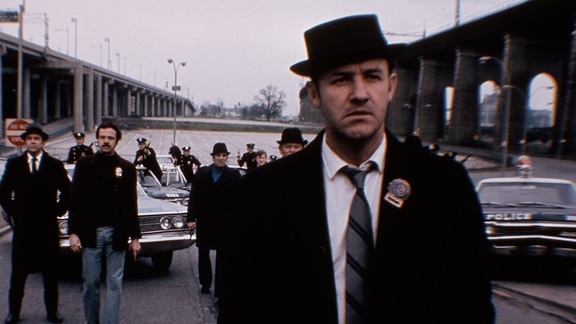
The French Connection (1971, dir by William Friedkin, DP: Owen Roizman)
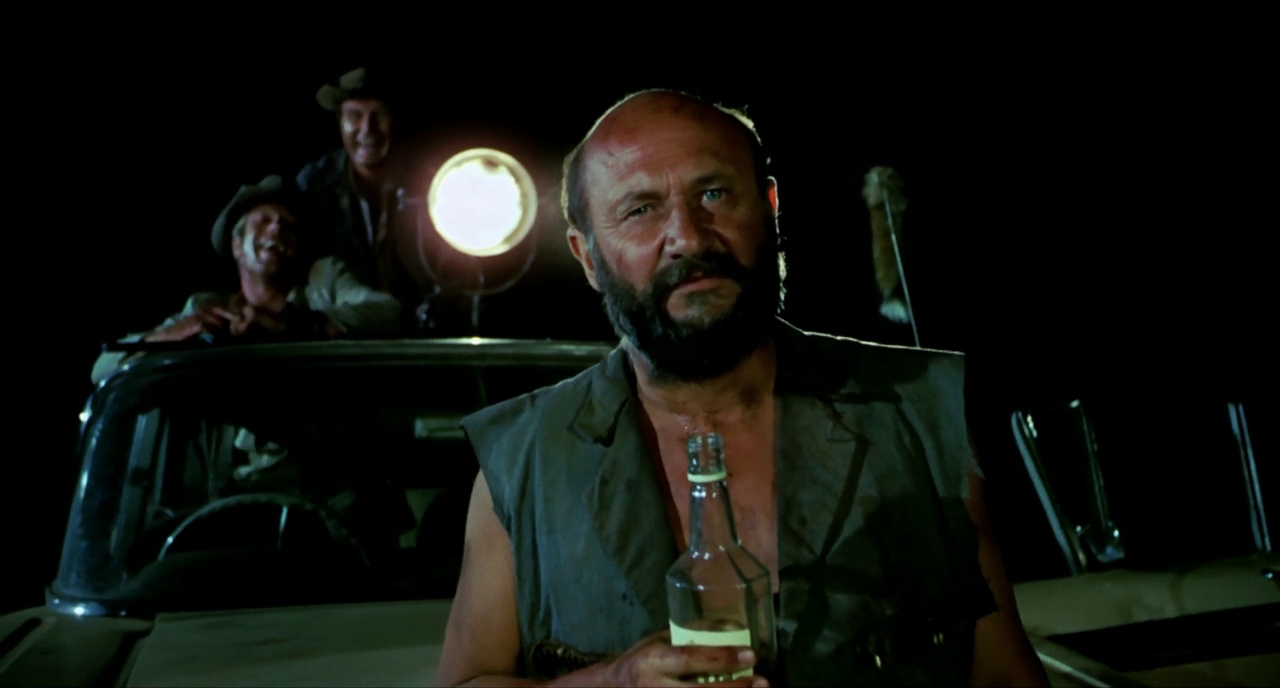
Wake in Fright (1971, dir by Ted Kotcheff, DP: Brian West)
The Last Movie (1971, dir by Dennis Hopper, DP: Laszlo Kovacs)
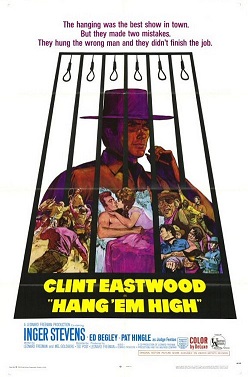
1889. The Oklahoma Territory. A former lawman-turned-cattleman named Jed Cooper (Clint Eastwood) is falsely accused of working with a cattle thief. A group of men, led by Captain Wilson (Ed Begley) lynch him and leave Cooper hanging at the end of a rope. Marshal Dave Bliss (Ben Johnson) saves Cooper, cutting him down and then taking him to the courthouse of Judge Adam Fenton (Pat Hingle). Fenton, a notorious hanging judge, is the law in the Oklahoma territory. Fenton makes Cooper a marshal, on the condition that he not seek violent revenge on those who lynched him but that he instead bring them to trial. Cooper agrees.
An American attempt to capture the style of the Italian spaghetti westerns that made Eastwood an international star, Hang ‘Em High gives Eastwood a chance to play a character who is not quite as cynical and certainly not as indestructible as The Man With No Name. Cooper starts the film nearly getting lynched and later, he’s shot and is slowly nursed back to health by a widow (Inger Stevens). Cooper is not a mythical figure like The Man With No Name. He’s an ordinary man who gets a lesson in frontier justice as he discovers that, until Oklahoma becomes a state, Judge Fenton feels that he has no choice but to hang nearly every man convicted of a crime. (Judge Fenton was based on the real-life hanging judge, Isaac Parker.) Over the course of this episodic film, Cooper becomes disgusted with frontier justice.
Hang ‘Em High is a little on the long side but it’s still a good revisionist western, featuring a fine leading performance from Clint Eastwood and an excellent supporting turn from Pat Hingle. The film’s episodic structure allows for Eastwood to interact with a motley crew of memorable character actors, including Bruce Dern, Dennis Hopper, L.Q. Jones, Alan Hale (yes, the Skipper), and Bob Steele. Hang ‘EmHigh has a rough-hewn authenticity to it, with every scene in Fenton’s courtroom featuring the sound of the gallows in the background, a reminder that justice in the west was often not tempered with mercy.
Historically, Hang ‘Em High is important as both the first film to be produced by Eastwood’s production company, Malpaso, and also the first to feature Eastwood acting opposite his soon-to-be frequent co-star, Pat Hingle. Ted Post would go on to direct MagnumForce.
4 (or more) Shots From 4 (or more) Films is just what it says it is, 4 (or more) shots from 4 (or more) of our favorite films. As opposed to the reviews and recaps that we usually post, 4 (or more) Shots From 4 (or more) Films lets the visuals do the talking.
89 years ago, Dennis Hopper was born in Dodge City, Kansas.
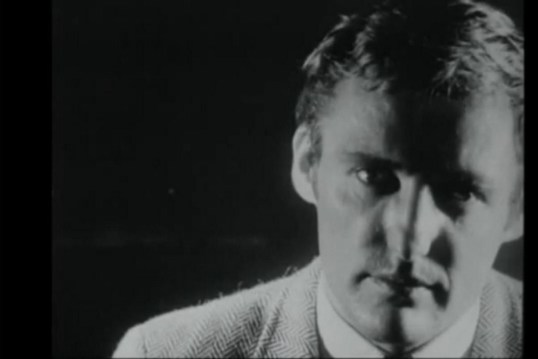
It seems rather appropriate that one of America’s greatest cinematic outlaws was born in a town that will be forever associated with the old west. Dennis Hopper was a rebel, back when there were actual consequences for being one. He started out acting in the 50s, appearing in films like Rebel Without A Cause and Giant and developing a reputation for being a disciple of James Dean. He also developed a reputation for eccentricity and for being difficult on set and he probably would have gotten completely kicked out of Hollywood if not for a somewhat improbable friendship with John Wayne. (Wayne thought Hopper was a communist but he liked him anyways. Interestingly enough, Hopper later became a Republican.) Somehow, Hopper managed to survive both a raging drug addiction and an obsession with guns and, after a mid-80s trip to rehab, he eventually became an almost universally beloved and busy character actor.
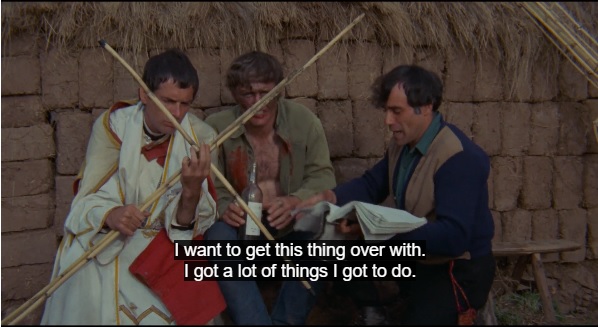
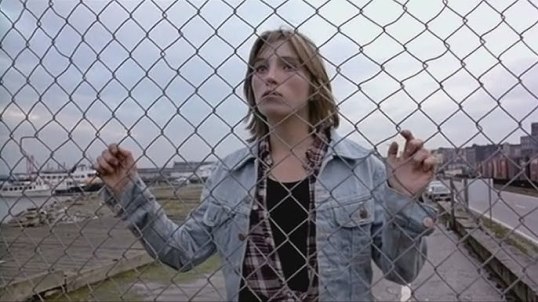
Hopper, however, always wanted to direct. He made his directorial debut with 1969’s Easy Rider, a film that became a huge success despite being an infamously chaotic shoot. The success of Easy Rider led to the Hollywood studios briefly trying to produce counter-culture films of their own. Hopper was given several million dollars and sent to Peru to make one of them, the somewhat dangerously titled The Last Movie. Unfortunately, The Last Movie, was such a bomb that it not only temporarily derailed Hopper’s career but it also turned Hollywood off of financing counter culture films. Hopper spent a decade in the Hollywood wilderness, giving acclaimed performances in independent films like Tracks and The American Friend, even while continuing to increase his reputation for drug-fueled instability. Hopper would eventually return to directing with his masterpiece, 1980’s Out of the Blue. (Out of the Blue was so controversial that, when it played at Cannes, Canada refused to acknowledge that it was a Canadian production. It played as a film without a country. Out of the Blue, however, is a film that has stood the test of time.) Unfortunately, even after a newly cleaned-up Hopper was re-embraced by the mainstream, his directorial career never really took off. He directed 7 films, of which only Easy Rider and Colors were financially successful. Contemporary critics often didn’t seem to know what to make of Dennis Hopper as a director. In recent years, however, Hopper’s directorial efforts have been reevaluated. Even The Last Movie has won over some new fans.
Today, on his birthday, we honor Dennis Hopper’s directorial career with….
4 Shots From 4 Dennis Hopper Films
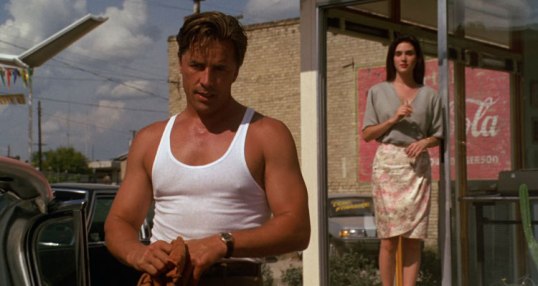
Easy Rider (1969, dir by Dennis Hopper, DP: Laszlo Kovacs)The Last Movie (1971, dir by Dennis Hopper, DP: Laszlo Kovacs)Out of the Blue (1980, dir by Dennis Hopper, DP: Marc Champion)The Hot Spot (1990, dir by Dennis Hopper, DP: Ueli Steiger)
First released in 1986 and still regularly watched and imitated, Blue Velvet is one of the most straight forward films that David Lynch ever made.
For all the talk about it being a strange and surreal vision of small town America, the plot of Blue Velvet is not difficult to follow. After his father has a stroke that leaves him confined to a hospital bed, Jeffrey Beaumont (Kyle MacLachlan) returns home from college. Lumberton appears to be a quiet and friendly little town, with pretty houses and manicured lawns and friendly people. Jeffrey, with his dark jacket and his expression of concern, appears a little out-of-step with the rest of the town. He’s been away, after all. One day, while walking through a field, Jeffrey discovers a rotting, severed ear. Jeffrey picks up the ear and takes it Detective Williams (George Dickerson). Detective Williams, who looks like he could have stepped straight out of an episode of Dragnet, is such a man of the innocent 1950s that his wife is even played by Hope Lange.
“Yes, that’s a human ear, alright,” Williams says, deadpan.
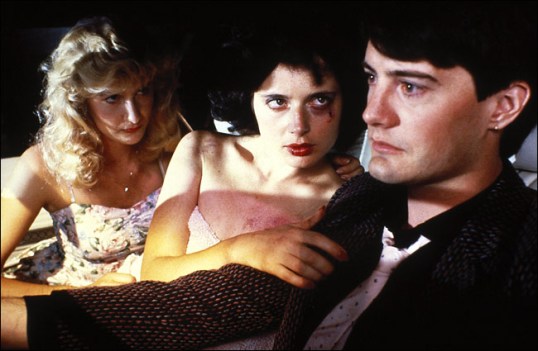
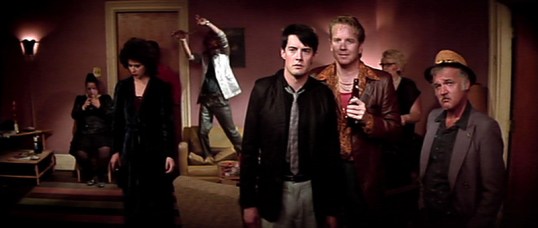
Blue Velvet (1986, dir by David Lynch, DP: Frederick Elmes)
With the help of Detective Williams’s blonde and seemingly innocent daughter, Sandy (Laura Dern), Jeffrey launches his own investigation into why the ear was in the field. He discovers that Lumberton has a teeming criminal underworld, one that is full of men who are as savage as the ants that we saw, in close-up, fighting over that ear in the field. Jeffrey discovers that a singer named Dorothy (Isabella Rossellini) is being sexually blackmailed by a madman named Frank Booth (Dennis Hopper). When Dorothy discovers Jeffrey hiding in her closet (where he had been voyeuristically watching her and Frank), it leads to Jeffrey and Dorothy having a sadomasochistic relationship. “Hit me!” Dorothy demands and both the viewer and Jeffrey discover that he’s got his own darkness inside of him. “You’re like me,” Frank hisses at Jeffrey at one point and, if we’re to be honest, it almost feels like too obvious a line for an artist like David Lynch. Lynch once described the film as being “The Hardy Boys in Hell,” and the plot really is as straightforward as one of those teenage mystery books.
That said, Blue Velvet also features some of Lynch’s most memorable visuals, from the brilliant slow motion opening to the moment that the camera itself seems to descend into the ear, forcing us to consider just how fragile the human body actually is. The film goes from showcasing the green lawns and blue skies to Lumberton to tossing Jeffrey into the shadowy world of Dorothy’s apartment building and suddenly, the entire atmosphere changes and the town becomes very threatening. We find ourselves wondering if even Detective Williams can be trusted. That said, my favorite visual in the film is a simple one. Sandy and Jeffrey walk along a suburban street at night and the camera shows us the dark trees that rise above them, contrasting their eerie stillness to Sandy and Jeffrey’s youthful flirtation.
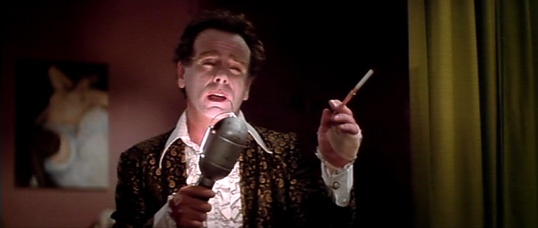
Dean Stockwell in Blue Velvet
Dean Stockwell shows up as Ben, an associate of Frank’s who lip-synchs to Roy Orbison’s In Dreams while Frank himself seems to have a fit of some sort beside him. In retrospect, Blue Velvet played a huge role in Dennis Hopper getting stereotyped as an out-of-control villain but that doesn’t make him any less terrifying as Frank Booth. Hopper, recently sober after decades of drug abuse and self-destructive behavior, summoned up his own demons to play Booth and he turns Frank into a true nightmare creature. Isabella Rossellini is heart-breaking as the fragile Dorothy. That said, the heart of the film belongs to Kyle MacLachlan and Laura Dern and both of them do a wonderful job of suggesting not only the darkness lurking in their characters but also their kindness as well. For all the talk about Lynch as a subversive artist, he was also someone who had a remarkable faith in humanity and that faith is found in both Jeffrey and Sandy. MacLachlan and Dern manage to sell moments that should have been awkward, like Sandy’s monologue about the returning birds or Jeffrey’s emotional lament questioning why people like Frank have to exist. Both Jeffrey and Sandy lose their innocence but not their hope for a better world.
BlueVelvet is a straight-forward mystery and a surreal dream but mostly it’s an ultimately hopeful portrait of humanity. The world is dark and full of secrets, the film says. But that doesn’t mean that it can’t be a beautiful place.
Blue Velvet (1986, dir by David Lynch, DP: Frederick Elmes)
For today’s scene that I love, here is the Mardi Gras sequence from 1969’s Easy Rider. Featuring Peter Fonda, Dennis Hopper, Karen Black, and Toni Basil walking through the streets of New Orleans, this scene was actually filmed during Mardi Gras. Those are real Mardi Gras floats and real Mardi Gras participants staring at the camera. That’s an actual citizen of New Orleans with whom Dennis Hopper appears to have nearly gotten into a fight. Personally, I relate to Toni Basil in this scene. She is having a good time no matter what!
I just love how Toni Basil can’t help but dance, no matter what.
4 (or more) Shots From 4 (or more) Films is just what it says it is, 4 (or more) shots from 4 (or more) of our favorite films. As opposed to the reviews and recaps that we usually post, 4 (or more) Shots From 4 (or more) Films lets the visuals do the talking.
Today, the Shattered Lens pays homage to the greatest of Mardi Gras cities, New Orleans!
4 Shots From 4 New Orleans-Set Films
Easy Rider (1969, dir by Dennis Hopper, DP: Laszlo Kovacs)
Zandalee (1990, dir by Sam Pillsbury, DP: Walt Lloyd)
The Curious Case of Benjamin Button (2008, dir by David Fincher, DP: Claudio Miranda)
Bad Lieutenant: Port of Call New Orleans (2009, dir by Werner Herzog, DP: Peter Zieitlinger)



 Through the Shattered Lens