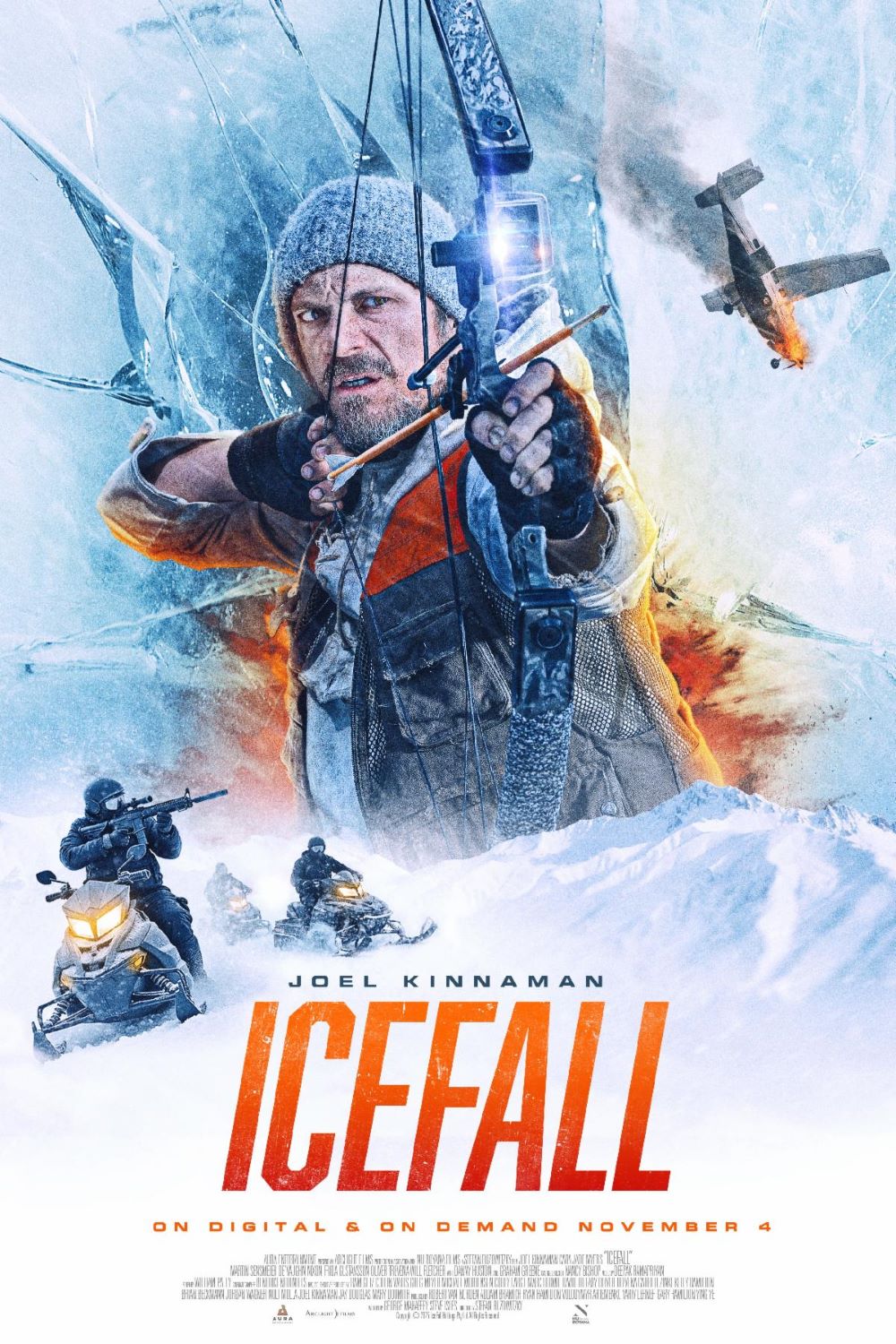
Review: Icefall (dir. by Stefan Ruzowitsky)


“You don’t find redemption in warmth. You fight for it in the cold.” — Ani

Icefall (2025) is a survival thriller set deep in a frozen wilderness where Ani, a determined Indigenous game warden, and Harlan, a grizzled poacher, find themselves forced together to evade criminals hunting down a crashed plane’s cash stash. Their uneasy alliance forms the heart of the movie, supported by the biting cold, shifting ice, and relentless danger that keeps the tension alive throughout.

The film benefits significantly from its leads’ performances, especially Joel Kinnaman’s portrayal of Harlan. Kinnaman has become something of a seasoned veteran in this kind of gritty thriller and action role, having built a career playing characters who balance toughness with a hint of vulnerability. His familiarity with this genre brings a dependable authenticity to Harlan, who feels weathered but not worn out, someone who understands survival instinctively. Alongside Cara Jade Myers’ portrayal of Ani, their on-screen chemistry roots the film in more than just action beats, making their relationship genuinely engaging amid the harsh landscape.

Speaking of the environment, Icefall uses its setting as more than just a backdrop. The fragile ice and near-empty wilderness create natural obstacles that heighten the sense of peril, reinforcing the story’s theme that nature itself is an adversary. The melting ice becomes a constant threat, lending the narrative a slow-burning pressure that’s as effective as any chase or gunfight. This atmospheric tension is one area where the film really earns its keep, immersing viewers in the dangerous beauty of its frozen world.

However, Icefall stumbles when it comes to story originality and pacing. The film’s premise feels familiar—dangling on the edge of a formula that fans might recognize as similar to the 1993 Sylvester Stallone thriller Cliffhanger. While Cliffhanger had that film’s villain as a magnetic and complex antagonist, Icefall misses that mark. Its criminals lack charisma and depth, removing a vital layer of excitement and tension from the story. Without a compelling foil for Harlan and Ani, many confrontations fall flat, and the thriller’s pulse falters.

The plot is further weakened by a somewhat cluttered narrative, introducing a secret government biohazard subplot that feels shoehorned in and detracts from the simpler core survival story. Characters occasionally make choices that seem more dictated by the demands of the script rather than believable motivations. These factors lead to inconsistent pacing, which can frustrate viewers looking for a tight, focused thriller.

Visually, the film offers moments of stark beauty but is uneven technically. Some sequences perfectly capture the isolating chill and danger of the icy wild, while others suffer from abrupt editing and less convincing digital embellishments that distract from the intended immersion. The cinematography shifts between grand vistas and awkward close-ups, occasionally disrupting the flow of tension.

Characterization is uneven as well. Ani shines intermittently but sometimes veers into typical thriller protagonist territory, exhibiting moments of indecision or cliché. Kinnaman’s Harlan remains the more grounded and believable figure, benefiting from his extensive experience playing similar roles. Meanwhile, the villains fail to rise above stereotype, lacking the nuance or menace that could have made the story pulse with higher stakes.

Still, when the film settles into the rhythm of survival—the crunch of snow underfoot, the slow erosion of trust, the ever-present threat of dissolving ice—Icefall delivers a tense, atmospheric experience. It’s not a revelatory thriller, but it does offer enough grit and moodiness for a single viewing, especially for fans of cold-climate survival dramas.

Icefall is a mixed bag: it has strong performances, especially from Joel Kinnaman, who clearly knows the ropes of this genre and plays an experienced, weathered survivor with ease. The film’s use of environment is a big plus, giving it an edge that many thrillers lack. Yet it suffers from an unoriginal plot that recalls better films like Cliffhanger but without their charismatic antagonists, plus narrative distractions and technical inconsistencies. It’s an okay watch for those in the mood for a frosty thriller with solid leads but never quite rises to leave a lasting impression.
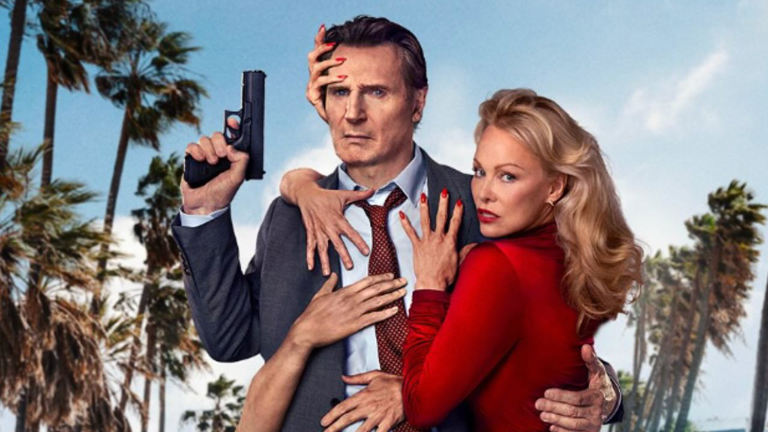
Brad reviews THE NAKED GUN (2025), starring Liam Neeson!


When I first saw that THE NAKED GUN was being rebooted with Liam Neeson as Frank Drebin, Jr., I must admit that I was quite skeptical. You see, the original THE NAKED GUN (1988) with Leslie Nielsen came out when I was 15 years old, and I remember watching it at the movie theater on a field trip with our high school’s Future Business Leaders of America (FBLA) club. I loved it so much! I eagerly watched THE NAKED GUN 2 1/2 (1991) and NAKED GUN 33 1/3 (1994) at the theaters as well. To be completely honest, this series is one of my favorites of my “growing into an adult” years, and I didn’t want to see it screwed up. When the trailer was released a couple of months ago my reaction was cautious optimism as I must admit it looked quite funny, and I decided that I would go watch it in the theater when it came out. Well, tonight my wife and I headed to the Cinemark in Little Rock to see what director Akiva Schaffer and his crew had come up with…

In THE NAKED GUN (2025), dedicated Detective Lt. Frank Drebin Jr. (Liam Neeson) follows in his father’s footsteps by leading Police Squad and causing an endless array of problems for Police Chief Davis (CCH Pounder). When a bank heist is staged by Sig Gustafson (Kevin Durand) in order to obtain a mysterious P.L.O.T. Device, Drebin teams up with his partner, Captain Ed Hocken Jr. (Paul Walter Hauser), and the beautiful crime novelist Beth Davenport (Pamela Anderson) to investigate. Their subsequent probe leads them to tech mogul Richard Cane (Danny Huston) and his sinister plot to use the device to revert humanity to a base barbaric state as the balls drop on New Year’s Eve. With the help of his deceased father’s spirit that’s being housed in the body of a large owl, Drebin goes all out to foil Cane’s plans while simultaneously falling in love with Beth! 

I’m going to go ahead and alleviate any suspense and state that I love the new NAKED GUN movie. I laughed out loud throughout the entire film, including the end credits, and I wasn’t the only one as there were people in our showing that were laughing much louder than me. It was a fun “crowd experience,” and I’m so glad we caught it in the theater. Not every joke is funny, but in the tradition of the original series, they come so fast and furious that there’s a good chance the next joke will be hilarious. Liam Neeson does a great job as Frank Drebin, Jr., infusing the character with just the right amount of seriousness to allow the absurdity all around him to be played for laughs. I told a friend a few months ago that I’d be really impressed if Neeson was able to pull this role off, and I’m glad to report that he passes with flying colors. He doesn’t make you forget the comedic genius of Leslie Nielsen, but he’s darn good. And Pamela Anderson is perfect in the crime novelist / love interest role. I haven’t seen her in anything in a long time, but she’s truly hilarious in the film. After watching her performance, I honestly don’t think any actress could have done any better. The rest of the game cast, including Paul Walter Hauser, Danny Huston and Kevin Durand each have good moments that add to the fun. I also enjoyed some of the specific throwbacks to the original series, including brief appearances by Priscilla Presley, Weird Al Yankovic, and especially the stuffed beaver, which got a big laugh out of me, just like it did when I was 15! 

Overall, I had a great time at the movie theater with THE NAKED GUN (2025). Director Akiva Schaffer delivers a hilarious, 85 minute film that’s a worthy follow-up to the original Zucker-Abrahams-Zucker / Leslie Nielsen classics. What else could you ask for?!!

Brad’s “Trailer of the Day” – THE NAKED GUN (2025), starring Liam Neeson!


When I first heard that Liam Neeson would be playing Frank Drebin, Jr. in a reboot of THE NAKED GUN series, I thought it might be a joke. Turns out it was the absolute truth! I’ll admit that I love the original NAKED GUN movies starring Leslie Nielsen. I watched every one of them at the movie theater and proudly own the DVD box set. Based on that love, I certainly hope that Neeson’s version will be a fun movie, and I’ll probably watch it at the movie theater sometime after it opens on August 1st as well. Check out the trailer for THE NAKED GUN (2025) below!

The Films of 2024: Horizon: An American Saga: Chapter One (dir by Kevin Costner)


Horizon: An American Saga: Chapter One is the rather unwieldy title of the first part of what Kevin Costner has said will be an epic four-part movie about the settling of the American frontier.

It’s very, very long.

It has a running time of three hours, during which time a lot of characters are introduced and a lot of plotlines are initiated but, because this is the only first chapter, none of them come to a close.  In fact, as the film ends, it’s still a mystery as to how some of the characters are even related.  I watched all three hours and I took my ADD meds this morning so you can be assured that I was actually paying attention.  That said, I still struggled to keep track of who everyone was or even where they were in proximity to each other.  Indeed, it was only towards the end of the film that I realized that several years were supposed to have passed over the course of the first chapter’s running time.

That’s not to say that the film is a disaster.  While it’s not quite the nation-defining epic that Costner obviously envisioned it as being, it’s also not quite the cinematic atrocity that several critics made it out to be.  It’s a throwback of sorts, to the epic westerns of old.  As such, the film features taciturn gunslingers, a woman with a past, dangerous outlaw families, fierce Indian warriors, and a wise Indian chief who has dreamed of the coming of the white man.  The film is full of actors — like Michael Rooker, Sienna Miller, Sam Worthington, Danny Huston, Will Patton, James Russo, Dale Dickey, and Kevin Costner himself — who feel as if they belong to a different era of filmmaking.  Just about everyone in the film is heading to the settlement of Horizon, which sits in Apache territory.  Despite the efforts of the Indians to kill every settler who shows up, they keep coming.  As one army officer explains it, the Indians have made the mistake of thinking that the settlers will come to believe the land is cursed while the settlers, all of whom are full of American optimism, instead chose to believe that the previous settlers were unlucky but that the next wave of settlers will make it work.  Costner has the right visual sensibility for a western.  The film reveals a director who is obviously in love with the Western landscape and the film is at its best when it simply frames the characters against the beauty of the frontier.  But when it comes to actually telling a compelling story, he struggles.  There are a lot of moving parts to the first chapter of Horizon and the problem is not that they don’t automatically connect but instead that Costner never gives us any reason to believe that they’ll ever connect.  There are no visual clues or bits of dialogue to assure the viewer that everything they’re watching is going to eventually pay off.  Costner asks his audience to have faith in him and remember that he directed Open Range and Dances With Wolves while forgetting about The Postman.

The first hour, which features a brutal raid on the settlement by a group of Indians, is the strongest.  It really drives home the brutality of what we now call the old west.  In the style of Michael Cimino’s The Deer Hunter, Costner closely observes the individual customs of the film’s settlers and carefully introduces several appealing characters who leave the viewer feeling as if they’ve met a very special and very unique community of people.  That makes it all the more devastating when the majority of those characters are subsequently wiped out with casual cruelty in a raid led by the Indian warrior Pionsenay (Owen Crow Shoe).  (Later — much later — a tracker played by Jeff Fahey will show similar brutality while wiping out a group of Apaches.)  The first hour establishes the frontier as being beautiful but also dangerous and it also drives home the mix of determination, desperation, and even madness that led so many to follow Horace Greeley’s advice and “Go west!”  Though the film was shot in early 2023, the brutality of the raid brought to mind the terrible images of the October 7th attacks on Israel.  The subsequent scenes in which Pionesenay and his followers ridiculed those in the tribe who wanted peace mirrored the current schism that’s driving apart the worldwide Left.  The U.S. Army, for their part, arrives a day late and can only offer up not-so subtle condescension.  The surviving settlers, however, remain determined to make a home for themselves.

The second hour focuses on Hayes (played by Costner), who rides into a mining town and gets involved with a family of outlaws who are looking for the woman who shot their father.  The second hour is a bit more of a traditional western than the first hour, though some of the violence is still shockingly brutal.  (Even being comedic relief won’t save you in this film.)  Abbey Lee gives a good performance as the woman with a past and a baby and Kevin Costner is  …. well, he’s Costner.  He could play this type of role in his sleep.

The third hour is a mess, introducing a wagon train and featuring a miscast Luke Wilson as the leader of the settlers and Jeff Fahey giving a strong performance as a ruthless tracker.  The third hour meandered as a whole new set of characters were introduced and I was left to wonder why the film needed new characters when the characters from the first two hours were perfectly adequate.  It was during the third hour that I started to really get impatient with the film and its leisurely approach to storytelling.

The film ends with a montage of what we can expect from the next few chapters of Horizon and I will say that the montage actually looked pretty cool.  That’s because the montage was almost totally made up of action scenes, with none of the padding that caused Chapter One to last an unwieldy three hours despite only having 90 minutes worth of story.  Still, one has to wonder if we’ll actually get to see the next three chapters.  The first chapter bombed at the box office and didn’t exactly excite critics.  Costner is producing and financing the films himself and I doubt he’ll give up on them.  The Horizon saga will be completed but will it made it to theaters or will it just end up on streaming?  Personally, I think the whole thing would work best as a miniseries but who knows?  (If Horizon was airing on Paramount, it would probably be a Yellowstone-style hit.)  All I really do know is that Chapter Two has yet to be released.  And that’s a shame because, for all of Chapter One‘s flaws, I’d still like to see how the story turns out.

You Have To Pay The Bills Somehow: The Maddening (1995, directed by Danny Huston)


Because her husband’s a dick who spends too much time working and not enough time taking the day off, Cassie (Mia Sara) grabs her five year-old daughter, Samantha (Kayla Buglewicz) and heads off for her sister’s house.  When Cassie stops at a gas station to fill up the car, she’s spotted by seedy Roy Scudder (Burt Reynolds!).  Roy puts down his cigar long enough to tamper with her car.  When it breaks down a few miles down the role, Roy drives up and offers Cassie and Samantha a ride back to his place, where he can fix her car or where she can at least call for hep.  Not realizing that she’s in a direct-to-video horror movie, Cassie accepts.

Big mistake!  Roy’s wife, Georgina (Angie Dickinson!), has not been the same since the mysterious death of her son and Georgina and Roy’s other child, Jill (Candace Huston, daughter of the film’s director and granddaughter of John Huston), needs a playmate.  Roy has decided that Samantha fits the bill.  Cassie is locked in a room while Samantha is turned into Jill’s slave and Roy deals with the angry ghost of his abusive father (William Hickey!).

You have to feel bad for Burt Reynolds.  He made this film at a time when his career was in decline.  His TV show was no longer on the air.  Boogie Nights was still two years away.  The man had bills to pay.  Can you blame Burt for accepting any role that came his way, especially if it meant a chance to co-star with Angie Dickinson and be directed by the son of John Huston?  Reynolds was famous for hating even his good films so you can only imagine what he must have thought about The Maddening.  Fortunately, since Burt was playing a total psycho in The Maddening, he could at least channel his feeling into the role.  Throughout ever minute of The Maddening, Burt is totally and thoroughly unhinged and angry in the way that only the former number one star in America could be upon having to settle for a role in a direct-to-video horror film.  He yells at his ghost father.  He slits throats.  He beats people into unconsciousness.  He does everything that a normal movie psycho does but, when he does it, it’s even more memorable because he’s Burt Reynolds.  Burt and Angie Dickinson playing the type of role that Bette Davis would have played for Robert Aldrich in the 60s are not just the main reasons to watch this movie.  They’re the only reasons.

This was Burt’s only horror film and it’s too bad that it couldn’t have been a better one.  But if it helped Burt keep the lights on during the lean years of the early 90s, good.

Film Review: Game Night (dir by John Francis Daley and Jonathan Goldstein)


In this time of division and conflict, can we all agree that Game Night is a damn funny movie?

The film tells the story of three couples who regularly get together for, as the title suggests, a game night.  Ryan (Billy Magnussen) and Sharon (Sharon Horgan) are quirky and a little bit daffy.  Kevin (Lamorne Morris) and his wife, Michelle (Kylie Bunbury) are generally dependable and Michelle has a really interesting story about the time that she met a man who may have been Denzel Washington but probably wasn’t.  Meanwhile, Annie (Rachel McAdams) and Max (Jason Bateman) are an ultracompetitive married couple, frustrated in their attempts to conceive a child but always confident in their ability to win any game that they play.  At one time, Gary (Jesse Plemons) and his wife used to be a part of the group but, after they got divorced, Max and Annie stopped inviting him.  You really can’t blame them.  Gary’s seriously creepy.

And then there’s Brooks Davis (Kyle Chandler).

Brooks is Max’s brother and, at first glance, he would appear to be everything that Max isn’t.  Brooks appears to have a lot of money.  He claims to have a successful career, even if no one’s quite sure what he does for a living.  He drives a nice car.  When he comes to town to visit his brother, he rents out a mansion.  Brooks is the type of older sibling who always has an embarrassing story or two to share about his younger brother.  In fact, Max feels so inadequate when compared to Brooks that it’s even interfering with Max and Annie’s efforts to have a child.  When Brooks invites everyone to come to his house for a very special game night, Annie and Max are determined to beat Brooks at whatever game he’s planning on having them play.

It turns out that Brooks has hired a company to put on an interactive role-playing game.  While listening to a fake FBI agent (Geoffrey Wright) explain the background of the mystery that they’re about to solve, the couples are shocked when several masked men burst into the house.  Everyone’s impressed as the men beat the fake FBI agent unconscious.  When the men start beating up Brooks, everyone praises Brooks for the realism of his game.  After Brooks is dragged out of the house, the couples set out to solve the mystery of who is behind this kidnapping.  As for the fake FBI agent, he lies on the floor motionless.  Even when Ryan kicks his body, the agent doesn’t move.  Everyone agrees that the agent is a really good and committed actor.

Of course, the joke is that Brooks really has been kidnapped but nobody realizes it.  It’s a good joke but, to the film’s credit, it’s not the only joke.  In fact, Game Night actually get funnier after everyone eventually realizes that they’re no longer playing a game.  Ever after they realize that Brooks actually has been kidnapped, Annie and Max are so competitive that they still keep trying to outdo everyone else.

Annie and Max also discover that they have no choice but to involve their creepy neighbor and former friend, Gary.  Jesse Plemons doesn’t have a lot of screentime but he gives a performance that is so exquisitely strange and awkward that he ends up stealing the entire movie.  Watching Plemons, you both feel sorry for Gary and understand why no one wants to play with him.  His desperation to be apart of the group is both exasperating and somewhat touching.

In fact, the entire cast does a good job, bringing their often clueless characters to life.  Max and Annie are a likable couple and Bateman and McAdams have a natural chemistry that makes them a lot of fun to watch.  There’s a great scene where Max and Annie, still thinking that they’re just playing a game, subdue a group of criminals in a bar.  Max and Annie’s clueless joy is intoxicating.  They’re having fun playing at being tough and we’re having fun watching them.  Of course, it eventually turns out that the gun that Annie thought was a toy is real and loaded and … well, things get a little bit messy.  While the scene where Annie and Max try to figure out how to dig a bullet out of a man’s arm may have made me cringe a little, it also made me laugh.  That’s a credit to both Bateman and McAdams, who made the scene both real and funny at the same time.

Anyway, I really enjoyed Game Night.  Clocking in at 100 minutes, it’s a briskly paced and good-natured comedy that never makes the mistake of lingering for too long over its own cleverness.  Director Jonathan Goldstein and John Francis Daley both redeem themselves for 2015’s Vacation.  If, earlier this year, you missed this one when it was in theaters, see it now and have a good time.

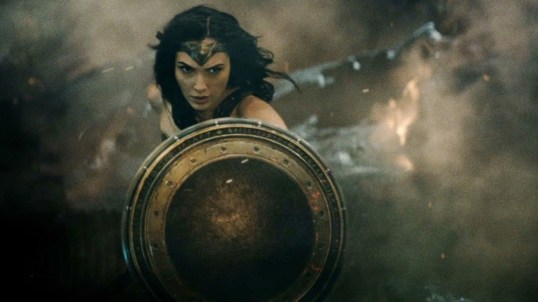
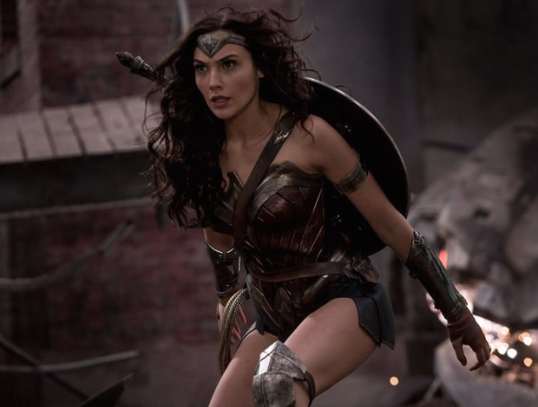
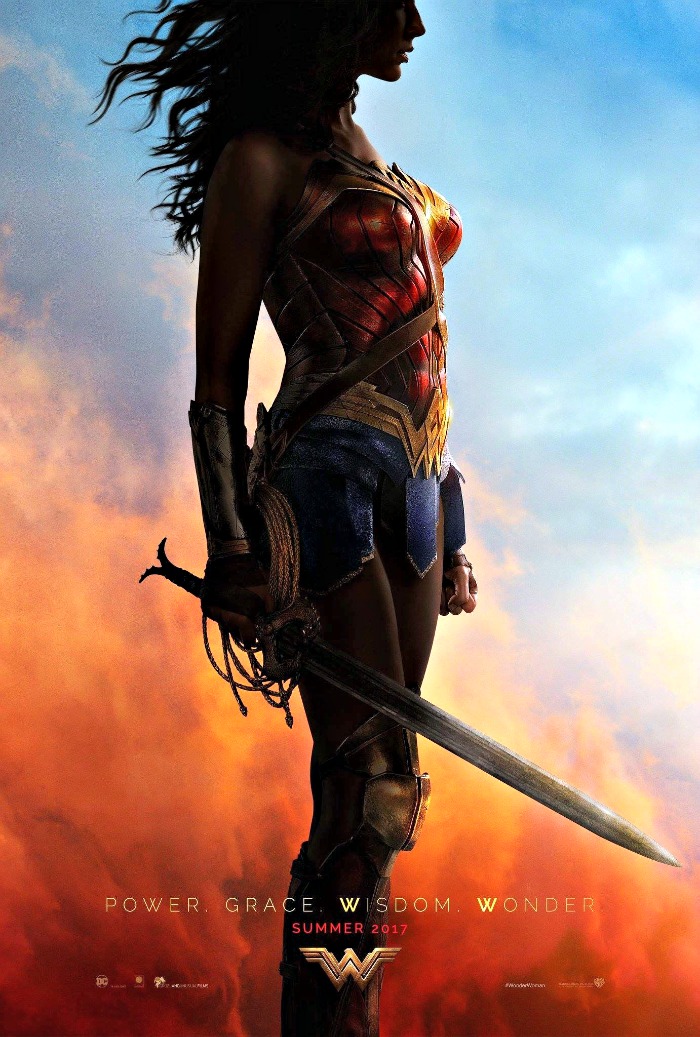
Film Review: Wonder Woman (dir by Patty Jenkins)


Wonder Woman is awesome!

I spent a while trying to think of the best way to begin this review.  There’s a lot to be said about Wonder Woman, as both a film and as a character.  Over the next few weeks, we’re going to be flooded with think pieces.  Is Wonder Woman too feminist or not feminist enough?  Does Wonder Woman herald a new direction for the DC Expanded Universe or is it destined to just be an anomaly among the ruins of crap like Man of Steel and Suicide Squad?  Does it announce the arrival of new star?  Is Wonder Woman pro-war or a plea for peace?  Does Wonder Woman live up to the rapturous early reviews or is it destined to suffer the same fate as the initially acclaimed, later-reviled Ghostbusters reboot?

Those are all legitimate questions.  They’re all worthy of debate and discussion.  And I look forward to reading everyone’s thoughts on blah blah blah blah….

Yes, Wonder Woman is empowering, both as a film and as a character.  It’s amazing to think that, with all the super hero adaptations that have come out over the past ten years, Wonder Woman is the first one to center around a female super hero.

Yes, Wonder Woman does finally prove that DC Expanded Universe can produce a good film, though I do have to say that two of the best things about Wonder Woman is that it had very little to do with any of the other DCEU films and it felt more like an MCU film.  With the period setting (the film takes place during World War I) and it’s weary view of the wars that men fight, Wonder Woman has far more in common with the first Captain America film than it does with Man of Steel.

Yes, Gal Gadot is going to be a huge star and her performance here suggests that she has range beyond action films and comic book melodramas.

Yes, Wonder Woman is a plea for peace but it’s a sincere and honest plea and one that does not ignore the realities of human nature.

And, finally, yes, Wonder Woman deserves those good reviews and I believe it will stand the test of time.

When all is said and done, what really matters is that Wonder Woman is freaking awesome!  The teaming of director Patty Jenkins and star Gal Gadot has resulted in one of the most entertaining and exciting comic book movies of recent times.  Usually, I resent it when an audience breaks into applause at the end of a movie, largely because it makes me feel as if I’m being pressured to make a snap judgment about a movie’s worth before I’ve had time to give it proper thought.  However, this time, when the applause broke out at the Alamo Drafthouse, I happily joined in.

I could be wrong about this but I don’t think Wonder Woman is ever actually called “Wonder Woman” at any point during the film.  If she was, I missed it and I’m sure someone will correct me in the comments.  Instead, she is referred to by her proper name, Diana.  When the film opens (after the obligatory modern-day prologue), Diana is a child living on the island of Themyscira, the home of the legendary Amazons.  Diana is the only child among the Amazons.  The daughter of Queen Hippolyta (Connie Nielsen), Diana dreams of becoming a warrior but her mother refuses to allow it.  When Diana is trained, it’s in secret by her aunt, General Antiope (Robin Wright).  At one point, Antiope tells Diana that if she’s going to be warrior, she’s going to have to be prepared to fight for everything.  No victory, Antiope tells her, will ever come easily.  I nodded at that line and I’m sure every other woman in the audience did so as well.  We understood what Antiope was saying.

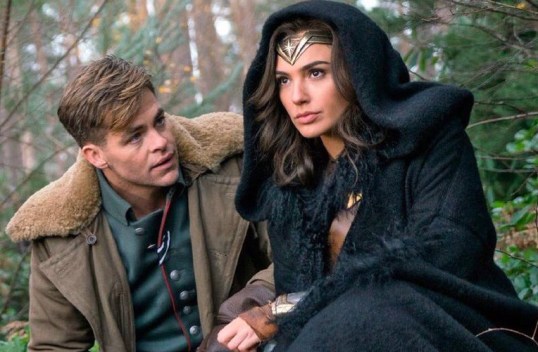
In 1918, for the first time in centuries, a man reaches the island.  His name is Steve Trevor (Chris Pine) and he’s an American spy.  No sooner does Steve’s plane crash on the beach then a boat full of Germans arrive.  After a genuinely exciting battle (perhaps the first exciting action scene to appear in any of the DCEU films), Steve reveals that the world is at war.  Suspecting that it is the influence of Ares, the god of war, that is causing people to kill one another, Diana defies her mother’s orders and leaves the island with Steve.  Steve’s goal is to keep the Germans from developing and deploying a lethal gas.  Diana, meanwhile, plans to track down and kill Ares.

While Steve is convinced that, as a result of human nature, wars are inevitable, Diana is resolute in her belief that all the evil in the world can be linked to Ares.  Their conflicting world views give Wonder Woman far more emotional depth and intellectual resonance than any of the other films that have, so far, been a part of the DC Expanded Universe.  By refusing to indulge in portentous hypermasculinity, it avoids becoming a pretentious slog like Man of Steel or Batman v Superman.  By refusing to treat war, death, and violence as a joke, it avoids falling into the soulless trap that imprisoned Suicide Squad.  When Diana runs and leaps into battle, she’s not just fighting for good against evil.  She’s fighting for the soul of humanity.

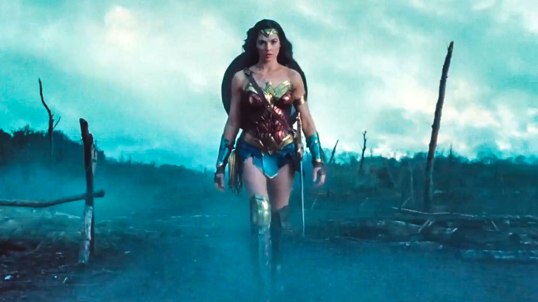
Some of the action scenes in Wonder Woman are nothing less than amazing.  The scene where Diana crosses the aptly named “No-Man’s Land” is destined to be remembered as a classic moment in comic book cinema.  I don’t want to spoil too much of the film but I will say that you’ll also never forget the way that Diana takes out a German sniper.  It’s an amazing moment, one that is matched by the film’s final battle.  Again, I don’t want to spoil anything so I’ll just say that the film’s finale brought tears to my eyes.

After providing Batman v Superman with its only good moments, Gal Gadot finally gets the film that she deserves and she gives an amazing performance.  As played by Gadot, Diana is confident but never arrogant, occasionally naive but never foolish.  She’s a fighter, one who refuses to surrender even when the rest of the world tells her to go home.  (There’s a rather interesting throw-away line, in which Steven’s secretary says that she’s looking forward to getting to vote in her first election.  Wonder Woman is saving a world that wouldn’t even allow her a voice in selecting the man who are constantly putting it in danger.)  Gal Gadot gives a charismatic and star-making performance.

Also giving a good performance — perhaps a career best if you take Hell or High Water out of the equation — is Chris Pine.  When Pine first appears, he seems to be doing a riff on his too-perfect Prince Charming performance in Into the Woods.  But, as the film progresses, Pine brings unexpected depth to this role.  Special mention should also be made of David Thewlis, who may not have a huge role but who makes the most of his limited screen time.

But, with all that in mind, the most important thing that I can tell you about Wonder Woman is that the film is an absolute blast, a fast-paced and exciting action film that is complimented by strong performances and an unexpectedly poignant subtext.

It’s empowering.

It’s entertaining.

It’s worthy of the applause that filled the Alamo Drafthouse.

In short, it’s absolutely awesome.

See it this weekend.

(Now, Marvel, where’s that Black Widow movie that y’all better be developing?)

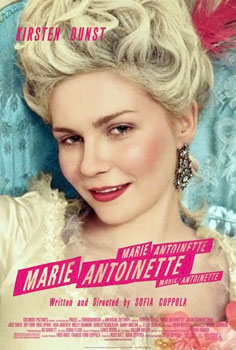
Cleaning Out The DVR Yet Again #25: Marie Antoinette (dir by Sofia Coppola)


(Lisa recently discovered that she only has about 8 hours of space left on her DVR!  It turns out that she’s been recording movies from July and she just hasn’t gotten around to watching and reviewing them yet.  So, once again, Lisa is cleaning out her DVR!  She is going to try to watch and review 52 movies by the end of Tuesday, December 6th!  Will she make it?  Keep checking the site to find out!)

marie-antoinette_poster

On November 12th, I recorded 2016’s Marie Antoinette off of Starz.

Before I review Marie Antoinette, I think it’s important that you know that I am an unapologetic Sofia Coppola fan.  I love every film that she’s made and I look forward to her upcoming remake of The Beguiled.  At the same time, I can also understand why some people feel differently.  Sofia Coppola’s films are not for everyone.  For one thing, almost all of her films deal with rich people.  The existential angst of the wealthy and/or famous is not a topic that’s going to fascinate everyone.  When you watch a Sofia Coppola film, you never forget that you’re watching a film that’s been directed by someone who largely grew up in the spotlight and who knows what it’s like to have money.  An ennui born out of having everything and yet still feeling empty permeates almost every scene that Sofia Coppola has ever directed.  (If you have to ask what ennui is, you’ve never experienced it.)  Many viewers look at Sofia Coppola’s filmography and they ask themselves, “Why should we care about all these materialistic people?”

However, while Sofia Coppola may not know what’s it’s like to be poor (or even middle class for that matter), she does understand what it’s like to feel lonely.  Her filmography could just as easily be called “the cinema of isolation.”  It doesn’t matter how much money you may have or how famous you may or may not be, loneliness is a universal condition.  A typical Sofia Coppola protagonist is someone who has everything and yet still cannot connect with the rest of the world.  More often that not, they turn to excessive consumption in order to fill the void in their life.  To me, the ultimate Sofia Coppola image is not, regardless of how much I may love them, Bill Murray and Scarlett Johansson in Lost in Translation.  Instead, it’s Stephen Dorff (playing a far less likable version of Bill Murray’s Translation character) standing alone in the desert at the end of Somewhere.

Marie Antoinette, which was Sofia’s follow-up to Lost in Translation, is technically a historical biopic, though it makes little effort to be historical or accurately biographical.  Kirsten Dunst plays Marie Antoinette, the final queen of France before the French Revolution.  It was Marie Antoinette was accused of dismissing starving French peasants by announcing, “Let them eat cake!”  (For the record, it’s probable that Marie Antoinette never said that.  It’s certainly never heard in Coppola’s film.)

Marie Antoinette opens with the title character arriving in France at the age of 14.  She’s an Austrian princess who has been sent to marry the future king of France, Louis XVI (Jason Schwartzman).  From the minute we meet her, Marie Antoinette is portrayed as being a pawn.  Her mother arranges the marriage as a way to seal an alliance with France.  The king of France (played by Rip Torn) expects Marie Antoinette to get produce an heir to the throne as quickly as possible.  Meanwhile, her new husband is an infantile and immature fool who doesn’t even know how to make love.  Marie Antoinette finds herself isolated in a strange country, expected to be all things to all people.

And so, Marie Antoinette does what I always do whenever I’m feeling unsure of myself.  She hangs out with her girlfriends.  She throws expensive parties.  She gambles.  She flirts.  She shops.  She has fun, regardless of whether it’s considered to be proper royal behavior or not.  Occasionally, she is warned that she is losing popularity with the French people but she’s not concerned.  Why should she be?  She doesn’t know anything about the French people.  All she knows about is the life that she was born into.  She didn’t choose to be born in to wealth and power but, since she was, why shouldn’t she have a good time?

The French Revolution doesn’t occur until near the end of Marie Antoinette and when it does happen, it happens quickly.  And yet, the shadow of the revolution hangs over the entire film.  We watch the knowledge that neither Marie Antoinette nor her husband possess: eventually, they are both going to be executed.  And knowing that, it’s hard not to cheer Marie Antionette on.  She may be destined for a tragic end but at least she’s having a little fun before destiny catches up with her.

Kirsten Dunst makes no attempt to come across as being French or Austrian but then again, neither does anyone else in the film.  After all, this is a movie where Rip Torn plays the King of France without once trying to disguise his famous Texas accent.  Coppola isn’t necessarily going for historical accuracy.  Instead, in this film, Marie Antoinette serves as a stand-in for countless modern celebrities.  In the end, Marie Antoinette is portrayed as not being much different from Paris Hilton or Kardashian.  Meanwhile, the people who eventually show up outside the palace, carrying torches and shouting threats, are the same as the viewers who loudly condemn reality television while obsessively watching every episode of it.

Coppola’s stylized direction results in a film that is both thought-provoking and gorgeous to look at and which is also features several deliberate anachronisms.  (In many ways, Marie Antoinette blatantly ridicules the very idea that history can be accurately recreated.)  Perhaps because it was following up the beloved Lost In Translation, Marie Antoinette has never got as much praise as it deserves but I think it’s a film that is totally deserving of a reevaluation.

(Sidenote: Fans of Italian horror should keep an eye out for Asia Argento, who has a small but very important supporting role.)

Wonder Woman Trailer Emerges At Comic-Con To Thunderous Applause


Wonder Woman

“What I do is not up to you.” — Wonder Woman

With that single line in the newly released San Diego Comic-Con trailer for next summer’s Wonder Woman a gauntlet has been dropped on manbros everywhere.

With Batman v. Superman: Dawn of Justice having been received with underwhelmingly at best to outright vehemence with some, DC was now setting it’s sights on the third of the DC Triumvirate to help right the DC Extended Universe film franchise. With Patty Jenkins doing directing duties and Gal Gadot in the title role, Wonder Woman will actually beat Marvel Studios in having the first female-led superhero film by at least a year.

From the reaction written about at SDCC’s Hall H where Warner Bros. had it’s presentation the trailer was received with thunderous applause and hope that DC has learned from their past mistakes and now ready to truly show the world it’s own diverse and wondrous universe of Gods, monsters, heroes and men.

Wonder Woman is set for a June 2, 2017 release date.

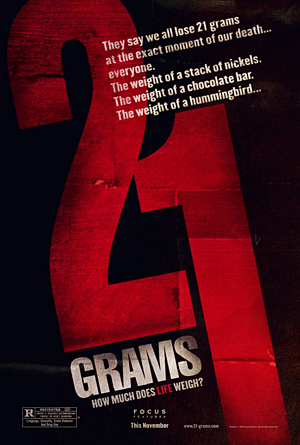
Embracing the Melodrama Part II #103: 21 Grams (dir by Alejandro Gonzalez Inarritu)


21_grams_movieRemember how shocked a lot of us were when we first saw Birdman?  Well, it wasn’t just because Birdman featured an underwear-clad Michael Keaton levitating in his dressing room.  And it also wasn’t just because Birdman was edited to make it appear as if it had been filmed in one continuous take (though, to be honest, I would argue that the whole “one continuous shot” thing added little to the film’s narrative and was more distracting than anything else.)  No, the main reason we were shocked was that Birdman was directed by Alejandro Gonzalez Inarritu and, when we thought of an Inarritu film, we thought of something like 2003’s 21 Grams.

It’s not easy to explain the plot of 21 Grams, despite the fact that 21 Grams does not tell a particularly complicated story.  In fact, if anything, the plot of 21 Grams feels like something that either Douglas Sirk or Nicholas Ray could have come up with in the 50s.  Indeed, the plot of 21 Grams is far less important than the way the Inarritu tells the story.  (In that, the dark and grim 21 Grams does have something in common with the arguably comedic Birdman.)

Inarritu tells his story out of chronological order.  That, in itself, is nothing spectacular.  Many directors use the same technique.  What distinguishes 21 Grams is the extreme to which Inarritu takes his non-chronological approach.  Scenes play out with deceptive randomness and it is left to the viewer to try to figure out how each individual scene fits into the film’s big picture.  As you watch 21 Grams, you find yourself thankful for little details like Sean Penn’s beard, the varying lengths of Naomi Watts’s hair, and the amount of sadness in Benicio Del Toro’s eyes because it’s only by paying attention to those little details can we piece together how once scene relates to another.

The film tells the story of three people whose lives are disrupted by the type of tragedies that the pre-Birdman Innaritu was best known for.

Sean Penn plays Paul Rivers, who is a sickly mathematician who desperately needs a new heart.  He’s married to a Mary (Charlotte Gainsbourg), who devotes all of her time to taking care of him and is frustrated by Paul’s fatalistic attitude towards his condition.  When Paul does finally get a new heart, he gets a new existence but is haunted by the fact that it has come at the expense of another man’s life.

Christina Peck (played by Naomi Watts) is a former drug addict who is now married with kids and who appears to have the perfect life.  That is until her husband and children are tragically killed and, in her grief, Christina falls back into her old lifestyle.  The formerly stable and happy Christina becomes obsessed with the idea of getting revenge for all that she has lost.  Naomi Watts was deservedly nominated for an Oscar for her work here.  Her vulnerable and emotionally raw performance holds your interest, even when you’re struggling to follow the film’s jumbled chronology.

And finally, there’s Jack Jordan (Benicio Del Toro).  Like Christina, Jack is a former drug addict.  Whereas Christina used the stability of family life to help her escape from her demons, Jack uses his new-found Christianity.  And just as Christina struggles after she loses her family, Jack struggles after tragedy causes him to lose his faith.  Like Paul, he struggles with why he’s been allowed to live while other have not.  Del Toro was nominated for an Oscar here and, like Watts, he more than deserved the nomination.

(While Sean Penn was not nominated for his performance in 21 Grams, he still won the Oscar for his role in Mystic River.)

21 Grams is a powerful and deeply sad film, one that will probably shock anyone who only knows Inarritu for his work on Birdman.  21 Grams is not always an easy film to watch.  Both emotionally and narratively, it’s challenging.  But everyone should accept the challenge.