October True Crime: In Broad Daylight (dir by James Steven Sadwith)


On July 10th, 1981, Kenneth Rex McElroy was gunned down in Skidmore, Oklahoma.  He was shot while sitting in his truck.  Over 40 bullets were fired into the truck but only two actually hit McElroy.  His fourth wife, Trena (who Kenneth first met when she was 12 and he was 35), was sitting beside him at the time but was not hit by any bullets.  McElroy was 47 years old when he was gunned down in broad daylight.  There were reportedly 46 witnesses who saw the shooting occurred.  When interrogated by the police, not a single one said that they saw anything.  Quite a few did mention that Ken McElroy had gotten exactly what he deserved.

Ken McElroy was a high dropout, a barely literate career criminal who rustled cattle, burned down houses, raped his fourth wife when she was just 12, and then killed her family’s dogs in order to intimidate them into not pressing charges against him.  He was known as the town bully, a surly man who had 17 children with 6 different women and who would shoot anyone who disagreed with him.  Whenever he was charged with a crime, he would intimidate the witnesses into not testifying against him.  In 1980. he got angry at a store owner after one of his kids was accused of shoplifting candy.  McElroy shot the man and was put on trial for attempted murder.  For once, he was convicted but he was freed on bail while awaiting appeal.  When it become apparent that McElroy would not be going to prison for a while, the citizens of Skidmore….

Well, I should probably chose my words carefully.  The truth of the matter is that no one has even been charged with or convicted of killing Ken McElroy.  It is known that several citizens did have a meeting a few night before McElroy’s death and that they discussed what they could best do to keep McElroy from hurting anyone else.  It’s also knoqn that, a week before he was shot, McElroy walked into the local bar with his rifle and dared anyone who wanted him dead to come get him.  Does that mean that a group of concerned citizens took it upon themselves to dispense vigilante justice?  That’s what Trena always claimed but again, no one was every charged, indicted, or convicted.  The death of Ken McElroy remains officially unsolved.

Perhaps that’s why the names were changed for the 1991 made-for-television movie In Broad Daylight.  Brian Denney may be playing a character named Len Rowan but, for anyone familiar with the case, it’s obvious that he’s playing Ken McElroy just as Marcia Gay Harden is obviously playing Tena McElroy, even if her character is called Adina.  The film doesn’t change the name of the town and it doesn’t change the circumstances that led to McElroy’s death.  W watch as McElroy intimidates the owners of a grocery store (played by Cloris Leachman and John Anderson) and even attempts to bully the local police (represented here by Chris Cooper).  The film features a gun-toting crowd surrounding Len Rowan’s vehicle but it’s shot in such a way that their faces are blurry.

In Broad Daylight was filmed in Texas and it definitely captures both the beauty and the potential danger that comes with living in a rural community.  Everyone in town knows everyone else.  There’s a strong sense of community but, because the community is so small and isolated, it’s easy for a man like Len Rowan to bully the entire town.  Some of the actors lean a bit too hard into their country accents.  (Lord protect us from Yankees trying to sound Southern.)  But the main members of the supporting cast  — Cloris Leachman, John Anderson, Chris Cooper, Marcia Gay Harden — all give convincing performances.  As for Brian Dennehy, he’s absolutely horrifying as the astoundingly cruel Len Rowan.  Dennehy plays Len as being a man who might not exactly intelligent (the real Ken McElroy dropped out of school early) but who is positively brilliant at intimidating people.  Dennehy plays Rowan as if he has a death wish.  All of his threats and his speeches make it clear that he’s just daring someone to shoot him.  Even when he realizes he’s about to get shot while sitting in his truck, he sit there and accepts the inevitable.  Perhaps even he was getting sick of dealing with himself.

After watching In Broad Daylight, it’s easy to understand why no one came forward as a witness.  By his own actions, Ken McErloy was destined to die violently.  A few people just decided to speed things up a little.  Who knows who?

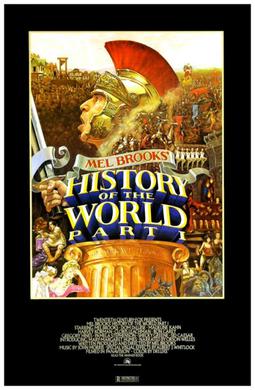
The History of the World, Part I (1981, directed by Mel Brooks)


Overlong, wildly uneven, gimmicky too a fault, and often laugh out loud funny with a mix of jokes that range from the crude to the sublimely clever to the surprisingly sentimental, The History of the World, Part I is the ultimate Mel Brooks films.

Narrated by Orson Welles and featuring five historical stories and a collection of coming attractions, The History of the World Part I follows man from his caveman origins to the French Revolution and the thread that ties it all together is that humanity always screws up but still finds a way to survive.  Moses (Mel Brooks) might drop and break one of the three tablets listing the 15 Commandments but he’s still able to present the other ten.  Stand-up philosopher Comicus (Mel Brooks) might make the mistake of poking fun at the weight of Emperor Nero (Dom DeLuise) but he still makes his escape with Josephus (Gregory Hines), Swiftus (Ron Carey), and Miriam the Vestal Virgin (Mary-Margaret Humes) and ends up serving as the waiter at the Last Supper.  (“Jesus!”)  The Spanish Inquisition may have been a catastrophe but it also gave Torquemada (Mel Brooks) a chance to show off his performance skills.  The French Revolution may have been a bloodbath but the future still held promise.  Ask for a miracle and he’ll show up as a white horse named Miracle, no matter what era of history you’re living in.

The humor is very Mel Brooks.  During the Roman Empire sequence, Madeline Kahn plays Empress Nympho.  Jackie Mason, Harvey Korman, Cloris Leachman, Spike Milligan, Jan Murray, Sammy Shores, Shecky Greene, Sid Caesar, Henny Youngman, and Hugh Hefner all make cameo appearances.  Carl Reiner is the voice of God.  John Hurt plays Jesus.  The film ends with the promise of a sequel that will feature “Jews in Space.”  Not every joke lands.  The entire caveman sequence feels forced.  But when the film works — like during The Inquisition production number — it’s hard not get caught up in its anything-goes style.  The entire Roman Empire sequence is probably more historically accurate than the typical Hollywood Roman epic.  That’s especially true of Dom DeLuise’s naughty performance as Emperor Nero.

Mel Brooks is 99 years old today and he says that he has at least one more film to give us, a sequel to Spaceballs.  I’m looking forward to it!  I’m also looking forward to rewatching and enjoying all of the films that he’s already given us.  The History of the World, Part I may not have initially enjoyed the critical acclaim of his earlier films but, in all of its anarchistic glory, it’s still pure Mel Brooks.

I CAN ONLY IMAGINE (2018) – a movie that came out at just the right time in my life! 


I CAN ONLY IMAGINE (2018) is the story of Bart Millard, the lead singer of the band MercyMe. He also wrote the song of the same name that inspired the movie. I remember when the song was released in 2001 as it immediately became a huge hit. As a person who attended church regularly and listened to contemporary Christian music, I heard it often either on radio or when other people would sing it at church. There was no getting away from the song as it was so popular. I really liked the song, but to be completely honest, it wasn’t especially meaningful to me. I just really liked it as a beautiful song. Fast forward to March of 2018 when the movie came out. 2018 was probably the most difficult year in my life, and I was needing hope. I saw I CAN ONLY IMAGINE at the movie theater, and its message of redemption and reconciliation provided glimmers of hope for me when my life had gotten really dark.

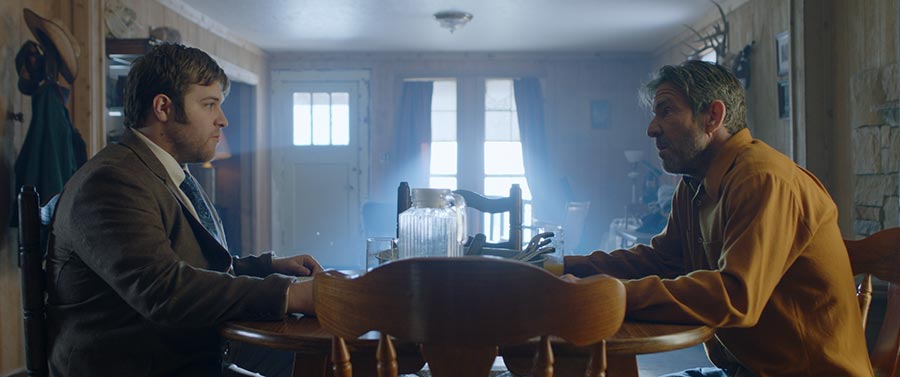
The movie provides us snapshots of Bart’s early life.  We see him at church camp where he meets the girl who would go on to be the love of his life, Shannon. We see him as a boy dealing with the fact that his mother has left the family because she was no longer able to deal with the abusive behavior of his dad, Arthur (Dennis Quaid). We also see how that abuse has extended to Bart himself. We see him as a high schooler (actor John Michael Finley) playing football in Greenville, TX, to try to please his dad. When he gets injured playing football and turns to the school’s music program, we see him hide the fact that he got the lead in the school production of “Oklahoma” because he knows his dad will make fun of him. Arthur is the kind of man who never has a nice word to say to his son. When he does find out about Bart performing in the musical, he tells him that it “sounds like a good joke.” It all boils over when the two get into a fight before Bart heads to church one morning, and Arthur smashes a plate over his head. Bart leaves for good, he thinks.  

With his love of music and great singing voice, Bart joins a band in need of a singer. Now we get snapshots of this portion of Bart’s life as the band hits the road and performs at different places, trying to sell as many of their homemade records as possible. Through sheer determination, Bart is able to convince Scott Brickell (Trace Adkins) to take over management of the band. After traveling with the group for a while, Brickell believes that they have a shot at making it in Nashville, so he secures the band, now known as “MercyMe,” a showcase in front of a group of top record executives. Unfortunately, the executives aren’t that impressed, with one even going so far as to tell Bart that he’s just not good enough. With those words bringing back all of the doubt that his father had instilled in him, Bart decides to quit the band. Sensing that Bart needs to resolve his family issues, Brickell asks him to take some time for himself. Bart asks the band to give him some time so he can go home for a while, not knowing what might be in store for him.

When Bart returns home, he finds his dad Arthur acting really strange… he’s being nice. He makes his son breakfast and then tells him about a project he’s hoping they can work on together, which is the restoration of his old Jeep. Bart doesn’t know what to make of this and even confronts his dad. Arthur tells him that he has become a Christian and even goes so far as to ask Bart for forgiveness for the way he has treated him in the past. Bart refuses to forgive him and gets in his dad’s truck to leave. While looking for the keys, Bart sees papers in his dad’s truck that reveal a terminal pancreatic cancer diagnosis. Discovering this information allows Bart to soften his heart towards his dad, and he even begins the process of forgiveness. The two men would be inseparable up to the point that Arthur passes away. Bart would say of his dad during this time that “he went from being a monster to the man I wanted to be.” At the funeral, Bart’s grandma (Cloris Leachman), who he called Me Maw, tells Bart, “I can only imagine what your dad’s seeing right now.” Ultimately inspired by his Me Maw’s words, as well as his own journey of grief and healing with his dad, Bart would write the lyrics that would turn into the most-played song in the history of Christian radio as well as the best-selling Christian song of all time (linked just below).

Movies that feature relationships between dads and sons always get to me, and I’m not even sure why that is. My dad and I have always had a great relationship. We were inseparable when I was growing up. My dad was my coach in sports, we always worked together on his projects, and he loved to take us fishing. My dad has always shown unconditional support and love towards me, and he continues to do so to this day. Maybe it’s my appreciation for my dad that leads me to this sort of emotional response when those relationships are presented on screen, but I think it’s even deeper than that. There’s a scene near the end of I CAN ONLY IMAGINE where Arthur shares his conversion experience with his son that always makes me cry like a baby. It seems that same day that he smashed that plate over Bart’s head, Arthur listened to his son sing at church on the radio and decided to turn his life over to God. Watching Arthur admit to his faults and become a man who shows great love and kindness to Bart is a beautiful sight to behold. And watching Bart accept that love and show that forgiveness may even be more beautiful. As a deeply flawed Christian myself, I think that’s why this movie means so much to me. I never tell other people how they should live their lives. In my opinion, each person has their own journey, and their lives will be based on their own decisions and actions. But it’s my personal belief that God is in the business of making things that seem impossible, possible, and He does it all while showing unconditional love and forgiveness. I can honestly say that when I’ve been at my lowest points in my own life (here’s looking at you 2018), it has been the process of turning things over to God that has opened me up both spiritually and emotionally to opportunities for meaningful, life-changing connections with other people. This movie tried to tell me that, and my own life is proving it out.

Check out the trailer below:

Horror On TV: One Step Beyond Episode 1.4 “The Dark Room” (dir by John Newland)


On tonight’s episode of One Step Beyond, Cloris Leachman plays Rita Wallace, an American photographer in France.  She’s looking for a model whose face will serve as the ultimate symbol of the country.  One day, a haunted-looking man (Marel Dalio) shows up at her apartment.  She thinks he’s a model.  The truth, needless to say, is something quite different….

This episode features good performances from both Leachman and Dalio.  In real life, Dalio was an icon of French cinema and a favorite of Jean Renoir’s.  When the Nazis invaded France, the Jewish Dalio fled Paris and, after a harrowing journey, eventually made it to America.  In America, he played the croupier in Casablanca and appeared in several other films.  Tragically, the rest of his family did not escape and were murdered by the Nazis.  Dalio returned to France after the end of the war and remained an in-demand character actor for several more decades, making his final film appearance in 1980.

The Darkroom originally aired on February 10th, 1959.

Retro Television Reviews: Suddenly Single (dir by Jud Taylor)


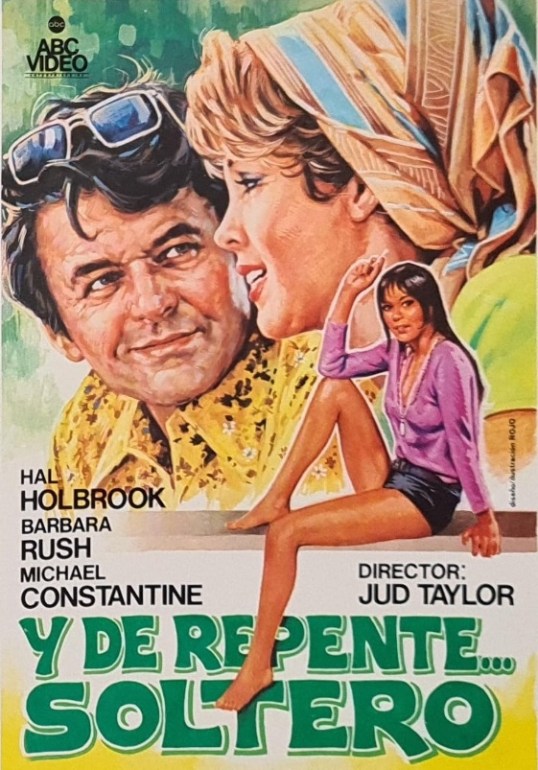
Welcome to Retro Television Reviews, a feature where we review some of our favorite and least favorite shows of the past!  On Sundays, I will be reviewing the made-for-television movies that used to be a primetime mainstay.  Today’s film is 1971’s Suddenly Single!  It  can be viewed on YouTube.

Suddenly Single opens with middle-aged Larry Hackett (Hal Holbrook) loading his suitcases into the back of his car.  His neighbors (David Huddleston and Pamela Rodgers) come over to say goodbye.  Larry has just gotten divorced and, as a result, he’s lost his perfect house in the suburbs.  Now, he’s going to have to move into the city and start a new life but he assures his neighbors that he’ll be okay and that there aren’t any hard feelings between him and his ex, Joanne (Cloris Leachman).  Sometimes, marriages just don’t work out….

Then Joanne shows up….

With her new husband, Ted (Fred Bier)!

While Larry can only watch, Ted insists on picking up Joanne and carrying her over the threshold of what used to be Larry’s house.  As it dawns on him that Joanne was having an affair during the final days of their marriage, Larry is understandably miffed.

Larry just isn’t ready to find himself in the world of the early 70s.  He’s an extremely conservative pharmacist who will now have to deal with hippies and the single scene.  His co-worker (Harvey Korman) encourages Larry to hit the bars.  Marlene (Agnes Moorehead) encourages him to figure out what he wants to do with his life.  His new and much younger neighbor, Jackie (Margot Kidder), tells him that he needs to get a gym membership and be more open-minded.  At first, Larry pursues a relationship with the classy Evelyn Baxter (Barbara Rush) but then he’s drawn to Jackie.  And Jackie, oddly enough, is drawn to him….

Quicker than you can say Breezy, Larry is dating the much younger Jackie and he’s starting to wear hip clothes and hang out with cool, long-haired people.  When he runs into his old neighbors on the street, he discovers that he no longer has much in common with them.  However, Larry still finds himself becoming jealous and possessive of Jackie, who is not the type of to give up her freedom for a relationship.  In the end, Larry is forced to admit that, while he has become more open-minded following his divorce, he still can’t magically change who he is.

Suddenly Single has a great cast and it’s not surprising that it’s a well-acted film.  At the same time, Larry can be a bit of a jerk.  Evelyn is the nicest person in the entire movie and Larry basically breaks her heart so that he can pursue an obviously doomed relationship with the younger Jackie.  It’s a bit sad to watch because everyone but Larry can see what he’s doing.  Larry may be wiser by the end of the film but that’s small solace to Evelyn.  Suddenly Single is about flawed characters and, as such, it can be easy to get annoyed with Larry and Jackie while also appreciating the fact that, like all of us, they’re just trying to figure out life as they go along.

Suddenly Single acts as a bit of time capsule and watching it is as probably as close as one can get to 1971 without a time machine.  It’s a trip to the past with some of the best actors of the era.

Retro Television Reviews: Death Sentence (dir by E.W. Swackhamer)


Welcome to Retro Television Reviews, a feature where we review some of our favorite and least favorite shows of the past!  On Sundays, I will be reviewing the made-for-television movies that used to be a primetime mainstay.  Today’s film is 1974’s Death Sentence!  It  can be viewed on YouTube!

There’s been a murder!

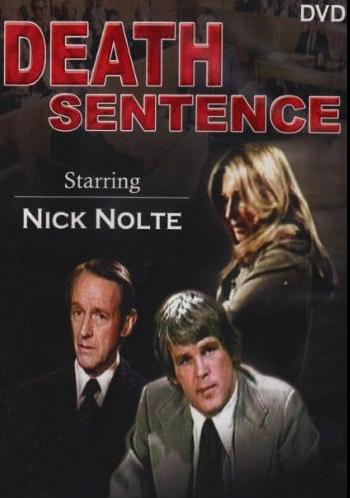
A young woman has been strangled in her own home.  The nosy neighbor (Hope Summers) testifies that the woman often argued with her woman and that she heard the woman yelling on the night of the murder.  The husband, John Healy (Nick Nolte), is found in a neighborhood bar and, when he’s brought back to his house, his drunken reaction to seeing his dead wife doesn’t do much to keep him from looking totally guilty.

However, the viewer knows that John is innocent because the viewer has already seen that the woman was murdered by Don Davies (Laurence Luckinbill), the man with whom she was having an affair.  She demanded that he leave his wife for her and Don, realizing that his cheating was about to revealed, responded by strangling her.

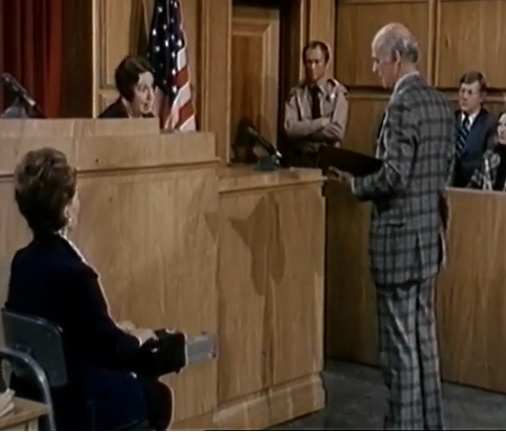
Don’s wife is Susan Davies (Cloris Leachman), who knows that she and Don have been going through a rough patch but who certainly had no idea that Don was cheating on her.  Shortly after the murder, Susan is called up for jury duty.  She’s placed on the jury and told that she will be an important part of a major trial.  As a result, she and the other jurors will be sequestered in a hotel….

And who is the defendant in this trial?  John, of course!

As opposed to the other members of the jury, who are ready to convict John even before the first bit of testimony is heard, Susan pays attention to what is said in the courtroom.  She listens to Lubell (Alan Oppenheimer), the prosecutor.  She listens to Tanner (William Schallert), the defense attorney.  She comes to believe that John is innocent but will she be able to hold her own against the rest of the jury?  And will she ever figure out that the murder was actually committed by her husband?

It’s an intriguing premise, even if it is a bit far-fetched.  I mean, it really is an amazing coincidence that Susan just happened to end up on the jury for a case involving a murder that was actually committed by her husband.  However, this is a made-for-television movie and, as soon as “Produced by Aaron Spelling” appears on the screen, most viewers should be savvy enough to know what they’re getting into.  Instead, the main problem with the film is that it opens by showing us who the murderer is.  Therefore, there’s really zero suspense as to who actually committed the crime.  Instead, the viewer spends the entire movie waiting for Susan to catch up.  Since the majority of the film takes place in court, it’s a very talky film but there’s no joy to be found in paying close attention to every word said and picking up on the details that will allow you to solve the crime for yourself.  This is a case where the film spoils its biggest twist and, despite good performances from Leachman and Luckinbill, it’s a bit dull.

(Nick Nolte, for his part, spends most of the movie silently sitting in the courtroom.  He’s not bad and his look of anguish is believable but it’s hardly a starring role, regardless of what the film’s video packaging might otherwise claim.)

In the end, what I’ll mostly remember about Death Sentence were the atrocious fashion choices made by the prosecutor.  Seriously, would you trust a man wearing this suit?

Retro Television Reviews: Haunts of the Very Rich (dir by Paul Wendkos)


Welcome to Retro Television Reviews, a feature where we review some of our favorite and least favorite shows of the past!  On Sundays, I will be reviewing the made-for-television movies that used to be a primetime mainstay.  Today’s film is 1972’s Haunt of the Very Rich!  It  can be viewed on YouTube!

The 1972 made-for-TV movie Haunts of the Very Rich opens with a lengthy shot of Lyle (Tony Bill) and Laurie (Donna Mills) sharing a very long kiss.  Obviously, they’re very happy and why shouldn’t they be?  They’re young.  They’re beautiful.  They’re in love.  They’re newly married.  And …. they’re on an airplane!

It’s a private plane, one that’s heading towards a resort called The Portals of Eden.  There’s only a few other people on the plane.  David Woodrough (Lloyd Bridges) is a businessman who is looking forward to spend some time away from his wife, especially if it means a chance to get to know one of the other passengers, Ellen Blunt (Cloris Leachman).  Annette Larner (Anne Francis) is also traveling alone and is hoping she might finally be able to get some sleep without having to take a handful of pills beforehand.  Rev. Fellows (Robert Reed) appears to have lost his faith.  And then there’s Al Hunsicker (Ed Asner).  Hunsicker’s a little bit confused about how he ended up on the airplane.  As far as he knows, he’s supposed to be on his way to a business meeting in Dallas.  Portals of Eden?  Al’s never heard of the place!  Of course, nobody on the plane really seems to be sure where they’re going or how they even got on the plane in the first place.  Strangely, Al appears to be the only one who finds any of this to be strange.

When the plane lands, they discover that the Portals of Eden is a large hotel sitting at the edge of a tropical wilderness.  Their host, the always polite Mr. Seacrist (Moses Gunn), welcomes them but avoids answering anyone’s questions.  Seacrist tells them to enjoy their stay.

For the first day, that’s exactly what everyone does.  They relax.  They indulge in a little pampering.  David gets to know Ellen.  Al is still worried about getting to his business meeting but he is assured that he can always fly out to Dallas the following day.

The night, a violent storm hits.  The next day, everyone wakes up to discover that the resort is nearly deserted.  There’s no electricity.  There’s no way to call out.  There’s not much food.  Seacrist tells them not to worry.  He assures them that help is on the way.  As the guests wait to be rescued, they finally start to wonder just how exactly the ended up at the resort in the first place.  They realize that they’ve almost all had a recent brush with death.  David swears to Ellen that he’ll file for divorce as soon as they get back home but what if they don’t have a home to which to return?  Occasionally, the guests hear a plane flying overhead.  At one point, they even see one land.  But every time, just when it seems like they’re on the verge of finally being rescued, the plane vanishes.

And things just get stranger from there.

If Jean-Paul Sartre had ended up in the United States, writing for The Bold and the Beautiful, the end result would probably look a lot like Haunts of the Very Rich.  Considering that this is a made-for-TV movie from the early 70s, Haunts of the Very Rich is a surprisingly effective and atmospheric little horror film.  The story itself won’t exactly win any points for originality.  You’ll guess the secret of Portals of Eden long before any of the characters in the film.  But still, it’s a well-directed and nicely acted film, one that’s topped off with a suitably surreal (if somewhat abrupt) finale.

Haunts of the Very Rich can currently be found on YouTube and I recommend it for anyone who likes their melodrama served with a side of existential dread.

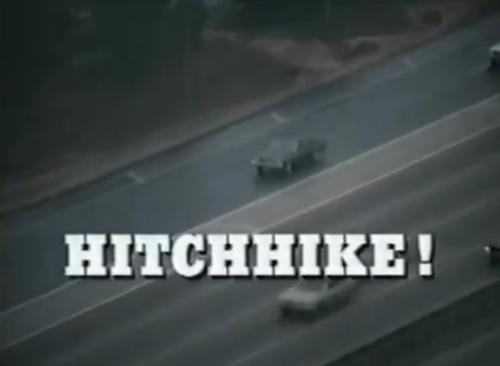
Retro Television Reviews: Hitchhike! (dir by Gordon Hessler)


Welcome to Retro Television Reviews, a feature where we review some of our favorite and least favorite shows of the past!  On Sundays, I will be reviewing the made-for-television movies that used to be a primetime mainstay.  Today’s film is 1974’s Hitchhike!  It  can be viewed on YouTube!

Claire Stevens (Cloris Leachman) is an emotionally vulnerable woman who is dealing with her loneliness and depression by driving to San Francisco to visit her sister.  As she’s driving, she spots a young man named Keith (Michael Brandon).  Keith is standing on the side of the road and holding out his thumb.  At first, Claire does the smart thing and she drives by him without stopping.  However, Claire starts to feel guilty so she turns around and — NO, CLAIRE!  WHAT ARE YOU THINKING!? — offers him a ride.  It turns out that he’s going to San Francisco as well!

At first, the drive is awkward.  Keith says that he doesn’t want to talk and he doesn’t appreciate it when Claire tries to make him listen to the classical music station.  But, as they drive, Keith starts to let down his defenses.  He says that he wishes that he could just sail away on the ocean.  He encourages Claire to embrace life and to just go for it.  They stop at a pier and have lunch.  Claire buys Keith a silly white hat and she places it on his head because, as she puts it, “it’s cute.”  Keith argues with her but he doesn’t take off the hat.  However, when Keith spots some cops, he immediately leads Claire away from them.

The viewer watches all of this with a sense of dread because the viewer knows what Claire doesn’t.  The viewer knows that Keith is the son of a wealthy man.  The viewer knows that Keith had been having an affair with his stepmother, who was only a few years older than Keith.  And the viewer knows that Keith murdered his stepmother with the same weapon that he’s currently carrying in his bag.  The police are looking for Keith and Keith is willing to do just about anything to stay free.

I have to admit that I yelled a little when Claire offered Keith a ride because it was such an obviously stupid thing to do.  Everyone knows that it’s never a good idea to pick up a hitchhiker.  And, if you’re a woman who is driving down an isolated road by yourself, the last thing you should ever do is offer a ride to some strange man standing on the side of the road.  Claire’s actions were foolish but, because she was played by Cloris Leachman, it was still hard not to sympathize with her.  Claire is someone who feels as if she’s been abandoned by the world and, quite obviously, she sees Keith as a kindred spirit.  Over the course of their journey, it becomes obvious that Claire is using Keith as a substitute for what she’s missing in her life.  He becomes both a son and a companion to her.  Unfortunately, Keith tends to go into a rage whenever he sense anyone getting too close to him.

Hitchhike! is a short movie and, for all the dramatic build-up, it ends on a rather anti-climatic note.  Cameron Mitchell shows up as a detective who is looking for Claire and Keith and he gives a mannered performance that is oddly over-the-top by even his generous standards.  That said, Michael Brandon has the blandly handsome look of a generic but charming serial killer while Cloris Leachman gives a credible and sympathetic performance as Claire.  If nothing else, this film can be watched with The Hitcher as a double feature.  Never stop your car for anyone!

Holiday Film Review: It Happened One Christmas (dir by Donald Wyre)


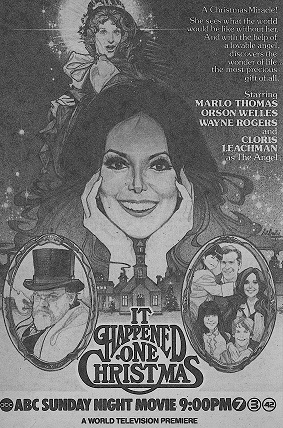
The 1977 made-for-TV movie, It Happened One Christmas, opens in Heaven.  We hear the voice of Joseph (Charles Grodin), one of the top angels.  Joseph has noticed that, in the town of Bedford Falls, a lot of people seem to be praying and all of their prayers concern one person.  They are all worried about Mary Bailey Hatch (Marlo Thomas).

He requests that an angel be sent down to Earth to help Mary with her problems.  Unfortunately, the only angel available is Clara (Cloris Leachman) and Clara, despite her optimistic outlook and upbeat personality, is not considered to be a particularly smart angel.  She hasn’t even gotten her wings yet!  However, Joseph promises her that, should she convince Mary Hatch not to toss away her life on Christmas Eve, Clara will get her wings.

But first, Joseph shows Clara all of the important events in Mary’s life.  Clara watches as young Mary saves the life of her brother, Harry.  A few weeks later, Mary manages to keep Dr. Gower from accidentally poisoning a patient.  Though Mary dreams of leaving Bedford Falls and pursuing a career as a writer, she instead ends up taking over her late father’s old Building and Loan company.  With the help of her husband, George (Wayne Rogers), she helps hundreds of people move into affordable housing.  She is also one of the few people in town willing to stand up to Old Man Potter (Orson Welles)….

What was that?

Yeah, I know.  Just hold on.  I’m getting to that.

Anyway, everything is going great in Mary’s life until her irresponsible Uncle Willie (Barney Martin) accidentally loses a deposit on Christmas Eve.  Facing embezzlement charges and having yelled at her family, Mary considers jumping off a bridge.  Fortunately, Clara is there to show her what her life would be like if she had never been born….

Excuse me?  Did you say that this sounds familiar?

Yes, It Happened One Christmas is a remake of It’s A Wonderful Life.  The main difference is that the genders are swapped.  Jimmy Stewart’s role is played by Marlo Thomas.  Wayne Rogers plays the Donna Reed role.  This leads to a few changes in the story.  For instance, Mary still yells at ZuZu’s teacher but she doesn’t get sucker punched as a result.  Whereas the original Mr. Potter treated George Bailey with outright hostility, the remake’s Mr. Potter tends to use a tone of condescending concern when talking to Mary.  Since George Hatch doesn’t lose his hearing in one ear, he’s able to serve in World War II and he returns on crutches.  In the world where Mary was never born, George still never marries but, instead of working at the library, he becomes a boorish auto mechanic.  Violet is no longer an important character and Mary never tries to blame her visions of Pottersville on “bad liquor.”  These are cosmetic differences but, otherwise, it’s pretty much the exact same story.

To be honest, it probably sounds more interesting than it actually is.  It’s not that It Happened One Christmas is a poorly made or a badly acted film.  It’s fine, really!  But it’s not It’s A Wonderful Life.  Marlo Thomas plays her role with a lot of energy but she’s still no Jimmy Stewart.  Stewart, who was still dealing with his own World War II experiences, played up the haunting sadness behind George’s mild-mannered facade and that’s something that Thomas never accomplishes.  If Stewart’s George seems like he’s been beaten down by one lost dream after another, Marlo Thomas’s Mary just seems like she’s having a really bad night.  By that same token, Wayne Rogers is likable a the love of Mary’s life but he’s no Donna Reed.  Even the great Orson Welles can’t escape the shadow of Lionel Barrymore.  Barrymore’s Mr. Potter was a pure misanthrope who was at his happiest mocking the dead and approving men for the draft.  Oddly, Orson Welles brings an almost avuncular style to Mr. Potter.  One gets the feeling that Welles simply couldn’t resist winking at the audience and assuring them that he was still the bigger-than-life showman that they had grown up with.

So, you may be wondering ….. why remake It’s A Wonderful Life in the first place?  I was wondering about that so I did a little research and thanks to an obscure web site called Wikipedia (not many people have heard of it), I discovered that It Happened One Christmas was actually made before It’s A Wonderful Life started to regularly air during the holidays.  At the time it was made, it was aactually remake of a classic film that was no longer regularly watched.  Frank Capra angrily denounced It Happened One Christmas as being “plagarism” but, in 1977, it was enough of ratings success that it was re-aired in both 1978 and 1979.  But, by that time, It’s A Wonderful Life had started to regularly air during the holiday season and was being rediscovered by audiences young and old.  As a result, the okay remake was soon overshadowed by the vastly superior original.

And really, that’s the way it should be.  It Happened One Christmas isn’t a bad movie but it just no replacement for Capra’s Wonderful film.

Retro Television Review: Long Journey Back (dir by Mal Damski)


Welcome to Retro Television Reviews, a feature where we review some of our favorite and least favorite shows of the past!  On Sundays, I will be reviewing the made-for-television movies that used to be a primetime mainstay.  Today’s film is 1978’s Long Journey Back.  It  can be viewed on YouTube!

I’m one of those drivers who always gets nervous around train tracks.

Perhaps it’s because I watched too many gory movies while I was learning to drive or maybe I’m just being overly cautious but I always have a fear that I’m going to be the driver whose car ends up getting stuck on the tracks while the train comes barreling down.  The fact that it’s apparently impossible to just stop a train without it rolling forward for at least a mile or two adds to my fear.  You get stuck on those tracks and, at the very least, you’re going to lose your car.  At the worst, you’ll lose your life.  Maybe if you’re lucky, you’ll only lose a limb.  Or maybe …. well, you get the point.  Most people make it a point to slow down whenever they hear the sound of a train coming or to stop and wait for those little barrier things to come down on other side of the tracks.  Myself, I always speed up if I see tracks approaching.  I figure that the quicker I drive over them, the quicker I don’t have to worry about getting hit by a train.

The 1978 film Long Journey Back did not do much to cure me of my fear of train tracks.  Within the first ten minutes of the film, a school bus ended up getting stuck on a set of train tracks and, in a genuinely frightening sequence, smashed into by a train.  Most of the students are killed.  So is the driver.  Celia Casella (Stephanie Zimbalist) survives being in the bus but most of her friends don’t.  Celia loses a leg and, when she eventually awakes from her coma, she can neither speak nor remember the accident.  Celia makes remarkable progress but it’s still difficult for her to adjust her post-accident life.

The film spends as much time with Celia’s parents as it does with Celia.  Her mother, Laura (Cloris Leachman), keeps a journal about Celia’s progress and never gives up faith that her daughter will recover.  However, Laura is sometimes so determined to only focus on moving forward that she overlooks the fact that Celia needs time to mourn not only her former life but also the friends that she lost in the crash.  Meanwhile, Celia’s father, Vic (Mike Connors), is a grim realist who, in a moment of emotional exhaustion, admits that he sometimes wonders if Celia wouldn’t have been better off dying in the crash.  Vic is someone who keeps everyone grounded in reality but who sometimes forget that Celia needs to have hope for the future.  Celia is not the only member of the family who has to learn how to live a new life.  From the minute that train hits that bus, everyone’s old life ends and a new one begins.

The film follows Celia’s recovery, her long journey back.  It’s a well-done film, featuring excellent and emotional performances from Zimbalist, Connors, and especially Leachman.  To its credit, the film avoids easy sentiment.  The film celebrates Celia’s strength and her parent’s love while acknowledging that the journey back is not going to be an easy one and it’s possible that Celia might never make it all the way back.  I cried more than a few times while watching Long Journey Back.  It’s a film that earns its tears.