Today is Angelina Jolie’s 50th birthday.
As I sit here writing this, Jolie is very much a respectable figure, one who doesn’t appear in as many movies she once did. When she does act, it’s almost always in the type of big and rather glossy films that inevitably seem to be destined to be described as potential Oscar contenders. She’s so identified with the work that she does for UNHCR that it can be argued that she’s even better known now as a human rights activist than as an actor. (On Wikipedia, her career is listed as being “actress, director, humanitarian.”) Angelina Jolie has made the move from acting to directing and even though none of her directorial efforts have been especially memorable, they still tend to get a lot of attention because she’s Angelina Jolie. Angelina Jolie is definitely a part of the establishment and, let me make this very clear, there’s nothing wrong with that! She’s still a good actress. She seems to be far more sincere about her activism than many of her fellow Hollywood performers. Personally, I think the efforts to get her to run for political office have been a little over-the-top (and they seem to have died down after an attempted presidential draft in 2016) but again, she’s earned her success and she deserves it.
That said, it can sometimes be surprising to remember that, before she became so acceptable, Angelina Jolie was Hollywood’s wild child, the estranged daughter of Jon Voight who talked openly about being bisexual, using drugs, struggling with her mental health, and playing with knives in bed. This was the Jolie who, long before she married Brad Pitt, was married to Billy Bob Thornton and used to carry around a vial of his blood. This was the Angelia Jolie who had tattoos at a time when that actually meant something and who went out of her way to let everyone know that she was a badass who wasn’t going to let anyone push her around. This was the Angelina Jolie who was dangerous and unpredictable and who wore her wild reputation like an empowering badge of honor.
That’s the Angelina Jolie who starred in Gia.
Made for HBO in 1998, Gia was a biopic in which Jolie played Gia Carangi, one of the first supermodels. The film followed Gia, from her unhappy childhood (represented by Mercedes Ruehl as Gia’s mother) to her early modeling days when she was represented by the famous Wilhelmina Cooper (Faye Dunaway) to her struggles with heroin and cocaine to her eventual AIDS-related death. During the course of her short life, Gia falls in love with a photographer’s assistant named Linda (Elizabeth Mitchell) but, as much as Linda tries to help her, Gia simply cannot escape her demons.
That Gia is a fairly conventional biopic is not a shock, considering that it was directed by the reliably banal Michael Cristofer. He starts the film with people talking about their memories of Gia and he doesn’t get anymore imaginative from there. That the film works and is memorable is almost totally due to performances of Elizabeth Mitchell and Angelina Jolie, both of whom give such sincere and honest performances that they make you truly care about Gia and Linda. Jolie, in particular, portrays Gia as being an uninhibited and impulsive agent of chaos, one who follows her immediate desires and who makes no apology for who she is and what she does. There’s a lot of physical nudity in this film but the important thing is that Jolie allows Gia’s soul to be naked as well. There’s nothing hidden when it comes either the character or Jolie’s empathetic and passionate performance.
Jolie won an Emmy for her performance in Gia and her work in this film led to her being cast in 2000’s Girl, Interrupted, the film for which she would win the Oscar for Best Supporting Actress. Since then, Jolie’s become, as I said at the start of this review, very much a member of America’s cultural establishment. My hope, though, is that someday, someone will give Jolie a role that will remind viewers of who she was before she became respectable. I think she still has the talent to take audiences by surprise.

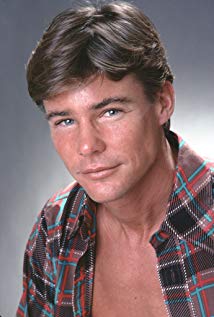
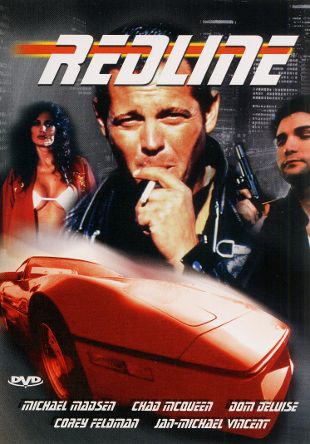 It is impossible to talk about the legend of Jan-Michael Vincent without talking about Red Line. In this direct-to-video car chase film, Vincent was cast as a gangster named Keller. When an auto mechanic named Jim (Chad “Son of Steve” McQueen) makes the mistake of taking one of Keller’s cars for a joyride, Keller blackmails Jim into stealing a corvette from a police impound lot. Red Line was typical of the type of films that Vincent was usually offered in the 90s, an action-filled crime film with a handful of recognizable faces.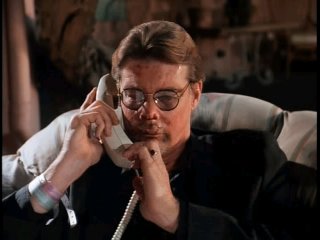

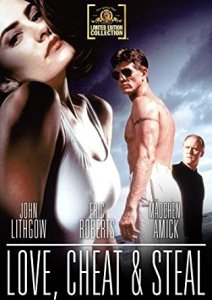 Paul Harrington (John Lithgow) is a wealthy banking consultant who has just married a sexy, younger woman, Lauren (Madchen Amick). Paul thinks that Lauren is perfect but then her brother, Donald (Eric Roberts), shows up. What Paul does not know is that Donald is not actually Lauren’s brother. Instead, Donald is Reno, Lauren’s first husband who she never actually divorced. Reno has just escaped from prison where he was serving time for a crime for which he believes Lauren framed him. While Paul tries to save his father’s failing bank, Reno starts to plan a bank robbery and Lauren tries to balance her old life with Reno with her new life with Paul.
 Through the Shattered Lens