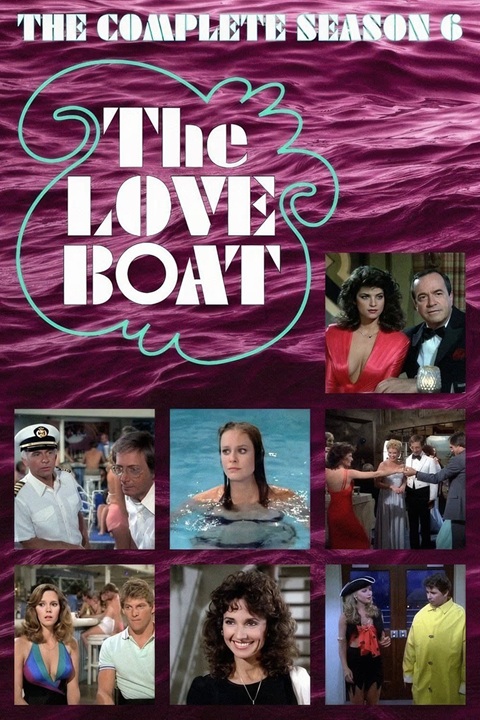
Retro Television Review: The Love Boat 6.1 and 6.2 The Italian Cruise: Venetian Love Song/Down for the Count/Arrividerci, Gopher/The Arrangement”


Welcome to Retro Television Reviews, a feature where we review some of our favorite and least favorite shows of the past!  On Wednesdays, I will be reviewing the original Love Boat, which aired on ABC from 1977 to 1986!  The series can be streamed on Paramount Plus!

This week, season 6 begins!

Episode 6.1 and 6.2 “The Italian Cruise: Venetian Love Song/Down for the Count/Arrividerci, Gopher/The Arrangement”

(Dir by Richard Kinon, originally aired on October 2nd, 1982)

The Love Boat crew goes to Italy!

The sixth season of The Love Boat did indeed start with a cruise to Italy.  It was a special two-hour episode, shot on location at sea and in Italy!  Our crew visits Monaco, Rome, Capri, and Venice and really, that’s the main appeal of this episode.  It’s certainly not the stories, which are pretty superficial even by the standards of the Love Boat.

Ernest Borgnine and Shelley Winters play an old Italian couple who bicker through the whole cruise but who also truly love each other.  Awwww!  Ernest and Shelley were veteran actors and they both appear to be having fun devouring the scenery in their scenes.  Their cruise goes better here than it did in The Poseidon Adventure.

Meredith Baxter falls for a man (David Birney, the annoying Dr. Samuels from the first season of St. Elsewhere) who turns out to be a gigolo.  However, he abandons being a manwhore so that he can pursue a relationship with Meredith.  I understand that Baxter and Birney were married at the time.  They have absolutely zero chemistry when they’re acting opposite each other.

Marie Osmond is angry over being expected to take part in an arranged marriage.  Yeah, that is kind of messed up.  She’d rather marry the totally handsome John James.

Finally, an Italian handyman who looks just like Gopher (and who is also played by Fred Grandy) abducts the real Gopher and takes his place on the ship so that he can try to win the love of a wealthy passenger named Angelica Francini (Christopher Norris) and…. well, actually, this storyline is kind of interesting.

Actually, maybe “interesting” the wrong word.

Goofy!  That’s the word I’m looking for.

This storyline is so goofy — so damn goofy — that it’s actually kind of fun.  I mean, it’s The Love Boat.  The Love Boat should be silly.  Fred Grandy playing two characters is silly and fun.  To give credit where credit is due, Grandy did a pretty good job playing the imposter imitating Gopher.  His attempts to speak in a stereotypical American accent made me laugh.  In the end, the real Gopher makes it back to the boat.  Confronted with two Gophers, the Captain realizes that the fake Gopher is the one who has actually been doing a good job and kicks him off the boat.  He’d rather have the real, incompetent Gopher and I don’t blame him.  What’s odd is that no one’s really upset or even that surprised by the kidnapping.  I don’t think anyone even bothers to callsthe police.

Anyway, Italy is the main attraction here.  I love Italy (which I visited the summer after I graduated high school) and I loved this episode!  At one point, Marie Osmond wore a red dress that looked a lot like the one that I wore to Pompeii on that windy day when I accidentally flashed a thousand tourists.  Marie was struggling with the wind too and I was like, “I share your struggle, Marie!”

I enjoyed this cruise.  I want to go back to Italy.

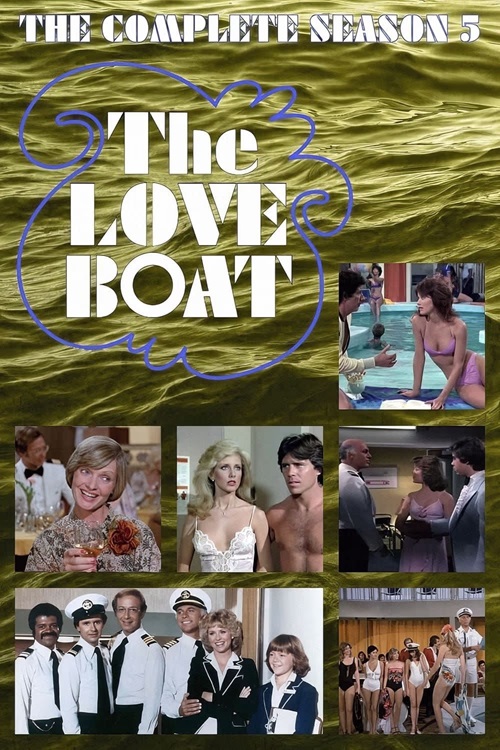
Retro Television Review: The Love Boat 5.4 “The Incredible Hunk/Isaac, the Marriage Counselor/Jewels & Jim”


Welcome to Retro Television Reviews, a feature where we review some of our favorite and least favorite shows of the past!  On Wednesdays, I will be reviewing the original Love Boat, which aired on ABC from 1977 to 1986!  The series can be streamed on Paramount Plus!

This week, The Love Boat sets sail without a laugh track and things get awkward.

Episode 5.4 “The Incredible Hunk/Isaac, the Marriage Counselor/Jewels & Jim”

(Dir by Howard Morris, originally aired on October 24th, 1981)

Julie has hired a new entertainer for this cruise.  His name is Hank Austin (Brian Kerwin) and he’s a teacher-by-day and a dancer-by-night.  Julie has never actually seen Hank perform but Hank’s agent assured Julie that he’s amazing.  How will Julie (and Captain Stubing) react when Hank turns out to be a …. STRIPPER!?

Even more importantly, how will the head of Hank’s PTA react?  Shelley (Christopher Norris) is also a passenger on the boat and she and Hank take an immediate liking to each other.  Fortunately, for Hank, Shelley does not see his performance but afterwards, she tells Hank that she’s heard a lot of people talking about how there’s a male stripper on the ship.  Hank laughs it off.  But then Julie walks up to Shelley and starts to complain about Hank’s act, which is seriously immature of her.  I mean, Julie doesn’t even know Shelley but Julie still acts like she’s morally offended that Shelley would associate with someone with whom Julie is upset.  It’s seriously out-of-character for Julie and it made me wonder if maybe Julie picked up some coke when the ship was docked at Acapulco.

Don’t worry, though.  Julie eventually apologizes for lashing out and Shelley and Hank leave the ship together.  From now on, the only stripping that Hank will be doing will be at PTA meetings.

Things also work out for Frank Dalton (Flip Wilson).  Frank boards the ship and tells Isaac that he changed Frank’s life.  Isaac has no idea who Frank is.  Frank explains that he took the same cruise last year.  He had a fight with his wife and went into the Pirate’s Cove for a drink.  Frank told Isaac his problems.  Isaac told him that sometimes, a man just has to put his foot down.  Frank took Isaac’s advice and, as a result, his wife left him.  Now, Frank is single and suicidal.  Isaac tries to set Frank up with some other passengers.  When that doesn’t work, Isaac calls Frank’s ex-wife and convinces her to board the boat in Acapulco and take him back.  Frank and Janet (Marla Gibbs) are reunited.  Good work, Isaac!

Finally, a jewel thief named Jim Pickett (Michael Zaslow) boards the boat.  He just wants to steal a valuable necklace but instead, he ends up falling in love with Lilia Chandler (Joan Van Ark).  When Jim does steal a necklace from Mrs. Landers (Henny Backus), he gives it to Lila.  However, when it looks like Jim’s going to get caught by the Captain, Lila gives the necklace back to Mrs. Landers.  It turns out that Lila is a jewel thief as well!  She was going to let Jim steal the necklace for her but then she fell in love with him.  The two reformed thieves leave the ship as a couple.

This was a weird episode because there was no laugh track.  There was several moments where it was obvious that a laugh track was meant to be heard but instead of canned laughter, there was only dead air.  It made the entire episode feel a bit awkward.  Laugh tracks are definitely dork and corny but then again, so is The Love Boat.  If anything, The Love Boat is one of the rare shows that benefitted from having a laugh track.  It’s absence made the entire cruise feel weird.

As for the guest stars and their stories, I liked Michael Zaslow and Joan Van Ark.  They had an enjoyable chemistry.  The other two stories weren’t that interesting.  The male stripper story only succeeded in making Julie look totally incompetent at her job.  She got mad at Hank for being a stripper but did it seriously not occur to her to ask what type of dancing he actually did before booking him?  As for the other story, it was just depressing.  A laugh track would have helped….

This was just not a very good cruise, I’m afraid.  It happens.  Hopefully, next week will be better.

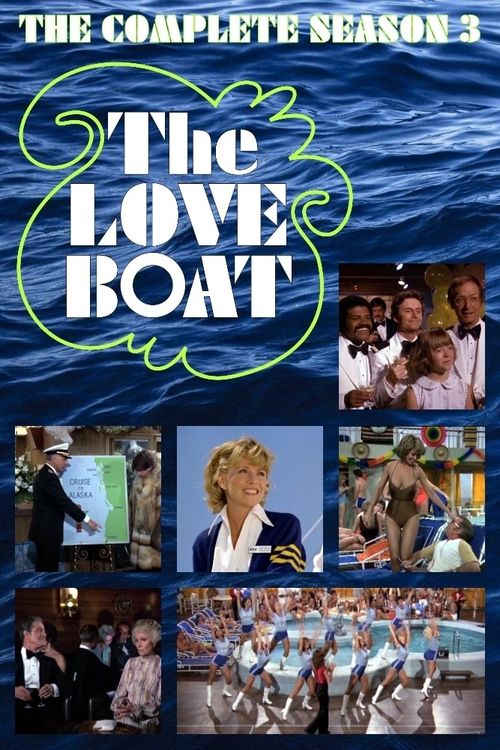
Retro Television Reviews: The Love Boat 3.28 “No Girls for Doc/Marriage of Convenience/The Caller/The Witness”


Welcome to Retro Television Reviews, a feature where we review some of our favorite and least favorite shows of the past!  On Wednesdays, I will be reviewing the original Love Boat, which aired on ABC from 1977 to 1986!  The series can be streamed on Paramount Plus!

This week, the third season of The Love Boat comes to a conclusion with an extra-long episode!

Episode 3.28 “No Girls for Doc/Marriage of Convenience/The Caller/The Witness”

(Dir by Gordon Farr and Richard Kinon, originally aired on May 3rd, 1980)

The finale of The Love Boat‘s third season features stage legend and two-time Oscar winner, Helen Hayes.  Hayes was considered to be such a big “get” for the show that she receives the zoom lens treatment when she steps onto the ship and all of the action seems to stop for a few minutes, presumably so the audience at home can give her a standing ovation.

Personally, I think Helen Hayes was pretty cool.  Along with being a hell of an actress (one whose career extended for over six decades), she was also the wife of Charles MacArthur, an acquaintance of the Algonquin round table, an outspoken Republican, a strong supporter of many charities, and a major benefactor of the Helen Hayes Hospital, a rehabilitation clinic in New York that has made major strides in treating physical disabilities.  To say that there are people in the world who can walk because of Helen Hayes is not hyperbole.

That said, Helen Hayes’s story is the dullest one on this cruise.  It’s not Hayes’s fault.  She is her usual outspoken and likable self.  It’s just the storyline itself doesn’t offer up much in the way of drama or comedy.  Hayes plays Agatha Winslow, a widow who was married to a friend of Stubing’s.  Stubing asks Julie to set Agatha up with someone but then they see Agatha hugging a younger man and Julie says that it won’t be necessary.

AGCK!  I HOPE NOT!  The younger man is played Helen Hayes’s son, James MacArthur!

No worries.  MacArthur is playing Scott Burgess, who is Agatha’s nephew.  Scott is a member of the protestant clergy who has never married because he feels that he has to take care of Agatha.  Scott and Beatrice Dale (Mildred Natwick) hope that Agatha will fall in love with and marry Beatrice’s brother, a businessman named Hollister (Maurice Evans).  Hollister owns a carpet company and he spends most of the episode look down at and commenting on the quality of the ship’s floor.  Agatha does not marry Hollister but she does realize that it’s time for her to move on and live her own life.  It’s all very pleasant but not very extremely interesting.

Far more interesting is the story of Gail Padgett (Christopher Norris), a woman who is boarding the ship because she needs to get away from her landline phone.  As she explains to Julie, someone has been calling and harassing her for months.  At no point does Julie suggest what I would suggest, which is that Gail should call the cops.  Indeed, when Gail starts to get calls on the boat, Julie never suggests calling the police or going to the captain or anything else.  Instead, Gail tells her stalker that she’ll meet him at the Pirate’s Cove Bar.  She tells Julie that she has a plan to humiliate him.  And again, you would think Julie might say, “How about we just arrest him when he comes in the bar?”  But instead, Julie smiles.  It’s the Love Boat!  No one is murdered on The Love Boat!  (Not yet, anyway.)

Gail’s stalker is a nerdy fellow named Melvin, who is played by a young Martin Short.  Before Melvin can arrive, Gail is approached by Jack Stander (Larry Breeding).  “Hi, I’m Robert Redford,” Jack says before admitting that he’s not Robert Redford and that he spent hours coming up with that opening line.  Thinking that Jack is her stalker, Gail takes Jack to her cabin where she get him to undress and then tosses all of his clothes out the porthole.  So now, Gail has not only flirted with and then stood up her stalker but she’s also committed theft.  WAY TO GO, GAIL!

Anyway, Gail eventually realizes that Jack is not her stalker and they fall in love.  Melvin is eventually revealed to be the caller but everyone laughs it off because he’s so nerdy.  (Because we all know how harmless nerdy stalkers are….)  This was a really weird story but, despite the stupidity of their characters, Christopher Norris and Larry Breeding made for a cute, likably vapid couple.

Maybe Gail should have gone to Wayne Dobson (Larry Wilcox) for help.  Wayne is an uptight assistant D.A. who has spent the last two months in a hotel room with Pat Bigelow (Catherine Bach), a witness to a crime who is in protective custody.  Even when Pat boards the cruise, Wayne has to come with her and stay in an adjoining cabin.  Pat is annoyed but she understand that Wayne is just doing his job. 

However, Wayne has fallen in love with Pat and he is upset to receive a telegram saying that the crooks have decided to plead guilty and that Pat can be released from protective custody.  Isaac, who was perhaps a bit too excited when he earlier thought Wayne was a male gigolo who was being paid to escort Pat, suggests that Wayne just lie and not let Pat know that her life is no longer in danger.  Wayne agrees and Isaac takes Wayne off to give him a makeover that will be so impressive that Pat will fall in love with him and reject notorious Love Boat lothario Mark Bridges (John McCook).

(Of course, any relationship that Wayne and Pat could ever have would be built on lies but whatever….)

Pat does fall for Wayne, though less because of the makeover and more because Wayne finally stops being so uptight.  She’s a bit miffed when she finds out that Wayne has been lying to her but she forgives him easily because this is The Love Boat.

Finally, after a night of skinny dipping leads to him losing his clothes and money, Doc announces that he’s through with women.  (And again, it doesn’t seem to occur to anyone that maybe Doc should call the police.)  That should be a relief to the crew because Doc really is a lawsuit waiting to happen.  Instead, they takes bets on how long it will take Doc to go back on his word.  It doesn’t take long.  Any story that centered around Doc being a Casanova just felt silly.  Bernie Kopell was likable as Doc but he was also a bit too naturally mild-mannered to be believable as a legendary lothario.

And so ends the third season of The Love Boat.  Vicki is now firmly a member of the crew.  Julie has given up on finding love.  Isaac and Gopher are as silly as ever.  And Doc is going to get the cruise line sued.  The 90-minute finale was a bit overextended and had some weak story elements but, overall, the third season was a lot of fun.  

Next week …. SEASON 4!

Retro Television Reviews: Fantasy Island 2.6 “War Games/Queen of the Boston Bruisers”


Welcome to Retro Television Reviews, a feature where we review some of our favorite and least favorite shows of the past!  On Tuesdays, I will be reviewing the original Fantasy Island, which ran on ABC from 1977 to 1986.  The entire show is currently streaming on Tubi!

It’s time for another tonally confusing trip to Fantasy Island!

Episode 2.6 “War Games/Queen of the Boston Bruisers”

(Dir by Earl Bellamy, originally aired on October 28th, 1978)

We’re just six episodes into the second season of Fantasy Island but a definite pattern has emerged.  Just as in the first season, each episode features two fantasies.  But, in the second season, it appears that one fantasy is always comedic and the second is always serious.  This has created an interesting tonal mishmash on Fantasy Island.  Mr. Roarke spends half of his time laughing at the silliness of it all and the other half warning people that their fantasy could lead to death.

Take this episode for instance.

Rowdy Roberts (Anne Francis) is a roller derby champ whose fantasy is to become a “gentlelady” so that she can impress her daughter’s future in-laws.  (Rowdy’s future son-in-law, meanwhile, is played by a young Jonathan Frakes.)  Mr. Roarke and Tattoo spend an entire weekend teaching Rowdy how to speak properly, how to eat with silverware, and all the rest.  However, snobbish Betty Wendover (Joanna Barnes) doesn’t want her son marrying Rowdy’s daughter so she arranges for Rowdy’s roller derby rival, Hooligan Hanreddy (Mary Jo Catlett), to come to the island and challenge Rowdy to a fight.  Rowdy throws a punch and then runs off, ashamed at not being sophisticated.  But, it turns out that Rowdy’s future son-in-law is really impressed with what Rowdy did and the wedding takes place after all.  Yay!

Needless to say, this is all incredibly silly but it’s meant to be silly and both Anne Francis and Mary Jo Catlett seem to be having fun overplaying their rivalry.  There is nothing particularly realistic about this fantasy but it’s not meant to be.  It’s meant to make the viewer smile and, for the most part, that’s what it does.

But, at the same time, Vietnam vet Joe Beck (Christopher George) is chasing another Vietnam vet, attorney Ted Harmon (Greg Morris), through the jungle, intent on killing him.  Joe blames Ted for the death of Joe’s younger brother.  Apparently, they were all POWs together and Joe’s brother died during an escape.  Joe is convinced that Ted betrayed his country.  This is all pretty dramatic and it’s hard not to wonder why Roarke would have agreed to sponsor this fantasy in the first place.  Ted is a prominent attorney who is thinking of running for political office.  If he was murdered on Fantasy Island, that wouldn’t do much for the island’s reputation.  Fortunately, it all works out in the end as Joe discovers that his younger brother is not only still alive but that he’s also the one who informed the VC about the escape attempt.  Amazingly, Ted doesn’t seem to be at all upset that he was nearly murdered over a mistake.  I guess that’s the magic of Fantasy Island.

These two fantasies didn’t really go together and, as a result, this episode feels a bit messy.  But there is one cute moment in which Tattoo reveals to Mr. Rourke that his new side hustle involves selling phony college degrees.

Go Tattoo!

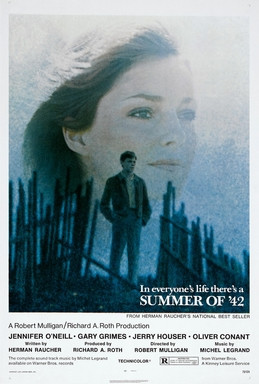
Back to School Part II #4: Summer of ’42 (dir by Robert Mulligan)


Summer_of_'42_POSTER

Originally, I was going to finish up the first day of my back to school reviews by talking about A Clockwork Orange.  I figured that, since the second film I reviewed was Andy Warhol’s Vinyl, it would just make sense that the fourth film would A Clockwork Orange.

But, I don’t know.  As I sat down and started to work on my fourth review, I realized that I’m not quite ready to write about A Clockwork Orange.  Instead, I’d rather hold off on that until tomorrow.  So, instead, I’m going to talk about Summer of ’42, another coming-of-age film that came out the same year.

That’s right — A Clockwork Orange and Summer of ’42 both came out in 1971 but — in content and sensibility — they might as well exist in different universes.  In fact, the only thing that they have in common is that they both tend to show up on TCM fairly frequently and that they’ve both influenced countless other films.

Speaking of TCM, that’s where I first saw Summer of ’42.  I have to admit that I’m writing this review from memory and that may not be the best way to review a film.  I saw Summer of ’42 about four months ago and, at the time, I thought it was a well-done but predictable little movie.  I even took notes for a future review but I didn’t get around to writing that review because … well, at the time, it just seemed like there wasn’t a lot to say about it.  Summer of ’42 is a sweet film but almost everything about it is right on the surface.  What you see is what you get.  I’m not surprised to discover that it was the 6th highest grossing film of 1971.  In a year that saw not only A Clockwork Orange but The Last Picture Show, The French Connection, Brother John, Billy Jack, Carnal Knowledge, Dirty Harry, Harold and Maude, Let’s Scare Jessica To Death, Klute, Straw Dogs, Pretty Maids All In A Row, and The Zodiac Killer, audiences were probably relieved to see a film that was neither violent, morally ambiguous, nor apocalyptic.

Instead, Summer of ’42 is a coming-of-age story that was specifically crafted to appeal to a world-weary audience’s nostalgia for the simple and carefree days of World War II.  This is one of those films where an older narrator continually reassures us that we’re seeing the most defining moment of his youth and all of the pretty images are in soft focus.  Hermie (Gary Grimes), Oscy (Jerry Houser), and Benjie (Oliver Conant) are three fifteen year-olds, all of whom are spending their summer on Nantucket Island.  Benjie is obsessed with sex but he’s nerdy.  Oscy is obsessed with sex but he’s a jerk.  Hermie is obsessed with sex but he’s the narrator so we already know that he’s too sensitive to lose his virginity to any girl his own age.

Luckily, there’s a woman in her 20s who is living in a nearby beach house.  Dorothy (Jennifer O’Neill) is beautiful but she’s married.  However, her husband’s a soldier and it is 1942 so, pretty soon, he’s out of the picture.  Hermie develops a mad crush on her and then, luckily for him, her husband dies and she spends a night teaching him the ways of love.  The next morning, she vanishes but leaves Hermie a note, telling him that she will never forget him and that it’s up to him to decide what their night together meant.

(Hermie never gets around to telling us what their night together meant so I guess it’s up to us to decide.  Personally, I just hope Hermie was careful who he told because, nowadays, a 23 year-old can get in a lot of legal trouble if she’s caught having sex with a 15 year-old.  Maybe things were different in 1942…)

As I said before, my initial response was that Summer of ’42 was sweet but predictable.  And that’s the way I still feel about it.  It was well-acted, well-filmed, and Jennifer O’Neill was amazingly beautiful but there was still something about Summer of ’42 that kind of bothered me.  We never really got to know who Dorothy was.  Her entire character was defined by her one night with Hermie.  Yes, I do understand that was kind of the point because the story was being told exclusively from Hermie’s point of view.  But it still bothered me.  Beyond being beautiful, tragic, and ultimately available, who was Dorothy?

But really, it wasn’t just something about the Summer of ’42 that was bothering me.  Instead, it was something about the coming-of-age genre in general.  I have lost track of how many nostalgic films and TV shows that I have seen that feature a narrator talking about the summer that he “became a man.”  It’s amazing how many awkward teenage boys apparently lost their virginity to a beautiful older woman who promptly vanished afterwards.  If, as has been recently suggested, I spent next summer in a rented beach house, am I going to be obligated to be the first lover of every 15 year-old, aspiring writer who happens to come wandering down the beach?  That could be time consuming, depending on how popular the beach is.

I guess what I’m saying is that perhaps somebody needs to remake Summer of ’42 and tell it from Dorothy’s point of view.

Just a thought.