The TSL Grindhouse: Grizzly (dir by William Girdler)


In 1976’s Grizzly, something is making a national park a lot less inviting.

Campers are turning up dead.  Bloody body parts are being found buried underneath leaves.  It’s obvious that a bear is to blame but reports seem to indicate that this isn’t just any bear.  This is a super bear, standing 8 feet tall and capable of knocking down an observation tower and picking up a helicopter.  This is the most dangerous bear known to man and the park has to be closed.

Closing the park during tourist season!?  Surely not!

Does this all sound familiar?  Grizzly came out a year after Jaws.  In all fairness to Grizzly, there were a lot of movies that ripped-off Jaws.  As a matter of fact, there are still movies ripping off Jaws.  The Jaws films eventually ended up ripping off themselves with three sequels.  Still, it’s hard to ignore just how blatantly Grizzly rips off Jaws.  We get shots from the bear’s point of view.  Christopher George plays the sheriff who keeps demanding that the park be closed down until the bear has been taken care of.  Andrew Prine is the hippie bear expert.  Richard Jaeckel is the crotchety old man who knows more about bears that just about anyone else in the world.  In Jaws, they needed a bigger boat.  In Grizzly, they need a bigger helicopter.  Jaws features scenes of people fleeing from the water.  Grizzly features an unintentionally funny shot of hundreds of panicked campers fleeing down the side of a mountain.

Grizzly is Jaws, without the water and without the wit.  And yet, in its own grim way, it works well enough.  The fact of the matter is that bears are scary and the bear in Grizzly is really, really big.  The gore effects are memorably grotesque and, perhaps even more so than Jaws, Grizzly goes out of its way to establish that anyone can die.  As for the actors, I’ve always enjoyed seeing Christopher George in films like this.  He was one of those actors who always seemed to try to give a convincing performance, even when he was appearing in a film that no one would mistake for a classic.  Richard Jaeckel and Andrew Prine also do their best to bring their characters to life.

Finally, I should mention that the film ends on a properly silly and over-the-top note.  Actually, it’s not that much different from the ending to Jaws.  It’s just that Jaws was made with such skill that even the silly moments worked.  Grizzly was directed by William Girdler, who was no Steven Spielberg.  At the end of Grizzly, I found myself shouted, “Why didn’t someone just do that in the first place!?”  Then again, if they had, we never would have gotten all of those point of view shots of the bear wandering through the forest while growling like an 70s obscene phone caller.

As a final note, I defy anyone to watch Grizzly without imagining Werner Herzog narrating the bear’s activities.  It cannot be done!
Scenes That I Love: Christopher George In City of the Living Dead


Today, we celebrate what would have been the 95th birthday of the rugged American actor Christopher George.

George may have gotten his start in westerns and war movies but he is best remembered for a series of horror films in which he appeared in the late 70s and early 80s.  One of the best of those was Lucio Fulci’s 1980 classic, City of the Living Dead.

In today’s scene that I love, Christopher George plays a reporter who realizes that psychic Catriona MacColl has been buried alive.  He digs her up.  Of course, this is a Fulci film, so things nearly go terribly wrong.

The TSL Grindhouse: Dixie Dynamite (dir by Lee Frost)


Welcome to Georgia!

Yes, the 1976 film Dixie Dynamite is supposedly set in Georgia but it’s hard not to notice that all of the hills and mountains in the background look like they’re from California.  The story features two sisters, Dixie (Jane Anne Johnston) and Patsy (Kathy McHaley), who go into the moonshine business after their father drives his car off a cliff.  Their father was the best moonshiner in the business and they aim to carry on his legacy, despite the efforts of Sheriff Marsh (Christopher George) and banker Charlie White (R.G. Armstrong).  Blowing up their stills and threatening to auction off their land isn’t going to stop these two from doing whatever it is exactly that they’re doing in this film.  Eventually, the sisters steal a bunch of dynamite and start blowing stuff up.  Normally, I’d say “Woo hoo!” but this film even makes random explosions seem as boring as the 4th of July in Canada.

Warren Oates plays Mack, a motocross champion who occasionally helps the daughter’s out.  At least, I think he’s helping them.  To be honest, it’s not always easy to tell what Mack’s purpose actually is in this story.  He tends to show up randomly, usually after all the action has ended.  He’s kind of a useless friend, to be honest.  Warren Oates brings his rough-hewn charm to the roll and you’re usually glad to see him, if just because the actresses playing the sisters are genuinely lousy, but you’re never quite sure what he’s doing there.  Watching the film, one gets the feeling that Oates just dropped by the set whenever he felt like it and filmed a scene or two.

It’s really not that crazy of a possibility.  Actor Steve McQueen makes a cameo appearance in this film, riding a motorcycle and challenging Oates.  McQueen didn’t make many films in the 70s.  Let’s consider some of the films that he turned down: The Great Gatsby, Jaws, Apocalypse Now, The Driver, The French Connection, Sorcerer, and Hard Times.  None of those films appealed to McQueen but he was still willing to show up for a day’s worth of shooting on Dixie Dynamite.  Of course, McQueen does go uncredited.

This is an odd film, full of slow spots that not even actors like Warren Oates, Christopher George, and R.G. Armstrong can make up for.  Director Lee Frost was best-known for his softcore exploitation films and Dixie Dynamite is full of odd transitions and jump cuts, leading me to suspect that the film was originally meant to be a lot more like a typical Frost film before it was decided to go in a PG-direction as well.

Perhaps the oddest part of the film is that the daughter’s final scheme to get revenge on the sheriff and the banker involves stealing two dead bodies from the local morgue.  The bodies are made up and dressed to look like Dixie and Patsy so that the sisters can fake their own death.  I can understand that and even give them credit for hatching a clever plan.  But I still find it weird that the film never really explains how the bodies were stolen or why they were in the morgue in the first place.  What are the chances that Patsy and Dixie would head down to the morgue and find two look-alikes?

The film features dynamite, Warren Oates, and corpse-stealing  but it’s still incredibly dull.  That’s just weird.

Monday Live Tweet Alert: Join Us For Dixie Dynamite!


As some of our regular readers undoubtedly know, I am involved in hosting a few weekly live tweets on twitter and occasionally Mastodon.  I host #FridayNightFlix every Friday, I co-host #ScarySocial on Saturday, and I am one of the five hosts of Mastodon’s #MondayActionMovie!  Every week, we get together.  We watch a movie.  We snark our way through it.

Tonight, for #MondayActionMovie, the film will be 1976’s Dixie Dynamite, starring Warren Oates and Christopher George! I picked it so you know it’ll be good.

It should make for a night of fun viewing and I invite all of you to join in.  If you want to join the live tweets, just hop onto Mastodon, find the movie on YouTube, hit play at 8 pm et, and use the #MondayActionMovie hashtag!  The live tweet community is a friendly group and welcoming of newcomers so don’t be shy.   

See you soon for some moonshine excitement!

Horror Scenes That I Love: Christopher George Digs Up Catriona MacColl in City of the Living Dead


From 1980’s City of the Living Dead, directed by the amazing Lucio Fulci, comes today’s scene of the day.  In this scene, it turns out that Catriona MacColl was actually not quite dead when she was buried.  Can Christopher George dig her up without accidentally killing her in the process?

Watch to find out!

Retro Television Review: Fantasy Island 5.12 “The Magic Camera/Mata Hari/Valerie”


Welcome to Retro Television Reviews, a feature where we review some of our favorite and least favorite shows of the past!  On Tuesdays, I will be reviewing the original Fantasy Island, which ran on ABC from 1977 to 1984.  Unfortunately, the show has been removed from most streaming sites.  Fortunately, I’ve got nearly every episode on my DVR.

This week’s episode presents your erstwhile reviewer with a bit of an ethical quandary.

Episode 5.12 “The Magic Camera/Mata Hari/Valerie”

(Dir by Don Chaffey and Don Weis, originally aired on January 16th, 1982)

I don’t feel completely comfortable about reviewing this episode of Fantasy Island and I’ll tell you why.

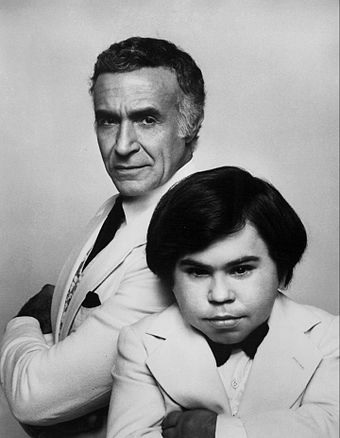
Occasionally, Fantasy Island would broadcast an extra-long episode.  These episodes would typically feature three fantasies as opposed to the usual two.  Unfortunately, when these long episodes were syndicated, one of the fantasies would be edited out so the episode would fit into an hour-long slot.  Usually, the editing was not particularly smooth, either.  The end result would usually be an episode that seemed oddly paced and the performances of Ricardo Montalban and Herve Villechaize would often seem uneven as well.  As such, it’s neither easy nor particularly fair to review those edited episodes.  When it comes to reviewing, I always want to see the complete episode.

And yet, now that the original Fantasy Island is no longer streaming anywhere (seriously, what the Hell, Tubi?), I’m stuck using the episodes that I have on my DVR.  And that means reviewing the edited, syndicated versions of these episodes.

As you can probably guess, this is one of those edited episodes.  The Valerie fantasy was removed for syndication.  That’s a shame because Valerie featured the final televised performance of actor Christopher George, a charismatic B-movie veteran who is pretty popular around the Shattered Lens offices.  It also featured Michelle Phillips, though apparently she did not return as the mermaid who she played earlier on the show.  I’d love to review Valerie but I can’t.  And that sucks,

As for the other two fantasies, one is basically a remake of the Lillian Russell fantasy, except this time Martha Harris (Phyllis Davis) goes into the past and finds herself transformed into her great-grandmother, Mata Hari.  She gets to dance.  She gets to spy.  She gets thrown in prison and sentenced to death but, fortunately, her life is spared when the firing squad’s rifles are filled with blanks and she’s given a drug by one of the men who is in love with that makes her appear to be dead.  This was a enjoyable fantasy, mostly because of the costumes and the melodrama.

The other fantasy features Bob Denver, coming to the Island for the second week in a row.  This time, he’s a photographer who wants to take the type of pictures that the world’s greatest photographers couldn’t.  Because of the awkward way the fantasy was stated, the photographer ends up with a camera that takes pictures of the future.  At first, the photographer is really happy and uses his camera to commit a little insider trading.  But then he takes a picture of a newspaper and sees a headline announcing his death in a fiery auto accident.  Uh-oh!

Again, neither of the two fantasies is bad (though the second one does require a certain tolerance for Bob Denver that some people may not have) but it was hard for me to enjoy them knowing that I was missing out on a third fantasy.  For that reason, I assigning this episode a grade of incomplete.  If I ever get a chance to watch the complete episode, uncut, I’ll revisit this review but until then, I really can’t give an overall grade to this episode.

Finally, for those keeping track, both Julie and Tattoo join Roarke when it’s time to greet the guests.  That’s only second time that’s happened this season.

Scenes That I Love: Christopher George In City of the Living Dead


Today, we celebrate what would have been the 93rd birthday of the rugged American actor Christopher George.

George may have gotten his start in westerns and war movies but he is best remembered for a series of horror films in which he appeared in the late 70s and early 80s.  One of the best of those was Lucio Fulci’s 1980 classic, City of the Living Dead.

In today’s scene that I love, Christopher George plays a reporter who realizes that psychic Catriona MacColl has been buried alive.  He digs her up.  Of course, this is a Fulci film, so things nearly go terribly wrong.

Retro Television Reviews: Fantasy Island 4.5 “The Love Doctor/The Pleasure Palace”


Welcome to Retro Television Reviews, a feature where we review some of our favorite and least favorite shows of the past!  On Tuesdays, I will be reviewing the original Fantasy Island, which ran on ABC from 1977 to 1986.  Almost the entire show is currently streaming is on Youtube, Daily Motion, and a few other sites.

This week, Roarke and Tattoo are still ignoring each other.

Episode 4.5 “The Love Doctor/The Pleasure Palace”

(Dir by Earl Bellamy and Cliff Bole, originally aired on November 22nd, 1980)

The plane has arrived and, once again, Mr. Roarke and Tattoo head down to the docks to meet their guests.  And, as with the previous season four episodes, it’s hard not to notice that neither Ricardo Montalban nor Herve Villechaize are willing to look at each other while delivering their lines.  I feel a little bit bad about having started almost every recent review by mentioning the obvious hostility between the two of them but it’s impossible not to notice.  Previously, one of the show’s greatest strengths was the playful banter between Roarke and Tattoo and, when it’s gone, it’s impossible not to notice the absence.

Speaking of hostility, Gordon Hughes (Gary Burghoff) seem to have a lot resentment against the world.  Thanks to the inheritance that he received from his grandmother, Gordon has graduated from law school and he is on the verge of joining a top law firm.  But, before he does so, he wants to go back in the past and discover how his grandmother made all of her money.  Mr. Roarke takes Gordon to a recreation of the saloon that his grandmother owned in turn-of-the-century San Francisco.  Gordon takes a sip of brandy and is transported into the past.  He quickly discovers that …. HIS GRANDMOTHER OWNED A BROTHEL!

At first, Gordon is upset about this discovery.  But then he falls in love with one of his grandmother’s employees, a waitress named Molly (Barbie Benton).  And then he stands up to a crooked cop (Dane Clark).  And then he meets his grandmother (Ruta Lee) and discovers that she was tough and refused to let anyone push her around.  Gordon realizes that he should be proud of his grandmother and his heritage and that he wants to be with Molly.  But then the San Francisco earthquake hits and Gordon is abruptly transported to the present.  Not to worry, though!  It turns out Molly was also a guest having a fantasy and she and Gordon board the airplane home together.

This fantasy — which featured a lot of nice clothes and period detail — would have been effective if not for Gary Burghoff’s rather off-putting performance as Gordon.  Seriously, Gordon came across as being such an uptight and self-righteous prig that it was difficult to have much sympathy for him.  Of course, that was kind of the point.  Gordon was supposed to be a snob but Burghoff made him such a convincing and such a committed snob that it was hard to believe that he could have changed his ways just over the course of a few days.

The second guest is actress Kim Holland (Loni Anderson), who is the biggest star in the world after appearing in only three movies.  She wants a break from being a star so Mr. Roarke arranges for her to serve as a nurse in a remote clinic that is run by the gruff Dr. Greg Miller (Christopher George).  Kim finds a purpose in life helping Dr. Miller but, when they’re kidnapped by a native tribe, Dr. Miller reveals that he has always known who Kim is.  Dr. Miller plays one of her movies for the tribe, convincing them that Kim is a goddess.  Miller goes on to explain that he’s been in love with Kim ever since he first saw her on screen.  Seeing as Kim’s fantasy was to not be recognized for a few days, it would seem that Roarke failed to keep up his end of the bargain.  But it doesn’t matter because Kim and Greg are in love.  This fantasy could have worked with perhaps a different actress in the role of Kim.  Loni Anderson gave such a blank performance as Kim that it was hard to really believe her either as a movie star or a nurse.

(Interestingly enough, the character of Kim Holland also appeared on the episode of The Love Boat that aired right before this episode.  So, if nothing else, this is the first Love Boat/Fantasy Island cross-over.  Incidentally, I’ll be reviewing that episode of The Love Boat in a few more months.)

This was a fairly forgettable episode.  The island was lovely to look at and I’m glad that everyone found love but I just wish Mr. Roarke and Tattoo could be friends again.

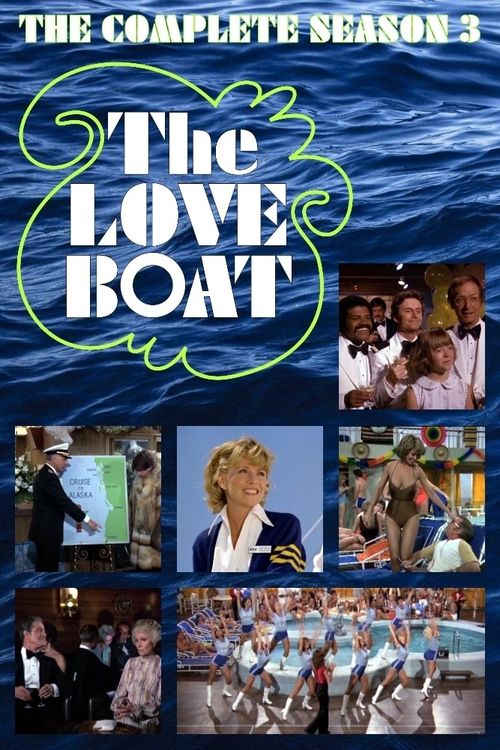
Retro Television Reviews: The Love Boat 3.8 “Play By Play/Cindy/What’s A Brother For?”


Welcome to Retro Television Reviews, a feature where we review some of our favorite and least favorite shows of the past!  On Wednesdays, I will be reviewing the original Love Boat, which aired on ABC from 1977 to 1986!  The series can be streamed on Paramount Plus!

It’s time for a Halloween cruise!

Episode 3.8 “Play by Play/Cindy/What’s A Brother For?”

(Dir by James Sheldon and George Tyne, originally aired on October 27th, 1979)

Yes, this episode does feature the Love Boat’s annual Halloween cruise but sadly, it doesn’t do much with the theme.  Last season’s Halloween cruise featured Vincent Price as an illusionist.  This season, there is a costume ball but it’s mostly just there so that the show can do a take off on Cinderella.

Cindy (Melissa Sue Anderson) is a shy girl who boards the ship with her wicked stepmother (Carolyn Jones) and her two less-than appealing step-sisters (Ronda Bates and Lila Kent).  While the stepmother tries to find an eligible bachelor for either one of her biological daughters, Cindy is expected to stay in the cabin and do the laundry.  However, Gopher hears Cindy singing Witchcraft and decides that Cindy simply has to sing for “the prince of pop,” Preston Maddox (Frank Sinatra, Jr., who looks like a cross between his father and Jerry Lewis).  However, how can Cindy escape from the cabin?  Gopher arranges for her to go to the costume ball and he even steals Julia’s Cinderella costume so Cindy can go incognito.  Cindy impresses Preston but, when Julie sees that Cindy is wearing her costume, Cindy makes a run for it.  She leaves behind one glass slipper and …. well, you know where this is going, right?  As everyone disembarks in Los Angeles, Preston has them try to on the slipper.  Cindy, however, doesn’t have to try on the slipper to prove her identity.  She just has to start singing Witchcraft.  By the end of the episode, you’ll wonder if Cindy knows any other songs.

While all that is going on, Bud Pomeroy (Christopher George) and Peggy Rossmore (Lynda Day George) are two sportscasters who work together but actually dislike each other.  Peggy thinks Bud is a chauvinist and Bud thinks that Peggy was only hired for her looks.  They decide to compete in a series of athletic events to determine who will stay at their station and who will quit.  Bud wins at arm wrestling.  Peggy wins a 5-mile race around the ship.  To determine their third event, Peggy randomly draws a piece of paper from Captain Stubing’s hat and discovers that the next competition will be weight-lifting!  When Bud throws his back out, it looks like Cindy is going to win but then Cindy asks Bud to stay and they discover that they actually love each other.  Yay!  Neither the story nor the characters were that interesting but Christopher George and Lynda Day George were married in real life and they made an attractive couple.

Finally, Tom Benton (Tom Hallick) has devoted his entire life to looking after his brother, Matt (Patrick Wayne), who uses crutches.  When Tom meets and falls in love with Kris (Joan Van Ark), Matt realizes that it is time for Tom to move on and find some happiness of his own.

For the most part, this was a typically pleasant episode of The Love Boat but, as a Halloween episode, it was a major disappointment.  They should have had some fun with season but, unfortunately, they didn’t.  This was like going on a Christmas cruise and not getting any presents.

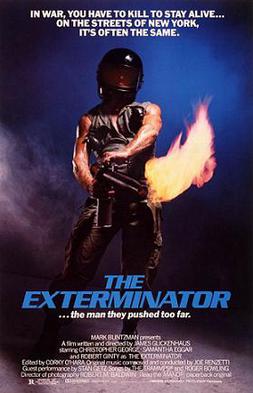
The TSL Grindhouse: The Exterminator (dir by James Glickenhaus)


First released in 1980, The Exterminator begins during the Vietnam War.

Two soldiers, John Eastland (Robert Ginty) and Michael Jefferson (future Cannon Film mainstay Steve James) have been captured by the Viet Cong and can only watch as a third soldier is beheaded by his captors.  (The graphic beheading, in which the camera lingers on the head slowly sliding off the neck, is an early warning of what this film has in store for its audience.)  Jefferson manages to free himself from his bonds and kills most of the enemy soldiers.  After Jefferson frees him, Eastland fires a bullet into the still twitching body of the VC commander.

The film jumps forward to 1980.  Living in New York City, Jefferson and Eastland are still best friends and co-workers at a warehouse.  For a second time, Jefferson saves Eastland’s life when the latter is attacked by a gang calling themselves the Ghetto Ghouls.  When the Ghouls get their revenge by tracking down Jefferson and piecing his spine with a meat hook, Eastland gets his revenge by killing …. well, just about everyone that he meets.

Though The Exterminator was obviously inspired by Death Wish, a big difference between the two films is that Eastland doesn’t waste any time before starting his anti-crime crusade.  In the original Death Wish, Paul Kersey (played by Charles Bronson) starts out as a self-described “bleeding heart” liberal who was a conscientious objector during the Korean War.  Even after his wife and daughter are attacked (and his wife killed) by Jeff Goldblum, Kersey doesn’t immediately pick up a gun and start shooting muggers.  Indeed, it’s not until the film is nearly halfway over that Kersey begins his mission and, in one of the film’s more memorable moments, he reacts to his first act of violence by throwing up afterwards.  While one could hardly call Death Wish an especially nuanced film, it does at least try to suggest that Kersey’s transformation into a vigiliante was a gradual process.

The Exterminator, on the other hand, goes straight from Eastland informing Jefferson’s wife about the attack to Eastland threatening a tied-up Ghetto Ghoul with a flame thrower.  When did Eastland kidnap the Ghetto Ghoul?  Why does Eastland have a flame thrower?  Where exactly has Eastland tied up the Ghetto Ghoul?  None of this is explained and the film’s abruptness gives it an almost dream-like feel.  The film plays out like the fantasy of everyone who has ever been mugged or otherwise harassed.  Magically, Eastland suddenly has the skills and the resources to outsmart not just the criminals but also the police who have been assigned to stop him.  Even the CIA is assigned to take down Eastland because his anti-crime crusade is inspiring people to wonder why the President hasn’t been able to reduce crime.  The film plays out like the type of daydreams that Travis Bickle had when he wasn’t driving his taxi.

Eastland is ruthless in his kills but fortunately, everyone he kills is really, really bad.  The Ghetto Ghouls clubhouse is decorated with a poster of Che Guevara but Che’s revolutionary rhetoric isn’t worth much when the Exterminator’s after you.  A mob boss makes the mistake of not telling Eastland about the Doberman that’s guarding his mansion so into the meat grinder he goes.  New Jersey loses a state senator when Eastland discovers him torturing an underage male prostitute.  The film was shot on location in New York City and the camera lingers over every grimy corner of the city.  A scene where Eastland walks through Times Square takes on a cinéma-vérité feel as people jump out at him and try to entice him to take part in everything the city has to offer.  If Death Wish suggested that Paul Kersey’s actions were saving New York, The Exterminator suggests that we should just let John Eastland burn the whole place down.

With his youthful face, Robert Ginty looks more like a mild-mannered seminarian than a hardened veteran of both Vietnam and the mean streets of New York but, ultimately, that works to the film’s advantage.  If anything, it explains why everyone who meets him trends to underestimate what he’s capable of doing.  B-movie vet Christopher George overacts in his usual amusing way as he plays the detective who has been assigned to catch The Exterminator.  Samantha Eggar plays a doctor who starts dating George for no discernible reason.  The scenes featuring George and Eggar often seems as if they belong in a different film but they do provide some relief from the rather grim and gruesome scenes of The Exterminator killing almost everyone who he meets.

The Exterminator was controversial when it was originally released and it still retains the power to shock.  It’s easy to laugh at some of the film’s more melodramatic moments but there were still more than a few scenes that I watched with my hands over my eyes.  The film’s hard edge grabs your attention from the start and the idea of the CIA sending assassins to take out a neighborhood vigilante is so over the top and ridiculous that it’s kind of hard not to appreciate it.  That the film totally buys into its paranoid worldview (“Washington will be pleased.”) makes the whole thing far more compelling than it should be.

As ludicrous as it all is, The Exterminator is a film that defies you to look away.