Icarus File No. 17: Che! (dir by Richard Fleischer)


Che Guevara!

By most accounts, Che Guevara epitomized the excesses and the hypocrisies of the extreme Left.  He spoke of the class struggle while remaining an elitist himself.  He oversaw thousands of executions and advocated for authoritarian rule.  In his writings, he frequently revealed himself to be a racist and a misogynist.  By arguing that the Russians should be allowed to bring nuclear missiles to Cuba, he brought the world to the brink of destruction.  However, he also died relatively young and he looked good on a t-shirt.  Decades after he was executed by the Bolivian Army in 1967 (or was it the CIA?), he remains an icon for college students and champagne socialists everywhere.

The film about Che! was released in 1969, two years after his death.  Starring the Egyptian actor Omar Sharif as Che Guevara, Che! opens with Guevara already a martyr and then quickly gives way to flashbacks.  Various actors pretending to be Cuban appear and speak directly to the audience, debating Che Guevara’s legacy.  Some describe him as being a violent thug who killed anyone who displeased him.  Others describe him as a visionary doctor who sacrificed his comfortable existence for the people.  It’s a rather conventional opening and one that hints that Che! is going to try to have it both ways as far as Che’s legacy is concerned.  But it’s still effective enough.  A montage of soldiers and rebels creates the proper feeling of a society on the verge of collapse.

And then Jack Palance shows up.

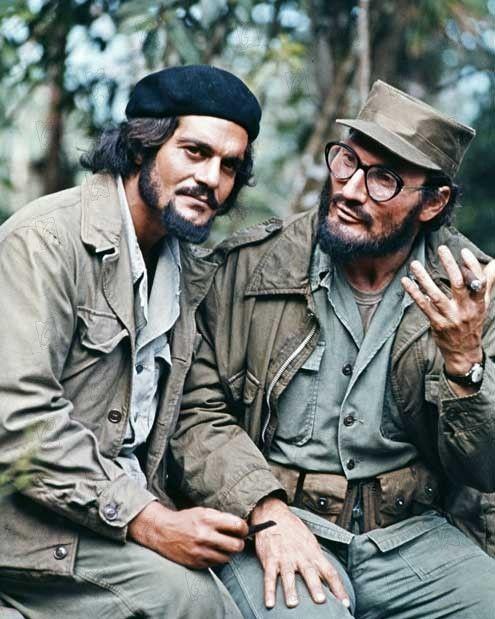
Palance first appears creeping his way through the Cuban jungle with a group of soldiers behind him.  Palance is chomping on a cigar and he wears the intense look of a man on a mission.  My initial reaction was that Palance was playing one of the CIA agents who sent to Cuba to try to assassinate Fidel Castro or to set up the Bay of Pigs invasion.  I kept waiting for him to look at the camera and launch into a monologue about why, for the safety of America, he had been dispatched the topple Cuba’s communist government.  Imagine my shock when Omar Sharif called Palance, “Fidel.”

Yes, that’s right.  Jack Palance plays Fidel Castro!  As miscast as the suave Omar Sharif is as Che Guevara, nothing can prepare one for seeing Jack Palance playing Fidel Castro.  Needless to say, there is nothing remotely Cuban or even Spanish about Jack Palance.  He delivers his lines in his trademark terse Jack Palance voice, without even bothering to try any sort of accent.  (And, needless to say, both he and Sharif speak English through the entire film.)  Anyone who has ever seen a picture of a young Fidel Castro knows that, while he shared a family resemblance with Justin Trudeau, he looked nothing like Jack Palance.  Eventually, Palance puts on a fake beard that makes him look even less like Castro.  When one of our narrators mentions that Castro was a great speaker, the film cuts to a scene of Palance spitting out communist slogans with a noted lack of enthusiasm.  When Castro takes control of Cuba, Palance looks slightly amused with himself.  When Che accused Castro of selling out the revolution, Palance looks bored.  It’s a remarkably bad piece of casting.  Seeing Palance as Castro feels like seeing John Wayne as Genghis Khan.  Thank goodness Hollywood never tried anything that silly, right?  Anyway….

As for the rest of the film, it hits all the expected notes.  The film was made in the very political year of 1969, a time when the New Left was ascendant and many considered Che Guevara to be a hero.  However, since this was a studio production, Che! tries to appeal to both college radicals and their parents by taking a “both sides” approach to Che Guevara.  Here’s Che teaching an illiterate farmer how to read.  Here’s Che overseeing a bunch of dissidents being executed.  Here’s Che getting angry at Castro for not being properly enthusiastic about housing Russian nuclear missiles.  Here’s Che talking about a moral revolution.  Here’s Che trying to start an unwanted war in Bolivia.  Here’s Che talking to Sid Haig — hey, Sid Haig’s in this film!

Like so many mainstream political films of the 60s and today, Che! tries to be political without actually taking any firm positions.  One is tempted to say that is the film’s downfall.  Of course, the film’s real downfall is casting Jack Palance as Fidel Castro.

There’s no way to recover from that.
The Unnominated: Mean Streets (dir by Martin Scorsese)


Though the Academy of Motion Picture Arts and Sciences claim that the Oscars honor the best of the year, we all know that there are always worthy films and performances that end up getting overlooked.  Sometimes, it’s because the competition too fierce.  Sometimes, it’s because the film itself was too controversial.  Often, it’s just a case of a film’s quality not being fully recognized until years after its initial released.  This series of reviews takes a look at the films and performances that should have been nominated but were, for whatever reason, overlooked.  These are the Unnominated.

“Honorable men go with honorable men.” — Giovanni Cappa

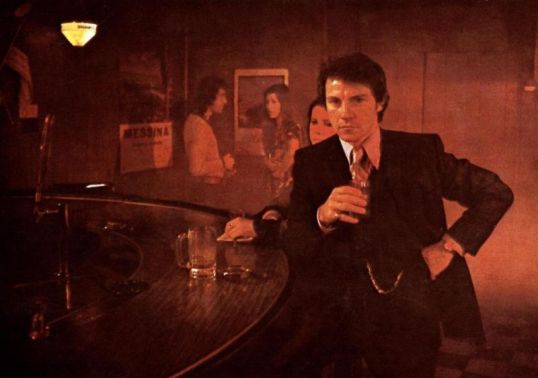
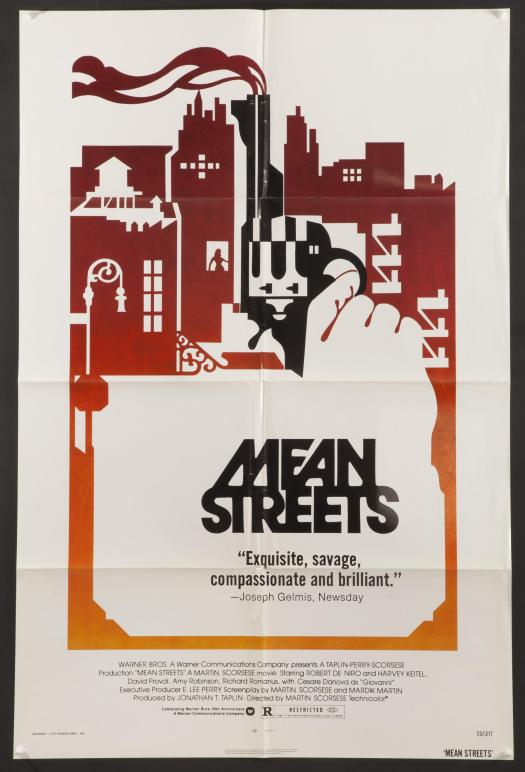
1973’s Mean Streets is a story about Little Italy.  The neighborhood may only be a small part of the sprawling metropolis of New York but, as portrayed in this film, it’s a unique society of its very own, with its own laws and traditions.  It’s a place where the old ways uneasily mix with the new world.  The neighborhood is governed by old-fashioned mafiosos like Giovanni Cappa (Cesare Danova), who provide “protection” in return for payment.  The streets are full of men who are all looking to prove themselves, often in the most pointlessly violent way possible.  When a drunk (David Carradine) is shot in the back by a teenage assassin (Robert Carradine), no one bothers to call the police or even questions why the shooting happened.  Instead, they discuss how impressed they were with the drunk’s refusal to quickly go down.  When a soldier (Harry Northup) is given a party to welcome him home from Vietnam, no one is particularly shocked when the solider turns violent.  Violence is a part of everyday life.

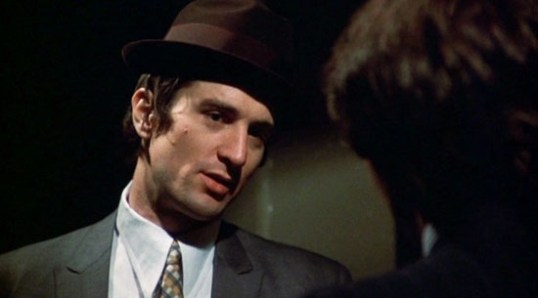
Charlie Cappa (Harvey Keitel) is Giovanni’s nephew, a 27 year-old man who still lives at home with his mother and who still feels guilty for having “impure” thoughts.  Charlie prays in church and then goes to work as a collector for Giovanni.  Giovanni is grooming Charlie to take over a restaurant, not because Charlie is particularly talented at business but just because Charlie is family.  Giovanni warns Charlie not to get involved with Teresa (Amy Robinson) because Teresa has epilepsy and is viewed as being cursed.  And Giovanni particularly warns Charlie not to hang out with Teresa’s cousin, Johnny Boy (Robert De Niro).  Johnny Boy may be charismatic but everyone in the neighborhood knows that he’s out-of-control.  His idea of a good time is to blow up mailboxes and shoot out street lamps.  Charlie, who is so obsessed with sin and absolution that he regularly holds his hand over an open flame to experience the Hellfire that awaits the unrepentant sinner, finds himself falling in love with Teresa (though it’s debatable whether Charlie truly understands what love is) and trying to save Johnny Boy.

Charlie has other friends as well.  Tony (David Proval) runs the bar where everyone likes to hang out and he seems to be the most stable of the characters in Mean Streets.  He’s at peace with both the neighborhood and his place in it.  Meanwhile, Michael (Robert Romanus) is a loan shark who no one seems to have much respect for, though they’re still willing to spend the afternoon watching a Kung Fu movie with him.  Michael knows that his career is dependent on intimidation.  He can’t let anyone get away with not paying back their money, even if they are a friend.  Johnny Boy owes Michael a lot of money and he hasn’t paid back a single dollar.  Johnny Boy always has an excuse for why he can’t pay back Michael but it’s obvious that he just doesn’t want to.  Charlie realizes that it’s not safe for Johnny Boy in Little Italy but where else can he go?  Brooklyn?

Mean Streets follows Charlie and his friends as they go about their daily lives, laughing, arguing, and often fighting.  All of the characters in Mean Streets enjoy a good brawl, despite the fact that none of them are as tough as their heroes.  A chaotic fight in a pool hall starts after someone takes offense to the word “mook,” despite the fact that no one can precisely define what a mook is.  The fights goes on for several minutes before the police show up to end it and accept a bribe.  After the cops leave, the fight starts up again.  What’s interesting is that the people fighting don’t really seem to be that angry with each other.  Fighting is simply a part of everyday life.  Everyone is aggressive.  To not fight is to be seen as being weak and no one is willing to risk that.

Mean Streets was Martin Scorsese’s third film (fourth, if you count the scenes he shot before being fired from The Honeymoon Killers) but it’s the first of his movies to feel like a real Scorsese film.  Scorsese’s first film, Who’s That Knocking On My Door?, has its moments and feels like a dry run for Mean Streets but it’s still obviously an expanded student film.  Boxcar Bertha was a film that Scorsese made for Roger Corman and it’s a film that could have just as easily been directed by Jonathan Demme or any of the other young directors who got their start with Corman.  But Mean Streets is clearly a Scorsese film, both thematically and cinematically.  Scorsese’s camera moves from scene to scene with an urgent confidence and the scene where Charlie first enters Tony’s bar immediately brings to mind the classic tracking shots from Goodfellas, Taxi Driver, and Casino.  One gets the feeling that Pete The Killer is lurking somewhere in the background.  The scenes between Keitel and De Niro are riveting.  Charlie attempts to keep his friend from further antagonizing Michael while Johnny Boy tells stories that are so long and complicated that he himself can’t keep up with all the details.  Charlie hold everything back while Johnny Boy always seems to be on the verge of exploding.  De Niro’s performance as Johnny Boy is one that has been duplicated but never quite matched by countless actors since then.  He’s the original self-destructive fool, funny, charismatic, and ultimately terrifying with his self-destructive energy.

Mean Streets was Scorsese’s first box office success and it was also the film that first brought him widespread critical acclaim.  However, in a year when the totally forgotten A Touch of Class was nominated for Best Picture, Mean Streets did not receive a single Oscar nomination, not even for De Niro’s performance.  Fortunately, by the time Mean Streets was released, De Niro had already started work on another film about the Mafia and Little Italy, The Godfather Part II.

Previous entries in The Unnominated:

  1. Auto Focus 
  2. Star 80
  3. Monty Python and The Holy Grail
  4. Johnny Got His Gun
  5. Saint Jack
  6. Office Space
  7. Play Misty For Me
  8. The Long Riders

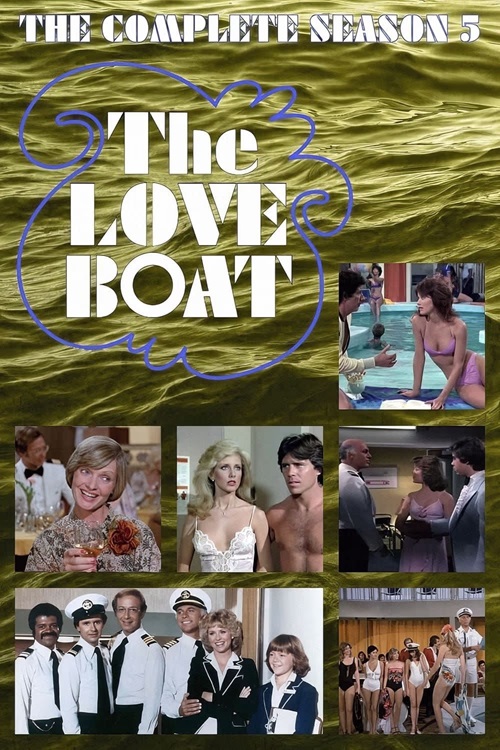
Retro Television Review: The Love Boat 5.7 “The Lady from Laramie/Vicki Swings/Phantom Bride”


Welcome to Retro Television Reviews, a feature where we review some of our favorite and least favorite shows of the past!  On Wednesdays, I will be reviewing the original Love Boat, which aired on ABC from 1977 to 1986!  The series can be streamed on Paramount Plus!

The Love Boat promises something for everyone!

Episode 5.7 “The Lady from Laramie/Vicki Swings/Phantom Bride”

(Dir by Jack Arnold, originally aired on November 14th, 1981)

As I did with this week’s episodes of Miami Vice, CHiPs, and Fantasy Island, I’m going to save time by doing this one bullet point style.

  • Before getting to the storylines, I want to point out that this week’s episode was directed by Jack Arnold.  Jack Arnold may not be a household name but he directed some of this site’s favorite science fiction and monster movies, including Tarantula, The Incredible Shrinking Man, It Came From Outer Space, and The Creature From The Black Lagoon!
  • As always, this cruise presents us with three stories.  One of the three stories definitely does benefit from Arnold’s macabre touch.  Juliet Mills and Buddy Hackett play Kate and Julian Garfield, who are married psychic researchers.  The board the boat in search of a ghost.  Captain Stubing doesn’t believe in ghosts and good for him!  (Neither do I!)  However, Gopher is totally convinced and he’s soon wandering around the boat with a bunch of garlic hanging around his neck.  Gopher, they’re looking for ghosts, not vampires!
  • At one point, Gopher is convinced that he’s managed to take a picture of a ghost but it’s actually just Kate looking through a porthole.
  • I have to admit that I groaned a bit when I saw that Juliet Mills was going to, once again, be a passenger on The Love Boat.  But then I remembered that Hayley is the Mills sister that gets on my nerves.  Juliet and Buddy Hackett had a surprising amount of chemistry.  They were likable together.
  • It is kind of funny that there are certain guest stars — like Juliet Mills — who show up over and over again but who always play different characters.  I’m always waiting for someone on the boat to be like, “Hey, weren’t you here last week?”
  • The least interesting story featured Nancy Dussault as a plain-spoken (or maybe just annoying) widow from Wyomin’ who fell in love with an Italian gigolo (Cesare Danova) who was on the boat with a rich socialite (Marti Stevens).  Cesare Danova played the mob boss in Mean Streets and the mayor in Animal House.  He did not look happy at all to be on The Love Boat.
  • Poor Vicki!  In this episode, 14 year-old Vicki pretended to be 18 in an attempt to flirt with Todd Andrews (Patrick Labyroteaux), a teenager who was traveling by himself.  The Captain grew very worried about Vicki, especially after he heard Todd suggesting that he and Vicki had fooled around late into the night.  (Todd was lying and, oddly enough, everyone seemed to be strangely forgiving of Todd’s actions.)
  • At one point, The Captain tells Vicki that he wanted her to spend time with people her own age.  Vicki replies that she was the only fourteen year-old on the ship.  And, seriously, Vicki has a point.
  • Vicki living on the ship has always seemed kind of strange to me and I always appreciate the episodes that try to honestly deal with the situation.  How can you not have mixed feelings about spending your teen years on a boat, largely surrounded by people who are quite a bit older than you?  That said, Gavin MacLeod was always at his best when he was playing Stubing as a father and Jill Whelan was refreshingly non-cutesy in the role of Vicki.  As a result, you couldn’t help but feel that, ultimately, the Captain and his daughter were right where they belonged.
  • This was an okay cruise.  The ghost storyline was fun.  MacLeod and Whelan tugged at the heartstrings.  When it comes to good stories on The Love Boat, two out of three is not bad at all!

Next week — The Love Boat goes on a Thanksgiving cruise!  (If only I had started reviewing The Love Boat a week earlier than I did, the timing would have been perfect.)  ‘Til then, set a course for adventure, your mind on a new romance….

Retro Television Review: Fantasy Island 5.5 “Mr. Nobody/La Liberatora”


Welcome to Retro Television Reviews, a feature where we review some of our favorite and least favorite shows of the past!  On Tuesdays, I will be reviewing the original Fantasy Island, which ran on ABC from 1977 to 1984.  Almost the entire show is currently streaming on Daily Motion, YouTube, Plex, and a host of other sites.

This week, Charo shows up but Tattoo doesn’t.

Episode 5.5 “Mr. Nobody/La Liberatora”

(Dir by Cliff Bole, originally aired on November 7th, 1981)

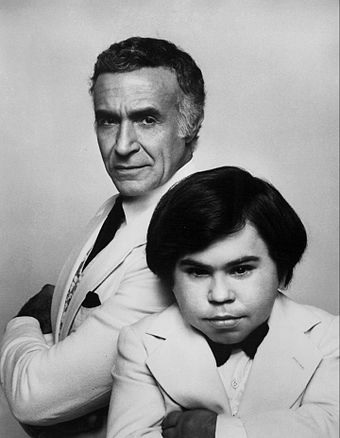
Once again, we have an episode the features only stock footage of Tattoo shouting, “The plane, the plane!”  Otherwise, Herve Villechaize is not in this episode.

What excuse does Mr. Roarke come up with this week to explain Tattoo’s absence?

He’s hung over.

Seriously, that’s what Mr. Roarke goes with!  He explains to Julie that Tattoo was up very late, helping another guest celebrate a drunken fantasy.  It must be said that Ricardo Montalban seems to be quite amused to be labeling his sidekick a drunk.  Apparently, Herve Villechaize was holding out for more money when this episode was shot and I’m guessing Tattoo being hung over was a “take that” on the part of the show’s producers.  To be honest, it feels a bit petty.

It falls to Julie to help Charles Atkins (Sherman Hemsley) fulfill his fantasy.  Charles is a short man who has been picked on by bullies all his life.  He wants to feel strong and confident.  Julie gives him a potion that she thinks will give him “inner strength” but — whoops! — instead it turns Charles into the world’s strongest man.  As Roarke admonishes Julie for not being specific when she ordered her potion, Charles embarks on a wrestling career.  Can Charles defeat Sampson Smith (H.B. Haggerty), the most savage wrestler in the world?  Or will he instead fall in love with Sampson’s publicist, Carrie Wilson (Vernee Watson) and realize that true strength comes from inside?  We all know the answer.  A more important question is whether Mr. Roarke will ever be foolish enough to let Julie handle a fantasy again?

This fantasy was nothing special.  The comedy was a bit too broad, though I did like the heartfelt performances of both Sherman Hemsley and Vernee Watson.  The main problem is that the whole thing hinged on Julie screwing up in a way that really didn’t make any sense.  Surely, she would have been smart enough to make sure she had the right potion before giving it to Charles.  I mean, not being careful with your potions sounds like a lawsuit waiting to happen.  Surely, Mr. Roarke would have kept a closer eye on his goddaughter as she handled her first fantasy ever.  Poor bumbling Julie doesn’t really work as a sidekick.  The show suffers without Villechaize’s snarky attitude.

Villechaize’s absence means that we also miss the chance to see him acting opposite Charo and that just seems like a crime against pop culture.  I have to admit that I was a little worried when I saw Charo’s name in the opening credits, largely because I thought she would be playing her silly Love Boat character.  Instead, Charo plays a world-famous guitarist named Dolores DeMurica, whose fantasy is to go back to the days of Spanish California and meet her ancestor, the famous El Lobo Rojo.  (El Lobo Rojo is basically Zorro but if Fantasy Island’s producers weren’t going to give Herve Villechaize a raise, they certainly weren’t going to pay for the rights to Zorro.)

I have to say that I was pleasantly surprised by Charo’s fantasy.  There was a lot of swashbuckling action, Cesare Danova and Alex Cord both gave good supporting performances, and Charo seemed to be energized by playing a character who, while comedic, was not quite as silly as The Love Boat‘s April.  Charo actually gave a pretty good performance here and the entire fantasy was fast-paced and fun to watch.  It would have been even more fun if Tattoo had shown up but it was not to be.

This episode was a mixed bag, with one forgettable fantasy and one entertaining fantasy.  In the end, both fantasies would have been better with Tattoo.

Retro Television Review: Fantasy Island 4.12 “The Heroine/The Warrior”


Welcome to Retro Television Reviews, a feature where we review some of our favorite and least favorite shows of the past!  On Tuesdays, I will be reviewing the original Fantasy Island, which ran on ABC from 1977 to 1986.  Almost the entire show is currently streaming on Daily Motion.

Today, I discovered that the YouTube account that was home to every episode of Fantasy Island has been taken down.  This frustrated me.  Fantasy Island is no longer on Tubi or Prime.  In both cases, the original has been pushed to the side to make room for the reboot.  So now, Daily Motion appears to be the only platform to have every episode.  Bleh!  Daily Motion includes so many commercials that it takes forever to get through one hour-long show.

*Sigh*

That said, I’m dedicated to this show.  If I have to watch it on Daily Motion, I’ll shudder and do it.

Episode 4.12 “The Heroine/The Warrior”

(Dir by George McCowan, originally aired on January 24th, 1981)

This week, two more guests come to Fantasy Island with a desire to discover and prove who they really are.

For instance, Bob Graham (James MacArthur, who I just previously saw on The Love Boat) may seem like a rather mild-mannered fellow but he’s actually obsessed with the martial arts and his fantasy is to challenge and defeat the world’s greatest martial artist, Kwong Soo Luke (played by Mako).  Bob wants to impress his wife, Linda (Shelley Fabares).  Personally, I think it’s kind of sad that Bob thinks that beating someone up is the only way that he can impress his wife, especially since Linda seems to be pretty impressed with her husband already.  Mr. Roarke also explains to Bob that Kwong Soo Luke traditionally kills his opponents after he defeats them.  Again, you have to wonder why anyone would volunteer to go up against Kwong Soo Luke.

Anyway, this fantasy suffers from the fact that we know, from the start, that there’s no way that Bob is going to die on Fantasy Island.  But again, there’s no way that, after all of the build-up, Bob isn’t going to get his fight.  As a result, Bob’s survival and his victory are pretty much guaranteed.  It brings Bob and Linda closer together but I get the feeling that divorce is still waiting for them in the future.  “Remember that time you took me to an island and then spent the whole time fighting some guy I didn’t even know?”  Bob better get used to hearing that.

Meanwhile, when Florence Richmond (Mary Ann Mobley) steps off the plane, Tattoo immediately guesses that she must be a teacher.  Roarke explains that Florence is actually a writer, one who has had a good deal of success with a series of trashy romance novels.  However, the prim and proper Florence feels that she’s never experienced a grand romance of her own so her fantasy is to be the heroine of one of her own books.  Roarke grants her fantasy and soon, Florence is falling in love with the enigmatic and possibly duplicitous Brent Hampton (Cesare Danova) and nearly getting raped by the vile Porter Brockhill (Robert Loggia).  Florence is shocked to discover that her novels take place in a world where lust is more important than love and true romance does not exist.  Suddenly, Florence understands why her latest books were so uninspired and she leaves Fantasy Island determined to write about true romance.

This storyline featured nice performances from Mary Ann Mobley, Cesare Danova, and Robert Loggia.  For me, it was mostly interesting as an examination of a fantasy that I’m sure every writer has, the fantasy of living inside of one of their own stories.

Next week …. hopefully, someone will have been kind enough to upload the show back onto YouTube!

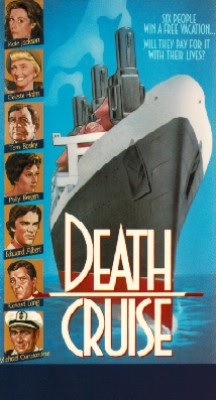
Retro Television Reviews: Death Cruise (dir by Ralph Senesky)


Welcome to Retro Television Reviews, a feature where we review some of our favorite and least favorite shows of the past!  On Sundays, I will be reviewing the made-for-television movies that used to be a primetime mainstay.  Today’s film is 1977’s Death Cruise!  It  can be viewed on Tubi and YouTube.

The thing with the Love Boat is that it promises something for everyone.  It’s a place where you set a course for adventure and put your mind on a new romance.

The same cannot be said of the Death Cruise.

Death Cruise opens with three couples winning an all-expenses paid trip on a luxury liner.  None of the couples are in a happy marriage.  Sylvia Carter (Polly Bergen) is tired of her husband, Jerry (Richard Long), and his philandering ways.  Elizabeth Mason (Celeste Holm) is frustrated with David Mason (Tom Bosley) and his loud dinner jackets.  Mary Frances Radney (Kate Jackson) is fed up with James (Edward Albert) and his smug refusal to start a family.  Of course, it’s not just martial problems that connects these passengers.  It’s also the fact that someone on the boat is stalking and killing them, one-by-one.  Can Dr. Burke (Michael Constantine) and Captain Vettori (Cesare Danova) track down the killer before it’s too late?

Death Cruise is an enjoyably twisty little murder mystery.  It aired in 1974, a good two years before the first Love Boat pilot film appeared on television.  However, both Death Cruise and The Love Boat were produced by Aaron Spelling so the two productions definitely have a shared DNA.  The Love Boat is basically Death Cruise with the addition of a laugh track and considerably less murder.  That said, I have my doubts as to whether Doc Bricker would have been as effective a detective as Dr. Burke.

One of the most interesting things about Death Cruise is how little anyone on the boat really seems to care about the fact that the passengers are turning up dead.  In fact, one widower is asking a widow to be his date to dinner within a few hours of the deaths of their spouses.  Of course, the murderer makes sure that dinner date is canceled but it’s still hard not to wonder whatever happened to an appropriate time of grieving.  Then again, I guess if you’re on a boat for a weekend, you just do whatever feels right at the moment.

(And certainly, if they were on The Love Boat, the walking HR nightmares that was Doc Bricker wouldn’t have wasted any time asking the widows to come by his office for a examination.)

Of the victims and suspects, Richard Long and Edward Albert are memorably sleazy while Tom Bosley plays up just how annoyed he is with the whole situation.  Michael Constantine is a good detective and the movie’s final twist is nicely executed.  Personally, when it comes to cruises, I will always prefer the safety and romance of The Love Boat but Death Cruise was an entertaining nautical diversion.

Horror Film Review: The Astral Factor (dir by John Florea)


Filmed in 1978 but not released until 1984, The Astral Factor tells the story of Roger Sands (Frank Ashmore).

Known as the Celebrity Killer, Roger is a serial killer who murdered women who reminded him of his famous mother.  It may seem like Roger is destined to spend the rest of his life in prison but what the legal system didn’t consider is that Roger has the ability to not only move things with his mind but to also turn himself invisible.  How did Roger get those powers?  Who knows?  At one point, Roger’s psychiatrist mentions that Roger was a student of the paranormal.  Later, it’s revealed that he had several books about the supernatural in his bedroom.  Apparently, Roger figured out how to do it himself.

Anyway, Roger is now invisible and soon, he has escaped from prison.  He is determined to kill the five women who testified against him at his trial, both because they remind him of his mother and also because he blames them for sending him to prison.  Roger strangles his victims, which in this case means that the actresses playing them have to pretend like they’re struggling with someone who can’t be seen.  In fact, Roger spends almost the entire film in a state of invisibility.

How do you catch a killer who can’t be seen?  It’s a fair question but police Lt. Charles Barnett (Robert Foxworth) might have the answer.  Barnett’s solution involves grabbing a gun and keep firing it until you hit something.  That’s a straight-forward solution but The Astral Factor is a pretty straight forward film.  The film begins with Roger turning invisible and, to its credit, it doesn’t spend too much time trying to justify or explain Roger’s magical powers.  The film understands that all the audience really needs to know is that Roger can’t be seen and that it’s up to Lt. Burnett to find a way to stop his killing spree.

The Astral Factor is a low-budget film, one that is full of formerly prominent performers who obviously showed up to get a quick paycheck.  Sue Lyon, Marianne Hill, Leslie Parrish, and Elke Sommer all play potential victims and all of them look like they would rather be doing anything other than appearing in The Astral Factor.  Robert Foxworth, to his credit, does his best to give a convincing performance as a level-headed cop who is forced to accept the reality of the paranormal.  Not only is he having to investigate a series of murders but he’s having to do it on his birthday.  Stefanie Powers plays his girlfriend, Candy.  Candy often refers to herself in the third person whenever she’s having a conversation with her boyfriend.  I tend to do the same thing so at least there was a character in this movie to whom I could relate.  Knowing the rules of the genre, I spent the entire movie expecting Candy to be put in danger and I was actually impressed when my expectations were subverted and that didn’t happen.

With the exception of a few atmospheric scenes and an entertainingly garish and tacky dance number, the film itself has the rather flat look of a made-for-TV movie, though the occasional hint of nudity indicates that it was meant to be a theatrical release.  As I mentioned at the start of this review, The Astral Factor was originally filmed in 1978 but it sat on the shelf until 1984.  That’s when a slightly shortened version was released under the title The Invisible Strangler.  Today, the film is available in countless Mill Creek Box Sets, under its original title and with its original run time restored.

Retro Television Reviews: Half Nelson 1.3 “The Deadly Vase”


Welcome to Retro Television Reviews, a new feature where we review some of our favorite and least favorite shows of the past! On Fridays, I will be reviewing Half Nelson, which ran on NBC from March to May of 1985. Almost all nine of the show’s episodes can be found on YouTube!

The pilot for Half Nelson was pretty good!  Now, let’s see if this rest of the show lived up to its promise.

Episode 1.3 “The Deadly Vase”

(Directed by Alan Cooke, originally aired on March 29th, 1985)

I cannot escape Robert Reed.

Seriously!  Robert Reed is one of those actors who seems to show up every week in my retro television reviews.  If he wasn’t starring in The Brady Bunch Hour, he was guesting on The Love Boat or Fantasy Island.  And now, he’s the guest villain in this week’s episode of Half Nelson!

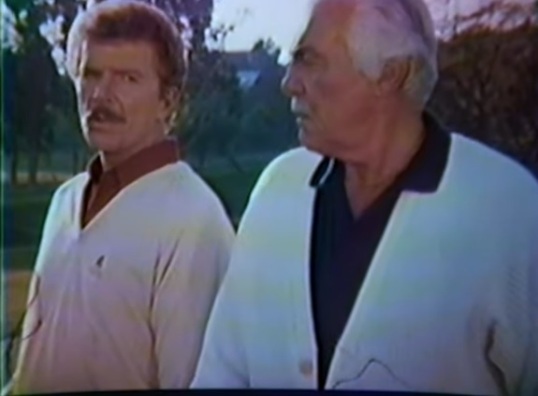
Reed, with his graying perm and his aging porn star mustache, plays Seymour Griffith.  Griffith is a fabulously wealthy Beverly Hills attorney who is planning on becoming even more wealthy by stealing a valuable vase and selling it to a crooked antiques dealer named Morgan (Cesar Romero).  Unfortunately, while stealing the vase, Griffith kills the owner.  (Griffith is also having an affair with the dead man’s wife.)  Somewhat inconveniently, for Griffith, the dead man was a client of the Beverly Hills Patrol!  Rocky Nelson is on the case, both because he’s romantically pursuing the dead man’s daughter (Michelle Johnson) and also because Rocky believes in justice.

This week’s villains

The tone of The Vase is notably different from the pilot that preceded it.  The Pilot had its comedic elements (such as Rocky continually borrowing famous cars from the studio) but it was ultimately fairly serious and it even ended on something of a down note, with Police Chief Parsons (George Kennedy) committing suicide rather than face justice for the murders that he committed.  In the pilot, Rocky was definitely out-of-place as a New Yorker in Los Angeles but, at the same time, he was finding his way around his new town and learning how to fit in.

The Deadly Vase, on the other hand, reimagines Rocky as a short, Italian version of Eddie Murphy’s Axel Foley from Beverly Hills Cop.  Chester (Fred Williamson), who was a supportive boss in the pilot, is suddenly a bit uptight about Rocky investigating a crime in Beverly Hills.  He even sends his newest recruits, Kurt and Beau (played by Bubba Smith and Hang Time‘s Dick Butkus), to follow Rocky around Beverly Hills and make sure that Rocky doesn’t offend any rich people with his New York attitude.  This episode pretty much just duplicates the plot of Beverly Hills Cop.  During one car chase, The Heat Is On plays on the soundtrack and it’s hard not to notice that the other musical cues are almost identical to the ones heard in Beverly Hills Cop.

Smith and Butkus aren’t the only new members of the cast.  Dependable character actor Gary Grubbs joins the show as Detective Hamill, who is far less a fan of Rocky’s than Parsons was.  Hamill shows up long enough to order Rocky to stay off the case and to get growled at by Rocky’s pit bull.  Hamill also gets to have a conversation with Dean Martin about whether or not Frank and Sammy and Shirley MacClaine would be willing to do a benefit for the Beverly Hills police department.  Dean is only onscreen for a few minutes but it’s still nice to see him there.

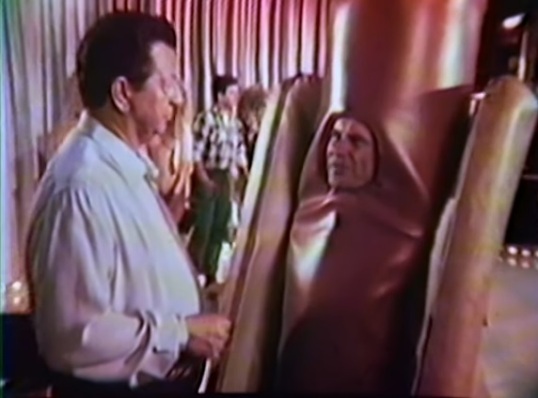
Joe Pesci, who was so strong in the pilot, spends most of this episode looking more than a little annoyed so I’m going to guess that he may not have been happy with the show’s new direction.  About the only time Pesci seems to be having fun is when Rocky is hired to play a hot dog in a commercial.  The director of the commercial is played by Donald O’Connor and yes, Pesci does wear a hot dog costume.

Joe Pesci getting dressed up like a hot dog pretty much saved this episode as the mystery itself was fairly bland and Robert Reed never really felt like a worthy opponent to Rocky.  Hopefully, next week’s episode will be a bit of an improvement …. or, at least, let’s hope the show finds another excuse to put Joe Pesci in a hot dog costume.

Made Man: Martin Scorsese’s MEAN STREETS (Warner Brothers 1973)


gary loggins's avatarcracked rear viewer

Let’s talk about Martin Scorsese a bit, shall we? The much-lauded, Oscar-winning director/producer/film historian has rightly been recognized as one of out greatest living filmmakers, with classics like TAXI DRIVER, RAGING BULL, GOODFELLAS, GANGS OF NEW YORK, and THE DEPARTED on his resume. Yet Scorsese started small, directing shorts and the low-budget WHO’S THAT KNOCKING AT MY DOOR? as a film student. He got work as an editor (UNHOLY ROLLERS) and assistant director (WOODSTOCK) before directing a feature for Roger Corman called BOXCAR BERTHA, starring Barbara Hershey and David Carradine. When Scorsese and Mardik Martin cowrote a screenplay based on Martin’s experiences growing up in New York’s Little Italy, Corman wanted to produce, but only if the film could be turned into a Blaxploitation movie! Fortunately, Warner Brothers picked it up, and the result was MEAN STREETS, which put Scorsese on the map as a filmmaker to be reckoned with.

View original post 554 more words

Italian Horror Showcase: Tentacles (dir by Ovidio G. Assonitis)


Okay, tell me if this sounds familiar.

There’s a beachside resort town, one whose survival is pretty much dependent upon tourists and big business.  If you give the tourists a reason to not show up, the town dies.  If you give big business a reason to build their factories and their underground tunnels somewhere else, the town dies.

Unfortunately, something bad is happening in this little town.  People are going in the water and they’re never returning.  It appears that they’re being killed by some sort of giant sea monster, even though the authorities swear that it’s simply impossible.  The town’s leaders are putting pressure on the sheriff to cover up the crimes.  A scientist shows up and thinks that everyone he meets is an idiot.

It’s not safe to go in the water but people keep doing it!

Now, you may be thinking that it sounds like I’m describing the plot of Jaws but actually, I’m talking about an Italian film called Tentacles.  Released in 1977, Tentacles was one of the many films that was directly inspired by the success of Spielberg’s film.  Jaws was such a phenomenal success that it was ripped off by filmmakers across the world.  That said, of all the people ripping off Spielberg’s film, the Italians brought an undeniable and frequently shameless flair to the Jaws knockoffs.

Tentacles is a bit different from other Italian Jaws films in that, this time, the threat does not come from a shark.  Instead, it comes from a giant octopus!  That’s actually a pretty good twist because, in real life, an octopus is actually more dangerous than a shark.  Not only are they bigger and considerably smarter than most sharks but if they get enough of their eight arms around you, they can literally squeeze you to death!  I mean …. agck!  Say what you will about sharks, I imagine getting eaten by one would suck but at least it wouldn’t take long to die.  Whereas if an octopus gets you, you would actually be aware of it squeezing you to death and oh my God, I’m never getting in the water.

Anyway, in Tentacles, the octopus is snatching babies off of piers and sailors off of boats and it’s using its octopus powers to rip their skin from their bones.  It also attack scuba divers by firing ink at them.  The sheriff (Claude Akins) says that it’s nothing to worry about but Ned Turner (John Huston), a hard-boiled reporter, thinks that there’s a story here.  Ned’s in town visiting his sister (Shelley Winters).  She has a ten year-old son who enjoys sailing.  Uh-oh….

Henry Fonda shows up for a few very brief scenes, playing the head of a company that built the underwater tunnel that somehow mutated the octopus.  Fonda looks incredibly frail in his scenes (and apparently, he filmed his part while recovering from heart surgery) but his performance in Tentacles still isn’t as cringe-inducing as his performance in The Swarm.

Also showing up is a marine biologist named Will Gleason (Bo Hokpkins).  Fortunately, Gleason owns two killer whales so, after the octopus kills his wife, Gleason sends out the orcas to track it down.  Before doing so, he gives them a pep talk.  Apparently, killer whales respond to positive reinforcement.

Tentacles is unique in that it’s an Italian production that managed to rope in a few well-known American actors.  It’s an odd film to watch because, on the one hand, the film is full of risible dialogue and it’s painfully slow whenever the octopus isn’t attacking anyone and no one really seems to be that invested in any of their characters.  (When the octopus kills a baby, the actress playing the baby’s mother underacts to such an extent that the scene becomes almost surreal.)  This isn’t like Jaws, where you actually care about Brody, Quint, Hooper, and the Kintner boy.  On the other hand, the octopus itself is actually kind of frightening so, on that very basic level, the film works.

In the end, Tentacles is one of the lesser Jaws rip-offs but you’ll never forget that octopus.