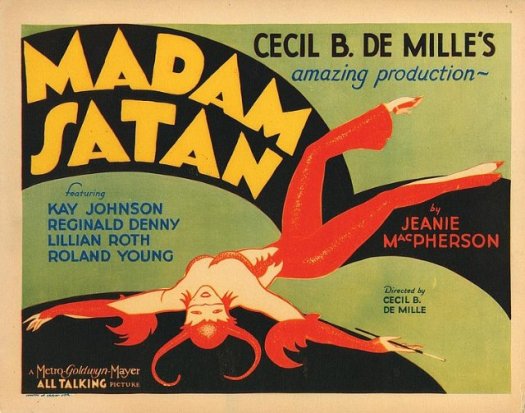
4 Shots From 4 Films: Madam Satan, Safe In Hell, Rasputin and the Empress, and Search For Beauty


4 Shots From 4 Films is just what it says it is, 4 shots from 4 of our favorite films.  As opposed to the reviews and recaps that we usually post, 4 Shots From 4 Films is all about letting the visuals do the talking.

All of the scenes below come from films that were made and released between the introduction of sound in the late 1920s and the adoption of the infamous Hays Production Code in 1934.  This was truly an exciting time for film as an art form.  Not only were filmmakers intoxicated with discovering what they could accomplish through the medium but they were also unhindered by censorship or regulation.  The end result was some of the most visually imaginative and narratively daring films to ever be released by the major American studios.

There’s a reason why film lovers continue to eagerly seek out pre-code films.  And if you want to experience what made the pre-Code era so memorable, you could not do any worse than to start with the four films featured in this post.

Madam Satan (1930, dir by Cecil B. DeMille)

Madam Satan (1930, dir by Cecil B. DeMille)

Safe in Hell (1931)

Safe in Hell (1931, dir by William Wellman)

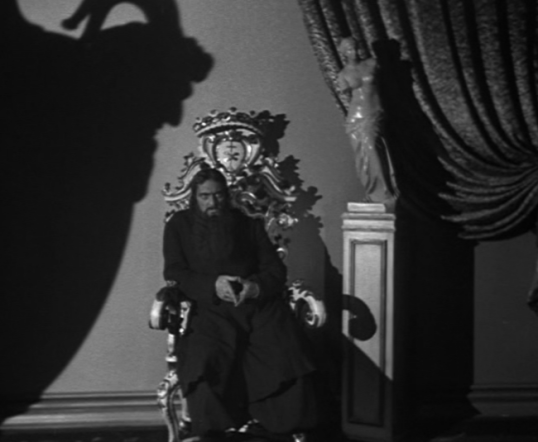
Rasputin and the Empress (1932, dir by Richard Boleslawski)

Rasputin and the Empress (1932, dir by Richard Boleslawski)

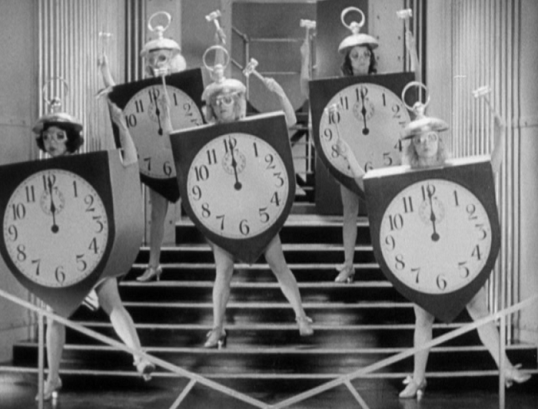
Search For Beauty (1934, dir by Erle C. Kenton)

Search For Beauty (1934, dir by Erle C. Kenton)

4 Shots From 4 Films: Special Cleopatra Edition


4 Shots From 4 Films is just what it says it is, 4 shots from 4 of our favorite films. As opposed to the reviews and recaps that we usually post, 4 Shots From 4 Films is all about letting the visuals do the talking.

Let’s celebrate the end of the month with four shots from four films about Caesar’s one true love, Cleopatra!

4 Shots From 4 Films

Cleopatra (1917, dir by J. Gordon Edwards)

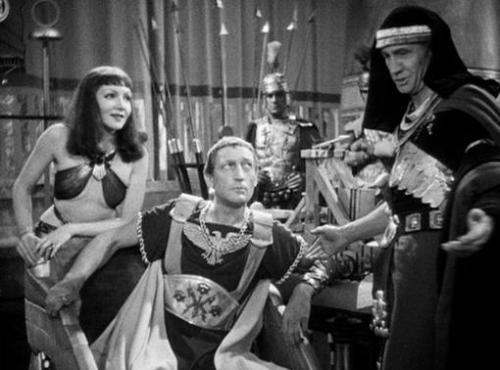
Cleopatra (1934, dir by Cecil B. DeMille)

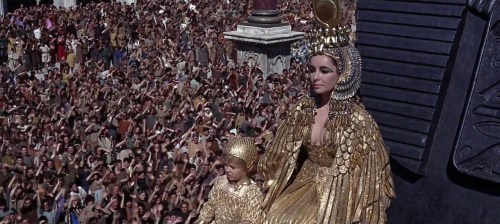
Cleopatra (1963, dir by Joseph L. Mankiewicz )

Cleopatra (1970, dir by Osamu Tezuka and Eiichi Yamamoto)

4 Shots From 4 Biblical Films


4 Shots from 4 Films is just what it says it is, 4 shots from 4 of our favorite films. As opposed to the reviews and recaps that we usually post, 4 Shots from 4 Films lets the visuals do the talking!

4 Shots From 4 Biblical Epics

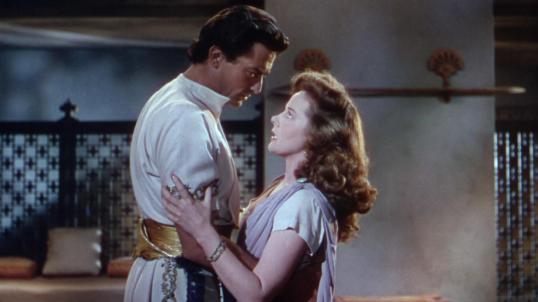
David and Bathsheba (1951, dir by Henry King. DP: Leon Shamroy)

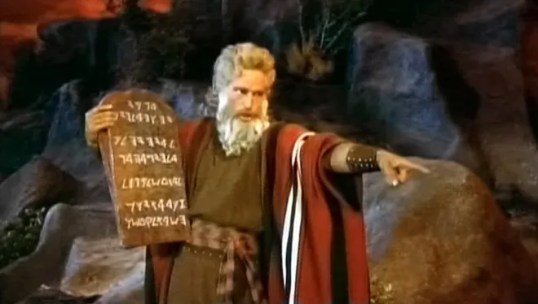
The Ten Commandments (1956, dir by Cecil B. DeMille, DP: Lloyd Griggs)

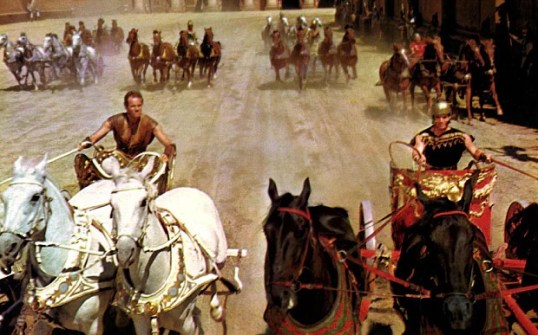
Ben-Hur (1959, dir by William Wyler, DP: Robert Surtees)

The Bible (1966, dir by John Huston, DP: Giuseppe Rotunno)

4 Shots From 4 Best Picture Winners: The 1950s


4 Shots From 4 Films is just what it says it is, 4 shots from 4 of our favorite films. As opposed to the reviews and recaps that we usually post, 4 Shots From 4 Films lets the visuals do the talking!

Today, I’m using this feature to take a look at the history of the Academy Award for Best Picture.  Decade by decade, I’m going to highlight my picks for best of the winning films.  To start with, here are 4 shots from 4 Films that won Best Picture during the 1950s!  Here are….

4 Shots From 4 Best Picture Winners: The 1950s

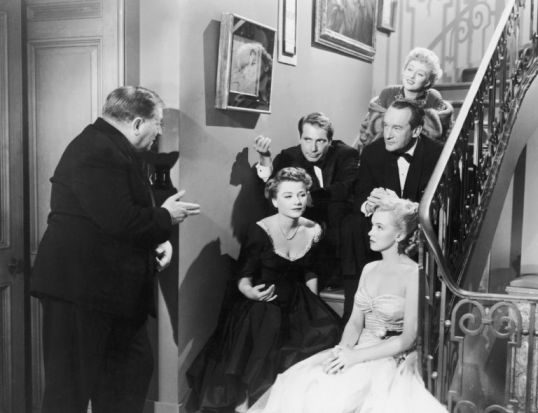
All About Eve (1950, dir by Joseph L. Mankiewicz, DP: Milton R. Krassner)

The Greatest Show On Earth (1952, dir by Cecil B. Demille, DP: George Barnes)

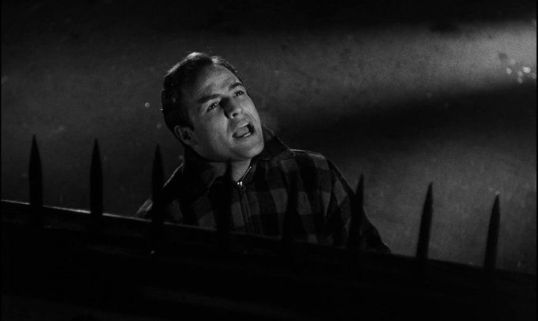
On The Waterfront (1954, dir by Elia Kazan, DP: Boris Kaufman)

Ben-Hur (1959, dir by William Wyler, DP: Robert Surtees)

Scenes That I Love: Moses Parts The Red Sea In The Ten Commandments!


142 years ago, on this date, director Cecil B. DeMille was born in Ashfield, Massachusetts.  From the silent era until his death in 1959, DeMille was one of Hollywood’s superstar directors.  His films, which were often over the top and effective at the same time, helped to build the modern film industry.

Today’s scene that I love comes from DeMille’s final film.  From 1956’s The Ten Commandments, Moses parts the Red Sea.

(Please note, this video starts with a frozen image that lasts for about 12 seconds.)

12 Oscar Snubs From the 1950s


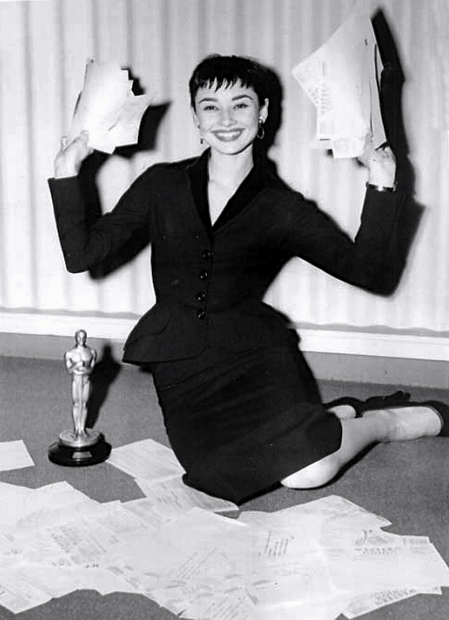
Audrey Hepburn and her Oscar.  At least the Academy didn’t snub her!

Continuing our look at the Oscar snubs of the past, it’s now time to enter the 50s!

World War II was over. Eisenhower was President. Everyone was worried about communist spies. And the Hollywood studios still reigned supreme, even while actors like Marlon Brando and James Dean challenged the establishment.  There were a lot great film released in the 50s.  There were also some glaring snubs on the part of the Academy.  Here’s twelve of them.
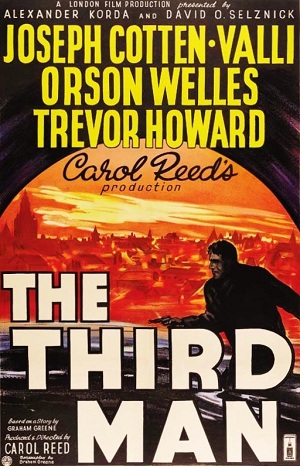
1950: The Third Man Is Not Nominated For Best Picture

….and Orson Welles was not nominated for Best Supporting Actor!  The Third Man received three Oscar nominations, for Director, Cinematography, and Editing.  The fact that Welles, Joseph Cotten, Alida Valli, and the film’s score were not nominated (and that King Solomon’s Mines was nominated for Best Picture instead of The Third Man) remains one of the more surprising snubs in Oscar history.

1952: Singin’ In The Rain Is Not Nominated For Best Picture

What the Heck, Academy!?  This was the year that The Greatest Show On Earth won the Best Picture Oscar.  Personally, I don’t think The Greatest Show On Earth is as bad as its reputation but still, Singin’ In The Rain is a hundred times better.

1953: Alan Ladd Is Not Nominated For Best Actor For Shane

How could Shane score a nomination for Best Picture without Shane himself receiving a nomination?

1954: Rear Window Is Not Nominated For Best Picture

Rear Window was not totally ignored by the Academy.  Alfred Hitchcock received a nomination for directing.  It also received nominations for Best Adapted Screenplay, Cinematography, and Sound.  However, Rear Window was not nominated for Best Picture and James Stewart, Grace Kelly, Raymond Burr, and Thelma Ritter all went unnominated as well.  Today, Rear Window is definitely better-remembered than the majority of 1954’s Best Picture nominees.  Certainly, it deserved a nomination more than Seven Brides For Seven Brothers and Three Coins in The Fountain.

1955: Ralph Meeker Is Not Nominated For Best Actor For Kiss Me Deadly

I guess I shouldn’t be surprised.  If the Academy wasn’t going to nominate Rear Window for Best Picture, there was no way that they would have nominated Ralph Meeker for playing a sociopathic private detective who, even if inadvetedly, helps to bring about the end of the world.

1955: Rebel Without A Cause Is Not Nominated For Best Picture or Best Actor

The 1955 Best Picture lineup was a remarkably weak one.  The eventual winner was Marty, a likeable film that never quite escapes its TV roots.  Picnic has that great dance scene but is otherwise flawed.  Mister Roberts was overlong.  Love Is A Many-Splendored Thing and The Rose Tattoo are really only remembered by those of us who have occasionally come across them on TCM.  Perhaps the best-remembered film of 1955, Rebel Without A Cause, received quite a few nominations but it was not nominated for Best Picture.  And while the Rebel himself, James Dean, was nominated for Best Actor, it was for his performance in East of Eden.  1955 was a strange year.

1955: Robert Mitchum Is Not Nominated For Best Actor For The Night of the Hunter

Robert Mitchum only received one Oscar nomination over the course of his entire career, for 1945’s The Story of G.I. Joe.  He deserved several more.  His performance as the villainous preacher in The Night of Hunter made Reverend Harry Powell into one of the most iconic film characters of all time.
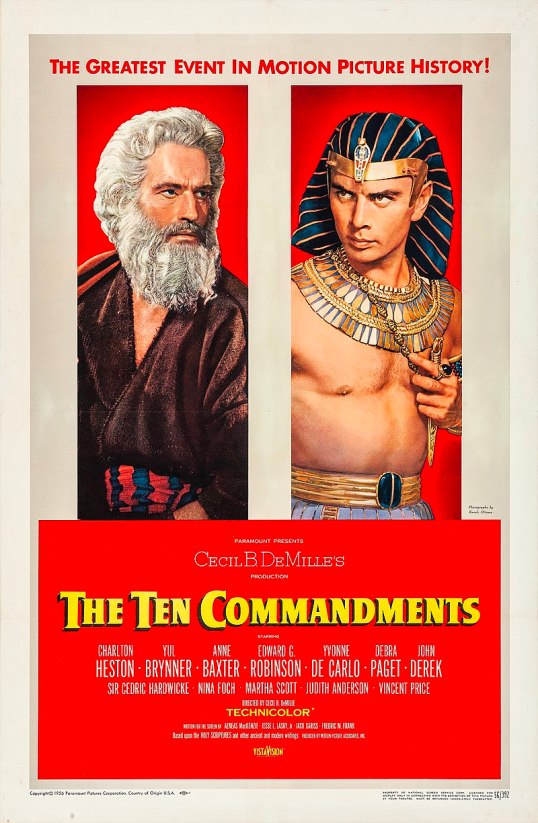
1956: Cecil B. DeMille Is Not Nominated For Best Director For The Ten Commandments

Cecil B. DeMille was only nominated once for Best Director, for 1952’s The Greatest Show On Earth.  DeMille, however, deserved to be nominated for The Ten Commandments.  As campy as DeMille’s films can seem today, he was an expert storyteller and that’s certainly evident when one watches The Ten Commandments, a film that holds the viewer’s attention for nearly four hours.  DeMille deserved a nomination for the Angel of Death scene alone.  The screams in the night are haunting.

1957: Henry Fonda Is Not Nominated For Best Actor For 12 Angry Men

With 12 Angry Men, Fonda did something that very few actors can.  He made human decency compelling.  One gets the feeling that, much like Tom Hanks in Captain Phillips, Fonda made it look so easy that the Academy took him for granted.

1958: Touch Of Evil Is Totally Ignored

Anyone who had researched the history of the Academy knows that there was no way that the 1950s membership would have ever honored Orson Welles’s pulp masterpiece, Touch of Evil.  That said, it still would have been nice if they had.  Touch of Evil has certainly go on to have a greater legacy than Gigi, the film that won Best Picture that year.

1958: Vertigo Is Almost Totally Ignored

Vertigo did receive nominations for Art Direction and Sound but Alfred Hitchcock, James Stewart, and the film itself were snubbed.

1959: Some Like It Hot Is Not Nominated For Best Picture or Best Actress

Some Like It Hot received 6 Oscar nominations, including nominations for Best Director, Best Actor, and Best Adapted Screenplay.  It did not receive a nomination for Best Picture and, sadly, Marilyn Monroe did not receive a nomination for Best Actress.  Much as with Henry Fonda in 12 Angry Men, one gets the feeling that the Academy took Monroe for granted.  It’s sad to realize that, while two actresses have been nominated for playing Marilyn Monroe, Monroe herself would never be nominated.

Agree?  Disagree?  Do you have an Oscar snub that you think is even worse than the 12 listed here?  Let us know in the comments!

Up next: Things get wild with the 6os!
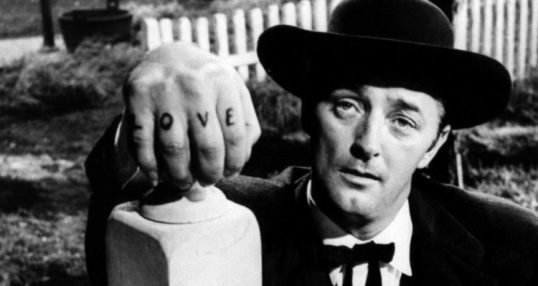
Night of the Hunter (United Artists 1955; D: Charles Laughton)
Scenes That I Love: Norma Desmond visits Cecil B. DeMille in Sunset Boulevard


Today, the Shattered Lens observes the 141st birthday of filmmaker Cecil B. DeMille.

Today, if Cecil B. DeMille is known at all, it’s for directing Biblical epics like The Ten Commandments.  However, there was much more to DeMille’s career than just that one film.  DeMille got his start during the early silent era and he quickly established himself as one of Hollywood’s first superstar directors.  Unlike many of his contemporaries, he survived the transition to sound and he remained a force in Hollywood at a time when many of the other silent directors were fading into obscurity.  DeMille played a key role in the founding of what would become the American film industry.  He began his career in 1914 and he made his last film in 1958.  That’s quite a legacy.

In 1950, when filming Sunset Boulevard, Billy Wilder needed someone to play the key role of one of Norma Desmond’s former directors.  Who better to represent the old style of Hollywood than Cecil B. DeMille?  In the scene below, DeMille plays himself.  Norma Desmond is, of course, played by Gloria Swanson, an actress whom DeMille had directed in the past.

From Sunset Boulevard, here’s a scene that I love.

Film Review: The Ten Commandments (dir by Cecil B. DeMille)


Though you may not know it if you’ve only seen the film during one of its annual showings on television, the 1956 religious epic, The Ten Commandments, originally opened with director Cecil B. DeMille standing on a stage.  Speaking directly to the audience, DeMille explains that, though the film they’re about to see me take some dramatic license with the story of Moses, it still based on not just the Bible but also the accounts of Philo, Josephus and Eusebius.  He also tells us that The Ten Commandments is more than just an adaptation of the Book of Exodus.  Instead, it’s a film about every man’s desire to be free.

Demille concludes with: “The story will take 3 hours and 29 minutes to unfold.  There will be an intermission. Thank you for your attention.”

To be honest, it’s kind of a sweet moment.  Cecil B. DeMille is a name that is so associated with (occasionally overblown) epic filmmaking that it’s easy to forget that DeMille was one of the most important names in the artistic development of American cinema.  He was there from the beginning and, unlike a lot of other filmmakers, he was equally successful in both the silent and the sound era.  Say what you will about his films, DeMille was a showman and he handles the introduction like a pro.  At the same time, there’s a real sincerity to DeMille’s tone.  After you listen to him, you’d almost feel guilty if you didn’t sit through all 3 hours and 29 minutes of his film.

That sincerity extends throughout the entire film.  Yes, The Ten Commandments is a big, long epic and some members of its all-star cast are more convincing in their roles than others.  And yes, the film can seem a bit campy to modern viewers.  (In fact, it wouldn’t surprise me if it seemed a bit campy to viewers in 1956 as well.)  Yes, The Ten Commandments does feature Anne Baxter saying, “Oh Moses!  You sweet adorable fool!”  But it doesn’t matter.  Even the most ludicrous of dialogue just seem right.  The film is just so sincere that it’s difficult not to enjoy it.

In the Book of Exodus, Moses is described as having a speech impediment and even tries to use it as an excuse to get out of going to Egypt.  That’s actually one of the reasons why Moses brought Aaron with him to Egypt, so that Aaron could speak for him.  In the movie, Moses is played by Charlton Heston, who comes across as if he’s never felt a moment of insecurity over the course of his entire life.  But no matter.  Heston may not by the Moses of Exodus but he’s the perfect Moses for the DeMille version.  When Heston says that Egypt will be visited by plagues until his adopted brother Ramses (Yul Brynner) agrees to allow the Jews to leave Egypt, you believe every word.  (Aaron, incidentally, is played by the legendary John Carradine.  He doesn’t get too much other than respectfully stand a few feet behind Charlton Heston but still: John Carradine!)

And really, anyone who dismisses The Ten Commandments out-of-hand should go back and, at the very least, watch the scene where the Angel of Death descends upon Egypt.  The scene where Moses and his family shelter in place while the screams of distraught mothers echo throughout the city is chilling.  Ramses may spend most of the film as a petulant villain but you almost feel sorry for him when you see him mourning over his dead son.  When he sets off after Moses, it’s not just because he’s doing what villains do.  He’s seeking vengeance for the loss of his first born.  For that brief moment, Ramses goes form being a melodramatic bad guy to being someone with whom the viewer can empathize.  Brynner, with his burning intensity, gives a great performance as Ramses.

As I said before, this film has what, in 1956, would have been considered an all-star cast.  Watching the names as they show up during the opening credits — Cedrick Hardwicke!  Yvonne DeCarlo!  Woody Strode!  Debra Paget! — is like stepping into a TCM fever dream.  Some of the performers give better performance than others.  And yet, even the worst performer feels as if they just naturally belong in the world that DeMille has created.  John Derek may seem rather smarmy as Joshua but his callowness provides a good contrast to the upright sincerity of Heston’s performance as Moses.  Edward G. Robinson’s cries of, “Where is your God now!?” may have provided endless fodder for impersonators but just try to imagine the film without him.  Even Vincent Price is in this thing!  He doesn’t have his famous mustache but, as soon as you hear his voice and see that famous glare, you know that it’s him.

Of course, when you’re growing up and The Ten Commandments is on TV every year, you mostly just want to see the scene where Moses parts the Red Sea.  The Ten Commandments was nominated for seven Oscars but it only won one, for its special effects.  (The prize for Best Picture went to another epic, Around The World In 80 Days.)  Today, the film’s special effects may no longer amaze viewers but there’s still something rather charming about the Red Sea parting and then crashing in on the Egyptian army.  The scene where the Earth opens up and swallows those who worshiped the Golden Calf remains impressive, if just because all of the extras really look terrified that they might die.  And while the Pillar of Fire may look a bit cartoonish to modern eyes, that’s a huge part of the film’s appeal.

The Ten Commandments is a big, long, sometimes silly, sometimes effective, and always entertaining epic.  It’s a grand spectacle and one that I usually watch every year when it shows up on television.  I missed this year’s showing but, fortunately, I own it on DVD.  It’s a sincere epic and a difficult one not to like.


Lisa Reviews An Oscar Winner: The Greatest Show on Earth (dir by Cecil B. DeMille)


Jimmy Stewart is Buttons the Clown!

Listen, there’s a lot of things that can be said about the 1952 Best Picture winner, The Greatest Show on Earth.  Not only was it one of three Cecil B, DeMille films to be nominated for best picture (along with 1934’s Cleopatra and 1956’s The Ten Commandments) but it was also the only one to win.  It brought Cecil B. DeMille his first and only nomination for best director.  (DeMille lost that directing Oscar to John Ford but he still took home an award, as the producer of The Greatest Show On Earth.)  The Greatest Show on Earth not only featured Charlton Heston in his first starring role but, with a finale that featured everyone involved in the same spectacular train crash, it also set the standard for the countless disaster movies that would follow.

But, with all of that in mind, the main thing that you’ll remember about this movie is that Jimmy Stewart was Buttons the Clown.

Buttons is a beloved member of the Ringling Bros. and Barnum & Bailey’s Circus.  He travels with the circus across the country, entertaining children and generally helping out wherever he can.  Everyone loves Buttons, despite the fact that no one has ever seen him without his makeup.  (That said, you only have to hear him speak to immediately recognize him as being played by Jimmy Stewart.)  Not even the circus’s no-nonsense manager, Brad Braden (Charlton Heston, naturally), knows what Buttons actually looks like.  Everyone assumes that Buttons is just a dedicated performer, a method clown.

However, it turns out that Buttons has a secret.  Of course, nearly everyone at the circus has a secret but Buttons’s secret is a little bit more serious than just a love triangle or a case of professional jealousy.  There’s a reason why Buttons is surprisingly good at providing first aid to the members of the circus.  Before he was a clown, Buttons was a doctor.  And, while he was a doctor, he killed his wife.

NO!  NOT JIMMY STEWART!

In Buttons’s defense, it was a mercy killing and he feels really bad about it.  That, of course, doesn’t matter to the FBI agent (Henry WIlcoxon) who suspects that the doctor may be hiding among the circus performers.  At first, Buttons views that train crash as the perfect opportunity to escape but then he finds out that many of his fellow performers have been seriously injured.  A doctor is needed.  Perhaps even a doctor in clown makeup….

Even under all that makeup, Jimmy Stewart does a great job of bringing Buttons to life.  Sometimes, we associate Stewart so much with his famous way of speaking that we overlook just what a good actor Jimmy Stewart actually was.  Even before you discover why Buttons is running from the cops, Stewart does a good job of capturing the sadness and the regret that lies at the heart of Button.  He’s truly a tragic clown.

Buttons’s status as a fugitive is just one of the many subplots to be found in The Greatest Show On Earth.  There’s a lot of drama (not to mention parades and performances) to get through before that train crashes.  Brad, for instance, is struggling to keep the circus from going bankrupt.  Meanwhile, his girlfriend, Holly (Betty Hutton), is torn between him and the arrogant but charming Great Sebastian (Cornel Wilde).  In fact, every woman in the circus — including Gloria Grahame and Dorothy Lamour — is in love with the Great Sebastian.  Sebastian is a bit self-centered but he’s famous enough to ensure that the circus won’t have to be closed.  Or, at least, he is until he’s injured in a trapeze accident.  Will Sebastian ever perform again?  Meanwhile, there’s a jealous elephant trainer named Klaus (Lyle Bettinger) and a crooked concessionaire named Harry (John Kellog).  A local gangster, Mr. Henderson (Lawrence Tierney), is trying to muscle his way into the circus’s business.  Is it any surprise that Brad always seems to be in something of a bad mood?  He’s got a lot to deal with!

And yes, it’s all a bit overblown and a bit silly.  And yes, the film really does feel like it was meant to be a commercial for Ringling Bros.  And yet, in its way, the film definitely works.  There’s a sincerity at the heart of the film, one that’s epitomized by Cecil B. DeMille’s opening narration.  “”A fierce, primitive fighting force that smashes relentlessly forward against impossible odds: That is the circus — and this is the story of the biggest of the Big Tops — and of the men and women who fight to make it — The Greatest Show On Earth!”  DeMille was 71 years old when he made The Greatest Show On Earth and he was coming to the end of a legendary filmmaking career.  DeMille was one of the founders of the American film industry and you can argue that, if not for some of his silent spectacles, Hollywood would have always remained just a neglected suburb of Los Angeles.  If anyone understood that importance of that old saying, “The show must go on!,” it was Cecil B. DeMille.  And really, that’s what The Greatest Show On Earth is all about.  It’s a tribute to the performers who refuse to give up.  Love triangles?  Fugitive clowns?  Injured acrobats?  Lawrence Tierney?  No matter what, the show must go on!

The Greatest Show On Earth is often described as being one of the worst films to win the Academy Award for Best Picture.  That has more to do with the quality of the films that it beat — High Noon, The Quiet Man, Moulin Rouge, and Ivanhoe — than the film itself.  The Greatest Show On Earth is old-fashioned and a bit silly but it’s still entertaining.  Should it have beaten High Noon?  That would be a definite no.  But it’s still better than Crash.

Cecil B. DeMented: MADAM SATAN (MGM 1930)


gary loggins's avatarcracked rear viewer

It’s wild! It’s weird! It’s Cecil B. DeMille’s  MADAM SATAN, a movie I’ve heard about for decades, but never had the chance to catch, until now. It’s got a little something for everybody, from drama to comedy to musical numbers to half-naked women to jazz baby Lillian Roth! Was it worth the wait, Dear Readers? Well… read on!

Better hold on to your seats though, as MADAM SATAN shifts abruptly in tone throughout it’s running time. It’s slow going the first few minutes, starting out as a stiff drawing-room drama. Angela Brooks (Kay Johnson) is worried about her dissipating  marriage to Bob, who neglects her and stays out all night. Now here comes comedy, with Bob (Reginald Denny ) and his pal Jimmy (Roland Young) trying to sneak in at dawn, two wasted wastrels drunk as the proverbial skunks. Suddenly, out of nowhere, the maid (Elsa Peterson) breaks out…

View original post 542 more words