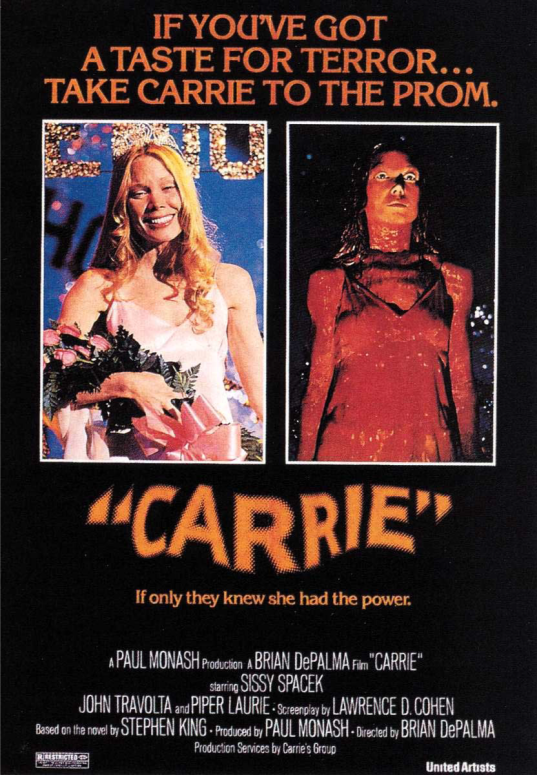
4 Shots From 4 Mind Bending Films: Carrie, The Fury, Patrick Still Lives, Scanners


4 Shots From 4 Films is just what it says it is, 4 shots from 4 of our favorite films. As opposed to the reviews and recaps that we usually post, 4 Shots From 4 Films lets the visuals do the talking.

For today’s edition of 4 Shots From 4 Films, we celebrate films that demonstrate what the human mind can do when it’s angry and there’s stuff around that can explode.  These are….

4 Shots From 4 Mind Bending Films

Carrie (1976, dir by Brian DePalma)

The Fury (1979, dir by Brian DePalma)

Patrick Lives Again (1980, dir by Mario Landi)

Scanners (1981, dir by David Cronenberg)

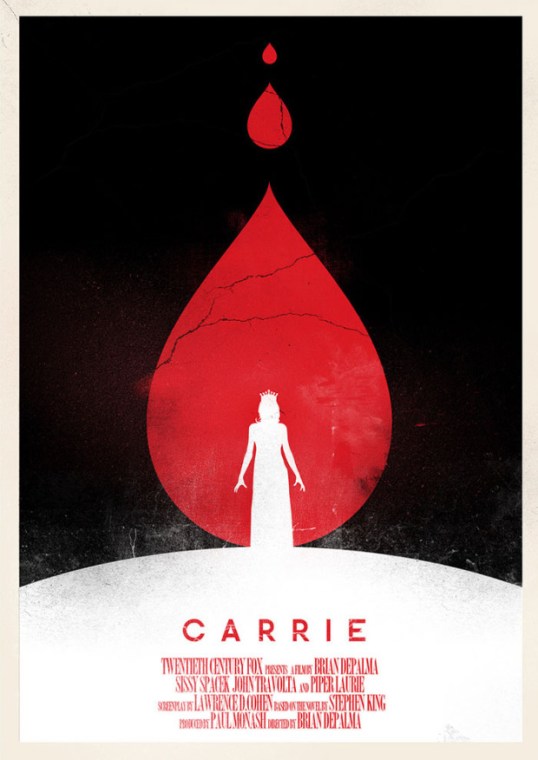
Book Review: Carrie by Stephen King


First published in 1974, Carrie is often cited as being Stephen King’s first novel.

That, of course, isn’t technically true.  King had written three novels before Carrie, the majority of which weren’t very good.  Carrie is a novel that King says he wrote in a hurry because he was living in a trailer and needed the money.  It’s also a novel that King says he had absolutely no faith in because he didn’t feel like he could write from a female perspective.  Despite King’s then-low opinion of what he had written, Carrie went on to become his first published novel.  Thought the novel wasn’t an immediate success (the hardback edition only sold 13,000 copies), it subsequently became a best seller after it was adapted into Brian DePalma’s 1976 film of the same name.

By now, we all know the story, don’t we?  Even if you’ve never read the book or seen any of the film versions, there’s been so many different rip-offs and unofficial remakes of Carrie that I doubt that there’s anyone who doesn’t know the story.  Everyone knows that Carrie White was a high school outcast and that her mother was a religious fanatic.  We all know what happened the night that Tommy Ross took Carrie White to prom.  We all know about the cruel prank that was played on Carrie, about the pig’s blood that was dumped on her right after Tommy and Carrie were crowned king and queen of the prom.  And we all know that Carrie’s response was to use her own telekinetic powers to burn down the entire town and to kill the majority of her tormentors.

44 years after it was first published, it’s still interesting to read Carrie.  On the one hand, you can definitely see the beginnings of King’s signature style, especially towards the end of the book when Sue Snell comes across a dying Carrie.  On the other hand, this book is definitely different from any other King novel.  For one thing, it’s only 199 pages long.  Living in a trailer and struggling to make ends meet may not have been easy for King but I would say it actually made him a better writer.  Carrie contains none of the rambling, self-indulgent filler that’s come to typify much of King’s recent work.  One imagines that, if King wrote Carrie today, we’d have to wade through at least 500 pages of people talking about the history of psychic phenomena before the book even got around to Sue asking Tommy to take Carrie to prom.  Instead, because King was writing while hungry, there’s a hunger to the book.  It doesn’t waste any time.

King structured the novel so that half of it was narrative and half of it was, for lack of a better term, evidence.  We get excerpts from police reports, newspaper articles, and books written after the prom disaster.  The White Committee offers up their official report.  We get to read a little bit of Sue Snell’s book, I Am Sue Snell.  I imagine the structure was largely the result of King’s self-confessed insecurity with the book’s subject matter.  (For instance, whenever you doubt that Tommy Ross would actually take Carrie to prom, an except from the final report of the White Committee pops up and assures you that he did.)  Though borne of insecurity, the structure actually works pretty well.  It leaves little doubt that, after Carrie’s prom, the world will never be the same again.

The thing that really struck me while rereading this novel was that Stephen King himself seemed to dislike Carrie White almost as much as her classmates did.  King focuses, to an almost uncomfortable degree, on Carrie’s unattractive appearance and, often times, he seems to be keeping his own distance from his main character, as if he was weary about trying to get inside of her head.  When Carrie does go on her rampage, she comes across more as an out-of-control monster than someone who has been pushed too far.  Our popular conception of Carrie being a tragic victim really has more to do with how Sissy Spacek played her in the original film than in how King wrote about her in his novel.

Instead, the book is far more concerned with Sue Snell and Tommy Ross, who are both portrayed as being everyone’s idealized high school companion.  As both a novel and a film, Carrie‘s greatest weakness has always been that the plot hinges on the idea that any teenager, no matter how guilt-ridden, would actually ask their romantic companion to take someone else to prom.  The pig’s blood, I believe.  The prom, less so.

Carrie has its flaws but, to be honest, I actually think it’s better than some of King’s more recent books.  If nothing else, it’s a chance to look into Stephen King’s mind before he became the Stephen King.

4 Shots From 4 Films: Special Brian De Palma Edition


4 Shots From 4 Films is just what it says it is, 4 shots from 4 of our favorite films. As opposed to the reviews and recaps that we usually post, 4 Shots From 4 Films is all about letting the visuals do the talking.

This October, I am going to be using our 4 Shots From 4 Films feature to pay tribute to some of my favorite horror directors, in alphabetical order!  That’s right, we’re going from Argento to Zombie in one month!

Today’s director: Brian De Palma!

4 Shots From 4 Films

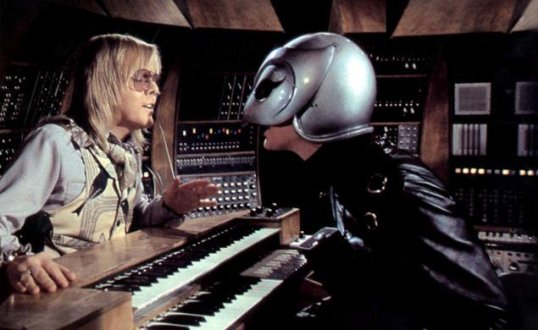
Phantom of Paradise (1974, dir by Brian De Palma)

Carrie (1976, dir by Brian De Palma)

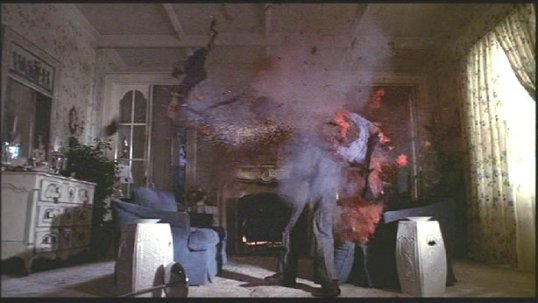
The Fury (1979, dir by Brian De Palma)

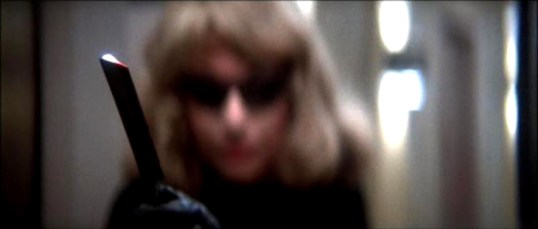
Dressed To Kill (1980, dir by Brian De Palma)


4 Shots From Horror History: The Texas Chainsaw Massacre, Jaws, Carrie, The Omen


This October, I’m going to be doing something a little bit different with my contribution to 4 Shots From 4 Films.  I’m going to be taking a little chronological tour of the history of horror cinema, moving from decade to decade.

Today, we continue with the 70s!

4 Shots From 4 Films

The Texas Chainsaw Massacre (1974, dir by Tobe Hooper)

The Texas Chainsaw Massacre (1974, dir by Tobe Hooper)

Jaws (1975, dir by Steven Spielberg)

Jaws (1975, dir by Steven Spielberg)

Carrie (1976, dir by Brian DePalma)

Carrie (1976, dir by Brian DePalma)

The Omen (1976, dir by Richard Donner)

The Omen (1976, dir by Richard Donner)

Lisa Marie Picks The 16 Worst Films of 2013


A lot of people are saying that 2013 was a great year for movies.  And I guess it was.  An unusually large number of memorable films were released last year.

However, by that same token, a huge number of truly terrible films were released in 2013 as well.  With that in mind, here are my personal picks for the 16 worst films of 2013.  Why 16?  Because Lisa doesn’t do odd numbers, that’s why.

16) Carrie

15) Getaway

14) After Earth

13) Broken City

12) The Company You Keep

11) See Girl Run

10) Would You Rather

9) Lee Daniels’ The Butler

8) Identity Thief

7) Movie 43

6) Disconnect

5) A Dark Truth

4) Freeloaders

3) Unhung Hero

2) Tyler Perry’s Temptation

And finally, my pick for the worst film of 2013…

1) Man of Steel

It’s only been recently that I’ve come to realize that Man Of Steel was the worst film of 2013.  When I first saw it, I thought it was bombastic and rather silly but I also thought it was just another mediocre action film.  However, the more that I’ve thought about the film, the more I’ve come to realize that Man of Steel truly represents everything that I dislike about mainstream film.  Beyond the fact that it took itself way too seriously, Man of Steel spent millions of dollars to celebrate the destruction of a major city but couldn’t find five minutes to devote to character development or memorable dialogue.  Two years ago, a lot of people disagreed with me when I announced that Zack Snyder’s Sucker Punch was one of the best films of 2011.  I wonder how those same people feel about Man of Steel.

ManofSteel

Tomorrow, I’ll continue my look back at the year that was with my 10 favorite songs of 2013.

(You can see my picks for the worst films of 2010, 2011, and 2012 by clicking on the links in this sentence.)

Arleigh’s Top 10/Bottom 5 Stephen King Film Adaptations


StephenKingbooks

“We make up horrors to help us cope with the real ones.” — Stephen King

Last week we saw the release of the Carrie remake starring Chloe Grace Moretz and directed by Kimberly Peirce. This got me to thinking that of all the writers I grew up reading it was Stephen King whose novels, novellas and short stories made for easy film adaptations. His stories may be supernatural, horror scifi or dark fantasy but they all share that common denominator of having some basis in the real world.

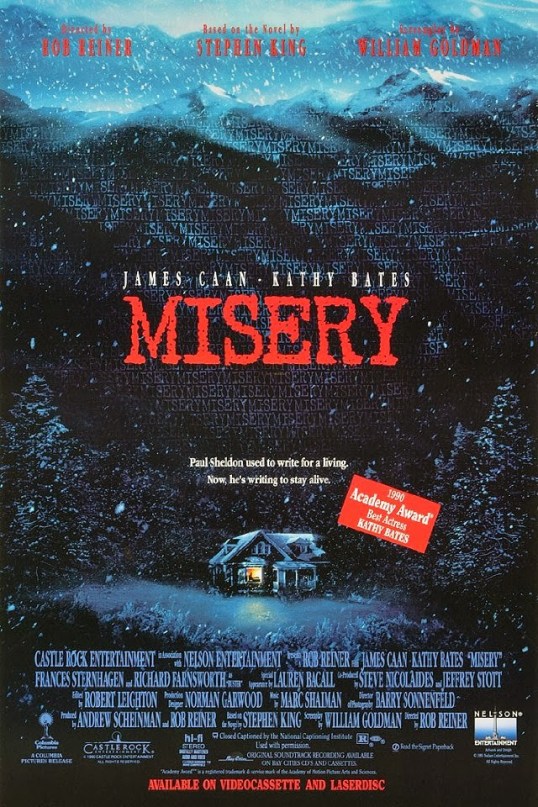
They’re stories of how the real world and it’s seemingly normal inhabitants will react to something just beyond the norm, the pale and the real. In one story we pretty much have a Peyton Place-like setting having to deal with a arrival of a Dracula-like figure. On another we see the isolated work of hotel sitting during the winter turn into something both supernatural and a look into the mind of someone cracking under the pressure of issues both personal and professional.

With all the Stephen King film adaptations since the original Carrie I know I have seen them all and can honestly say that I’ve become an expert on the topic. So, here’s what amounts to what I think would be my top 10 best and bottom 5 worst film/tv adaptations from Stephen King stories.

Top Ten

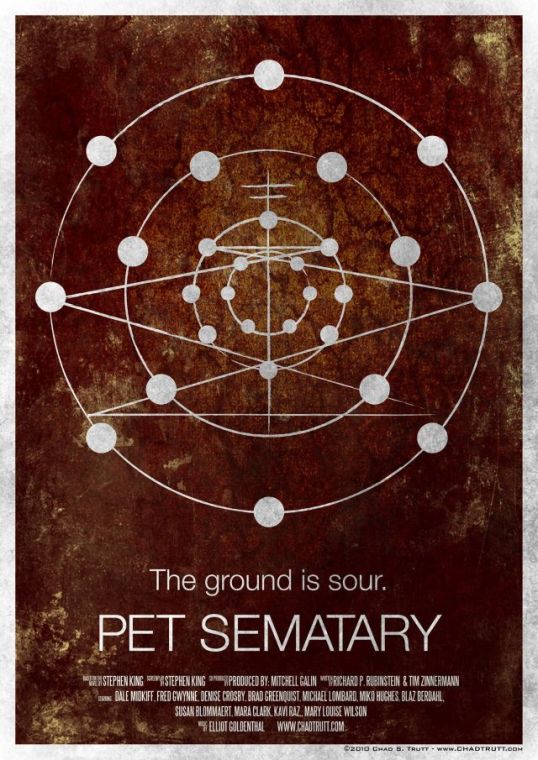
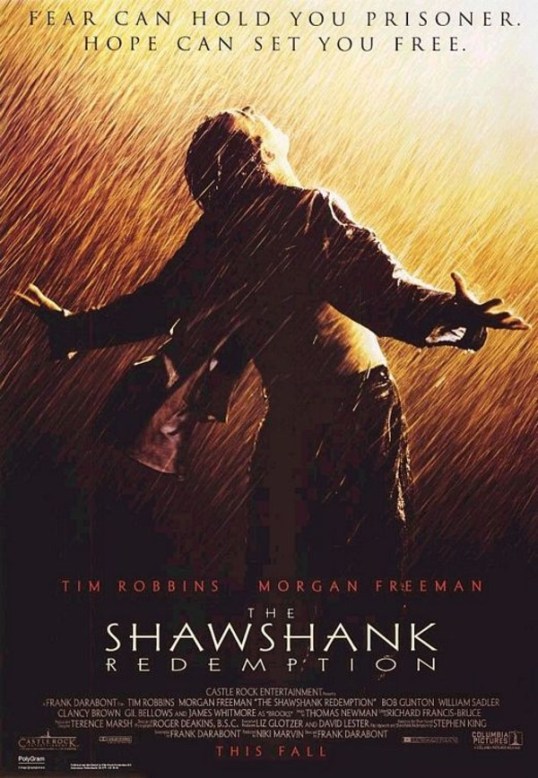
1. Salem'sLot2. TheShining3. DeadZone4. Carrie5. Christine6. Misery7. TheMist8. PetSematary9. shawshankredemption10. standbyme

Bottom Five

1. GraveyardShift2. maximumoverdrive3. Dreamcatcher4. TheMangler5. ChildrenoftheCorn

Halloween Horrors 2013 : “Carrie” (2013)


Carrie-movie-poster


Let me preface this review by saying one thing : Lou Reed died today, so not much else matters.

Seriously — in a world dominated by poseurs and phonies, Lou was the read deal. Avant garde before there was avant garde, glam before there was glam, punk before there was punk, new wave before there was new wave — Lou stayed six steps ahead of all trends by simply not giving a flying fuck about any of them and staying true to himself. Plus, he was quintessential New York in a way that just can’t be faked. In many ways, he was a mirror to the Big Apple’s other favorite creative son, Woody Allen — Woody’s world is one of stuffy academia, anally rententive dinner parties, emotionally distant family patriarchs and matriarchs, and lifeless and pretentious gallery openings, while Lou’s world wasn’t just the streets but the gutters : strung-out drag queens who will give head to strangers to earn enough for their next heroin fix; two-bit hustlers looking for a gullible mark from out of town; desperate AIDS patients freezing in the cold because they lost their homes, families, and jobs; kids fresh from the Port Authority bus terminal looking to hit it big but willing to do anything to get by in the meantime while secretly knowing from the outset that their dreams are never gonna come true.

In short, the kind of people Woody Allen tells stories about are outnumbered by the kind of people Lou Reed told stories about by a factor of about 1,000 to 1, but the rarified elites from planet Woody love to glamorize and pine for the kind of lives that folks on Planet Lou lived — unless, of course, they had to spend one night on the streets, outside the safe confines of their luxury condos, at which point their romanticized notions of life among the “unwashed” would dissipate in a hurry. They know that, of course, so they just “take a walk on the wild side” comfortably by purchasing framed photographs and paintings by down-and-out artists who may or may not become “the next big thing” but are, they know, quite likely living hand-to-mouth existences right now and probably always will.

Burroughs. Warhol. Basquiat. Reed. Our connection to that New York as it was is fading rapidly, isn’t it? Disney has cleaned up 42nd Street. The grindhouses are gone. Harlem has been Clintonized. And another link to the past was severed today, irrevocably. New York’s got class now, but it ain’t got soul. Characters like Alan Alda’s blowhard from Woody’s Crimes And Misdemeanors have won. Poverty and desperation are more widespread than ever, but they’re inside, keeping their mouths shut. And one of the last honest voices that chronicled the lives of the poor and desperate with no pretense, no bullshit, and no flinching is silent  forevermore. Iggy Pop’s doing car commercials now, for Christ’s sake, and Debbie harry’s touring the casino circuit — all is lost.

And on that note, let’s talk about this new Carrie remake, shall we?

chloe-grace-moretz-as-carrie-white-in-carrie-718x400


Competence shouldn’t be a dirty word, all things considered, but when it’s all a movie has going for it, is that really saying very much? Director Kimberly Peirce doesn’t really do anything new with Stephen King’s horror classic apart from giving the unfortunate title character a more lurid backstory, but it’s not like she’s done anything actively bad here, either. The story proceeds more or less along the lines of the original (and along the lines of the made-for-cable remake starring Angela Bettis), so hey — it’s a decent little horror tale, we all know that. Likewise, Chloe Grace Moretz turns in a respectable enough performance in the lead role, Julianne Moore takes a completely different tack with the elder White than did Piper Laurie but it really works, and among the supporting cast Gabriella Wilde deserves special mention for her nice turn as the well-enough-meaning-but-hopelessly-misguided  Sue Snell.

Still — where’s the soul? Like the new, cleaned-up Manhattan, Carrie circa 2013 is an exercise in mere presentation, with no substance beneath it whatsoever. DePalma’s dramatics are nowhere to be found here, nor his shocks. This is a movie that knows we already know the story and proceeds accordingly. “Just don’t fuck things up” seems to be all the more that Peirce and company were aiming for here, and as a result that’s all we get — a movie that gets in, does the job, and gets out.

Chloe-Grace-Moretz-and-Julianne-Moore-in-Carrie-2013-Movie-Image-3


Little touches like having Carrie make her prom dress herself make sense, but serve no real purpose in terms of broadening our understanding of the character or her situation, much less get us to go so far as to re-evaluate either — and adding camera phones to the infamous shower scene at the beginning don’t so much as “modernize” the proceedings as they draw attention to the fact that elements are being tacked on her for the sake of — well, nothing, I suppose.

So — we come back to competence again. Lou Reed wasn’t a “good singer” in any conventional sense of the term, but man, he was in there. He lived and breathed the kind of life he wrote songs about. He brought the same kind of immediacy to his work that Brian DePalma brought to Carrie in 1976. And that’s what’s missing here in Perice’s cold, clinical, by-the-numbers remake. That doesn’t make this new version a bad one, I guess, as I said — but it does make it a pointless one. This has all been done before, and been done a whole lot better, so — why bother?

Carrie-the-movie-every-bully-should-see


But again — none of this matters all that much. Lou Reed died today. I’m wasting your time — and mine — by talking about anything other than that.

Halloween Horrors 2013 : “Carrie” (1976)


Carrie-Poster


Over at my “main” site — http://trashfilmguru.wordpress.com , for those who don’t know, don’t care, either, or both — I’ve been doing what every other goddamn movie blog in the universe does in the month of October: namely, review a bunch of random horror flicks. But come on — you didn’t think I was just gonna sit back and let Lisa Marie, Arleigh, Leonard Wilson, and everybody else have all the fun here on TTSL, did you?

Nah. I just had to muscle in and opine on a few macabre movie delights on these digital “pages” before the month was out, as well. And I might as well start with the one everybody’s talking about right now, Carrie, the 1976 classic directed, in his inimitable style, by Brain DePalma, based on the runaway best-seller by Stephen King, and starring Sissy Spacek as quite likely the most hapless horror heroine in history.

This film is significant for a number of reasons, not the least of which being that it was the first King “property” to be adapted for the big screen, thus announcing the arrival of a major new player on the scene who would go on, of course, to have a veritable industry of celluloid “translations” of his work sprout up over the ensuing decades, some of which were clearly — oh, wait, people these days are talking about a different Carrie altogether? One that just came out last week?

Well, I saw that one, too, but fuck it — I feel like reviewing this one first.

carrie_mother


Let’s backtrack to that “horror’s most hapless heroine” claim for a minute, shall we? It might sound like a bold claim, but I swear it’s true — think about it for a minute : poor Carrie White starts the movie by having her first period in the shower at school, she thinks she’s dying because her religious whack-job of a mom is too chickenshit to tell her about menstruation, she gets teased mercilessly by all the girls who witness her uncomfortable (to say the least) entry into womanhood, she has no friends to speak of, she’s stuck with a bunch of telekinetic powers that she doesn’t understand or know how to effectively control, she’s the butt of every cruel joke her classmates play, she has to listen to her idiot mother blather nonsense 24/7,  she gets invited to the prom as by the most popular kid in school strictly as an act of misguided charity, and then, just when she’s granted one moment of respite from the nonstop parade of tragedy that comprises her existence when she’s crowned world’s most unlikely  prom queen, she gets a bucket full of pig blood dumped all over her, freaks out and kills everybody with her “mind powers,” and goes home from the best/worst night of her life to find that mommie dearest has decided to kill her in Jesus’ name.

Talk about a gal who just can’t catch a break.

carrie1976-0372


Sure, it all seems a bit over the top — okay, it all is a bit over the top — but DePalma pulls out all the stops to draw you into this sordid little world of revival tent-reject parents (Piper Laurie), evil high school bitches (Nancy Allen), pussy-whipped wannabe-tough guys (John Travolta), well-meaning but ultimately ineffectual teachers (Betty Buckley), semi-guilt-ridden classmates (Amy Irving), jocks with out of control white-guy ‘fros (William Katt), and grounds the whole heady mixture in a turn-for-the-ages performance by Spacek that really makes you feel for the poor kid even — maybe especially — when she finally snaps. His always-stylish-and-inventive use of sound, split screen, and slow-burn tension keep you pretty well fixated on the proceedings throughout, and all in all you’ve just gotta say this still holds up as a pretty impressive cinematic achievement.

Of course, King hit on a fairly inventive little gimmick from the outset here — plenty of horror stories, fairy tales, fables, and probably even  nursery rhymes are little more than thinly-disguised metaphors for the onset of puberty and the scary transition from childhood into the ‘adult” world, but here he just dispensed with the pretense and doubled-down by ripping the mask off and piling the real, actual, non-metaphorical point on top of the , as we say in modern parlance, “genre trappings,” and as a result ended up penning a scary story for the ages.
Sissy_Spacek_as_Carrie_White,_1976


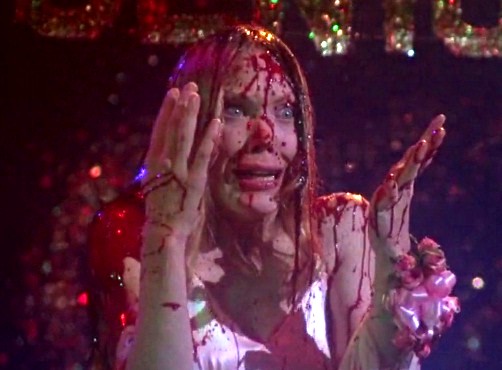
Classic visuals — you know, like the one reproduced directly above — hammer the point home in memorable fashion, to be sure, and what Carrie lacks in subtlety it definitely makes up for in sheer, shock-ya-senseless power. Audiences went wild for this flick back in ’76, and while that might not be saying much because they also went apeshit for every cheesy “patriotic” bicentennial gimmick, knick-knack, gee-gaw, and useless item of “home decor” that came out that year, in this case they were absolutely right — this is a nifty little barnburner of a movie that has aged as well as any wine you care to mention.

Carrie is aviailable on DVD and Blu-Ray from MGM, and it’s also currently playing on Netflix’s instant streaming queue, where it can be found under no less than three category headers — “horror,” “Halloween favorites,” and “cult movies.” So go check it out already — or check it out again already, as the case may be — and we’ll talk about that other  movie with the same title next time around.

Quick Review: Carrie (dir. by Kimberly Peirce)


carrie2013bannerHigh School can be a rough time. Growing up, we always had Freshman Day, where bullies spent the first Friday of the new semester terrorizing the newbies. I spent at least one of those years either writing in the Library for lunch or on the run between classes until a poem/love letter I wrote on behalf of a member of the Varsity Football team left me in their good graces and under their protection. Needed to tell your girl she was the best thing since Ham & Pineapple pizza, but in an eloquent way? Go ask that geek in the back row of English reading Christine with the big round glasses. Oh, the joys of High School. I can’t even imagine how intense bullying can get today with all of the social media we have. It’s easy to imagine what you could do to protect yourself if you could be as cool as Nightcrawler and make yourself teleport, fight off your foes like Batman or best of all, Force Choke the crap out of someone like Darth Vader.

In that sense, the story of Carrie is still kind of cool, and mildly disturbing.

There was a point in Stephen King’s life where Carrie almost never happened. It was because of his wife, Tabitha that the story was ever finished and that the parts focused on women and their “monthlies” (as members of my family would say) were written the way they were. Carrie got King his foot in the door and set him for other releases like The Shining, Christine and Salem’s Lot. I think next to The Shining, it might be his most remade film.
I’m not sure if there’s anyone who never saw Brian De Palma’s Carrie from 1978 with Sissy Spacek. If not, Kimberly Peirce’s version is not bad at all as an introduction to the story. It actually has at least one element from the book that was never featured in the original film (though part of me does wish that it contained the newspaper format – something like John Larroquette’s narration for The Texas Chainsaw Massacre). Carrie is simply the tale of a young girl in high school who discovers she has telekinetic powers. Eventually, she gets pushed and loses it, unleashing her abilities against anyone in her way. No version of the story has ever gone into detail on how she got them outside of the puberty angle – they’re just there.

Peirce’s version moves just as well as De Palma’s, which is interesting because supposedly they happen to be friends. The main differences lie in DePalma’s choice of nudity versus Peirce’s lack of it, and DePalma’s lack of blood (a sign of the times) compared to Peirce’s extended usage of it. Other than that, it’s roughly the same film, any closer and you’d end up with Gus Van Sant’s shot for shot version of Psycho. Half of me wonders why it needed to be remade (again), the other half says, “You know what, it wasn’t half bad.” There’s nothing essentially wrong with Carrie, but it’s really hard to talk about the Peirce Carrie Film without going back to the DePalma one.

First, Carrie’s biggest strength by far comes in it’s casting. As the leads, both Chloe Grace Moretz and Julianne Moore are great in their roles – almost better than the film deserves. Granted, it’s kind of difficult to imagine anyone messing up something as simple as this. When it comes to young horror starlets, the first two names that come to my mind are Silent Hill’s Jodele Ferland and The Hunger Games’ Isabelle Fuhrman, both of which I thought would be interesting fits here. If Katharine Isabelle was just a little younger, that would have worked too. However, I forgot that Moretz had both The Amityville Horror and Let Me In under her belt (and we won’t speak of Dark Shadows – That wasn’t horror. That wasn’t even comedy. I can’t even identify what that was). Her role as Carrie is somewhat similar to Let Me In, being more reserved here than the Kick Ass films and with good reason.

Moore’s version of Margaret White spends some time self harming herself, which was a little eerie and reminded me of Paul Bettany’s character in The DaVinci Code, punishing themselves for their sins. She’s good here, but after coming off winning an Emmy for playing Sarah Palin in “Game Change”, she looks like she’s underused here. It’s like having an actor play a superhero after becoming a great director and winning tons of accolades. A job is a job, and Moore does a great one here given what she has to work with.

The supporting cast was interesting. I didn’t expect to like Judy Greer’s gym teacher as much as I did, and Ansel Angort’s Tommy Ross was good. I hope that this film leads to bigger and better roles for him. A surprise was Chronicle’s Alex Russell as Billy Nolan, the character originally played by John Travolta. He pulls off a villain well. Portia Doubleday’s version of Kris Hargensen may actually be better than Nancy Allen was, though this could also be in part due to the way the story is written.

So, on with the plot. Carrie White (Moretz) is a reclusive loner, living with her overprotective mother (Moore). In the school shower, she has her period for the first time and not realizing what’s occurring to her (and having never been told just what to expect), naturally panics. This leads to an all out humiliation by her peers that’s even recorded. Carrie later learns about her abilities, while her nemesis, Kris is kicked from the prom and vows to take her vengeance against Carrie. Some of the main sequences are actually expanded upon, which I thought were actually good.

I think the only problem I had with Carrie was the technique used for the Telekinesis. It almost seems a little CGI heavy, but when I think about it, I’m not sure how else they could have pulled off much of what they did here without it. Additionally, Moretz’s version of Carrie uses her hands a lot, which almost makes it seems like she’s either dancing or is trying to conjure up something. It’s not a terribly bad thing and you may actually get used to it after she does it once or twice. Part of me kept expecting her to scream “Unlimited Power!” at one point but it was just a minor “Wow, that’s kind of weird.” Reaction, at least for me.

Carrie’s not really meant for little kids. Anyone who’s a fan of Moretz by way of Diary of a Wimpy Kid might not be ready to handle Carrie, but if you’ve followed any of the Kick Ass films, Carrie’s actually lighter than those. Overall, it’s one of the better remakes out there and a very short film (I’m writing this while watching the Nightmare on Elm Street remake, so I like to think I have a good basis of comparison). If you never saw the original, it might be worth a try. If you don’t wish to spend the money for the ticket, you can always watch one of the other versions and wait for this to come out on Blu-Ray.

Poll: Which Films Are You Most Looking Forward To Seeing In October?


Im-in-Love-with-a-Church-Girl

It’s in the end of the month and you know what that means!

It’s time to combine two of my favorite things: a poll and a list of film titles.

Which four films are you most looking forward to seeing in October?  Let us know by voting below.  You can vote up to four times and, as always, write-ins are accepted!

Happy voting!