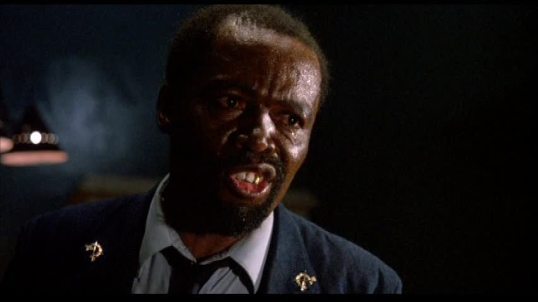
Things Could Be Worse: 8 Fictional Presidents Who Were Terrible At Their Job


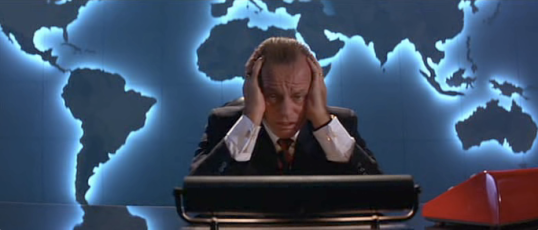
Jack Nicholson

2016 is an election year and things are looking pretty grim right now.  It’s enough to make you throw your hands up in frustrating and demand that someone push the reset button.  However, things could always be worse.  From the world of film, here are 8 President so incompetent, corrupt, and sometimes murderous that they will make you long for the dull mediocrity of a Jeb Bush or a Martin O’Malley.

1) The President (William Devane) in The Dark Knight Rises (2012)

devaneYou’re the leader of the free world and a masked terrorist has just launched a deadly attack on a major U.S. city.  He has blown up a major sporting event on national television.  He has killed the mayor.  He is allowing a crazy sociopath to preside over show trials.  The terrorist demands that you neither send troops into the city nor do you aid anyone who is trying to leave.  What do you?  If you are the President played by William Devane in The Dark Knight Rises, you say, “Okay,” and then breathe a sigh of relief when Batman turns out not to be dead after all.  William Devane also played JFK in The Missiles of October and President James Heller on 24.  Neither of them would have backed down to Bane as quickly as the President in The Dark Knight Rises.
2) The President (Billy Bob Thornton) in Love Actually (2003)

This President thinks that he can bully the world until he makes the mistake of getting on the bad side of the new British Prime Minister (Hugh Grant).  How are you going to call yourself the leader of the free world when even Hugh Grant can make you look like a fool?

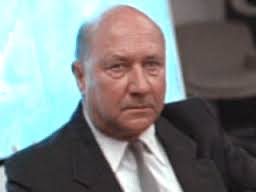
3) The President (Donald Pleasence) in Escape From New York (1981)

DonaldHey, Mr. President, when Snake Plisskin nearly gets killed trying to save your life, you might want to try showing a little gratitude.  Escape From New York ends with Snake asking The President who he feels about all the people who died rescuing him from New York.  When the President can only mutter a few words of regret, Snake responds by destroying the tape that would have presumably prevented World War IV.  Way to go, Mr. President!  Would it have killed you to shed a few crocodile tears, at least over the fate of Cabbie?
4) The President (Cliff Robertson) in Escape From L.A. (1996)

The President from Escape From New York was practically Lincolnesque compared to the jerk who succeeded him.  A theocrat who claimed to have an open line to God, this President banned smoking, drinking, cursing, red meat, guns, atheism, pre-marital sex, and everything else that made life fun.  Anyone who disagreed got exiled to the island of California.  Good thing that Snake Plisskin was still around to set things straight, even if it did mean that Florida ended up getting conquered by Cuba.  Why doesn’t Snake ever run for President?

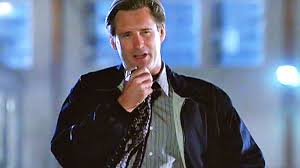
5) President Thomas J. Whitmore (Bill Pullman) in Independence Day (1996)

billIn a word, overrated.  Yes, President Whitmore did lead the army that repealed the alien invaders but he would not have had to do that in the first place if he had prevented the Earth from being invaded in the first place.  How many warning signs did the Whitmore administration ignore until it was too late?  And how much funding did his administration cut from the military that the Air Force was left in such poor shape that they could get shown up by Randy Quaid in a crop duster?  As for Whitmore’s famous speech and the battle that followed, a sequel to Independence Day is coming in June so he must not have done that good of a job of scaring the aliens off.
6) President James Dale (Jack Nicholson) in Mars Attacks! (1996)

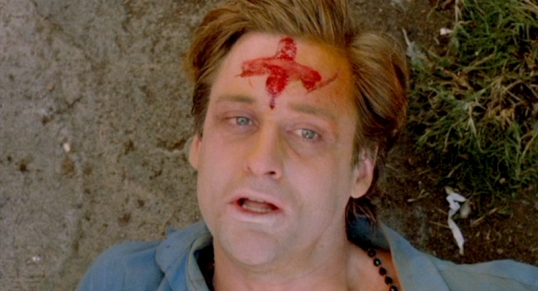
At least President Whitmore got a chance to redeem himself by leading the battle against the invaders.  James Dale did not even get that far.  After foolishly believing everyone who told him that the aliens came in peace, he made the mistake of offering his hand in friendship and ended up with a flag sticking out of his chest.

7) President Alan Richmond (Gene Hackman) in Absolute Power (1997)

Not only did President Richmond think that he could get away with murder, he also thought he could outsmart Clint Eastwood.  Big mistake.  Clint Eastwood is no Hugh Grant.

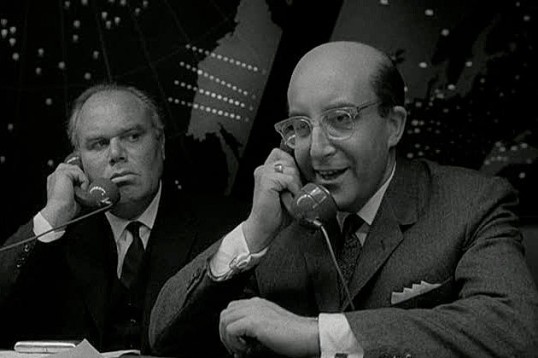
8) President Merkin Muffley (Peter Sellers) in Dr. Strangelove: Or How I Learned To Stop Worrying And Love The Bomb (1964)

Mixing the raw charisma of Adlai Stevenson and the phone skills of Bob Newhart, President Merkin Muffley attempts to stop the end of the world and fails miserably.  He even allows the Soviet ambassador to get a picture of the Big Board!  But don’t worry.  President Muffley may have failed to prevent nuclear war but he will not allow there to be a mineshaft gap!

When this election year get you down, just remember: things could always be worse!

strangelove


Here’s the Trailer for Robotec…I mean Independence Day: Resurgence


Independence Day Resurgence

For decades fans of Robotech (Macross everywhere else in the world) have been hoping for a live-action film adaptation of this very iconic anime series from Japan. Many Westerners had their first introduction to anime after watching the localized version of the original Japanese series Macross. There have been some traction to get the live-action film up and running but rarely past pre-production stage.

With special effects advancing to the point that we can almost recreate dead people back to life via digital trickery, entire worlds astronomers could only dream of and fantastical lands and creatures it’s high time we got a live-action Robotech film. We fans deserve such a gift.

For now, let’s settle for Independence Day: Resurgence which seems to lift certain elements from the anime series spoken of above to make up the plot of the sequel to 1996’s blockbuster hit, Independence Day.

Independence Day: Resurgence is set for a June 24, 2016 release date.

4 Shots From 4 Films: Wes Craven Edition


Today is the birthday of one of the masters of horror. So, here’s wishing Wes Craven a happy birthday.

Now, go out there and check out his films. Here’s a four to try out. It’s got voodoo, a thing from the swamp, a street full of nightmares and, the one that started him off, the very last house on the left.

4 SHOTS FROM 4 FILMS

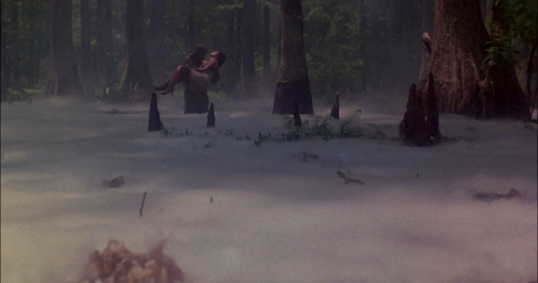
Swamp Thing (dir. by Wes Craven)

Swamp Thing (dir. by Wes Craven)

A Nightmare on Elm Street (dir. by Wes Craven)

A Nightmare on Elm Street (dir. by Wes Craven)

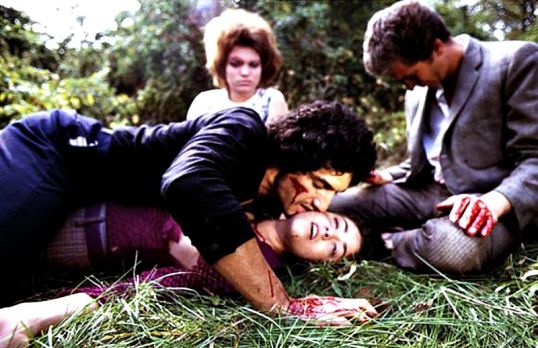
The Last House on the Left (dir. by Wes Craven)

The Last House on the Left (dir. by Wes Craven)

Horror Scenes I Love: The Serpent and The Rainbow


TontonMacoutes

“I want to hear you scream.” — Dargent Peytraud

All I can say about this scene is that I guarantee every guy who watches this will want to cross their legs tight. They may just scream as well just as a reflex action to what happens in the end.

Yet, as one watches this torture scene of the main lead in the film the audience never really sees anything. Everything’s implied and we see signs of what’s about to happen throughout the segment.

The Serpent and The Rainbow continues to be one of my favorite horror films and one of my favorite Wes Craven offerings.

Horror Review: The Serpent and The Rainbow (dir. by Wes Craven)


The word zombies conjures up the flesh-eating variety popularized by George Romero’s horror films and the legion of films from others soon after. Prior to 1968’s Night of the Living Dead the word zombies was synonymous more with the gothic-like horror films which took the Haitian voodoo folklore about the recently dead being brought back to life by voodoo priests to act as mindless slaves. It’s this version of the word zombie which Wes Craven decided to explore with his 1988 film adaptation of the Wade Davis non-fiction book The Serpent and The Rainbow. Wes Craven’s film fictionalizes the ideas and treatises put forward in Davis’ book and creates a film which tries to put to light the true horror which lay behind the voodoo folklore regarding zombies.

The film introduces us to the ethnobotanist character of Dennis Alan (played by Bill Pullman) who’s approached by a major pharma-corporation about researching the scientific origins and cause of the voodoo “zombie”. He heads off to Haiti at a time when it’s going through a political upheaval that would lead to the subsequent revolution that topples the dictatorship of that country’s leader, Francois “Baby Doc” Duvalier. During his time in Haiti he investigates story of a patient named Christophe who was reported dead 8 years past but seen recently walking about in a dazed manner. It’s while trying to get a handle on how Christophe was declared dead by authorities but then “resurrected” years later which brings Alan in contact with the local witch doctors who question Alan’s motives but also ridicule him for his narrow viewpoint regarding things which science cannot answer. But through persistence he finally gets one local to assist him in procuring the so-called “zombie powder” used to bring the dead back to life.

The Serpent and The Rainbow shows the real horror about zombification when Alan’s investigations and persistence to acquire the “zombie powder” brings the attention of the country’s secret police (the Tonton Macoutes) and one of it’s leaders and reported voodoo priest in Captain Dargent Peytraud (played by Zakes Mokae in a chilling performance) who warns him repeatedly not to continue. Repeated verbal warning and threats soon become more direct and physical as Alan finds out first-hand why no one in the country dares to speak of “zombies” to an outsider and why Captain Peytraud and his Tonton Macoutes were feared as if they were agents of the evil spirits of their voodoo faith.

Craven does a very good job in taking Wade Davis’ non-fiction book and creating a thrilling and suspenseful piece of horror which suggests that the lead character of Dennis Alan has stepped into a world that was steeped not just in the realm of science but also in the supernatural. The film includes some great scenes which shows Alan experiencing some very horrific nightmares which seems indistinguishable from his waking moments and vice versa. Unlike Craven’s previous work in horror which were imbued with some dark humor but always brutal in it’s depiction of everyday horror, this film rarely goes the gory route though the scenes of torture should make even the most hardened and jaded horror aficionado to squirm in their seat.

The true horror revealed by Craven’s film is the very human figure of Captain Peytraud and his Tonton Macoutes who use the local populace’s fear of “zombification” and how Peytraud has taken advantage of these people’s voodoo beliefs to control the public and keep themselves in power. It’s horror that many recognize and understand yet heightened even more with the addition of a local religious practice that’s relatively unknown and misunderstood by outsiders (especially by those in the West). The film never truly answers the question raised in the beginning of the film of whether the practice of “zombification” is wholly scientific and pharmacological in origins and cause or does religion and the supernatural has a hand in making the process occur. Even after the climactic encounter between Alan and Captain Peytraud in the end of the film only brings more questions which Craven seems to relish in not letting his film answer on either side of the discussion.

The Serpent and The Rainbow is one of those films during the 1980’s which never really got a fair shake from critics and the audience but has since gained quite a following in the years since it’s release. It’s actually one of Craven’s more subtle works during that period of time where violence in the film was the exception instead of the rule as in his past films. It’s a film which continues to gain fans as more and more younger film fans discover the film. Sometimes the word zombies doesn’t conjure up the typical flesh-eating variety but instead one even more horrific since it’s one based on real-life. Sometimes reality can be scarier than what we can conjure up in our minds. The Serpent and The Rainbow is one film which does a great job in supporting that.

Review: Torchwood: Miracle Day Ep. 08 “End of the Road”


“End of the Road” is quite an apt title for the eight episode in the fourth season of Torchwood. We see the end of a couple characters during the episode and at the same time we finally get the final pieces to the question of who or what caused “Miracle Day”.

The episode begins with the Torchwood team arriving at the Colasanto estate and led by Olivia Colasanto to her grandfather and Jack’s former companion and lover from the late 1920’s. We find out that Angelo Colasanto has kept himself alive through natural means, but is now in a coma as Jack looks on. Angelo’s condition when revealed almost felt like a cop out, but in a major exposition info dump done by his granddaughter we find out who is behind Miracle Day”. They’re called The Families and are made up of the descendants of the three men last seen in the previous episode forming an alliance to study Jack’s seeming immortality.

Angelo himself has been kept out of the alliance due to the three men’s discomfort over his homosexuality. Angelo has been observing not just the three families through the years, but Jack as well in an attempt to either stave off whatever plans The Families have in regards to the “Miracle” or, at the very least, give Jack the clues needed to fix the problem. But before Jack, Gwen, Esther and Rex can do their thing to save the day there’s the little obstacle of Rex’s old boss in the form of Wayne Knight interrupting the Jack/Colasanto reunion. The rest of the episode never lets go of the throttle once John De Lancie’s CIA head honcho Shapiro show’s up and we get closer to this season’s endgame.

The episode was well-written even with the major expositional scene involving Nana Visitor’s character. Each character in the Torchwood team got a chance to shine in their roles with Barrowman making Jack’s bittersweet reunion with Angelo a mixture of happiness and regret. If there was a weak point in the cast’s performance it would continue to be some of the side characters like Wayne Knight’s deputy director Friedkin and Bill Pullman’s Oswald Danes. While I can understand the role of Knight’s character in the overall scheme of things this season I still can’t quite grasp just exactly what Pullman’s Danes character is suppose to do other than be over-the-top creepy. Even Ambrose’s Kitzinger got a chance to own her scene as she finally unleashes what she truly feels about Oswald Danes despite having to be his publicist.

“End of the Road” ends on a major cliffhanger with one of the Torchwood team members shot and the team split apart as the CIA, The Families and everyone else seem to be pulling at them from all directions making their task about solving “Miracle Day” that much more difficult. With only two more episodes remaining this season what looked to be a show that seemed stuck on idle for most of the middle episodes has suddenly begun to speed ahead towards what could be an epic conclusion.

Poll: Tell Lisa Marie What To Watch Next Sunday


So, guess what I did earlier today?  That’s right — I put on a blindfold, a stumbled over to my ever-growing DVD, Blu-ray. and even VHS collection and I randomly selected 12 films!

Why did I do this?

I did it so you, the beloved readers of Through the Shattered Lens, could once again have a chance to tell me what to do.  At the end of this post, you’ll find a poll.  Hopefully, between now and next Sunday (that’s August 21st), a few of you will take the time to vote for which of these 12 films I should watch and review.  I will then watch the winner on Sunday and post my review on Monday night.  In short, I’m putting the power to dominate in your hands.  Just remember: with great power comes great … well, you know how it goes.

Here are the 12 films that I randomly selected this afternoon:

Abduction From 1975, this soft-core grindhouse film is based on the real-life abduction of Patty Hearst and was made while Hearst was still missing.  Supposedly, the FBI ended up investigating director Joseph Zito to make sure he wasn’t involved in the actual kidnapping.

Aguirre, The Wrath of God From director Werner Herzog and star Klaus Kinski comes this story about a Spanish conquistador who fights a losing battle against the Amazon.

Black Caesar In one of the most succesful of the 70s blaxploitation films, Fred Williamson takes over the Harlem drug trade and battles the mafia.

Don’t Look Now Donald Sutherland and Julie Christie are a married couple who attempt to deal with the death of their daughter by going to Venice, Italy.  Christie quickly falls in with two blind psychics while Sutherland pursues a ghostly figure in a red raincoat through Venice.  Directed by Nicolas Roeg.

The Lion In Winter From 1968, this best picture nominee stars Peter O’Toole and Katharine Hepburn as King Henry II and his wife, Eleanor of Aquitaine.  Taking place on Christmas Eve, Henry and Eleanor debate which one of their useless sons will take over a king of England.  This film is also the feature debut of both Anthony Hopkins and Timothy Dalton.

Logan’s Run — From 1976, this sci-fi film features Michael York and Jenny Agutter as two future hedonists seeking Sanctuary and instead finding Peter Ustinov and a bunch of cats.  Filmed in my hometown of Dallas.

Lost Highway — From director David Lynch comes this 1997 film about … well, who knows for sure what it’s about?  Bill Pullman may or may not have killed Patricia Arquette and he may or may not end up changing into Balthazar Getty.

Mystic River — From director Clint Eastwood comes this film about murder, guilt, redemption, and suspicion in working-class Boston.  Starring Sean Penn, Kevin Bacon, and Tim Robbins.

Naked Massacre — From 1976, this stark film is something a grindhouse art film.  It takes the true life story of Chicago mass murderer Richard Speck and transfers the action to Belfast.  Also known as Born for Hell.

Night of the Creeps — From 1986, this film features alien slugs that turn an entire college campus into a breeding ground for frat boy zombies.  Tom Atkins gets to deliver the classic line: “Well don’t go out there…”

PetuliaConsidered by many to be one of the best American films ever made and one of the definitive films of the 60s, Petulia tells the story of a divorced doctor (George C. Scott) who enters into an odd relationship with Julie Christie.  Directed by Richard Lester, this film also stars Joseph Cotten, Richard Chamberlain, and the Grateful Dead.

What Have You Done To Solange? — From 1975, What Have You Done To Solange is a classic giallo that  features dream-like murders, disturbing subtext, and one of the best musical scores of all time.

So, there’s your 12 films.  Vote once, vote often, have fun, and I await your decision.

Voting will be open until Sunday, August 21st.

Review: Torchwood: Miracle Day Ep. 05 “The Categories of Life”


We’ve now reached the halfway point of the latest season of Torchwood. While the previous four episodes in this season has been quality work there’s been a small, but growing number of the show’s fans who saw the series as not as good season 3, Torchwood: Children of Earth, and that the addition of more American characters and transplanting the team to the US had lessened the show to some degree. I can’t say if these fans are right or not, but this midway point episode goes a long way to really giving Torchwood: Miracle Day the punch it really needed to put the season from just very good to something on the level of season 3.

The team has now split up into three working groups with Gwen headed back to Wales to try and get her ailing father from becoming just another statistic in the so-called “Outflow Camps” being set up by world governments with the help of the pharma-transnational PhiCorp. Her brief reunion with Rhys and her baby girl makes for some fun moments, but it doesn’t last long as Gwen gets right down to the business of “rescuing” her father from the very people tasked to help him. Their plan seemed like something that would never succeed, but seeing the chaos at the newly created “Outflow Camps” really helped in believing that Gwen and Rhys could actually pull off their rescue of her father. It’s not the danger of being discovered which puts her father in greater danger but the “Miracle Day” situation itself which does it and from that development in this episode’s story thread do we get a clue as to the darker nature of the hidden modules being built in these camps.

It’s during the plot thread involving Rex, Esther and Dr. Vera (who had decided earlier in the episode that she had a better chance to help people if she helped Rex with his plans) in California which was the strongest thread in the episode. We get to see first-hand through the eyes of Vera and Rex just how unprepared the government really was even in setting up these PhiCorp “Outflow Camps”. Camps which have been designed to house those who have been given new categories to describe their “Miracle Day” status. Category 1 being those who were braindead but still alive for some reason (including those who have been horrifically mangled in some fashion). Category 2 being people who have survived a fatal event and still alive and conscious (Rex for example) with Category 3 being everyone else who are healthy and no need for extensive care.

It’s during Vera’s tour with an unctuous, inept camp administrator that the true nature of the camps come to light. It serves less as a place to help ease the overcrowding in hospitals, but more of a concentration camp to segregate those labeled Cat 1 and 2 from the general population who make up Cat 3. It’s also in this plot thread that we see for the first time the horrific nature of the secret camp modules that Rhys had heard being called “burn units”. I wasn’t surprised that the writers decided to go all the way with demonstrating the nature of the modules with one of the season’s lead characters with still half a season to go, but it was a major gut-punch and should change how the Torchwood team goes about exposing not just PhiCorp, but those behind it and the true nature and agenda of “Miracle Day”.

The third plot thread in this episode was the weakest of the three as we see Capt. Jack continue in his attempt to understand Oswald Danes and his role in whats going on, but also use him to try and expose PhiCorp.  I’ll be the first to admit that I was wrong in thinking Pullman’s performance as Danes would smooth itself out, but with five episodes in the season already in the can his character (as interesting as this character still remains to be) just looks and behaves like a bad caricature of an unhinged villain. Maybe Pullman will pull back on the scenery-chewing long enough to actually appear as the dangerous, albeit tortured, foil for the team, but I’m losing hope. This thread does show that whatever sympathy Jack may have had for Danes just went out the window as the very person he’s trying to use has just set himself up to be the face of “Miracle Day” and the cult growing around his personality.

“The Categories of Life” was still the best episode to date for this new season of Torchwood despite the weakness that is Oswald Danes. It explored the subject matter that’s dear to many (health care in the country or lack thereof) and themes of how in times of crisis people will flock to whoever is speaking the loudest (even if the message is one that is not for the benefit of people) and give those in power the blank check to do whatever needs to be done to keep the masses a false sense of hope and security.

Torchwood: Miracle Day still hasn’t reached the epic greatness that was season 3’s Torchwood: Children of Earth, but with five more episodes to go it’s making a strong push to try and equal it. Whether it does or spectacularly fail in the attempt should make the second half of the season worth watching.

1st Episode: “The New World”

2nd Episode: “Rendition”

3rd Episode: “Dead of Night”

4th Episode: “Escape to L.A.”

Review: Torchwood: Miracle Day Ep. 04 “Escape to L.A.”


Torchwood: Miracle Day has been very casual in revealing the cause and ultimate agenda behind the so-called “Miracle Day” event which has turned everyone on the planet Earth with a unique form of immortality. There’s been speculation from new and old fans alike about the cause and reason. Some think it’s aliens from the future. Some believe it to be a government experiment that went terribly wrong. One thing the previous and third episode in this new season did dole out was that a major pharmaceutical company, PhiCorp, seemed to have been aware of the arrival of “Miracle Day” and planned accordingly even to the point of infiltrating governmental agencies to deflect suspicion from them. Which brings us to the fourth and latest episode: “Escape to L.A.”.

This fourth episode sees the latest incarnation of the Torchwood team arriving in Los Angeles with a plan to infiltrate one of PhiCorp’s many headquarters around the country and steal a server which may hold the information they need to expose the company to the world and finally get down to the bottom of what “Miracle Day” truly is. To say that PhiCorp has become more than just an ovelry opportunistic megacorporation after this episode would be an understatement. This episode had everything for pretty much all spectrum of Torchwood fans. It had some very emotional and quieter moments for some of the main characters (such as Esther Drummond and Rex Matheson). For those wanting a bit more action this episode had it as well as the team’s plans to infiltrate the PhiCorp server room runs across a few stumbling blocks in the form of a creepy hired assassin in the form of one C. Thomas Howell. There’s even a few lighter and funnier moments involving the team’s search for a base of operations while in L.A. with Rex sarcasticly commenting that Jack was trying to turn everyone he meets gay with Jack’s retort admitting to just such.

“Escape to L.A.” also continues to delve into the growing role of Oswald Danes (Bill Pullman still hamming it up as the twitchy, but smarter than he looks pedophile-murderer) in this new season’s scheme of things. While the last episode threw off the cloak of repentance Danes had shown on live TV this latest episode shows Danes as quite devious in trying to keep himself in what he thinks is the only way to protect himself from those who still thinks he owes society for what he had done. The interesting thing about what Danes does in this episode was that it put a voice into one of the themes being explore in this season. Danes sees those still living when they should be dead just like him being herded into places (abandoned hospitals and camps being built by PhiCorp) to be away from those still living in truth. It was interesting that he would be the voice for this theme and a counter to the fearmongering of a Tea Party politico in the form of Mayor Ellis Hartley Monroe (Mare Winningham). For once in this series, so far, I think many wouldn’t be too far off in saying they were rooting for Danes. He was the lesser of two evils in this episode even though it looks like it will be the catalyst which will propel Pullman’s character into the cult leader the season’s marketing had been hinting at.

While the episode wasn’t as good as episode 3’s “Dead of Night” it was still a very strong episode. This was an episode that actually added more pieces to the mystery of “Miracle Day” and just how far-ranging PhiCorp’s (and what could be others as hinted at cryptically in the episode’s final moments) role as the main antagonist for this new season. From how the episode ended for the Torchwood team it looks like we might see the team back on British soil as Gwen must now deal with her father’s safety.

The season continues to improve with each new episode and it’s a good thing this episode gave out more than just dribbles of clues. With only 6 more episodes to go it was high time the series went into the next gear as it races towards the answer to the question of “What is Miracle Day?”.

1st  Episode: “The New World”

2nd Episode: “Rendition”

3rd Episode: “Dead of Night”

Review: Torchwood: Miracle Day Ep. 03 “Dead of Night”


Torchwood: Miracle Day has now reached it’s third episode and we’re beginning to see a few more clues as to the truth about the so-called “Miracle Day” event which automatically made everyone on the planet Earth immortal (with the exception of the planet’s previous lone immortal Capt. Jack Harkness who became mortal instead). The series has been a bit slow about the reveals and dropping of clues and with only 10-episodes to this season it’s going to be interesting to see how Davies and his writers will tie things up when the tenth episode rolls around.

“Dead of Night” is the name of this latest episode and it’s actually quite an apropo title. The episode happens mostly at night and it’s during the darkness of night that we get a glimpse at some of the darker sides of some of the characters on the show. First, we see the team on the run after the bungled attempt by CIA deputy director Friedkin (Wayne Knight) to apprehend Matheson and the remaining Torchwood team at Dulles International. It’s interesting to notice how Rex and his fellow agent in Esther Drummond seemed out of sorts realizing that they’ve been betrayed by the very agency they work for (and maybe the very country they serve loyally) while both Jack and Gwen seem to take it all in stride as if they’ve been there and done that. Some have mentioned that the show doesn’t seem to be classic Torchwood and I can see where they’re coming from. The additions of the American characters to the team and the transplanting to US soil has created a different tone to the show which seem to be harder for the veteran fans to accept at the moment.

It’s definitely not the writing or the acting which has given this show an almost dual nature and feel. Tonight’s episode was written by Jane Espenson (who helped write the excellent sixth episode of Game of Thrones, “A Golden Crown”) and the flow of the show seemed to have improved for the previous one. Most of the set-up’s been completed and now the team is up and running once again with a new problem to solve. It’s that very problem which drives this episode as Jack and his new team begin to uncover one of the major clues that goes a long way into explaining the true nature of “Miracle Day”. I do think that finding out a major pharmaceutical conglomerate might have had a hand or knew in advance about “Miracle Day” wasn’t too much of a surprise. The way the episode paints PhiCorp and their plans for their wonder drug seems like the bad dream for everyone trying to overhaul the nation’s health care system for the better.

The show further explores Capt. Jack Harkness’ current situation as he begins to accept the fact that he’s finally dying (aging being the correct term people would use, but not for one so used to being immortal) and he doesn’t do as well as some would want him to. His emotional and drunken late-night call to Gwen after a one-night’s dalliance with a stranger picked up at a club brings back some emotional baggage and the sexual tension between the two. There’s an almost air of desperation in John Barrowman’s performance in this scene which should show new fans to the show that the series won’t be all about action and intrigue. There’s a reason the series has cultivated such a rabid fanbase and it’s been the performance by the actors, first and foremost. Eve Myles performance as Gwen on the receiving end of Harkness’ call were at times empathic, sad and frustrated as if she thought this was something the two were past but now have been brought back to the surface.

The other major performance of the night belongs to Bill Pullman’s pedophile murderer, Oswald Danes. His character still continues to be the show’s cipher. We’re still not sure what to think of Danes. He’s being made out to be a sympathetic character in one moment then a devious manipulator trying to find whatever advantage he could get his hands on to keep himself safe. We finally do get an idea who Danes is during a confrontation between him and Harkness and it spoke volumes at just how banal evil really is and it’s current face happens to be Bill Pullman’s. It’s going to be interesting to see how Danes, PhiCorp and “Miracle Day” will tie together once this season gets deeper into it’s main story.

“Dead of Night” was better than the last episode but still shows some growing pains as the writers are still coping with some of the major changes to the show’s usual tone. While some long-time fans of the show seem to not be as accepting of these changes I think it’s these changes that show’s growth in the series and such things do take time to find their footing. I expect more growing pains in the coming episodes, but I do think that this episode goes a long way into  establishing the melding of old Torchwood with the new Torchwood.

1st episode: “The New World”

2nd episode: “Rendition”