Eye in the Sky is many things. It’s a tense and involving drama. At times, it’s a satire of the bland and often cowardly bureaucracy that controls so much of the world. Occasionally, it’s an angry polemic and a sad-eyed look at the state of the world today. It’s a film about drone warfare, one that is remarkably honest about both the costs and the benefits of being able to randomly blow people up on the other side of the world. It’s a film that will make you think and it will make you cry and it will even make you laugh in a resigned sort of way.
But, at heart, it’s ultimately the story of two houses in Nairobi, Kenya.
In the first house, terrorists are plotting their next attack. The film leaves little doubt as to what they are planning. Thanks to a miniature drone controlled by Jama Farah (played by Barkhad Abdi and it’s good to see him giving as good a performance here as he did in Captain Phillips), both American and British intelligence are aware of what’s happening in that house. A British jihadist is planning her next attack. Guns are being loaded. Suicide vests are being prepared. If nothings done to stop their plans, hundreds of people are going to die.
Sitting nearby is the other house. And, in this other house, an apolitical Kenyan family is going about their day with zero knowledge of what’s happening just a few doors down. 11 year-old Alia Mo’Allim (Aisha Takow) twirls a hula hoop while her father watches. Later, in the day, she’ll go out in her village and, while the local militia harasses anyone who doesn’t look right to them, Alia will attempt to sell bread. She’ll set up her table directly outside of the first house.
And what no one in that village realizes is that an armed drone is hovering above them. As they go about their day, they have no idea that there are men and women in America and Britain who are debating whether or not to blow them up.
Colonel Katherine Powell (a steely and totally convincing Helen Mirren) is determined to blow up that house and the terrorists within, even if it means blowing up Alia in the process. However, before Powell can give the order, she has to get permission from Lt. Gen. Frank Benson (Alan Rickman, at his weary best) and Benson has to get permission from the government. And the government is full of people who are eager to take credit for killing terrorists but who don’t want to be blamed for any of the inevitable collateral damage. Everyone passes responsibility to someone else.
Powell may be the most determined of everyone to blow up that house but she is not the one who will actually be firing the missiles. That responsibility falls on two Americans, Lt. Steve Watts (Aaron Paul) and Carrie Gershon (Phoebe Fox). As the teorrists prepare and Alia tries to sell bread and the bureaucrats debate, Watts and Gershon are the only ones who seem to truly understand what’s about to happen. If they fire the missiles, Alia will probably die. If they don’t, hundreds of other definitely will.
It all makes for incredibly tense and thought-provoking film, one that is all the more effective because it actually allows both sides to make their case. In Eye in the Sky, no one is presented as being perfect. On the one hand, Powell may be willing to manipulate the data to get permission to fire that missile. But, on the other, the film doesn’t deny that Powell is right when she says that if they don’t blow up the terrorists when they have a chance, hundreds of innocent people are going to die. Towards the end of the film, Alan Rickman says, “Never tell a soldier that he doesn’t understand the cost of war,” and Eye in the Sky appears to understand that cost as well. Nobody escapes this film untouched.
Well-acted and intelligently written and directed, Eye in the Sky was one of the most thought-provoking films of the previous year. See it if you haven’t.
Here are six mini-reviews of six films that I saw in 2016!
Alice Through The Looking Glass (dir by James Bobin)
In a word — BORING!
Personally, I’ve always thought that, as a work of literature, Through The Looking Glass is actually superior to Alice’s Adventures in Wonderland. That’s largely because Through The Looking Glass is a lot darker than Wonderland and the satire is a lot more fierce. You wouldn’t know that from watching the latest film adaptation, though. Alice Through The Looking Glass doesn’t really seem to care much about the source material. Instead, it’s all about making money and if that means ignoring everything that made the story a classic and instead turning it into a rip-off of every other recent blockbuster, so be it. At times, I wondered if I was watching a film based on Lewis Carroll or a film based on Suicide Squad. Well, regardless, the whole enterprise is way too cynical to really enjoy.
(On the plus side, the CGI is fairly well-done. If you listen, you’ll hear the voice of Alan Rickman.)
Gods of Egypt (dir by Alex Proyas)
I don’t even know where to begin when it comes to describing the plot of Gods of Egypt. This was one of the most confusing films that I’ve ever seen but then again, I’m also not exactly an expert when it comes to Egyptian mythology. As far as I could tell, it was about Egyptian Gods fighting some sort of war with each other but I was never quite sure who was who or why they were fighting or anything else. My ADHD went crazy while I was watching Gods of Egypt. There were so much plot and so many superfluous distractions that I couldn’t really concentrate on what the Hell was actually going on.
But you know what? With all that in mind, Gods of Egypt is still not as bad as you’ve heard. It’s a big and ludicrous film but ultimately, it’s so big and so ludicrous that it becomes oddly charming. Director Alex Proyas had a definite vision in mind when he made this film and that alone makes Gods of Egypt better than some of the other films that I’m reviewing in this post.
Is Gods of Egypt so bad that its good? I wouldn’t necessarily say that. Instead, I would say that it’s so ludicrous that it’s unexpectedly watchable.
The Huntsman: Winter’s War (dir by Cedric Nicolas-Troyan)
Bleh. Who cares? I mean, I hate to put it like that but The Huntsman: Winter’s War felt pretty much like every other wannabe blockbuster that was released in April of last year. Big battles, big cast, big visuals, big production but the movie itself was way too predictable to be interesting.
Did we really need a follow-up to Snow White and The Huntsman? Judging by this film, we did not.
Me Before You (dir by Thea Sharrock)
Me Before You was assisted suicide propaganda, disguised as a Nicolas Sparks-style love story. Emilia Clarke is hired to serve as a caregiver to a paralyzed and bitter former banker played by Sam Claflin. At first they hate each other but then they love each other but it may be too late because Claflin is determined to end his life in Switzerland. Trying to change his mind, Clarke tries to prove to him that it’s a big beautiful world out there. Claflin appreciates the effort but it turns out that he really, really wants to die. It helps, of course, that Switzerland is a really beautiful and romantic country. I mean, if you’re going to end your life, Switzerland is the place to do it. Take that, Sea of Trees.
Anyway, Me Before You makes its points with all the subtlety and nuance of a sledge-hammer that’s been borrowed from the Final Exit Network. It doesn’t help that Clarke and Claflin have next to no chemistry. Even without all the propaganda, Me Before You would have been forgettable. The propaganda just pushes the movie over the line that separates mediocre from terrible.
Mother’s Day (dir by Garry Marshall)
Y’know, the only reason that I’ve put off writing about how much I hated this film is because Garry Marshall died shortly after it was released and I read so many tweets and interviews from people talking about what a nice and sincere guy he was that I actually started to feel guilty for hating his final movie.
But seriously, Mother’s Day was really bad. This was the third of Marshall’s holiday films. All three of them were ensemble pieces that ascribed a ludicrous amount of importance to one particular holiday. None of them were any good, largely because they all felt like cynical cash-ins. If you didn’t see Valentine’s Day, you hated love. If you didn’t see New Year’s Eve, you didn’t care about the future of the world. And if you didn’t see Mother’s Day … well, let’s just not go there, okay?
Mother’s Day takes place in Atlanta and it deals with a group of people who are all either mothers or dealing with a mother. The ensemble is made up of familiar faces — Jennifer Aniston, Julia Roberts, Kate Hudson, and others! — but nobody really seems to be making much of an effort to act. Instead, they simple show up, recite a few lines in whatever their trademark style may be, and then cash their paycheck. The whole thing feels so incredibly manipulative and shallow and fake that it leaves you wondering if maybe all future holidays should be canceled.
I know Garry Marshall was a great guy but seriously, Mother’s Day is just the worst.
As far as recent Biblical films go, Risen is not that bad. It takes place shortly after the Crucifixion and stars Joseph Fiennes as a Roman centurion who is assigned to discover why the body of Jesus has disappeared from its tomb. You can probably guess what happens next. The film may be a little bit heavy-handed but the Roman Empire is convincingly recreated, Joseph Fiennes gives a pretty good performance, and Kevin Reynolds keeps the action moving quickly. As a faith-based film that never becomes preachy, Risen is far superior to something like God’s Not Dead 2.
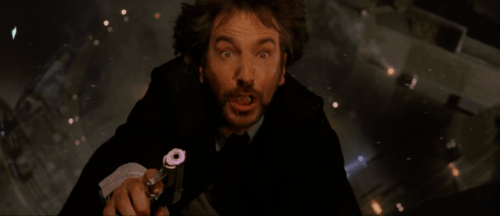
For the past week, we’ve been sharing some of our favorite holiday scenes! Myself, I shared two scenes from It’s A Wonderful Life and Miracle on 34th Street. However, I just recently realized that we hadn’t shared any scenes from a film that has, particularly in this year, emerged as a holiday favorite!
So, without further ado, enjoy this scene from Die Hard!
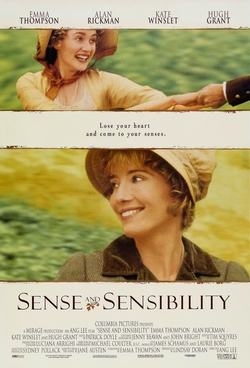
I just finished watching the 1995 best picture nominee Sense and Sensibility on TCM and, despite the fact that I’ve watched it several times in the past, I’m glad that I took time to rewatch it. Sense and Sensibility is one of those very special films that you should rewatch every few months just to be reminded of how good it is. There’s no CGI in Sense and Sensibility. Instead, there’s just some very good writing, some excellent performances, and some lushly wonderful images of the English countryside, courtesy of director Ang Lee. It’s a deliberately paced film, one that proves the virtue of a subtle touch.
The film tells the story of the Dashwoods. As Mr. Dashwood (Tom Wilkinson) dies, he tells his son by his first wife, John (James Fleet), to take care of his second wife (Gemma Jones) and their three daughters, Elinor (Emma Thompson), Marianne (Kate Winslet), and Margaret (Emilie Francois). Naturally enough, John does the exact opposite and soon the Dashwood sisters are forced to leave their large estate and fend for themselves.
The film centers on the practical Elinor and the passionate Marianne. Elinor meets and falls in love with Edward (a surprisingly restrained Hugh Grant), an aspiring clergyman who is also John’s brother-in-law. Edward comes from a wealthy family but will be disinherited if he marries someone who has neither money nor social prominence. Marianne, meanwhile, has fallen in love with John Willoughby (Greg Wise), who is handsome, dashing, rich, and a bit of a cad. (Cad is such a cool word. People should start using it more.) Marianne is so in love with the unworthy Willoughby that she misses the fact that the kindly Col. Brandon (Alan Rickman) has also fallen in love with her.
Sense and Sensibility is based on a Jane Austen novel and, in its very British way, it’s a wonderfully romantic film. Tonight, when viewed in the shadow of the recent passing of Alan Rickman, the scenes featuring Col. Brandon were even more poignant than usual. His love for Marianne is perhaps the most pure and selfless love to be found in the entire film. There’s a scene where Col. Brandon is speaking to Elinor and Marianne, inviting them to his estate. Marianne ignores him until Brandon mentions that Willoughby is also inspected. Suddenly, Marianne looks up and smiles and Alan Rickman allows just a hint of pain to enter his voice. It’s a masterful performance.
But really, the reason why I love this film is because it’s about sisters. I am the youngest of four sisters and, whenever I see this film, it’s hard for me not to see the Bowman sisters in the Dashwood sisters. There is so much about Marianne that I relate to, from her passionate pursuit of “true love” to her artistic sensibility to her somewhat dangerous habit of wandering around in the middle of thunderstorm. You never doubt for a second that Emma Thompson and Kate Winslet could be related and this film always makes me appreciate my own sisters.
Sense and Sensibility was nominated for Best Picture of 1995 but it lost to a film that is its total opposite, Mel Gibson’s Braveheart.
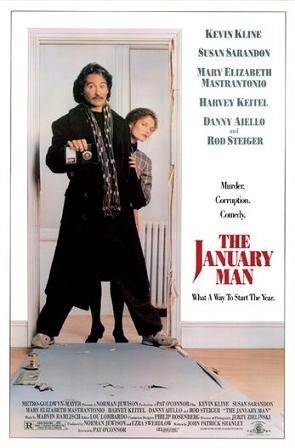
Last week, when the world first learned of the death of the actor Alan Rickman, it was shocking to realize just how many great roles he had played. He made his feature film debut as Hans Gruber in Die Hard. He played Colonel Brandon in Sense and Sensibility, Severus Snape in the Harry Potter movies, the Sheriff of Nottingham in Robin Hood: Prince of Thieves, Hilly Kristal in CGBG and Marvin the Paranoid Android in Hitchhiker’s Guide to the Galaxy. He even played Leonard Nimoy Alexander Dane in Galaxy Quest. But the first time I ever saw Alan Rickman, he was playing Ed the Painter in The January Man.
As The January Man begins, the new year is barely a day old and already Manhattan is in a panic. Over the past 11 months, a serial killer has terrorized the city, killing one woman per month. His latest victim, Allison Hawkins (Faye Grant) was murdered on New Year’s Eve. Now, it’s January and everyone in New York City is waiting for the killer to strike again.
Mayor Flynn (Rod Steiger, bellowing his lines as only an Oscar-winning “great” actor can) is upset because Allison was a friend of his daughter, Bernadette (Mary Elizabeth Mastrantonio). Flynn orders the police commissioner, Frank Starkey (Harvey Keitel), to put his brother on the case. Nick Starky (Kevin Kline) was the best detective in New York but Frank framed him on corruption charges. Now, Nick is working as a fireman and does not want to return to police work. However, Nick tells Frank that he will investigate the murders on one condition: Nick wants to make dinner for Frank’s wife (and Nick’s former lover), Christine (Susan Sarandon).
After cooking an octopus for Christine, Nick works the case. His unorthodox methods get on the nerves of Capt. Alcoa (Danny Aiello, bellowing almost as much as Rod Steiger) but also wins him the heart of Bernadette. Helping him investigate the case (and repainting his office) is his neighbor, Ed (Alan Rickman). Ed is not only a painter but he’s also a computer expert who figures out exactly where the killer is going to strike next.
The January Man was Alan Rickman’s second film and followed his debut in Die Hard. Other than sharing a similarly sarcastic sense of humor, Ed the Painter is the exact opposite of Hans Gruber. Gruber was a murderer who would do anything for money. Ed is an artist who wants only to paint and hang out with Nick Starkey.
When I first saw The January Man, I was seven years old and I was on an airplane flying to London. I was too young to really understand what was happening in the movie but I knew that Ed was my favorite character because he was the one who got all the funny lines and he spoke with a British accent. When he told one of his models “Don’t molest anything,” I thought it was hilarious even though I did not really understand what he was talking about. (Years later, I would watch The January Man on HBO and I would discover that Ed made his living painting nudes and that Bernadette and Nick were having sex, all information that was edited out of the airplane version.)
After I heard that Rickman had died, I rewatched The January Man for the first time in years. I discovered that The January Man is a terrible movie that tries to unsuccessfully to mix slapstick comedy with brutal serial killer action but Alan Rickman still gives a really good performance, the best in the film. (A close second would be Mary Elizabeth Mastrantonio, whose smile lights up every scene in which she appears. She married the movie’s director so at least she got something good out of appearing in The January Man.) That Alan Rickman is one of the film’s few bright spots is a testament to his talent as an actor. Alan Rickman was such a great actor that he even made The January Man watchable.
So, I should start out by explaining that this is not the latest entry in my soon-to-be-revived series, Lisa Marie’s Favorite Grindhouse and Exploitation Film Trailers. Instead, these are 6 trailers for 6 films that you will have a chance to see in 2015!
Seriously, it’s always good to start a new year with something to look forward to, right?
1) 71
This one look intense, no? Jack O’Connell plays a British soldier who, during the British occupation of Northern Ireland, finds himself lost behind enemy lines in Belfast. Jack O’Connell is a rising star and the film won best director at the British Independent Film Awards.
2) Veronika Decides to Die
This was actually filmed in 2008, premiered in Brazil in 2009, played in Germany in 2010, and, seven years later, it’s finally getting a U.S. release. It’ll premiere in theaters and on VOD on January 20th and then, in March, it’ll be released on DVD. That would seem to indicate that First Look International, the film’s distributor, doesn’t have much faith in it. But you know what? Some of the best films ever made were distributed by people who had no faith. This could be a challenging, edgy film. Or it could be crap.
We’ll find out!
3) A Little Chaos
This historical drama stars Kate Winslet and it was directed by Alan Rickman! The trailer looks gorgeous. I majored in art history so I have to admit that I will always have a weakness for films like this.
4) Woman in Gold
Will Ryan Reynolds ever star in another good film? That’s a question that I often find myself pondering. Reynolds is the type of talented actor who deserves more than co-starring in R.I.P.D. and showing up in a cameo in A Million Ways to Die In The West (BLEH!).
While Woman in Gold does not look to be the type of film that’s going to help re-establish Reynolds as being a rising star, it does look like a film that will give him a chance to remind people that he actually can act. Undoubtedly, it’ll help that he will be co-starring with Helen Mirren. Woman in Gold is scheduled to be released on April 3rd.
5) Wild Card
It’s not January unless Jason Statham is killing someone. 2015’s Jason Statham film will be Wild Card. It’ll be released on January 30th.
6) Blackhat
And finally, we have Blackhat. It’s scheduled to be released on January 16th. It’s directed by Michael Mann and stars the official sexiest man alive, Chris Hemsworth. Apparently, Hemsworth will be helping to capture whoever it was who hacked Sony.
When I saw Lee Daniels’ The Butler, I was not impressed.
Yes, the audience applauded as the end credits rolled. And yes, I know that almost all of the mainstream critics have given it a good review. I know that Sasha Stone has been hyping it as a surefire Oscar contender. I know that, up until 12 Years A Slave introduced us all to an actress named Lupita Nyong’o, Oprah Winfrey was considered to be the front-runner for the Best Supporting Actress Oscar.
But it doesn’t matter. The Butler did little for me.
I also realize that the film ended with a title card that announced that what I had just watched was dedicated to the American civil rights movement. In many ways, that title card felt like emotional blackmail, implying that if you criticized The Butler than that meant you were also criticizing the brave, real life men and women who risked their lives to fight for equal rights.
However, when you put emotions and good intentions to the side, the fact of the matter is that Lee Daniels’ The Butler is not that good of a movie. One need only compare The Butler to some of the other films that were released this year that dealt with the African-American experience — films like 12 Years A Slave and Fruitvale Station — to see just how safe and uninspiring The Butler truly is.
The Butler tells the story of Cecil Gaines (Forrest Whitaker), the son sharecroppers (played by David Banner and Mariah Carey) in the deep south. After Cecil’s father is murdered by plantation owner Thomas Westfall (Alex Pettyfer), Cecil is raised and educated by the wealthy Annabeth Westdall (Vanessa Redgrave). Eventually, the teenaged Cecil leaves the plantation and ends up working in a hotel where he’s educated in how to be a master servant by the elderly Maynard (Clarence Williams III, who brings a quiet dignity to his role). Cecil eventually gets promoted to a hotel in Washington, D.C. It’s there that he meets and marries Gloria (Oprah Winfrey).
In 1957, Cecil is hired to work at the White House. Along with befriending two others butlers (played by Cuba Gooding, Jr. and Lenny Kravitz), Cecil also gets the chance to observe history play out first hand. Starting with Dwight Eisenhower (played by Robin Williams) and ending with Ronald Reagan (Alan Rickman, giving a performance that is incredibly bad), Cecil watches as President after President deals with the civil rights movement. Some presidents, like John F. Kennedy (James Marsden) are portrayed as being heroes while others, like Richard Nixon (John Cusack), are portrayed as being villains but all of them have the watchful eye of Cecil Gaines in common.
Meanwhile, at home, Gloria has a brief affair with Howard (played by Terrence Howard and really, you have to wonder what Cecil was thinking leaving his wife alone with anyone played by Terrence Howard) and Cecil’s oldest son, Louis (David Oyelowo), gets involved with the civil rights movement and grow increasingly estranged from his father.
The Butler actually starts out pretty well. There’s a lengthy sequence where Louis and a group of students are trained on how to conduct a sit-in that’s extremely compelling to watch. However, then John Cusack shows up wearing a big fake nose and the entire film starts to fall apart.
From a cinematic point of view, the film fails because it ultimately seems to be more dedicated to trotting out a parade of celebrity cameos to actually telling a compelling story. As is his usual style, Lee Daniels directs with a heavy hand and, as a result, the film is full of emotionally-charged scenes that fail to resonate for longer than a handful of minutes.
My main issue with The Butler is that the film literally contains no surprises. Nothing out of the ordinary happens and, at no point, is the audience actually challenged to consider the way they view history or race relations. Whereas films like Fruitvale Station and 12 Years A Slave truly challenge our assumptions, The Butler encourages us to pat ourselves on the back for being so enlightened. Every single frame of The Butler is specifically designed to fool us into thinking that we’re watching an important and challenging movie.
Because of a silly copyright lawsuit, the official title of The Butler is Lee Daniels’ The Butler. However, that title is very appropriate because The Butler is definitely a Lee Daniels film. Even if you didn’t know it beforehand, it would be easy to guess that the same man who directed Precious and The Paperboy also directed The Butler. As a director, Daniels specializes in making simplistic points in the most bombastic way possible. The results are films, like The Butler, that are more concerned with manipulating an audience than challenging an audience. When audiences applaud at the end of The Butler, they aren’t so much applauding the film as much as they are applauding themselves for having seen it.
Well, we all knew it would have to end someday and now, it’s over. The Harry Potter film series, which began way back in 2001, is concluding right now in a theater near you. On Friday night, me, Jeff, my sister Erin, and our friend Evelyn went down to the AMC Valley View and we saw Harry Potter and the Deathly Hallows, Part 2.
The cinematic story of Harry Potter is over and yes, I did cry as I watched it end. I didn’t just cry because of the movie, though the movie itself is one of the best of the year and it has one of those wonderful endings that just makes it impossible to remain dry-eyed. No, I cried because — with this film — an era of my life is truly over.
When the first Harry Potter film came out, I was only 16 and still trying to deal with the fact that I had been diagnosed as being bipolar just a few weeks earlier. I felt alone and broken and destined to spend the rest of my life on the outside looking in. The three hours that I spent watching Harry Potter and the Sorcerer’s Stone were three hours when I didn’t have to worry about suddenly bursting into tears and having everyone around me worrying about whether or not I was actually taking my hated medication. For three hours, I could escape to another world where those who were different were celebrated precisely because they were different. For three hours, I could imagine that just maybe I had a special purpose for existing too and maybe I had benevolent wizards and witches looking out for me too. And I’m sorry if all that sounds trite in retrospect but, when you’re 16 and you think you’re too damaged to love, anything that gives you hope and pleasure in the present is a precious treasure.
Over the years, I eventually came to realize that being bipolar was hardly a curse and, as I matured and grew up and discovered new things, there was always a Harry Potter film either playing or about to come out. Whether I was escaping high school, graduating college, or dealing with just every good or bad thing that makes up life, Harry Potter — this character who I first met (in book form) when I was 13 — was always there. So, at the risk of sounding overdramatic, the end of Harry Potter is the end of a chapter of my life.
One final personal note: As I watched Harry Potter and the Deathly Hallows, Part Two, I had three dolls (or action figures, as boys insist on calling them) in my purse. These dolls — Harry, Hermione, and Ron — came out around the same time as the second Harry Potter film and my mom (who collected dolls) ordered them off of Ebay three years ago, shortly before she entered the hospital for the final time. Now, my mom was not a huge fan of the Harry Potter series but she knew that I loved it and that’s why she made those dolls her final gift to me.
And those are some of the reasons why I found myself crying as I watched the finale of Harry Potter. However, there’s another reason why I cried and that’s that this is just a great film and the perfect conclusion to the series.
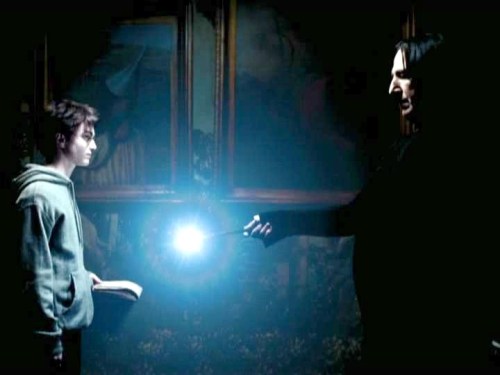
Essentially, Harry Potter and the Deathly Hallows, Part Two starts up immediately after the conclusion of Part One. Dobby is dead, Lord Voldemort (a wonderfully neurotic Ralph Fiennes) and the Death Eaters are intent on destroying everything, and Severus Snape (Alan Rickman, wonderful as always) is in charge of Hogwarts. After spending the first part of Deathly Hallows as fugitives, Harry Potter, Ron Weasley, and Hermione Granger (Daniel Radcliffe, Rupert Grint, and Emma Watson) return to Hogwarts to take a final stand against Voldemort. Things end in a surprisingly bloody battle (this film is not for children) that leaves several characters dead and ultimately reveals that one wizard wasn’t the saint we always assumed he was while another is revealed to be the secret hero of the entire series.
Let’s get one question out of the way right now: will non-Harry Potter fans be able to follow this film? Uhmmm…no. Sorry. Then again, why would a non-Harry Potter fan be at a film called Harry Potter and The Deathly Hallows Part Two anyway? I mean, seriously, if you’re just going to film because everyone else is doing it than who are you to bitch anyway? This is what you non-Harry Potter fans need to do. Stop reading this review. Go watch the previous Harry Potter films. Watch them in order. Take your time because Deathly Hallows is going to be in theaters for a while. And then, once you’ve become immersed in the story, go see how it all concludes. And then come back here and read rest of this review.
Okay, so is everybody up to date?
Cool.
One of the more interesting features of the Harry Potter series is that so many different directors (each with his own definite, individual style) have been involved in bringing these films to the screen. Among Harry Potter fans, hours can literally be spent debating the merits (and weaknesses) of Chris Columbus, Alfonso Cuaron, Mike Newell, and David Yates. My own theory is that each director was perfectly suited for each film he directed. The audience-friendly vision of Chris Columbus was what the first two films needed, just as Prisoner of Azkaban needed Cuaron’s far darker vision and Mike Newell’s attention to character made Goblet of Fire one of the best of the Harry Potter films. And while David Yates may not be as well-known (or critically acclaimed) as Newell or Cuaron, he brings exactly the right tone to Harry Potter and the Deathly Hallows, a perfect combination of spectacle and humanity. It is to Yates’ credit that the scenes in which the characters simply talk to each other are just as compelling as the dramatic sequences where Voldemort and the Death Eaters attack Hogwarts. Yates understands that this material could easily come across as silly or childish and to his credit, he never allows the audience to simply dismiss this film as a lot of blathering about wands and CGI magic. As opposed to other directors who have given us summer blockbusters, Yates takes his film seriously.
And, fortunately, so does his cast.
One of the great pleasures of the Harry Potter series is that it’s given American audiences the chance to discover (and rediscover) some of the great British character actors and a lot of them show up (some for only a matter of minutes) here in the finale. Maggie Smith, Jim Broadbent, Julie Walters, Robbie Coltrane, Gary Oldman, John Hurt, David Thewlis, Emma Thompson, and Jason Isaacs all put in appearances. Kelly MacDonald has a great scene playing a ghost, Helena Bonham Carter is perfect as the evil Bellatrix Lestrange, and Alan Rickman is brilliantly ambiguous as Severus Snape. (And yes, Snape’s actions are explained in this film and yes, I did cry.)
Ralph Fiennes plays so many villains that I now find myself expecting him to show up killing people in every movie I see. He’s like a British Christopher Walken. Still, it’s easy to take an actor like Fiennes for granted. For the entire Harry Potter series to work, Lord Voldemort can’t just be an ordinary villain. He’s got to be the sum total of all things evil and deadly. You’ve got to believe that people would be scared to speak his name. Great heroes need a great villain and Fiennes’ Voldermort is a great villain.
Ultimately, however, the true credit for the success of the Harry Potter series belongs to three actors who have literally grown up on the movie screen — Daniel Radcliffe, Rupert Grint, and Emma Watson. The producers are fortunate indeed that the cute kids that they cast over a decade ago have all grown up to be talented, attractive, and likable actors. If the first part of Harry Potter and the Deathly Hallows seemed to showcase both Grint and Watson (almost to Radcliffe’s expense), part 2 is most definitely centered on Harry Potter. That doesn’t mean that Watson and Grint aren’t good in this film. They are and they get to share one of the best movie kisses of 2011. (As well, for those who keep count, Grint says “Bloody Hell,” three times in the film.) But, for obvious reasons, this film is all about Harry and Radcliffe’s performance as Harry. It’s a challenge for Radcliffe and it’s a challenge that he more than succeeds at conquering. As the film ended, I realized that I was sad to know that the adventures of Harry Potter were done but I was excited to see what the future will hold for Radcliffe, Grint, and Watson.
Incidentally, Harry Potter and the Deathly Hallows Part 2 has been released in both 3-D and 2-D. We saw the 3-D version and if you have any knowledge of how I feel about 3-D (and how motion sick I tend to get while watching 3-D films) then that should show you just much I love the Harry Potter series. I loved it so much that I was even willing to overlook my hatred of 3-D. The 3-D here (which was added after the film has already been filmed) doesn’t really add much to the movie. There were a few cool moments where I was all like, “Look, I can reach out and grab a piece of Voldemort,” but otherwise, the 3-D was a negligible factor as far as the overall film was concerned.
Still, there was one interesting thing about the 3-D. The theater we saw the movie in was half-way empty. At the same time, the neighboring theater — in which the 2-D version was playing — had a line of people waiting to get in. They were not only waiting to see the 2-D version, they were waiting to see a showing that wouldn’t even begin until a full 90 minutes after the 3-D version started. I mention this because, in the wake of Avatar, so many people have taken it for granted that 3-D is the future of movies and soon, as long as a film is in 3-D, we won’t have to worry about the difficult stuff like an interesting plot or compelling characters. However, 3-D has become an overexposed gimmick. For every film like Cave of Dreams that uses 3-D to craft an actual artistic statement, there’s a 1,000 films like Priest which use 3-D just because it’s an easy way to trick sucks into spending an extra dollars to see a crappy film.
What so many filmmakers seem to forget is that the majority of film goers are not looking for 3-D. We’re just looking for a good film. And sometimes — like with Harry Potter and the Deathly Hallows — we get lucky and we find a great film.
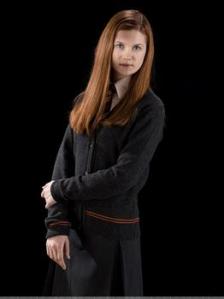
(Oh, and one last thing: I know everyone always expects me to claim to be just like Hermione but actually, I’ve always related more to Ginny Weasley. Like her, I’m the youngest of four siblings, I’ve got red hair, and I always get my man, in the end.)
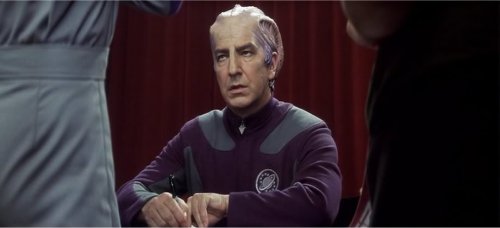
 Last week, when the world first learned of the death of the actor Alan Rickman, it was shocking to realize just how many great roles he had played. He made his feature film debut as Hans Gruber in Die Hard. He played Colonel Brandon in Sense and Sensibility, Severus Snape in the Harry Potter movies, the Sheriff of Nottingham in Robin Hood: Prince of Thieves, Hilly Kristal in CGBG and Marvin the Paranoid Android in Hitchhiker’s Guide to the Galaxy. He even played





 Through the Shattered Lens